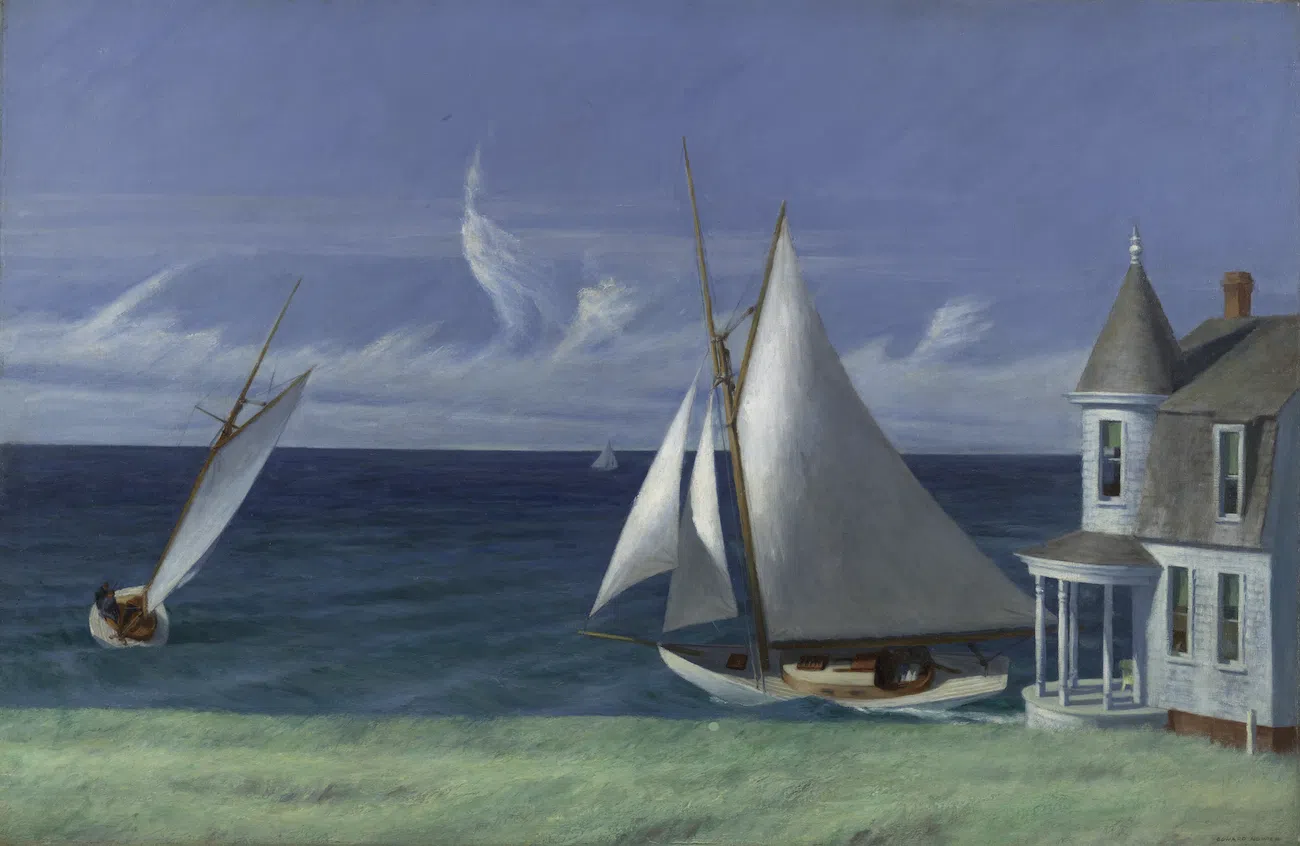
Edward Hopper (1882 – 1967), “The Lee Shore,” 1941, Oil on canvas, 28 1/4 x 43 in, The Middleton Family Collection
The United States will celebrate its 250th anniversary in 2026, and the festivities are taking many forms. One way turns an eye toward history, seeing how far the country has come since its founding. The exhibition A Nation of Artists is doing so by looking at visual culture, specifically how artistic production has been shaped through exchange, expansion, conflict, and innovation. Nothing, after all, is created in a vacuum. Art—and individual creativity—is a reflection of culture.
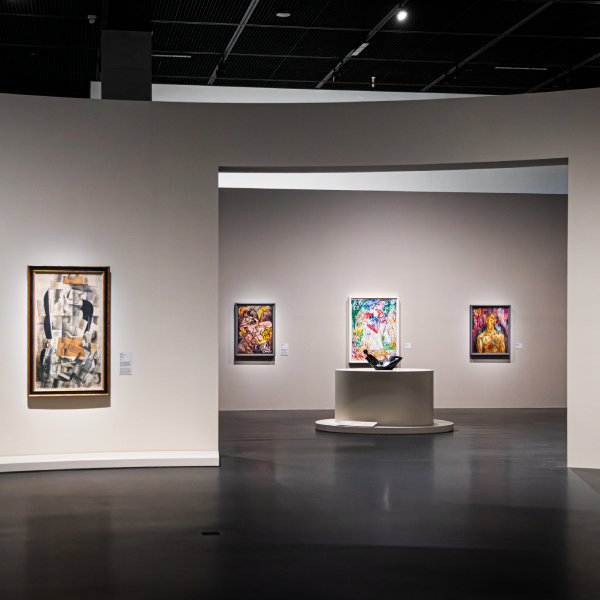
A Nation of Artists appears simultaneously at the Pennsylvania Academy of the Fine Arts (PAFA) and the Philadelphia Museum of Art (PMA). Each institution has a different way of organizing the works on view. PAFA takes a thematic approach, showcasing art from the late 18th century to today, and groups works with westward expansion, the rise of industry, and an increasingly global world in mind. PAM, which is currently celebrating its 150th anniversary, is looking at work chronologically. It organizes American art from 1700 to 1960, noting similar themes to PAFA, such as international exchange, technological innovation, and shifting cultural economics (abundance for some, but not others).
Regardless of approach, both institutions are charting art through more than 1,000 paintings, photographs, sculptures, and decorative arts. This includes more than 120 rarely seen works from the Middleton Family Collection, one of the U.S.’ most significant private holdings of American art.
“Our aspiration is that this exhibition is for everyone—no prior knowledge of art or history required,” shares John S. Middleton. “We believe in the power of storytelling to connect people and are thrilled to partner with these two storied institutions to share the works that have brought our family so much joy and inspiration. Like baseball, art has the power to bring people together and surprise us when we least expect it. With every viewing, there’s something new to discover. It’s an honor to help bring American art to life in a new way during this very special 250th commemoration of our country’s founding.”
A Nation of Artists is on view at PMA until July 5, 2027, and at PAFA until September 5, 2027.
The United States will celebrate its 250th anniversary in 2026, and the festivities are taking many forms. One way turns an eye toward history, seeing how far the country has come since its founding.
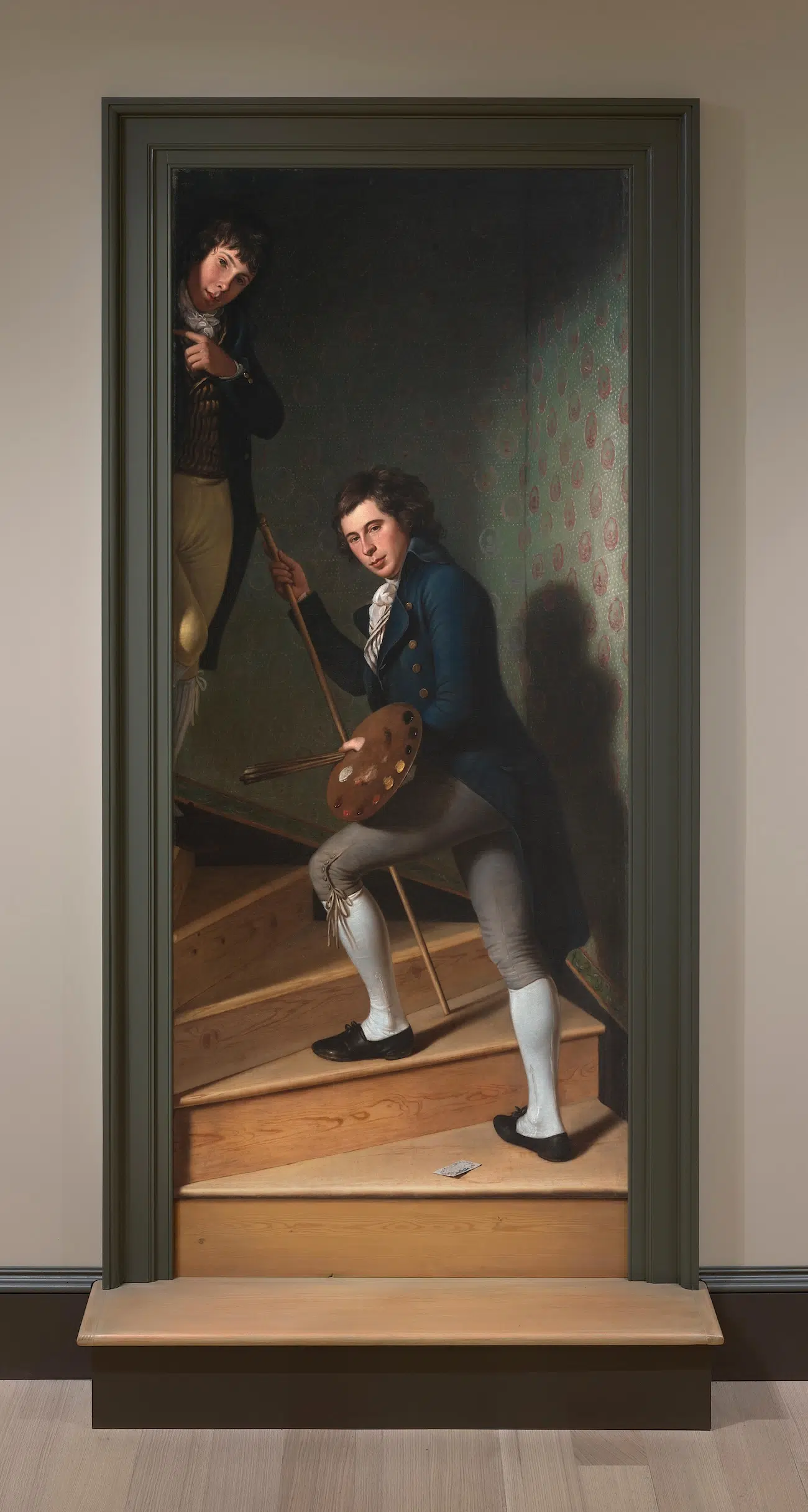
Charles Willson Peale, (1741 – 1827), “Staircase Group (Portrait of Raphaelle Peale and Titian Ramsay Peale I),” 1795 Oil on canvas 7 ft 5 1/2 in × 39 3/8 in, Philadelphia Museum of Art, The George W. Elkins Collection, 1945 , E1945-1-1.
The exhibition A Nation of Artists is doing so by looking at visual culture, specifically how artistic production has been shaped through exchange, expansion, conflict, and innovation.
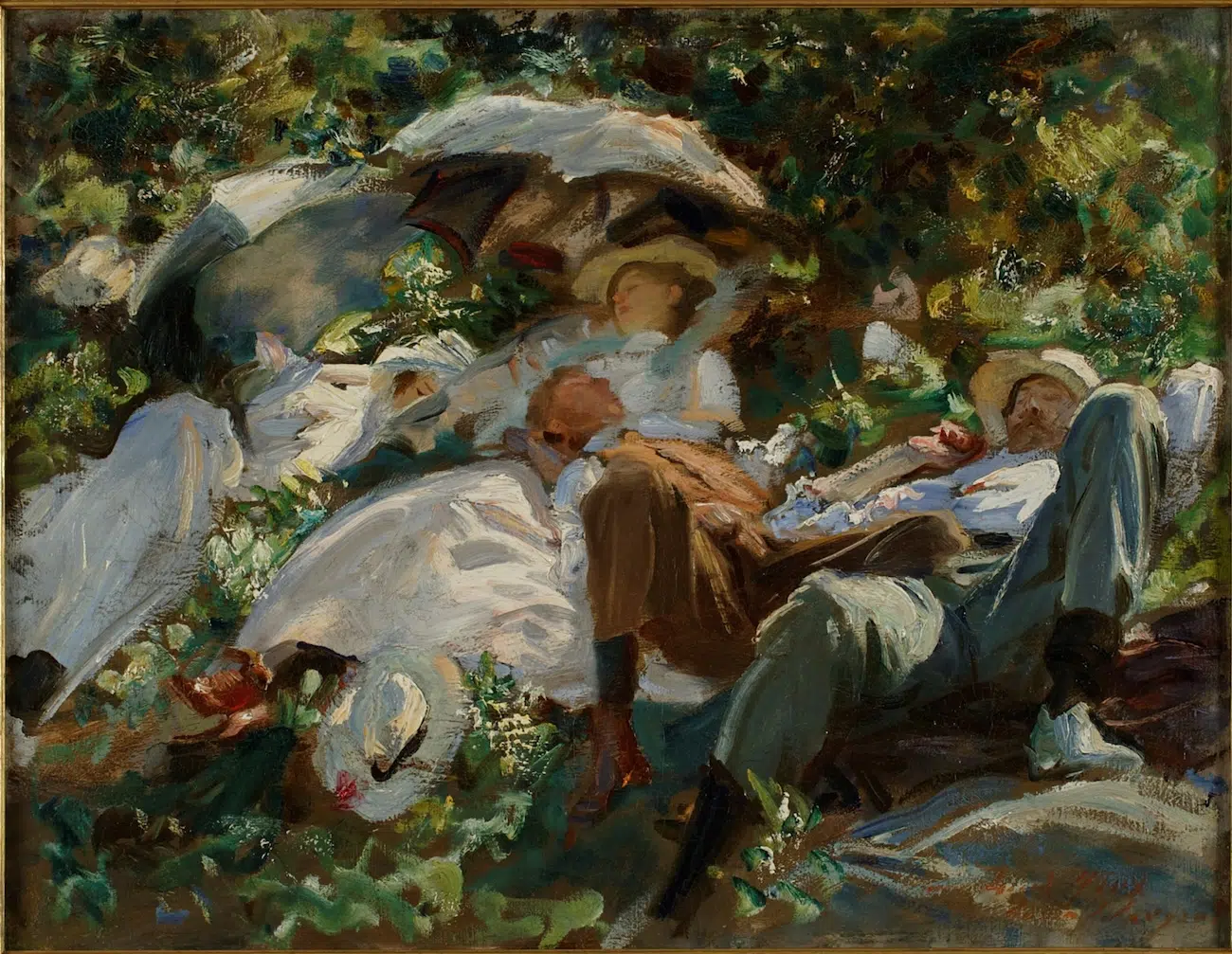
John Singer Sargent (1856 – 1925), “A Siesta,” 1904-1905, Oil on canvas, 22 3/8 × 28 9/16 in, The Middleton Family Collection
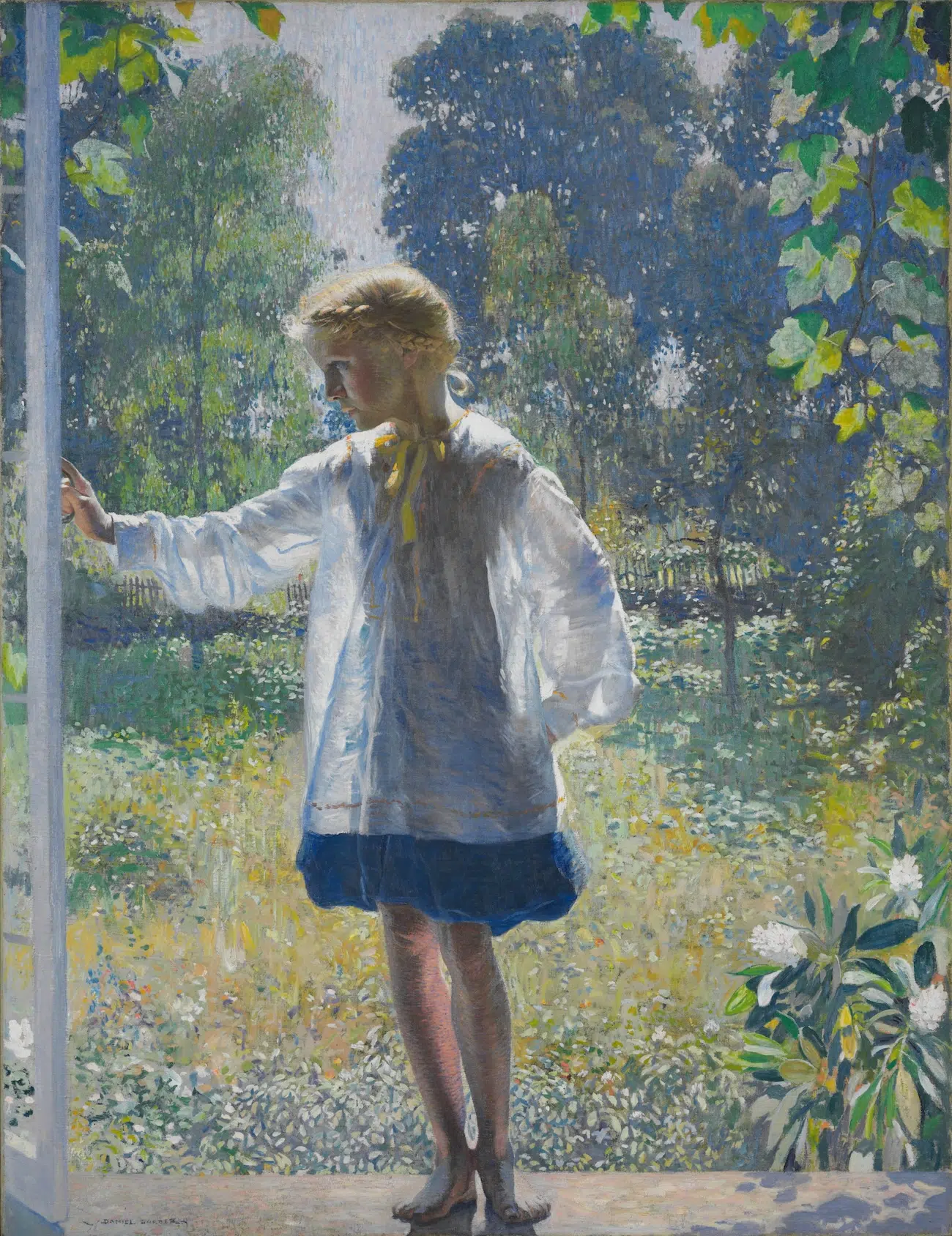
Daniel Garber (1880 – 1958), “Tanis,” 1915, Oil on canvas, 60 × 46 1/4 in, Purchased with funds contributed by Marguerite and Gerry Lenfest, 2011, 2011-60-1
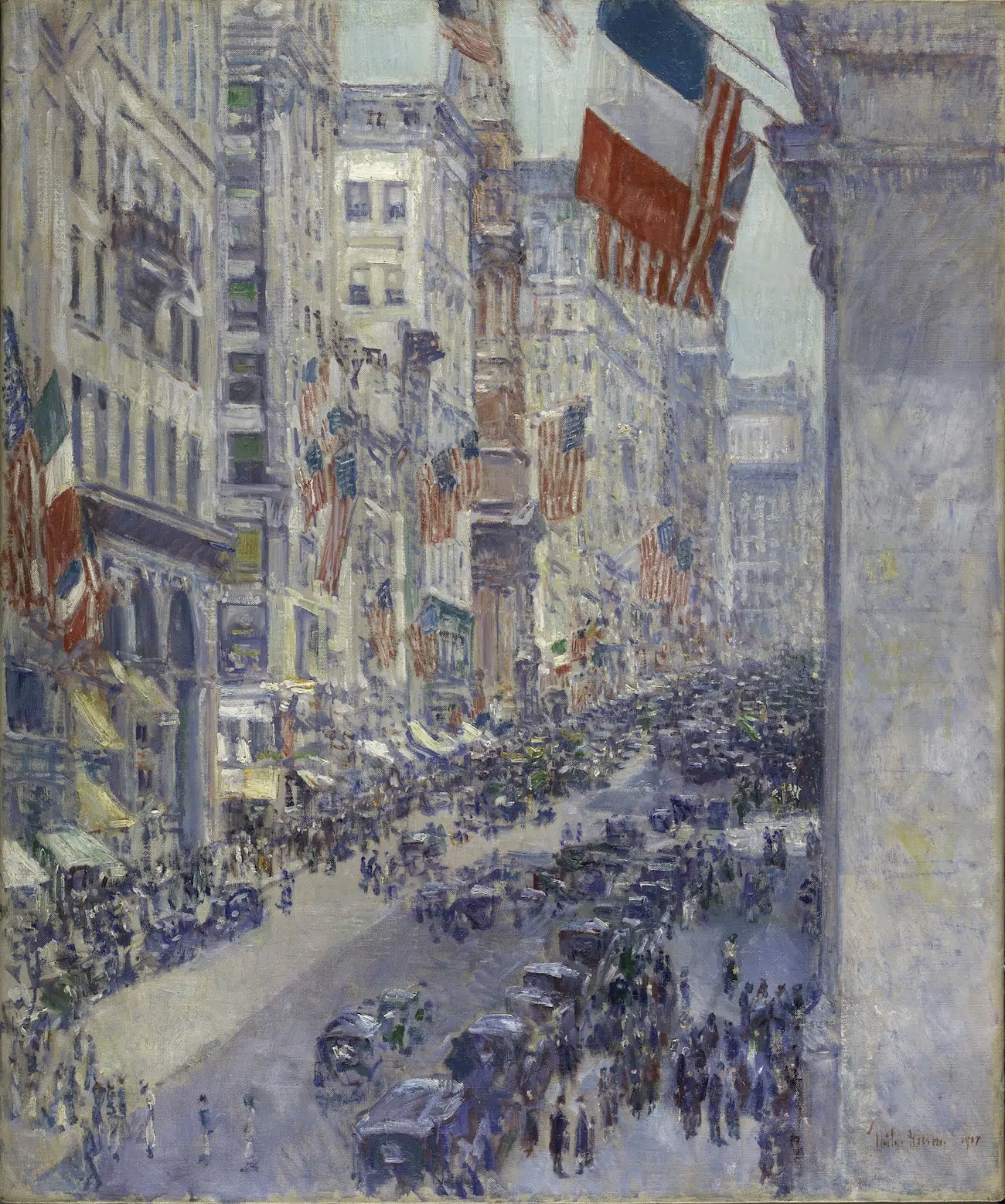
Childe Hassam (1859-1935), “Up the Avenue from Thirty-Fourth Street,” 1917 Oil on canvas, 36 in × 29.93 in, The Middleton Family Collection
A Nation of Artists appears simultaneously at the Pennsylvania Academy of the Fine Arts (PAFA) and the Philadelphia Museum of Art (PMA).
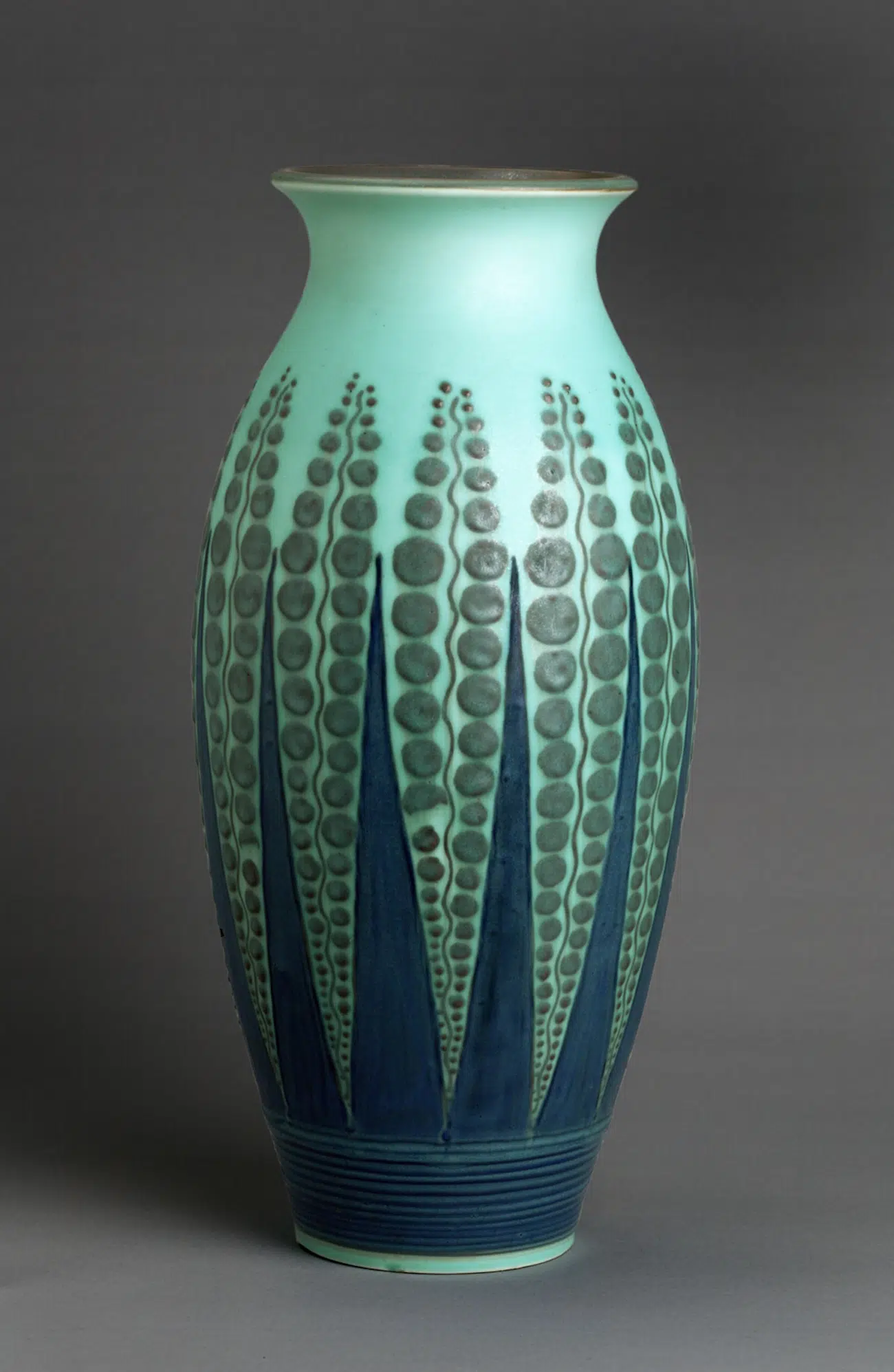
Rookwood Pottery (Manufacturer), William Ernst Hentschel (Decorator), 1927, Vase, Medium Porcelain (Later Mat/Mat Moderne glaze line), 17 1/2 x 8 1/4 in, Philadelphia Museum of Art, 125th Anniversary Acquisition. Gerald and Virginia Gordon Collection, 2002, 2002-21-63
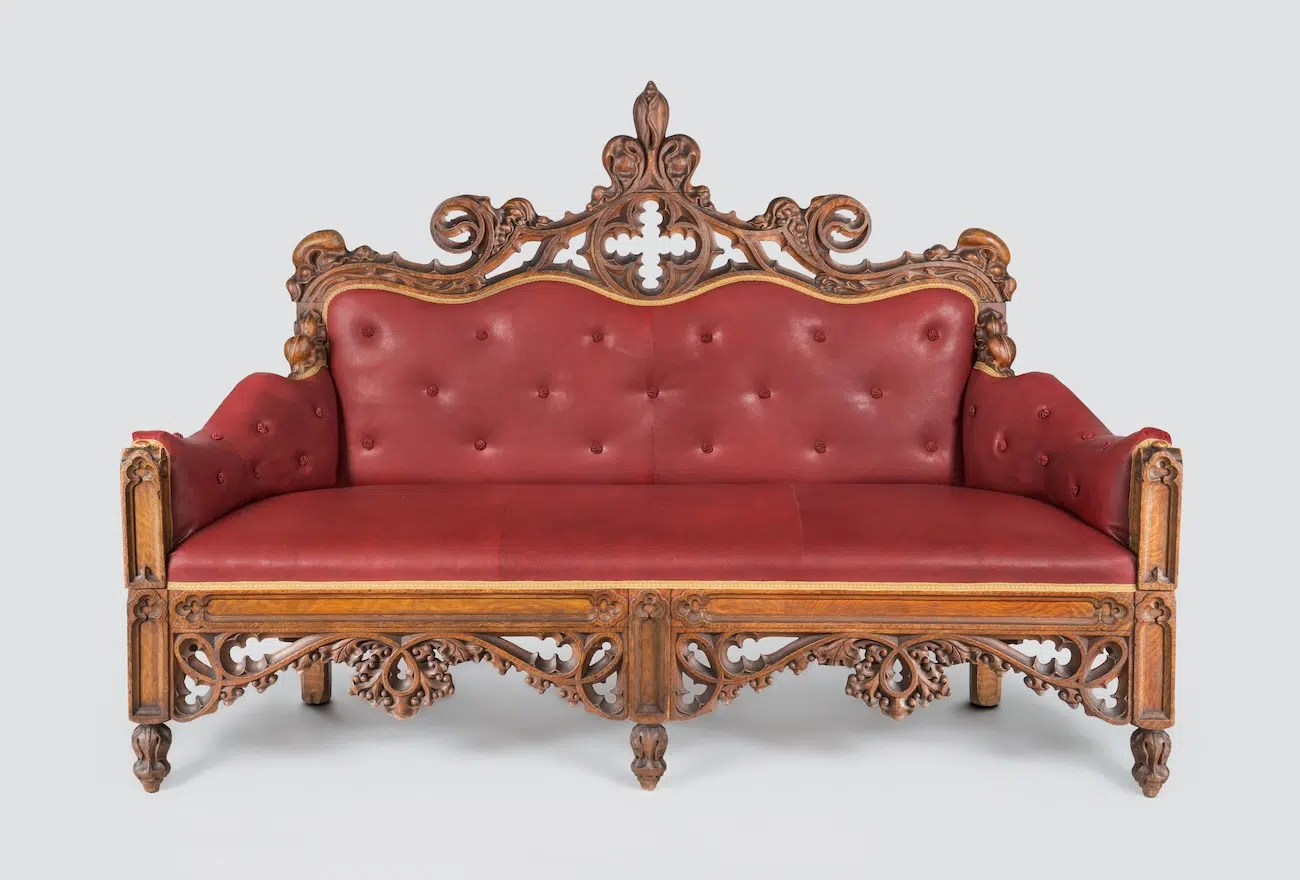
Artist/maker unknown, Sofa, 1835-1840 , Tulip poplar, pine; wool and silk fibers, linen and curled-hair under-upholstery, replacement leather upholstery, 43 in × 6 ft 4 1/2 in × 28 in, Philadelphia Museum of Art, Purchased with McNeil Acquisition Fund for American Art and Material Culture, 2006, 2006-132-1
Each institution has a different way of organizing the works on view. PAFA takes a thematic approach.
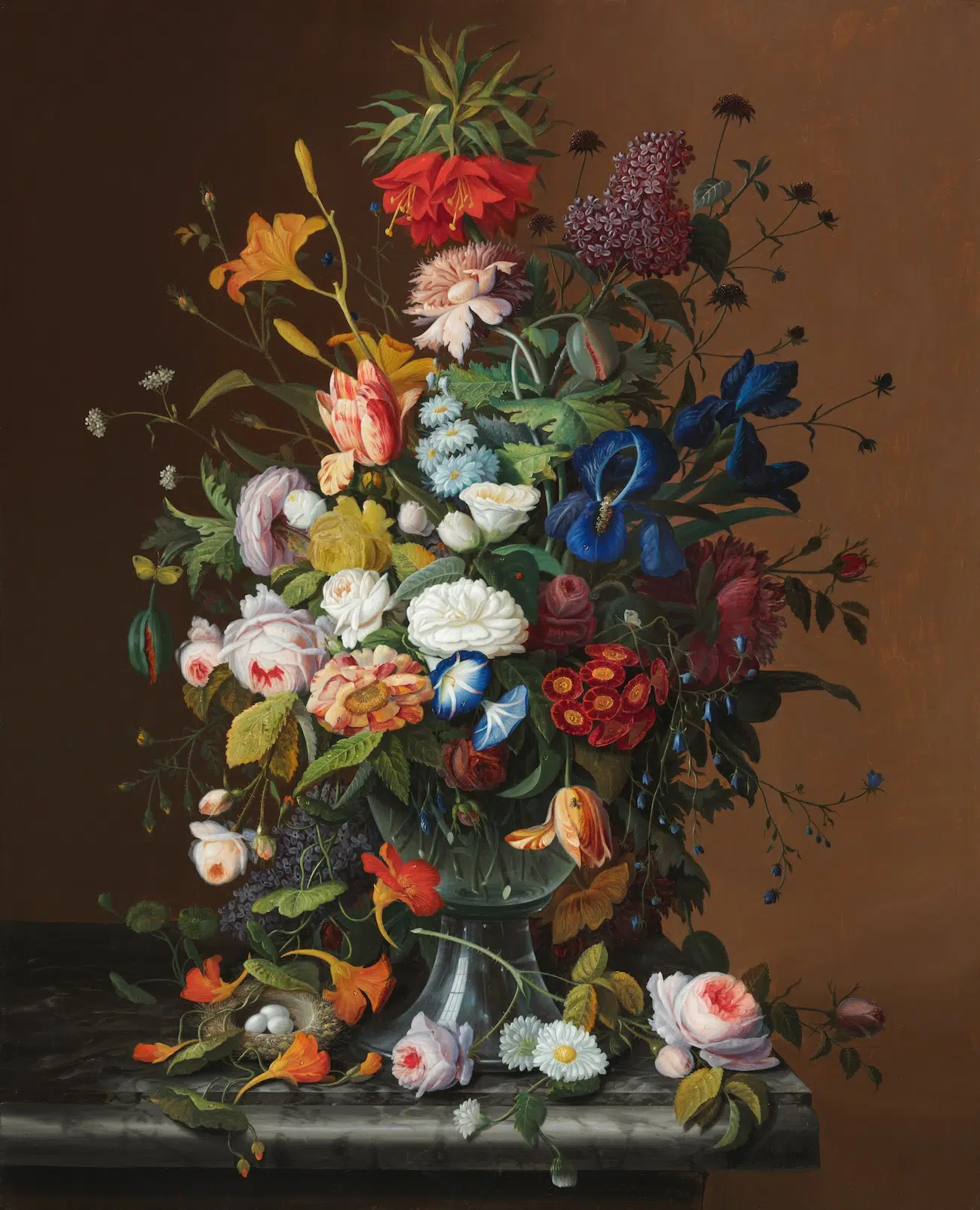
Severin Roesen (1816 – c. 1872), “Flower Still Life with Bird's Nest,” Oil on canvas, 40 × 32 in, Philadelphia Museum of Art, Purchased with support from the Henry P. McIlhenny Fund in memory of Frances P. McIlhenny, Mr. and Mrs. Robert L. McNeil, Jr., the Edith H. Bell Fund, Mrs. J. Maxwell Moran, Marguerite and Gerry Lenfest, the Center for American Art Fund, Donna C. and Morris W. Stroud II, Dr. and Mrs. Robert E. Booth, Jr., Frederick LaValley and John Whitenight, Mr. and Mrs. John A. Nyheim, Charlene Sussel, Penelope P. Wilson, the American Art Committee, and with the gift (by exchange) of Theodore Wiedemann in memory of his wife, Letha M. Wiedemann, 2010, 2010-6-1
PAM, which is currently celebrating its 150th anniversary, is looking at work chronologically.
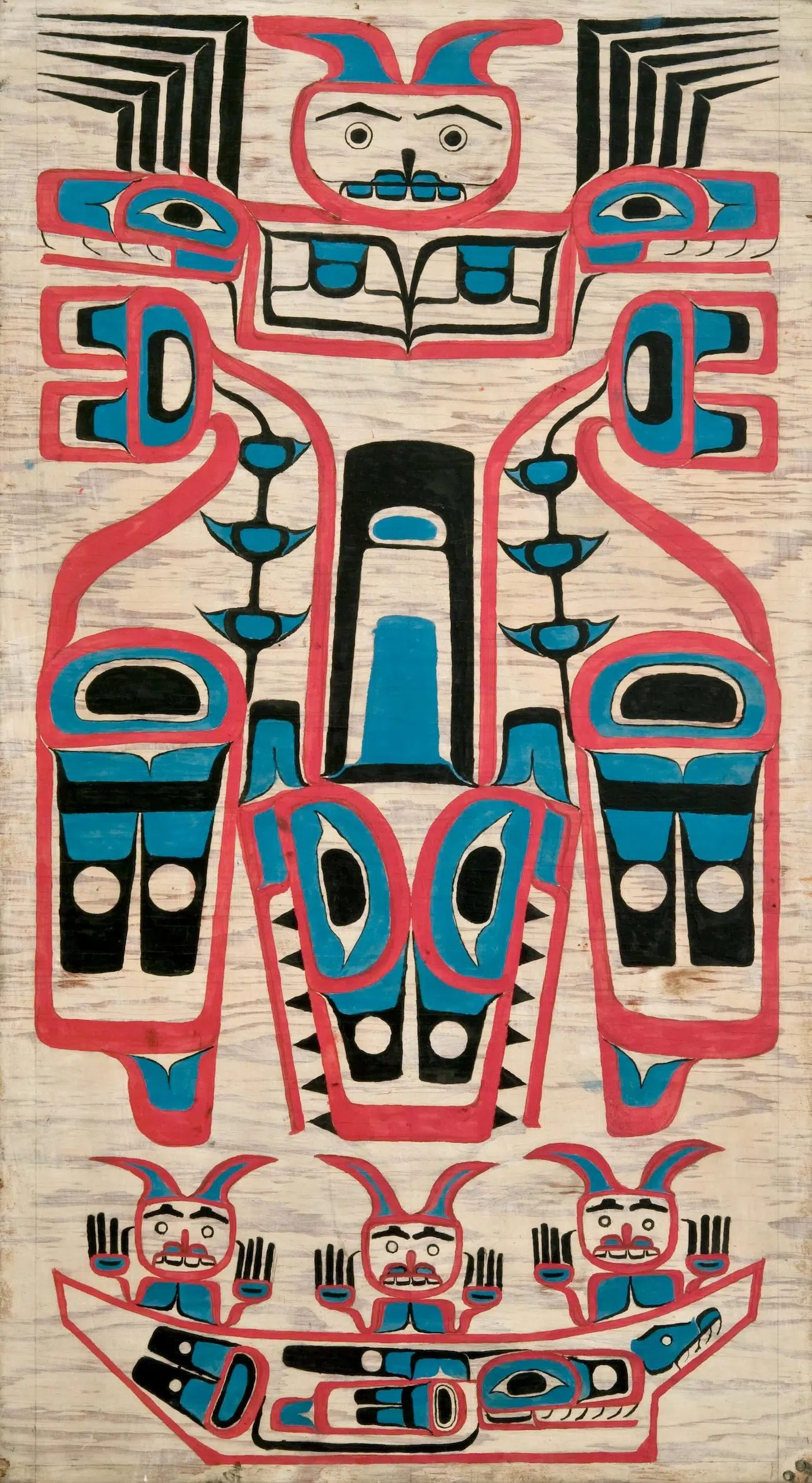
John Wallace (1901-1956), “Untitled,” 1939, Oil on panel, 36 x 19 ¾, in, Philadelphia Museum of Art, A.E. Gallatin Collection, 1952.
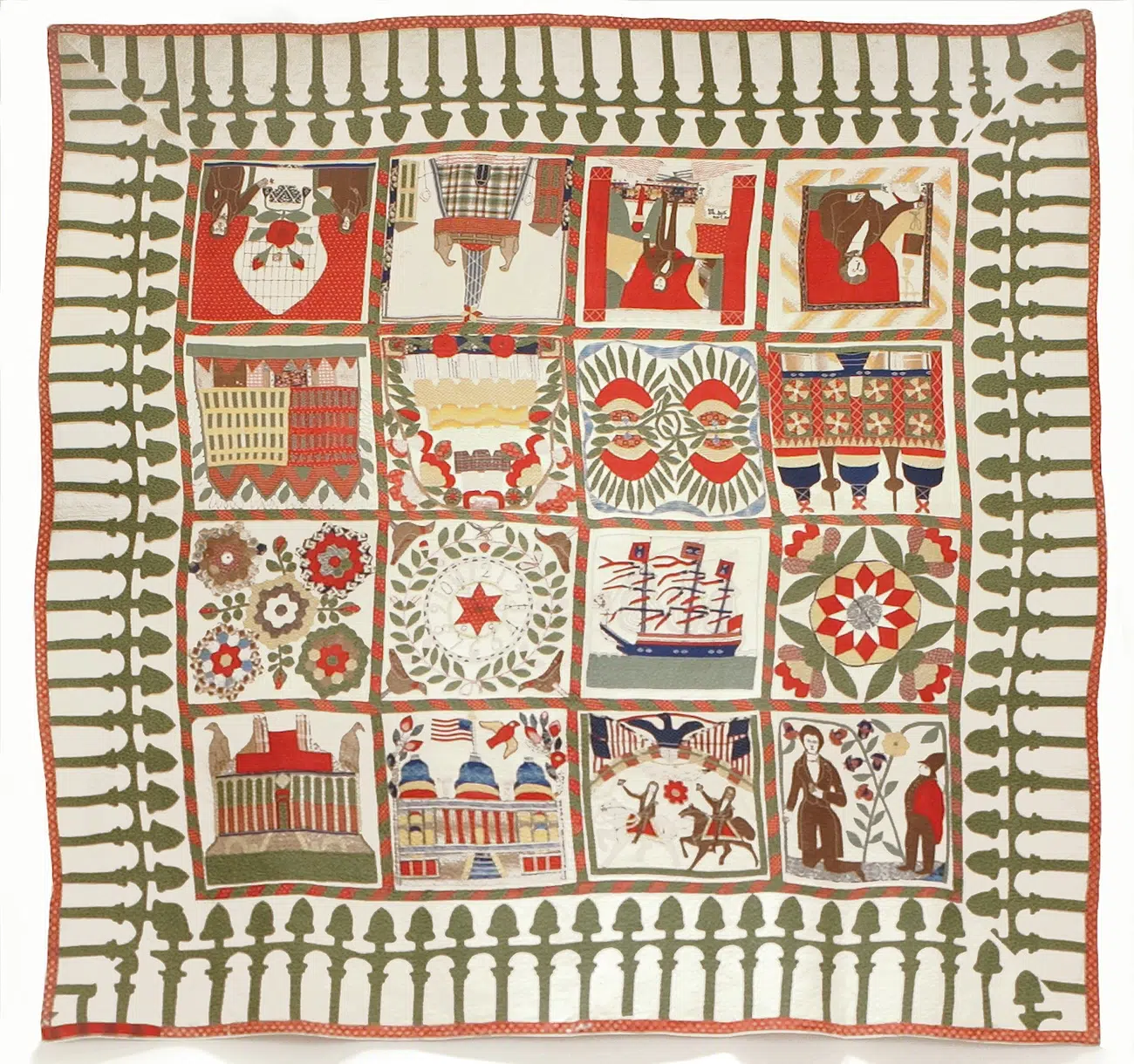
Artists formerly known, “James Buchanan” Quilt, c. 1857, woven and printed cottons with appliqué and embroidery; diagonal quilting, 8 ft × 8 ft 3 in, Philadelphia Museum of Art, On loan from The Dietrich American Foundation.
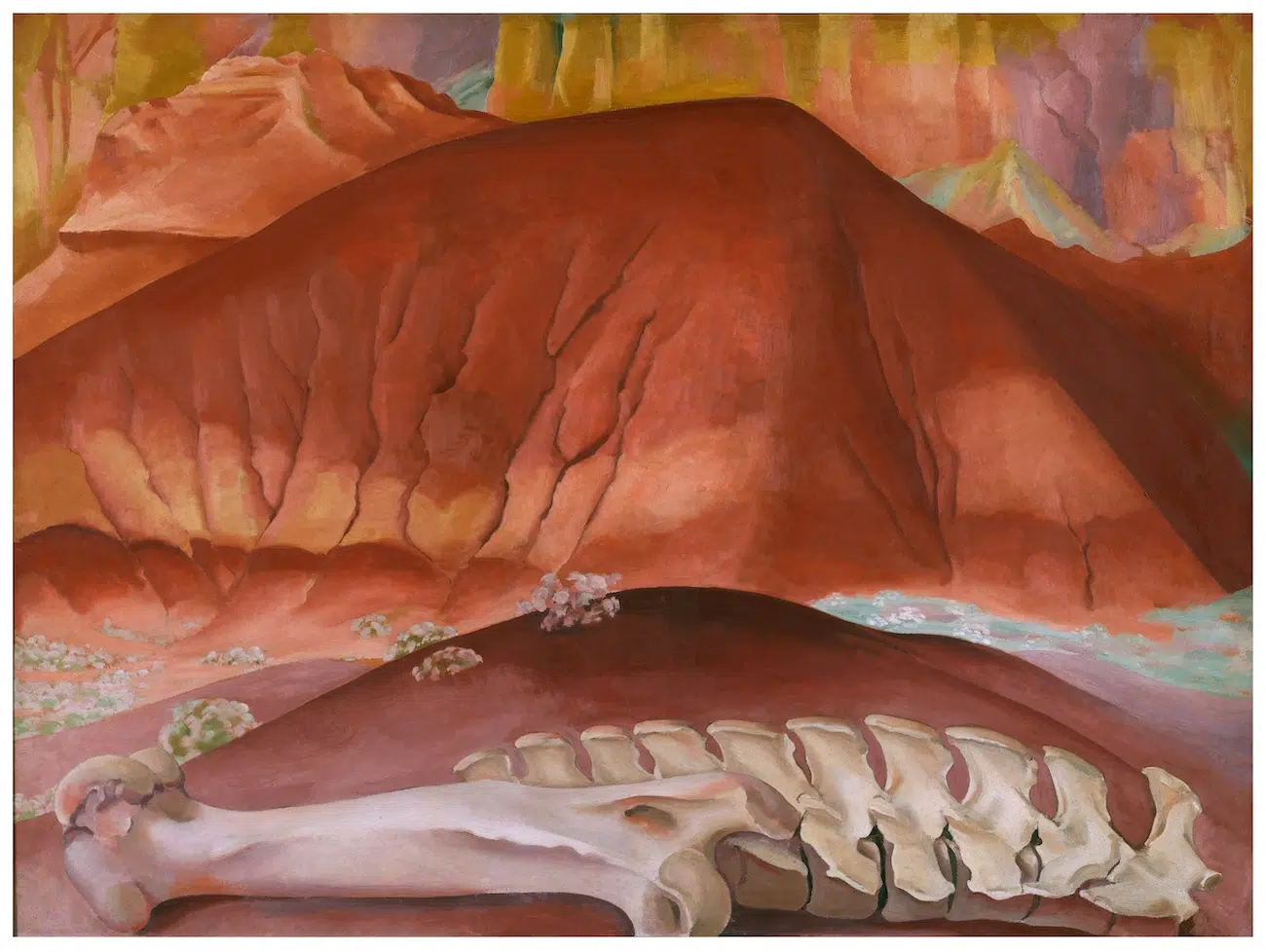
Georgia O'Keeffe (1887 – 1986), “Red Hills and Bones,” 1941, Oil on canvas, 29 3/4 × 40 in, Philadelphia Museum of Art, The Alfred Stieglitz Collection, 1949, 1949-18-109
Regardless of approach, both institutions are charting art through more than 1,000 paintings, photographs, sculptures, and decorative arts.
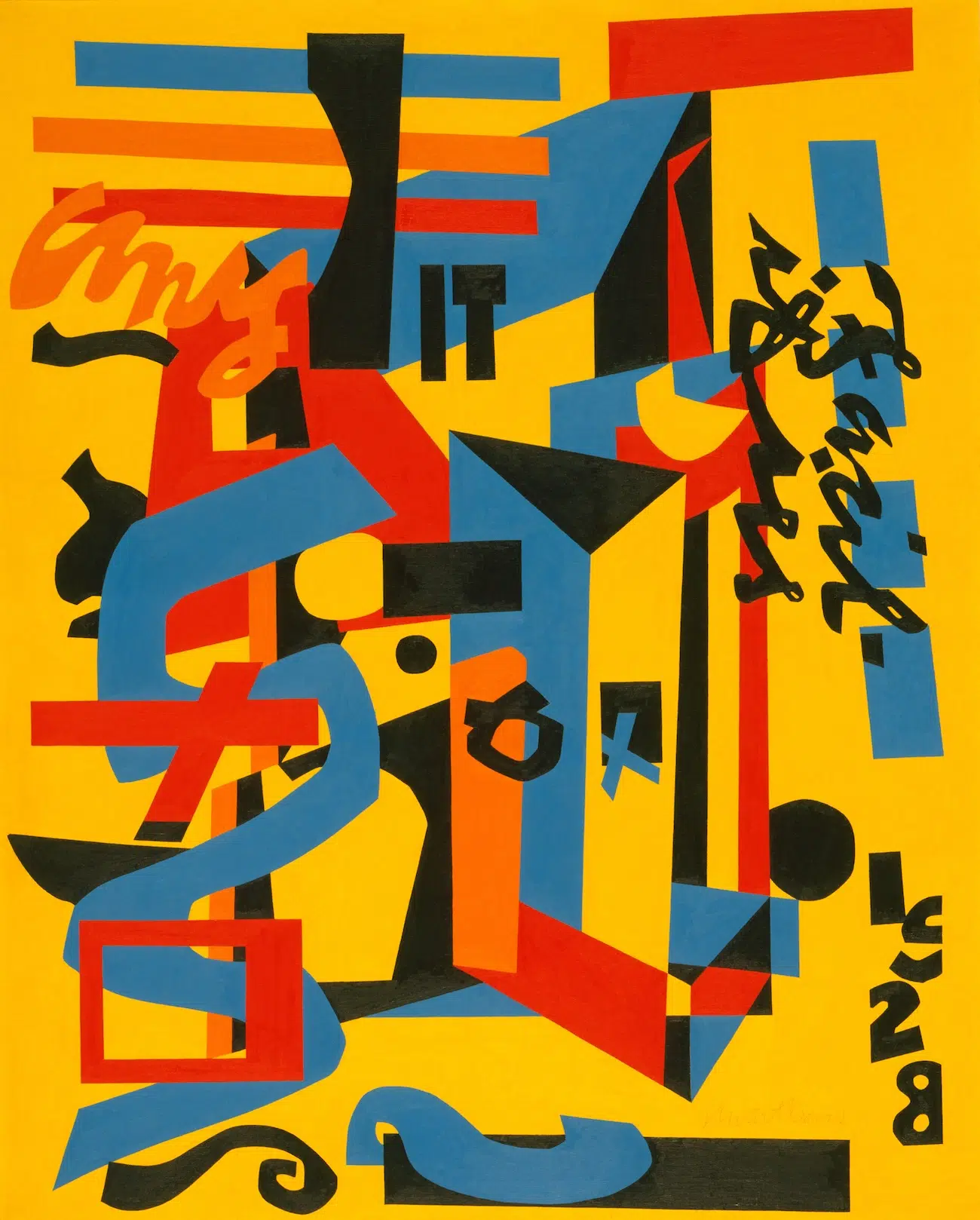
Stuart Davis (1892 – 1964), “Something on the Eight Ball,” 1953-1954, Oil on canvas, 56 × 45 in, Framed: 67 5/8 x 56 1/2 x 3 in, Philadelphia Museum of Art, Purchased with the Adele Haas Turner and Beatrice Pastorius Turner Memorial Fund, 1954, 1954-30-1