Artist Jim Naughten finds animals more interesting than people. It’s not for lack of trying; throughout his creative life, he’s studied a wide range of topics. “My work has been inspired by books and childhood interests,” Naughten tells My Modern Met, “particularly historical subject matter, ranging from WWII military re-enactors through to Namibian tribes in Victorian costume.” It wasn’t until he stumbled upon stereoscopy, an early Victorian form of 3D imaging, and began working with natural history museums collections, that he realized he was meant to center his artwork around animals.
The discovery wasn’t completely out of left field, because as a child, Naughten had loved these types of institutions. “I then created a series called Mountains of Kong, taking in stereoscopy, dioramas, and color work,” he says. “I had started art school as a painter and switched to photography, slightly by chance, and always felt an affinity with painting. Working with Photoshop to alter backgrounds and colors felt very familiar and reminded me of the painting process.”
Things changed for Naughten after a visit to the Field Museum in Chicago. “The museum was full, but a temporary exhibition on extinction remained entirely empty,” he explains. “Most of the visitors were more interested in T-rex who has been extinct for 66 million years, but seemingly no interest in the plight of our current wildlife.” From that, his series Eremozoic was born, in which beautiful—but fictional—images of wildlife speak to how we are increasingly disconnected from the natural world. “The series was made with natural history specimens, dioramas, existing images, and lots of post-production work.”
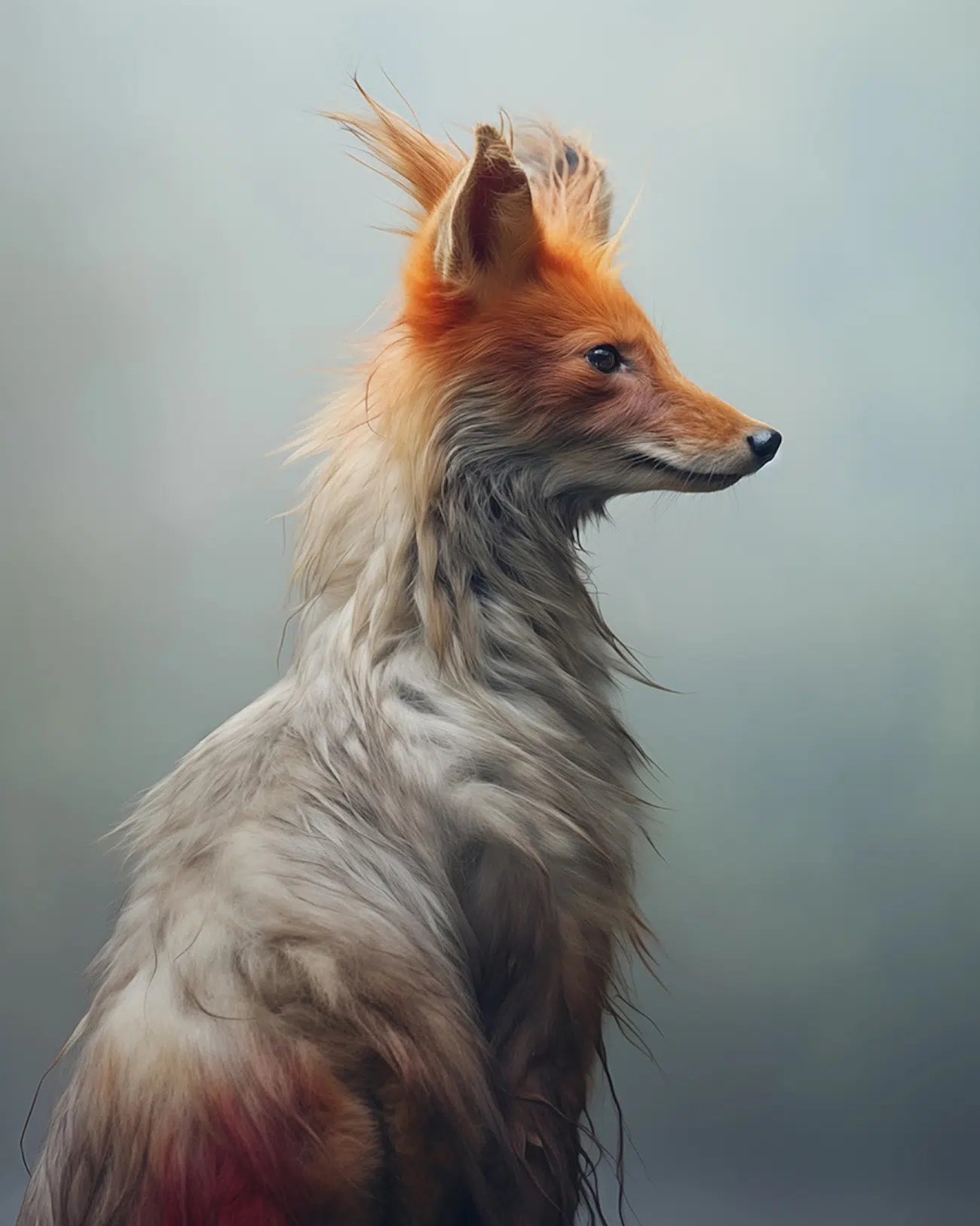
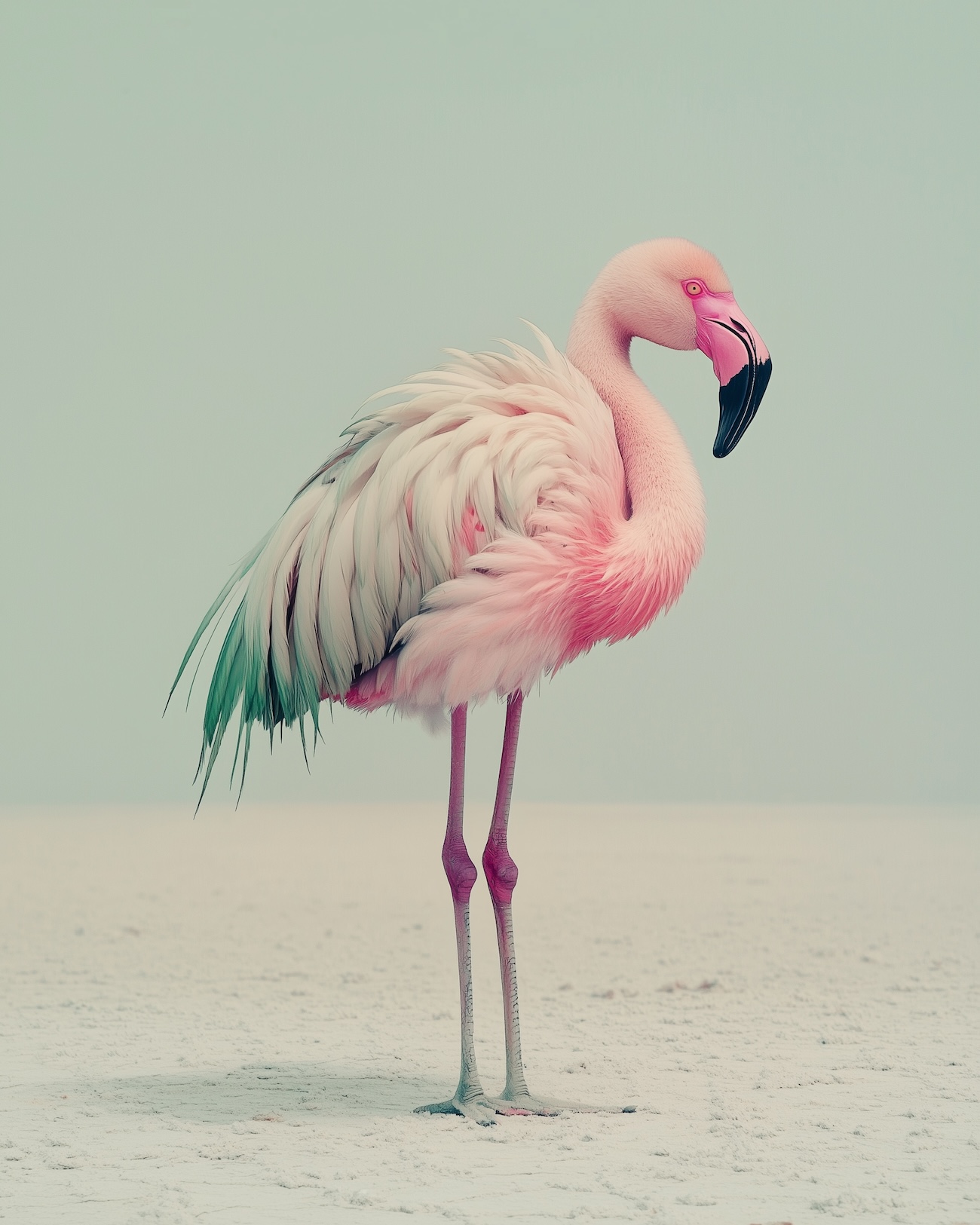
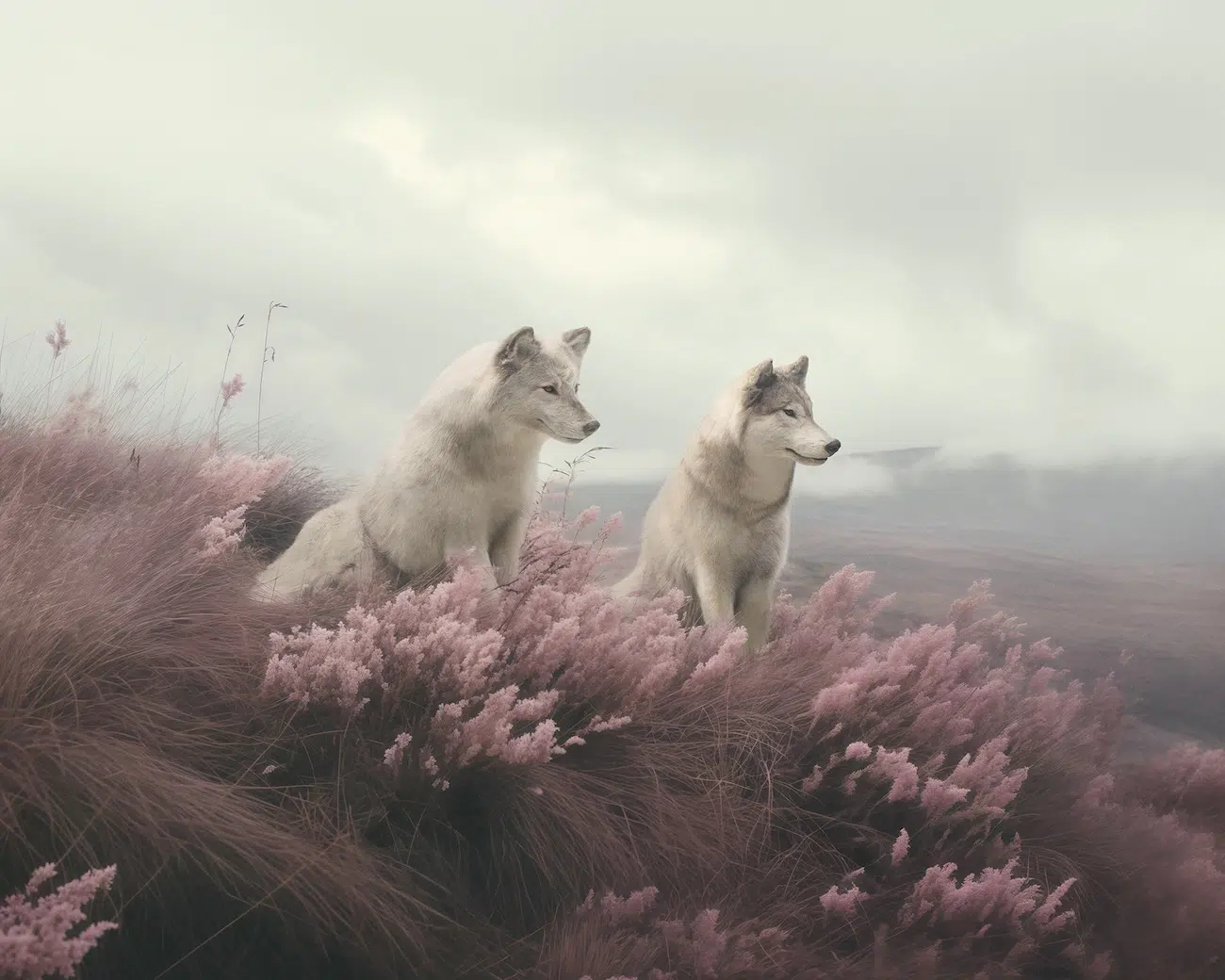
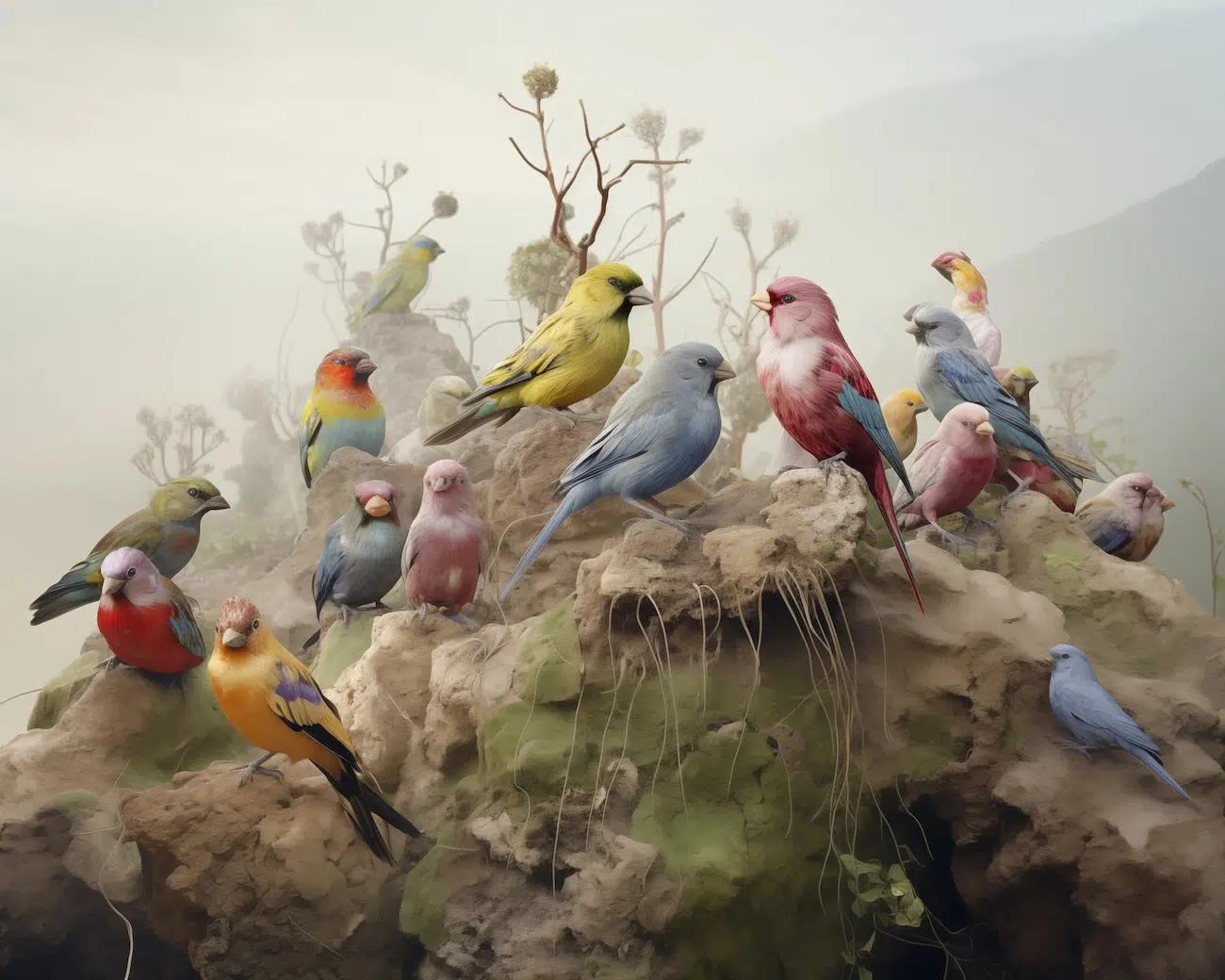
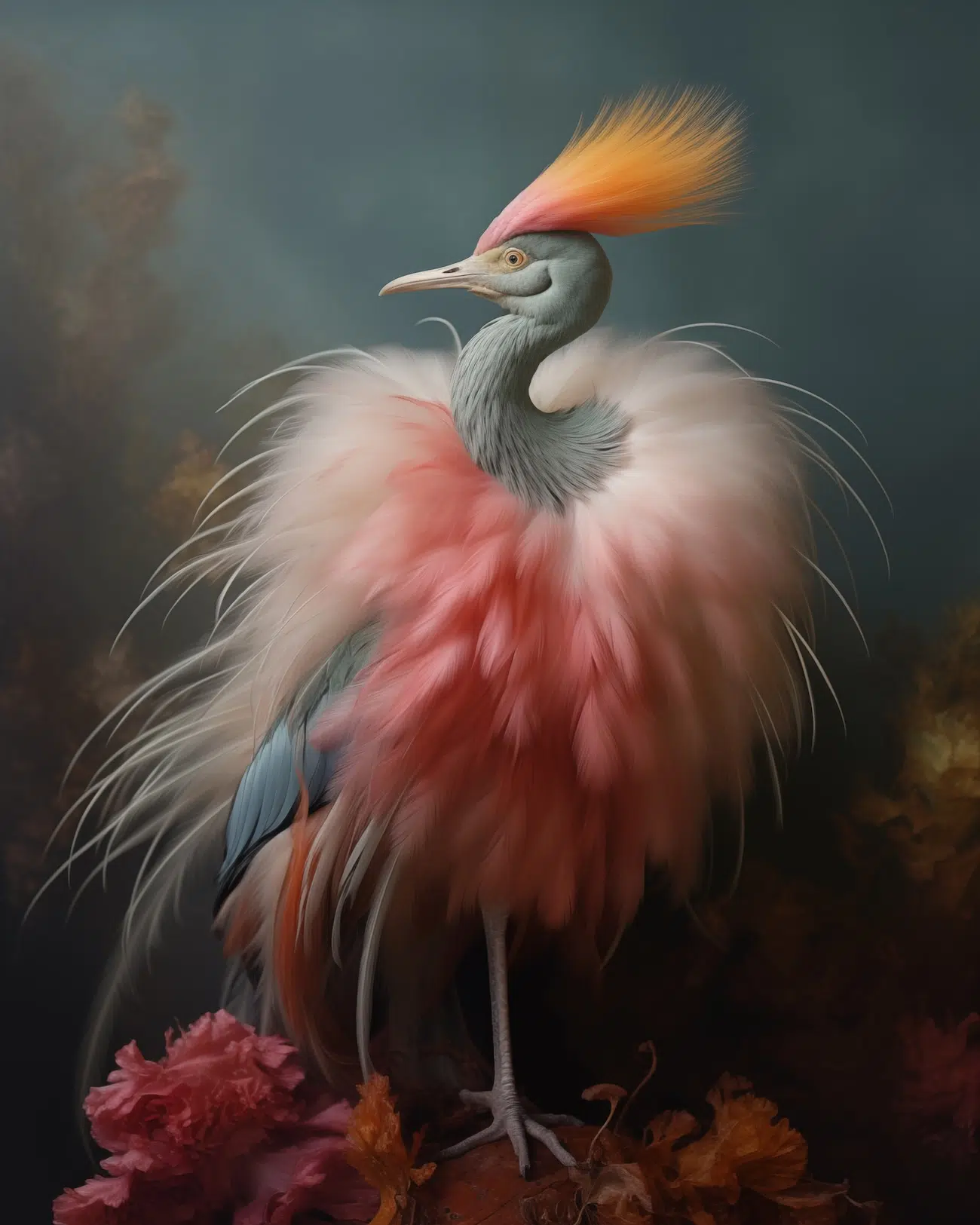
A year after Eremozoic, Naughten began work on his current series, Biophilia. “AI was beginning to take off,” he says, “and having seen some extraordinary images created by a friend, I decided to experiment.” His exisiting images are a starting point for each piece. “It’s an extremely odd process,” he shares, “which I have mixed feelings about but it worked very well for Biophilia. I loved working from home, recycling images, and it felt like making an amazing soup out of some very dull ingredients… being able to make images that are novel, and, counterintuitively, with a far lower carbon footprint than my previous projects had genuine appeal.”
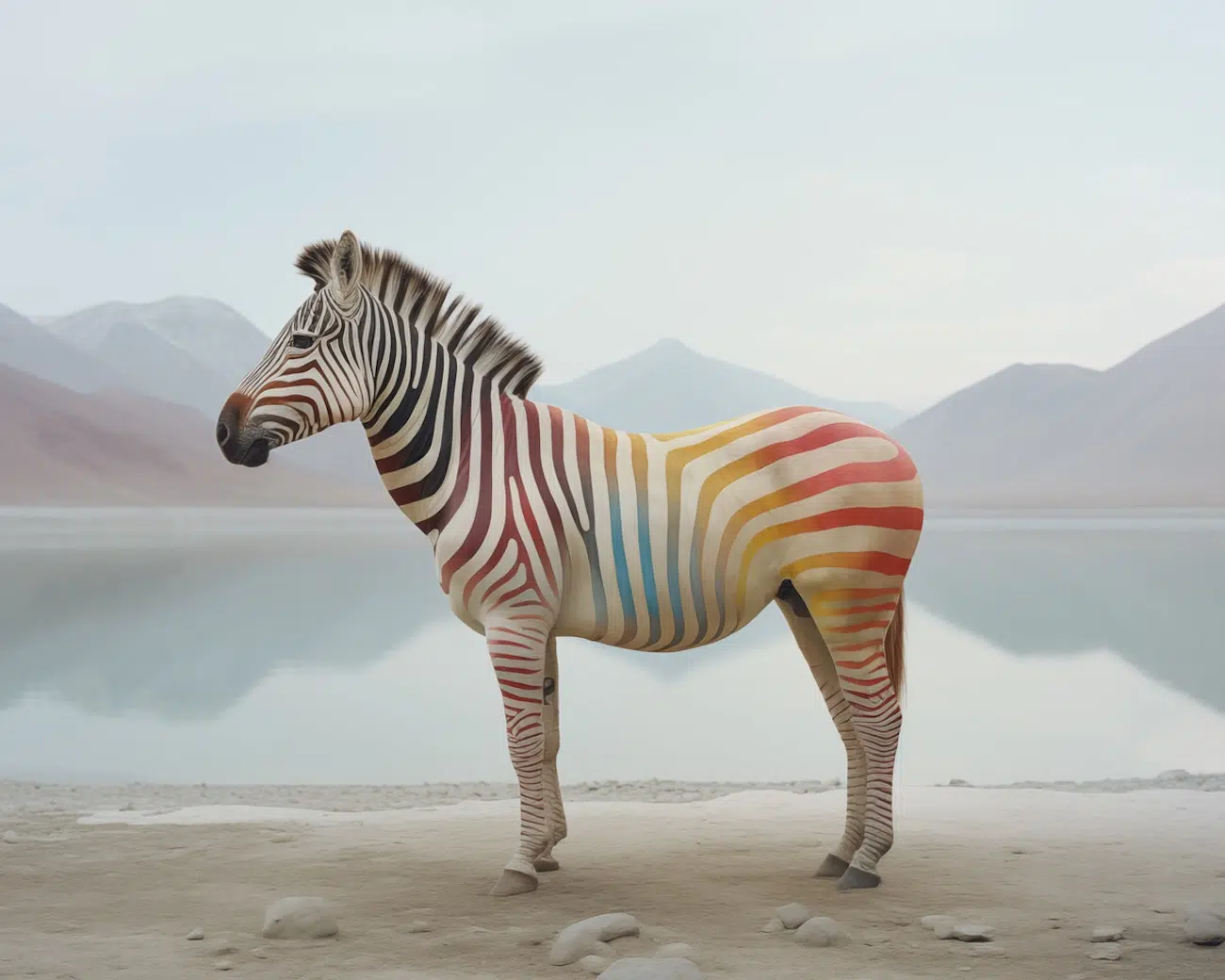
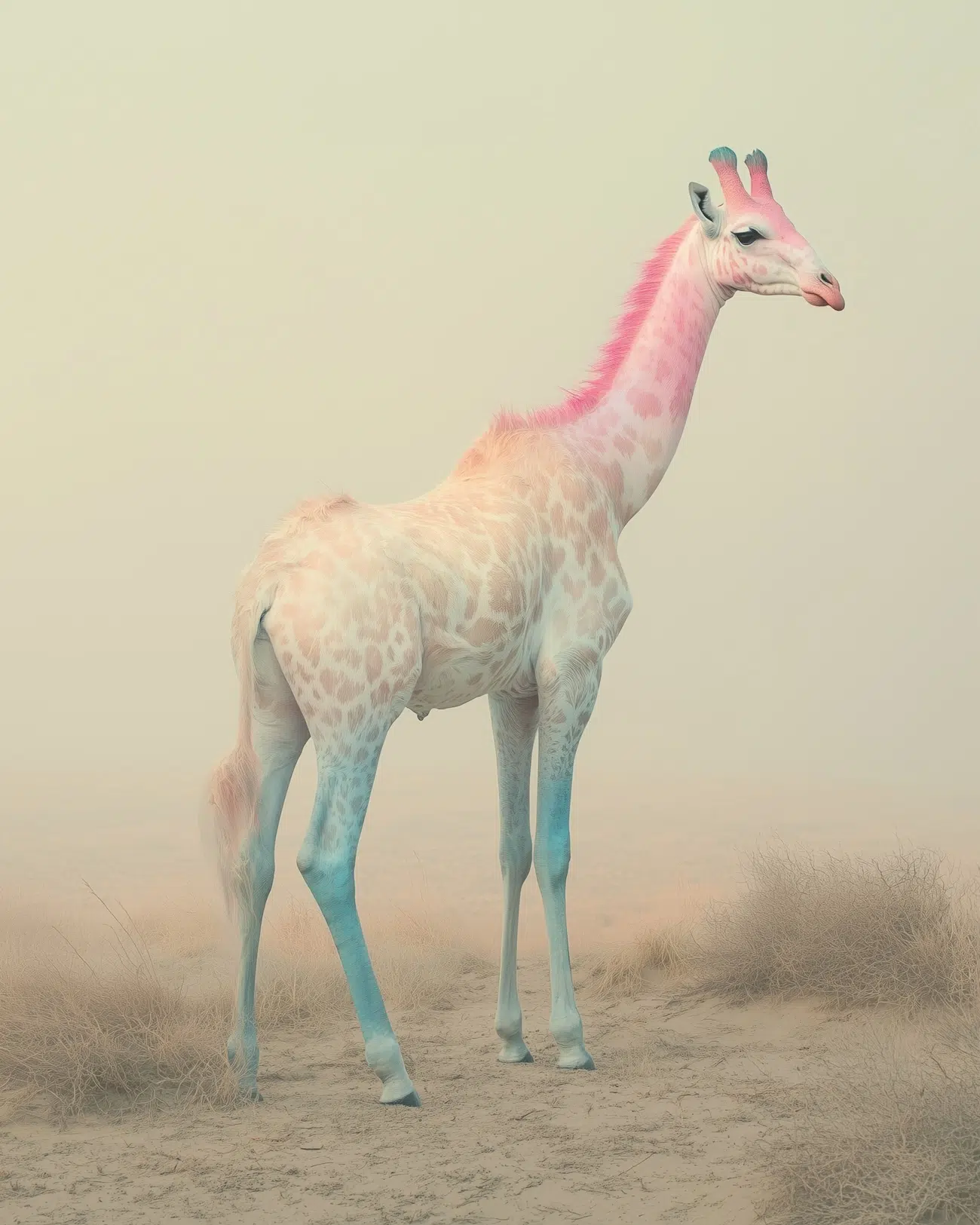
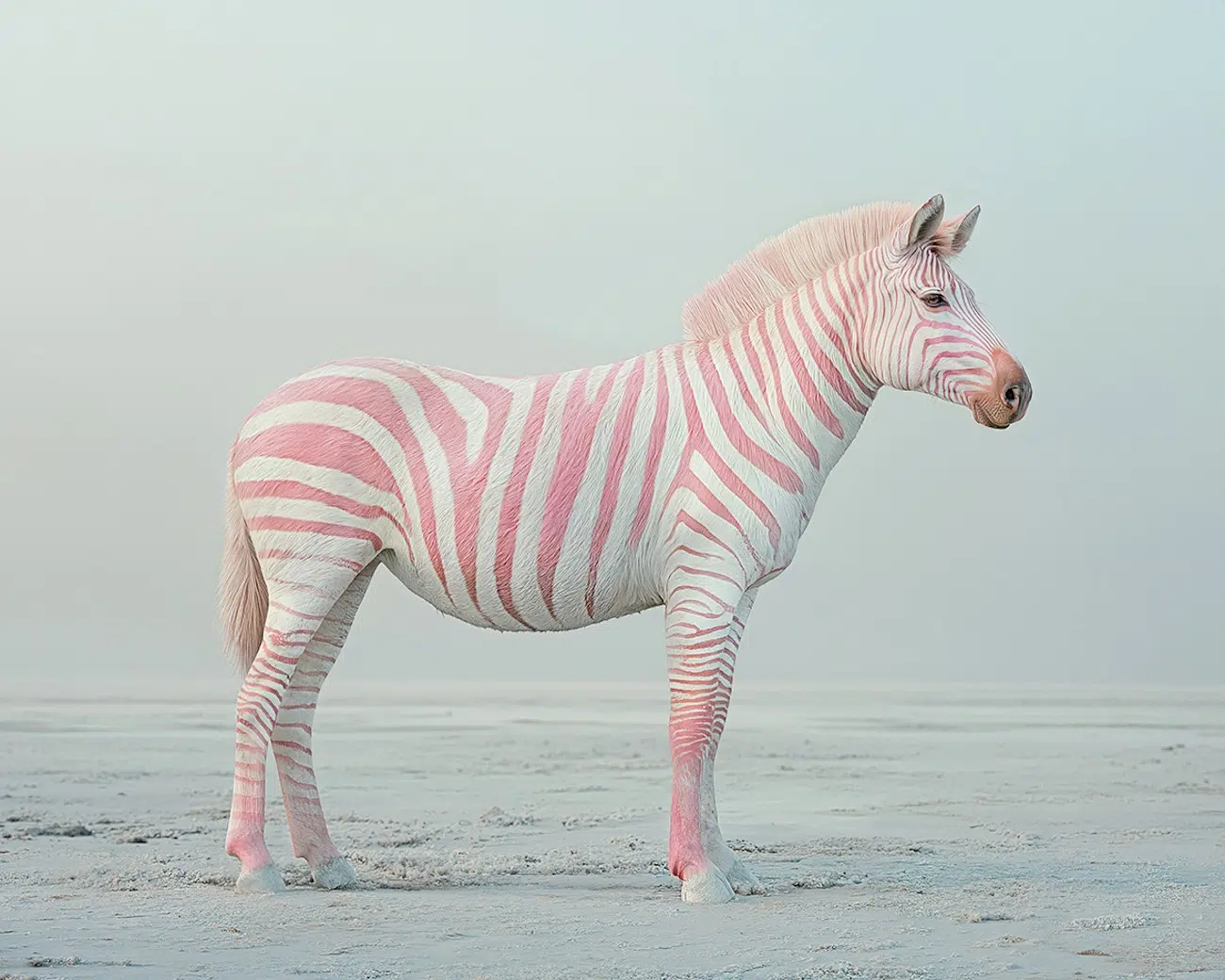
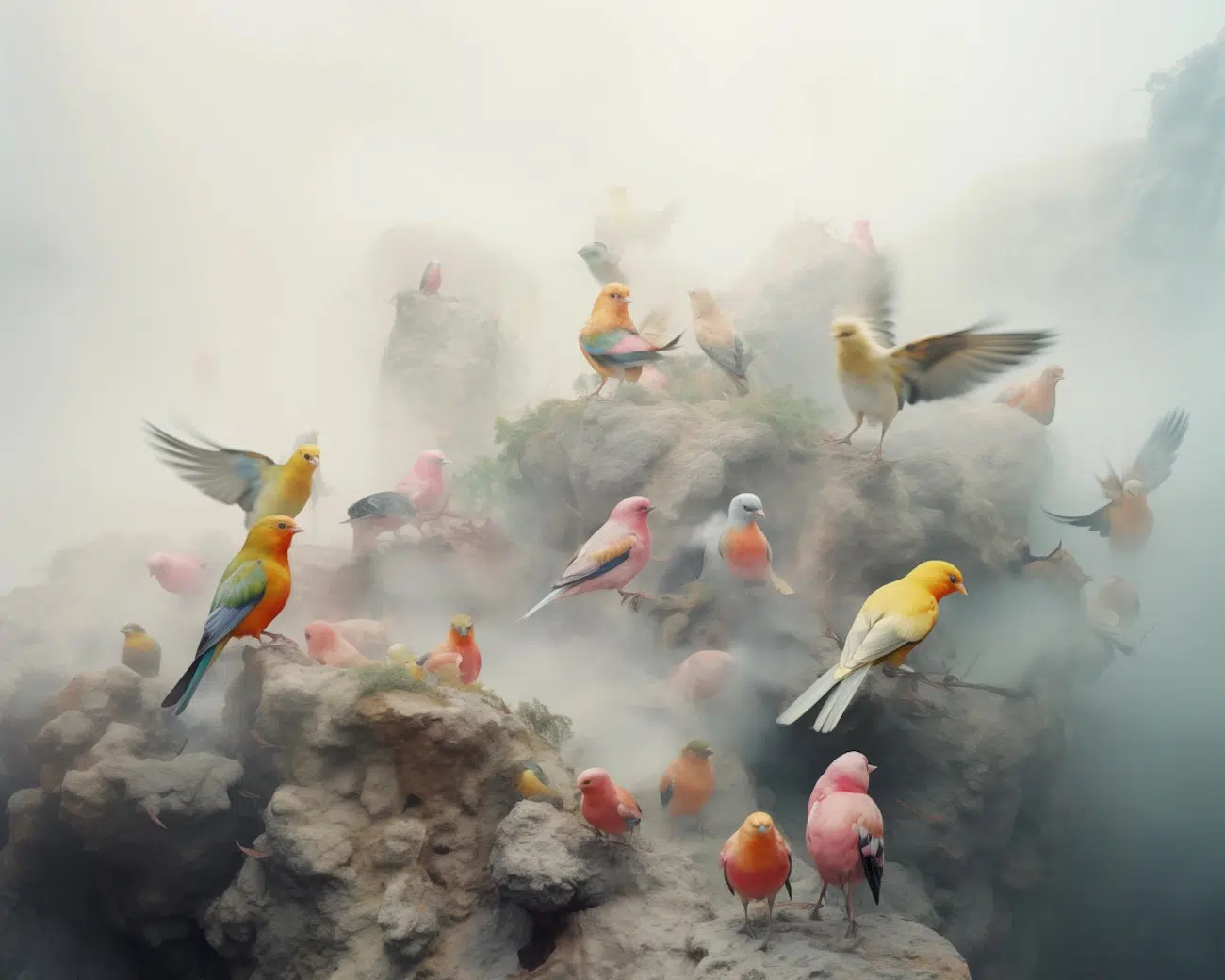
Biophilia features animals within their landscapes. They are familiar but obviously fictional. A gibbon, for instance, sits on a sand dune with a brilliant gradient coat. In another piece, the black stripes of a zebra give way to rainbow hues. Each animal, or group of animals, is isolated within the environment. It recalls Naughten’s earlier works while reminding us that two things can be true; the natural world inspires imagination and our greatest memories, yet is couched in anxiety about our role in it all and the future of the planet.
Naughten’s work is currently on view at Michael Reid until May 2, 2026.
Artist Jim Naughten uses AI to reimagine his older work and produce his latest series, Biophilia.
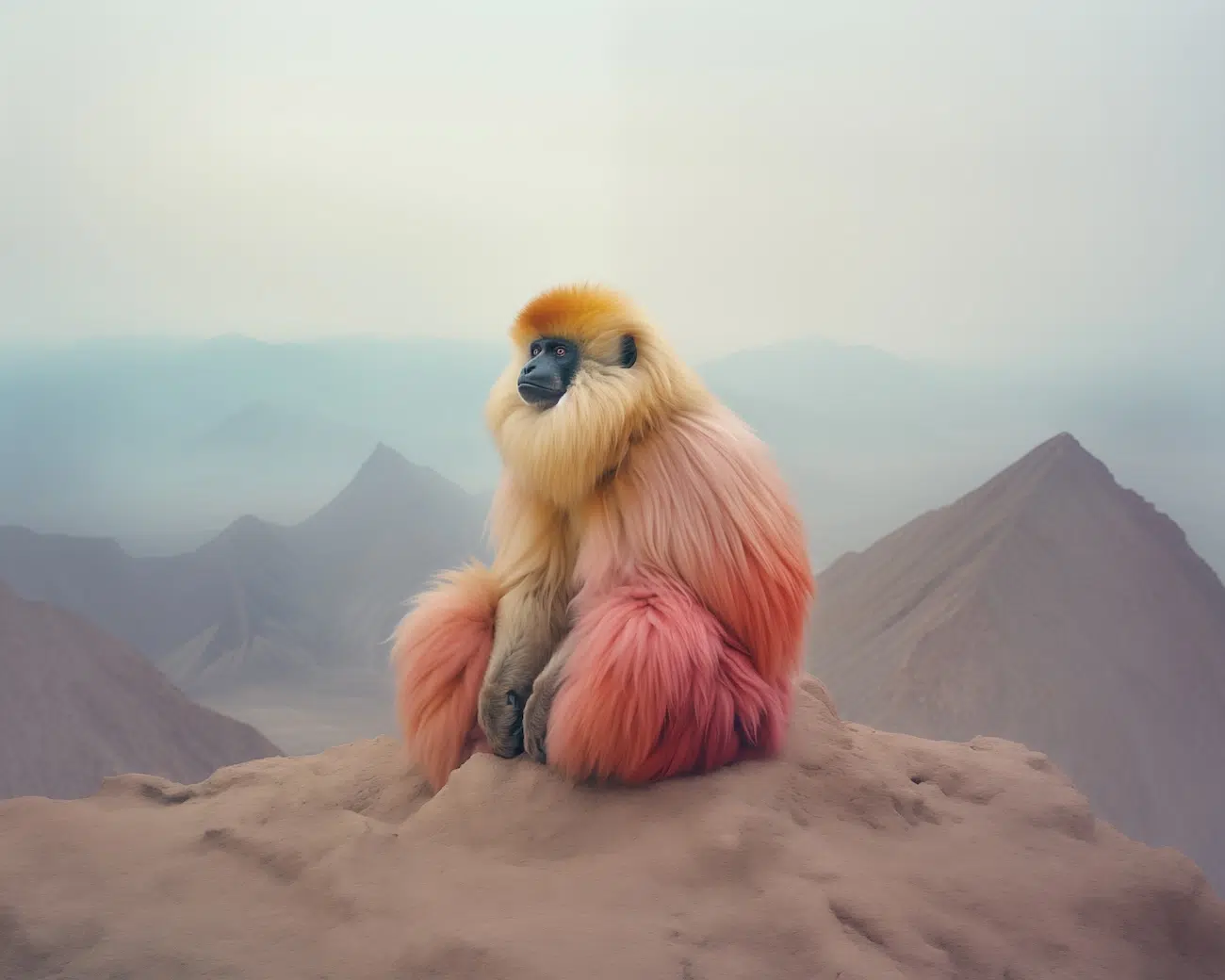
The animals are familiar, but obviously fictional, and speak to our disconnectedness from the natural world.
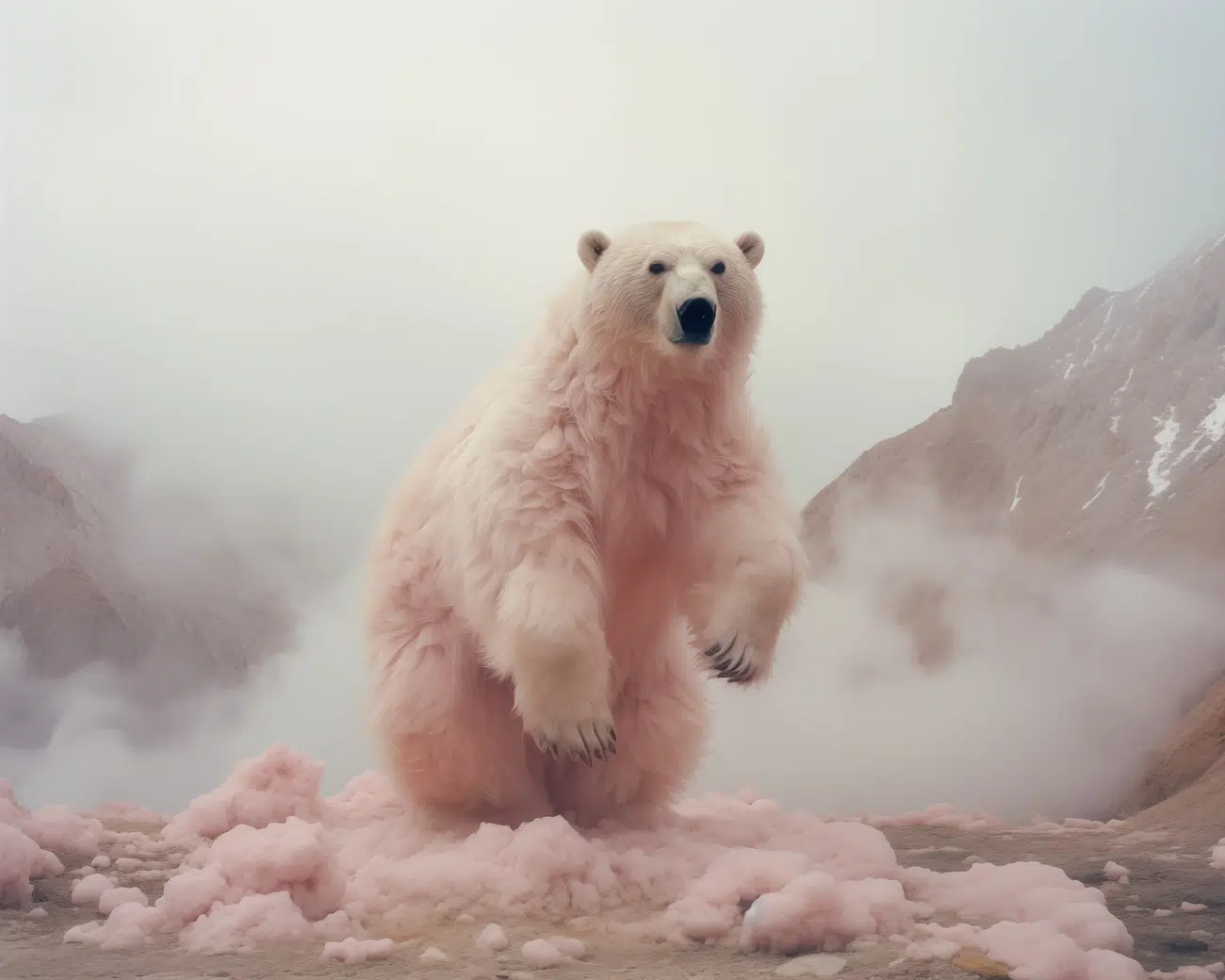
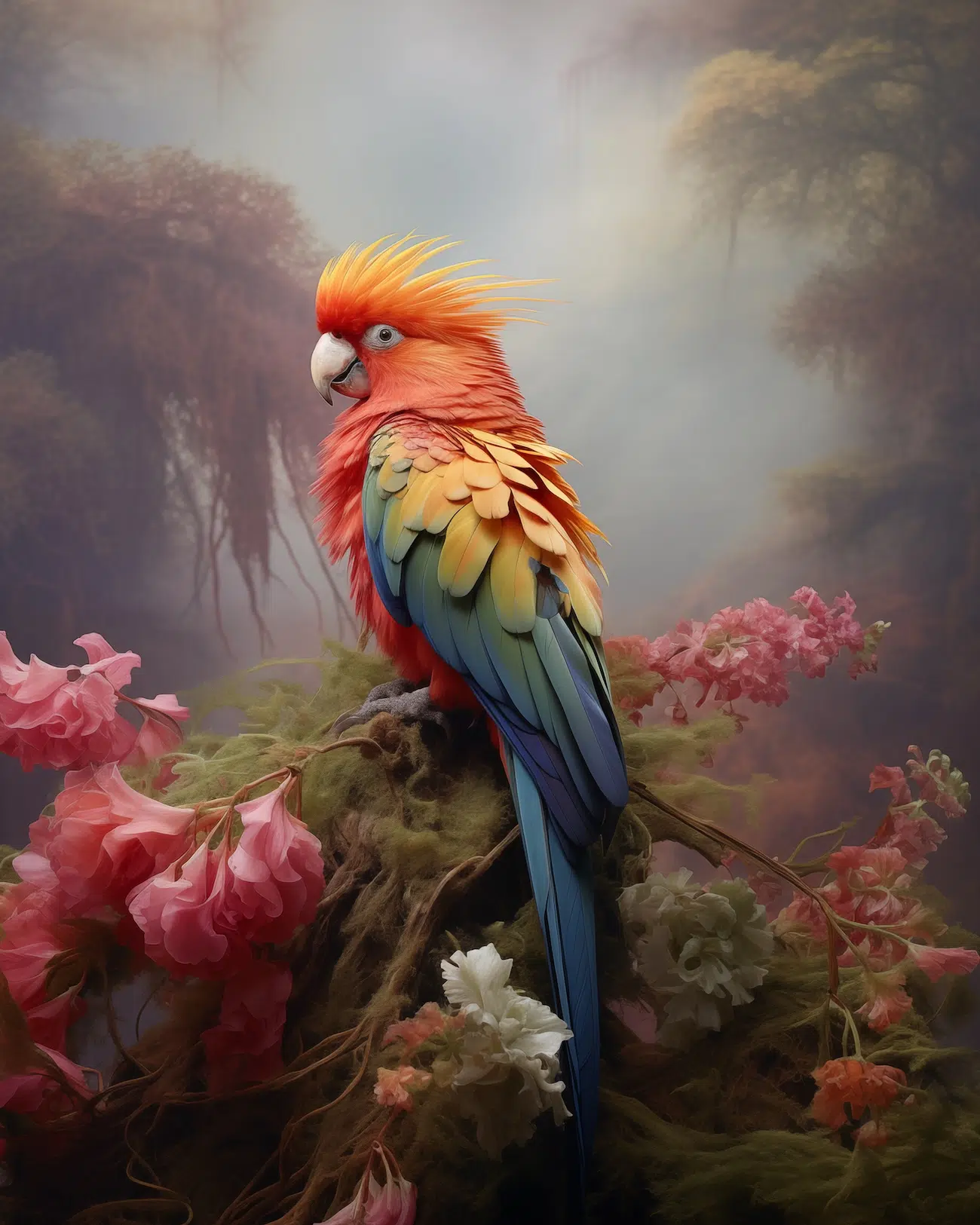
“It’s an extremely odd process [using AI],” he shares, “which I have mixed feelings about but it worked very well for Biophilia,” he tells My Modern Met.
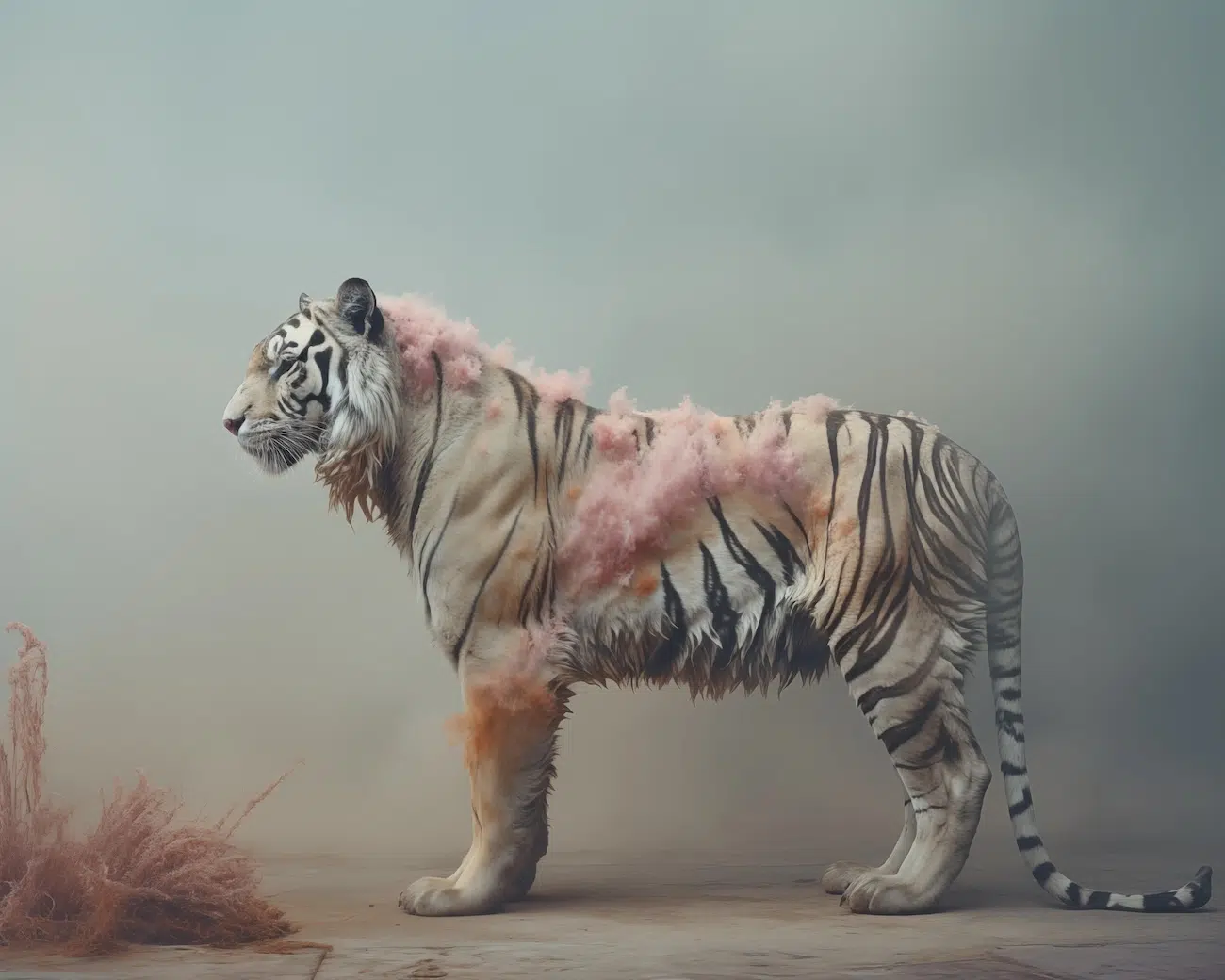
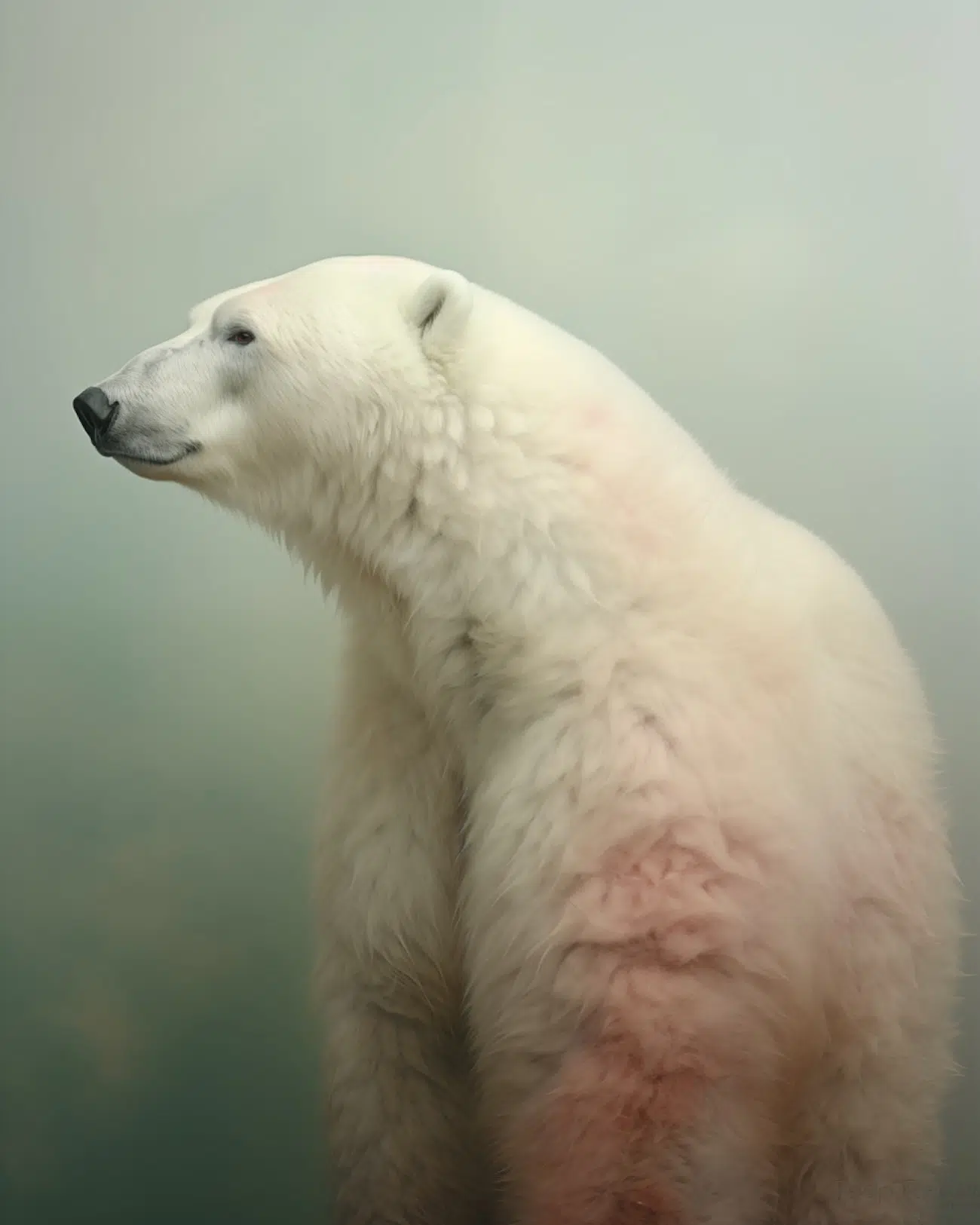
“I loved working from home, recycling images, and it felt like making an amazing soup out of some very dull ingredients…” he shares.