Photo: Laurian Ghinitoiu
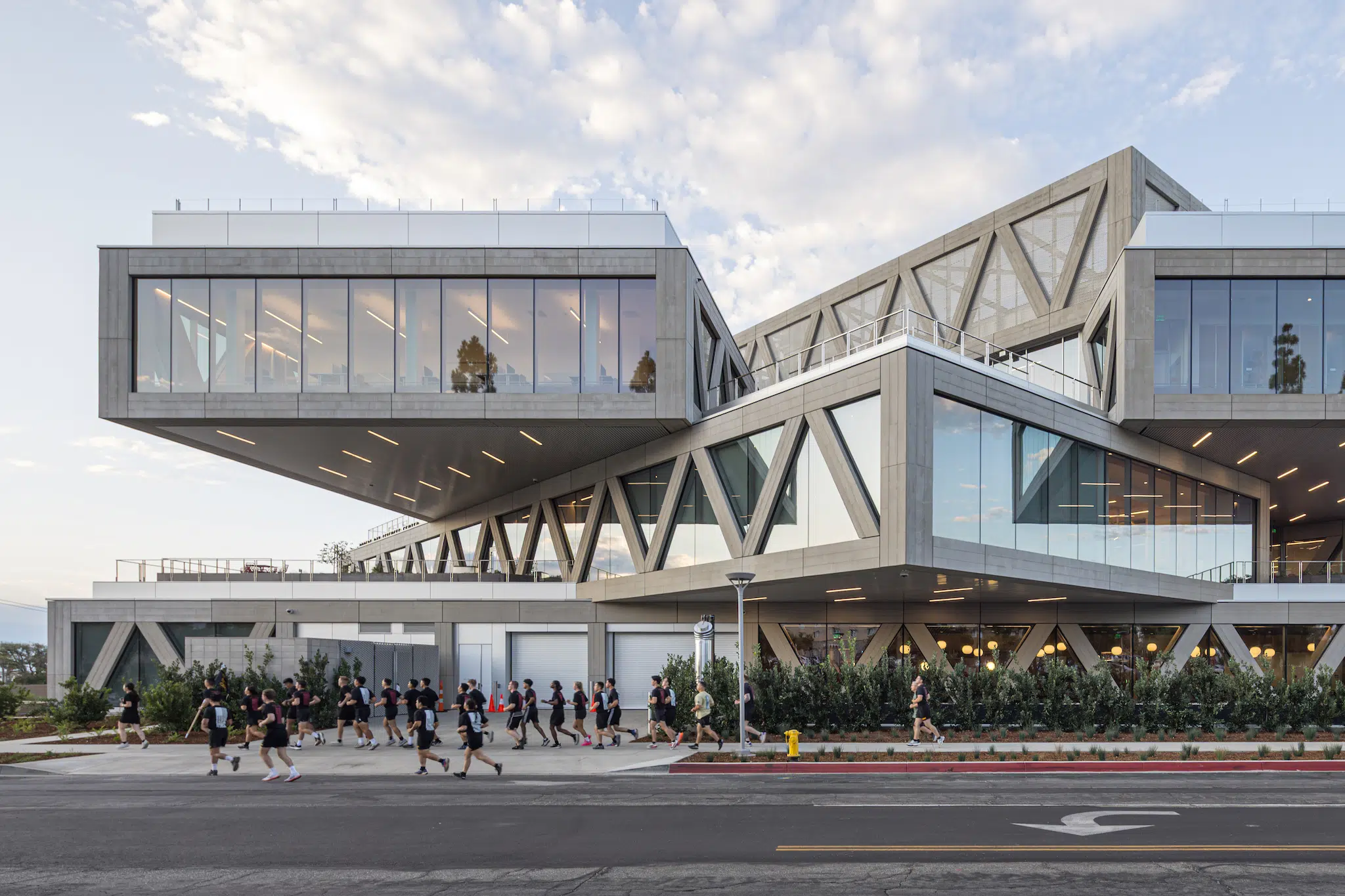
Earlier this fall, students and faculty at Claremont McKenna in Southern California encountered a brand-new sight on their campus. Now nestled along the college’s eastern edge is the Robert Day Sciences Center (RDSC), originally commissioned in 2020 and recently completed by the Bjarke Ingels Group (BIG). Inside, RDSC houses computational gene, brain, and climate research hubs, significantly advancing the college’s science program. But this sense of innovation is equally present on the building’s exterior, challenging architectural conventions through its dramatic silhouette.
At 135,000 square feet, RDSC takes the form of several stacked cubes, organized at varying angles. To soften the center’s angularity, board-formed panels of glass fiber-reinforced concrete decorate the facade, mimicking a warm, wooden texture while also providing the durability and fire resistance necessary for a modern laboratory. That environmental responsibility extends to RDSC’s roof, where 11,000 square feet of solar panels provide more than 340 megawatt hours of energy production per year. Completing the building are several outdoor terraces, which bloom across the overhangs produced by the rotated blocks. Here, visitors can enjoy 360° views of the nearby Mount Baldy, alongside landscaping with native flora.
These rectangular structures, however, aren’t just an architectural statement—they also serve a practical purpose. The gaps between these blocks create the full-height atrium at the heart of the center, where visitors can catch glimpses of classrooms and research spaces from every floor of the building. Each level bridges the level below, all supported by triangular steel trusses clad in Douglas fir. By repeating the textures, rhythms, and geometry of the center’s exterior, BIG generates a seamless transition between elements both within and beyond RDSC. That connectivity also facilitates moments of intellectual exchange, in which students and faculty alike can easily see one another from the building’s various levels.
“Even if you’re not doing anything with a particular person, you’re still going to catch a glimpse of them two floors up,” Bjarke Ingels of BIG told Claremont McKenna in a recent interview. “You can even give a shout out and say, ‘I wanted to give you this thing. Or can we talk about this later?’ In a way, it increases the invitation to exchange, which is what really drives innovation in these highly interdisciplinary spaces.”
Aside from its welcoming timber detailing, RDSC’s interior also features an impressive sculpture by Damien Ortega. Titled Magnetic Field, the work reimagines Earth’s magnetosphere, suspended 30 feet in the air and composed of 18 metal rings and nearly 1,500 glass spheres. Coupled with the center’s architectural fluidity, Magnetic Field is a seeming reminder of the intersection between the arts and sciences, both of which coexist throughout RDSC.
“There are studies that show how the richness of your environment impacts the neurological activity of your brain,” Ingels continued. “In that sense, we wanted to create an environment that invited different kinds of thinking.”
To learn more about the Robert Day Sciences Center at Claremont McKenna, visit Bjarke Ingels Group’s website.
Designed by Bjarke Ingels, the Robert Day Sciences Center at Claremont McKenna College resembles a breathtaking stack of rotated cubes.
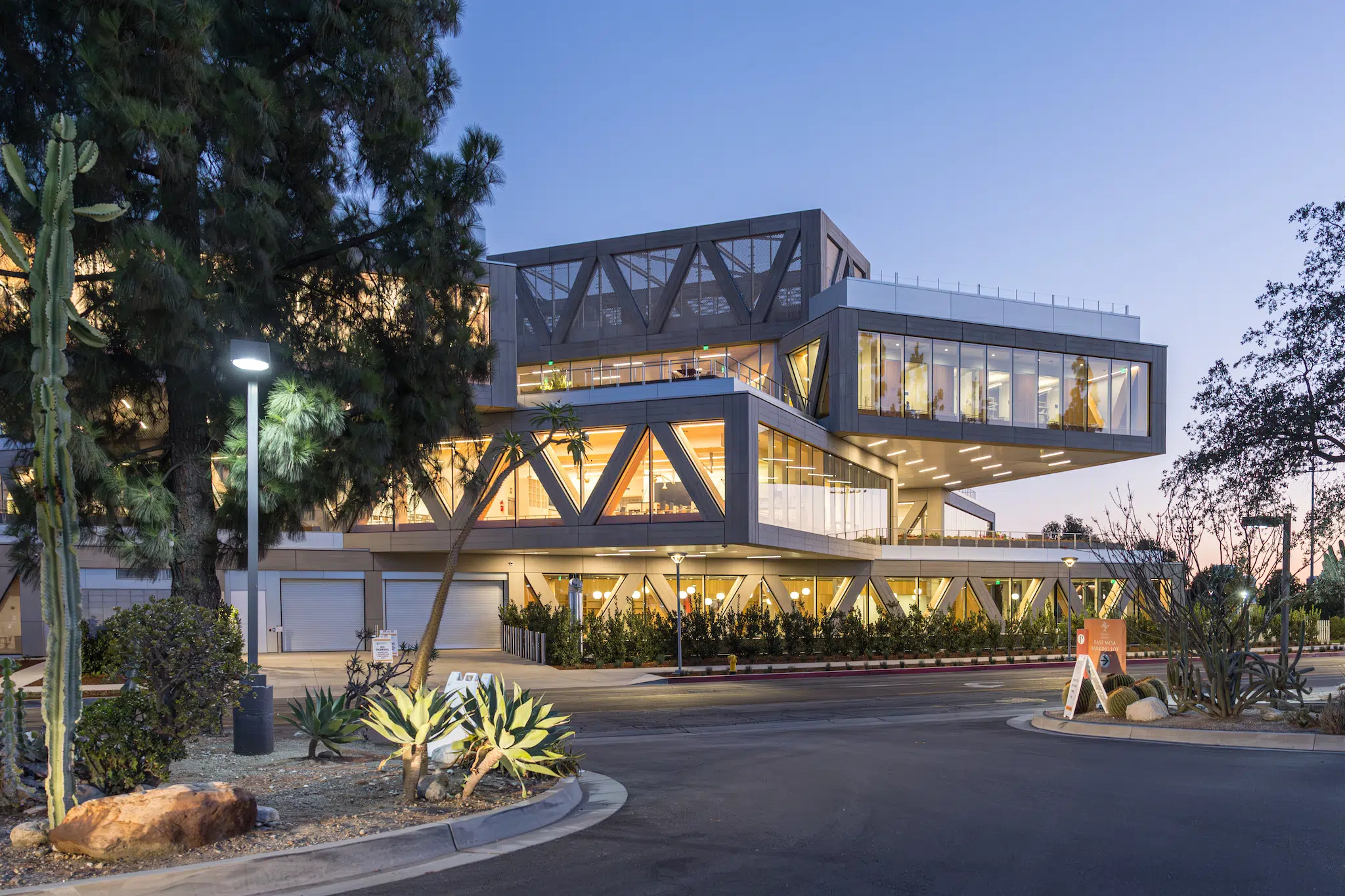
Photo: Laurian Ghinitoiu

Photo: Laurian Ghinitoiu
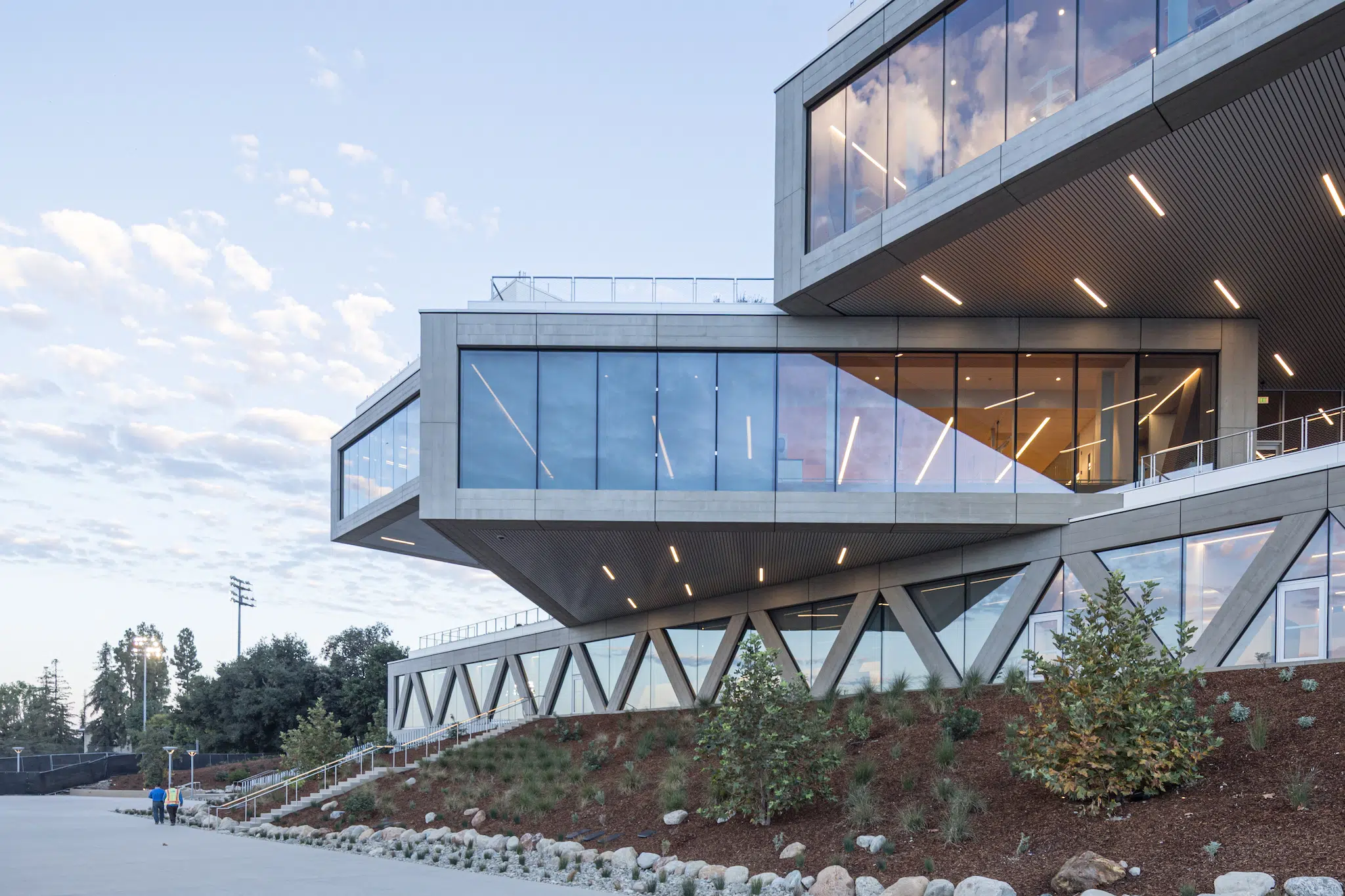
Photo: Laurian Ghinitoiu
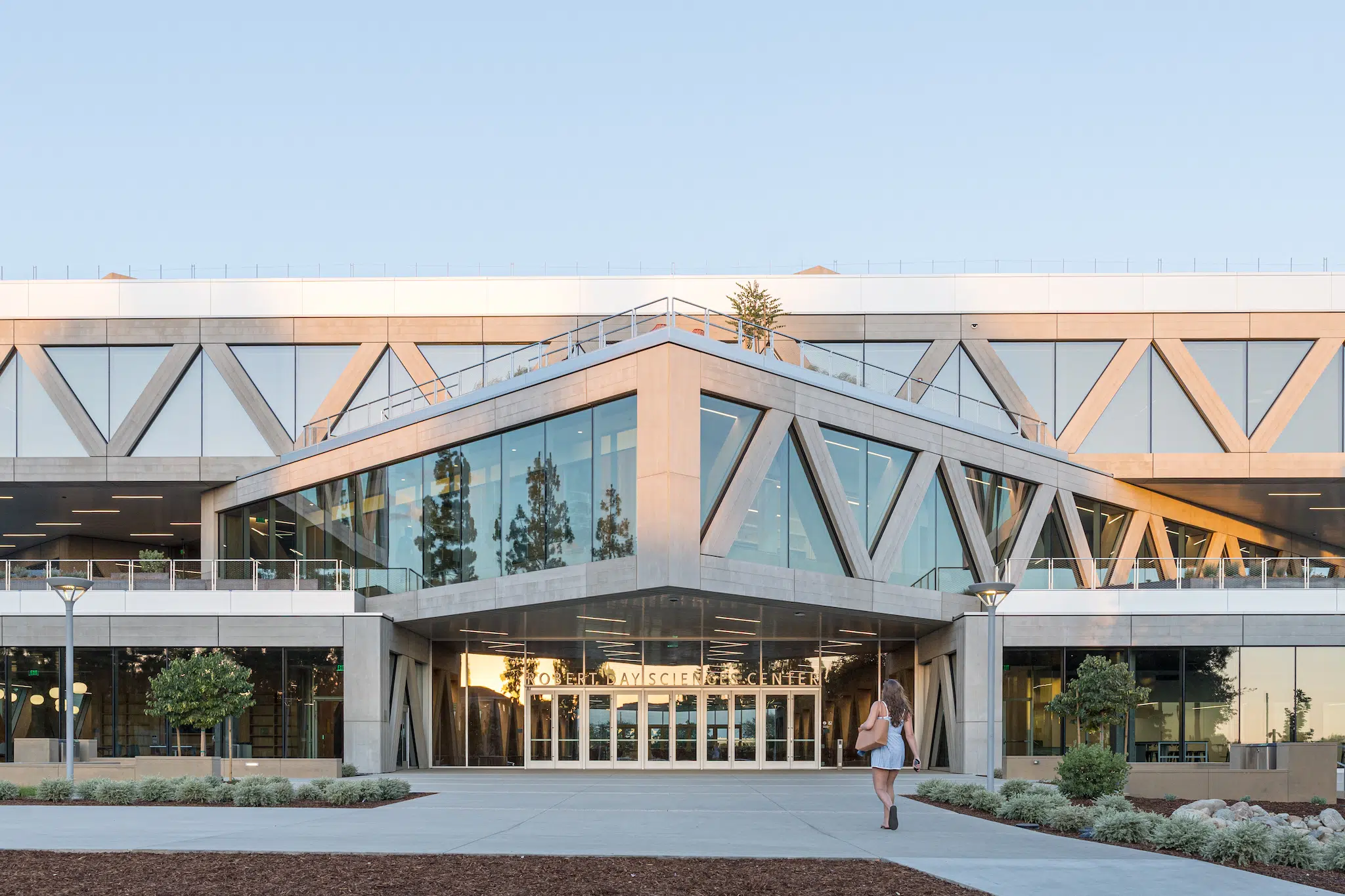
Photo: Laurian Ghinitoiu
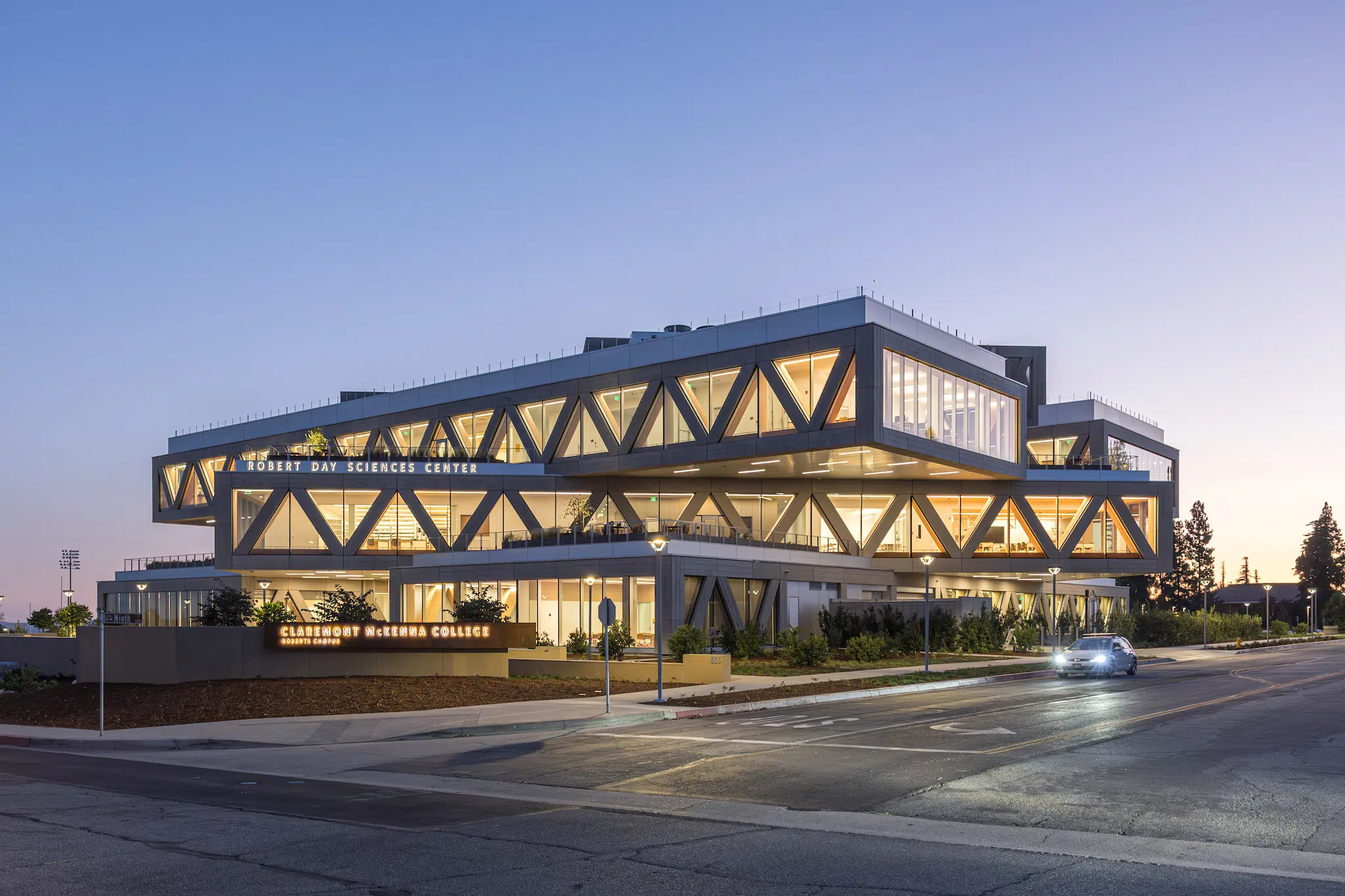
Photo: Laurian Ghinitoiu
This geometric angularity continues throughout the science center, whose interior is made even warmer thanks to timber detailing.

Photo: Laurian Ghinitoiu
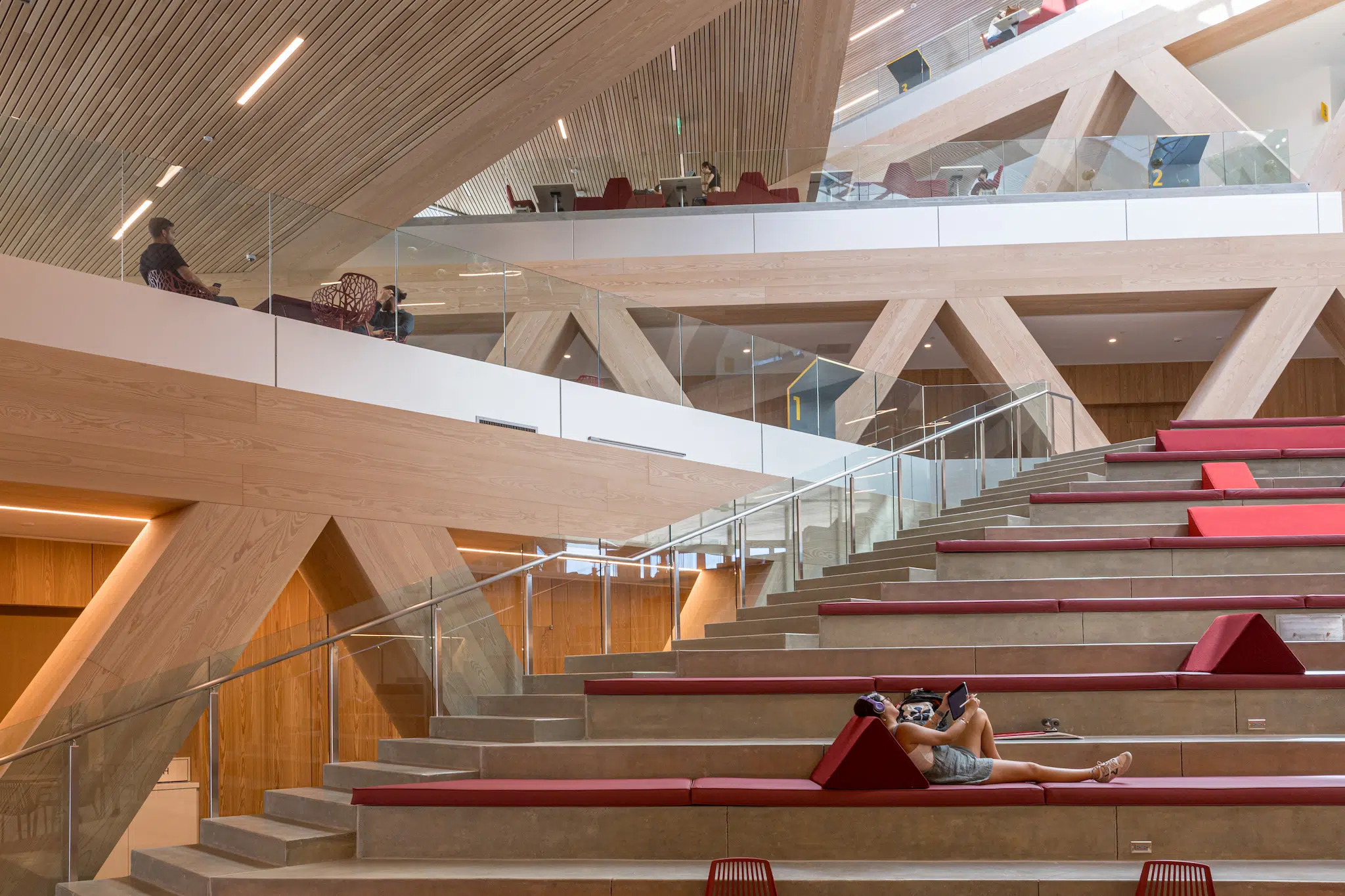
Photo: Laurian Ghinitoiu
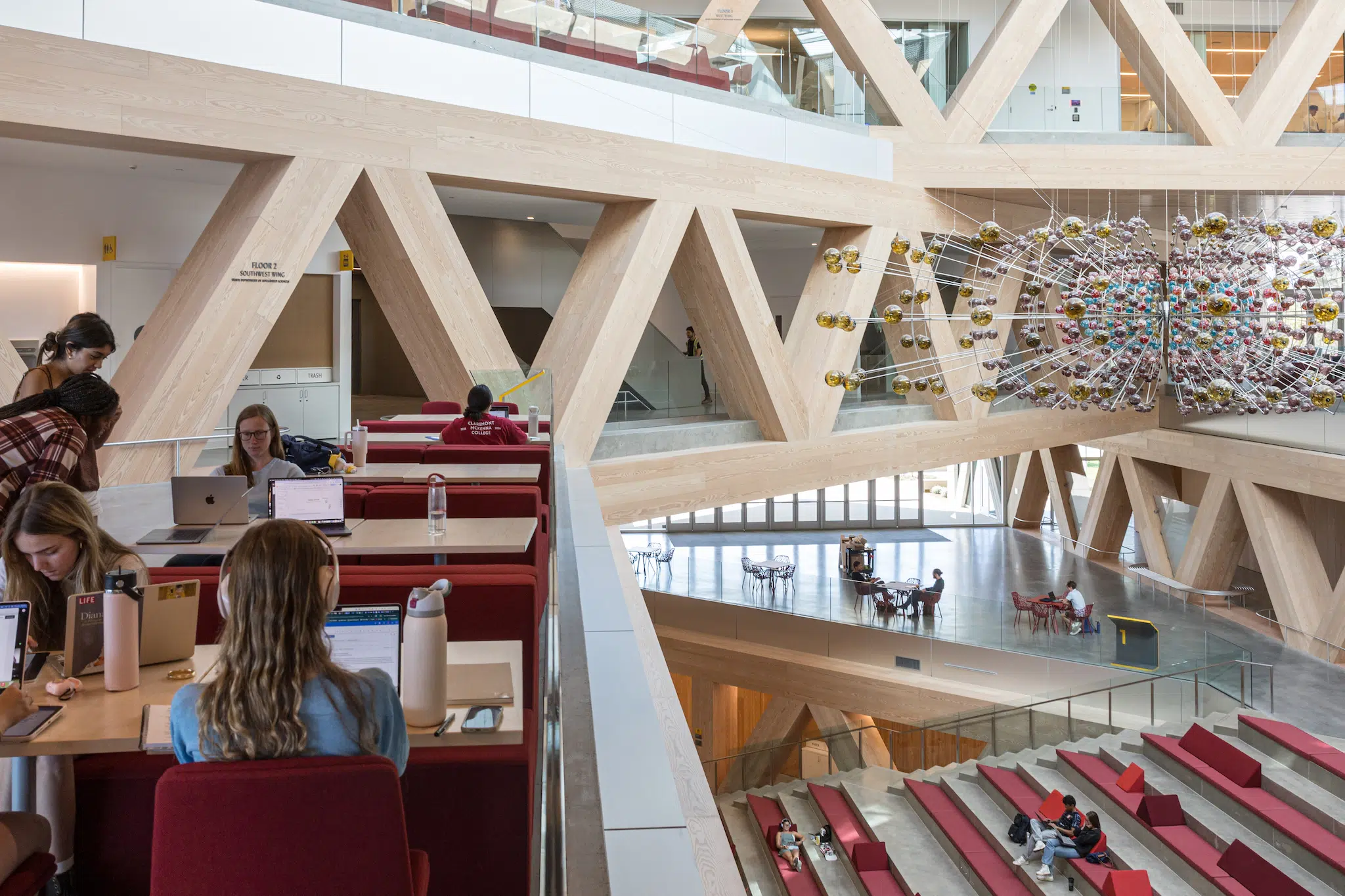
Photo: Laurian Ghinitoiu
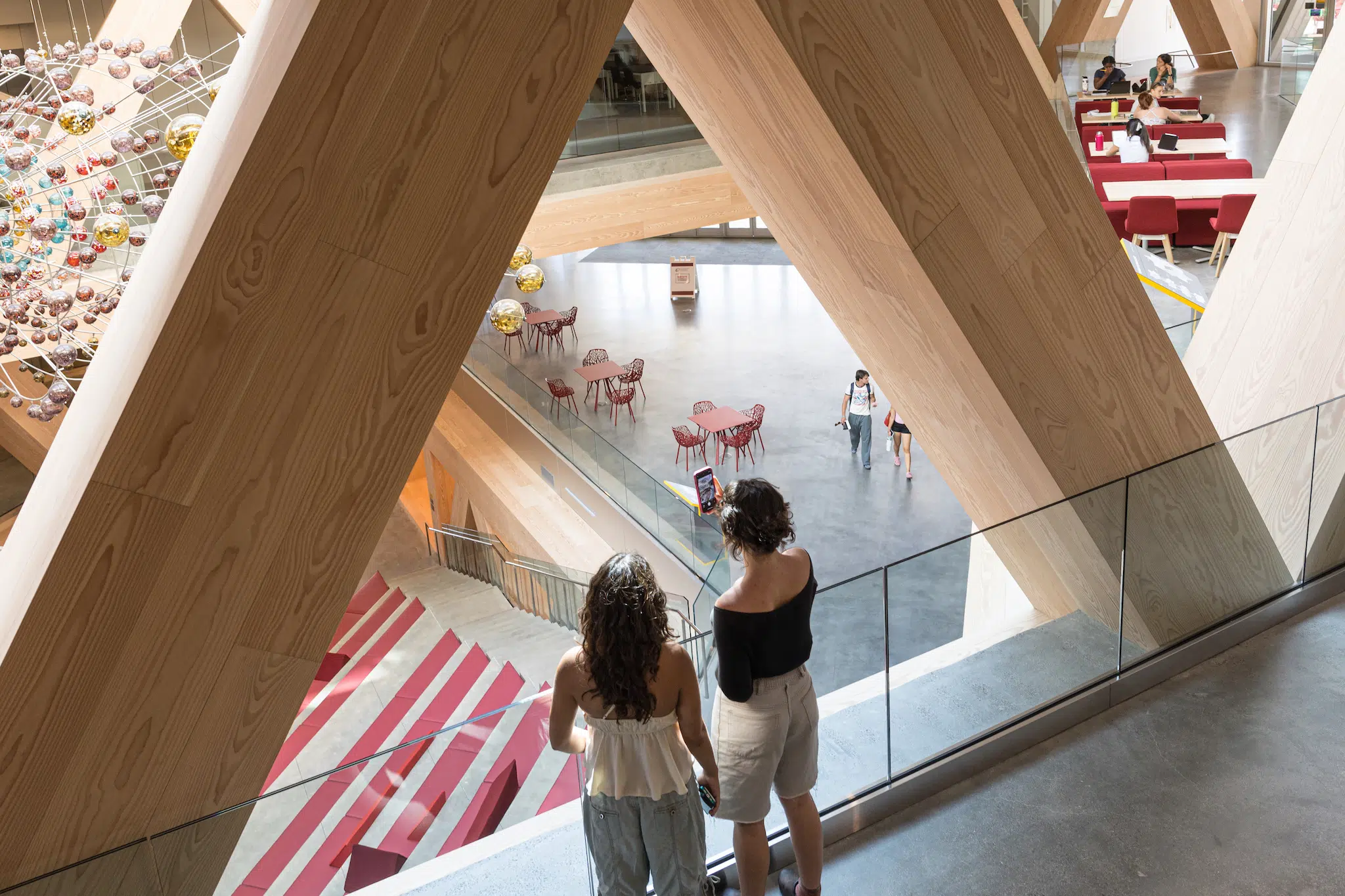
Photo: Laurian Ghinitoiu
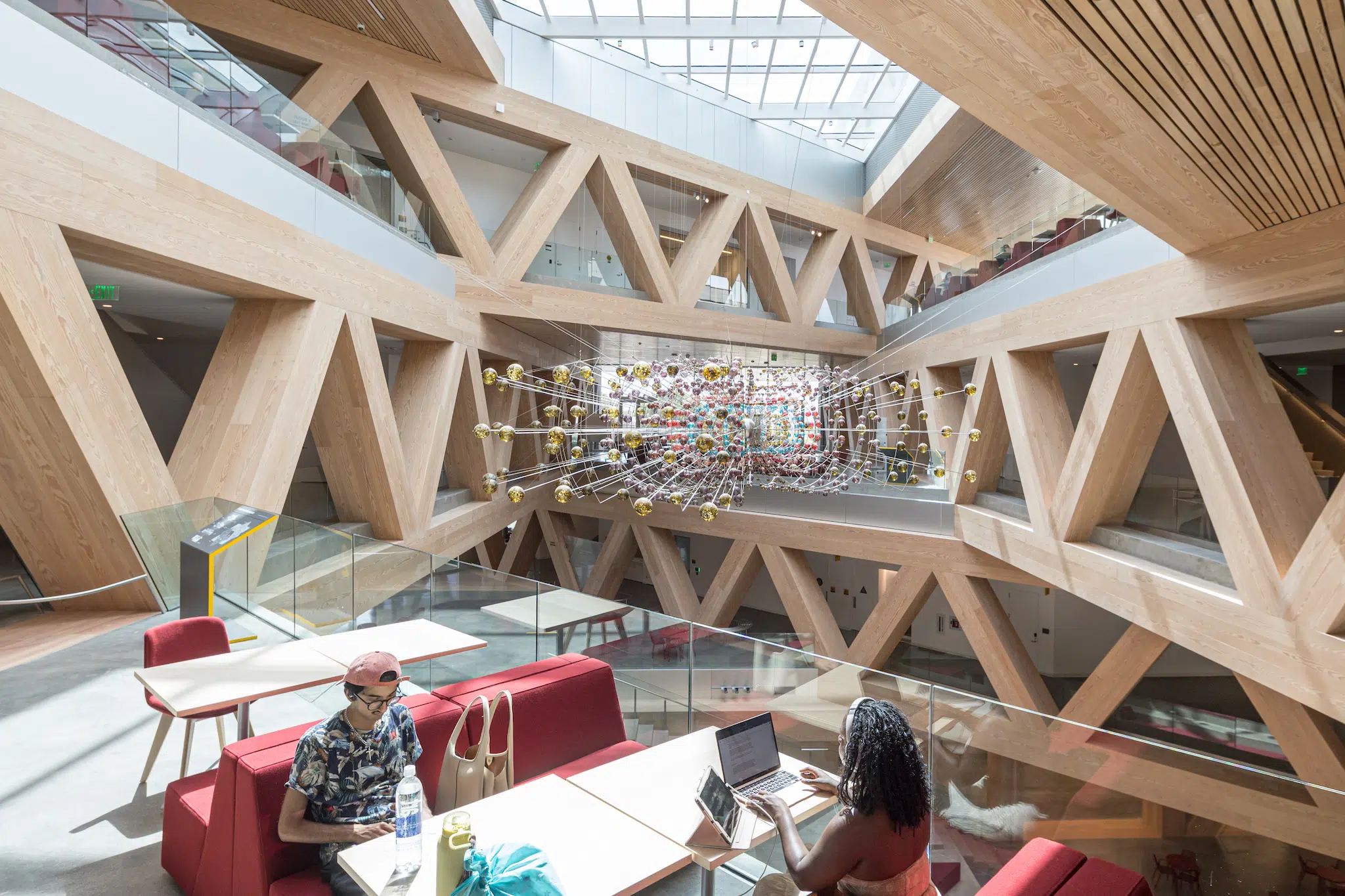
Photo: Laurian Ghinitoiu
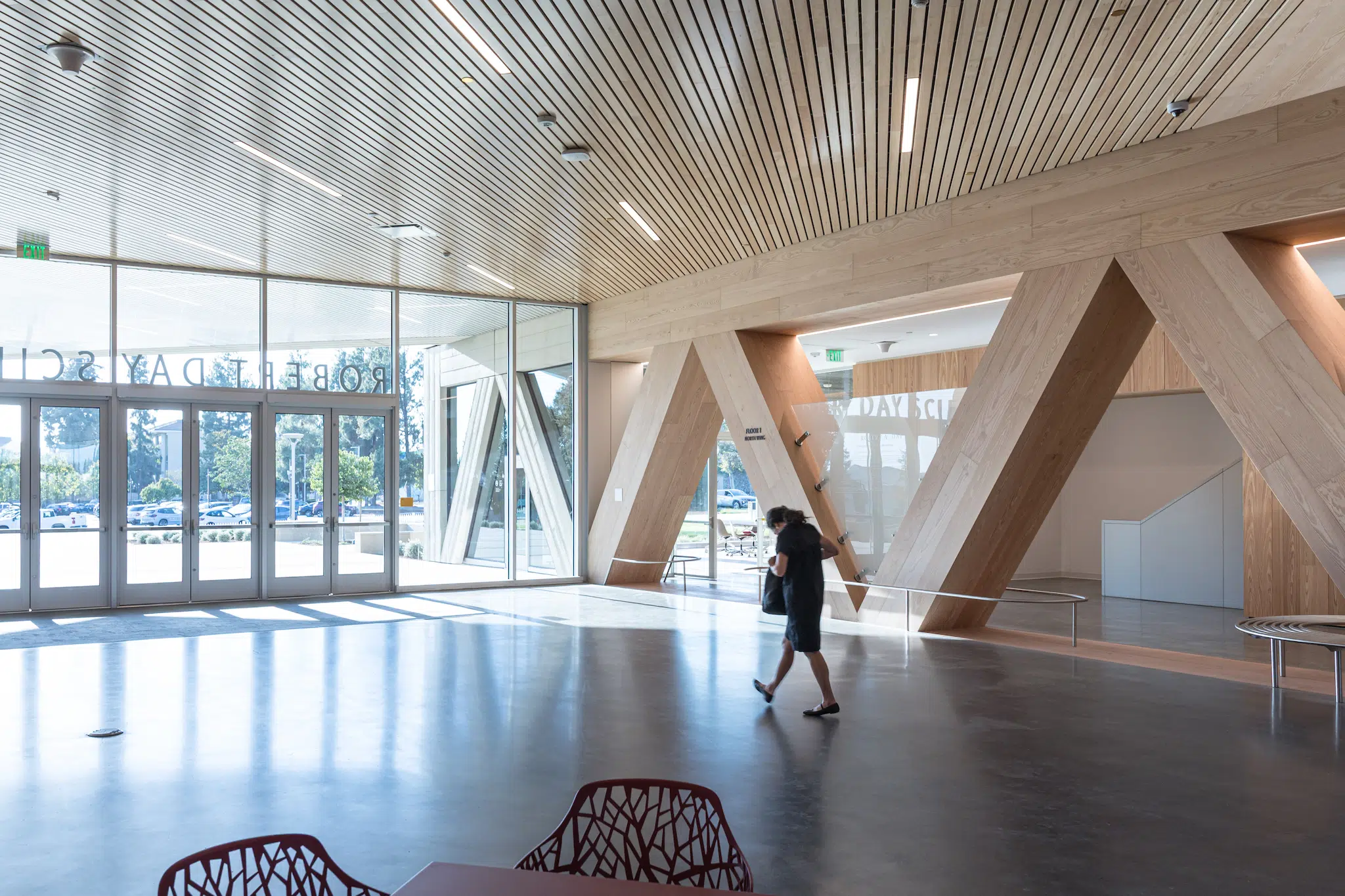
Photo: Laurian Ghinitoiu