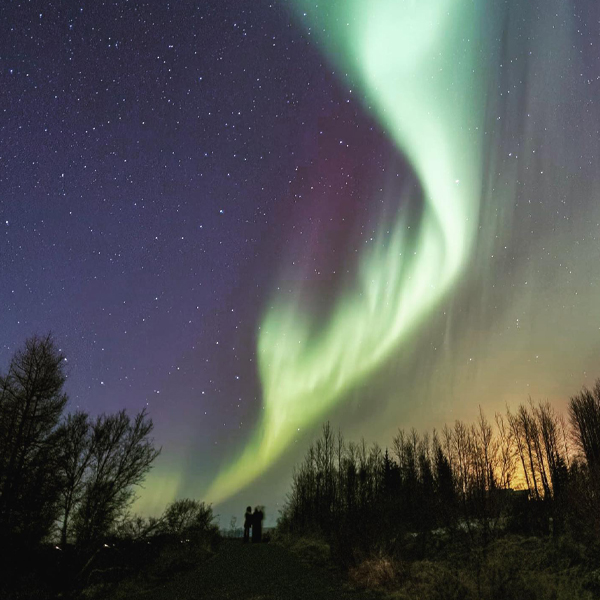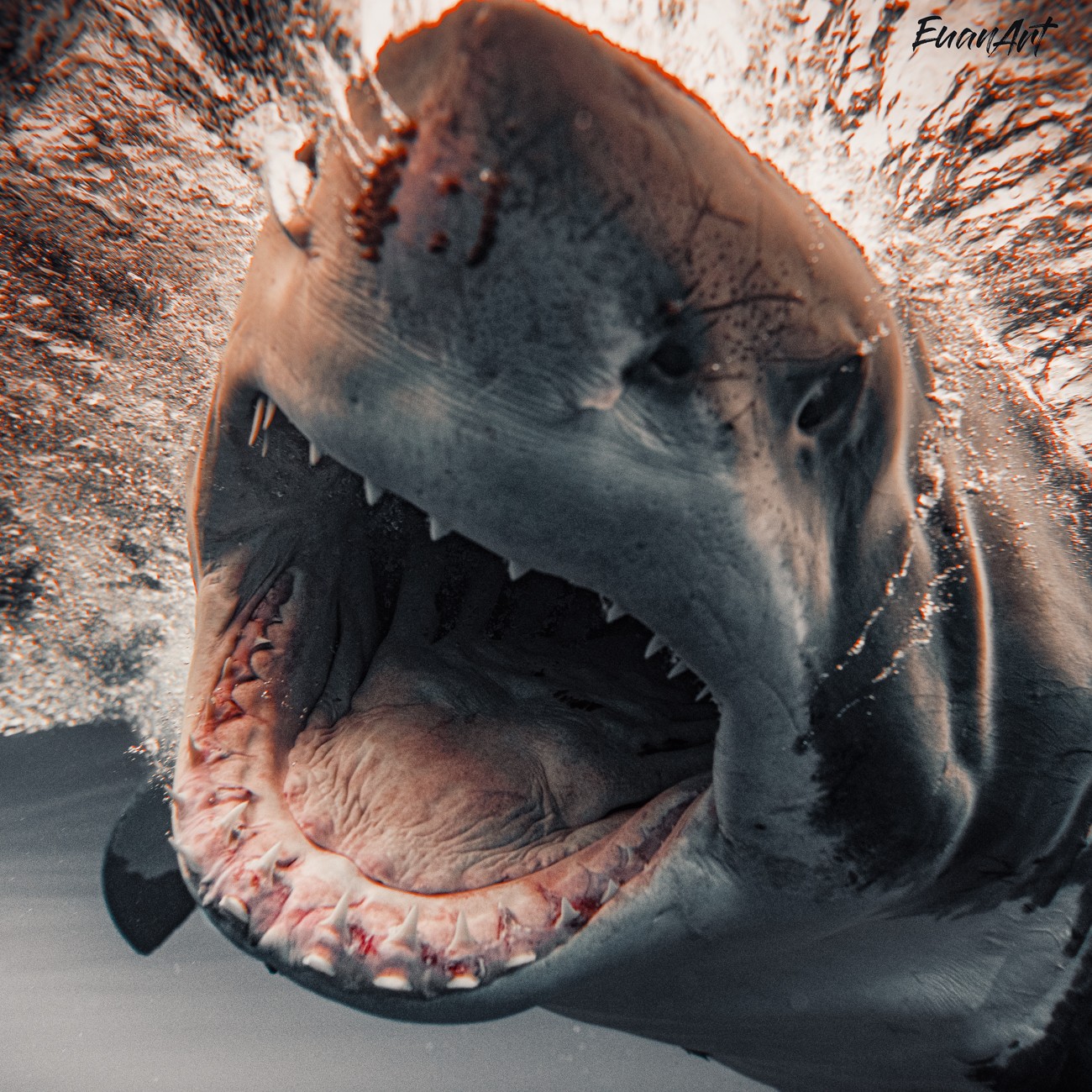
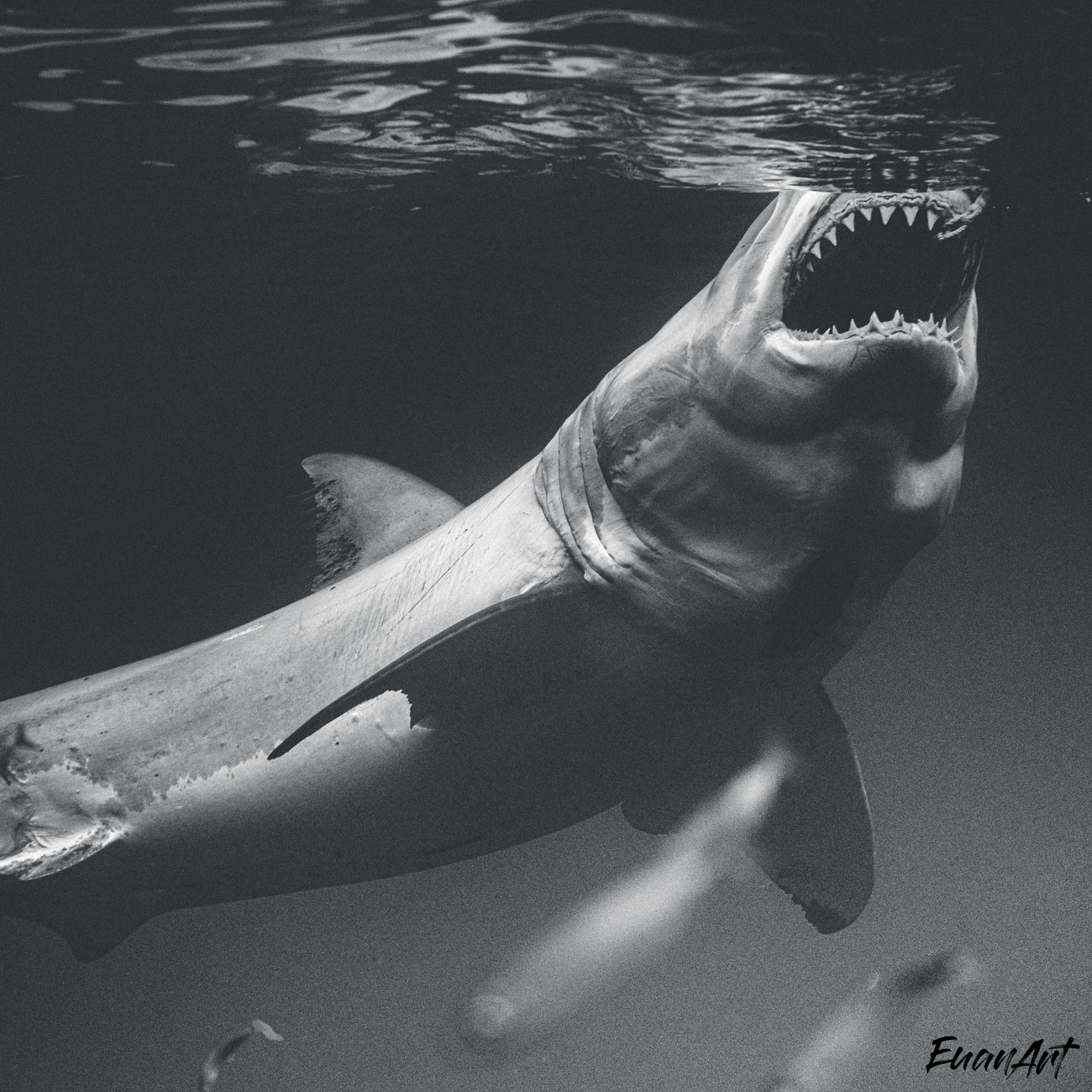
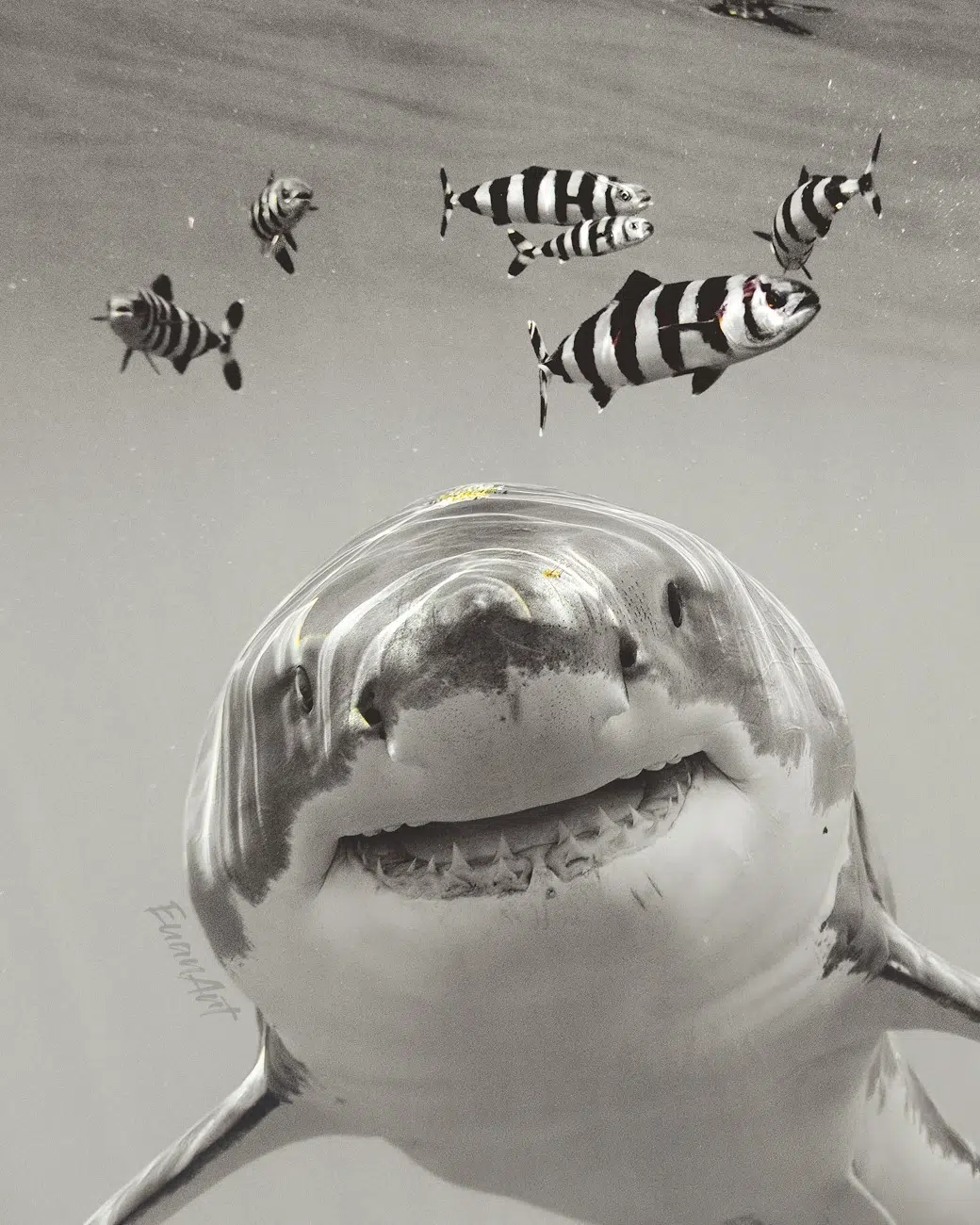
Known for his up-close-and-personal images of great white sharks, Euan Rannachan is no ordinary photographer. Without fear, he throws himself into seas around the world to get close to the apex predator he has admired since childhood. As a photographer and visual artist, he honors these sharks through incredible photography and artwork.
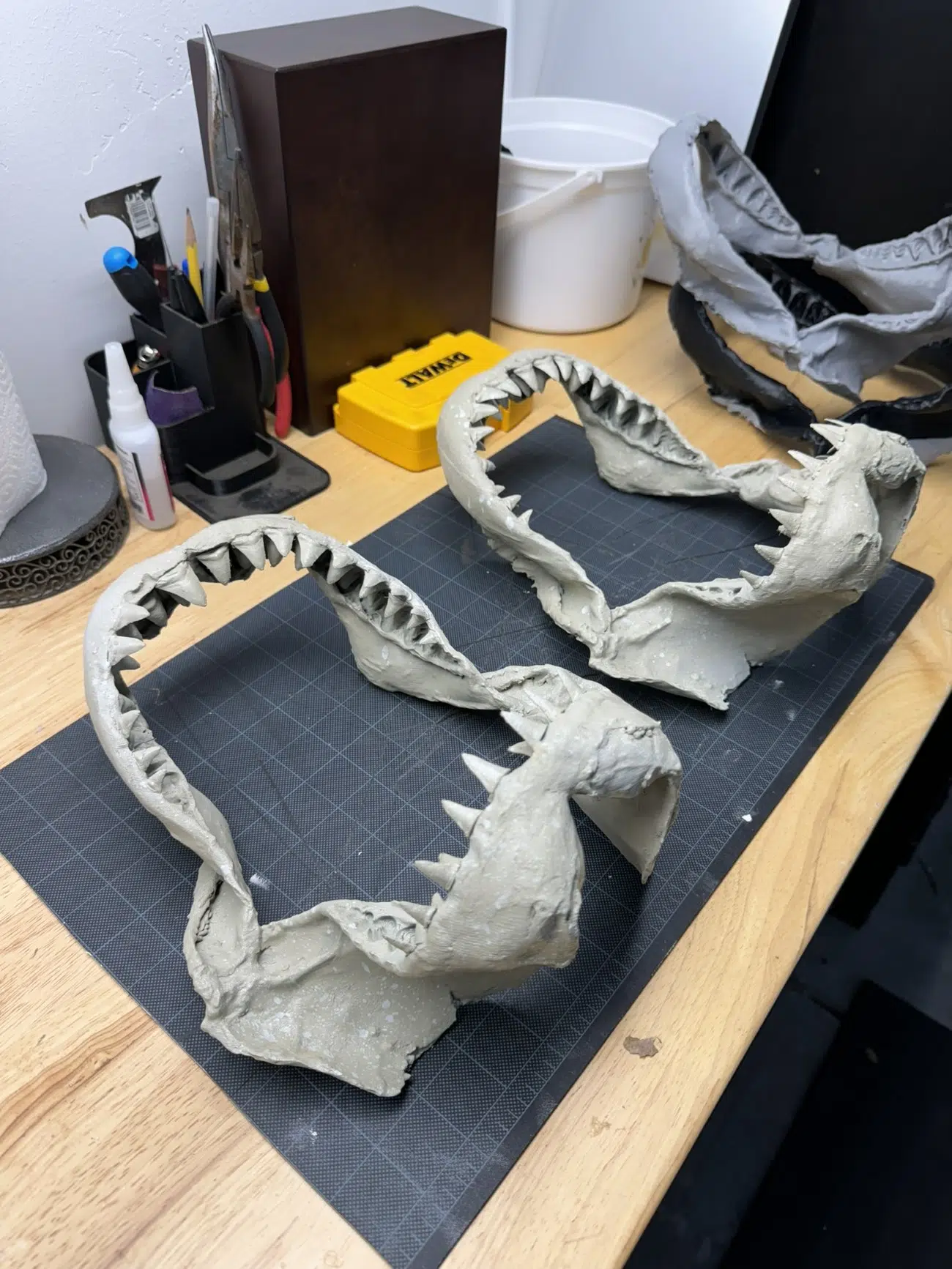
Whether he’s recreating the infamous Jaws movie poster or 3D-printing replicas of shark jaws, Rannachan’s mind is always moving. For years, he focused on the waters of Mexico’s Guadalupe Island, taking the opportunity to hone his skills and view sharks. Now, he’s expanded into other countries, bringing his knowledge and passion with him, but always keeping the same spirit to document the true nature of sharks.
We had the chance to speak with Rannachan about his love for sharks and how this has informed his artistic practice. We also discuss what it was like to encounter a great white for the first time and how he keeps himself safe in the water. Read on for My Modern Met's exclusive interview and stay updated on his adventures by following him on Instagram.
When did your love of sharks begin, and where does your passion for them come from?
My fascination with apex predators goes back as far as I can remember. As a kid, while most kids had posters of cars or planes, I also had a life-size polar bear poster on my wall that I was completely obsessed with. I’ve always been drawn to powerful animals, from birds of prey and bears to, of course, massive white sharks.
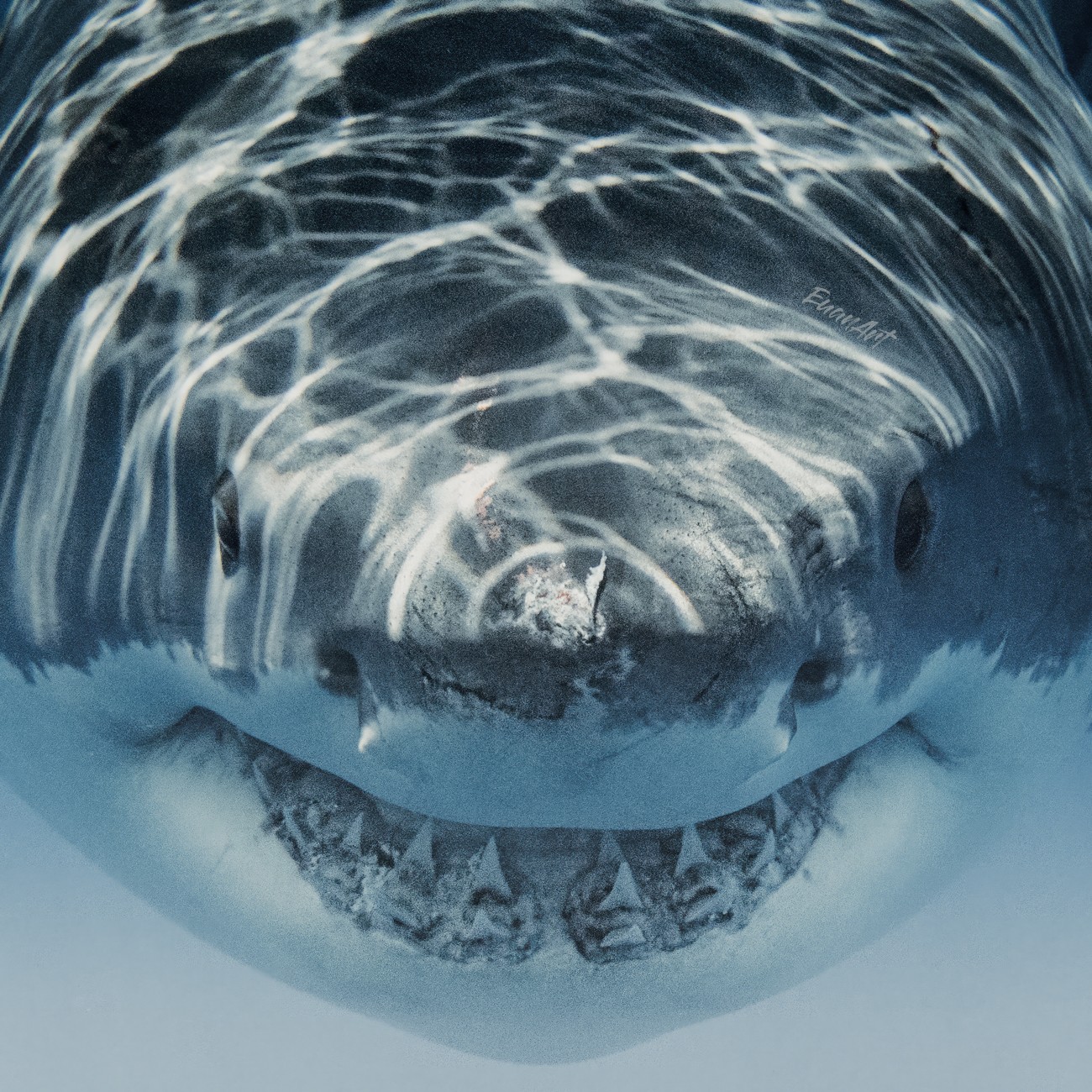
For a long time, I thought seeing great whites up close meant traveling all the way to South Africa, New Zealand, or Australia. Then I found out about Guadalupe Island. In 2016, after getting all my gear waterproofed and finally making the trip, I came face-to-face with them for the first time. That moment of looking a white shark in the eye changed everything—it turned a lifelong fascination into something I knew I needed to dedicate myself to for the rest of my life.
Can you share a bit about your first live encounter with a shark and what that felt like?
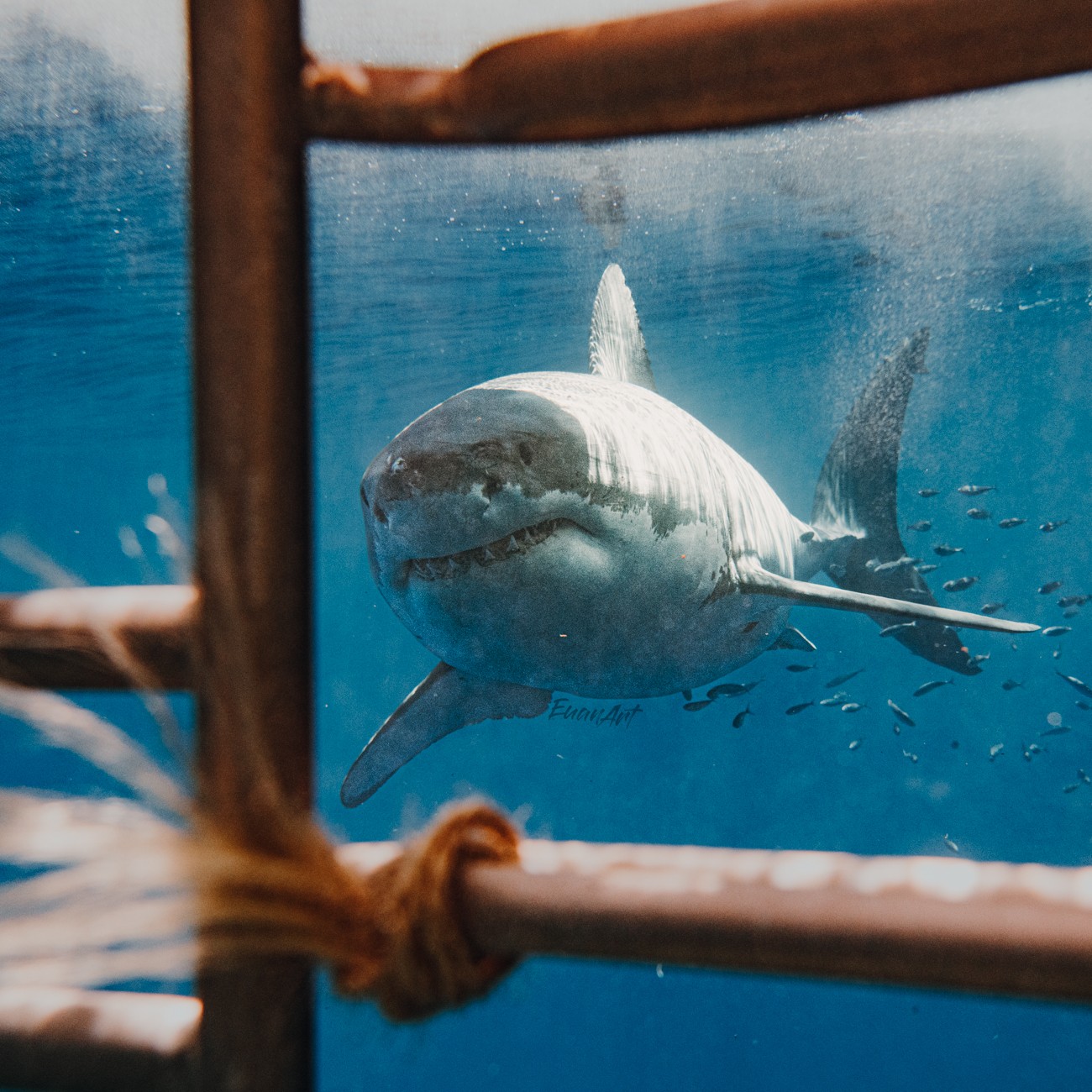
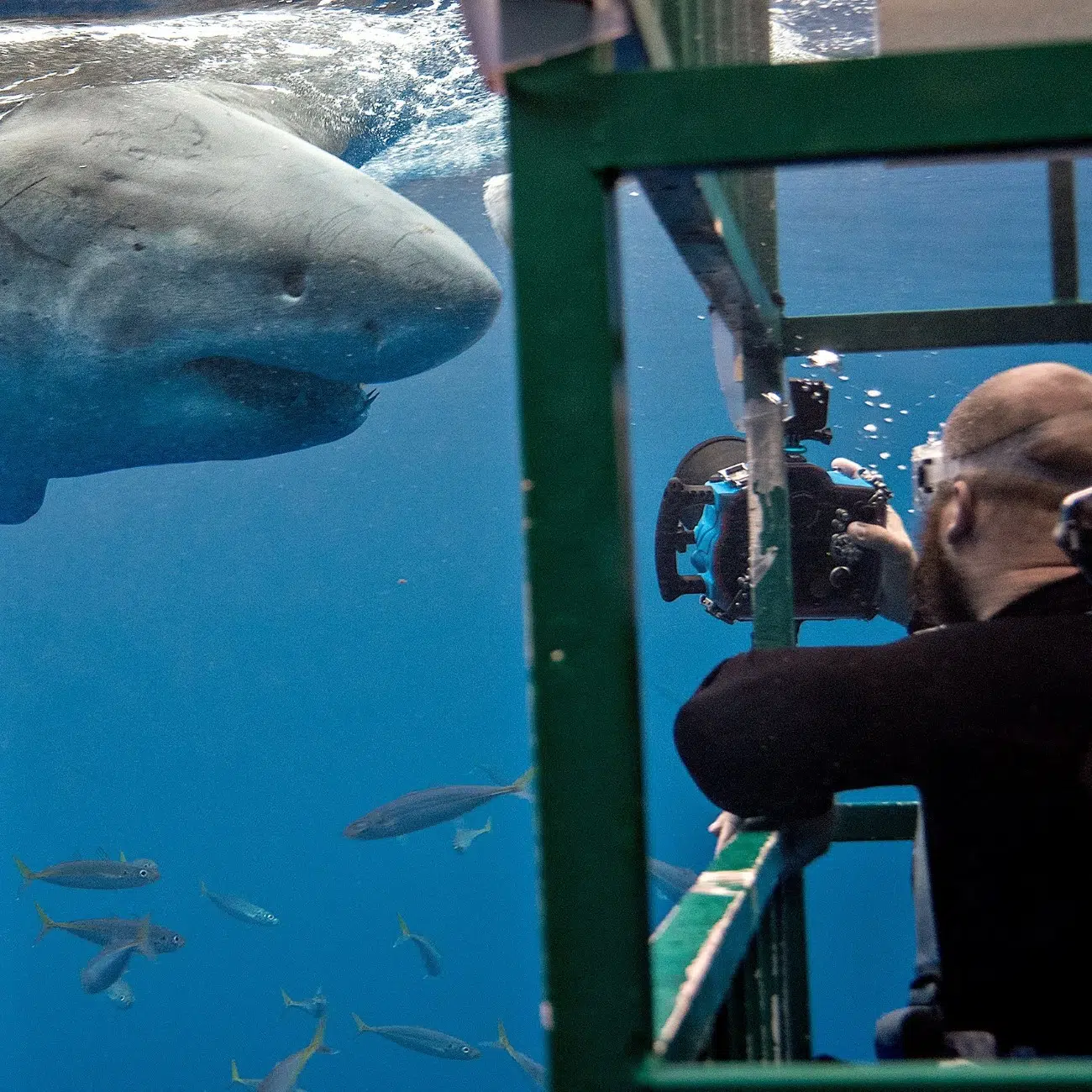
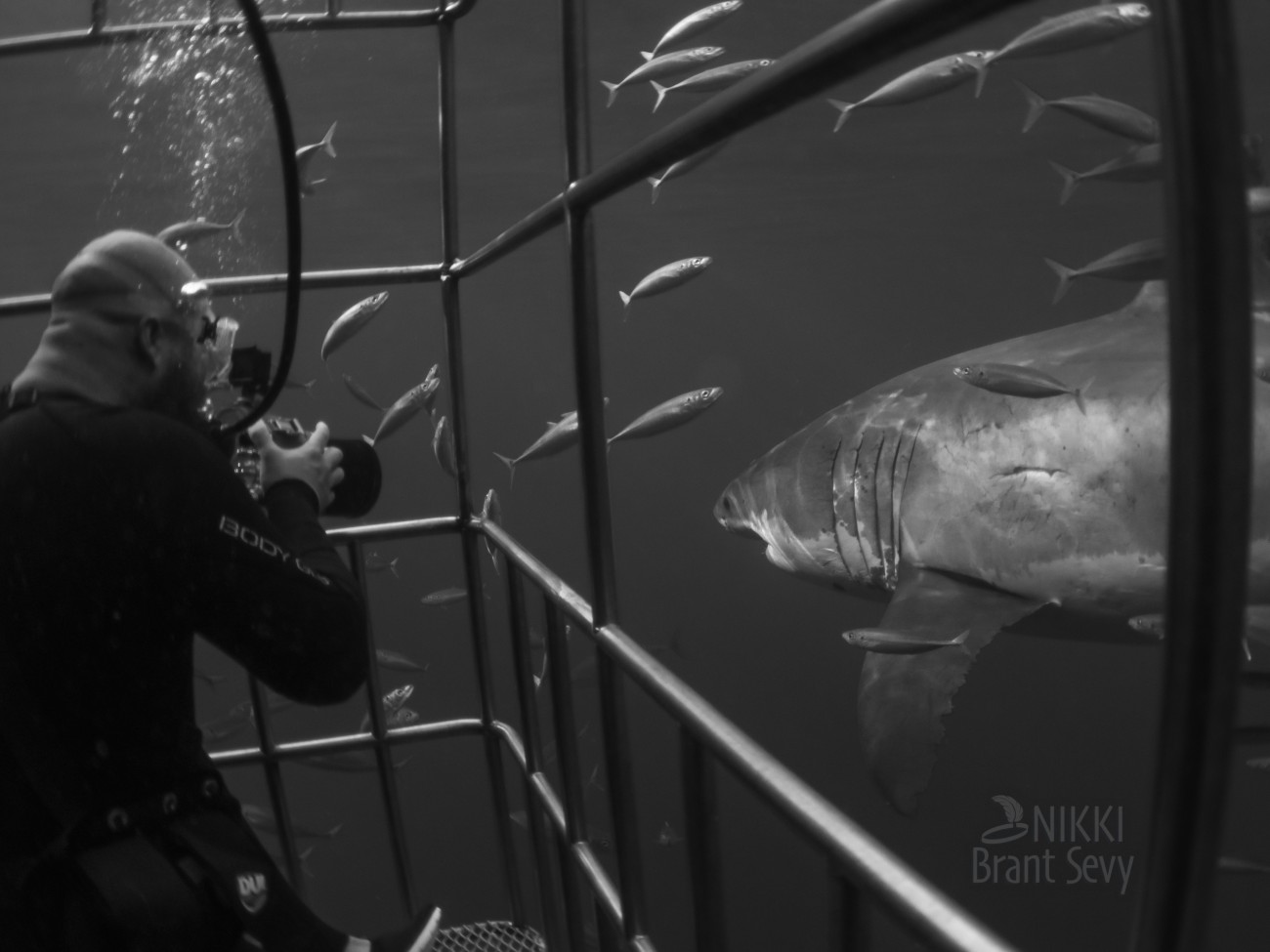
The first time I ever got in the water with great whites was also the first time I’d ever breathed without a snorkel. I was hooked up to a hookah line from the boat, and honestly, that alone was overwhelming—figuring out how to breathe, how not to tangle the rope, how to keep from blowing bubbles in front of other people while they were trying to see the sharks. At first, the hardest part wasn’t the sharks at all—it was learning cage etiquette and how to actually use my camera underwater.
But once I settled in, everything changed. The first time a massive white shark cruised past the cage, I wasn’t scared—I was buzzing with excitement. Being eye-to-eye with them is like standing in front of a living dinosaur. It’s completely out-of-body, and every single encounter feels that way. Different sharks, different behaviors, different moods—no two are the same. Even now, I still get butterflies, not out of fear, but out of love for being in their presence. That very first dive confirmed it for me: this is something I’d be doing for the rest of my life.
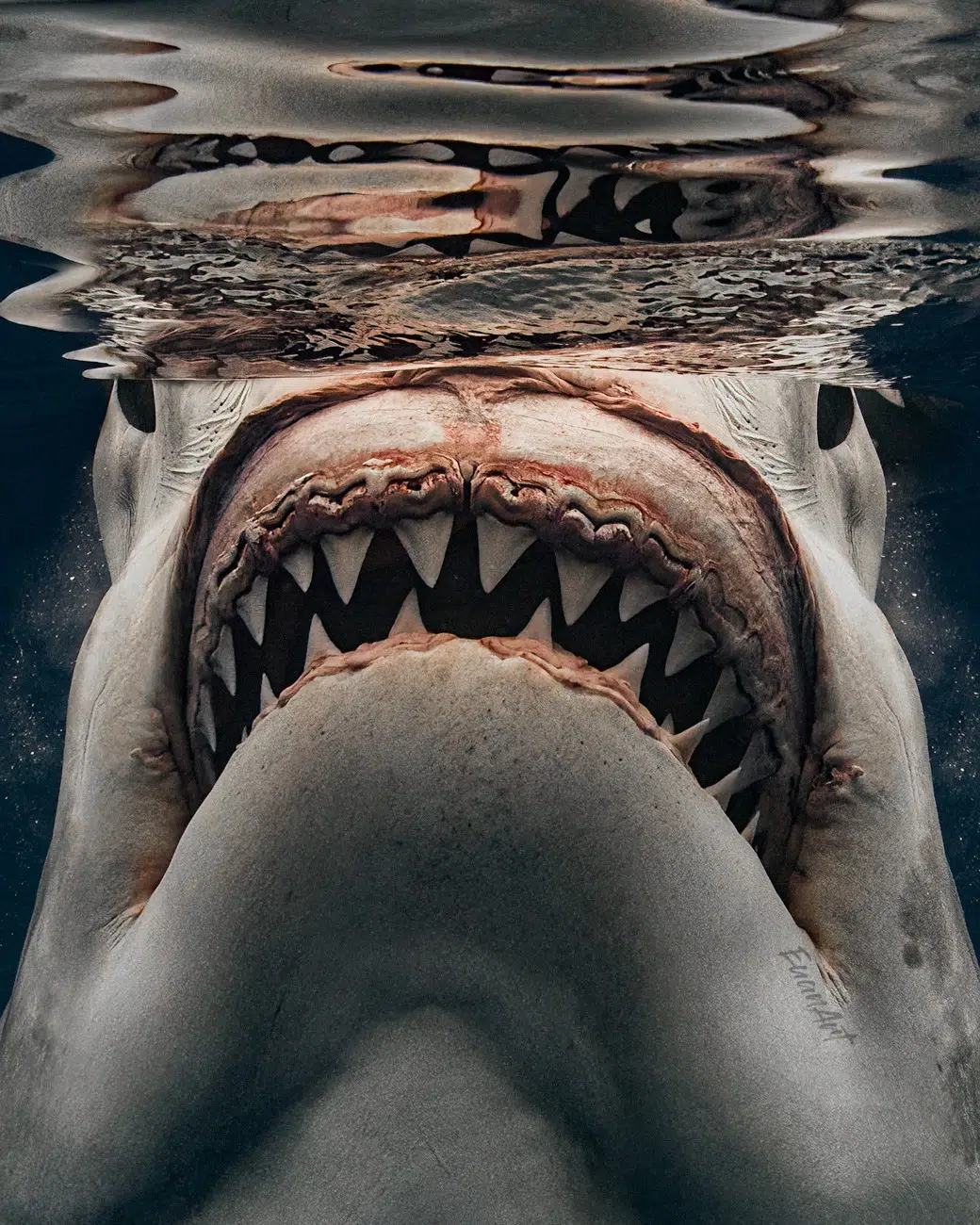
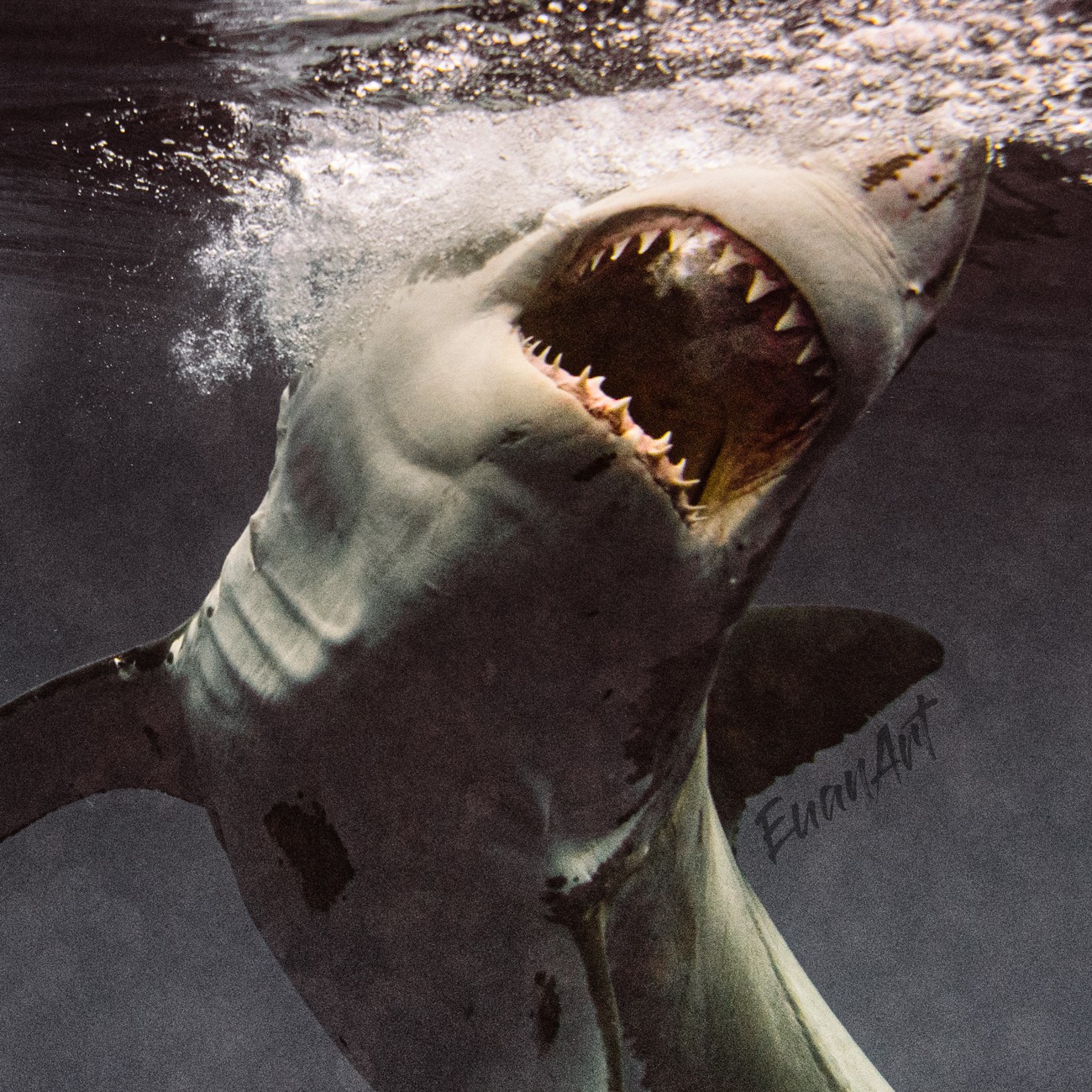
When did photography come into the equation, and how did you develop your skills?
I’ve been a professional photographer for close to 20 years now. Over that time, I’ve worn a lot of hats—shooting everything from NASCAR campaigns for Clorox and product work for Burt’s Bees, to covering the San Jose Sharks, documenting big-wave surfing at Mavericks, and serving as Creative Director for Dakota Shy Winery in Napa for the last 15 years. By now, I know my camera like the back of my hand.
But I didn’t get the chance to photograph great whites until 2016 on my first trip to Guadalupe. That was a whole new learning curve. Shooting underwater was nothing like anything I’d done before—setting up the housing, figuring out how light and motion worked below the surface, and just troubleshooting in real time. It was frustrating at first, but once I got it dialed in, it opened up a completely new world of possibilities.
Since then, it’s been constant evolution—new lenses, new cameras, new techniques—but the purpose has always been the same. Photography is my tool for showing sharks the way I see them: powerful, yes, but also beautiful, complex, and worthy of respect rather than fear. If my work can start that conversation and change even one person’s perspective, then it’s doing its job.
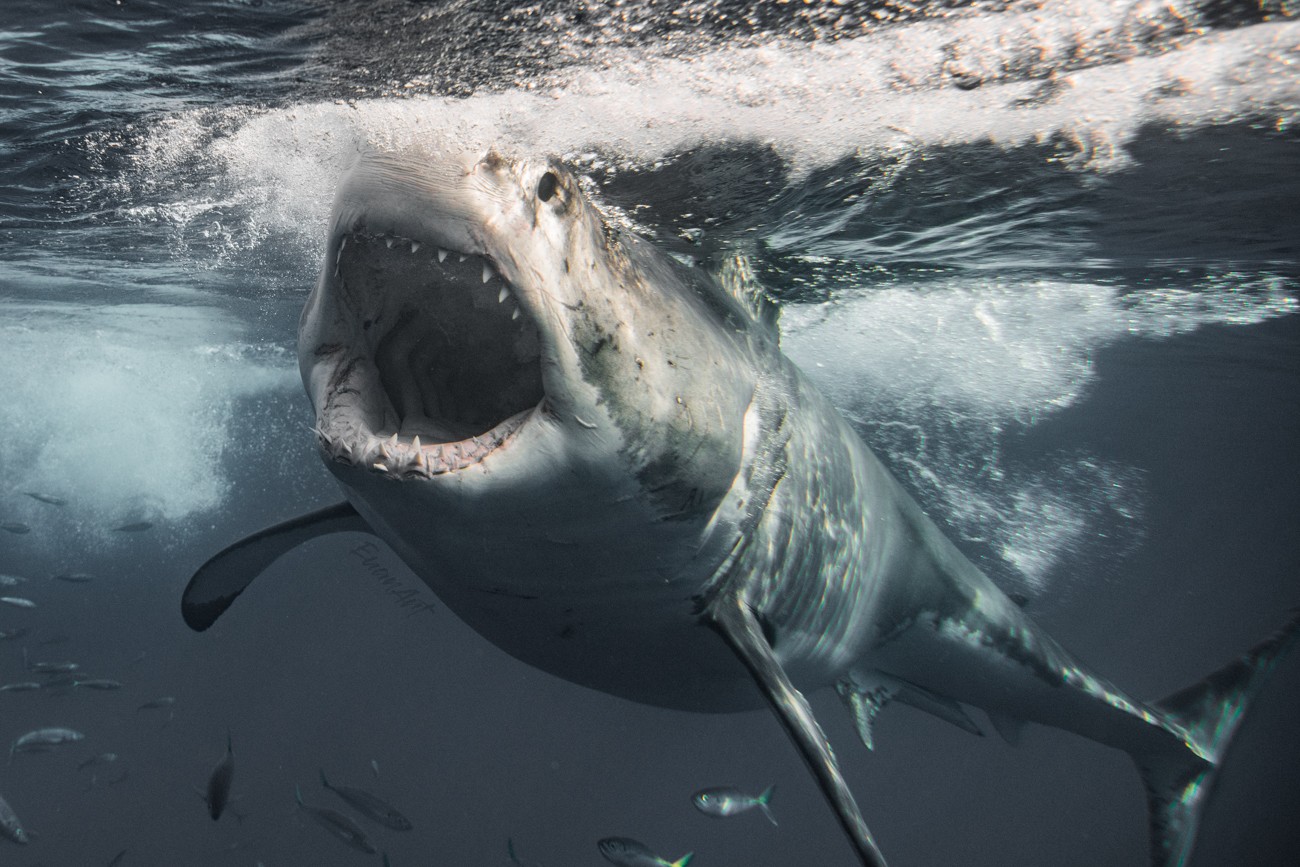
What do you love most about sharks, and what’s the best part of photographing them?
What I love most about great white sharks is that they’re essentially living dinosaurs. You’re in the water, sharing space with an apex predator, and yet you can coexist with them—that’s not something you can do with lions or tigers. I’ve spent hundreds of hours in the water with these sharks, and not once have they ever shown aggression toward me. I’ve seen them aggressive toward other animals, sure, but never toward humans. That shattered a misconception I carried with me into the cage—one that I think a lot of people have because of Hollywood and the way sharks are portrayed.
Another thing I love is how every single encounter is different. Some sharks are curious, some cautious, some have clearly just eaten, others are hunting. You never know what you’re going to get—it’s like Christmas morning every time you drop into the water. From a photography standpoint, that unpredictability makes it both incredibly challenging and deeply rewarding. The conditions are always changing—light shifts, particles drift through, behaviors vary—and you’ve got to stay sharp. It demands total focus, but when you get it right, it’s one of the most satisfying things you can capture on camera.
What’s the biggest misconception you feel that people have about sharks?
The biggest misconception people have about sharks is that the second you step into the ocean, you’re going to get ripped to shreds. That’s a story Hollywood has sold us for decades, but it couldn’t be further from the truth. I’m in the water with great whites all the time, often just a few feet away, and they’re completely fine with me being there. Yes, there’s a cage, but honestly, it’s more for my peace of mind than anything else. If a shark really wanted in, it could. The reality is, they’re not these mindless eating machines people imagine.
What I hope my work does is give sharks another chance in people’s eyes. If someone looks at one of my photos and starts to question what they thought they knew—if they see the intelligence, the curiosity, or just the sheer beauty of the animal—then maybe they can put aside the old Hollywood narrative and start seeing sharks for what they really are.
How do you ensure your safety while in the water with sharks?
Safety depends a lot on the situation. At Guadalupe, the sharks are there to feed on the massive pinniped colonies—elephant seals, sea lions, fur seals—so the risk of mistaken identity is real if you’re just free-swimming. A shark looking up at your silhouette could easily confuse you for a seal. That’s why cages are the safest option there. They give people, especially first-timers, the chance to see one of the ocean’s top apex predators up close without taking unnecessary risks.
Other places are a different story. When we’re out with blue sharks, makos, or other species, we usually free-dive with no cage. In those cases, we use a bait line ethically to bring the sharks in. The current carries the slick out, the sharks follow it in, and we meet them on their terms. That’s when awareness becomes everything. You keep eye contact, you establish presence, and if a shark comes a little too close, a simple redirection—a hand on the snout to gently push them away—is often enough. Usually, our guides handle that so guests can just experience the moment.
Whether it’s in a cage or on a line, the key is respect. Sharks aren’t out there hunting us. If you stay calm, aware, and assertive, they recognize you as another big presence in the water and generally leave you alone.
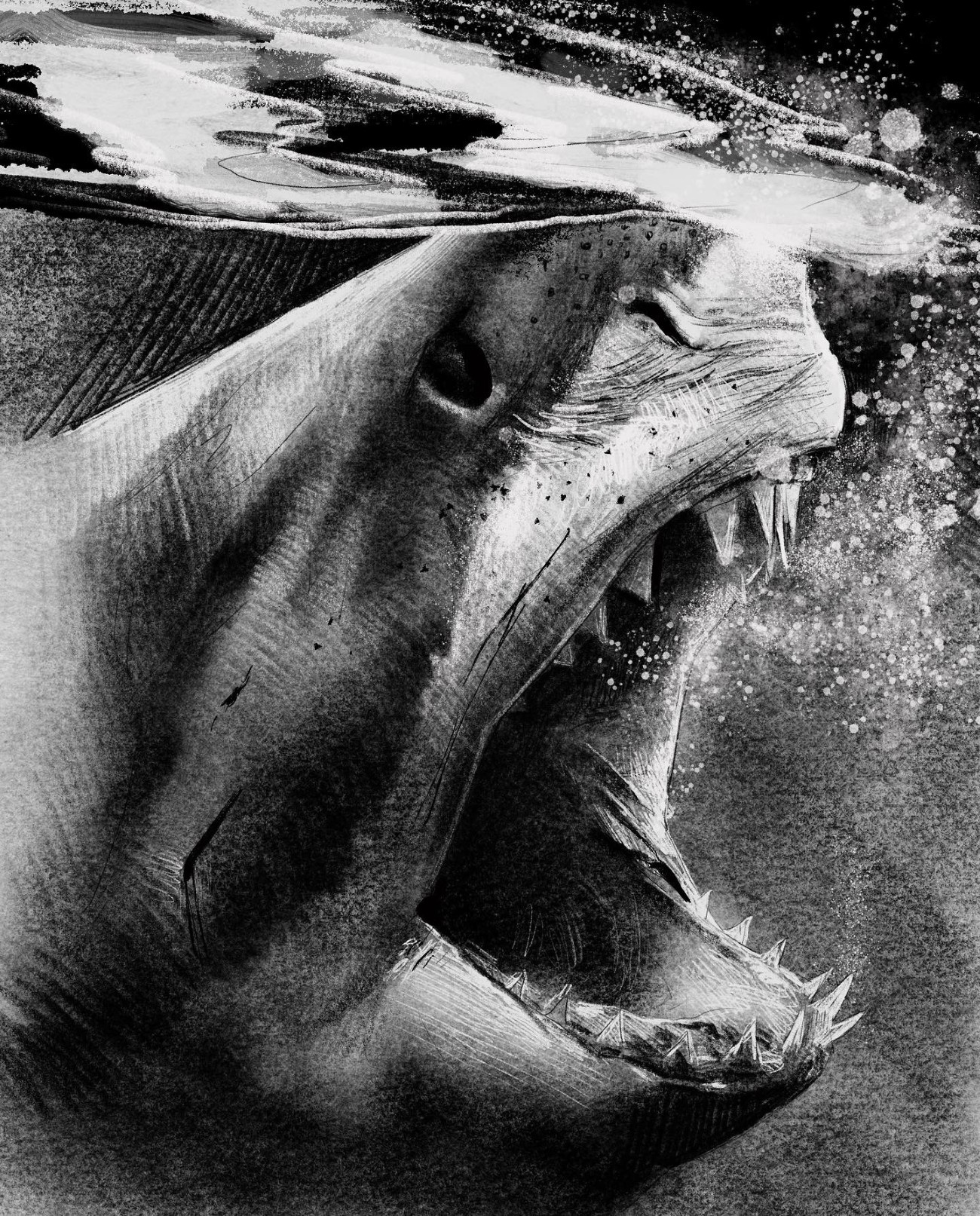
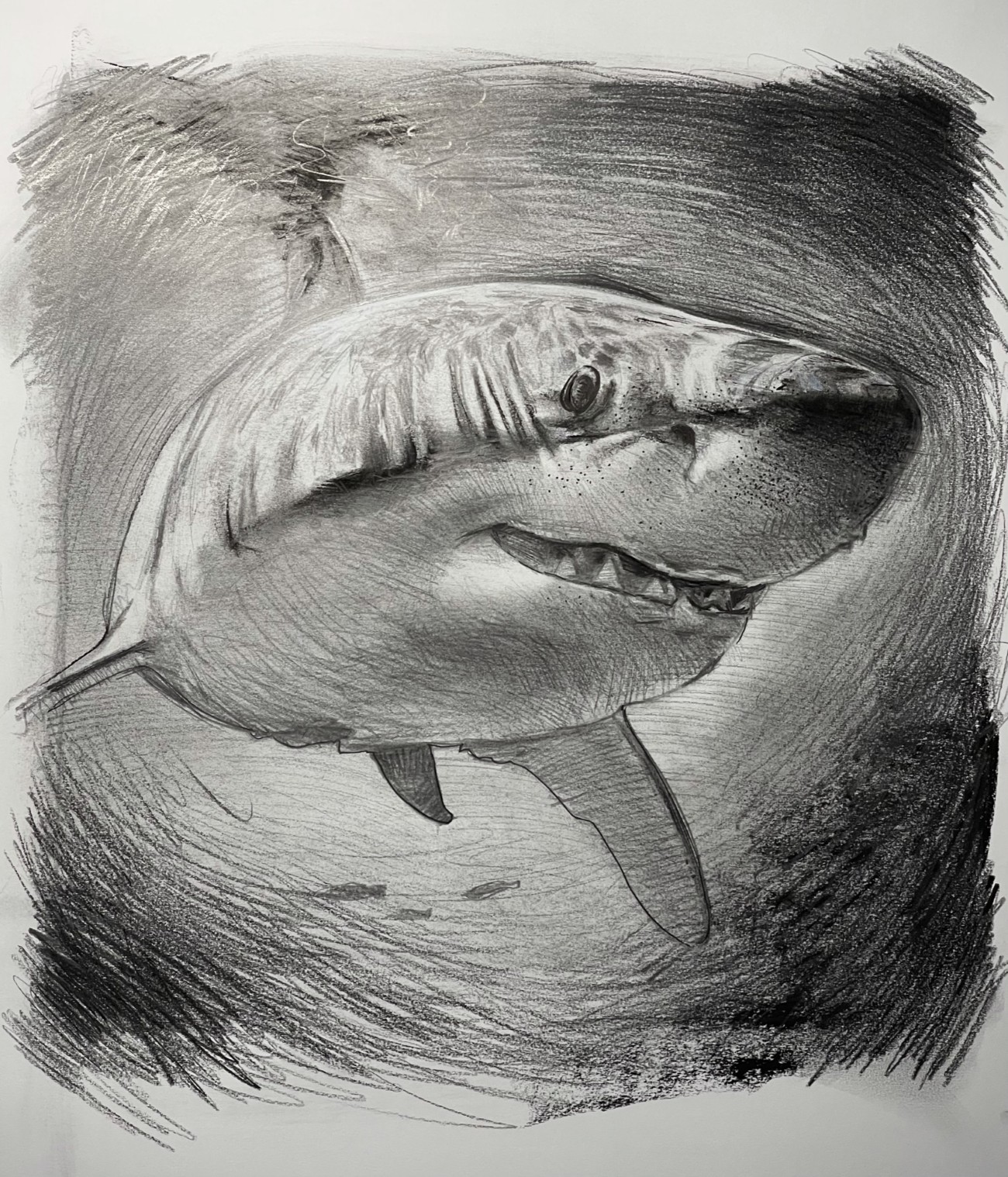
Your love of sharks even extends into other artistic mediums, like charcoal drawings and sculpture. Is there any medium you haven’t yet explored that you’d like to try?
I’ve explored a lot of different mediums with sharks—charcoal drawings, traditional sketching, and especially sculpture through 3D printing. Drawing them is always fun for me, even though water and surface detail can be tricky to get right. It’s a challenge, but one I enjoy. With sculpture, I focus on recreating jaws. I’d never want a shark to die for the sake of its jaws, so 3D printing gives me a way to create accurate replicas without any harm. I even have a massive four-foot set of jaws in my kitchen that I built from a scan of a 22-foot white shark that was lost to bycatch. That piece became the basis for a whole side business where I make custom jaws for people.
Lately, I’ve been experimenting with VR—drawing in three dimensions and actually walking around the form of a shark. It feels like a glimpse into the future of how we might create and share art. For now, I’m mostly in traditional mediums and 3D printing, but exploring more immersive technology like VR is definitely something I’d like to keep pushing into.
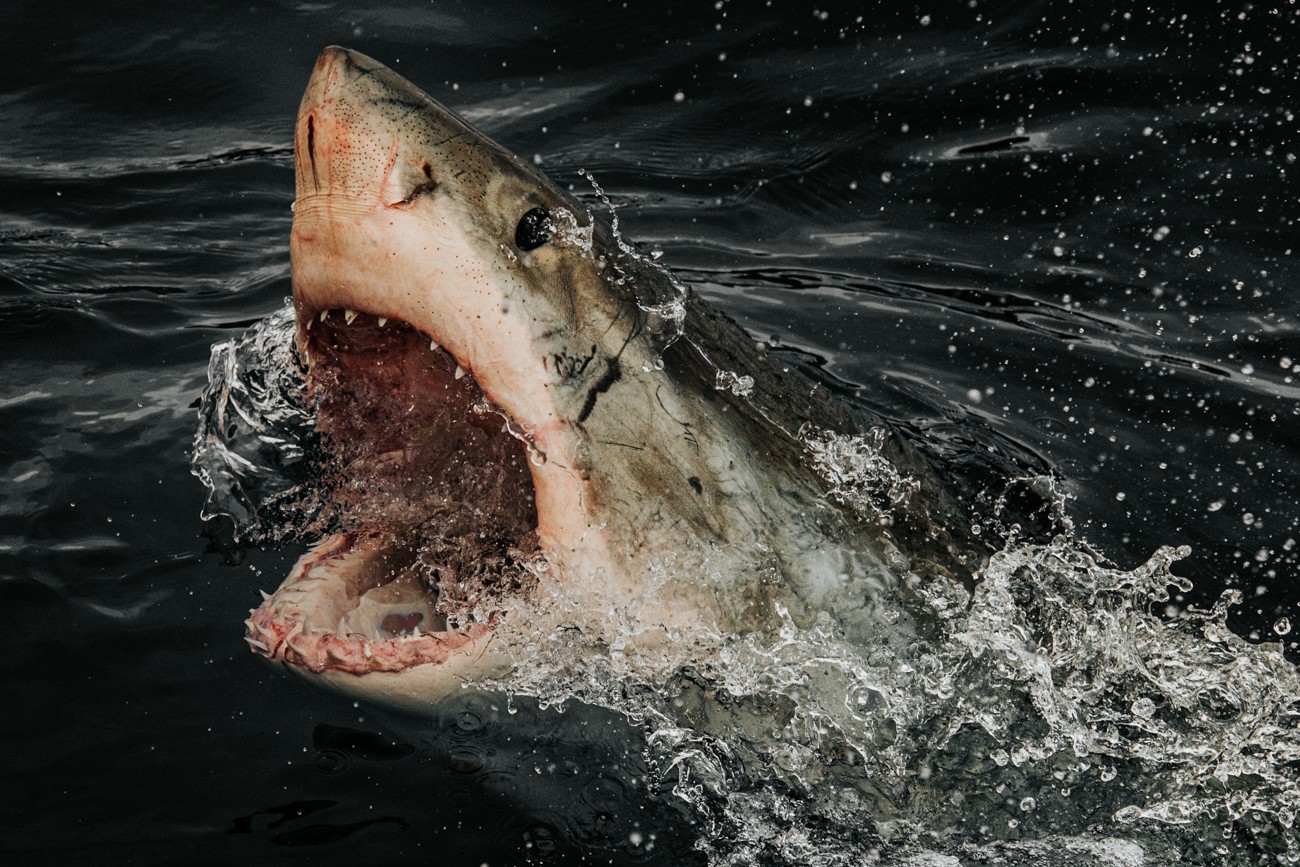
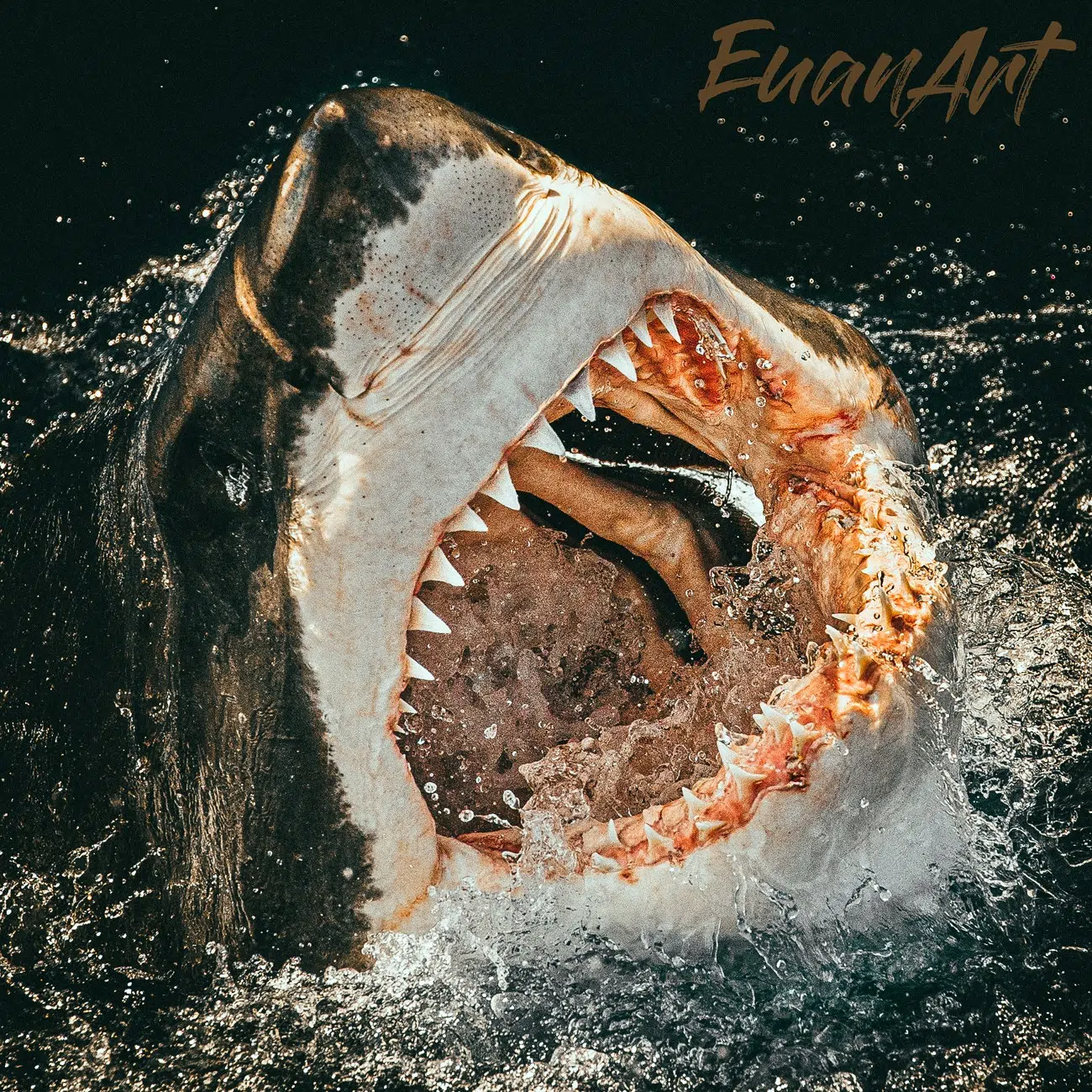
I know that shark conservation is an issue near and dear to you. Please tell us what we can do to help ensure that sharks continue to thrive.
If someone is really interested in sharks, the best thing they can do is actually go and see them in the wild with a reputable, ethical dive company. Getting in the water with these animals—seeing them with your own eyes—is the fastest way to break through the old fears and really understand just how incredible they are. Not everyone can do that, of course, but for those who can, it’s life-changing.
For others, supporting conservation efforts is huge. Do your homework. Make sure the organization you’re backing is ethical and transparent, and then find ways to contribute. That doesn’t always mean money. Volunteering your time, spreading awareness, or simply helping amplify the right voices can make a real difference.
I’m a big advocate of ecotourism done responsibly, because it not only funds research and conservation but also educates people in the most direct way possible. When people see sharks for themselves, they stop seeing monsters and start seeing the vital role they play in our oceans. That shift in perspective is what helps ensure sharks continue to thrive.
What’s next for you?
What’s next for me is really just staying ready for the moment I can get back in the water with great whites. Guadalupe, which was such a huge part of my work and my art, has been closed for a few years now. There are rumors it might open again, but until that’s official, I’m keeping my focus on other parts of the world. New Zealand and Australia are at the top of my list. They’ve got some incredible great white activity right now, and I’d love to spend time there in the near future. South Africa is still hit or miss, but it’s another place I’d eventually like to explore.
In the meantime, I’m staying busy creating. I’m still deeply involved in my art direction at Dakota Shy, shooting big-wave surfing at Mavericks, and photographing music festivals like BottleRock, Aftershock, and Ohana. I’m making films, creating art, and keeping the momentum going across all these different creative outlets. But in the back of my mind, I’m always waiting for the chance to get back to what I feel I was put here to do—capturing white sharks. That’s the work that drives me most, and I’ll be ready the moment the opportunity comes.