Photo: Steelman et al., Sci. Adv. 11, eadx7205
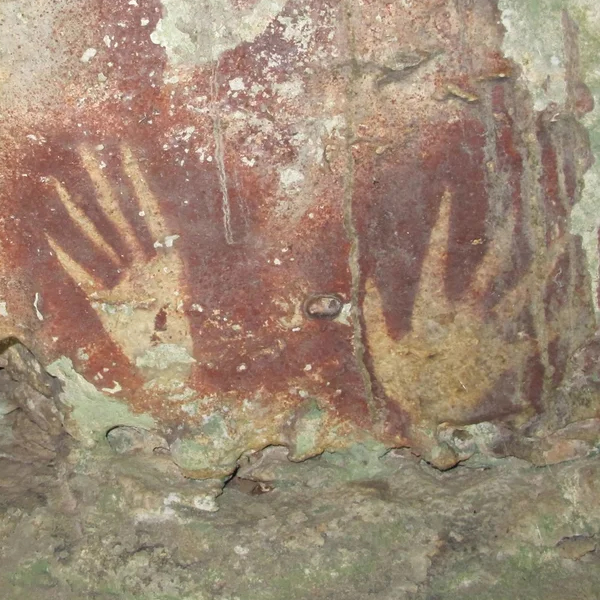
The Lower Pecos Canyonlands in Texas are home to one of the most alluring mysteries in the world of anthropology. A group of nomadic hunter-gatherers, whose identity remains unknown to researchers, created an extensive document on their perception of the world in the form of more than 200 elaborate pieces of rock art.
While long known to the locals, a group of researchers recently made a thorough examination of how these ancient artworks were created, along with their puzzling content. The group published their findings in Science Advances. Karen Steelman, from the Shumla Archaeological Research and Education Center, along with Carolyn Boyd and J. Phil Dering of the Department of Anthropology at Texas State University, mapped out and dated the rock art using two different and independent radiocarbon methods.
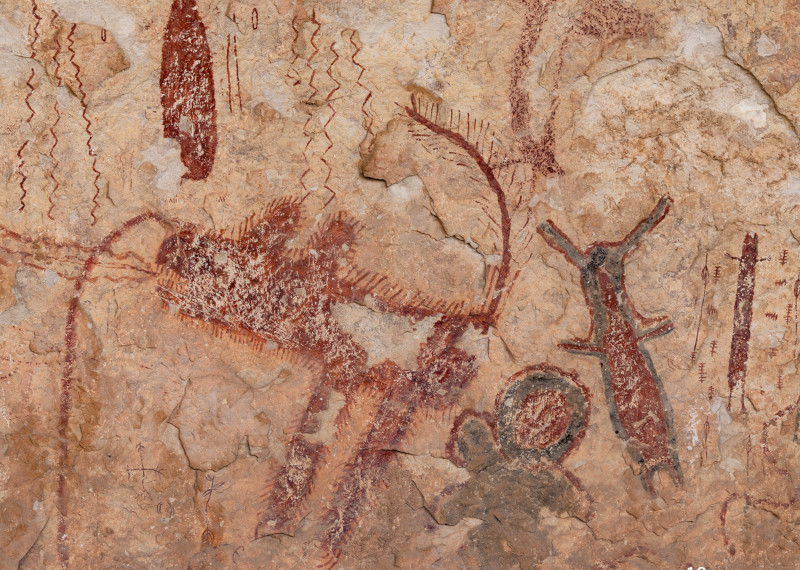
The murals were found to have been created over a period of approximately 4,000 years, with the earliest dating back about 6,000 years ago. Painted on limestone, the rock art depicts humanoid and animal-like characters, along with symbols that have yet to be deciphered. All these components were woven into visual narratives that detail creation myths, calendar cycles, and spiritual rituals, forming the cosmovision of this enigmatic people.
Most impressively, despite having been painted by roughly 175 generations of artists, the researchers found the creators followed a strict set of rules throughout the years, such as laying the colors in the same order—choices that made it easier to communicate their vision and pass it down to their descendants.
“These paintings may be the oldest surviving visual record of the same core cosmology that later shaped Mesoamerican civilizations and is manifested today throughout Indigenous America,” Boyd said in a statement. What’s more, the mural ties into the larger picture of pre-Columbian history and how cultures across the continent were connected; the researchers spotted elements present in later civilizations, such as the Aztecs and the Huicholes in central Mexico.
To Boyd, the murals are like an ancient library containing hundreds of books authored by 175 generations of painters, with the stories still being told today. “The murals are viewed by Indigenous people today as living, breathing, sentient ancestral deities who are still engaged in creation and the maintenance of the cosmos,” the researcher told Live Science.
The Lower Pecos Canyonlands in Texas are home to over 200 elaborate pieces of rock art that capture the worldview of yet-to-be-identified group nomadic hunter-gatherers.
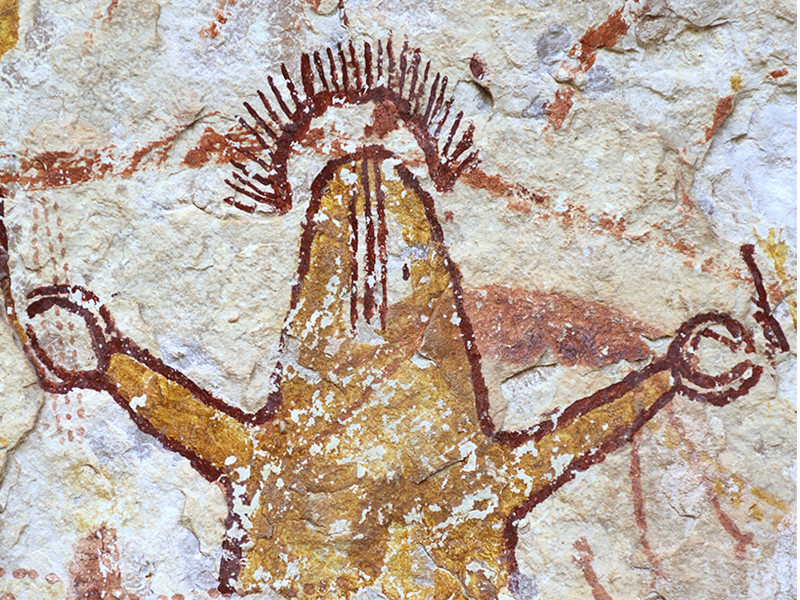
Photo: Steelman et al., Sci. Adv. 11, eadx7205
A group of researchers recently made a thorough examination of how these ancient artworks were created and their puzzling content, publishing their findings in Science Advances.
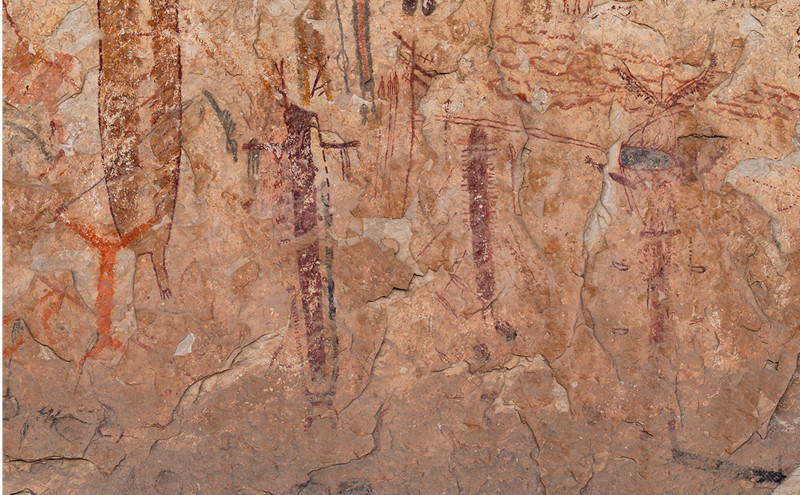
Photo: Steelman et al., Sci. Adv. 11, eadx7205
The murals, created over a period of approximately 4,000 years, depict humanoid and animal-like characters, woven into visual narratives that detail creation myths, calendar cycles, and spiritual rituals.
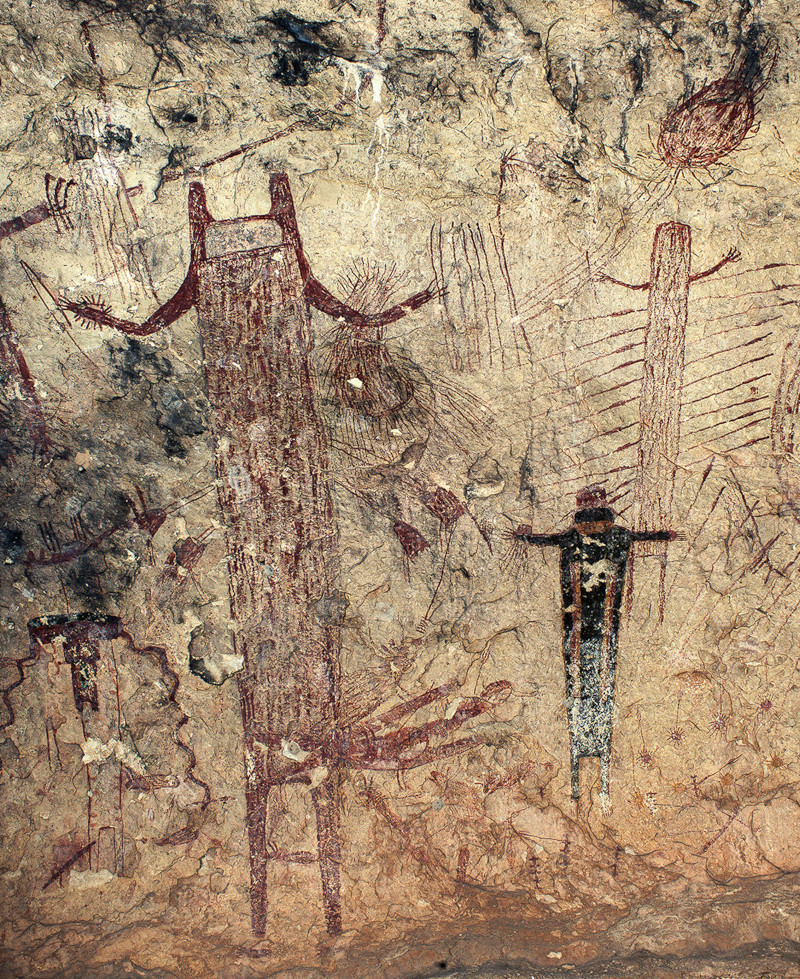
Photo: Steelman et al., Sci. Adv. 11, eadx7205
Sources: Mapping the chronology of an ancient cosmovision: 4000 years of continuity in Pecos River style mural painting and symbolism; Ancient rock art along US-Mexico border persisted for more than 4,000 years — and it depicts Indigenous views of the universe
Related Articles:
Indigenous Elders Decode Ancient Rock Art Filled With Shamans Spiritually Transforming Into Animals
African Rock Art Demonstrates How Indigenous People Were Early Paleontologists
Volunteers Uncover 3,500-Year-Old Rock Art During Environmental Cleanup in Kazakhstan
Ancient Rock Art Depicts Psychedelic Music and Dance in Peru