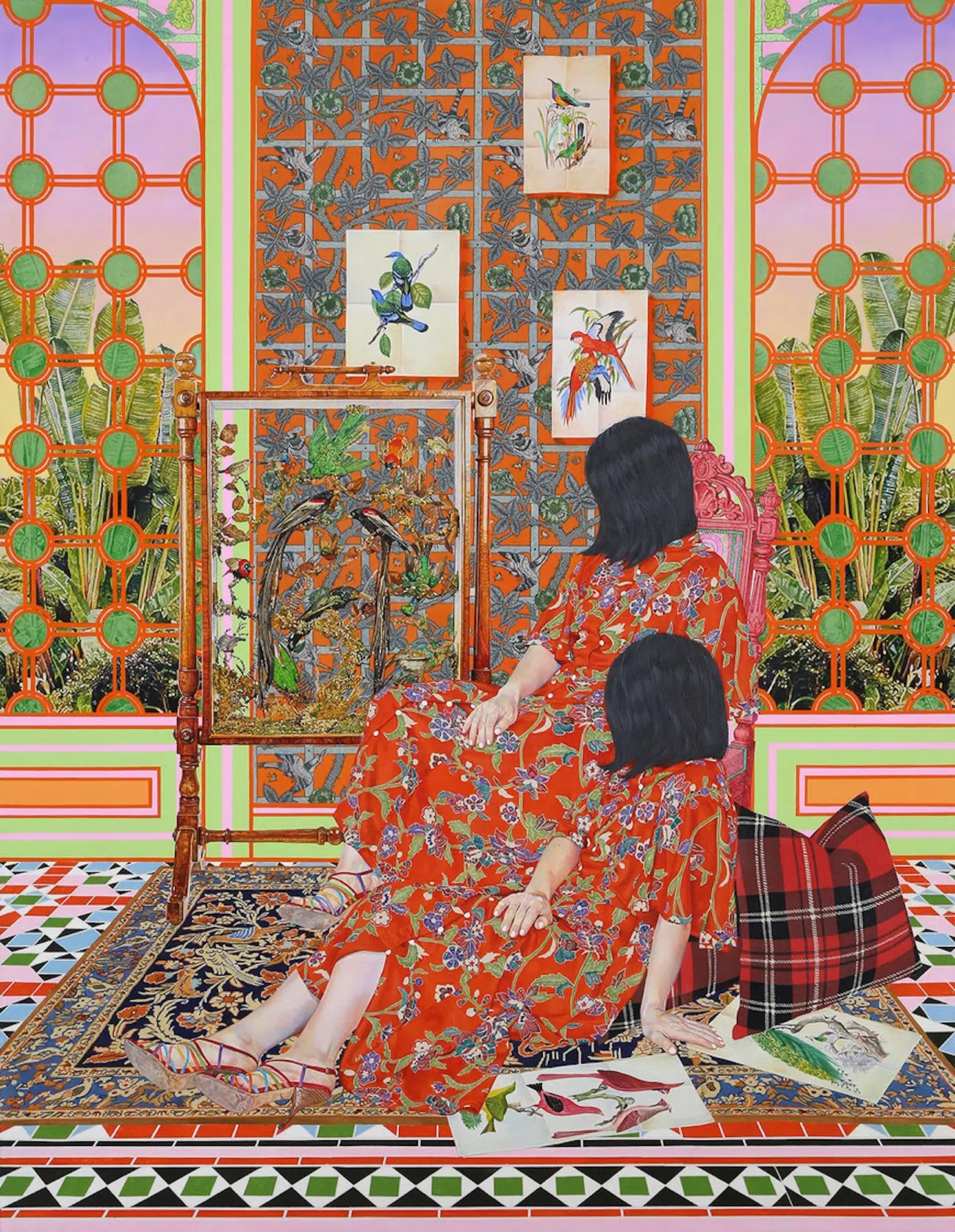
“Bird Collector”
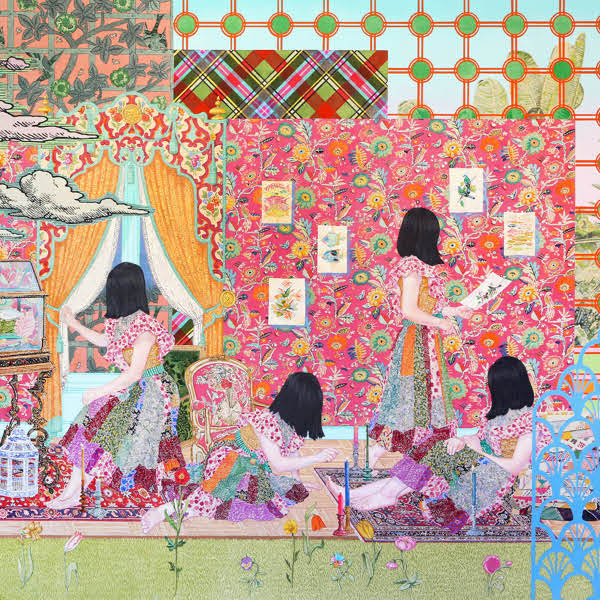
Take your time when viewing the paintings by Naomi Okubo. The intricate, layered works are awash in patterns upon patterns, often cloaking the figures within them. Taking place indoors, outdoors, and spaces in between, the pieces draw from realism while not shying away from elements that border on the surreal. Within a grassy field, for instance, is a portal—a looking glass—into another place. Larger-than-life dolls greet the women as they enter a greenhouse, offering a compelling narrative as we admire the formal elements of Okubo’s work.
The world Okubo has created is often one of enclosure. Her figures, draped in lavishly adorned garments, appear to be sequestered within the airy glass spaces. Plants and lush fabrics surround them, but there is an uneasy feeling about it all. That, despite the beauty, they can’t leave; they are specimens—faceless, to be admired but not much else.
The anxiety evoked by the figures is intentional, and it represents the evolution of Okubo’s visual language. “In her early work, Okubo depicted women without faces as a symbol of the pressures to conform in Japanese society,” a statement from the artist explains. “Over time, these faceless figures have come to function more broadly as a mirror, allowing viewers to project themselves and reflecting both individual experiences and societal dynamics.
“In recent years, she has also been exploring the motif of the ‘greenhouse/home,’ a confined yet seemingly nurturing space that resonates with her upbringing and contemporary life, highlighting how environments can both protect and constrain.”
We spoke with Okubo about her paintings, including how she comes up with her compositions and where you can see her work (in person) next. Scroll down for My Modern Met’s exclusive interview.
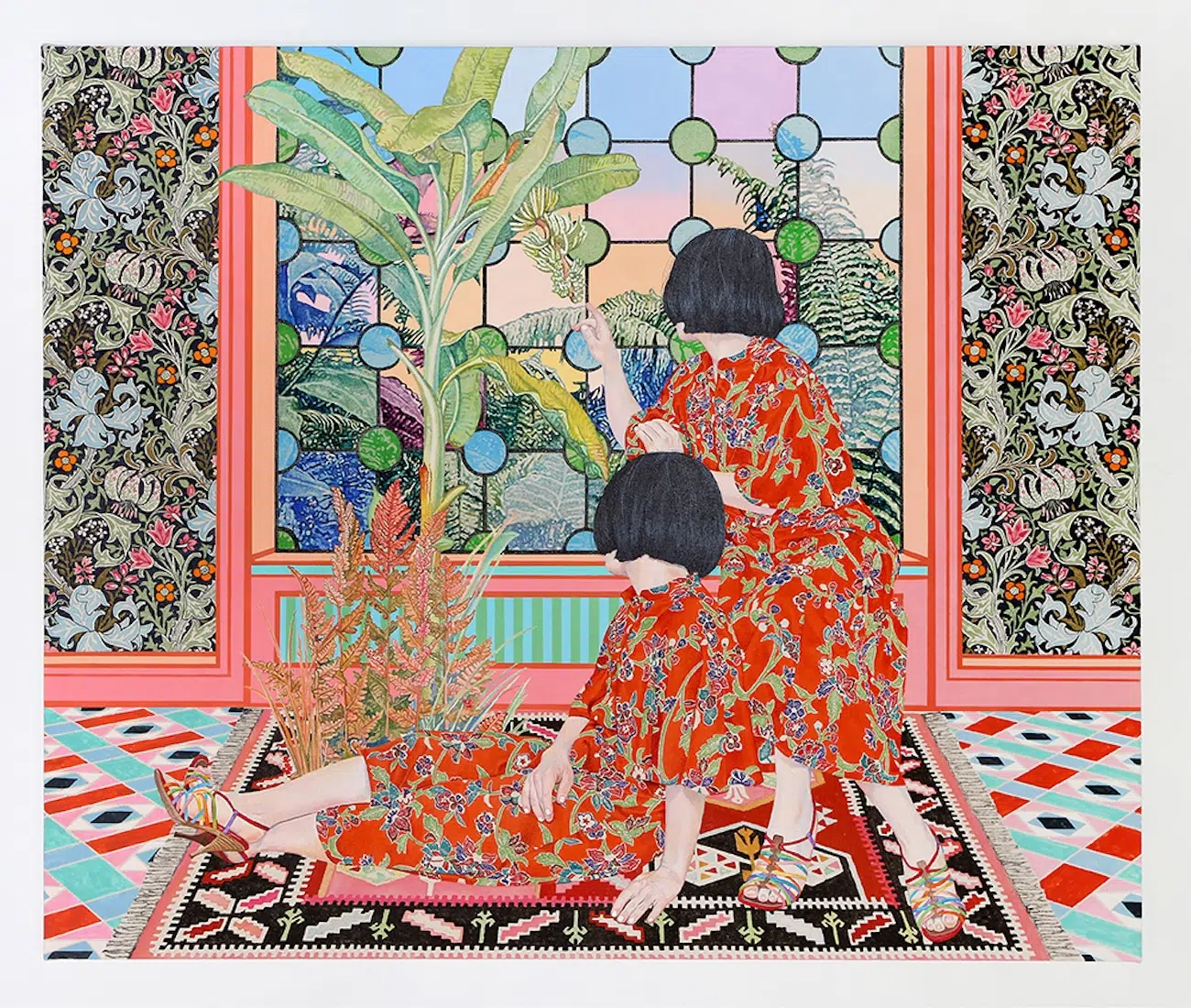
“Specimens”
What is your artistic background?
I grew up drawing because my mother was a painter, and from a young age, I naturally developed a love for making images. At the same time, I was always fond of handicrafts such as sewing and knitting, so combining patterns and colors has been familiar to me since childhood. In recent years, I have even been making the clothing worn by the figures in my paintings, which allows the things I have done throughout my life to be reflected in the work, regardless of the medium.
What led to the development of your personal style?
My father was born in Yokohama toward the end of World War II, when my grandfather was working at the Swiss Embassy, and after the war he worked on a U.S. military base. Because of these experiences, he was deeply influenced by American culture. My mother—who was much younger than my father—also belonged to a generation that admired Western culture. As a result, the environment in which I grew up was filled with Western furniture and objects, which has undoubtedly shaped my sensibilities as well.
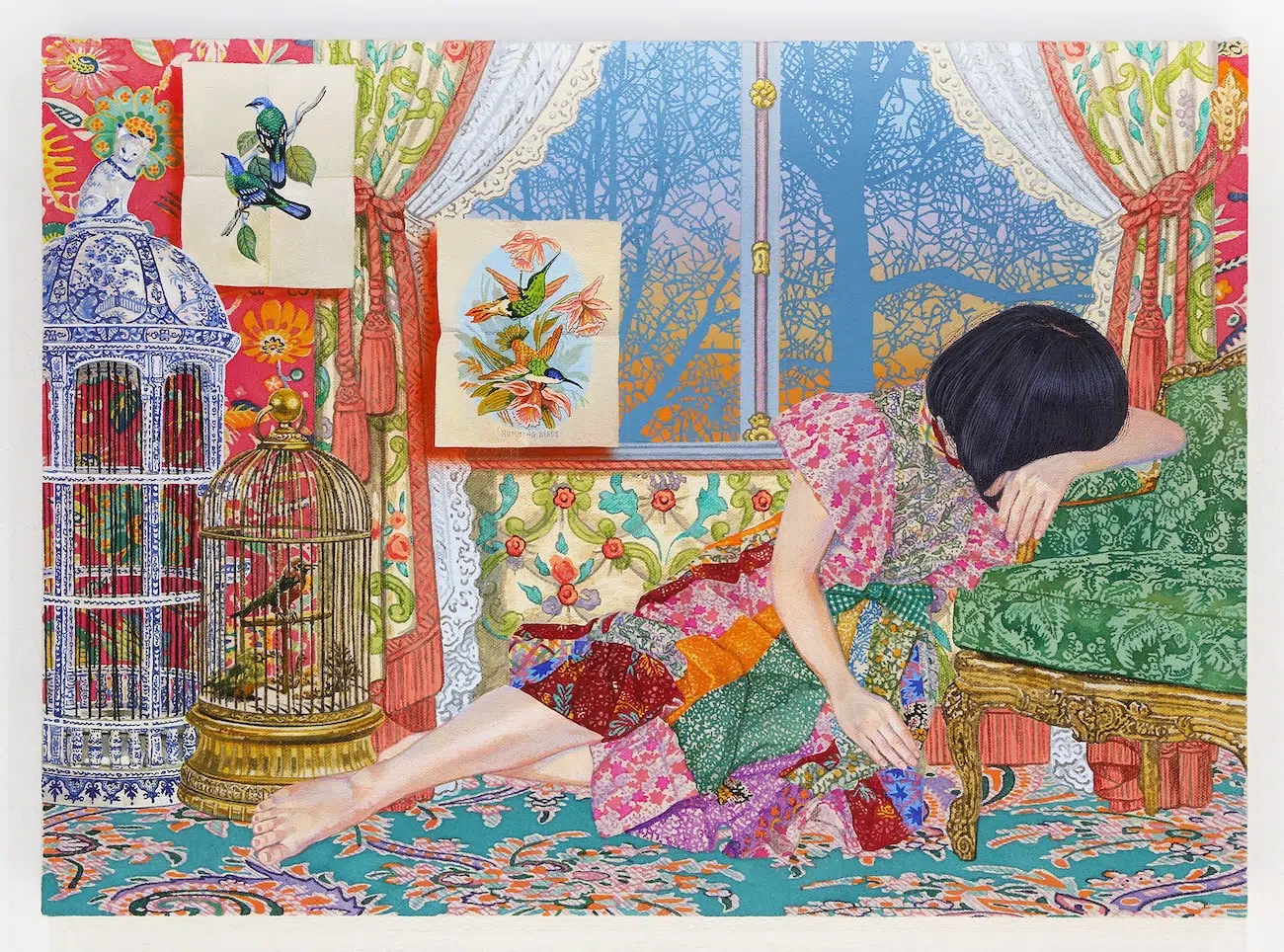
“Birdcage #2”
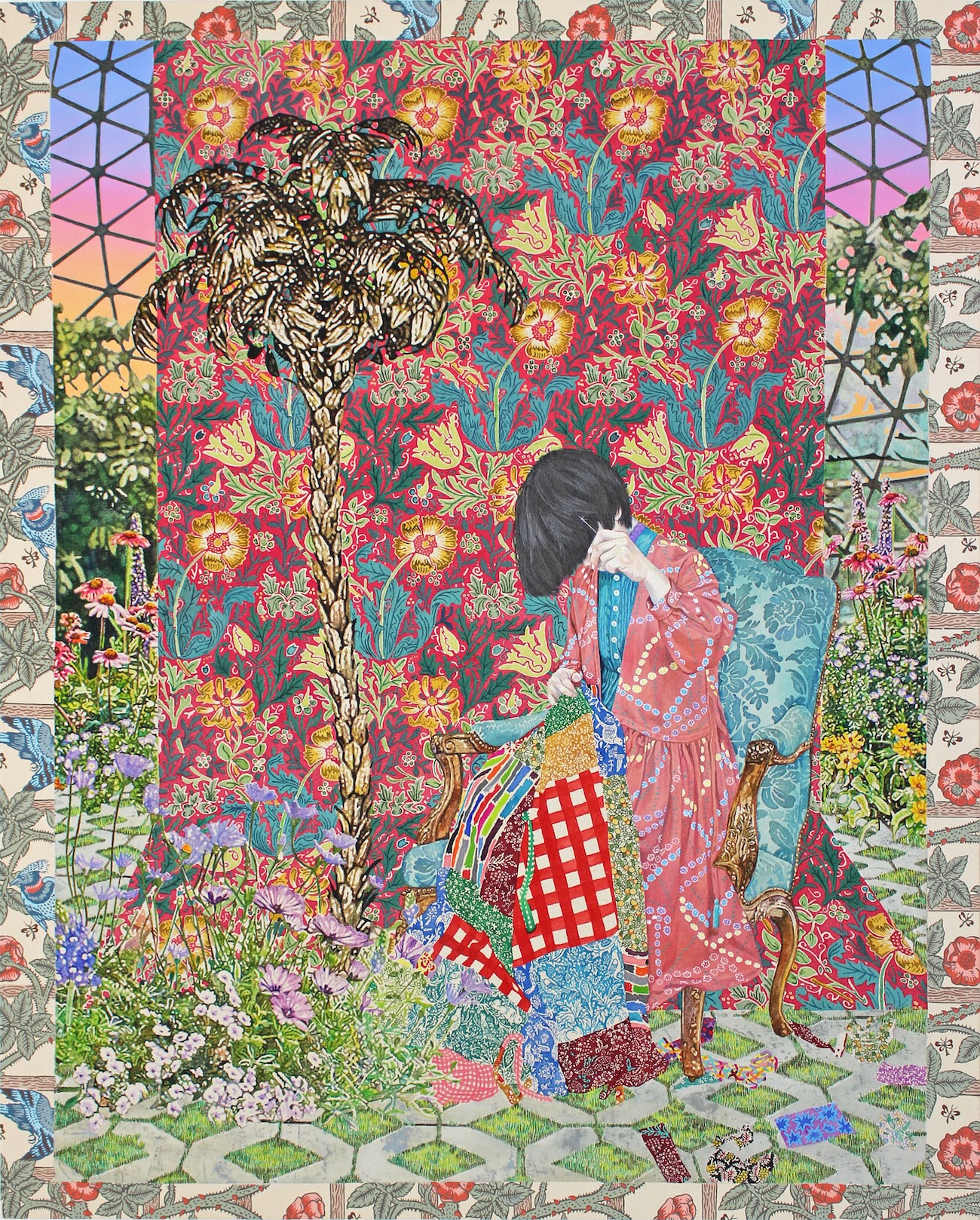
“Sew together, or to be sewn on…”
How would you describe your paintings to someone who has never seen them before?
I usually describe my work quite simply as figurative paintings made with acrylic, characterized by vibrant colors and a high level of detail.
Women have played a central role in your work, albeit they have changed over time. Can you talk about the decision to depict women and how they have shifted throughout the years?
The women in my work are depictions of myself, so my own age and whatever hairstyle I have at that moment naturally appear in the paintings. They will continue to change as I do. Although they can be considered self-portraits, I do not paint the face, which means their expressions cannot be read. This absence creates a space for viewers to project themselves onto the figures. In fact, people of various ages, backgrounds, and ethnicities have told me that they see the figure as “themselves.” In that sense, the women in my work also function like a mirror.
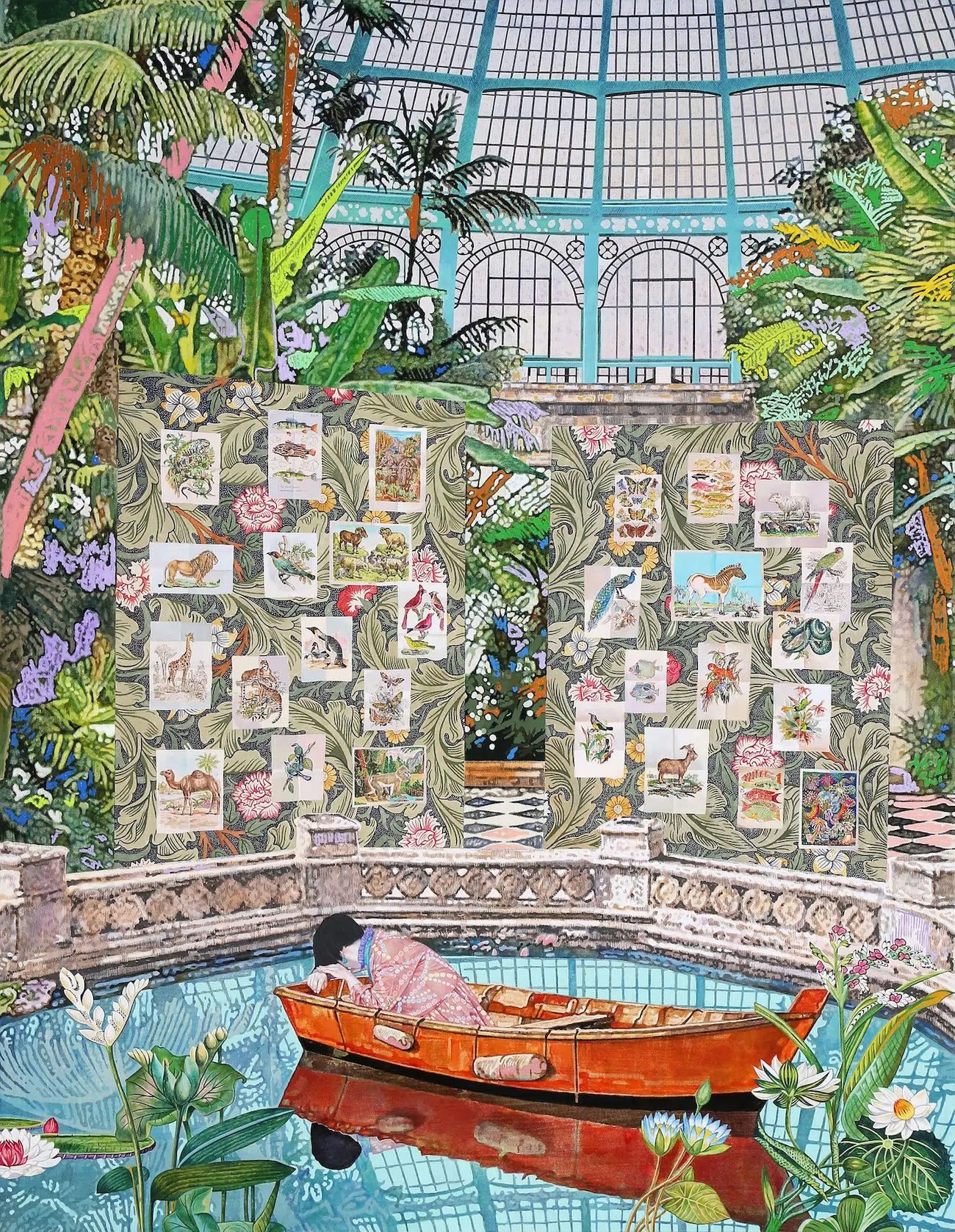
“Stay away from the outside…”
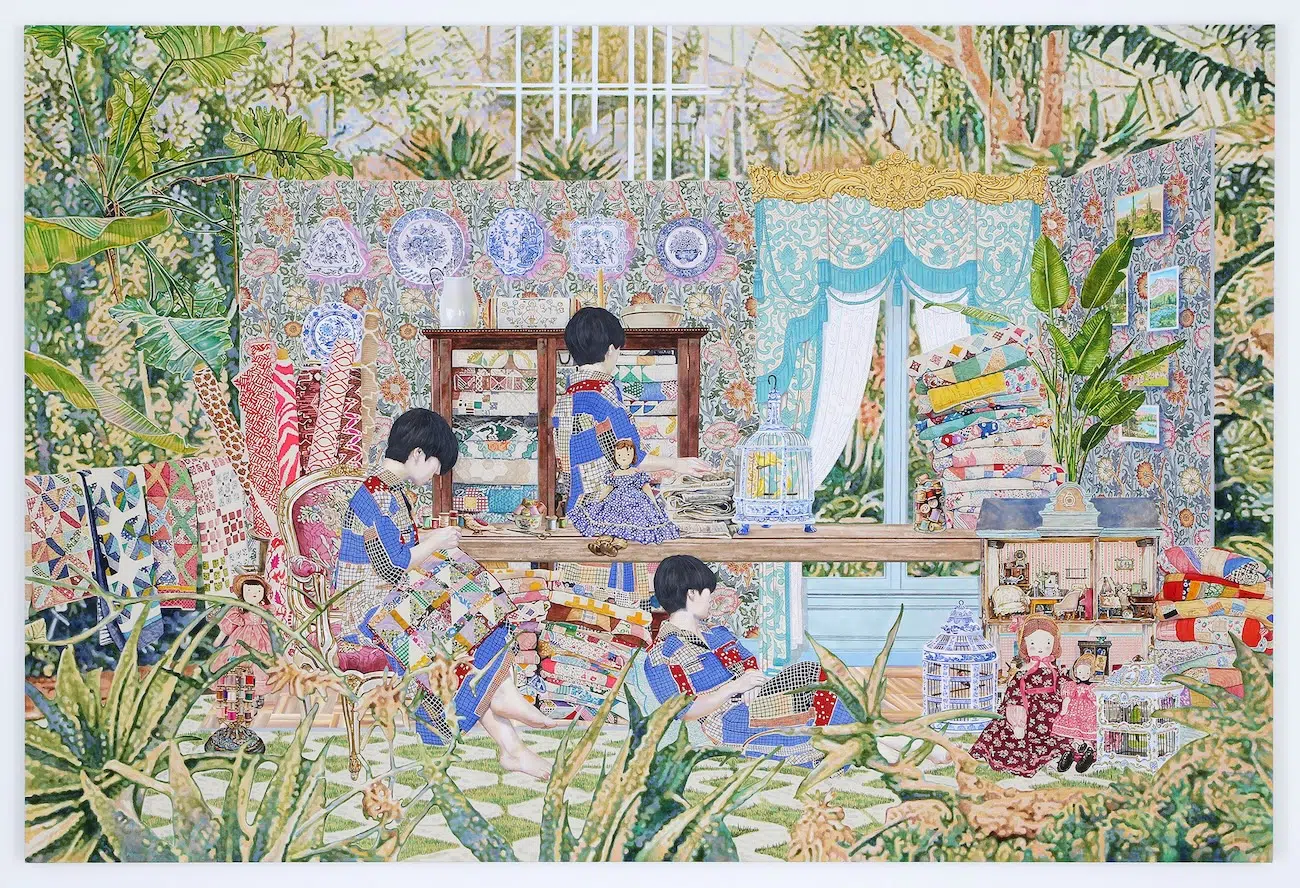
“Living in the Closely Glazed Space”
Your work is incredibly layered and detailed; there is so much to uncover, from taking it all in visually to considering the symbolism and meaning. Can you share how you come up with your compositions, on a visual as well as conceptual level?
Indeed, my paintings are built from layers of different elements, techniques, and meanings. In terms of process, I begin by selecting various images that fit the theme or concept of the work or exhibition. I then create a highly detailed composition in Photoshop, combining these images with self-portraits in which I wear clothing appropriate to the scene. At this stage, I also determine the colors with precision, so the finished painting is almost identical to the digital study.
At the same time, I value the aspects of painting that cannot be fully explained in words—the sense of play, the openness, and the spaces left for interpretation. Some decisions are made simply through considerations of composition or color balance, so elements that carry meaning and those that do not coexist within the same picture plane.
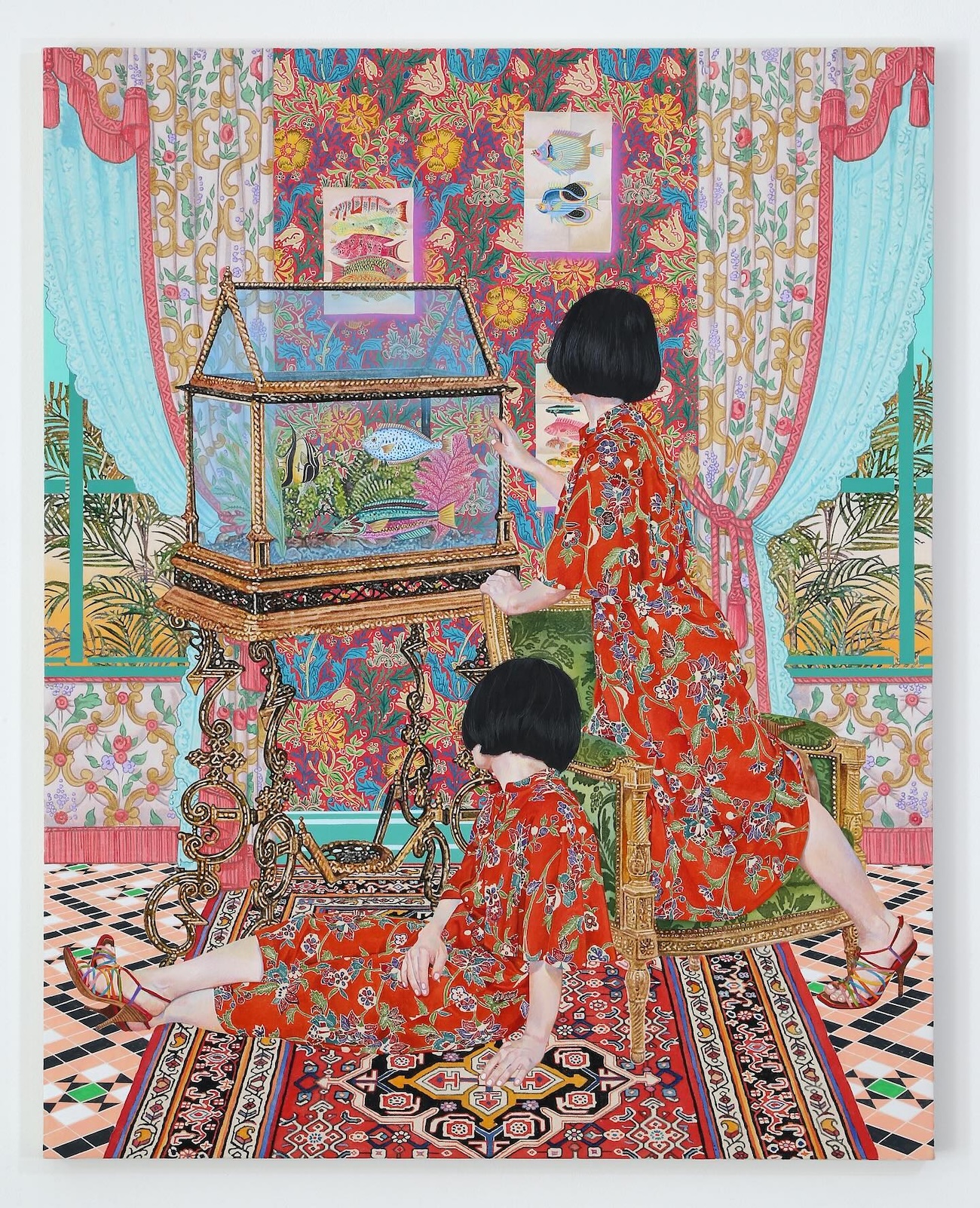
“Within the Enclosed Space”
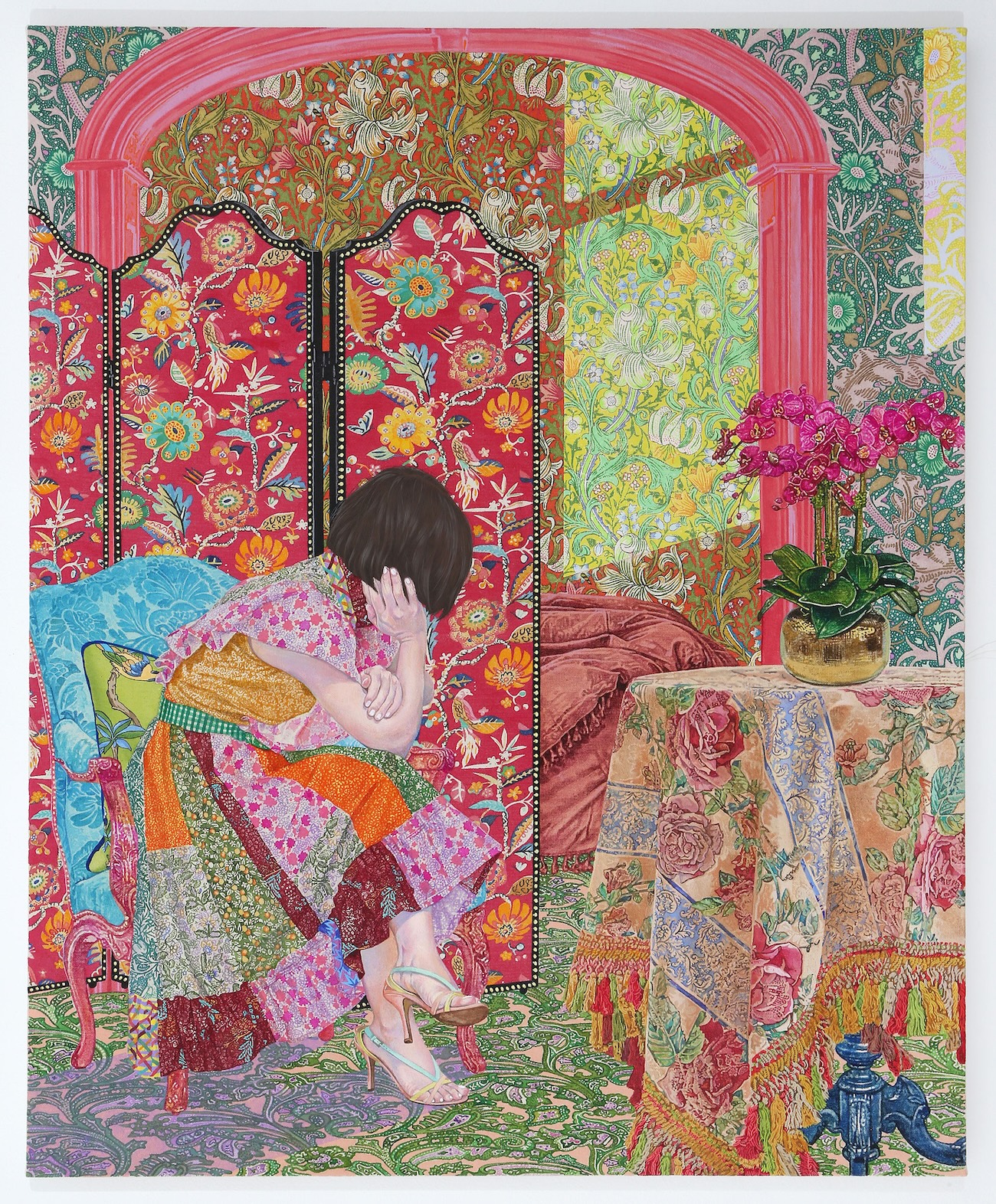
“Endless day Acrylic”
What do you hope that viewers take from the work?
I believe that artists cannot, and should not, control how viewers interpret their work. So people are free to receive and understand the paintings in whatever way resonates with them.
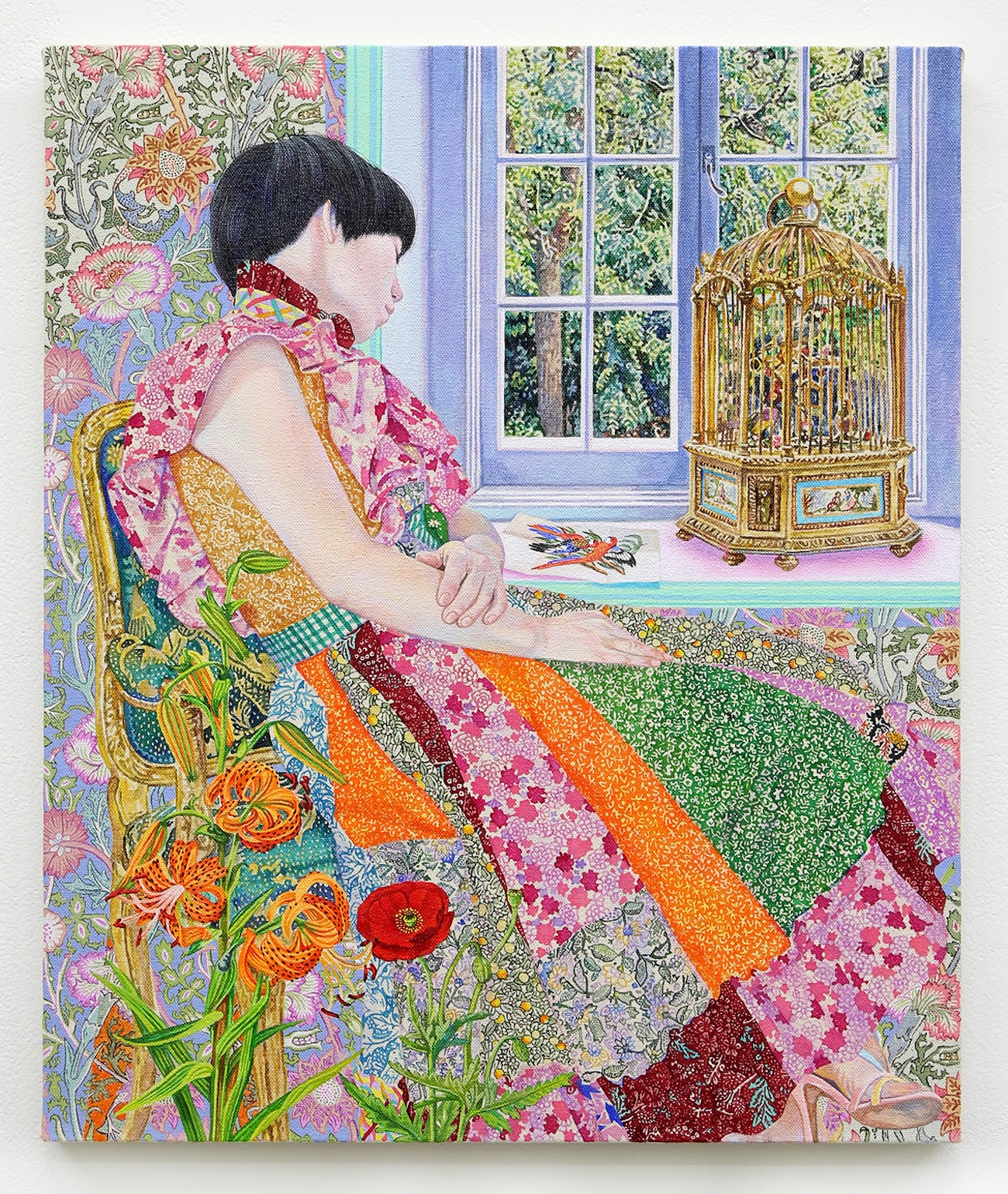
“In the birdcage”
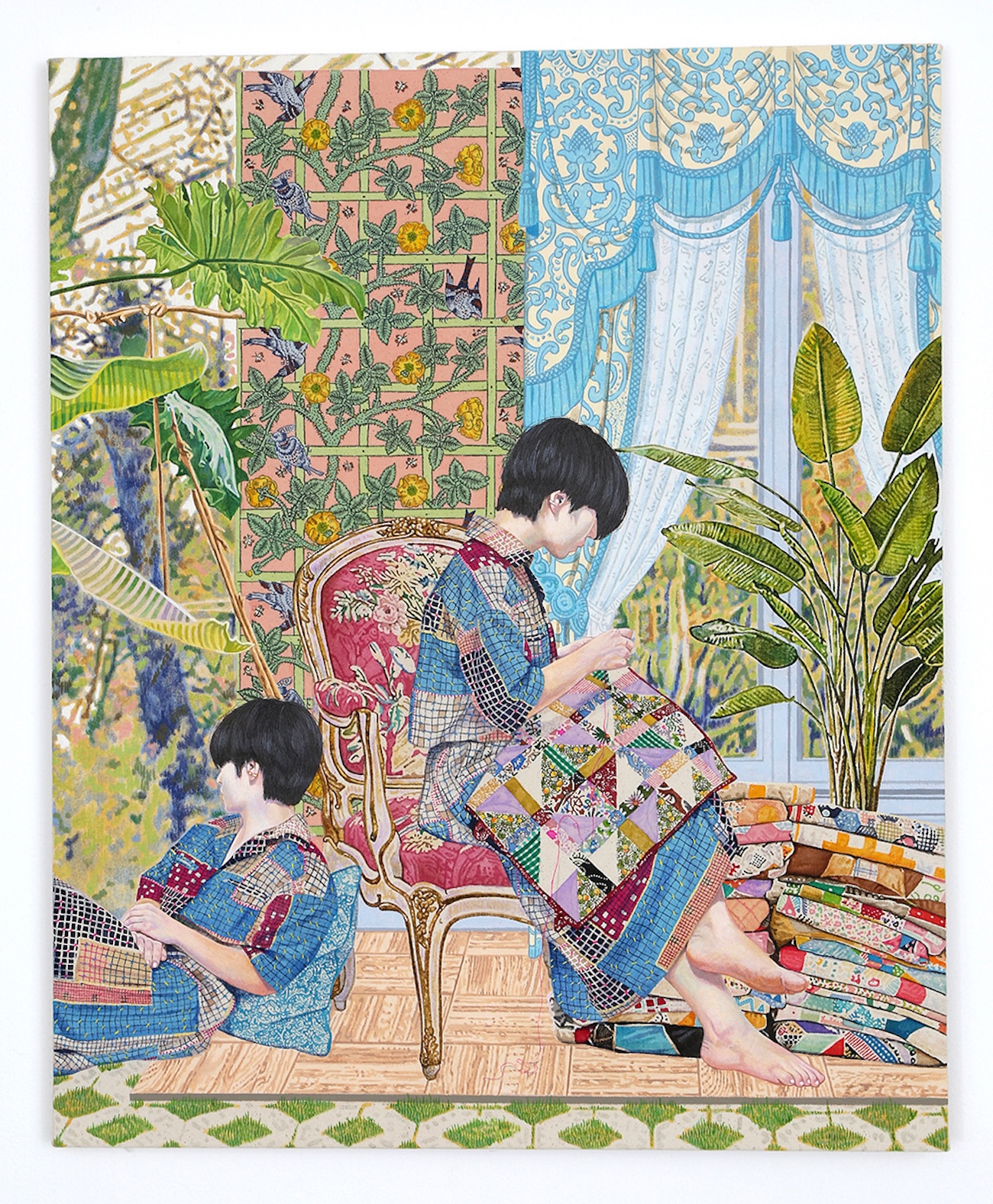
“Living in the Closely Glazed Space #2”
Is there a piece or series you feel best exemplifies who you are as an artist?
When I create a work, I always begin from a personal experience. This does not mean that I want to talk about myself or have people learn about me. Rather, I believe that within individual experiences, there are threads that connect to broader social issues. In that sense, every work can be seen as representing myself, yet as the piece develops, it also grows distant from me and becomes something beyond the personal.
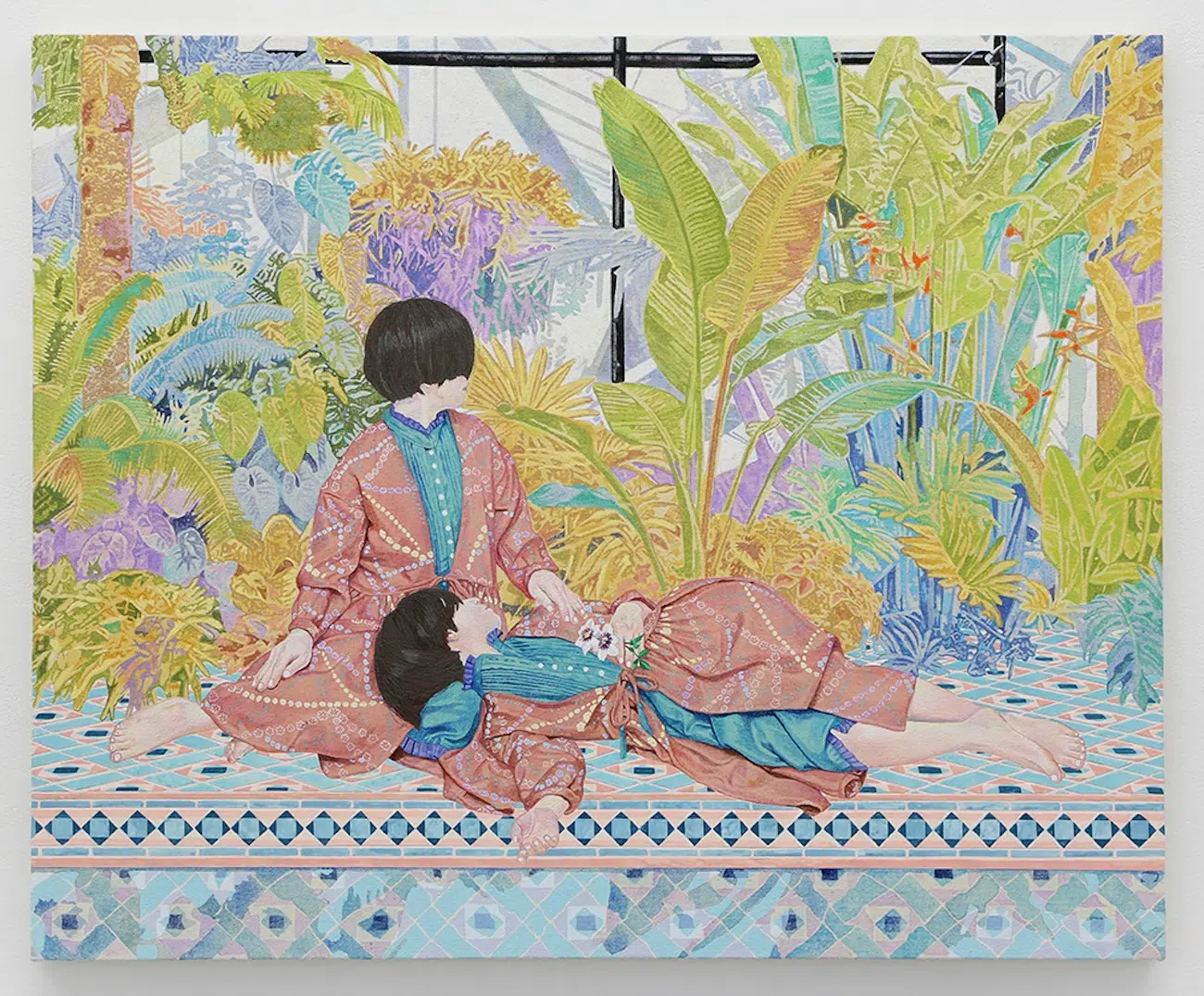
“Adherence Garden”
What are you working on next? Anything exciting you can tell us about?
Next year, I will have exhibitions in Taipei (Taiwan) and Toronto (Canada), and I am currently developing the plans for both shows. If anyone reading this interview happens to live nearby, I would be delighted if you would follow my work and visit the exhibition.
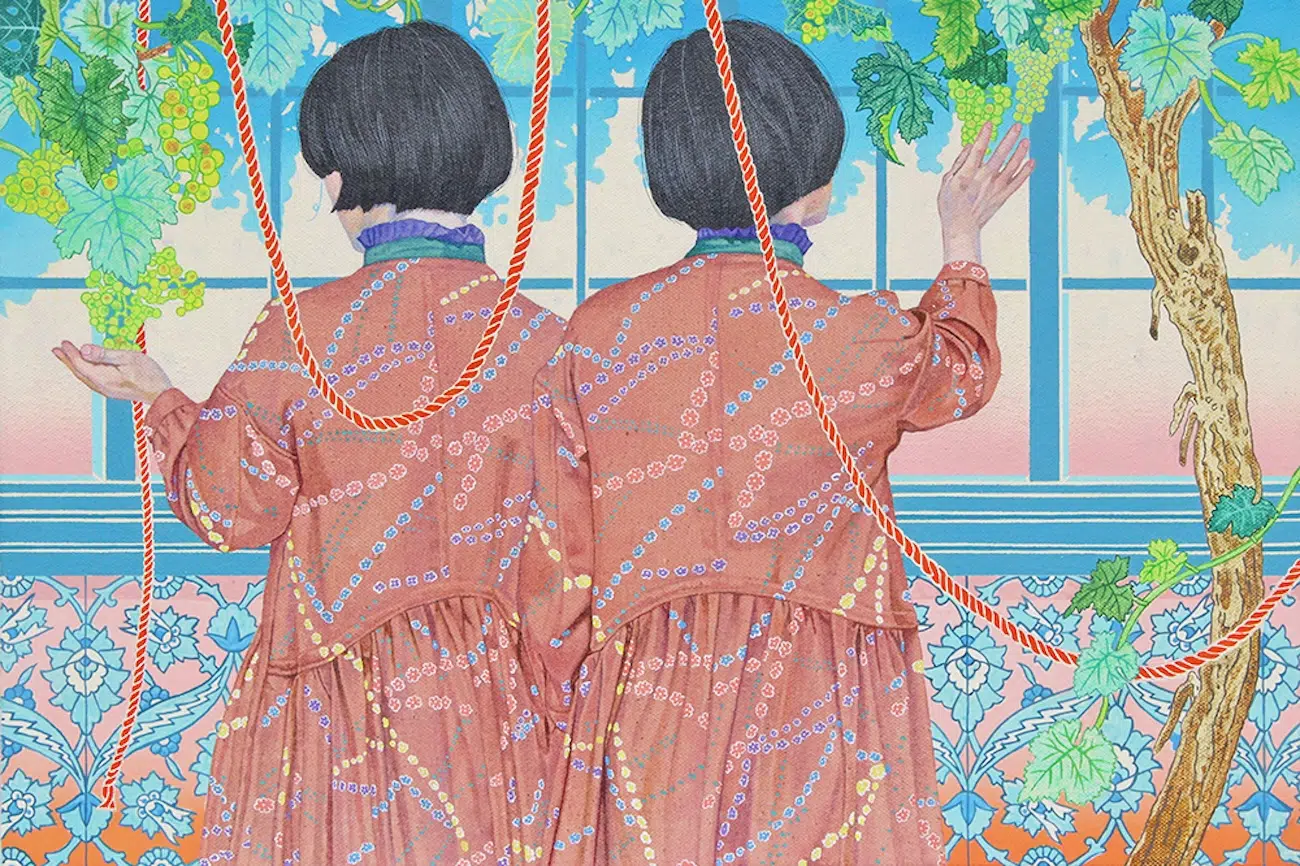
“Anticipation”
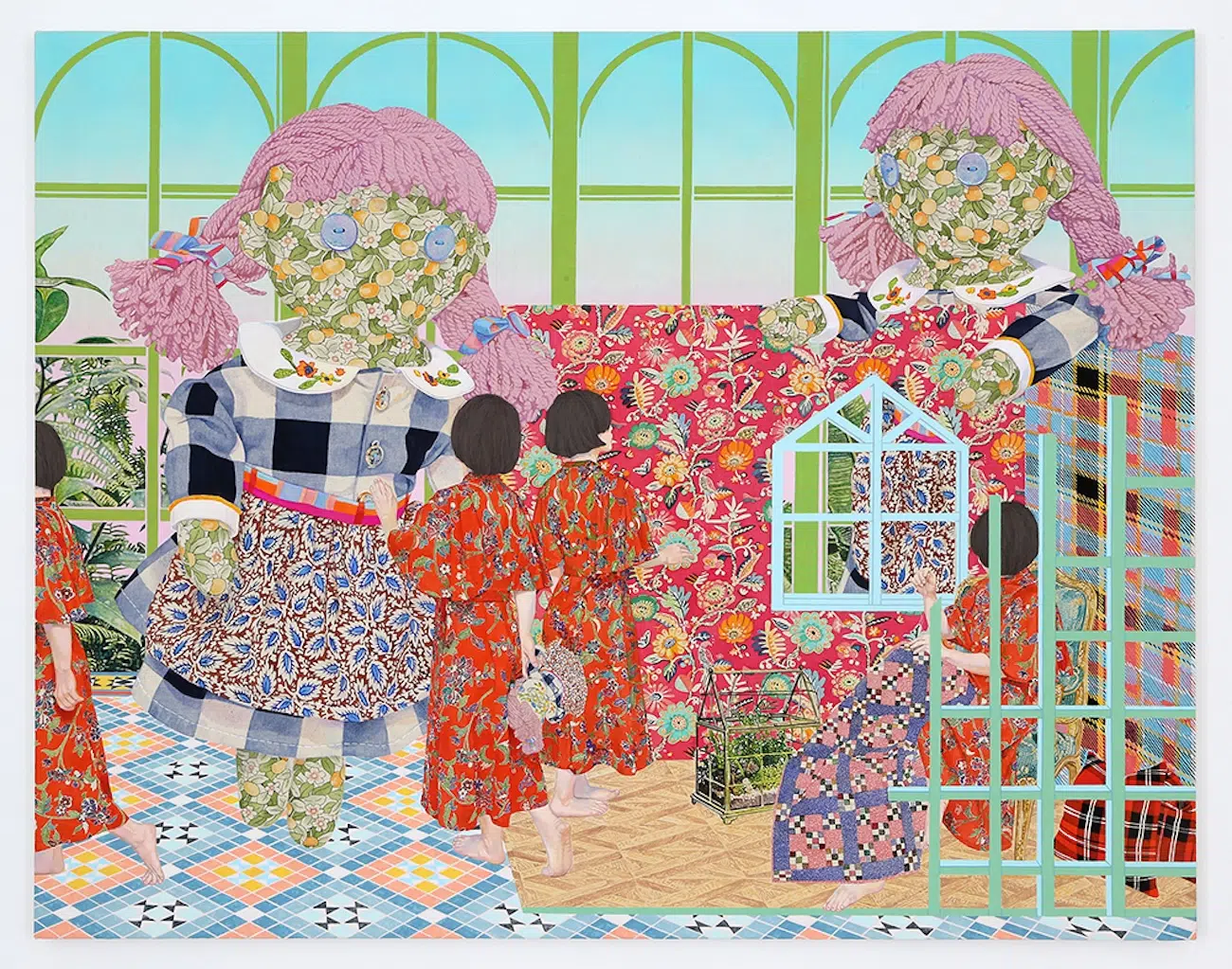
“Little Mama – Closely Glazed Space”
“Specimens”
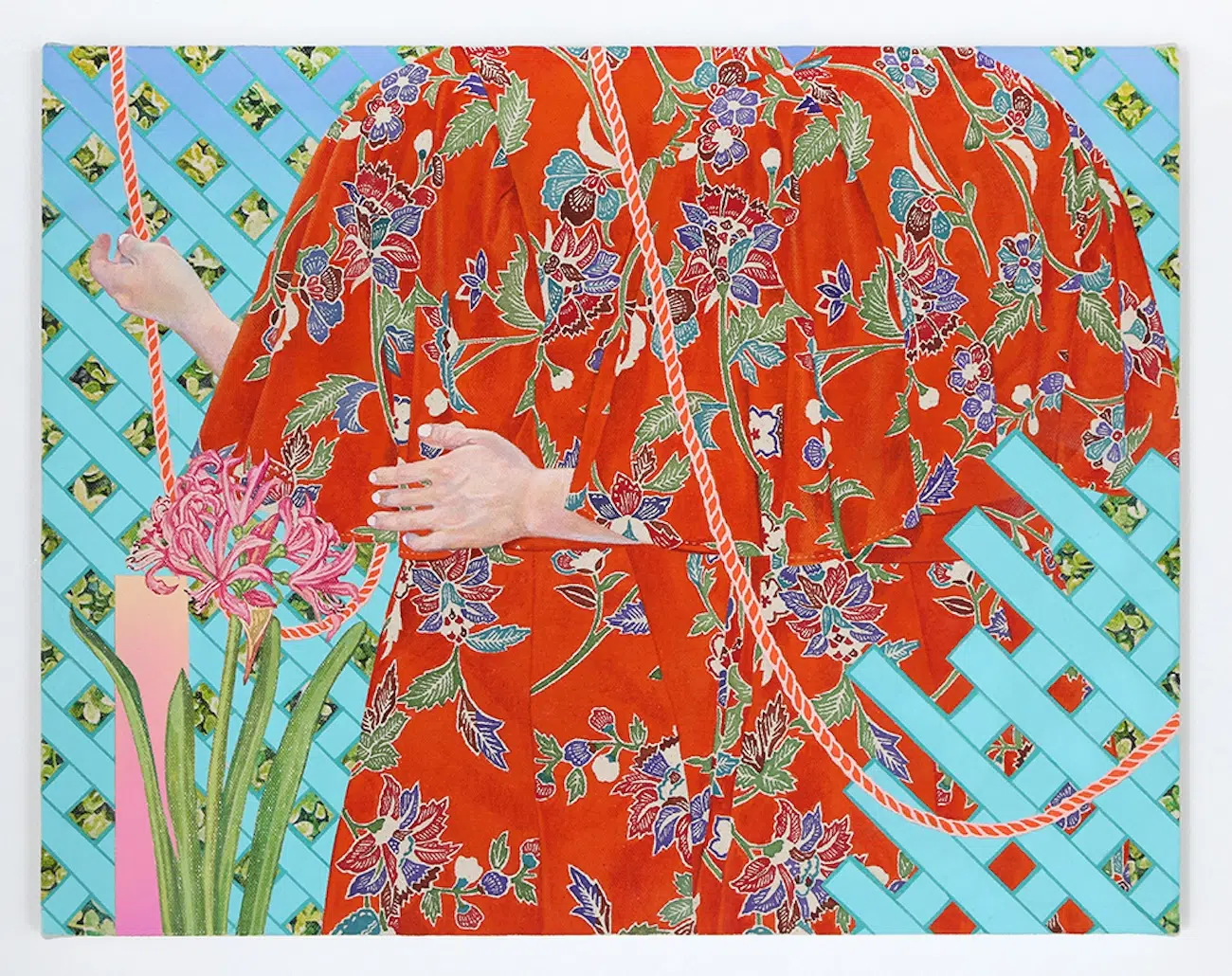
“Inextricable – Nerine”
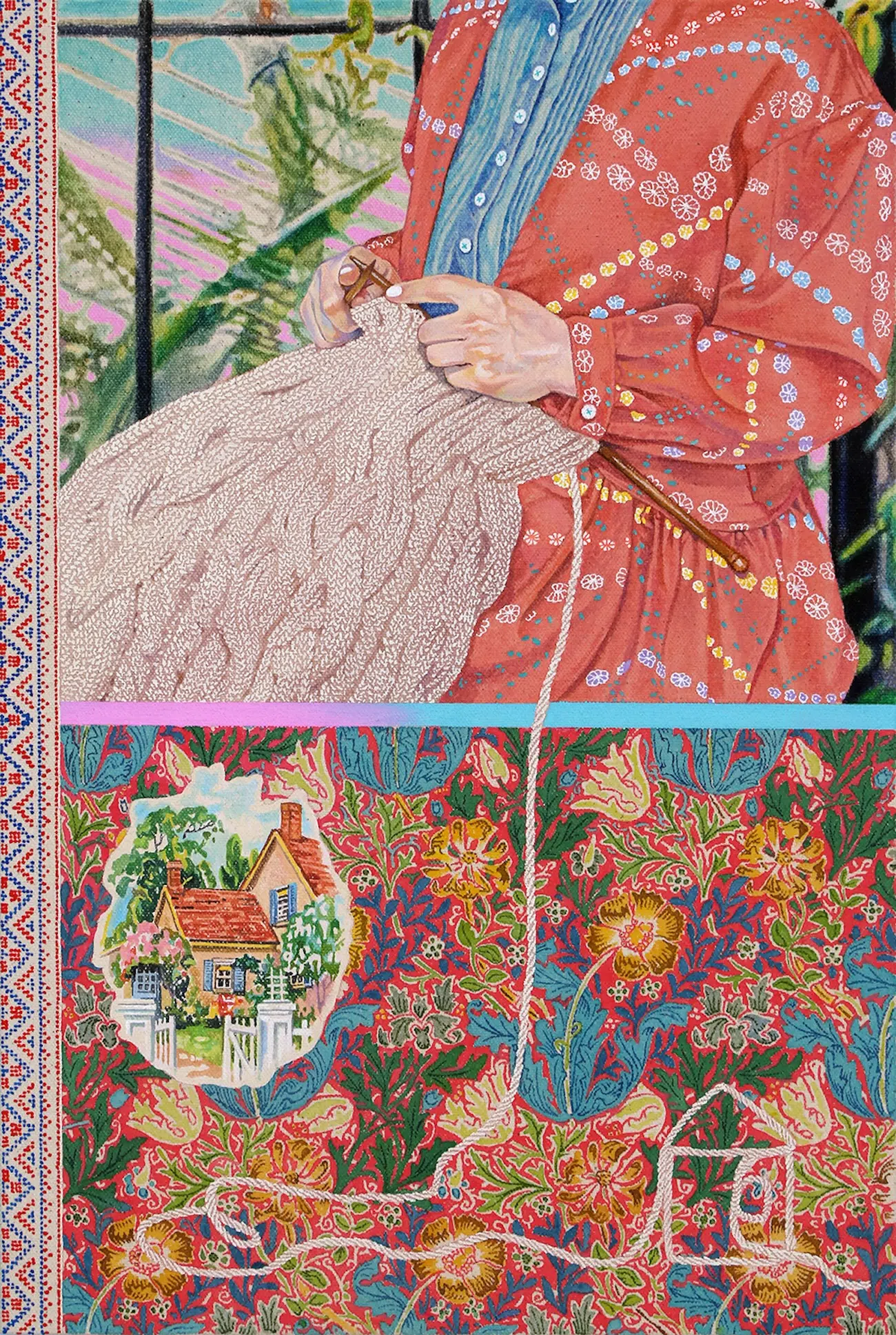
“Knitting/Home”
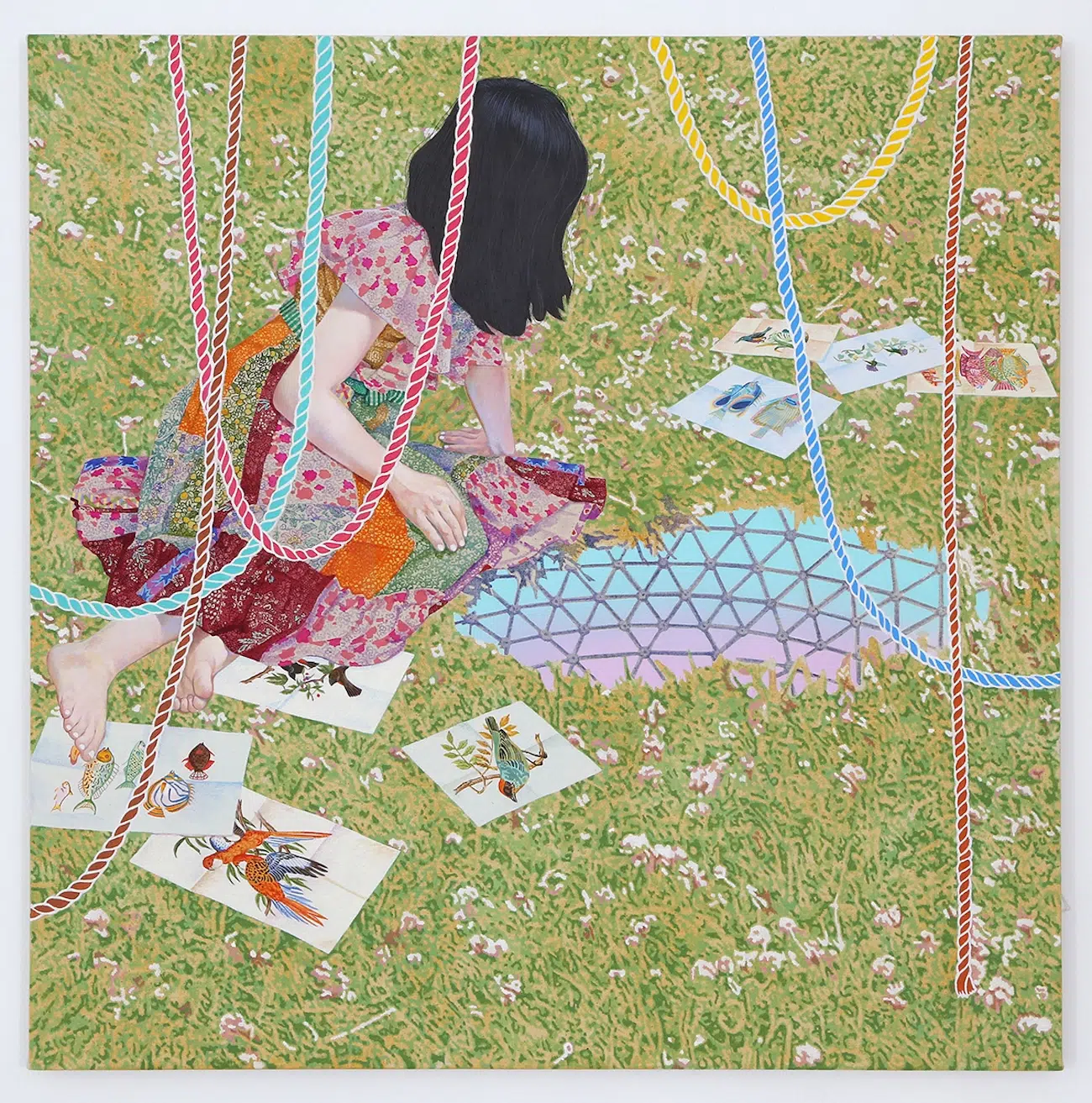
“The Conservatory of the Collector”
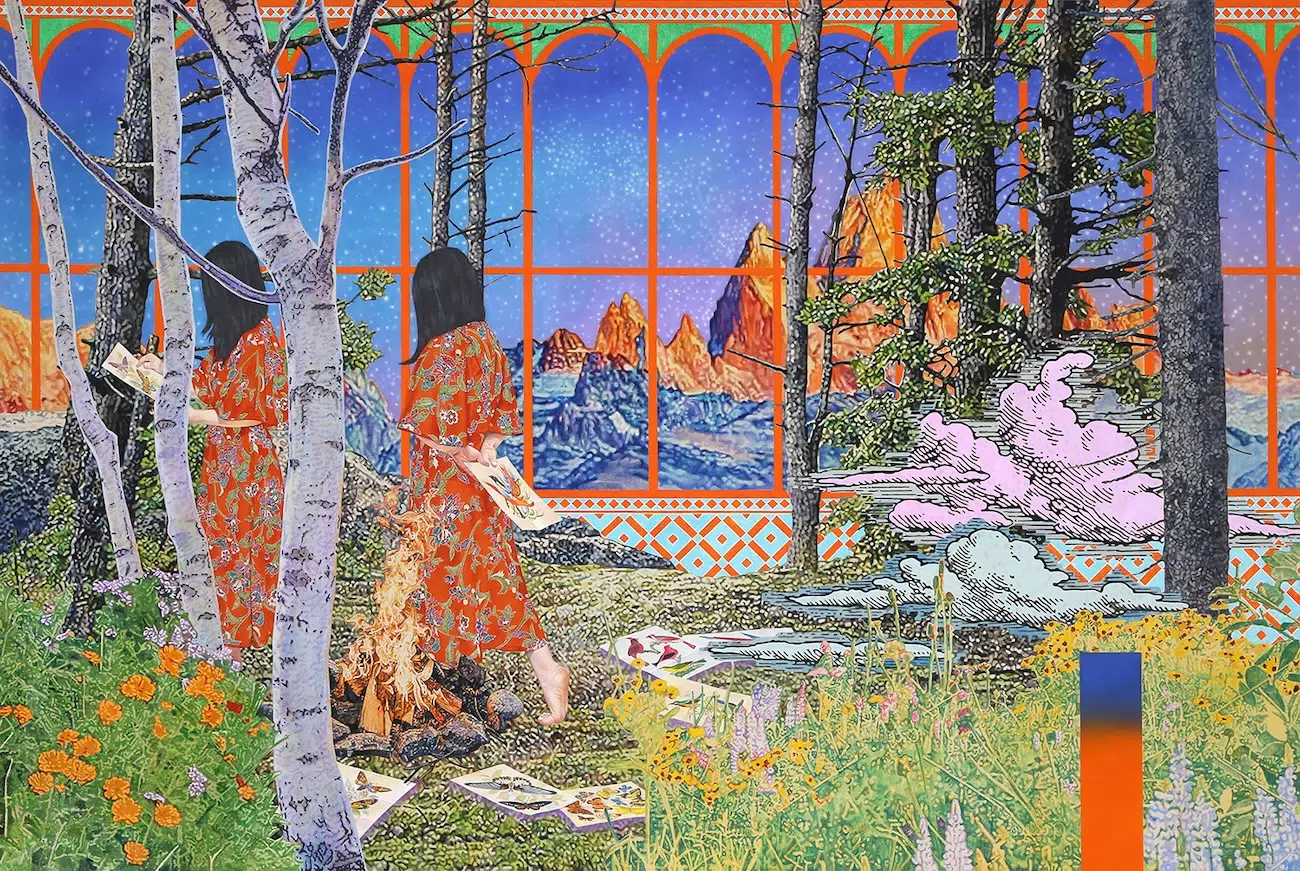
“Elsewhere”
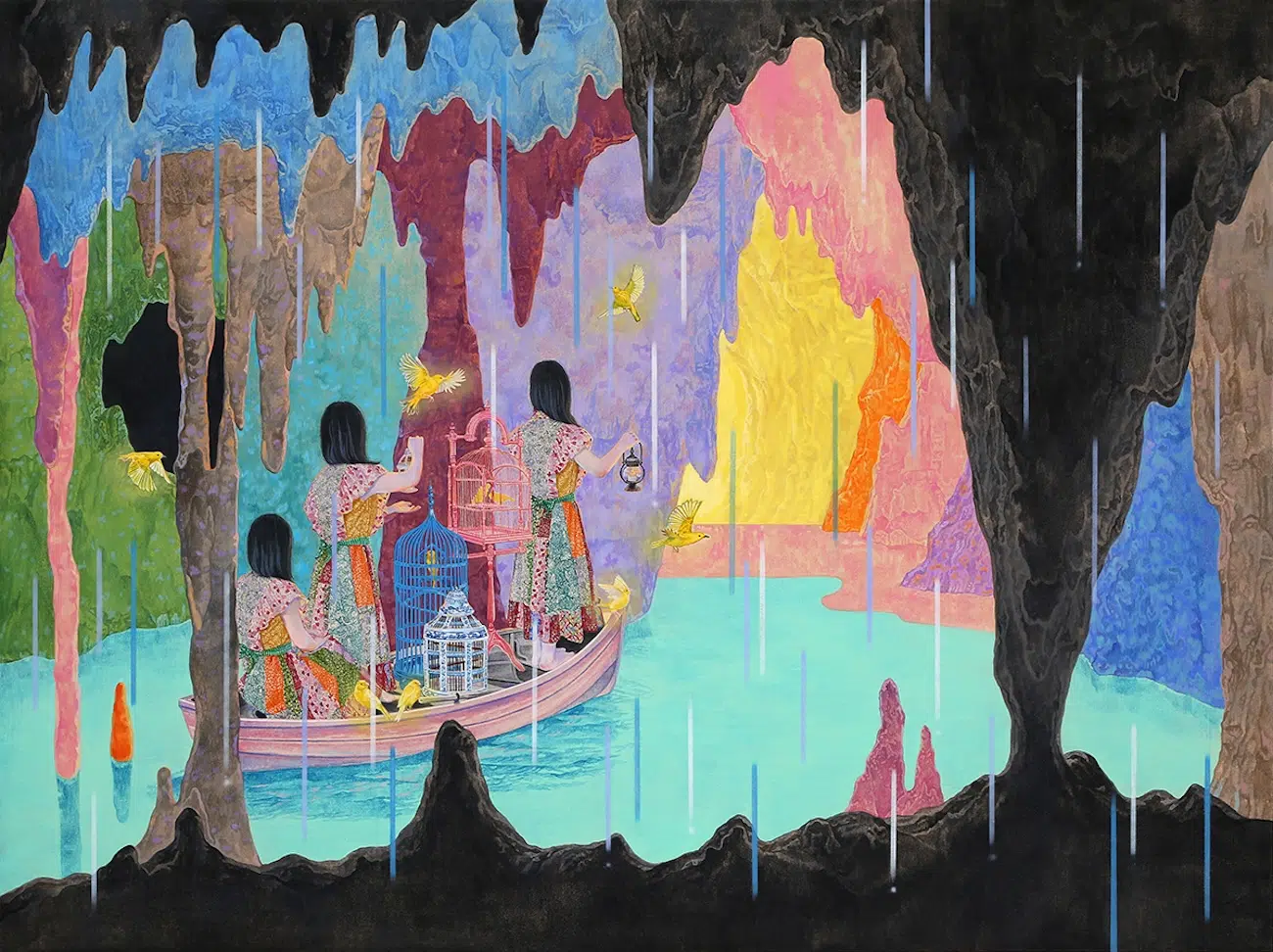
“Canary Cave”