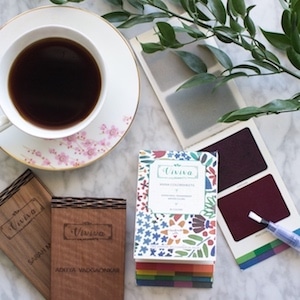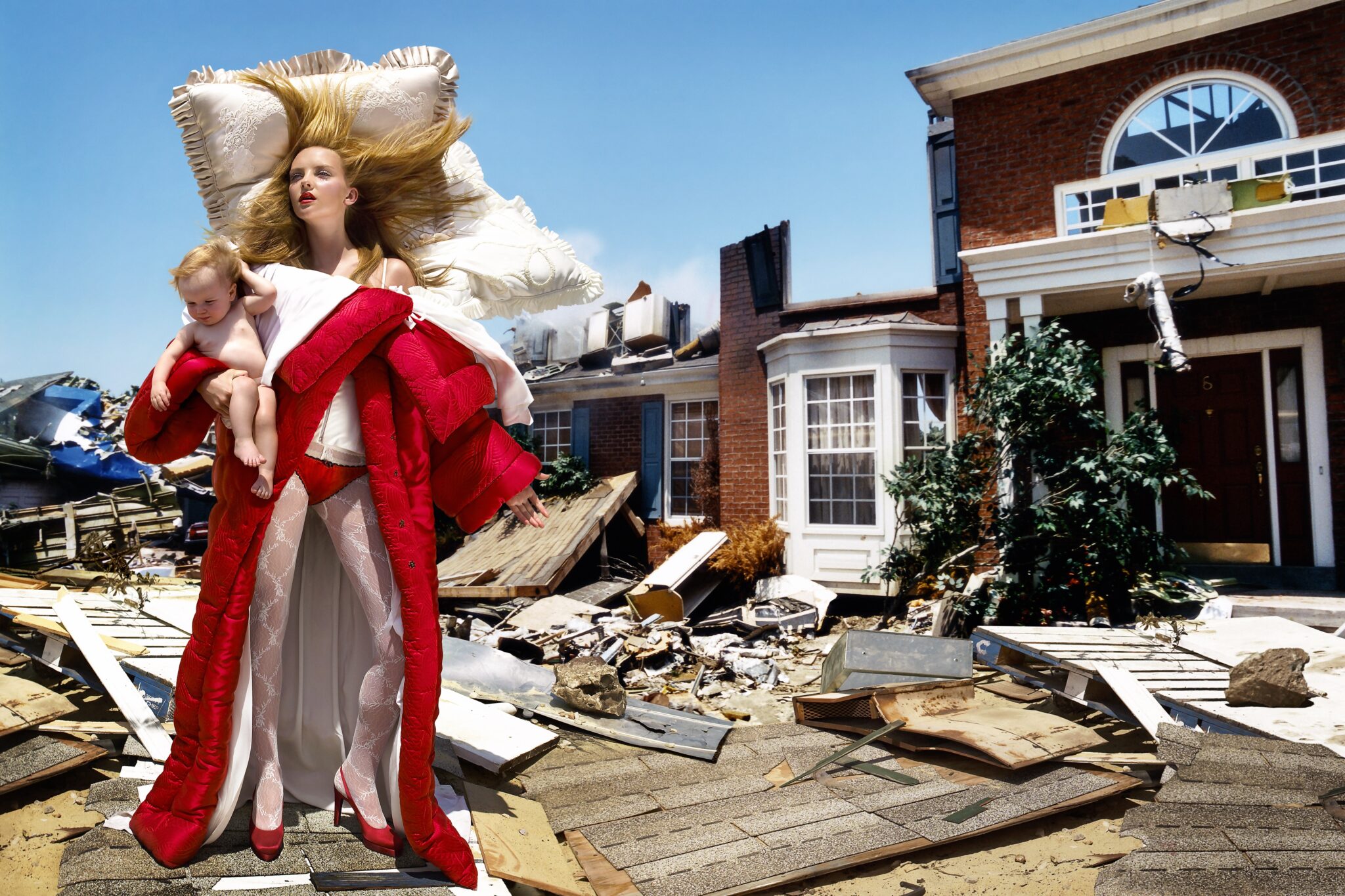
“The House at the End of the World,” Los Angeles, 2005
It might be easier to list the stars that David LaChapelle hasn’t worked with than with those that he has. Throughout his decades-long career, the photographer has radically redefined the portrait genre, transforming cultural icons such as Muhammad Ali, Jackie Chan, Sofia Coppola, Lady Gaga, and Dolly Parton into the most whimsical, expressive versions of themselves. In other words, imagination is permitted to run wild with LaChapelle. In his work, Megan Thee Stallion hatches from a cocoon, David Bowie cradles a naked mannequin, Whitney Houston screws records to a wall, and the Beastie Boys serve hot dogs and burgers behind a diner counter.
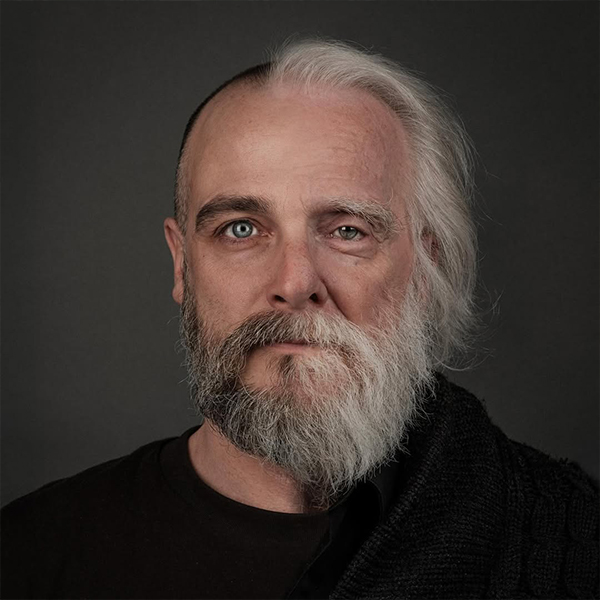
But LaChapelle’s photographs aren’t just about theater, play, and drama. They also radiate with a sleek sensibility, meditating upon rich, allegorical themes through their careful staging, lighting, and compositions. After all, his career began in New York City in the 1980s, a period marked not just by intense creativity, but by loss. During this time, he collaborated with Andy Warhol on shooting for Interview Magazine, while also snapping more intimate images of his friends in small apartments in the East Village. These scenes, LaChapelle explains, responded to the ongoing AIDS epidemic and contended with death and sexuality. These ideas continue to influence his work, which is as expansive as it is multi-dimensional.
“These early works helped define my technique and approach to making pictures,” LaChapelle tells My Modern Met. “I continue to use an analogue process and I think [in] analogue.”
Now, yet another dimension to LaChapelle’s practice is about to be revealed. On January 31, 2026, As the World Turns, the artist’s largest-ever retrospective staged in the United States, will finally open at the Orlando Museum of Art (OMA). The exhibition gathers nearly 200 images across LaChapelle’s visual universe, spanning early religious figurative works, fashion and editorial photography, celebrity portraiture, and dazzling works that explore spirituality, environmental fragility, the body, transcendence, and the human condition itself.
Also featured in As the World Turns are hand-painted negatives, film-based media, and behind-the-scenes footage, offering a rare glimpse into LaChapelle’s artistic process. The exhibition will even debut a major new installation that draws inspiration from classical fresco techniques, made possible by LaChapelle’s Italian gallery, Deodato Arte.
Ahead of the exhibition’s opening later this month, My Modern Met had the chance to speak with both David LaChapelle and Coralie Claeysen-Gleyzon, the chief curator at OMA. Read on for our exclusive interview with the photographer and curator.
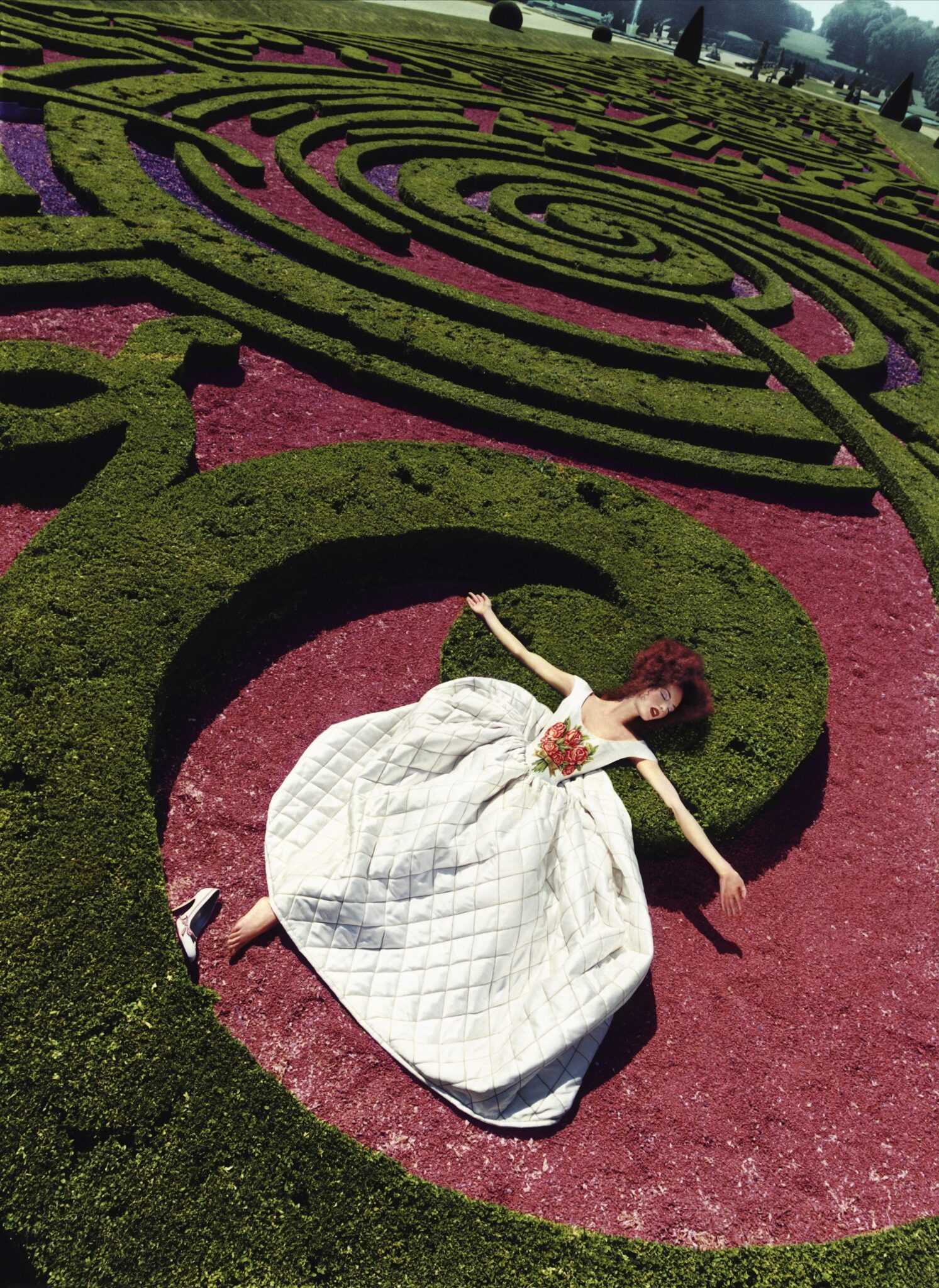
“Collapse in a Garden,” Paris, 1995
What are the origins of As the World Turns, and what was the process of bringing it to OMA?
Coralie Claeysen-Gleyzon [CCG]: A couple of years ago, I got a chance to meet David LaChapelle’s studio manager; a serendipitous encounter, because I was already deeply familiar with David’s work, having eagerly followed his incredible career since the late ’90s. The process of curating an exhibition of his work felt both natural and intuitive. In 18 months, As the World Turns was born.
My goal was to present an exhibition that would celebrate LaChapelle’s legacy in the context of contemporary art and his influence on photography in particular. Creating a show that could fully reflect the breadth and complexity of his practice meant making difficult decisions. He has been extraordinarily productive for over four decades, and narrowing the exhibition down to 167 works was in itself a significant challenge. I initially selected about 90 works, but the exhibition ultimately grew into the largest retrospective of his work to date in the United States.
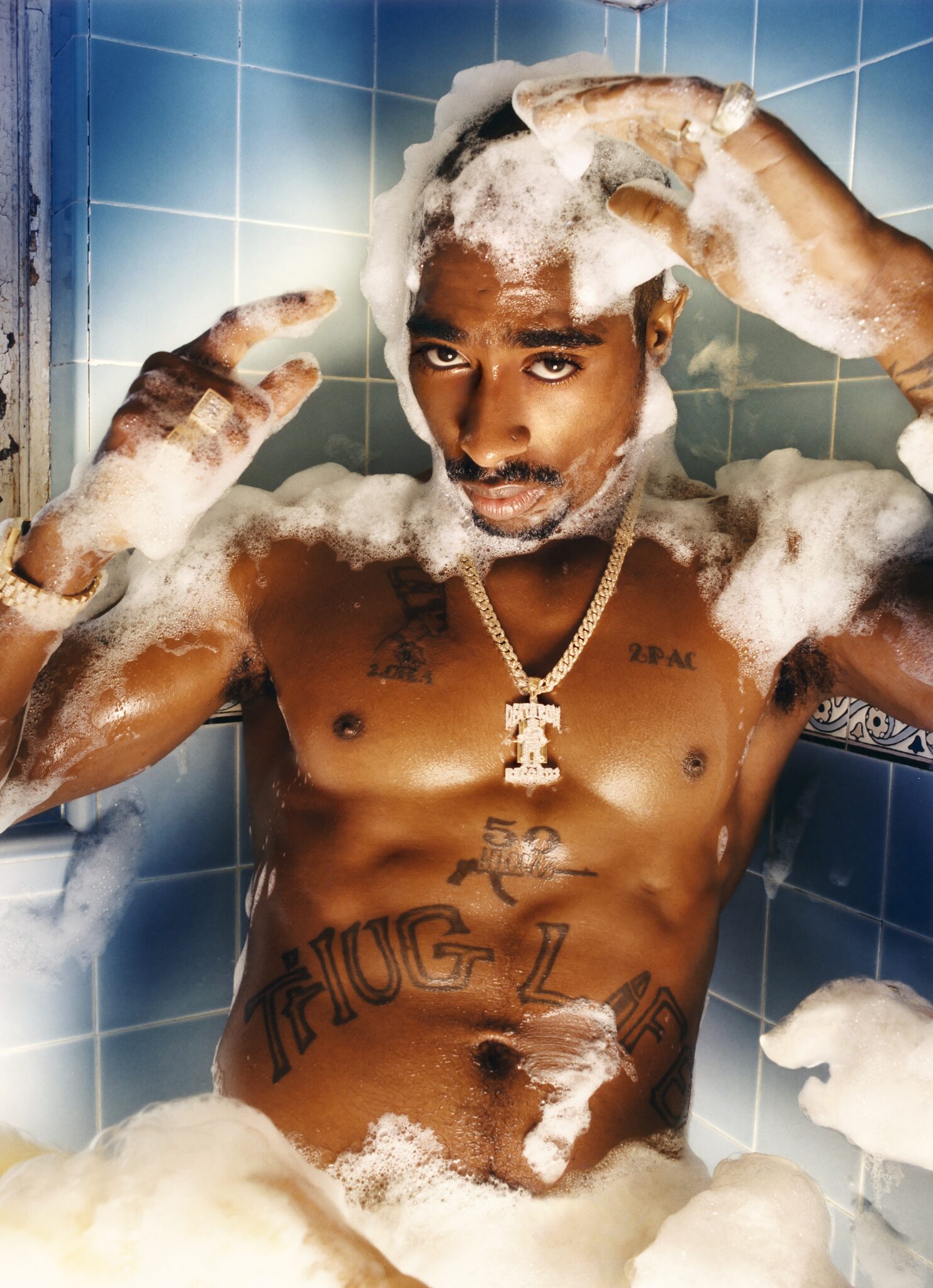
“Tupac, Becoming Clean,” Los Angeles, 1996
What was your experience working with Claeysen-Gleyzon, and what is the significance of As the World Turns, considering it’s your largest-ever retrospective?
David LaChapelle [DL]: We had been in discussion with Coralie for the past few years. She was born in France, where my work has been exhibited frequently over the past two decades. It was a serendipitous parley into planning this exhibition in America with someone who was so familiar with my broader body of work.
I really gave her carte-blanche to curate the exhibition, and it has been fascinating to see how she tells stories through the direction of the show. The path of the show is very different from how we have shown before, but Coralie’s instincts have brought surprising and new meaning to the works in the way that they relate to each other.
We have pulled some of my earliest works from my archive. They give insight to the photographic processes I used very early in my career—and still use—when I was refining techniques around color and hand painting negatives. We are also including many classic works as well as some special new projects that have never been shown before.
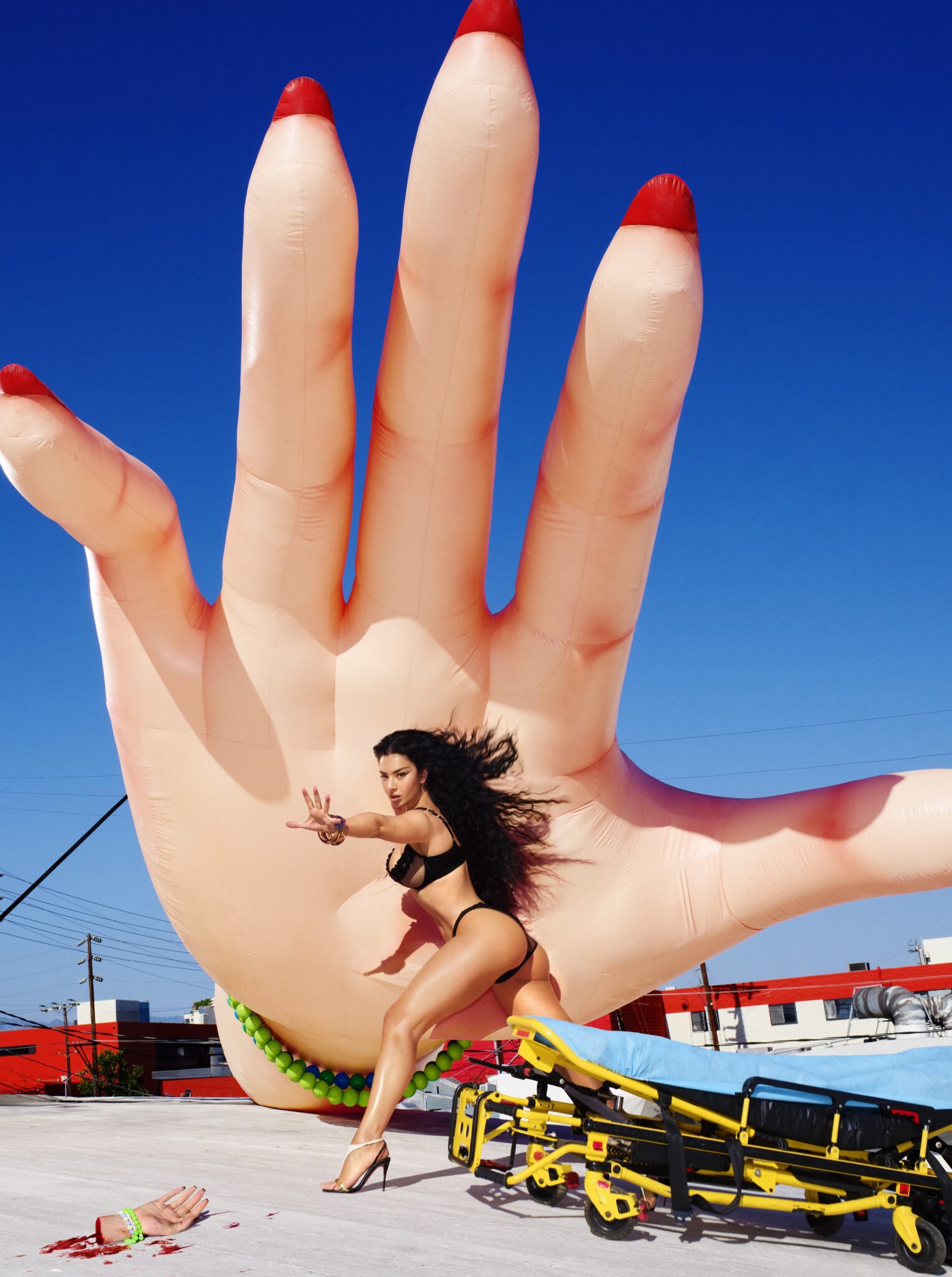
“Charli XCX: Biting the Hand,” 2024
What curatorial strategies did you employ to synthesize several decades’ worth of LaChapelle’s creative output? What was the experience of working with him to accomplish this monumental task?
[CCG]: As the World Turns was conceived as a journey through the different “facets” of LaChapelle’s career, allowing visitors to experience how his work shifts and expands over time. Like the many facets of a diamond, the various series and “angles” of his practice connect, merge, and reflect into one another. Rather than a chronological approach, I focused on creating a cohesive experience that connects all sides of his practice, balancing intimate early photographs, vivid celebrity portraiture, and large-scale allegorical scenes into a single narrative flow.
My aim was to show not only the evolution of his imagery, but the different ways his work can be seen and felt. These sections intentionally overlap, creating a porous structure that reflects how themes such as spirituality, fame, beauty, nature, and the human condition recur across decades.
Working with David and his team was deeply collaborative. With more than 40 years of extraordinarily productive work, his openness and insight into his process made it possible to shape an exhibition that reflects the full breadth of his practice, honoring the power of the images, the stories that shaped them, and the craftsmanship behind them, while also giving me the opportunity to bring my own curatorial perspective to the content. He empowered me to tell his story, and I felt a deep responsibility to honor that trust.
View this post on Instagram
The exhibition is very personal, featuring several hand-painted negatives, film-based media, and behind-the-scenes footage. What compelled you about these more intimate works, and what do you hope people will learn about your practice through these objects?
[DL]: I feel a lot of the works that have become most influential tend to be large scale, theatrical productions, and heavily involved with set design and props. But before I had that opportunity and scale, I was making images with my friends in small apartments in New York’s East Village neighborhood with just a camera and no money. These pictures were in response to a plague (AIDS) that was killing all of my friends in the 1980s. I was making images that tried to answer questions about life and death. These early works helped define my technique and approach to making pictures. I continue to use an analogue process and I think [in] analogue. Within the exhibition, there are examples that show my process, some hand-drawn studies and video pieces that show my process of making pictures.
View this post on Instagram
How will the exhibition be presented (e.g., thematically or chronologically), and how did you determine the exhibition’s organizational approach?
[CCG]: The exhibition will be presented with a loose thematic flow that helps orient visitors as they move through the galleries. This structure will allow early and recent pieces to coexist in conversation. Thematic sections encompass “Art Historical Influences,” “Allegories, Gods and Goddesses,” “Stardom/Celebrity,” “The Commercial World,” “Fashion,” “Nature as Goddess,” and “Religion/Spirituality.”
Spatially, scale was a key consideration, as so much of David’s work is bold and visually striking. Playing on the intensity of the works, the flow will bring intimate early portraits, such as Andy Warhol’s, and some of David’s preparatory sketches, alongside vivid celebrity photographs and large-scale allegorical tableaus, including a world-premiere piece newly commissioned for a gallery in Milan.
This contrast is intentional, encouraging visitors to move between intimate details and visually dramatic works. The curation also emphasizes LaChapelle’s highly constructed process. Regardless of size, each photograph is presented as a complete production, carefully staged, lit, and composed, reflecting the narrative and visual storytelling that link both his photography and filmmaking practice.
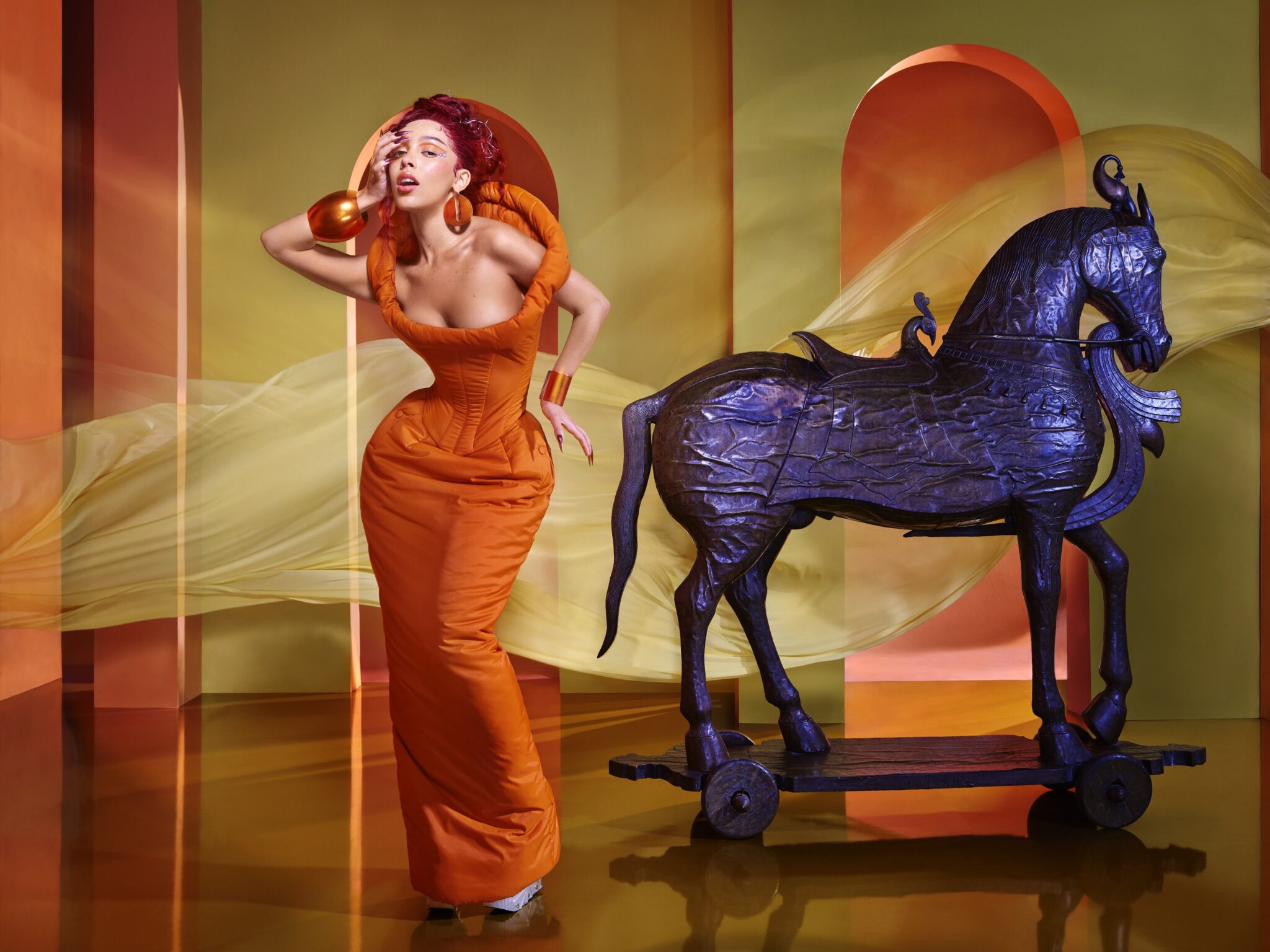
“Doja Cat: Gone with the Wind,” 2021
Tell us more about the new work created in collaboration with Deodato Arte, Italy. What was the inspiration behind this piece, and how does this new creation complement—or differ from—your previous output?
[DL]: We are living in really precarious times. So many prophecies have happened and manifested, and it just seems like this is a good time to contemplate “The Second Coming.” There are so many existential threats to life on Earth—and that’s when we naturally turn to God.
My Italian gallery, Deodato Arte, has been very supportive in some of the larger scale, personal projects I have been making. The gallery owner has great interest in theology and religion, and he has made a lot of my works centered in this exploration possible.
View this post on Instagram
What do you hope viewers will take away from the exhibition?
[CCG]: First, I hope viewers gain insight into the genius behind his images. Through hand-painted negatives, film-based media, and behind-the-scenes footage, we see the depth of intention, imagination, and resourcefulness that go into every photograph. There is a story behind each image, and this exhibition invites viewers to slow down and discover it. Witnessing how a photographer’s work can be so visually rich, intricately detailed, and labor-intensive is truly mesmerizing and an ode to photography as an art form.
Second, I hope visitors experience the exhibition as a meeting ground, something that brings people together rather than pulling them apart. LaChapelle’s work can be provocative, engaging with religion, sexuality, and the body unapologetically, yet it is ultimately rooted in empathy, understanding, and beauty. Presenting an artist who is both openly gay and Christian is rare, and that duality is central to the exhibition. His Catholic upbringing, his use of angels and spiritual symbolism, and his representation of people as transcendent, compassionate beings, while reclaiming the body in all shapes and sizes, reflect a deeply personal worldview. His lived experiences, including profound loss early in his career, shaped how spirituality became a refuge and a creative force in his work, and remains so today.
Finally, I hope visitors revel in the beauty and energy of “the World according to LaChapelle.” There is an “anima” in the Latin sense of “a soul” to each and every single one of his images. They breathe, they have a pulse, they’re alive, they exult. Through his work, he has explored the full range of human emotions and the extremes of the human experience, like a Greek tragedy, exposing and using cliches, mythological figures, humor, and drama, archetypes, allegories, and rich symbolism that lead to such impactful images that they leave you breathless. They touch on the sublime.
[DL]: I hope that one or more [of these works] will touch [visitors] in a meaningful way, the way music does.
Exhibition Information:
David LaChapelle
As the World Turns
January 31–May 3, 2026
The Orlando Museum of Art
2416 N. Mills Ave., Orlando, FL 32803
David LaChapelle: Website | Instagram
Orlando Museum of Art: Website | Instagram
My Modern Met granted permission to feature photos by Uproar by Moburst.
Related Articles:
Sir Elton John and David Furnish Bring Their Exceptional Photography Collection to the V&A Museum
Paul McCartney’s Never-Before-Seen Beatlemania Photographs Are Coming to Gagosian
New Photography Book Lifts the Veil on Kurt Cobain and Courtney Love’s Family Life in the Early 90s