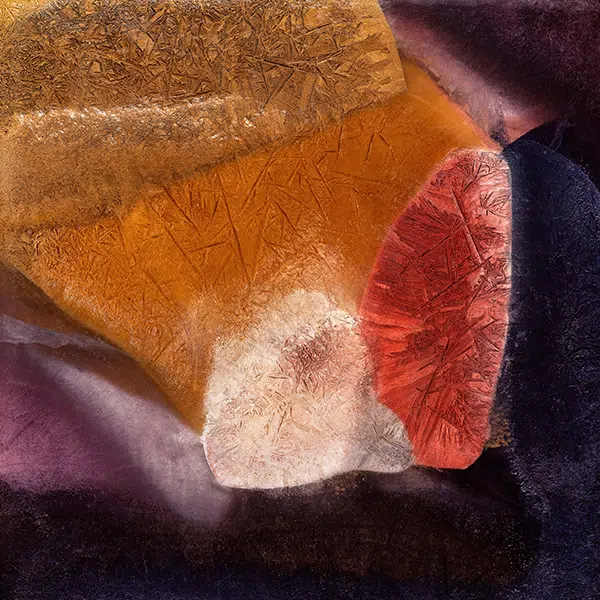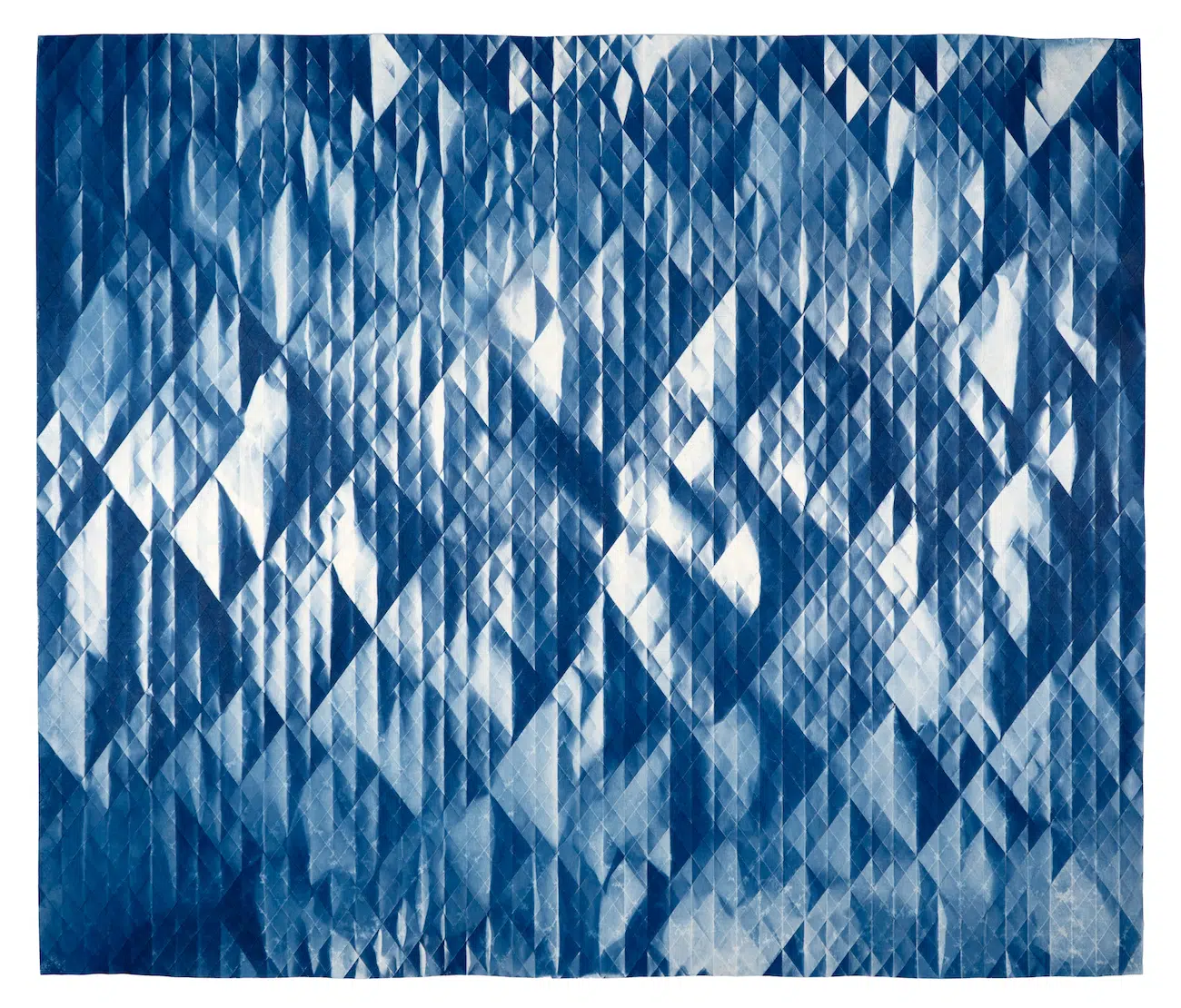
Fritz Horstman, Folded Cyanotype, 2025, 21 x 24.5 inches.
Working with alternative photographic processes such as cyanotype and platinum-palladium, artist Fritz Horstman captures the geometry of folded forms and renders them as compelling two-dimensional images that suggest depth and volume.
Horstman’s current exhibition, Folded Worlds, transforms simple sheets of paper into intricate, illusionistic compositions. The show brings together his Folded Cyanotypes—including his largest works to date—alongside a new series of Folded Palladiums. Installed in close dialogue, these bodies of work underscore the artist’s ongoing investigation into camera-less photography and material-driven image making.
At first glance, the compositions evoke icy landscapes, crystalline formations, or shifting architectural planes. In reality, they are direct impressions of folded paper. Each work records the interaction of light, shadow, and surface through a tactile, hands-on process. This interplay between flatness and dimensionality anchors Horstman’s practice. He describes each piece as “a two-dimensional artifact of a three-dimensional moment in the life of the paper,” where the illusion of space emerges from a once-physical structure.
Horstman began exploring folded forms more than a decade ago after observing the rhythmic shadows cast by creased paper. He turned to cyanotype, a 19th-century process that uses sunlight rather than a camera to produce its signature blue tones. That immediacy continues to shape his work.
“I was totally hooked after the first few resulting Folded Cyanotypes,” Horstman tells My Modern Met, noting that the medium produces “illusions of space and unexpected depth.” Because exposure depends on environmental conditions, each print also carries subtle traces of time and place.
More recently, the artist expanded into platinum-palladium printing, a historically rich process known for its tonal complexity. He began experimenting with it during a residency at Tusen Takk in Michigan, where access to specialized facilities made the transition possible. The resulting works introduce a softer, more atmospheric register.
“The huge range of grays in platinum-palladium is especially well suited to the subtleties of some of the folding patterns,” he explains. Their luminous surfaces contrast with the graphic clarity of cyanotype, allowing the two processes to deepen and complicate one another when shown together.
Rooted in the lineage of experimental photography, Horstman’s practice treats folding as both method and subject. Light and surface work together to articulate structure, producing images that read as both planar and spatial. The results balance precision with atmosphere while emphasizing the tension between physical material and perceived form.
His process resists standardization and avoids digital mediation. Horstman develops folding patterns intuitively, never relying on computer modeling or fixed templates. He folds, unfolds, and refolds each sheet, allowing structure and chance to interact. After coating the paper with light-sensitive chemicals, he exposes it to sunlight or UV light. Shadows shift across the surface during this stage, shaping the final composition.
“It’s not until the paper goes into the bath that I see what I have,” he says. Subtle variations in pressure, light, and chemistry introduce an element of unpredictability that remains central to the work.
This experimental approach informs the conceptual weight of the images. Rather than depicting folds, the prints register events. Each one captures a fleeting alignment of material, light, and form. In doing so, Horstman challenges the expectation of precision often associated with photography and instead foregrounds variation, irregularity, and discovery.
Despite their process-based origins, the works resist easy classification. They function simultaneously as documentation and abstraction, revealing their own making while evoking landscapes, topographies, or crystalline structures.
“While I’m not depicting anything other than the materials and process, the imagery that is evoked is undeniable,” Horstman notes. Each composition operates as a self-contained system while also pointing outward to broader visual associations.
Scale plays an increasingly important role in Folded Worlds. Many of the works rank among Horstman’s largest to date, with some approaching the height of the artist himself. This shift amplifies their physical presence and visual impact. “I’m really excited by the immersive quality of the largest works,” he says. The expanded scale invites viewers to experience the patterns as environments rather than images.
The exhibition design reinforces this sense of immersion. Curator Emily Miller, founder of Municipal Bonds, arranged the works to create a dynamic visual rhythm across mediums and sizes. Groupings of cyanotypes and palladium prints encourage comparison, while the placement of large-scale pieces within more intimate spaces heightens their spatial intensity.
Ultimately, Folded Worlds foregrounds process as both subject and strategy. Through the repeated acts of folding, exposing, and developing paper, Horstman transforms modest materials into complex visual systems. The resulting works challenge conventional ideas of photography, shifting the medium from representation toward transformation.
Folded Worlds is Horstman’s third solo exhibition at Municipal Bonds and is currently running until April 25, 2026.
Fritz Horstman’s Folded Worlds explores how simple sheets of paper can become complex visual systems through experimental cyanotype and palladium printing.
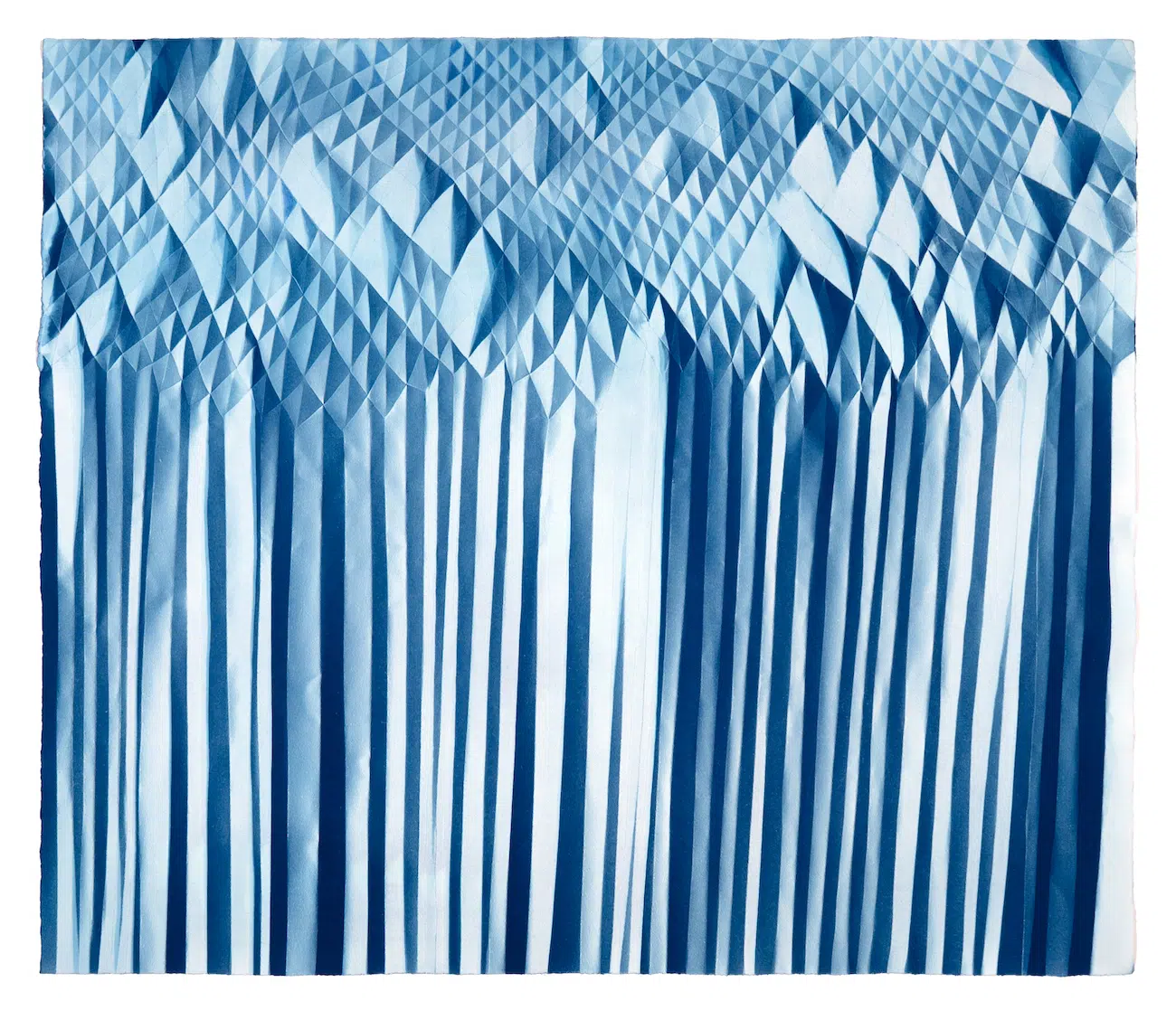
Fritz Horstman, Folded Cyanotype, 2025, 18 x 21 inches.
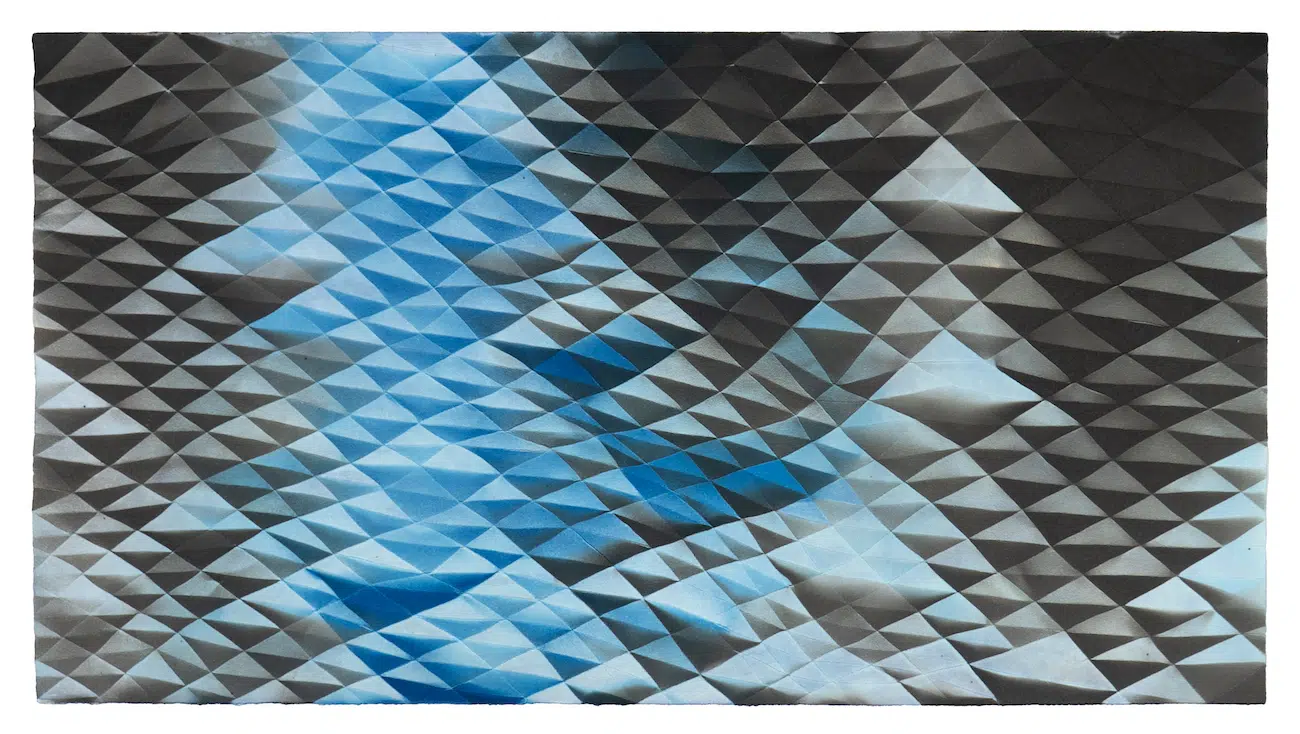
Fritz Horstman, Folded Cyanotype and Platinum Palladium, 2025, 18 x 21 inches.
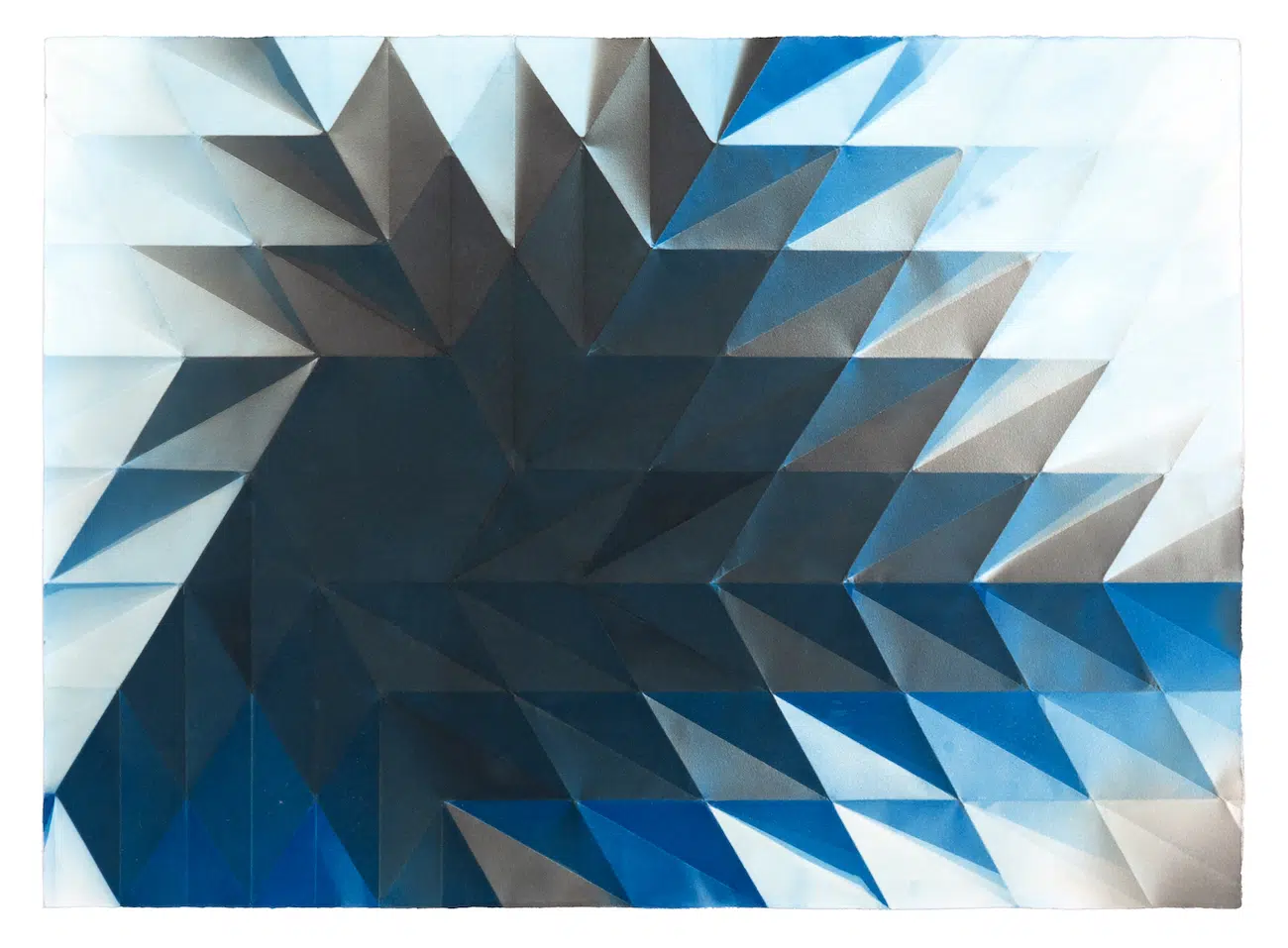
Fritz Horstman, Folded Cyanotype and Platinum Palladium, 2025, 14.25 x 19.75 inches.
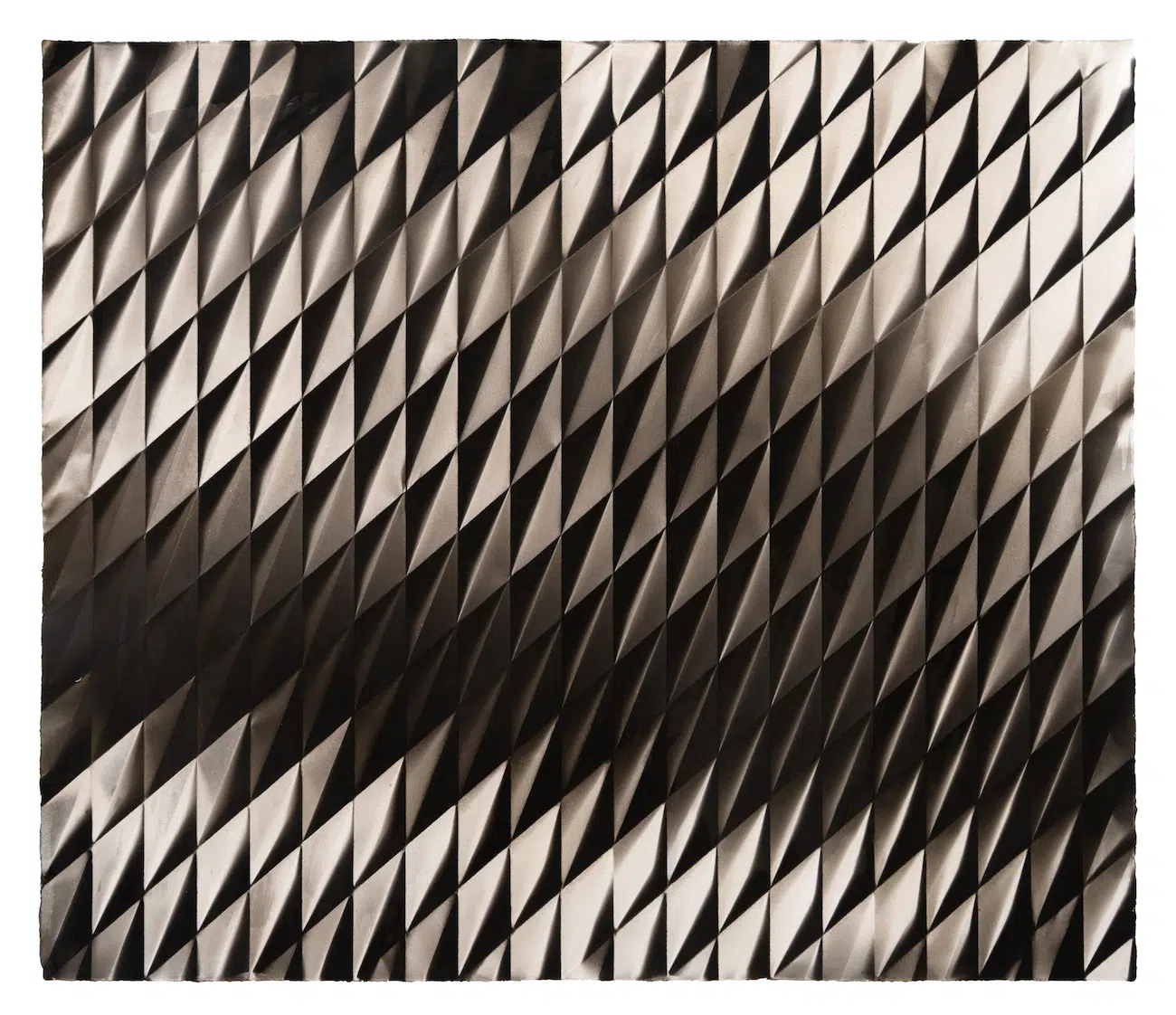
Fritz Horstman, Folded Platinum Palladium, 2025, 18 x 21 inches.
Through a process of folding, exposing, and developing light-sensitive paper, Horstman creates images shaped by chance, material behavior, and controlled intervention.
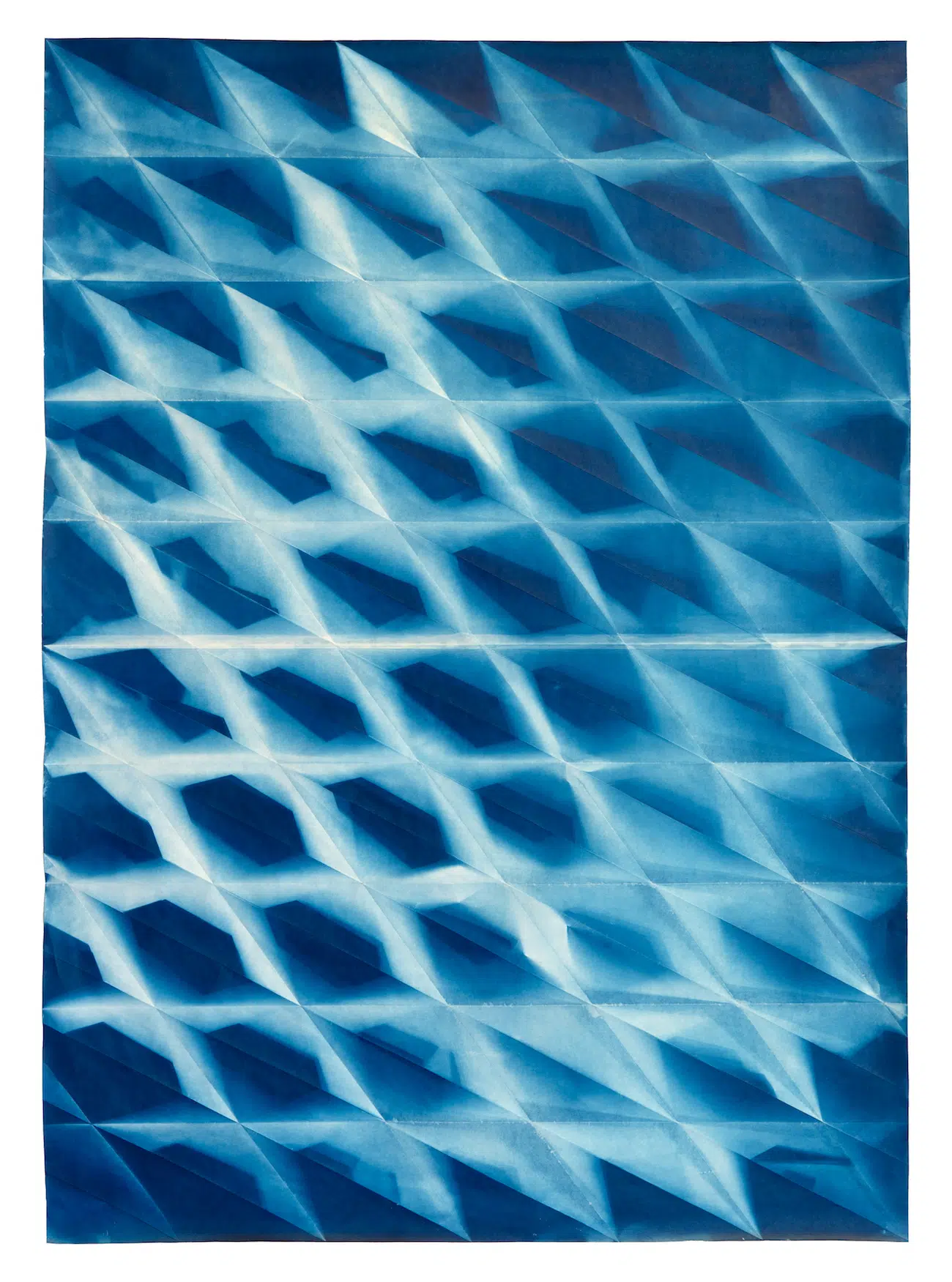
Fritz Horstman, Folded Cyanotype, 2025, 39.5 x 53.5 inches.
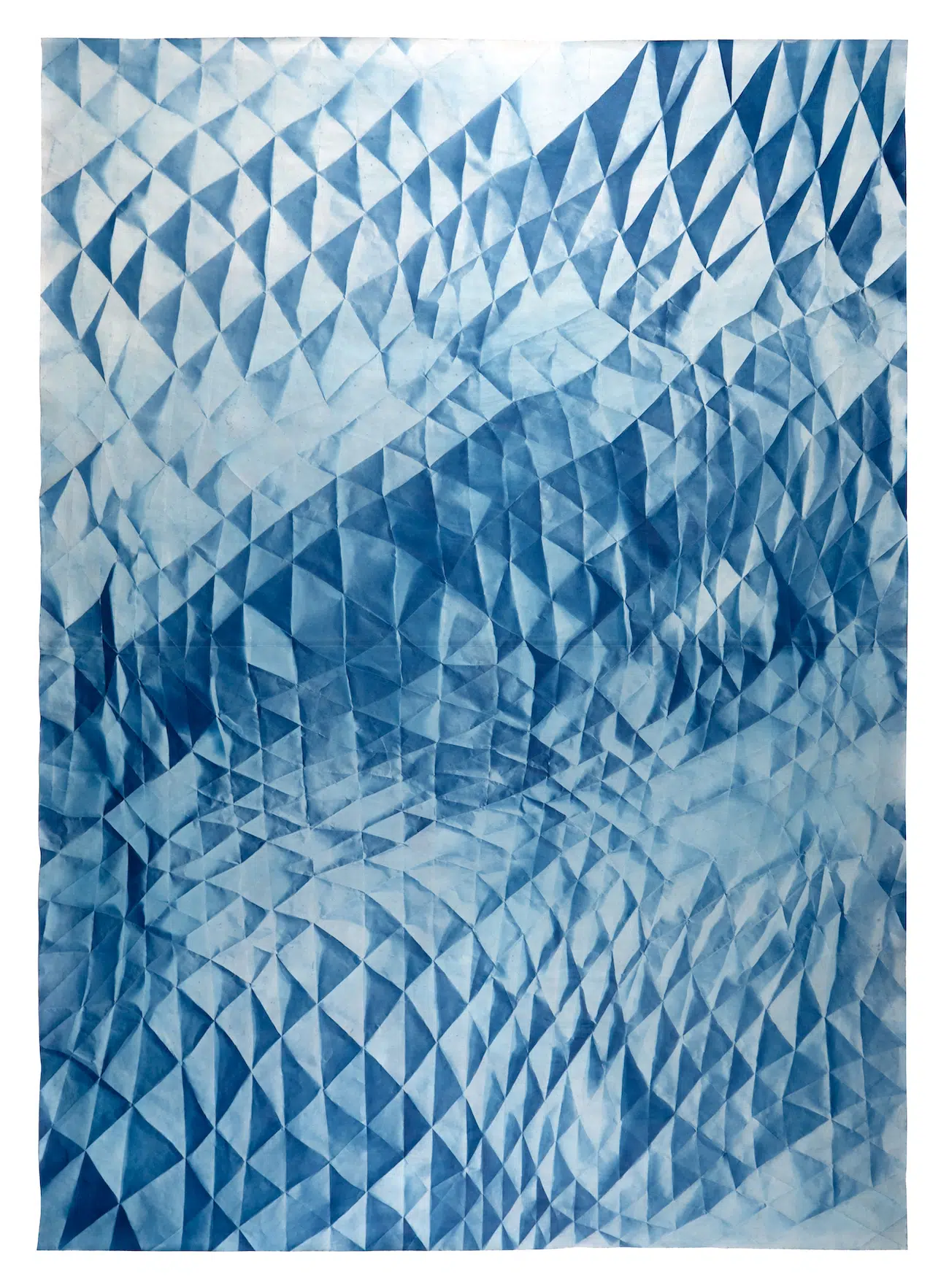
Fritz Horstman, Folded Cyanotype, 2025, 53 x 39.5 inches.
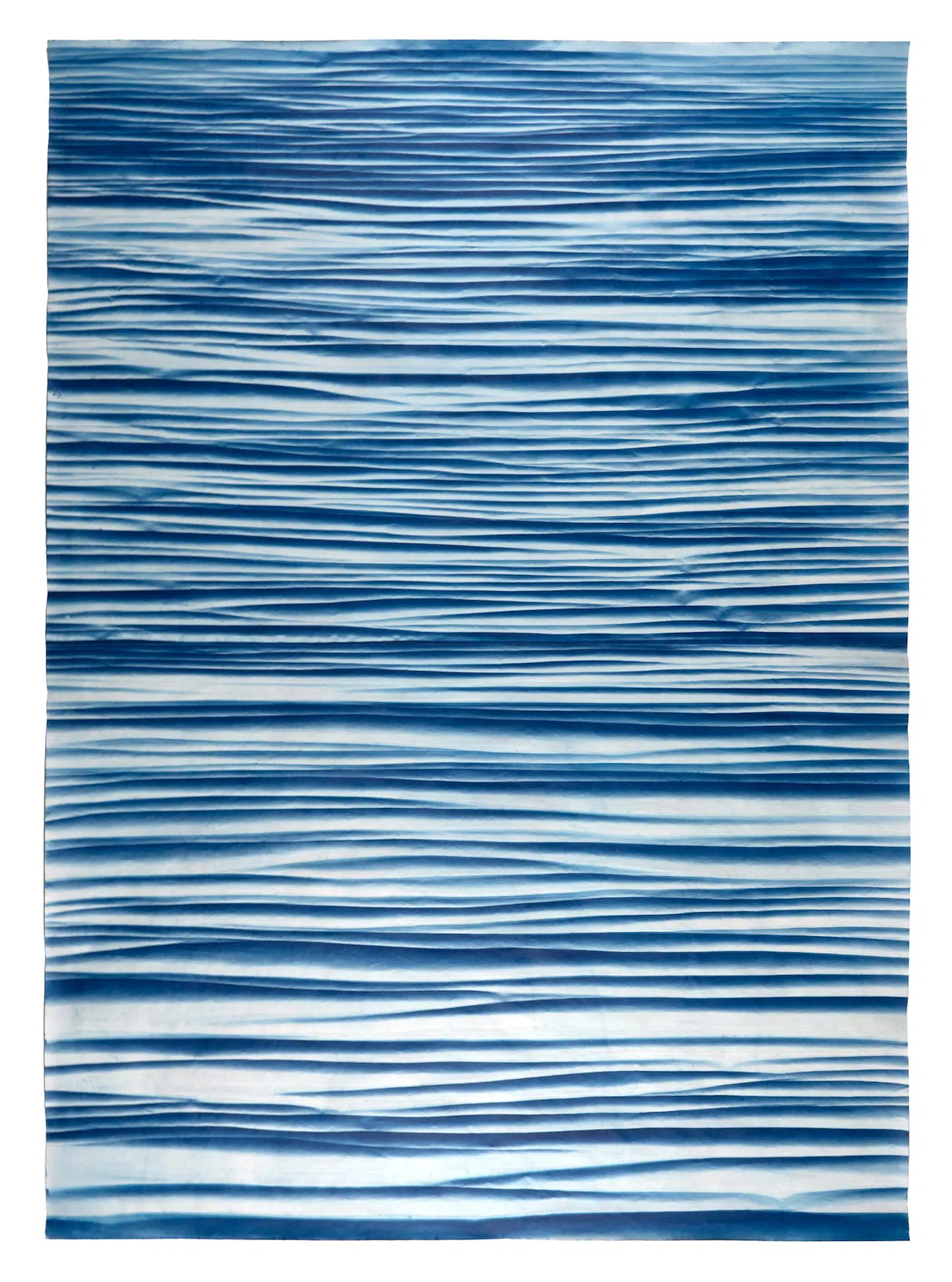
Fritz Horstman, Folded Cyanotype, 2025, 54 x 39.5 inches.
The exhibition ultimately reveals photography as a process of transformation, where material structure and perception continuously reshape one another.
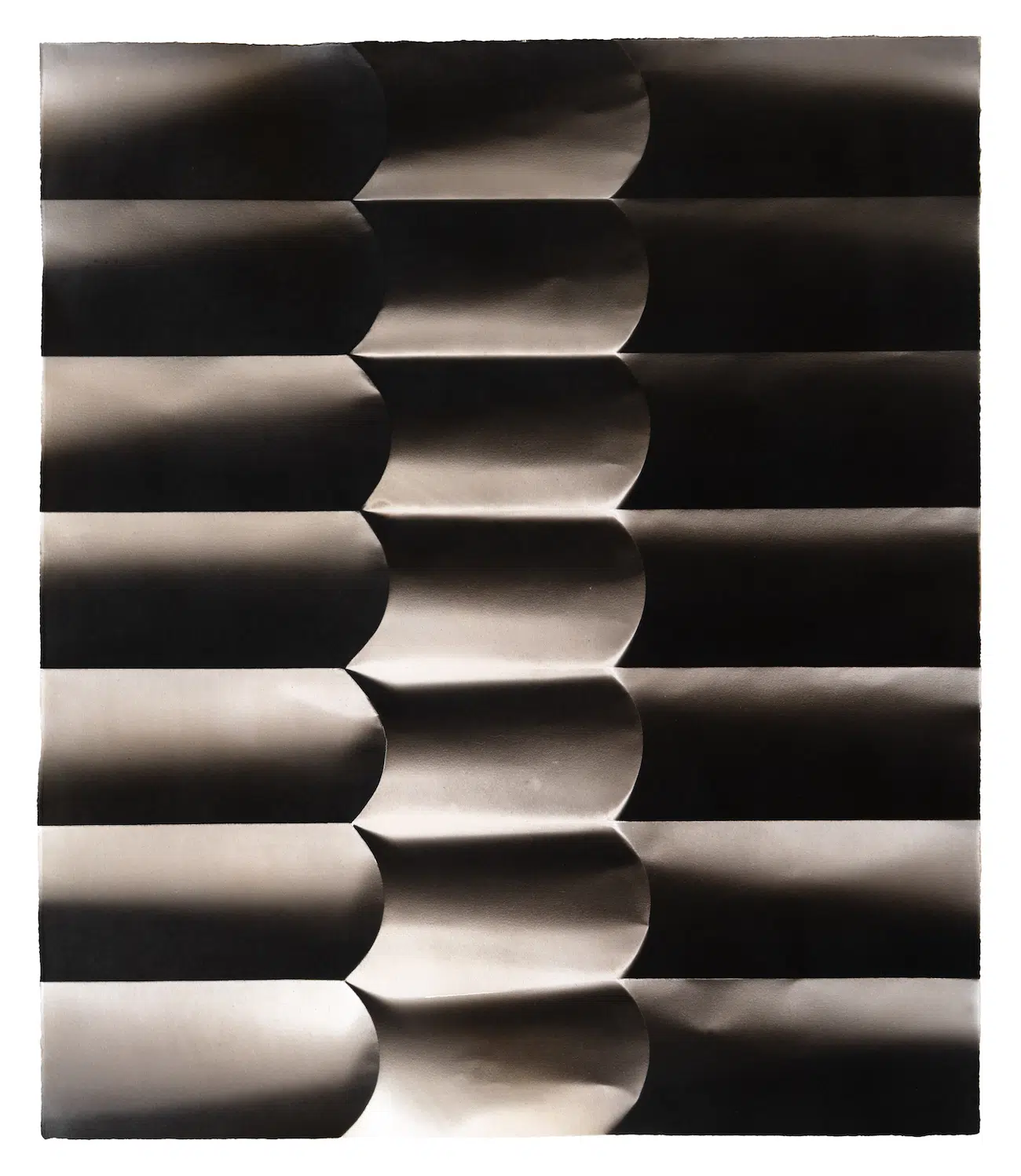
Fritz Horstman, Folded Platinum Palladium, 2025, 21 x 18 inches.
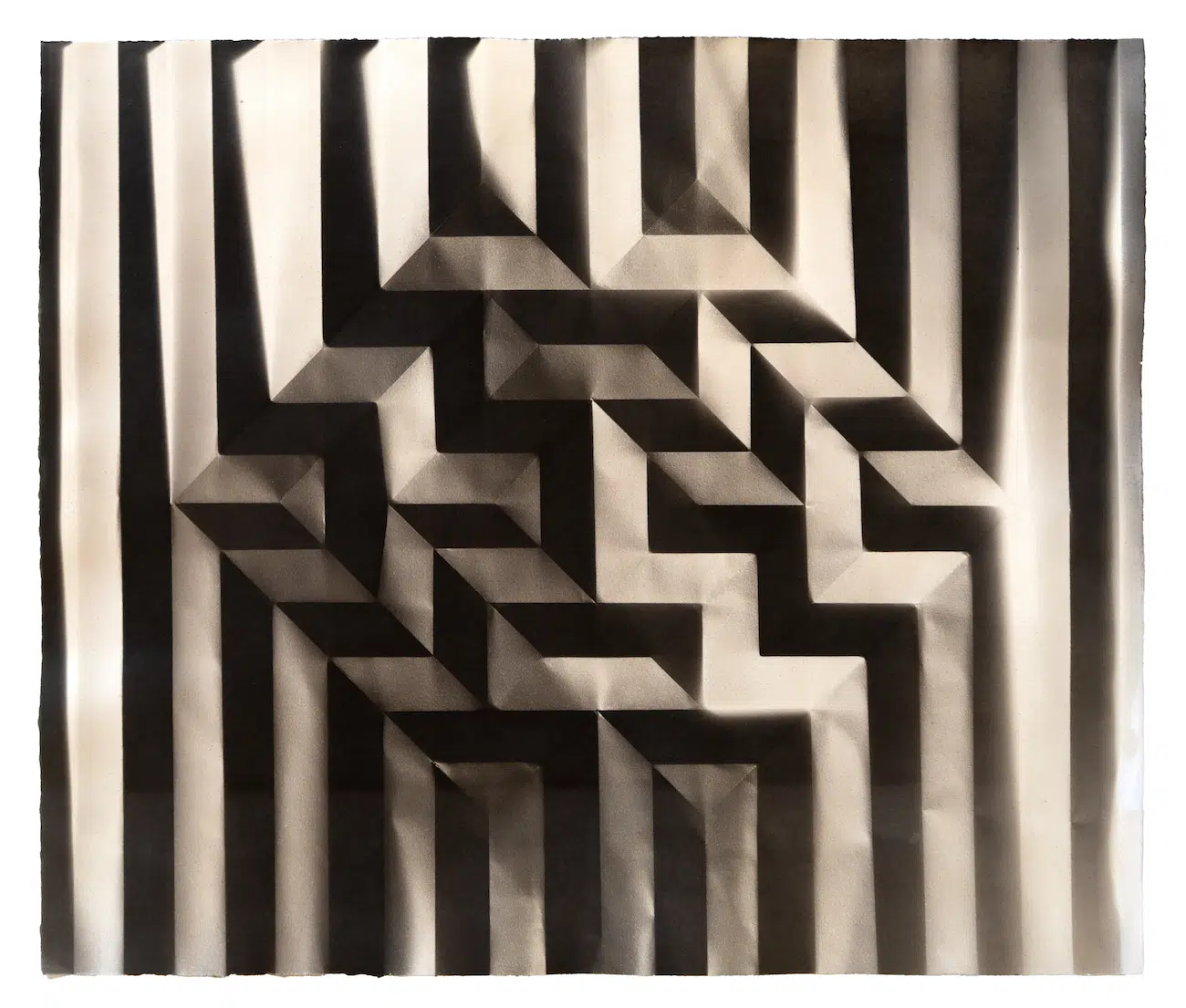
Fritz Horstman, Folded Platinum Palladium, 2025, 19 x 22 inches.
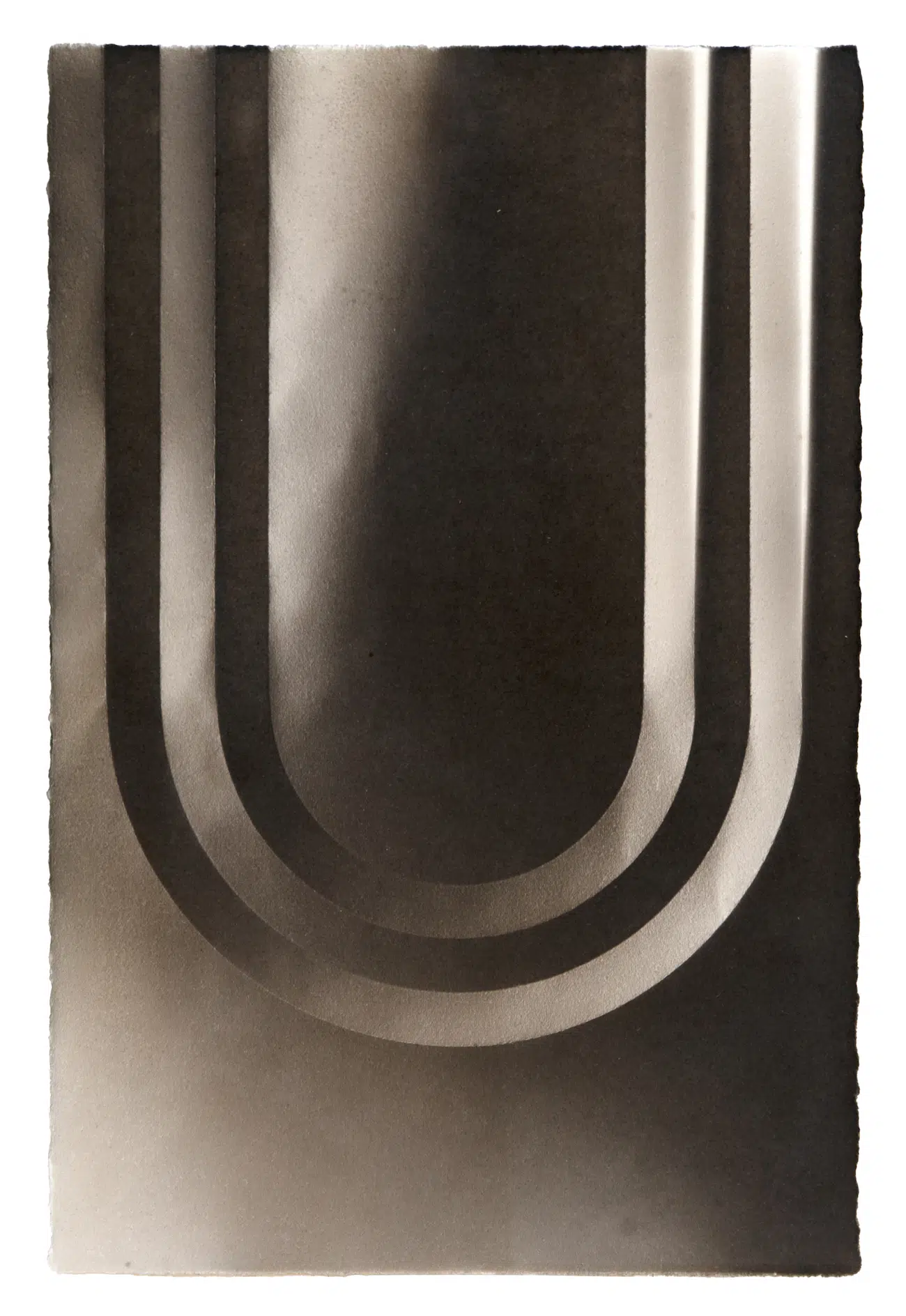
Fritz Horstman, Folded Platinum Palladium, 2025, 11 x 7.5 inches.
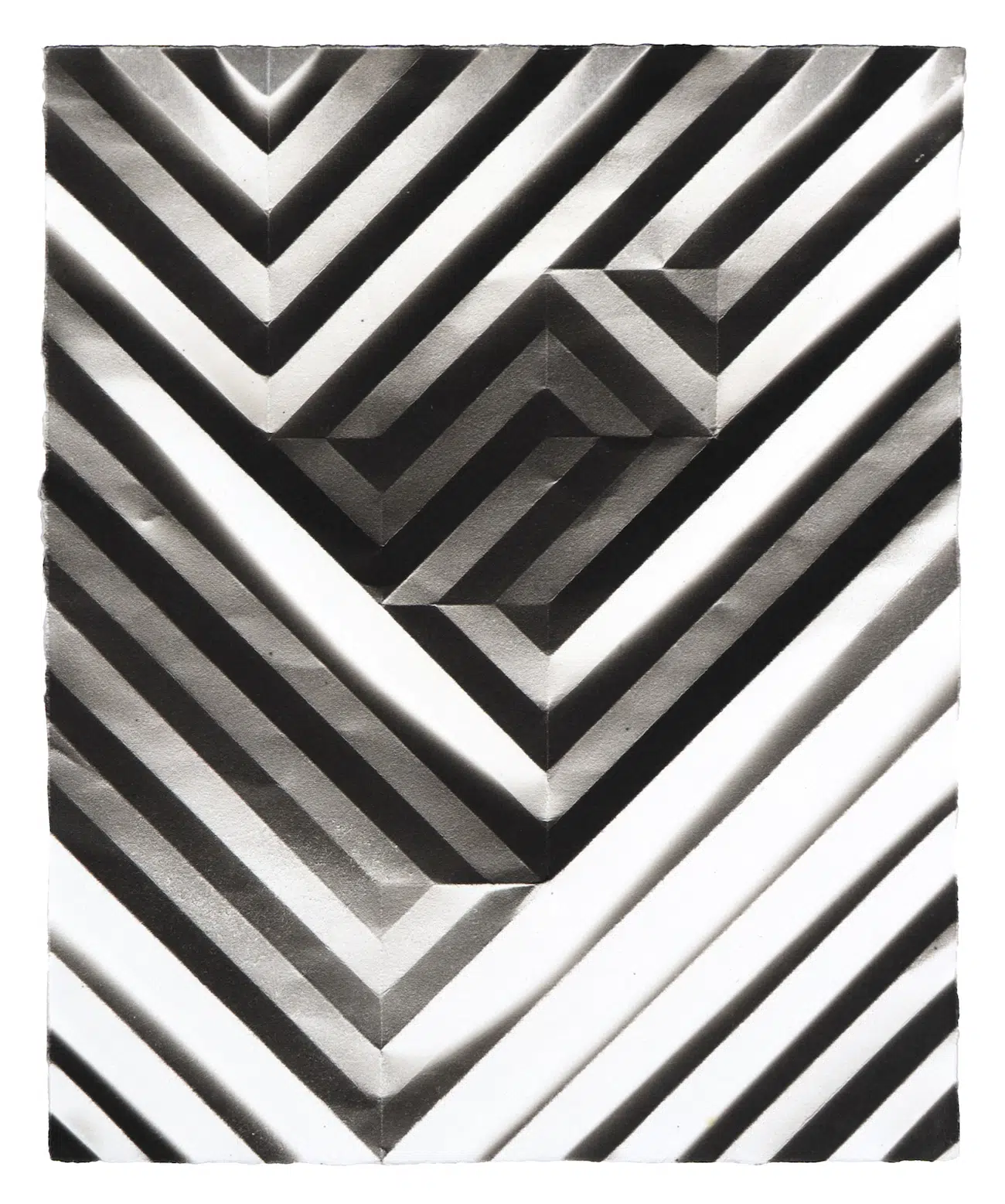
Fritz Horstman, Folded Platinum Palladium, 2025, 10 x 8 inches.
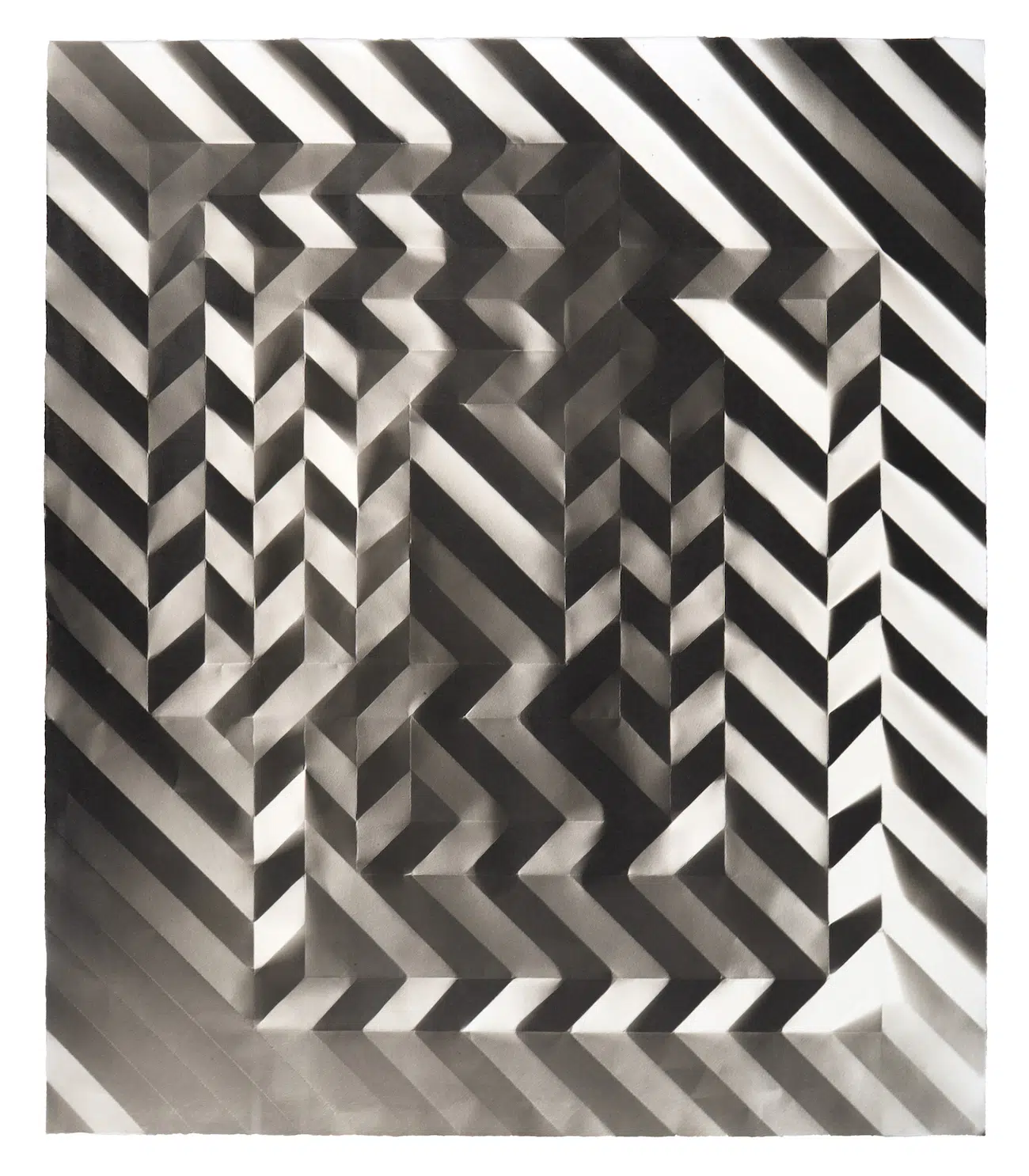
Fritz Horstman, Folded Platinum Palladium, 2025, 21 x 18 inches.
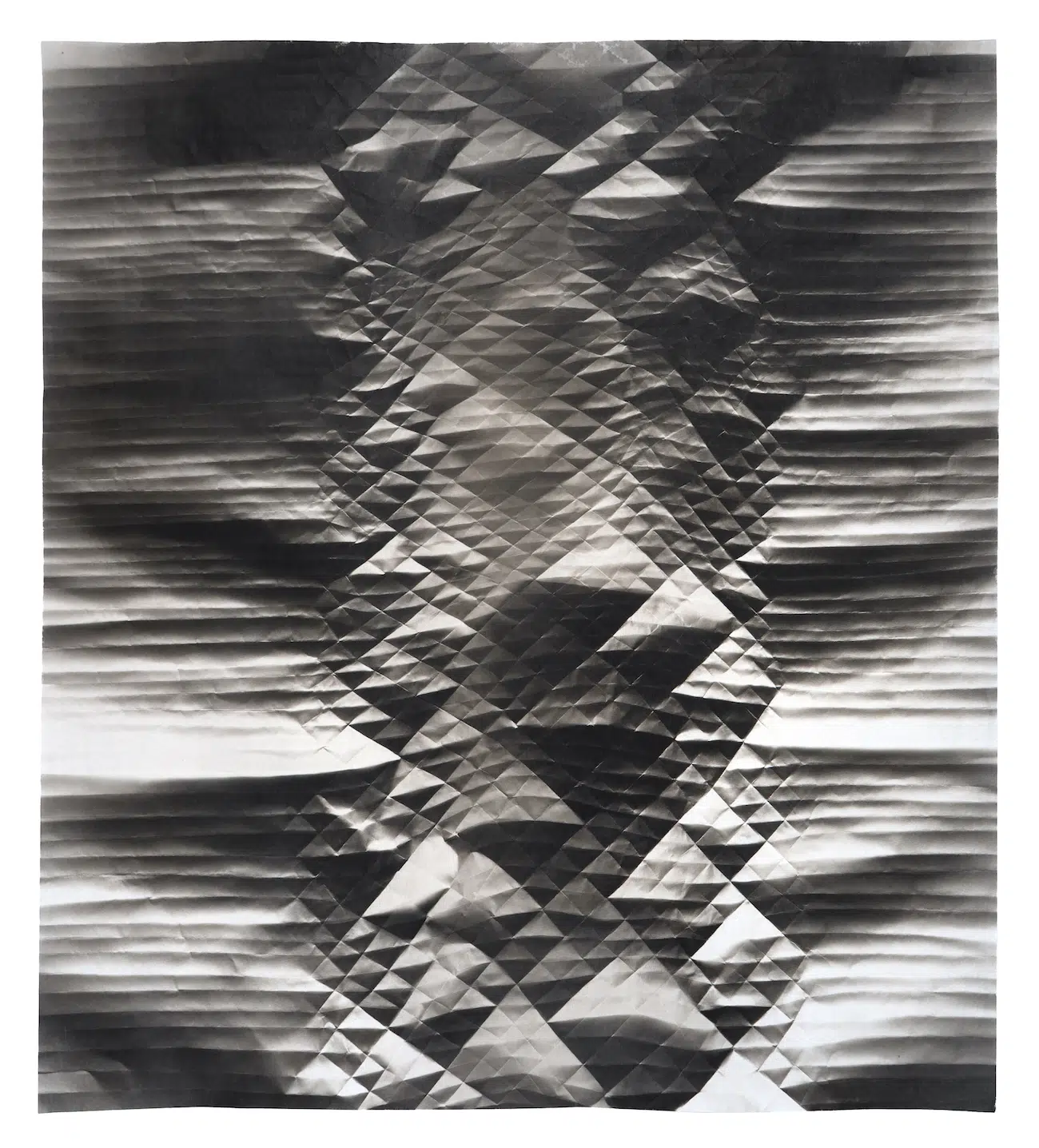
Fritz Horstman, Folded Platinum Palladium, 2025, 21.75 x 19.5 inches.
Horstman’s work is on view at Municipal Bonds until April 25, 2026.
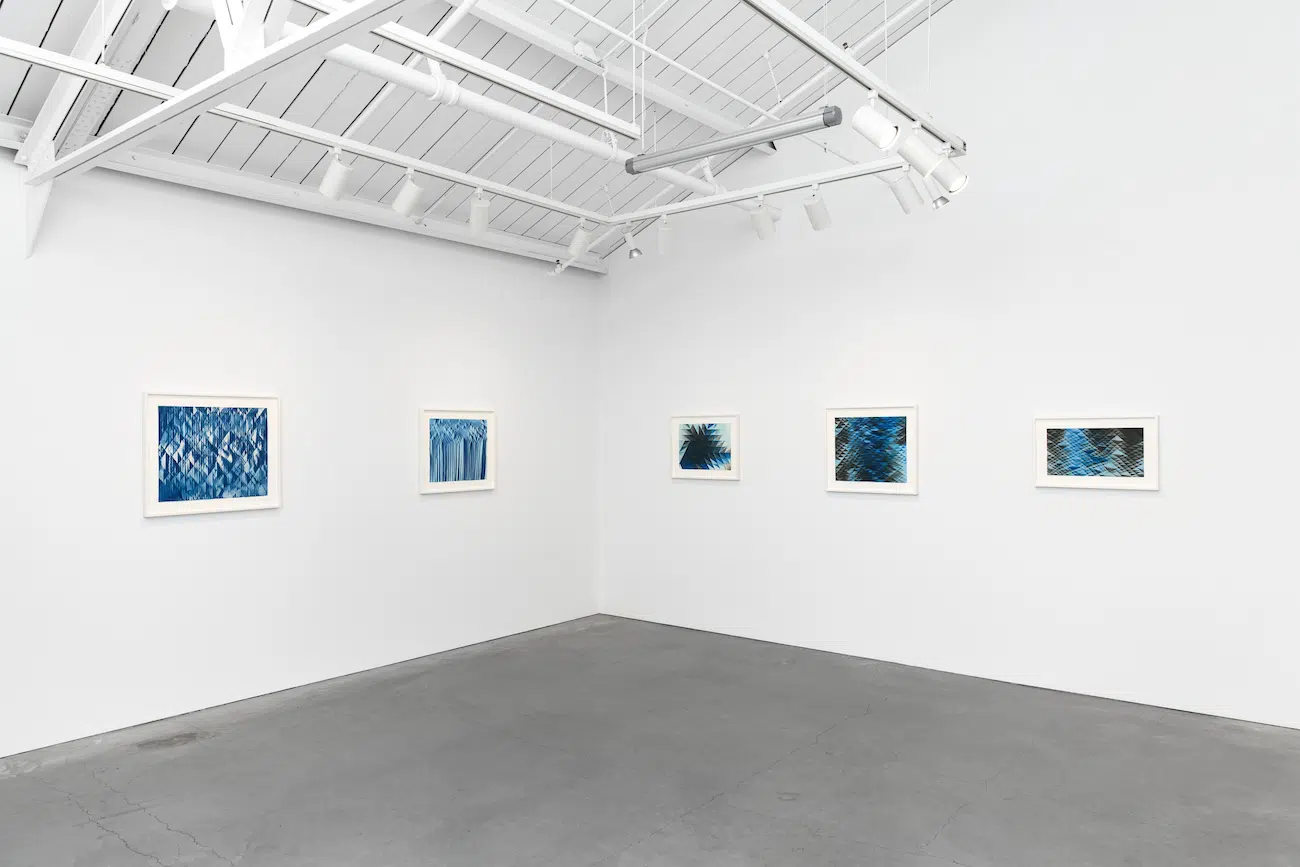
Gallery view from “Folded Worlds” a solo exhibition by Fritz Horstman at Municipal Bonds, San Francisco. On view from March 7 through April 25, 2026. Photographed by Shaun Roberts.
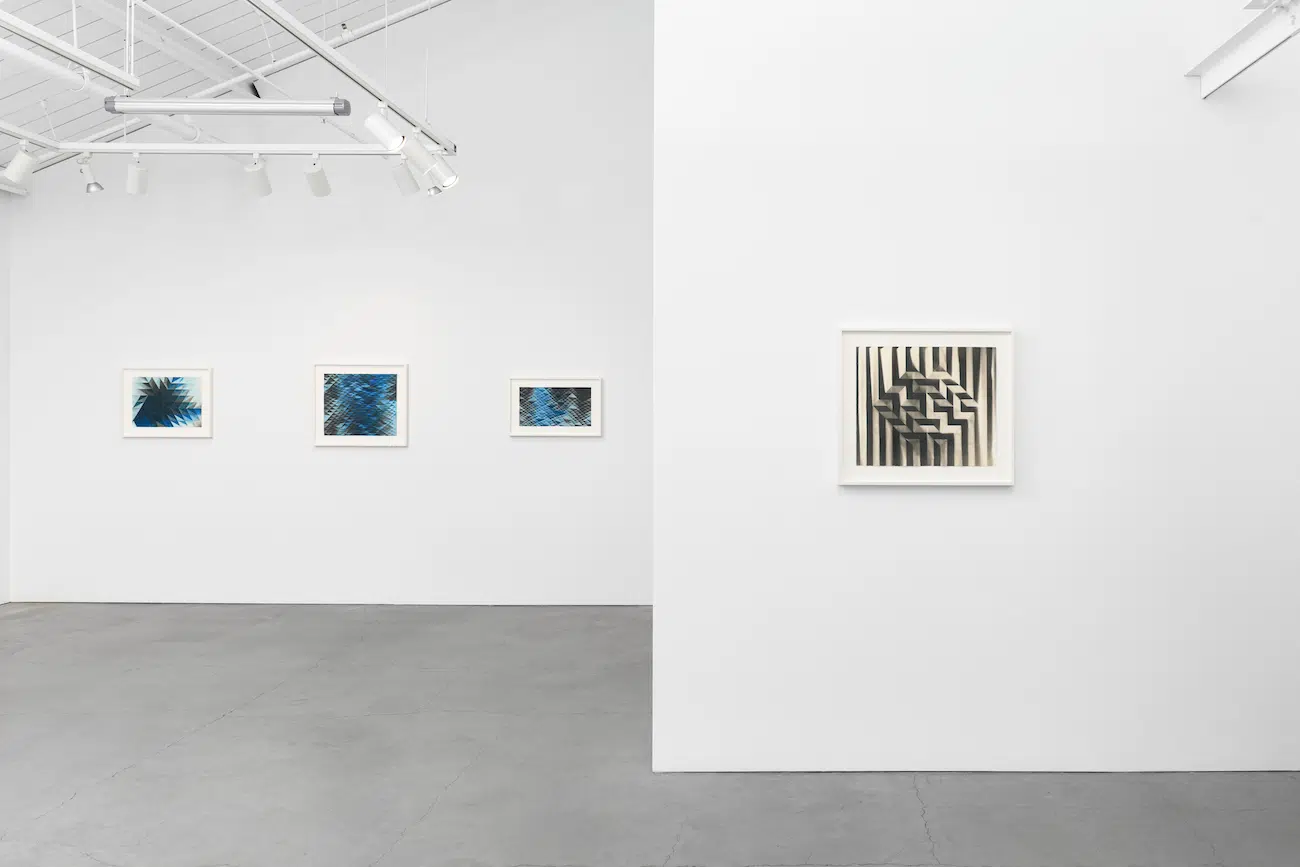
Gallery view from “Folded Worlds” a solo exhibition by Fritz Horstman at Municipal Bonds, San Francisco. On view from March 7 through April 25, 2026. Photographed by Shaun Roberts.
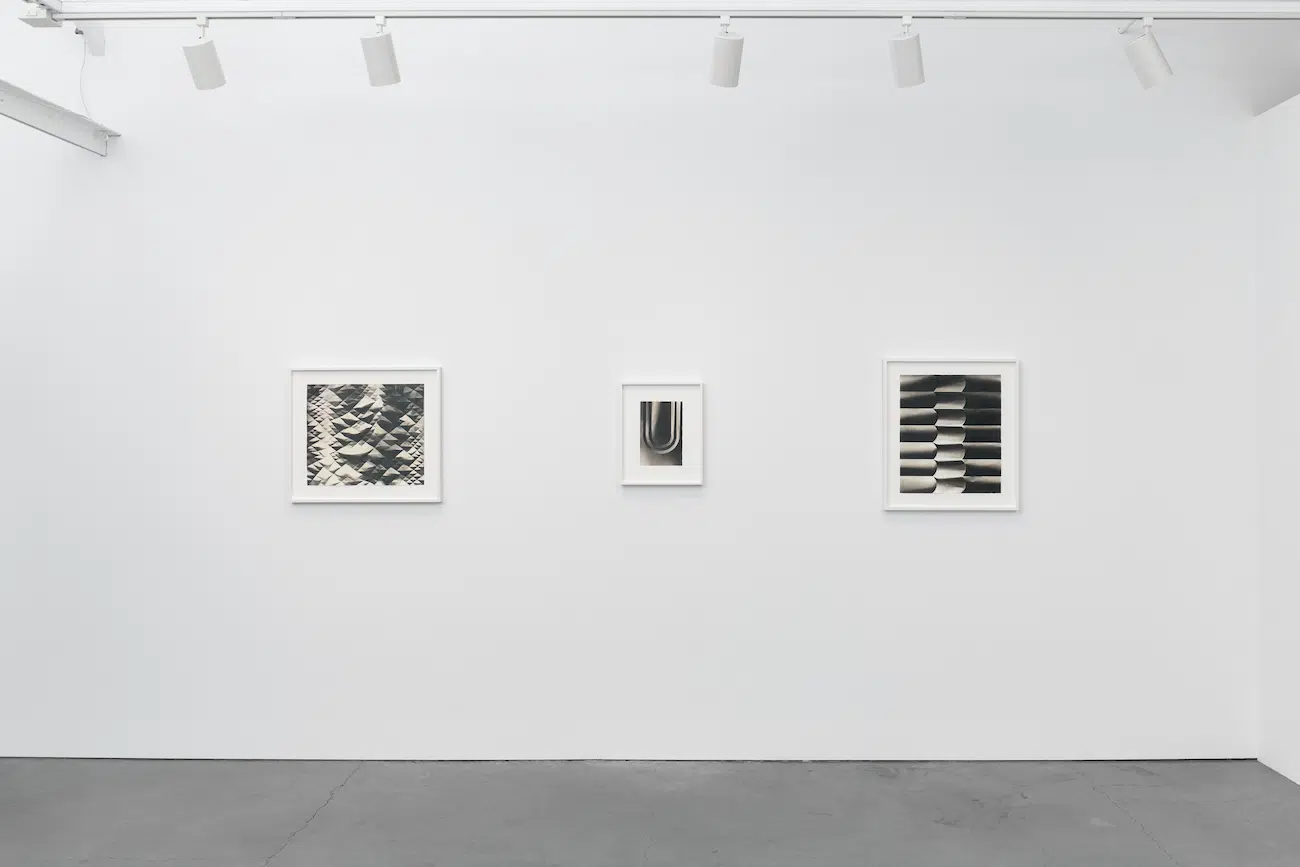
Gallery view from “Folded Worlds” a solo exhibition by Fritz Horstman at Municipal Bonds, San Francisco. On view from March 7 through April 25, 2026. Photographed by Shaun Roberts.
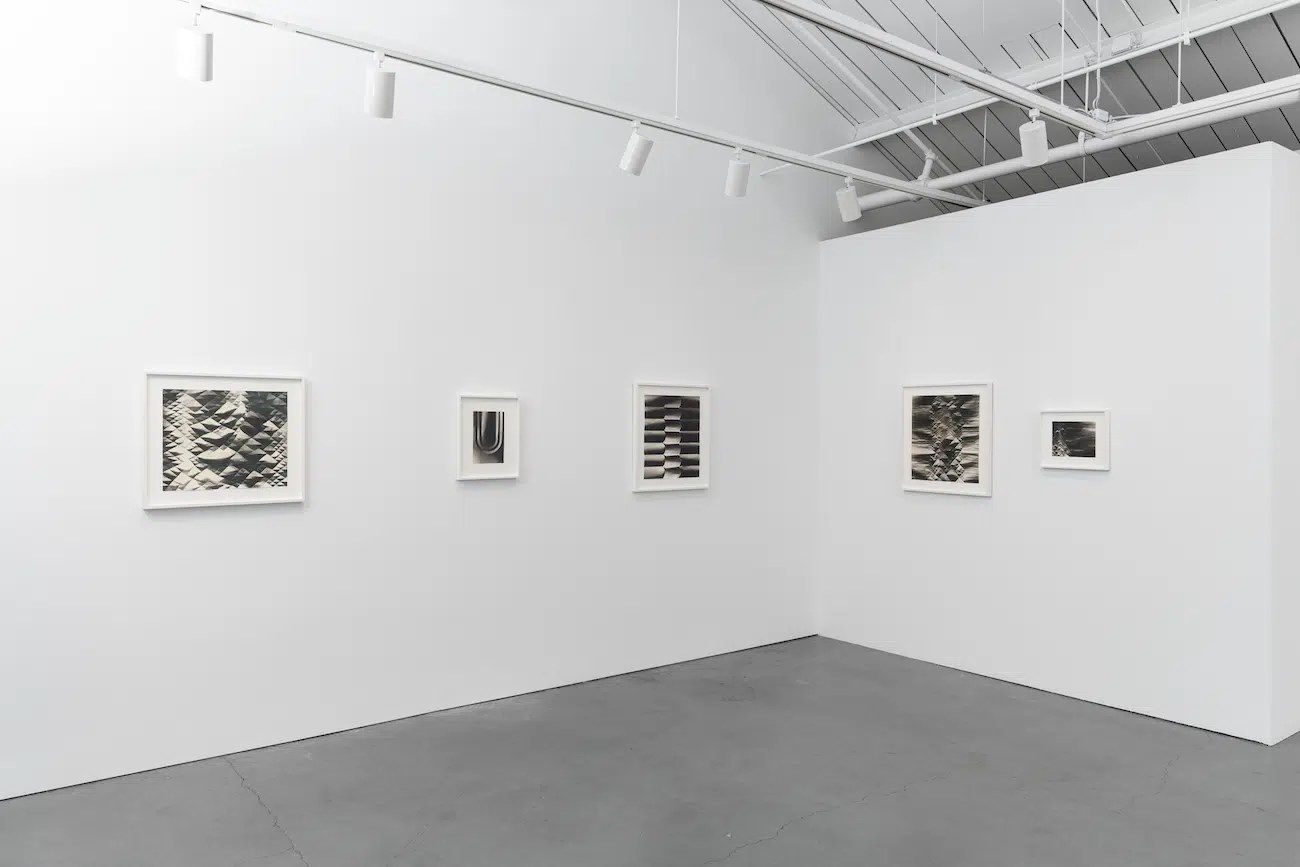
Gallery view from “Folded Worlds” a solo exhibition by Fritz Horstman at Municipal Bonds, San Francisco. On view from March 7 through April 25, 2026. Photographed by Shaun Roberts.