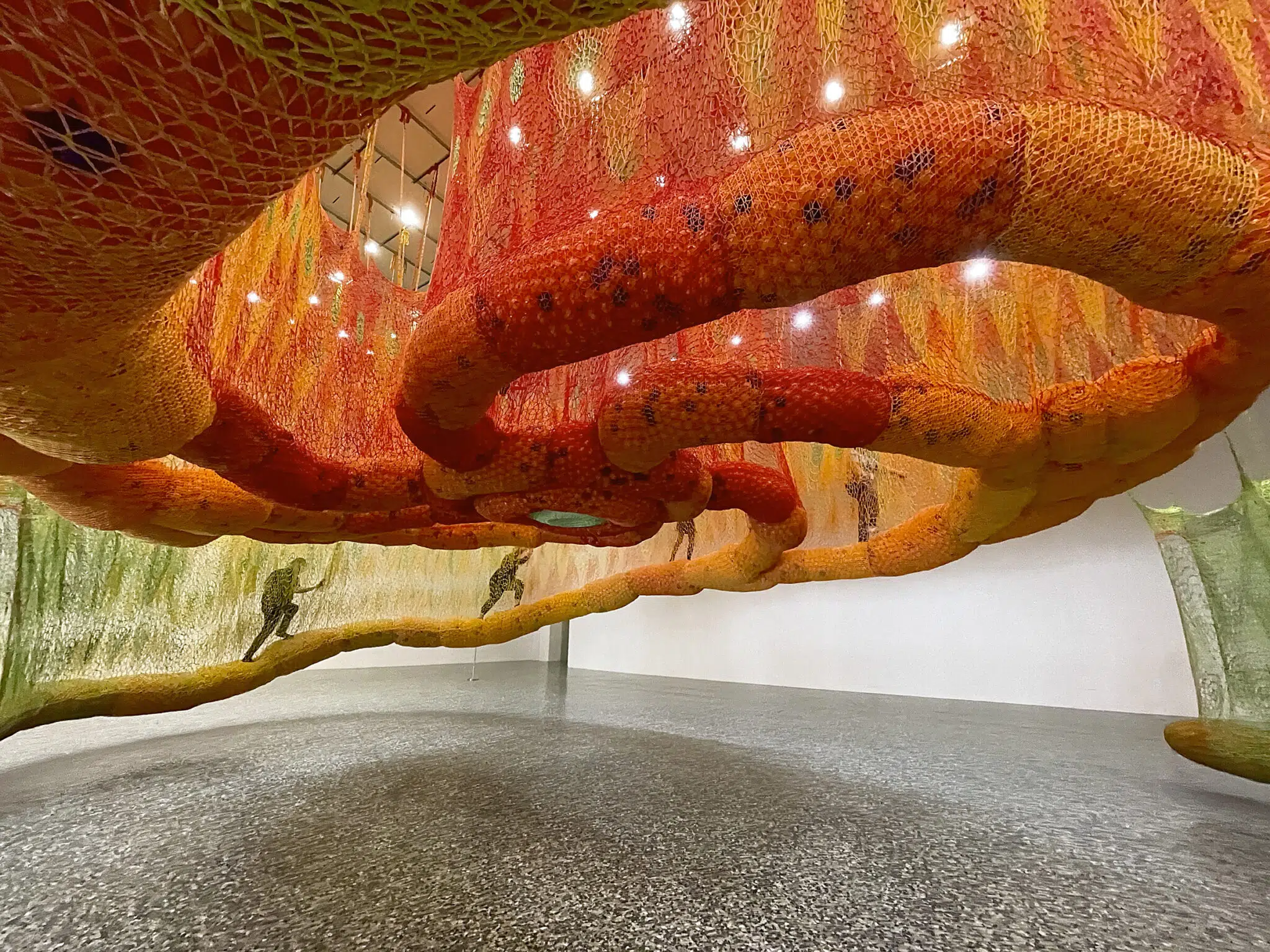
Installation view of “SunForceOceanLife” at the Museum of Fine Art, Houston, in 2020. (Photo: Albert Sanchez)
In 2019, the Museum of Fine Arts, Houston (MFAH) tapped Ernesto Neto to produce a monumental, site-specific piece for one of its galleries. About a year later, the museum unveiled the commission, which would become one of the Brazilian artist’s largest crochet works to date. Now, after much anticipation and weeks of reconstruction, SunForceOceanLife has returned to MFAH’s Cullinan Hall following its original debut.
Suspended an astonishing 12 feet in the air, the immersive installation invites guests to traverse a labyrinth of hand-woven pathways. When viewed together, these pathways blend together into a dramatic gradient, shifting from buoyant greens and bold yellows to earthy oranges and deep reds. Though vibrant in and of itself, this color palette serves another purpose, mimicking the cyclical relationship between the sun, the sea, and the earth. This thematic interest is enhanced by Neto’s structural vision, in which each pathway has been meticulously sewn together into a spiral formation.
As visitors climb SunForceOceanLife, though, they may be struck by a sense of vertigo or instability. That’s precisely the point—the installation is filled with soft, plastic balls that warp underfoot. In navigating what at first seems like treacherous territory, we must confront our bodies and how best to keep them upright, instilling a familiarity with ourselves that might otherwise be overlooked or taken for granted. The farther we travel, Neto hopes, the more our movements relax, coaxing us into a meditative state. By the end of the experience, the structure might even resemble an existential hammock, in which we’re surrounded, if not comforted, by the artist’s crocheted webs.
That interpretation proves to be an accurate one. “Neto notes that the sensation of floating, the body cradled by the crocheted fruits of our labor, brings to mind a hammock,” Mari Carmen, MFAH’s curator of Latin American art, remarked last month during a preview for the exhibition. “[It’s] the quintessential Indigenous invention that uplifts us and connects us to the wisdom and traditions of our ancestors.”
Neto’s practice has long revolved around the vernacular and Indigenous cultures that define Brazil. In fact, it was the artist’s grandmother that first taught him how to crochet, a popular Brazilian craft that is “typically executed by women on a small, delicate scale,” per Carmen. In Neto’s work, though, crochet is far from minuscule, with his sculptures assuming such ambitious dimensions and forms that they become essential to the environments in which they’re found. SunForceOceanLife is no exception; after all, the installation measures 30 x 53 x 35 feet and weighs 6,000 pounds. It’s a fitting tribute, then, to the natural world and the sun as the vital source that “enables all life on this planet.”
“I hope that the experience of this work will feel like a chant made in gratitude to the gigantic ball of fire we call the sun, a gesture of thanks for the energy, truth, and power that it shares with us as it touches our land, our oceans, and our life,” Neto said of the installation.
SunForceOceanLife is currently on view at the Museum of Fine Arts, Houston, through September 7, 2026. To enjoy the installation, visitors must sign a waiver, wear MFAH-issued socks, and confirm that they are able to walk without assistance. For more information, visit the MFAH website.
At the Museum of Fine Arts, Houston, visitors can once again experience Ernesto Neto’s SunForceOceanLife, an immersive installation originally commissioned by the museum in 2019.
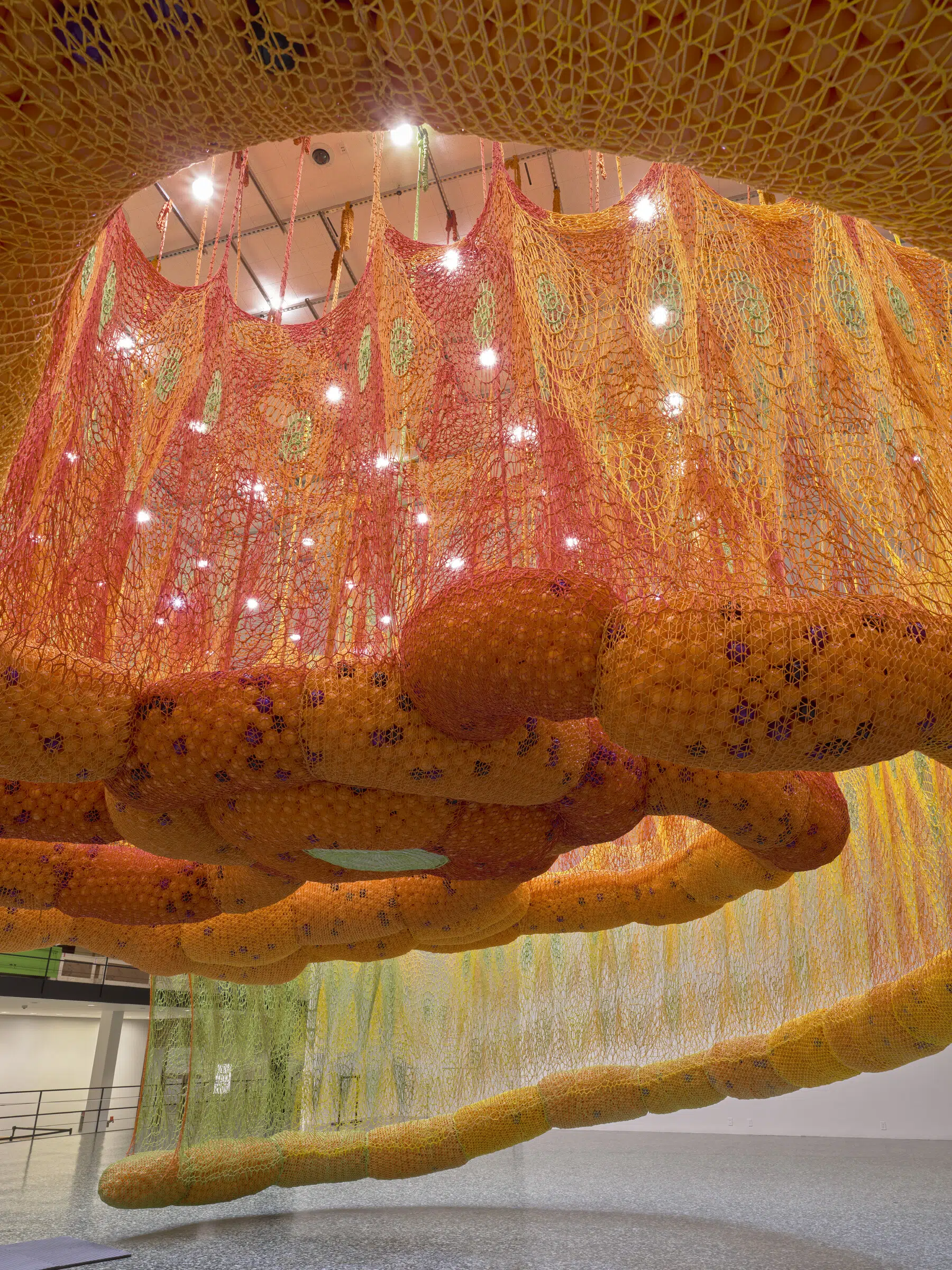
Installation view of “SunForceOceanLife” at the Museum of Fine Art, Houston, in 2020. (Photo: Albert Sanchez)
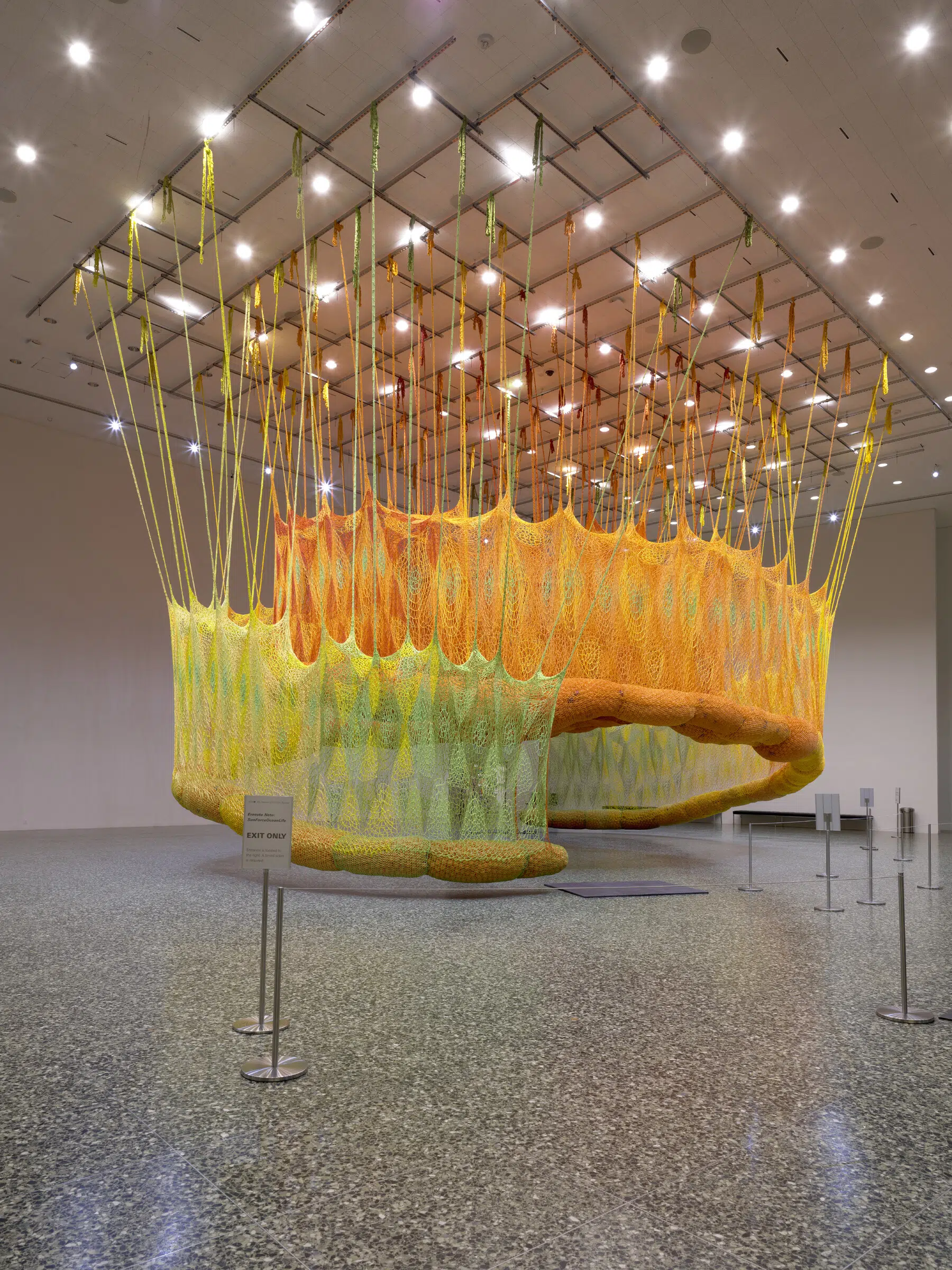
Installation view of “SunForceOceanLife” at the Museum of Fine Art, Houston, in 2020. (Photo: Albert Sanchez)
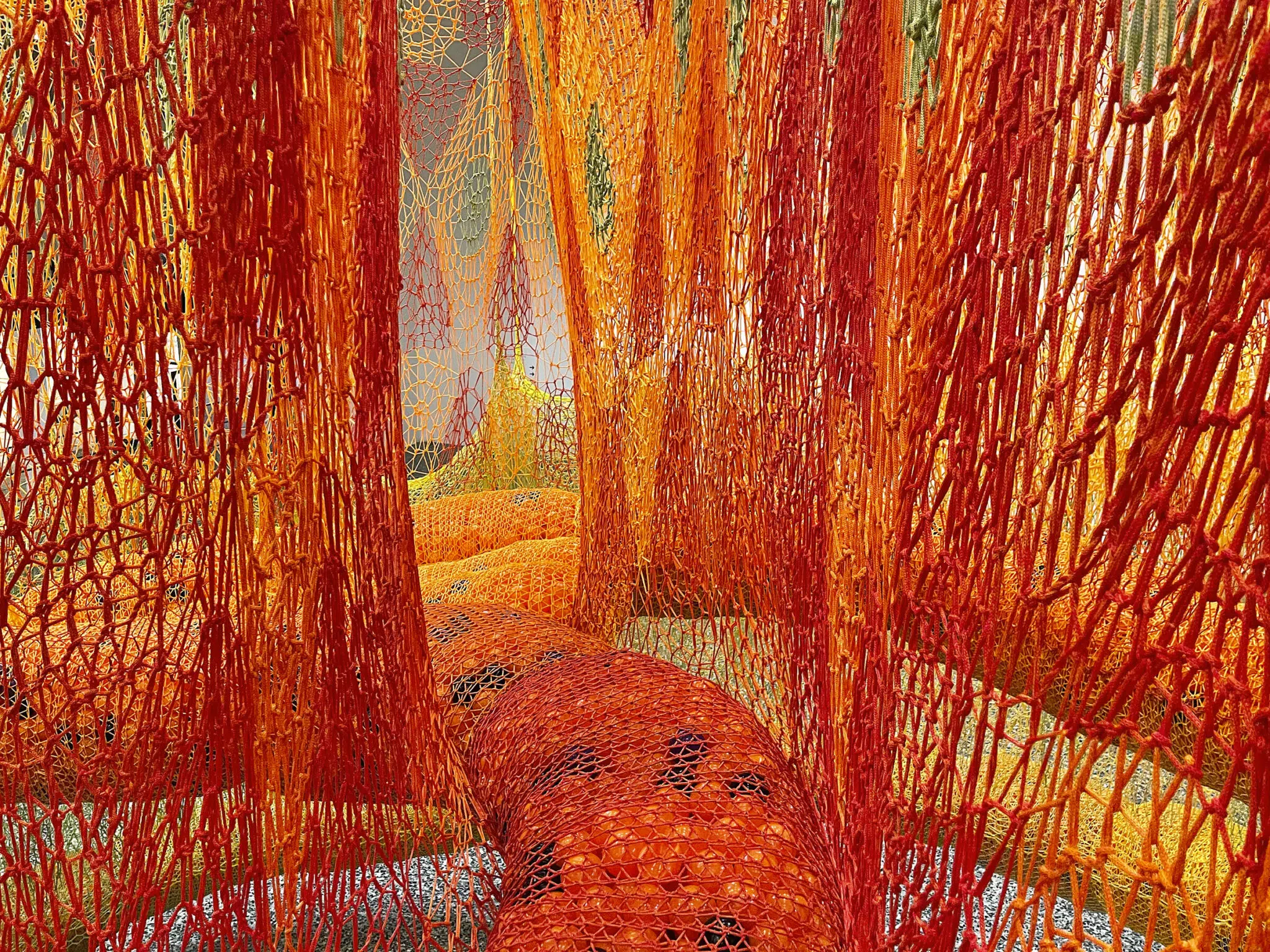
Installation view of “SunForceOceanLife” at the Museum of Fine Art, Houston, in 2020. (Photo: Albert Sanchez)
View this post on Instagram
Suspended 12 feet in the air, the work invites visitors to traverse a labyrinth of crocheted pathways, each filled with soft, plastic balls that move underfoot.
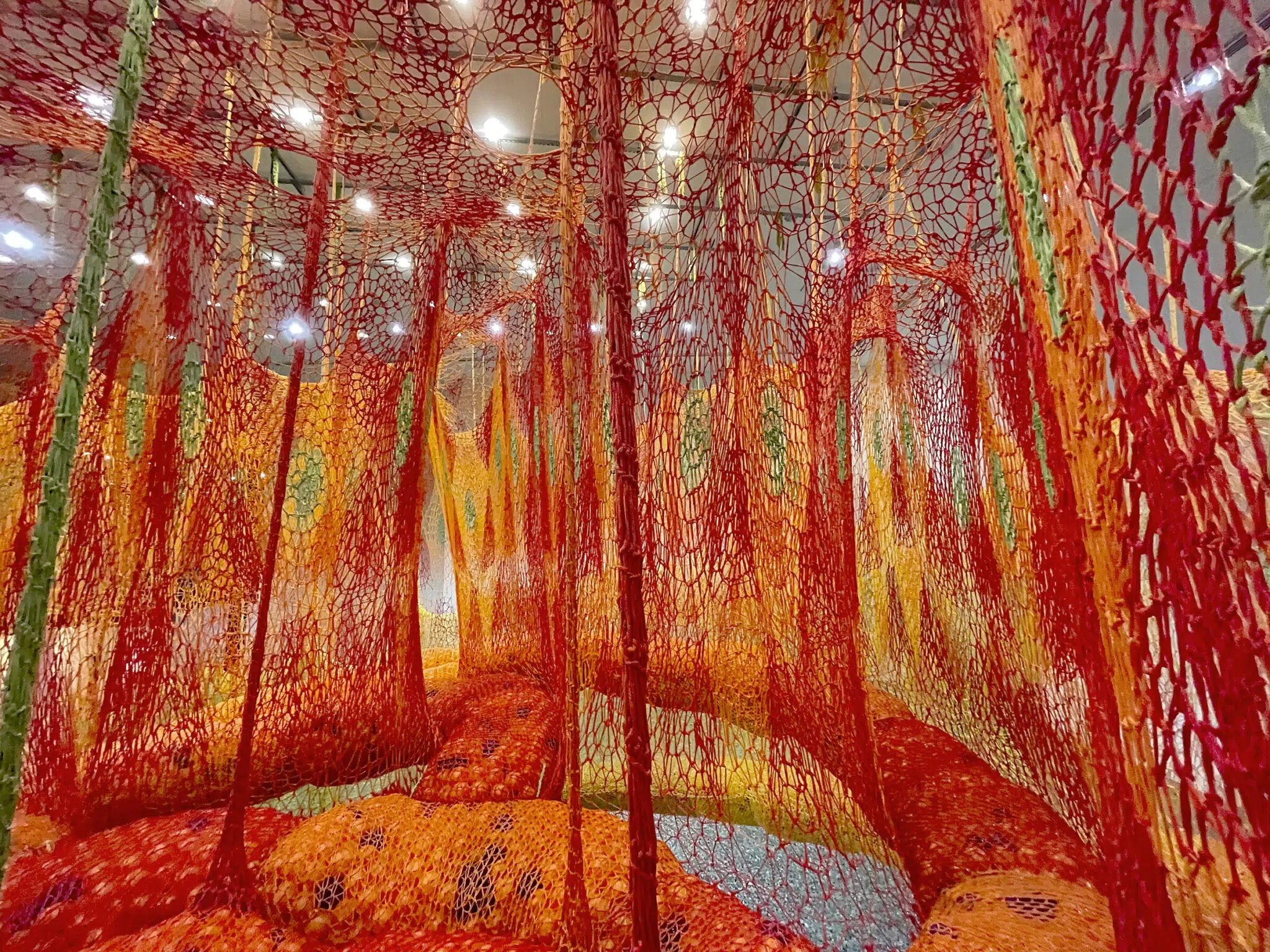
Installation view of “SunForceOceanLife” at the Museum of Fine Art, Houston, in 2020. (Photo: Albert Sanchez)
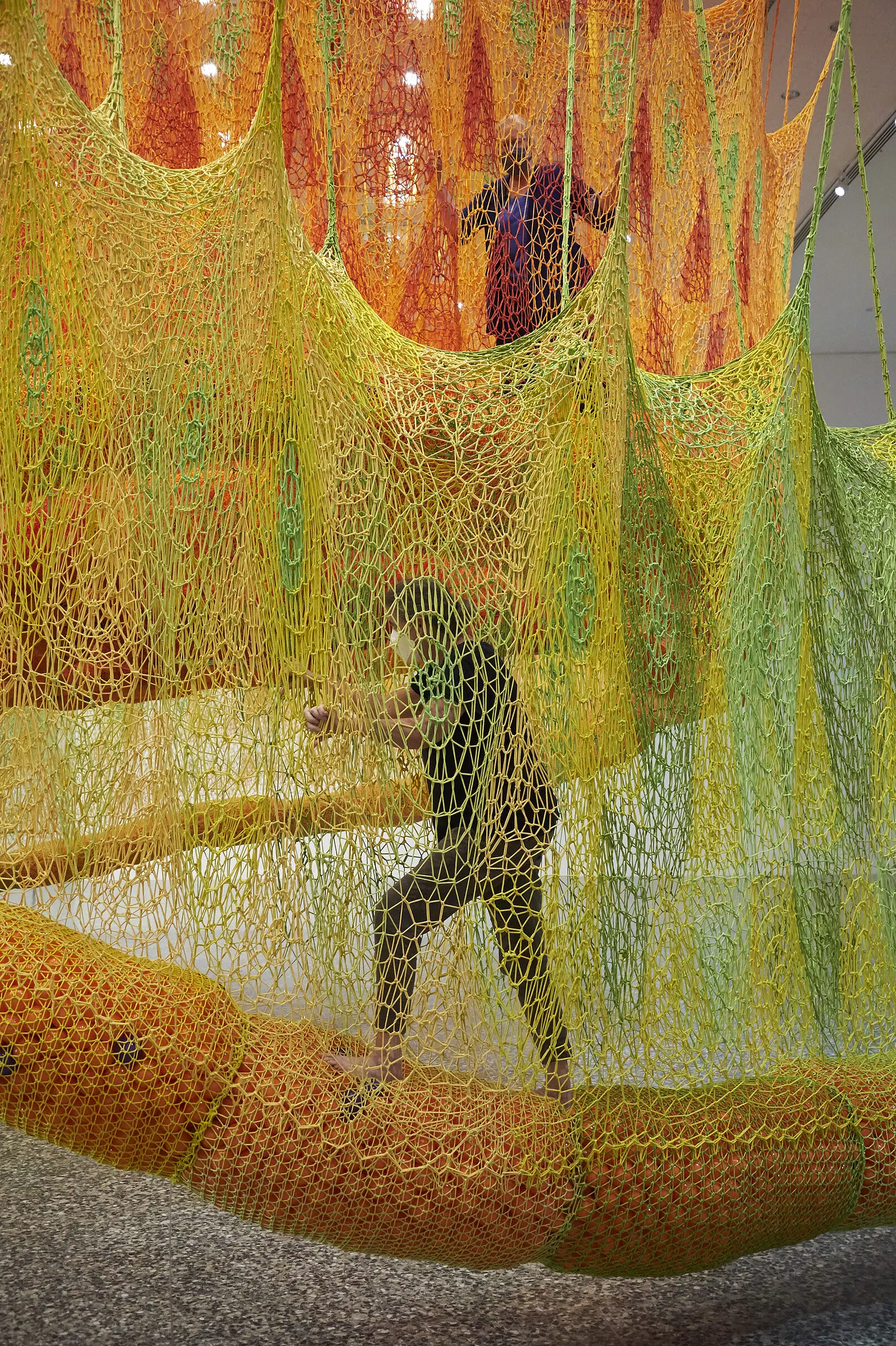
Installation view of “SunForceOceanLife” at the Museum of Fine Art, Houston, in 2020. (Photo: Albert Sanchez)
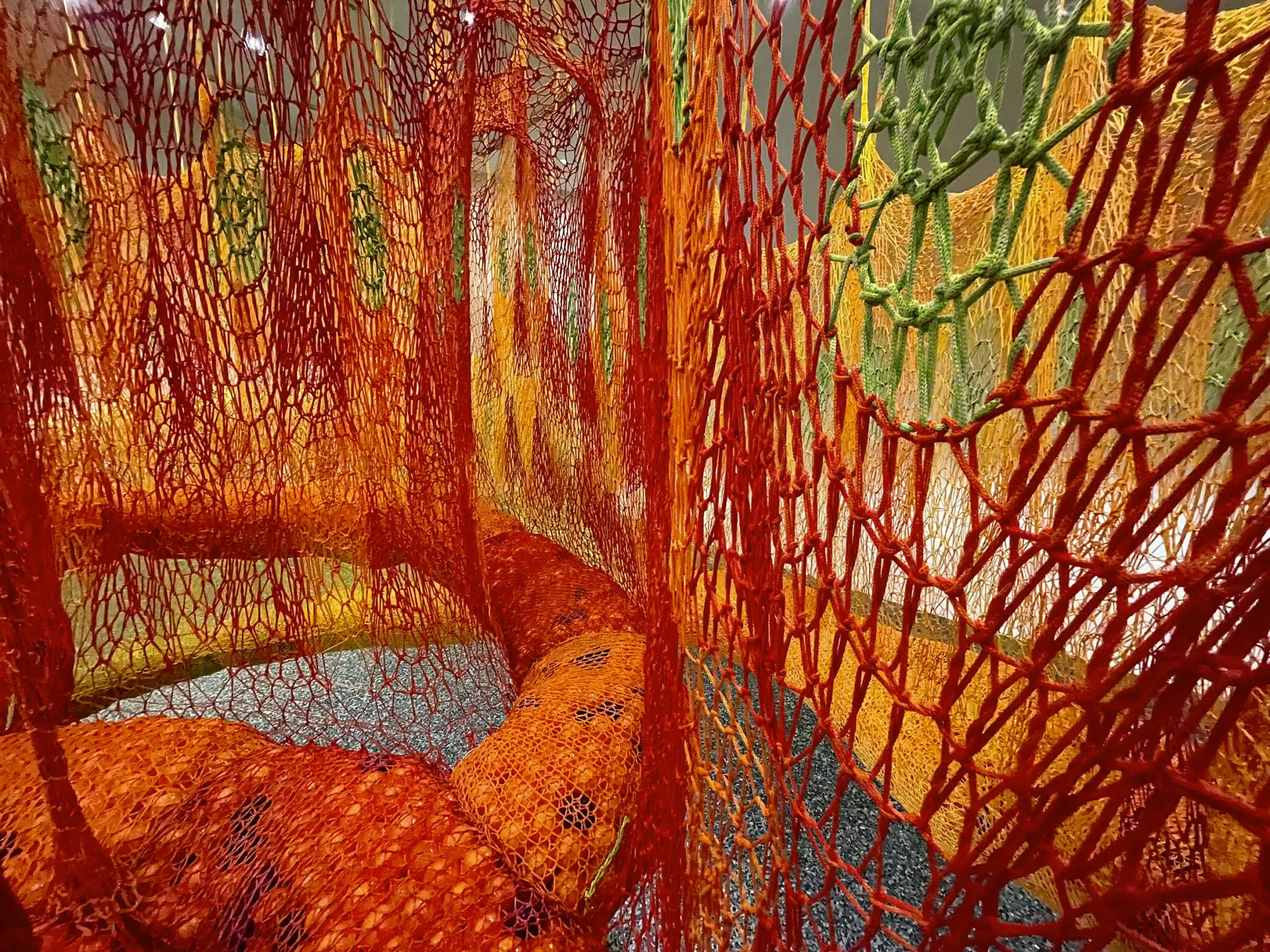
Installation view of “SunForceOceanLife” at the Museum of Fine Art, Houston, in 2020. (Photo: Albert Sanchez)
SunForceOceanLife, which is now one of Neto’s largest crocheted works to date, was originally commissioned by MFAH in 2019.
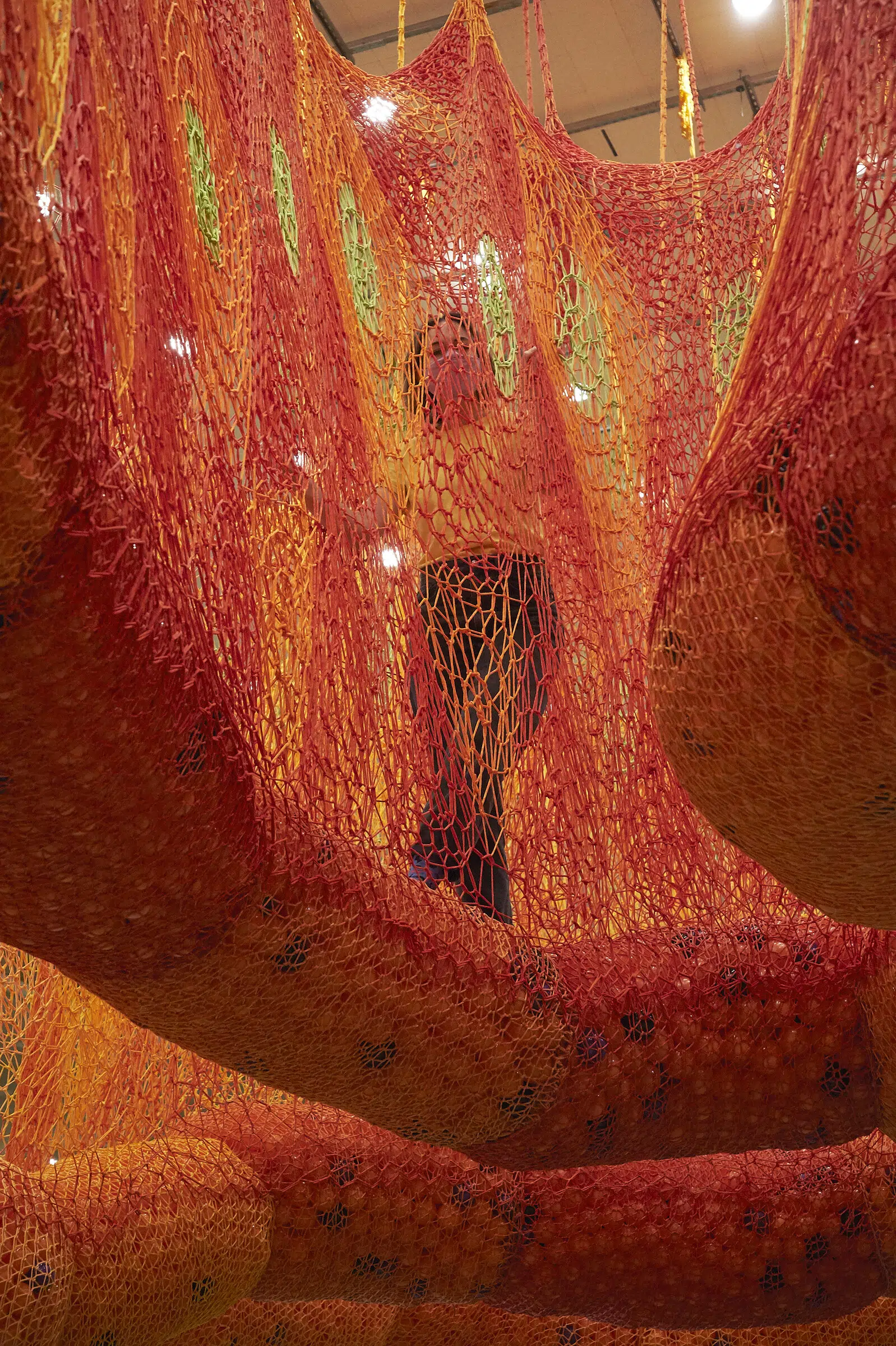
Installation view of “SunForceOceanLife” at the Museum of Fine Art, Houston, in 2020. (Photo: Albert Sanchez)
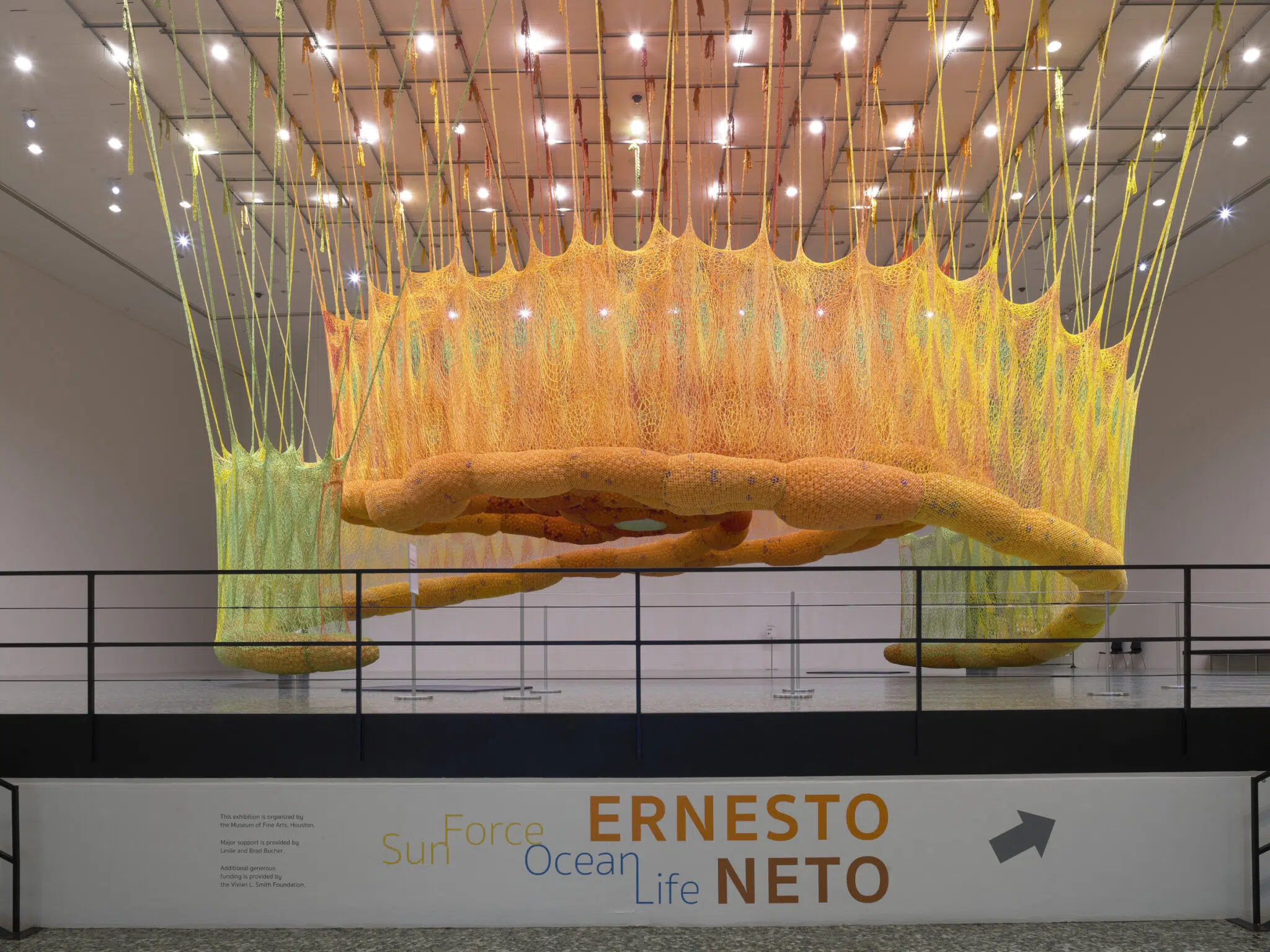
Installation view of “SunForceOceanLife” at the Museum of Fine Art, Houston, in 2020. (Photo: Albert Sanchez)