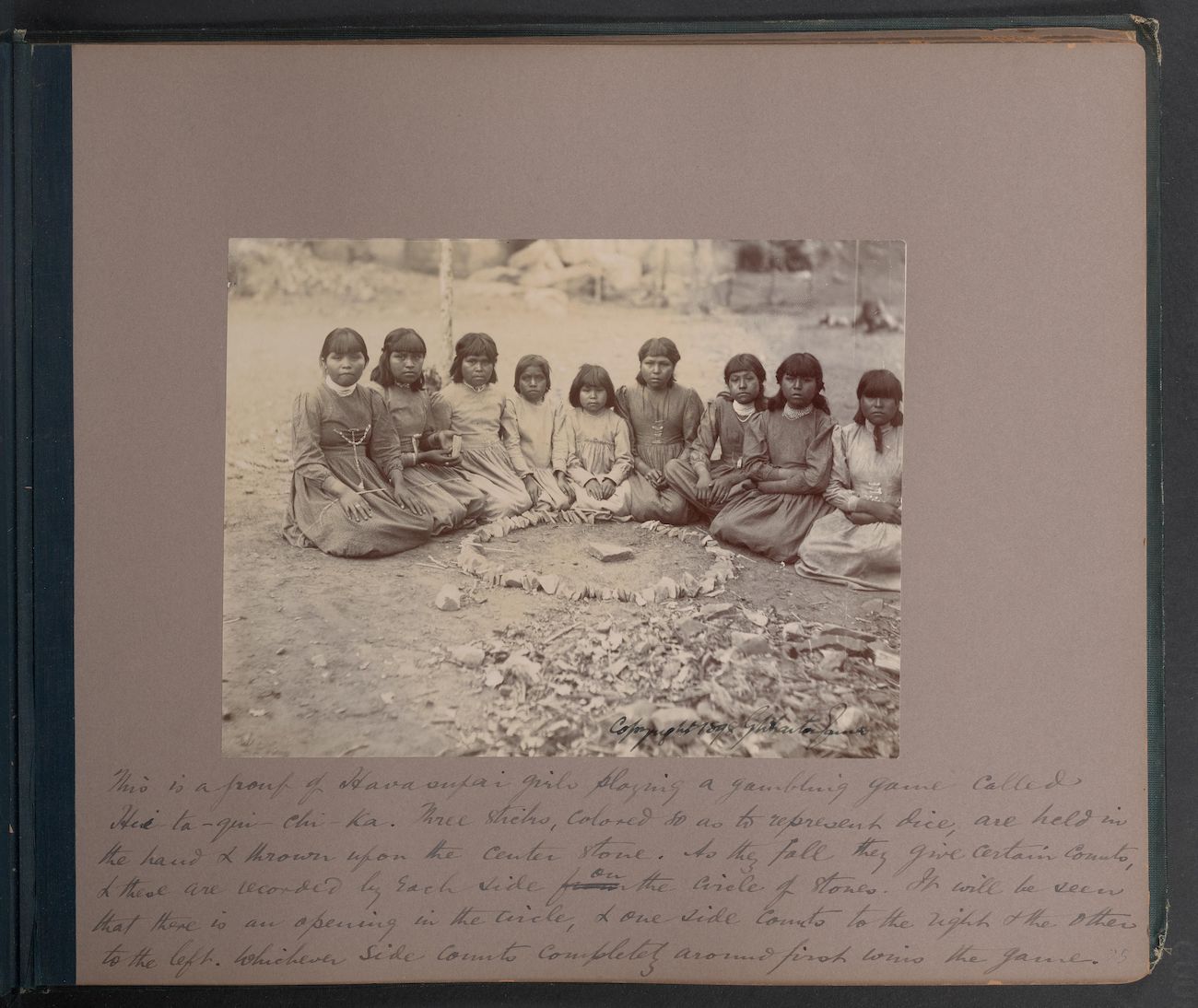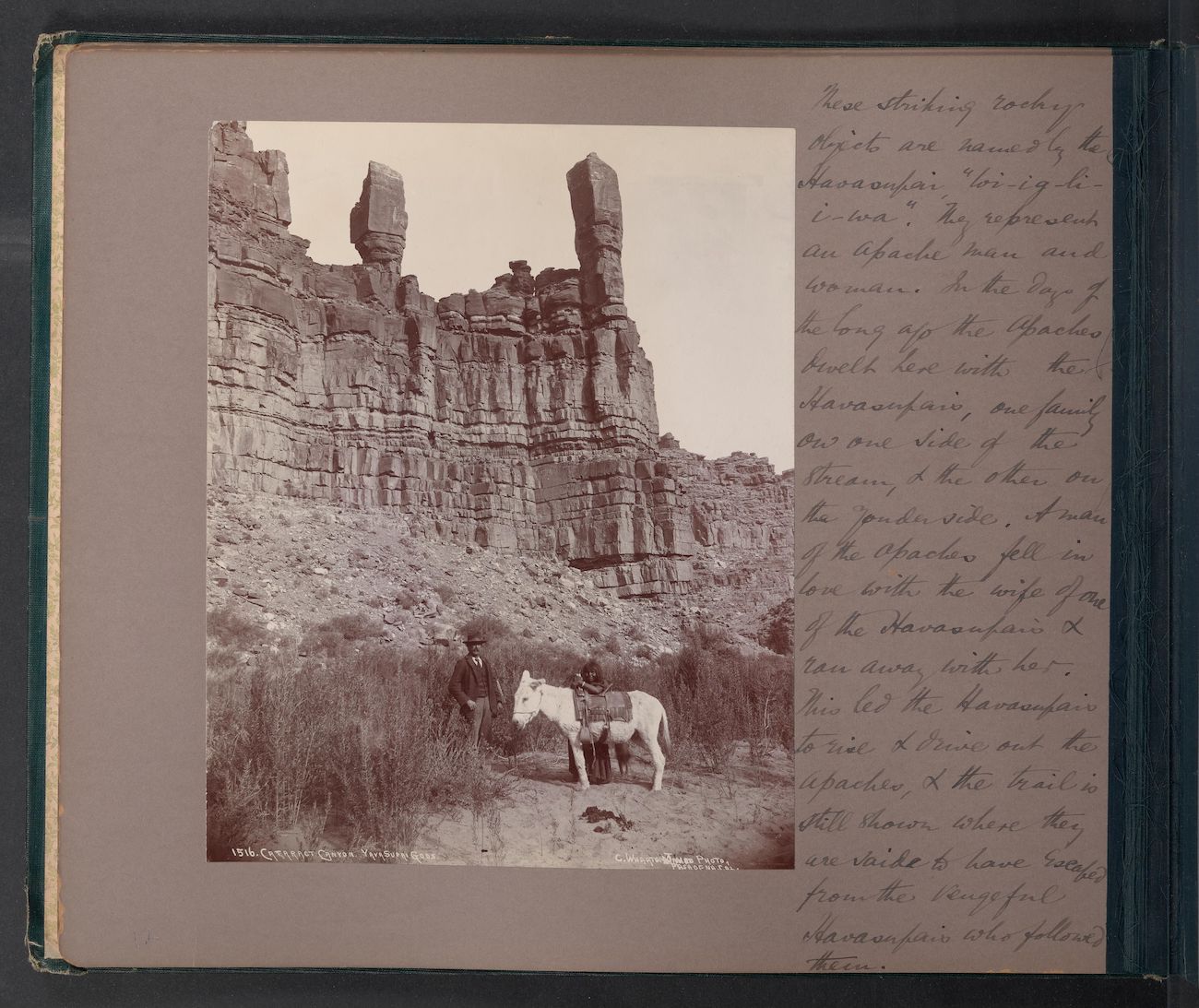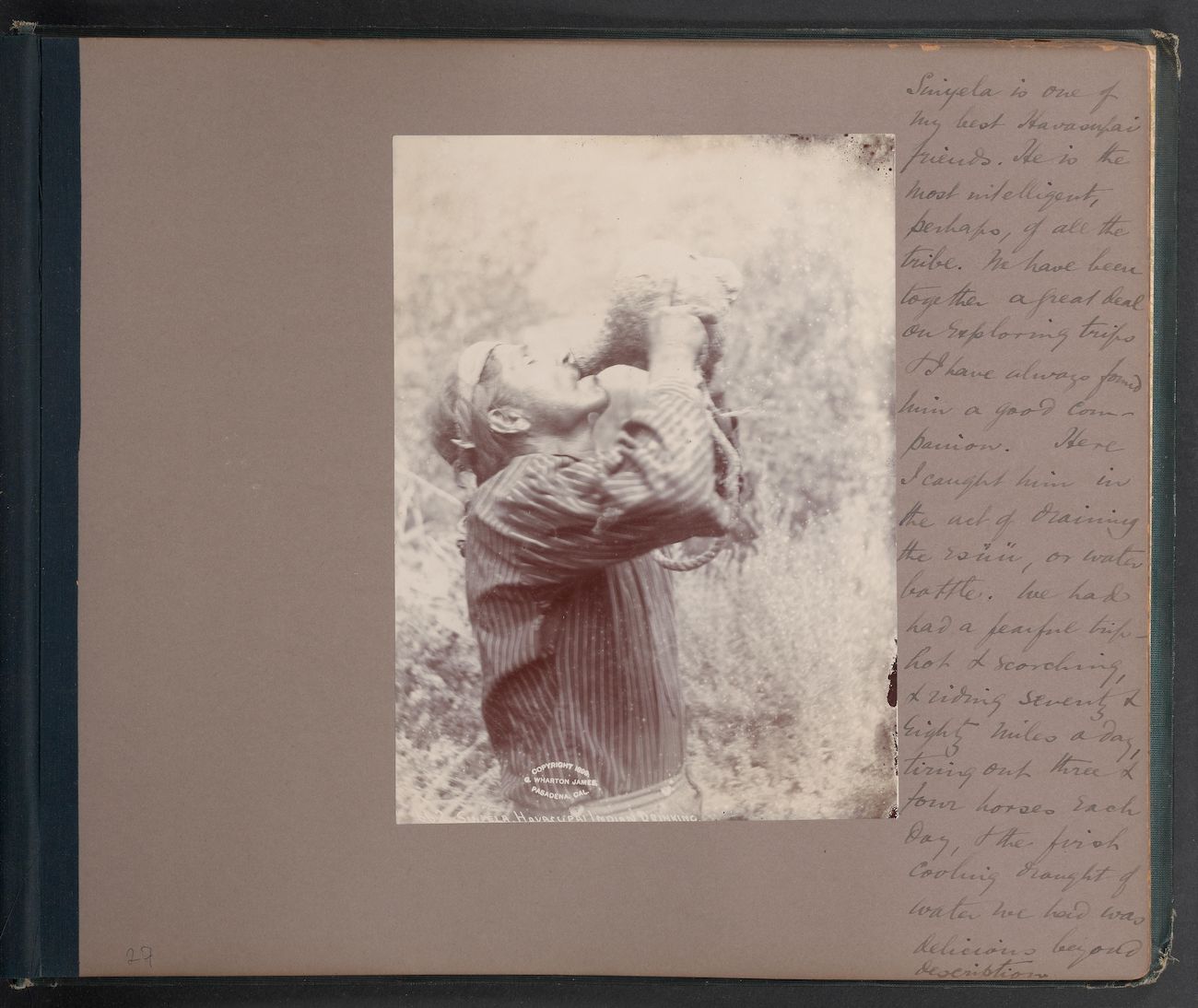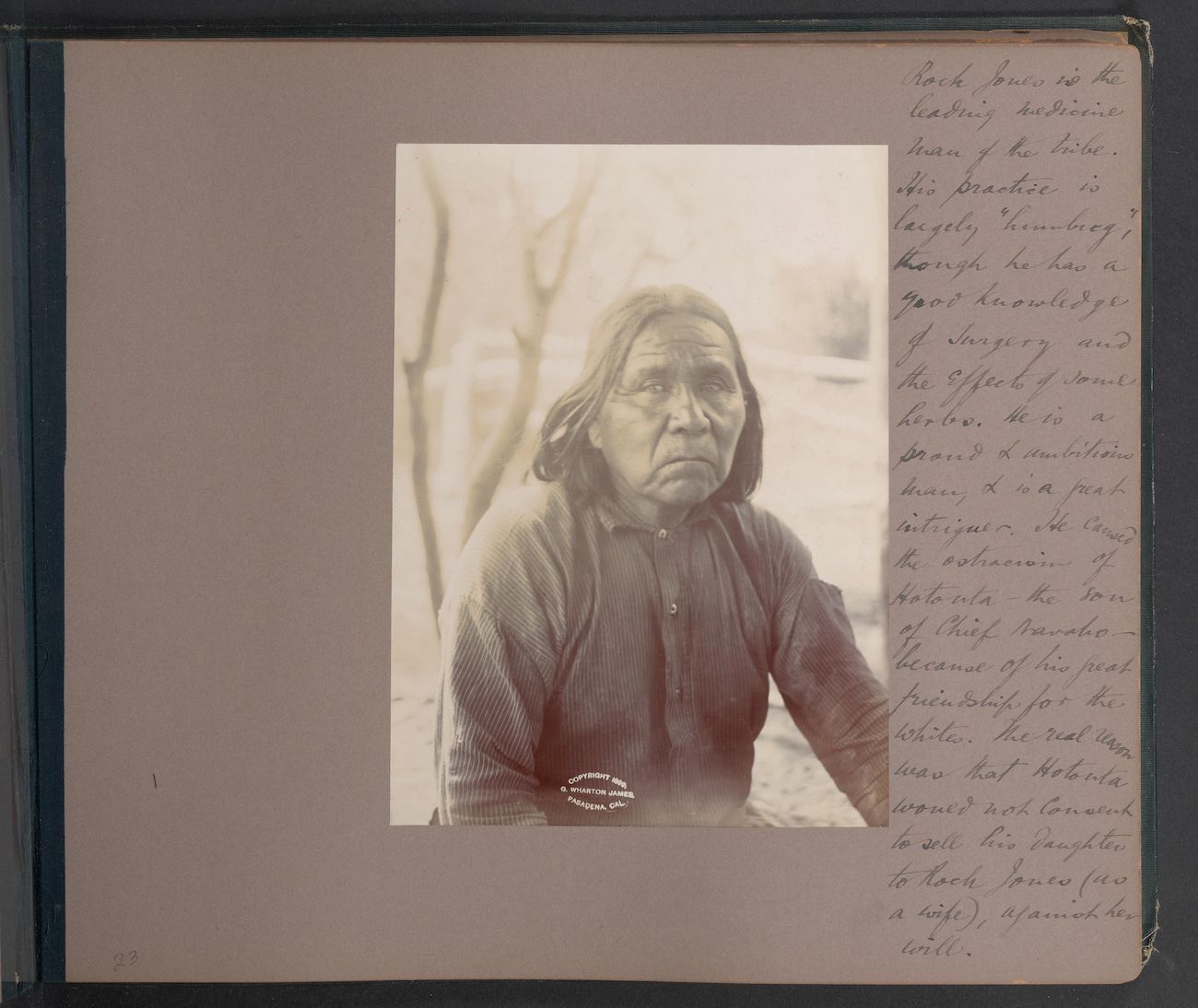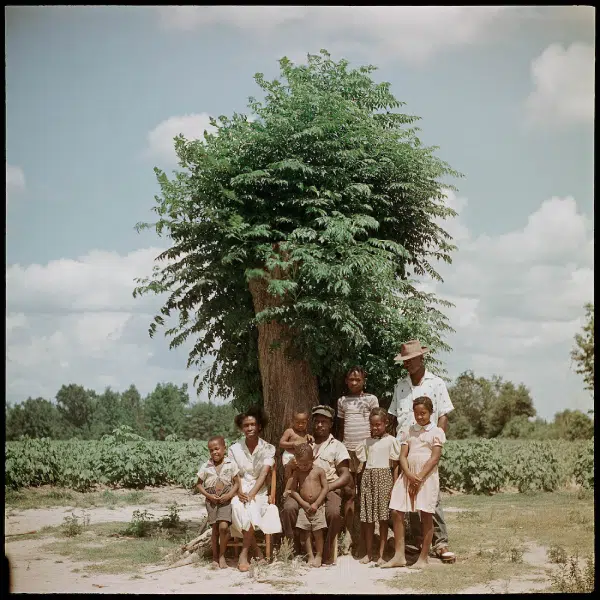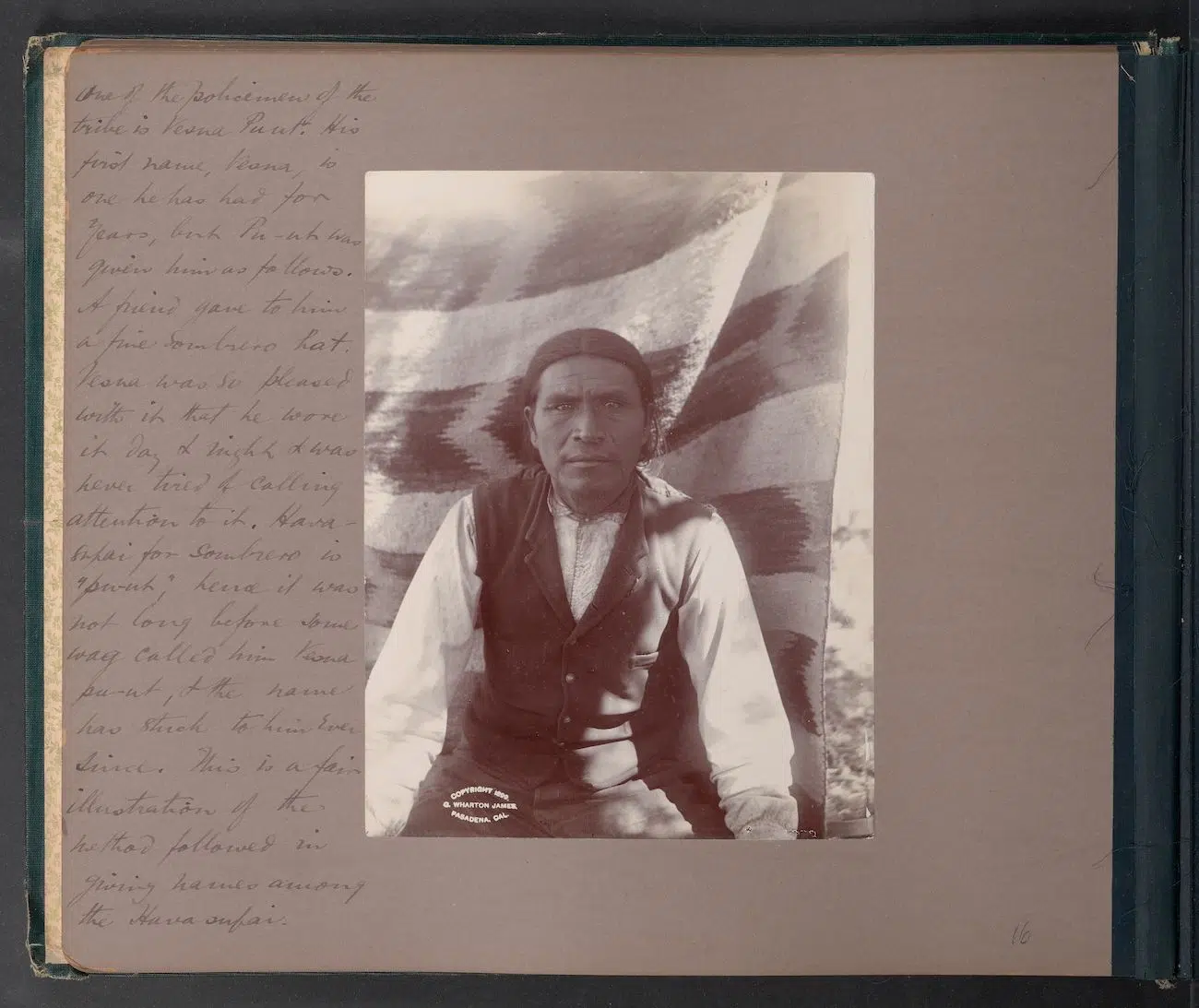
The photographs produced by George Wharton James in the early 20th century position the Havasupai Tribe within a landscape that is both specific and expansive. Figures appear alongside Havasu Creek, within cultivated terrain, or framed by the Grand Canyon walls that embed them within the landscape.
This connection is not incidental. The name Havasupai translates to “people of the blue-green water,” referencing the distinctive color of the creek that runs through the canyon and sustains daily life. For generations, the Havasupai have lived within this region, developing agricultural practices and seasonal movement patterns that respond to its climate and terrain. The presence of water and land in these photographs reflects a long-standing relationship to place that is both practical and cultural.
However, the period in which these images were produced is critical. By the early 1900s, increasing tourism and federal oversight were reshaping access to the canyon. The establishment of Grand Canyon National Park in 1919 formalized these changes, restricting the Havasupai to a fraction of their ancestral lands. The photographs exist within this moment of transition. They document presence, but also coincide with a narrowing of land rights and mobility.
Unlike generalized representations of Indigenous communities, these photographs point to a distinct ecological relationship. The Havasupai have long lived within the canyon, relying on the waters of Havasu Creek for agriculture and daily life. This included seasonal movement between the canyon floor and the plateau above, adapting to shifts in climate and terrain.
In the images, traces of this relationship are visible. Agricultural spaces appear alongside domestic scenes. Water is consistently present, not only as a resource but as a cultural anchor. The photographs suggest continuity through daily practice rather than staged expressions of identity.
Today, the Havasupai continue to live in Supai Village maintaining a connection to the same land and water systems seen in James’ photographs. Viewed now, these images function differently than they may have at the time of their creation. Rather than serving solely as ethnographic records, they can be read as documents of an ongoing relationship to place, despite historical disruption.
James’ photography provides a rare visual record of the Havasupai at the beginning of the 20th century, documenting both the community and the landscape that has sustained it for generations. Together, they point to a relationship to land that remains active and deeply rooted today.
Early 20th-century photographs by George Wharton James frame the Havasupai Tribe within the expansive landscape of the Grand Canyon.
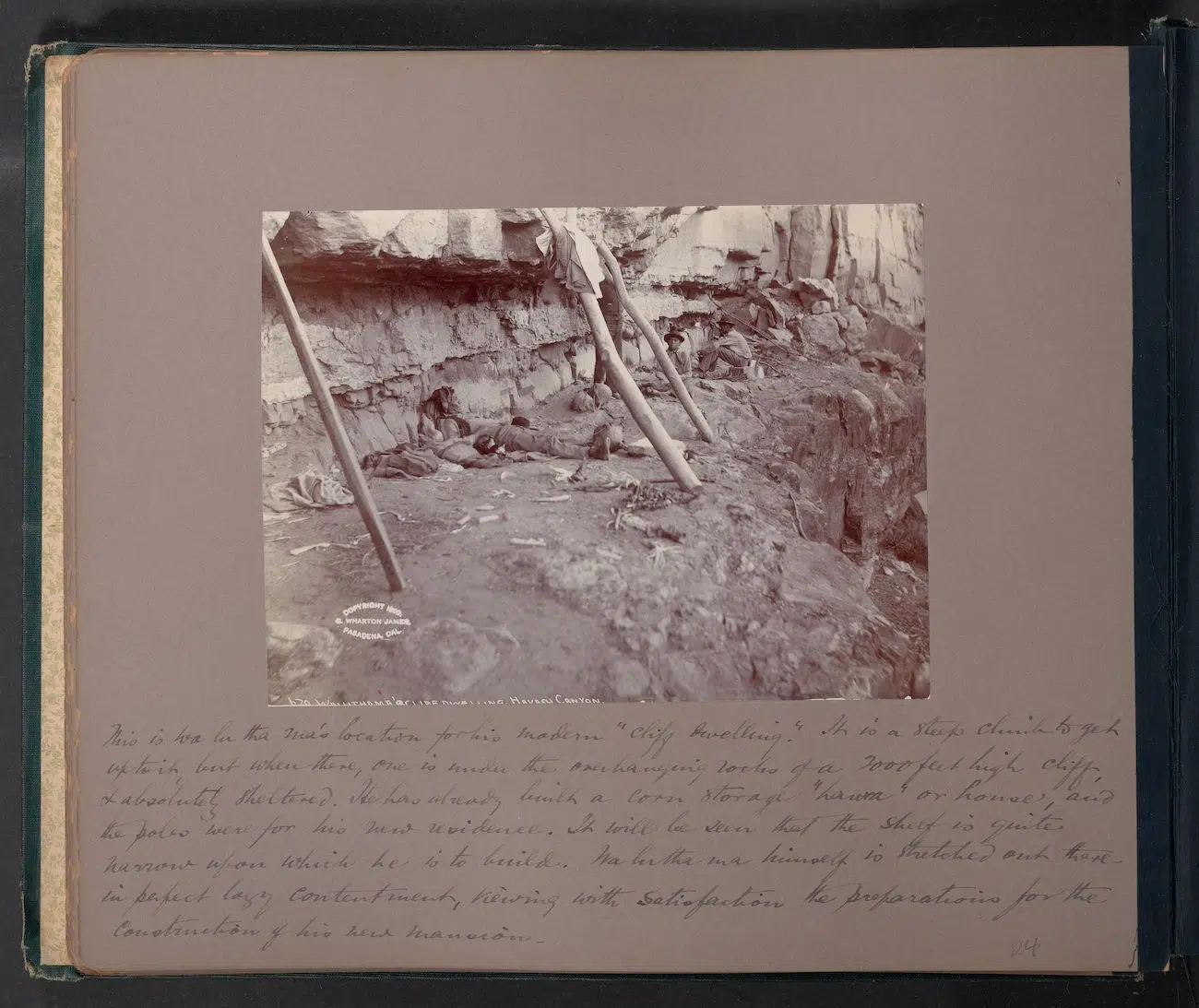
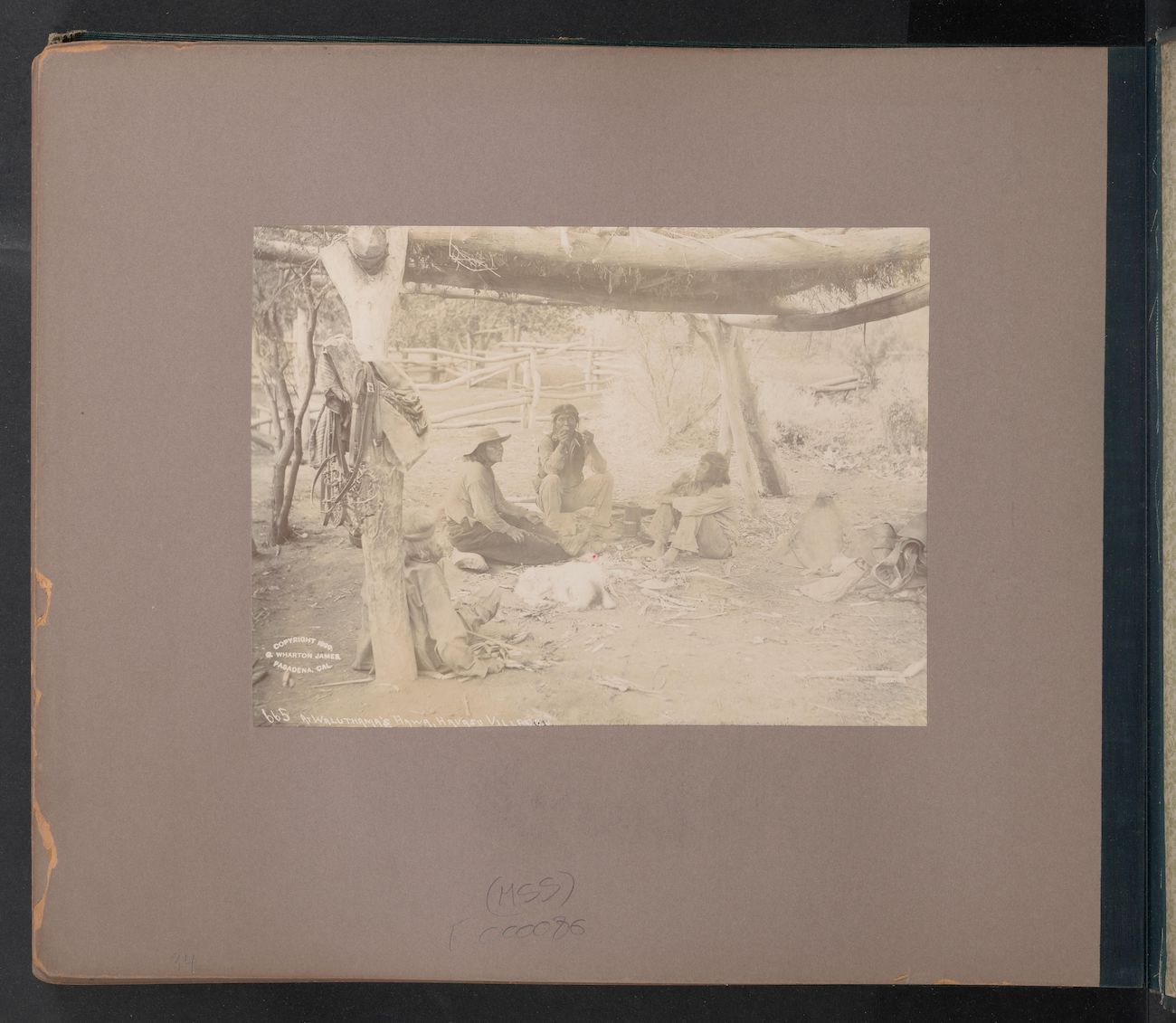
The images reveal a distinct ecological relationship between the Havasupai people, the canyon, and its waters.
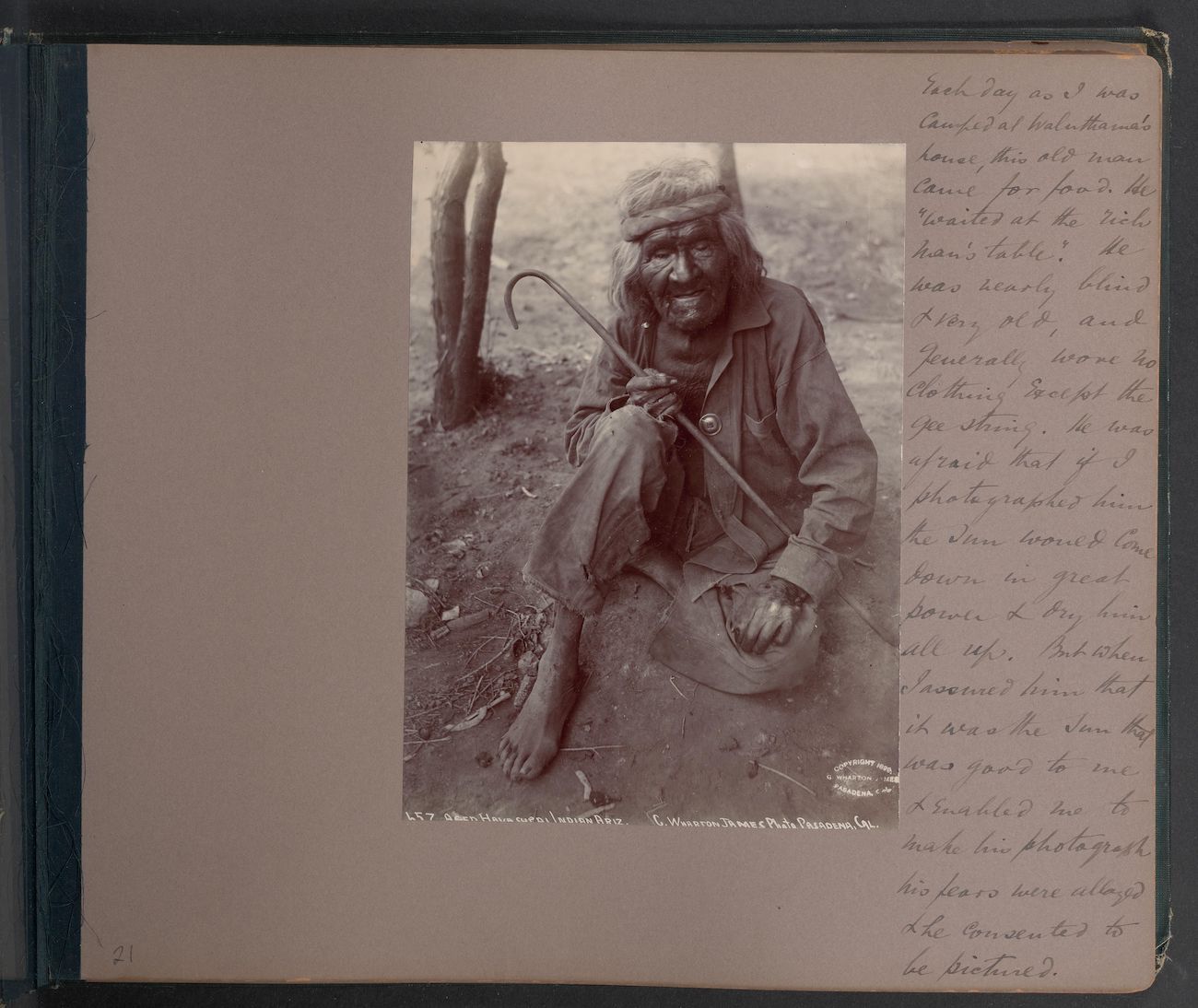
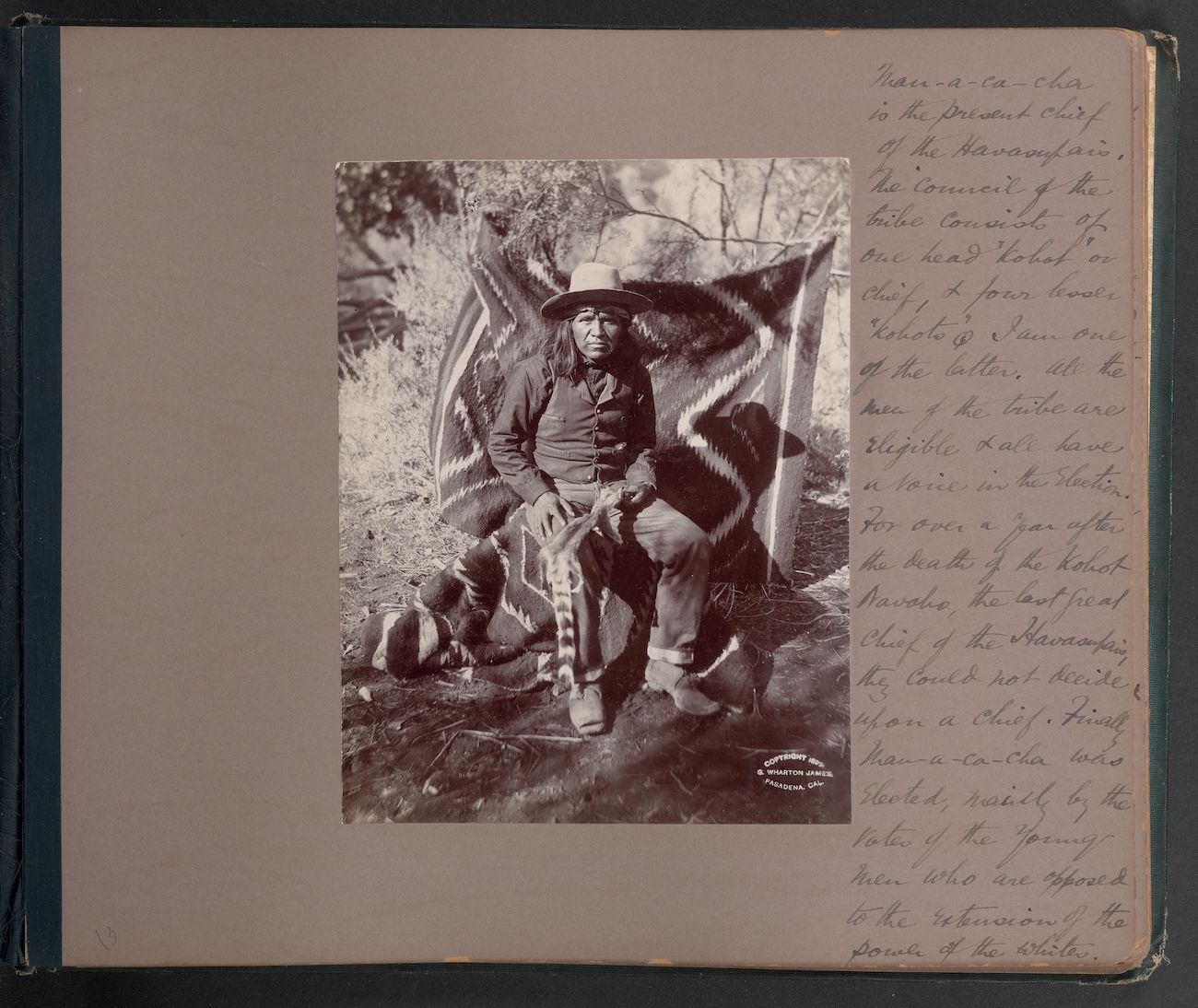
Viewed today, the photographs reflect both a moment of historical disruption and an ongoing connection to ancestral land.