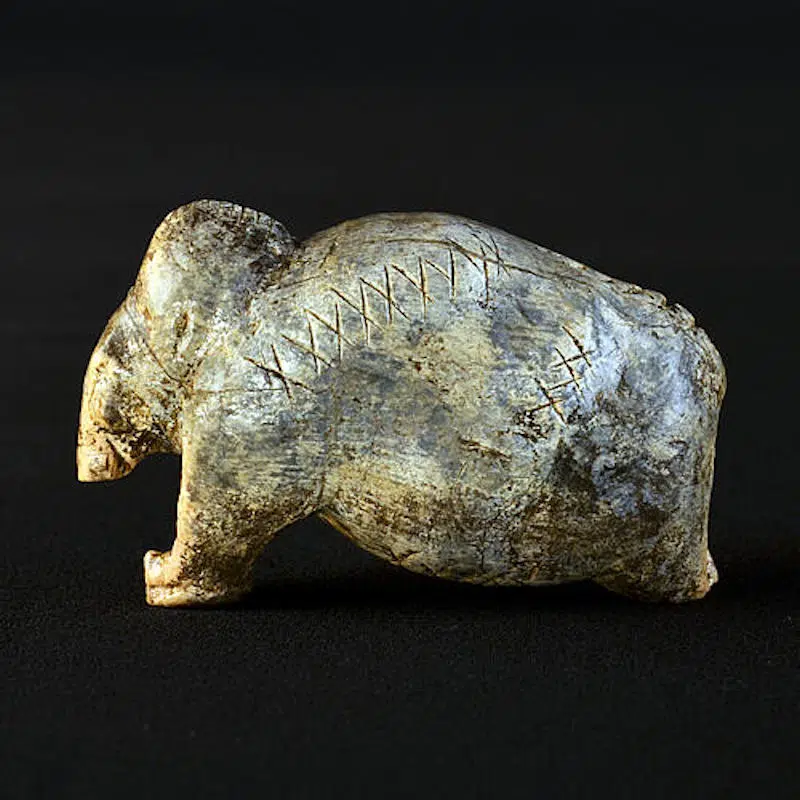
The mammoth figurine from Vogelherd Cave. (Photo: University of Tübingen / Hildegard Jensen CC BY 4.0)
Long before cities, agriculture, or record keeping, Ice Age humans carved small lines and dots into ivory and bone. At first glance, these marks seem simple. But new research suggests they may represent one of the earliest steps toward written language.
For decades, historians placed the birth of writing in ancient Mesopotamia around 5,300 years ago. There, proto-cuneiform symbols helped track goods and trade. But new research published in the journal Proceedings of the National Academy of Sciences suggests that the roots of writing stretch far deeper into the human past—more than 30,00 years.
The study examines 40,000-year-old Ice Age symbols carved into bone, stone, and ivory. Rather than dismissing them as decoration, researchers asked a different question: Do these marks follow a pattern?
Archaeologists uncovered the carvings in caves in southwestern Germany. The objects include animal figurines, tablets, and tools dating between 45,000 and 34,000 years ago. Many carry repeated dots, short lines, crosses, and notches. The research team then built a digital database of more than 3,000 individual signs from 260 artifacts. They analyzed how often symbols appeared and how they clustered together.
The results revealed structure; certain signs recur more frequently than others, and some appear in consistent sequences. The arrangements show intention rather than impulse.
To understand what that structure means, the researchers compared the carvings to early proto-cuneiform tablets from Mesopotamia. They measured the statistical complexity of each system, which refers to how much predictable information a symbol system carries. The Ice Age symbols showed levels of organization similar to those early writing systems.
One detail, in particular, stood out. Figurines often display more complex symbol sequences than tools. This difference suggests the marks may have carried social or ritual meaning. Perhaps they signaled identity. Perhaps they marked ownership, memory, or belief. We cannot decode them today. Still, the patterns suggest that people within these communities understood them. The marks may have worked as shared visual signals long before alphabets existed.
While the Ice Age people might’ve had a system, it’s a different thing to record speech. The carvings, in this case, do not form a full writing system. But they do show repeated, rule-based combinations. That kind of shared structure forms the backbone of written communication.
The small cuts in ivory may look modest to modern eyes. Yet they represent something profound. They reveal that long before cities rose or records were kept, humans were already shaping symbols into systems. The impulse to leave meaning behind is ancient. And it may have begun in the quiet scratch of stone against bone, deep in an Ice Age cave.
Ice Age humans carved small, repeated symbols into bone and ivory nearly 40,000 years ago.
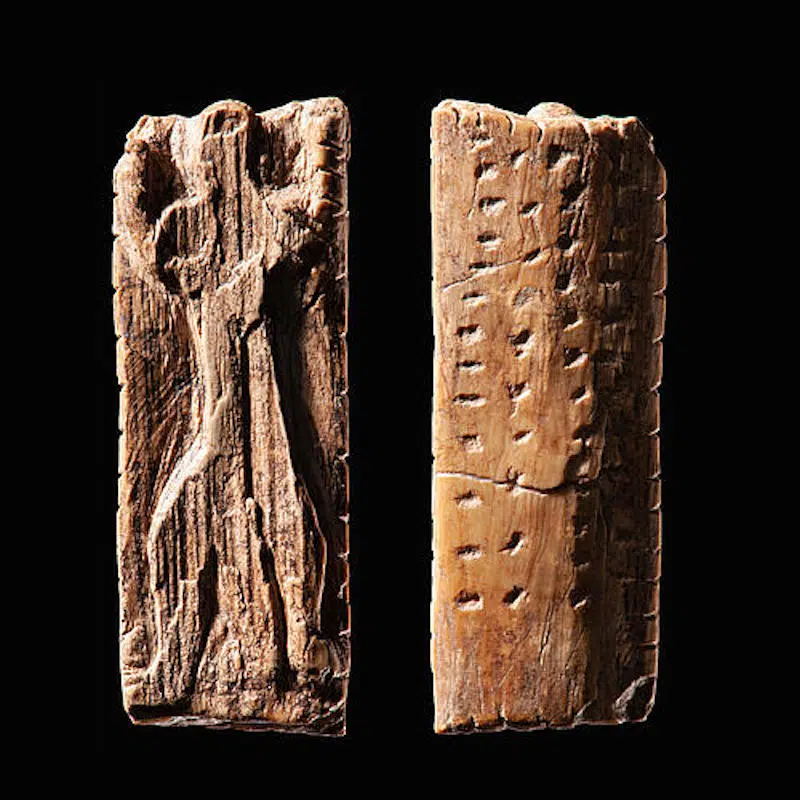
“Adorant” from the Geißenklösterle Cave is approximately 40,000 years old. (Photo: Landesmuseum Württemberg / Hendrik Zwietasch CC BY 4.0)
New research shows these marks follow structured patterns similar to early proto-writing systems.
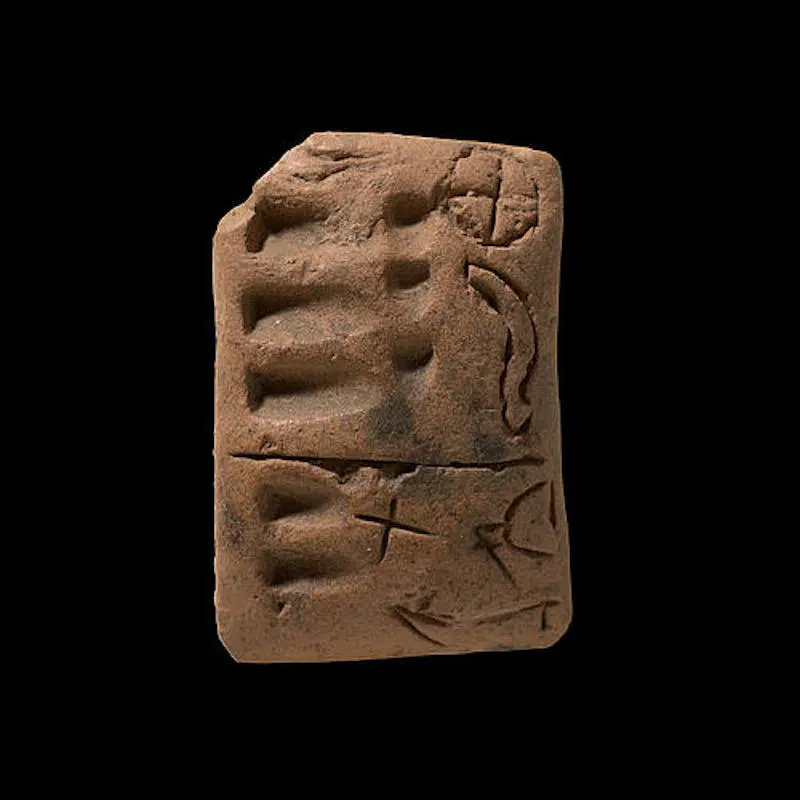
Proto-cuneiform tablet, approximately 3350 to 3200 years old. (Photo: taatliche Museen zu Berlin, Vorderasiatisches Museum / Olaf M. Tesmer CC BY 4.0)
While not full writing, the symbols may represent one of the earliest steps toward written language.
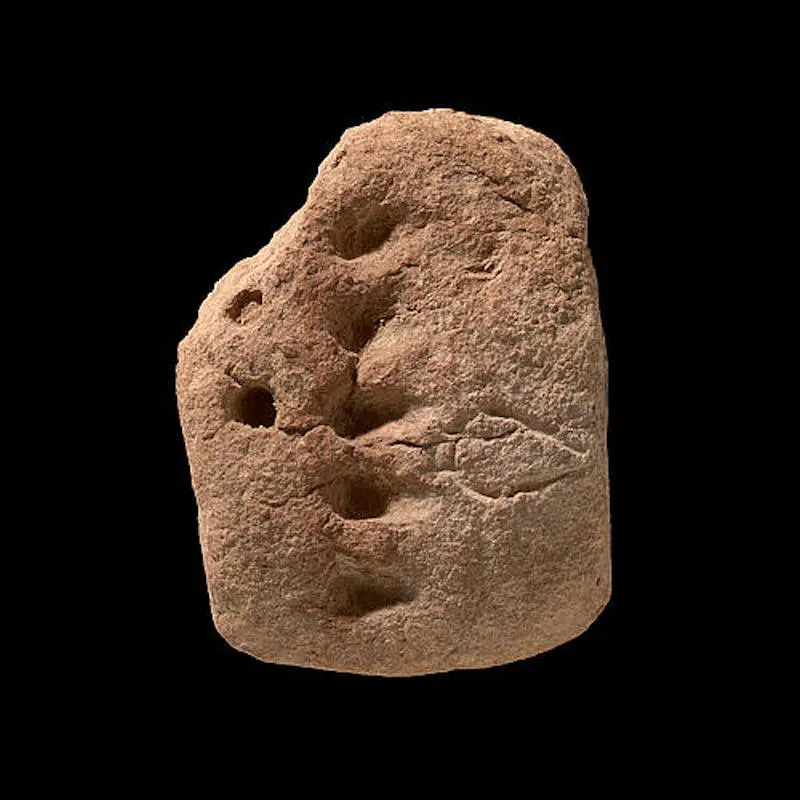
Proto-cuneiform tablet, approximately 3350 to 3200 years old. (Photo: taatliche Museen zu Berlin, Vorderasiatisches Museum / Olaf M. Tesmer CC BY 4.0)
Source: 40,000-Year-Old Stone Age Symbols May Be a Precursor to Written Language, Humans 40,000 y ago developed a system of conventional signs
Related Articles:
The Oldest Written Text in the World Is 5,500 Years Old
Listen to the World’s Oldest Sheet Music, a Mesopotamian Hymn Over 3,000 Years Old
Ancient Math Is Hidden in 8,000-Year-Old Floral Pottery Patterns
Linguists Are Creating the First-Ever Complete Dictionary of Ancient Celtic Languages