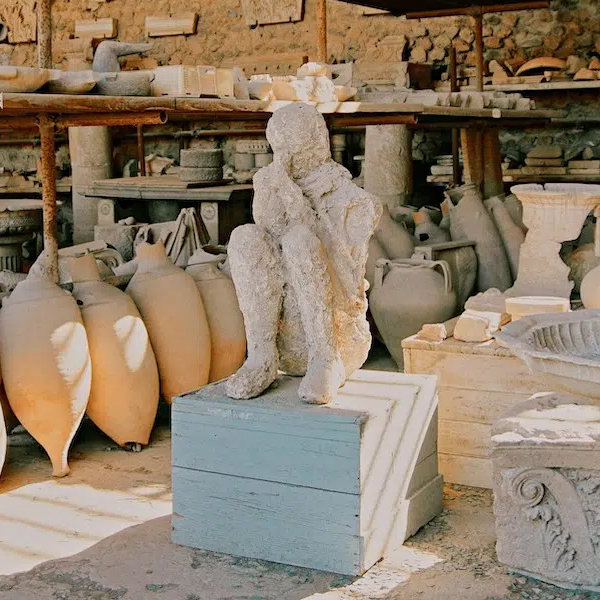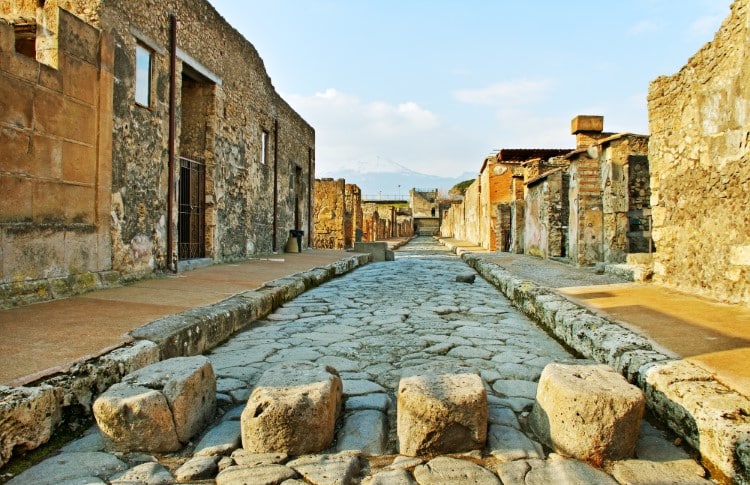
Prior to the eruption of Mount Vesuvius in 79 CE, and consequently being buried under volcanic debris and ash, the ancient Roman city of Pompeii was a thriving place. The vibrant settlement played a critical role in trade; thus, its 15,000 inhabitants lived in impressively modern conditions for the era. Now it's a famous archaeological site where excavations and new discoveries reveal more and more about how the Pompeians lived. When visitors tour the Pompeii archaeological park today, they can see the preserved remains of a well-planned city that catered to the daily life needs of its residents.
This ancient innovation is particularly evident when looking at how roads were built in Pompeii. One of the most noticeable features on the streets is the series of large raised stones placed in strategic locations. These prominent stepping stones acted as ancient crosswalks. Not only did they allow people to cross the street without touching the water and mud sitting on ground level, but they were also spaced wide enough so that carriage wheels could pass through without issue.
They were major connecting points for the city, and converged at the forum, where entrances to temples were located. They also connected the entrances of homes and shops, like bakeries, of which Pompeii had more than 40. The roads went all the way to the city walls, controlling trade and traffic through Pompeii.
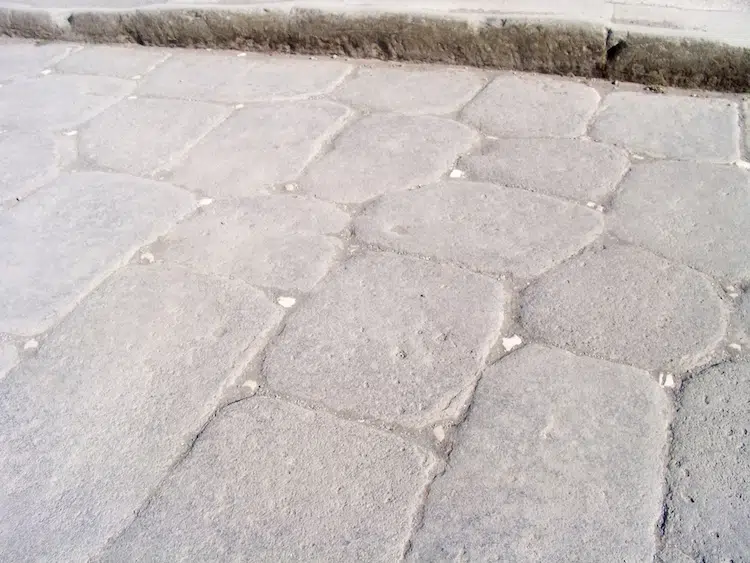
Natural reflectors were also incorporated into some of the roads in the form of small white stones. These paler rocks were set among the larger slabs to help people find their way at night. The moon would reflect on the stones, creating enough light for people to be able to see.
Drainage was also particularly important since most homes in Pompeii had no direct sewer connection. Refuse was washed into the street, making these stepping stones critical. Raised sidewalks with drainage also allowed people to move freely without putting their feet in sewage. Interestingly, Herculaneum, a wealthier town nearby, had a superior sewerage system and not these large street crossings.
Innovations like these make Pompeii a fascinating place to visit and a wonderful example of ancient Roman urban planning.
Pompeii's ancient roads are used today by tourists, but once played a pivotal role in everyday life in the city.
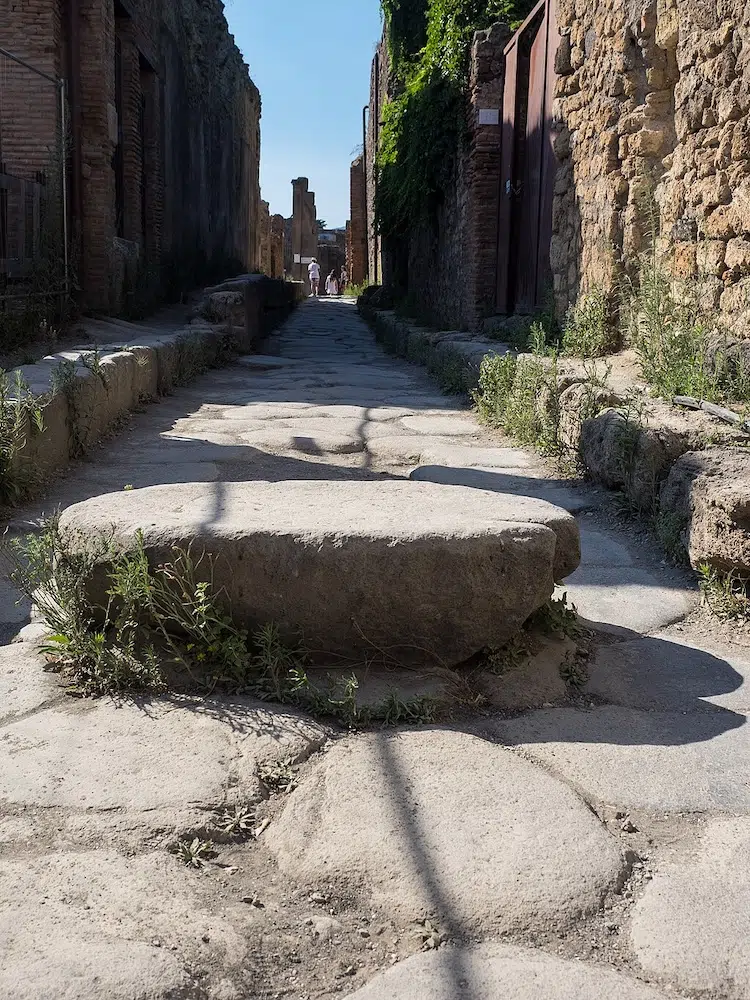
The roads connected bakeries, taverns, and homes and converged at the forum, or city center, where many temples were.
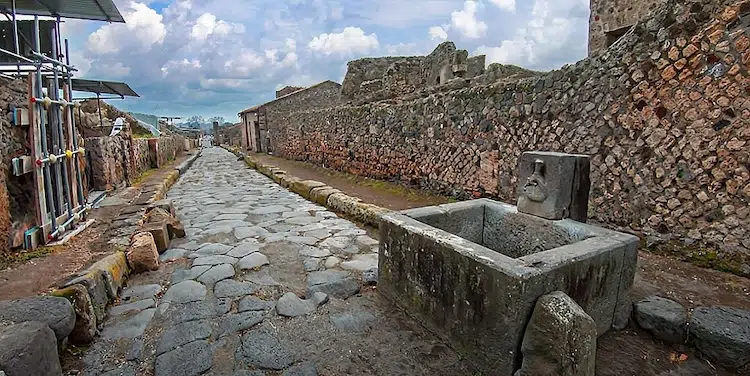
Public fountain along the Via Stabiana (Regio VI XVI) the main cardi (north-south road) Pompeii Prowalk (Photo: Mary Harrsch via Wikimedia Commons, Public domain)
Stepping stones kept residents' feet clean of mud and sewage and were wide enough to let carriage wheels pass through.
Between the large stones are small white ones meant to reflect moonlight and guide people at night.
This article has been edited and updated.
Related Articles:
Watch the Final Hours of the Once-Vibrant City of Pompeii
Nearly Life-Sized Relief Sculptures in Exceptional Condition Discovered in Pompeii
Pompeii Excavation Unearths One of the Largest and Most Luxurious Private Baths
Italian Archeologists Created 100 Plaster Casts of Pompeii Victims Petrified in Ash