Earlier in 2025, Snøhetta unveiled the Shanghai Opera House, an innovative structure resembling an unfurling fan. This opera house is just one of many performing arts centers that the Oslo-based architecture firm has designed, including the Norwegian National Opera and Ballet, the Busan Opera House in South Korea, and the Isabel Bader Center in Canada. Now, Snøhetta has turned its attention to Düsseldorf, where it will build yet another ambitious opera house.
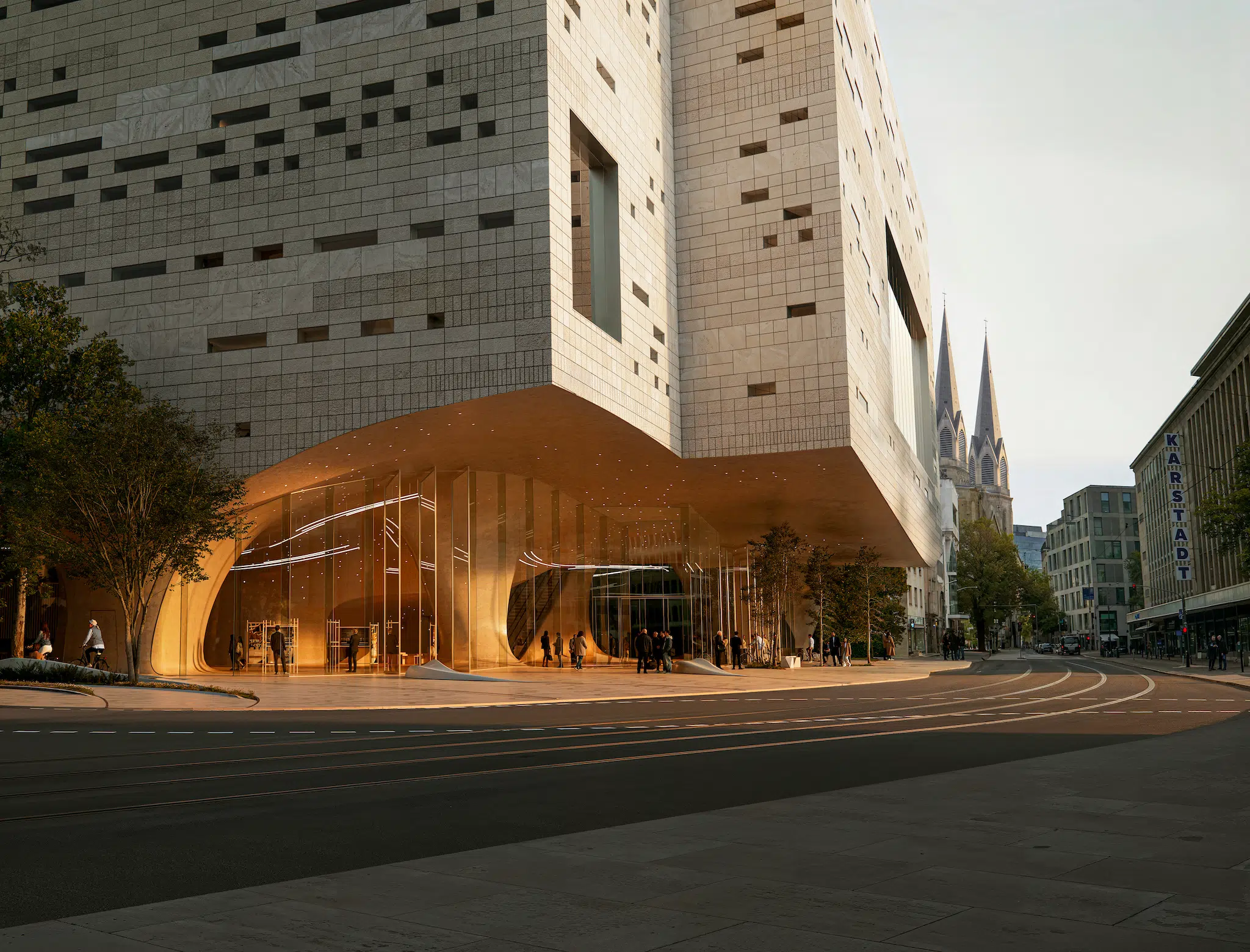
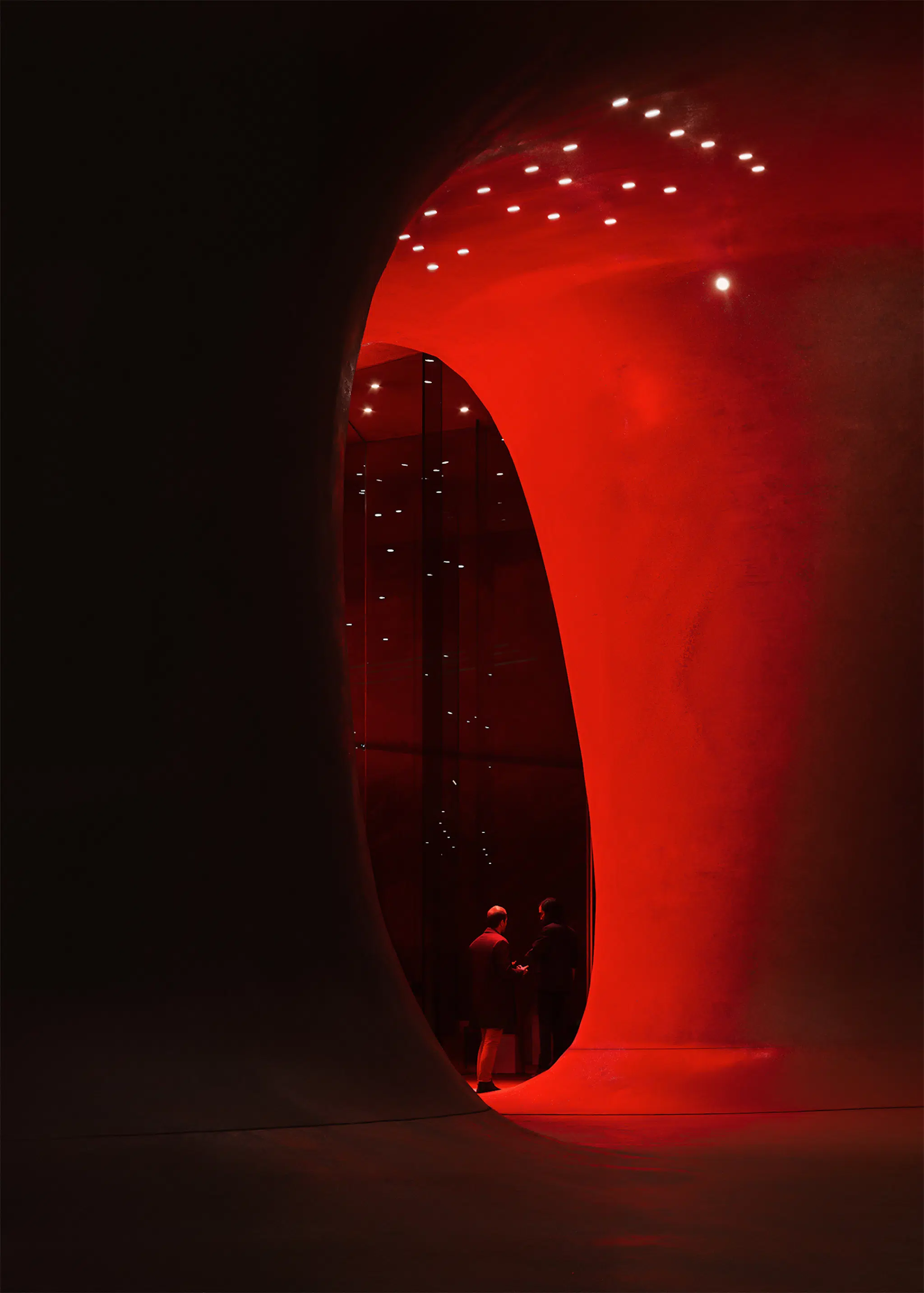
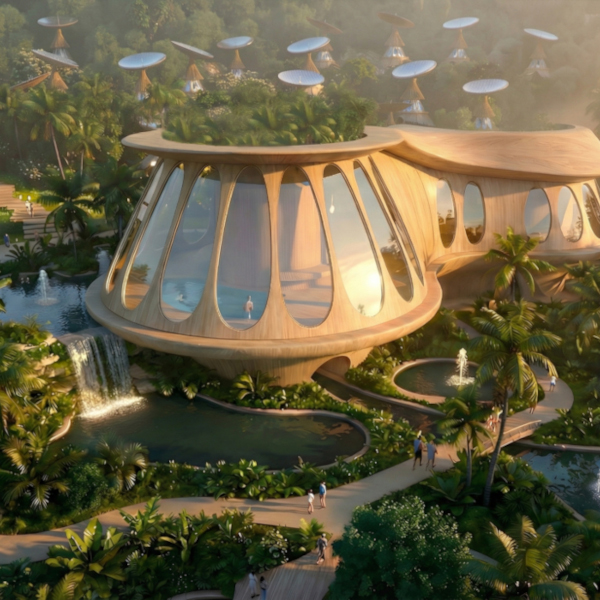
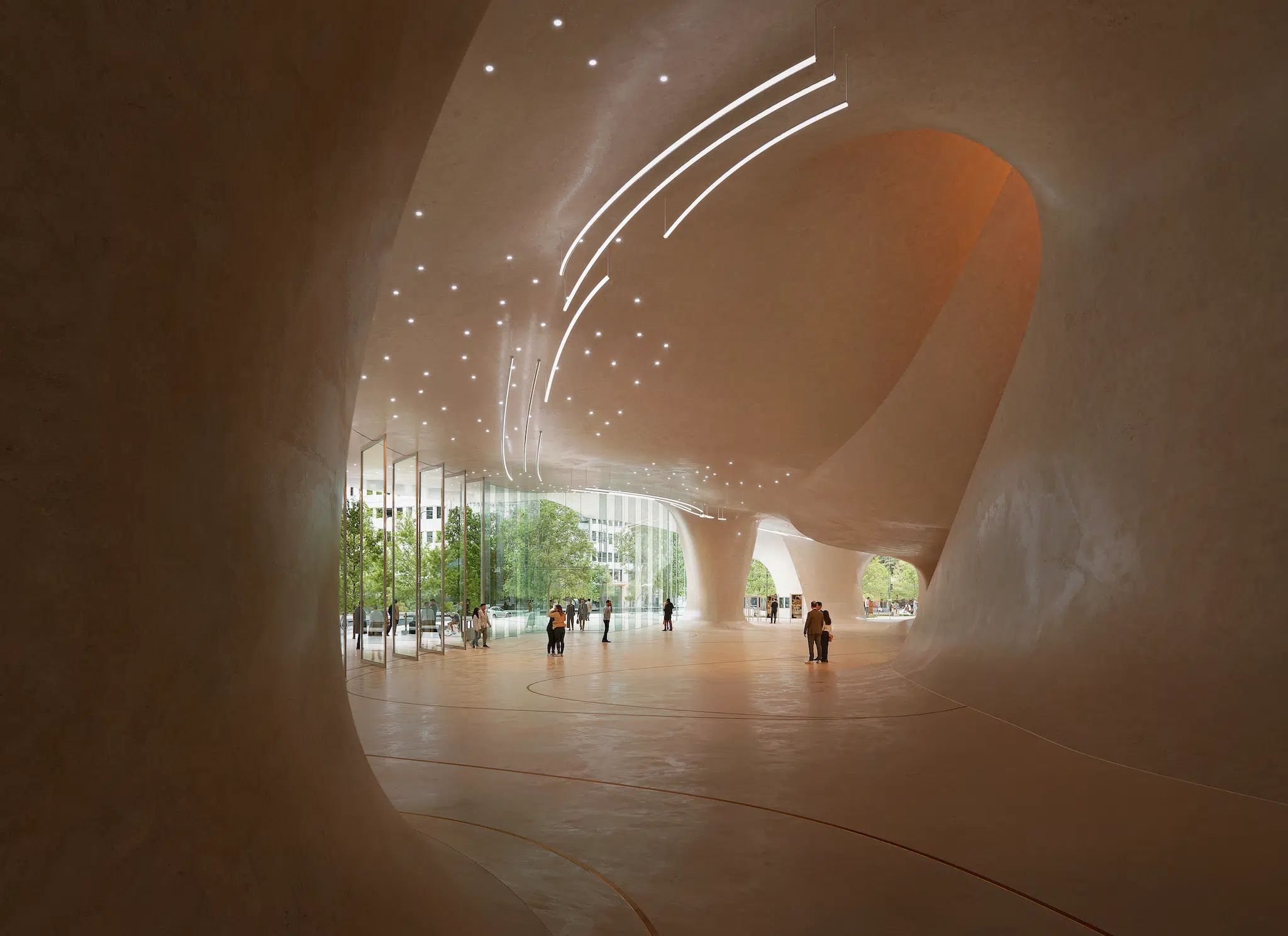
Currently in its planning phase, the Düsseldorf Opera House finds its formal inspiration in the Rhine. For millennia, the river has carved its way throughout Germany’s Rhineland, shaping the sedimentary foundation upon which Düsseldorf is built. Snøhetta translated this natural landscape into the opera house’s cavernous structure, whose ground floor resembles an eroded cave, per the firm. These visual cues and themes of erosion continue throughout the building, emerging primarily as mineral materials.
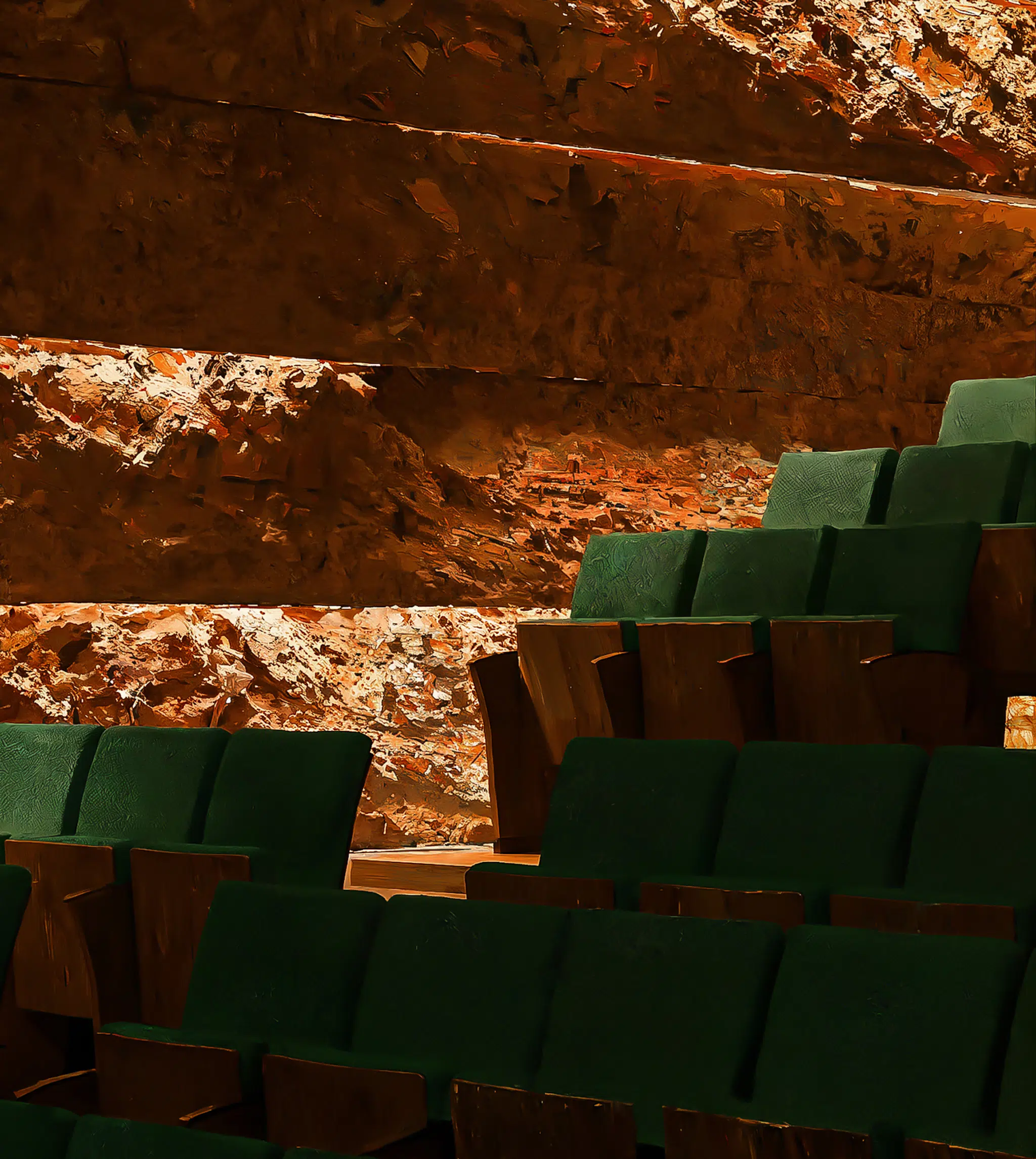
The walls of the studio stage, for instance, appear to be rough-hewn, boasting dramatic ridges and rugged detailing. Despite bearing the texture of an actual cave, these walls nevertheless remain inviting, thanks in part to their warm tone and the studio’s green seating. The main auditorium, which seats 1,300 guests, interprets this earth motif through smoked oak paneling and red seating, positioned into organic, arch-like rows. This color scheme echoes that of Düsseldorf’s existing opera house, which is expected to be demolished.
Outside, the Düsseldorf Opera House assumes an asymmetrical silhouette, organized into three trapezium-shaped segments. Each section is linked by pathways peppered across the building’s ground floor, where daylight seamlessly filters in through massive, street-level windows. The roofs of the three unified structures also slope in opposite directions, resulting in a highly contemporary yet fluid silhouette.
“When designing the Düsseldorf Opera House, it was essential to us that this central building should not shut itself off from the city, but instead draw the public into the ground floor, creating a public forum where urban life can flow freely in and out,” Kjetil Trædal Thorsen, Snøhetta’s founding partner, said in a statement. “This forum, filling the entire ground floor, will become a large, open, and accessible space in the heart of the city.”
The opera house’s façade is equally compelling, clad in light-colored, rear-ventilated natural stone arranged in bands reminiscent of sedimentary layers. To increase material tension and textural intrigue, these stone modules vary in their surface finishes, ranging from very rough to finely ground. Scattered across the façade, too, are windows of several different sizes: large windows highlight central public areas such as the foyer, bar, and rehearsal rooms, while smaller “filter windows” provide uniform lighting, shading, and ventilation, according to Snøhetta.
Completing the design is a landscaped roof, combining photovoltaics, skylights, and technical infrastructure to form a biosolar roof. Green terraces also snake through these spaces, planted with species native to the Lower Rhine floodplains.
“The opera is not conceived as a stand-alone monument, but as an integral part of the urban fabric,” Thorsen continued. “Through the integration of the three components, the building opens itself to users of all ages and becomes a true gathering place for the citizens of Düsseldorf.”
Snøhetta’s design proposal was unanimously selected by a 25-member jury in the Opera House of the Future competition. “The building skillfully reacts to its surroundings, opens up a variety of views of the city, and shows a design of high sophistication,” Heiner Farwick, chairman of the jury, said of the proposal during a press conference.
Stay updated about the project’s progress and learn more on Snøhetta’s website.
Snøhetta’s design for the new Düsseldorf Opera House revolves around cavernous motifs, inspired by the Rhine River.