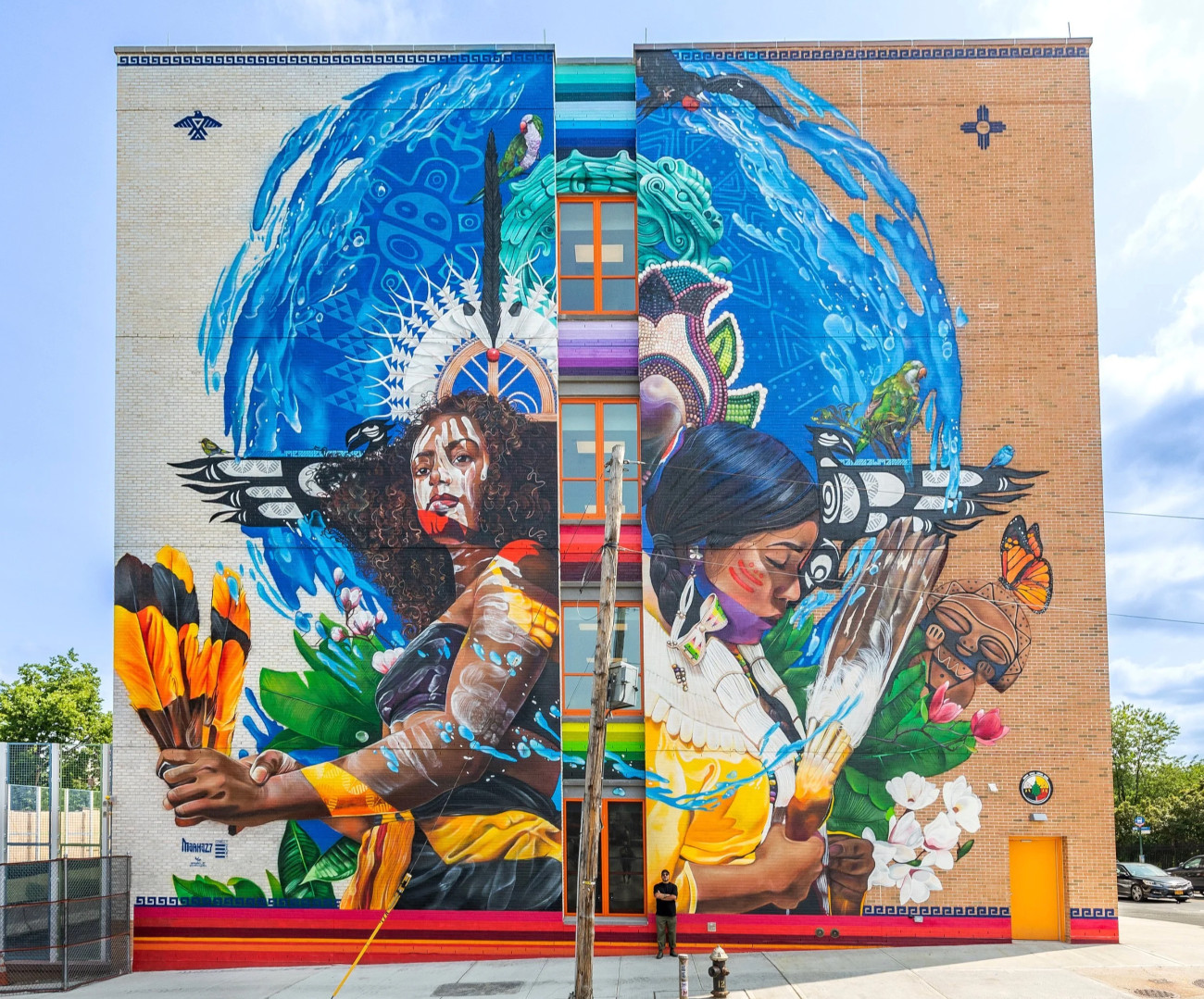
“Indigenous Flow”
For most Americans, a cooler represents a place to store drinks for an outing with loved ones on a sunny day. But for others, it’s a symbol of work and survival, allowing many immigrant families to make a living by selling treats on the streets. Artist Victor Quiñonez, best known as Marka27, has devoted his career to sharing these points of view. Born in Mexico and raised in the U.S., he has set out to amplify the voice of marginalized communities through street art.
My Modern Met saw the work of Marka27 at SCOPE Art in Miami, where a golden pyramid made up of coolers greeted visitors. On one side, the piece, titled Elevar La Cultura (translated to Elevate the Culture) features the image of a woman of color breastfeeding; while on the other side, symbols of different religions from around the world are showcased in an egalitarian way. The piece sends a message of support and admiration to people from different backgrounds at pivotal—and hostile— point in American history.
The New York-based artist, who has experimented with graffiti, vinyl sculptures, and fashion, has long found inspiration in Mexican muralism. Particularly, the work of its three leading figures: Diego Rivera, David Alfaro Siqueiros, and José Clemente Orozco. While the pictorial influence can be seen in the stacked compositions of his murals, their mission to spotlight social causes through oversized works shines throughout his oeuvre.
This desire to tell stories has prompted him to develop his signature “Neo Indigenous” style. Marka27 draws inspiration from Mayan and Aztec imagery and mixes it with contemporary elements, hoping to both honor his heritage and send a message about belonging and empowerment. This is all while exploring the racial inequities that have shaped the history of graffiti as an art form.
If you’re in Texas, you can further immerse yourself in his vision by visiting his Ni De Aquí, Ni De Allá exhibit, opening at the University of North Texas UNT Galleries in Denton through May 1, while Elevar La Cultura is arriving at the The Latino Cultural Center in Dallas on February 17.
My Modern Met had the chance to chat with Marka27 about his creative process, his latest work, and what he hopes people will take away from his art. Read on for our exclusive interview with Marka27.
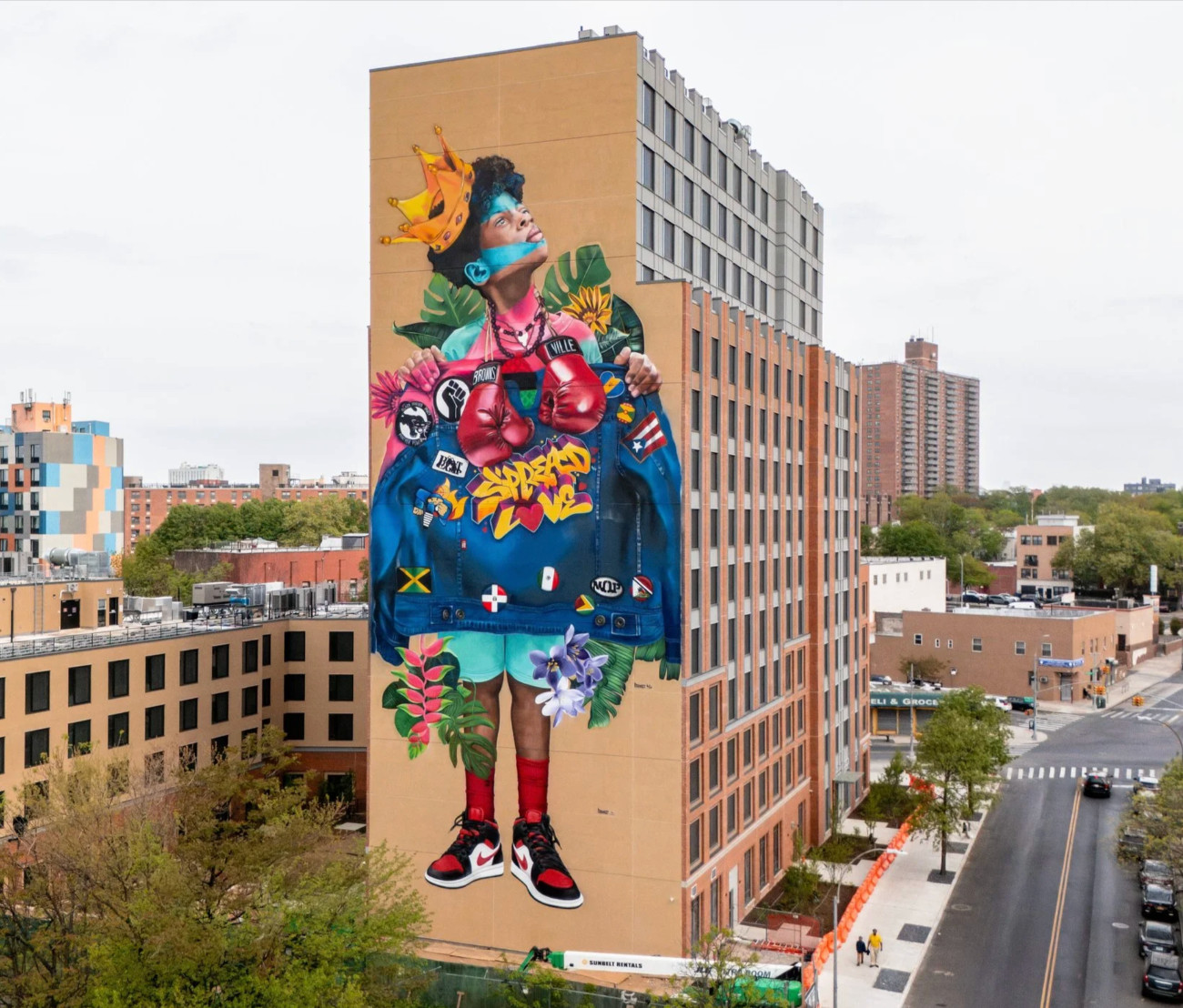
“King of Love”
How did your artistic journey begin?
My artistic journey began when I was exposed to Mexican muralists, Rivera, Siqueiros, and Orozco. I was inspired by the tremendous social impact their work made in Mexico and North America. They spoke for vulnerable communities and fought against exploitation of labor workers. They inspired the Black Panthers, Berets, and Chicano art movement. As a struggling teen this gave me a feeling of hope and empowerment.
What drew you to graffiti and street art?
I was inspired by hip hop culture in general and graffiti was a way for me to escape my environment. I grew up in East Dallas during the ’80s and ’90s. This was a rough time with a lot of drugs, gang violence, mass incarceration, and immigration enforcement. My father was deported during my childhood and I was also incarcerated as a youth going through the system. My lived experience has guided my artistic journey.
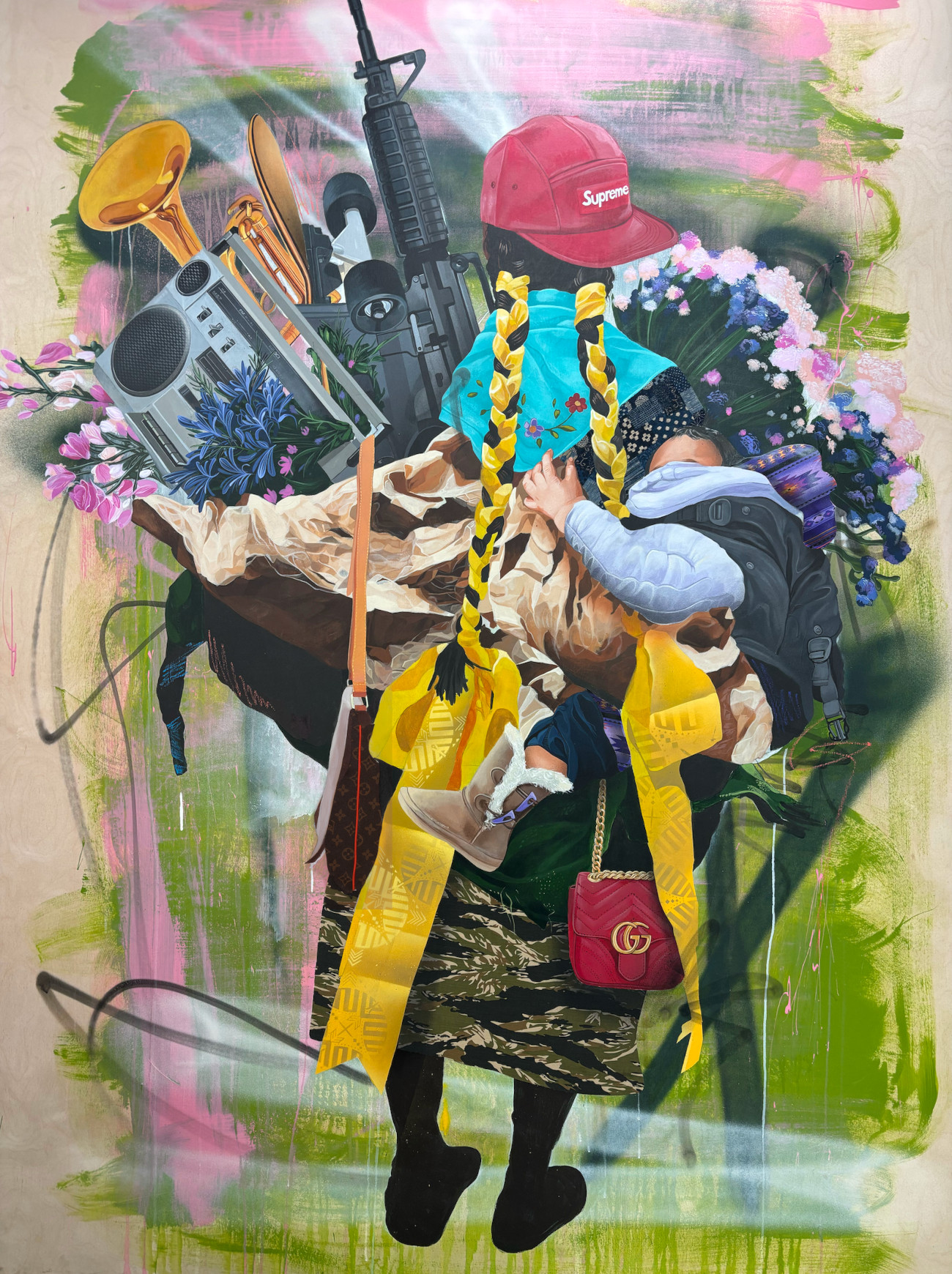
“Supreme Hustle”
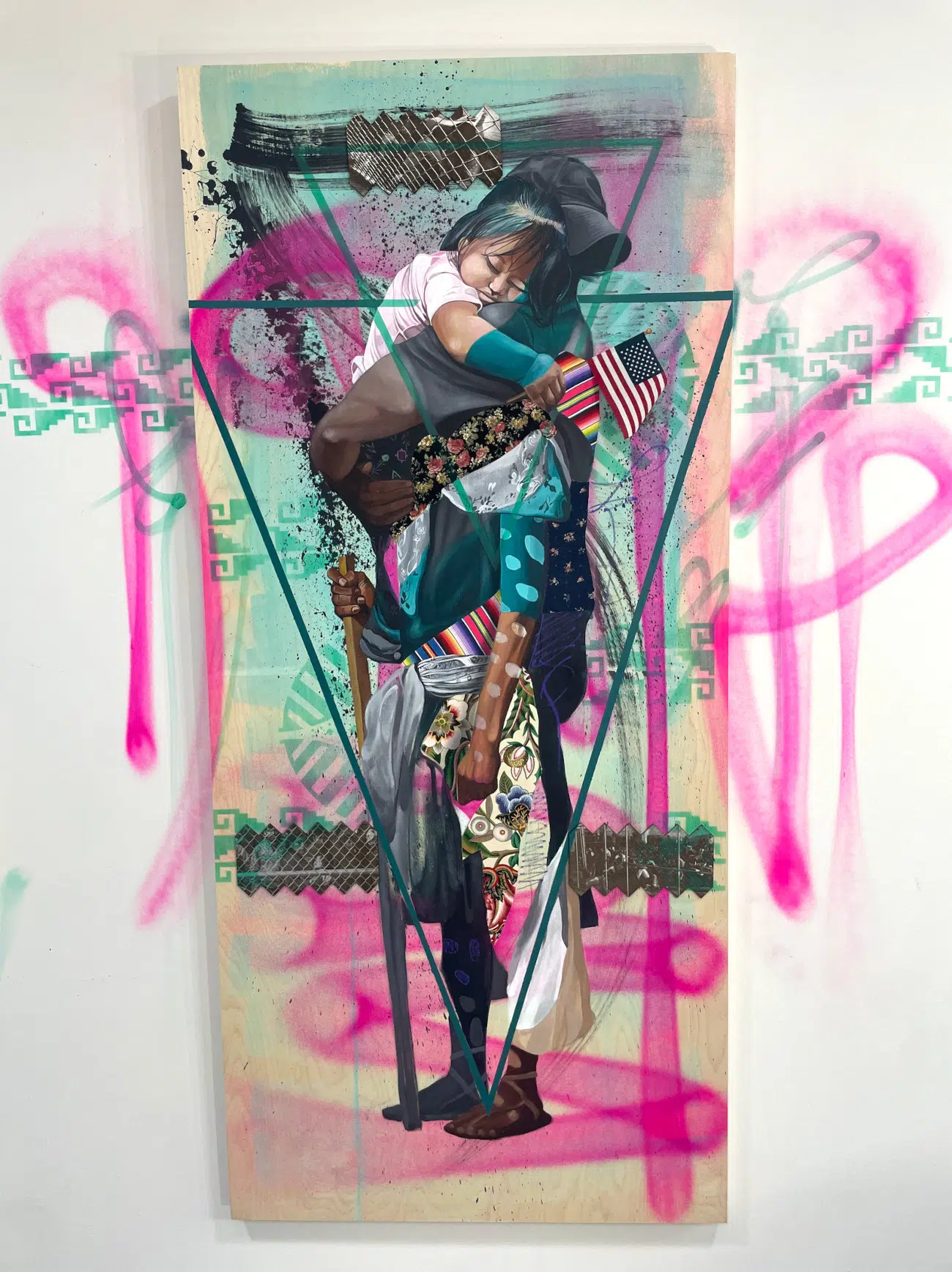
“Ni De Aquí, Ni De Allá”
What does your creative process look like?
I’m a big collector of cultural objects, textiles, and spiritual items, and I have over 15 years of experience in fashion and product design. My creative process is informed by lived experiences and my passion to express cultural authenticity. I work with multiple mediums using fine art techniques combining tradition, expression, and technology to produce mixed medium paintings, sculptures, and large-scale installations.
What materials do you enjoy working with the most?
I love using spray paint for large-scale murals as well as my studio practice. I also enjoy combining textiles and layering acrylic and oils over my images to create depth and complex renderings.
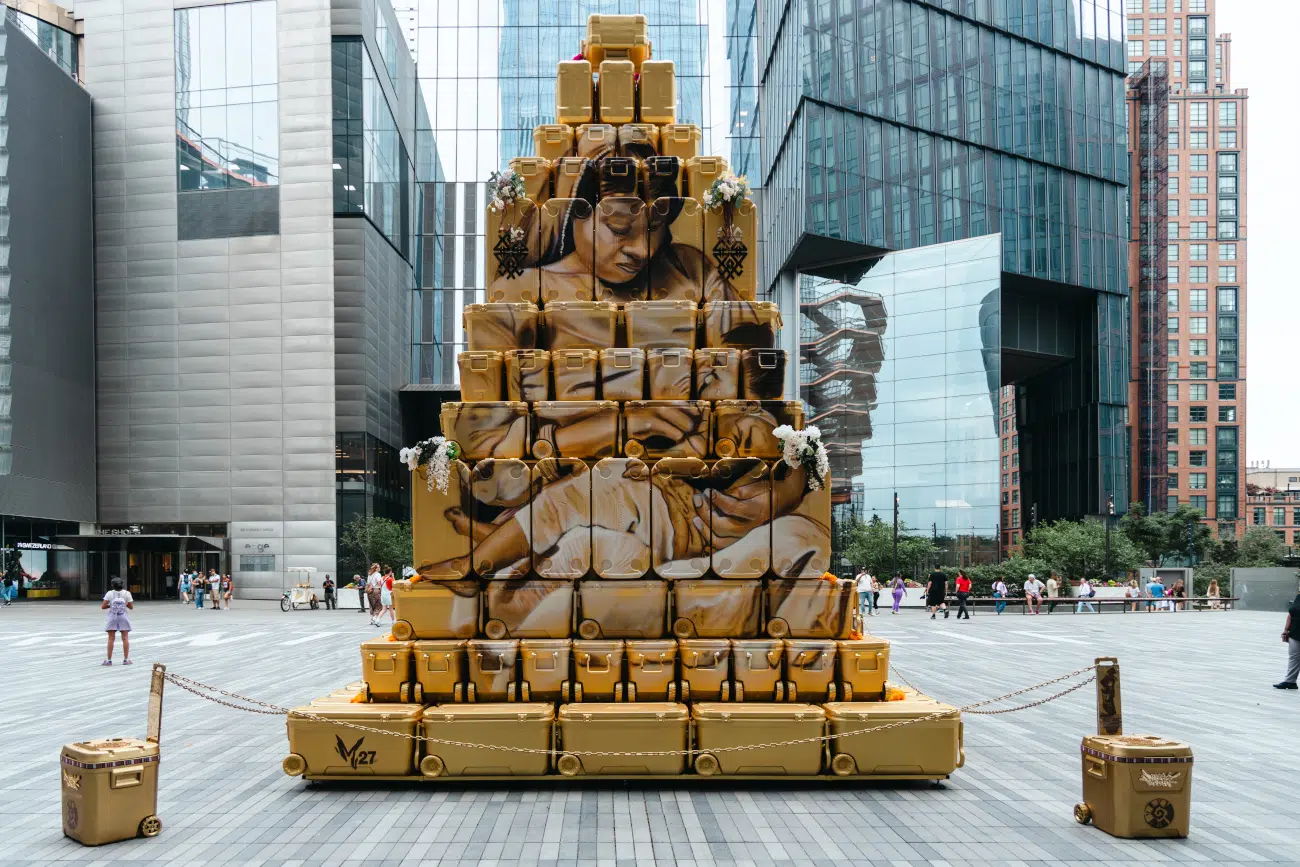
“Elevar La Cultura”
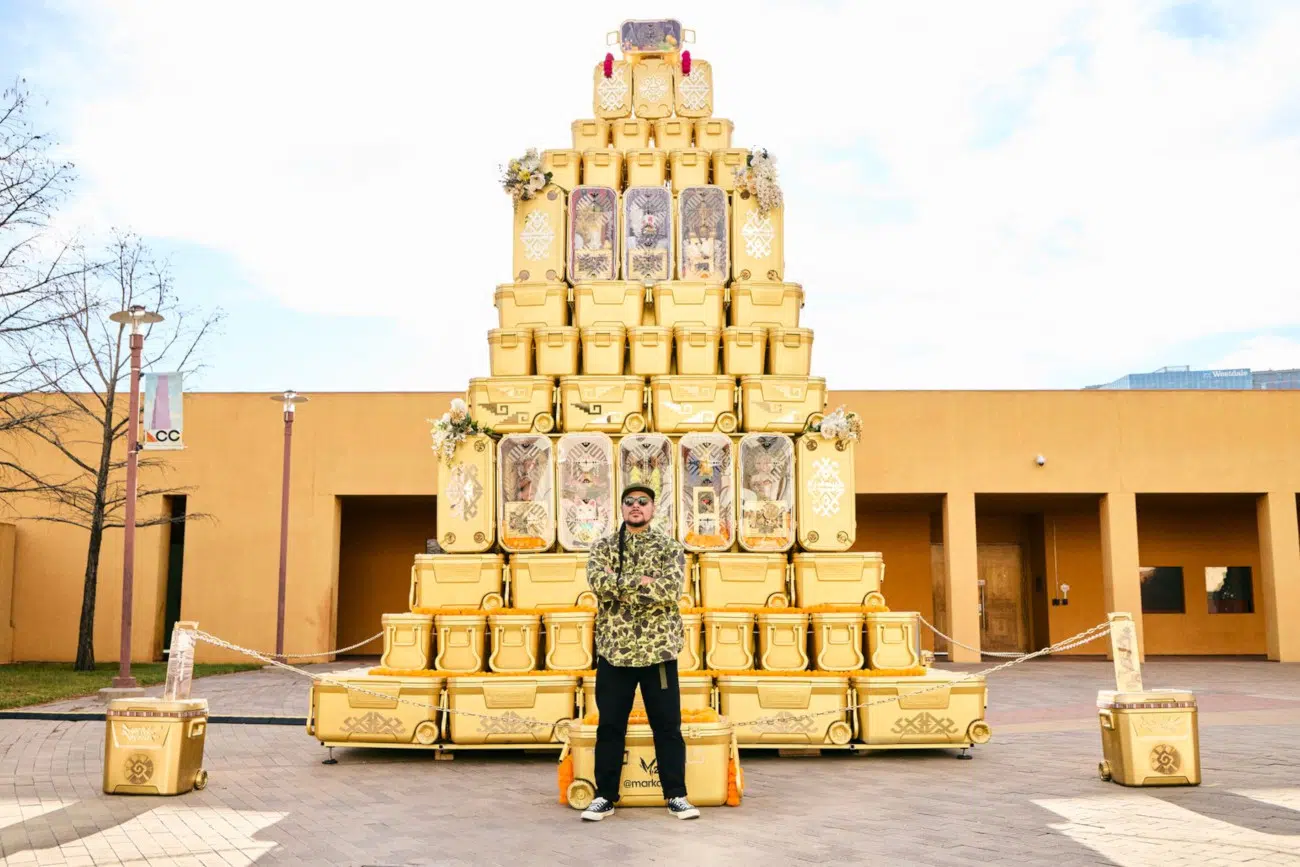
“Elevar La Cultura”
As an artist, what do you like about creating large-scale works, such as murals and installations?
Large-scale work speaks to a much larger audience and demands dialogue. It’s often the case with murals and large installations created for public viewing. They also create a physical space for gatherings, celebrations, protest, and opportunities to show our strength and resilience.
What inspires your compositions?
Storytelling inspires my compositions. I create images that build a narrative for viewers. The messaging is intended to evoke awareness and empathy for social issues facing many immigrant communities. I’m incredibly interested in cultural textiles, patterns, symbols, and have developed a style I coined “Neo Indigenous.”
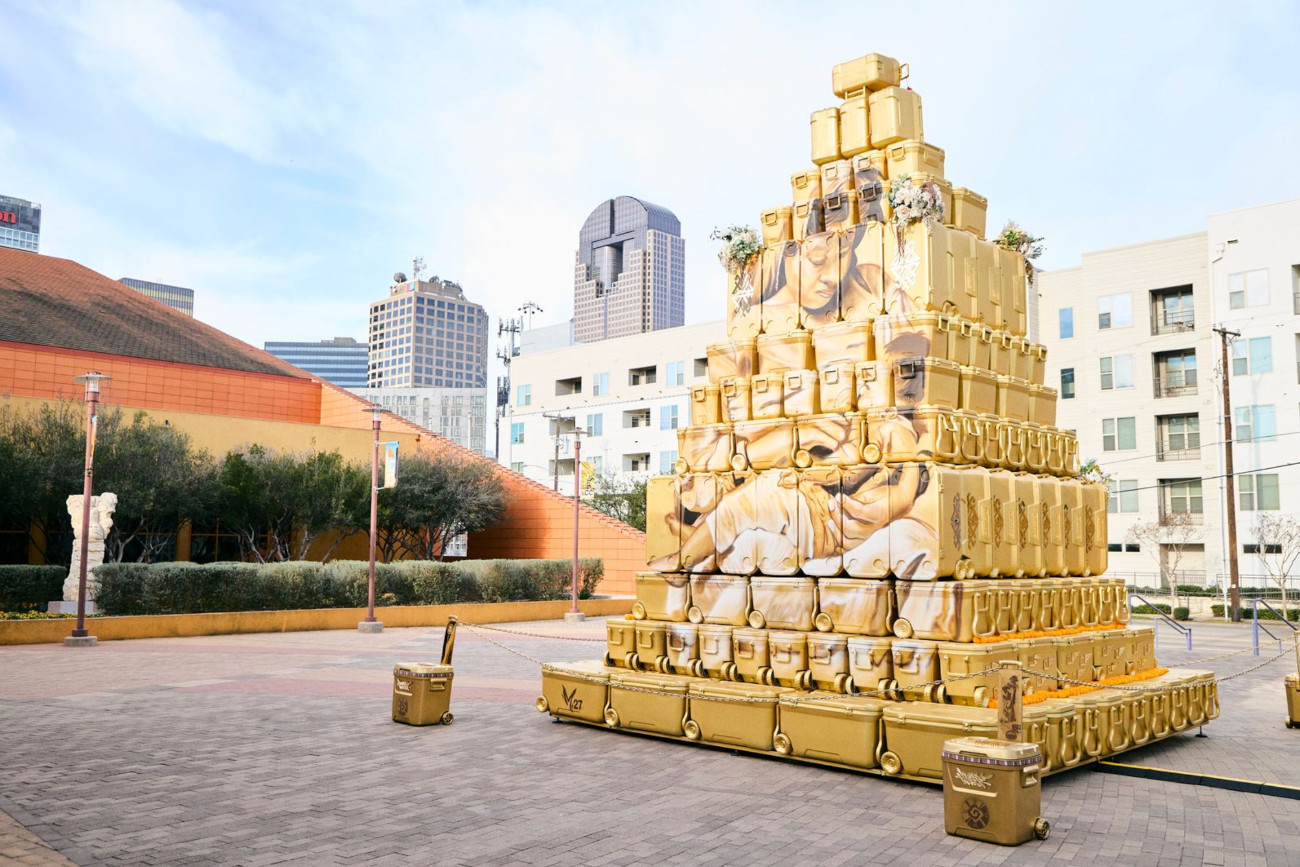
“Elevar La Cultura”
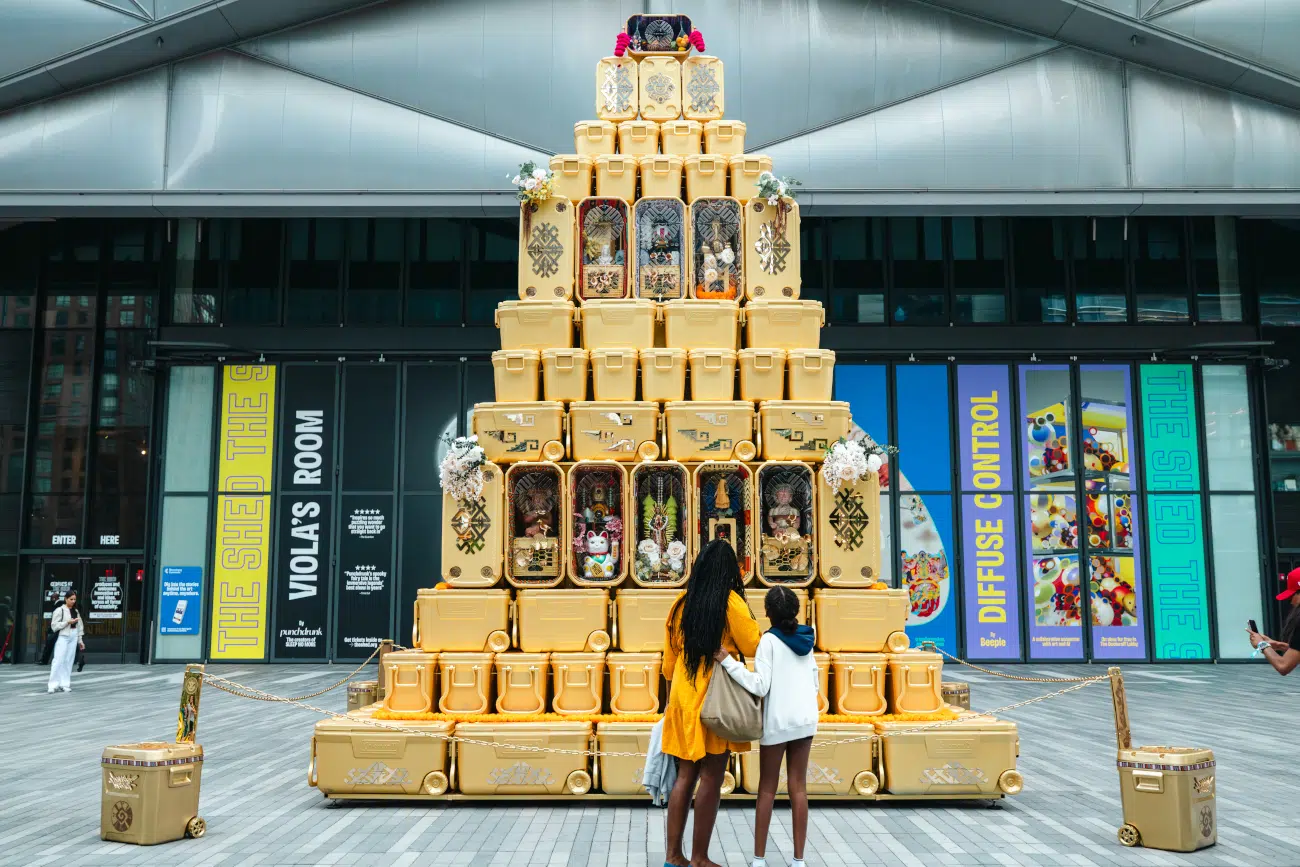
“Elevar La Cultura”
What’s the story behind the installation you presented at SCOPE Art?
Originally commissioned by The Shed in New York City, Elevar La Cultura debuted this past July 2025 as part of the organization’s annual Open Call program, curated by Deja Belardo, associate curator of civic programs and visual art at The Shed. Belardo selected me as one of 12 groundbreaking artists reimagining identity and resistance through contemporary art.
Inspired by the beauty and resilience of immigrant street vendors and undocumented workers across the country, my artwork honors the creativity, labor, and survival that fuels resilience and builds legacy within many hard-working and vulnerable communities. My first installation using a cooler was during my residency at Mass Moca in 2024. I created an Altar using the cooler combined with cultural and spiritual objects dedicated to street vendors and undocumented workers.
For me, coolers doubled as both conceptual and material building blocks for Elevar La Cultura. Most people see the cooler as a tool for leisure, not for survival; it’s for barbecues, tailgating, and celebrations. But for immigrant communities, the cooler is a tool and symbol for opportunity and independence. In every major city, you see families and vendors selling fruit, food, and water out of these coolers on the streets and in subway stations. They’re a necessity for survival and a way to start an honest living.
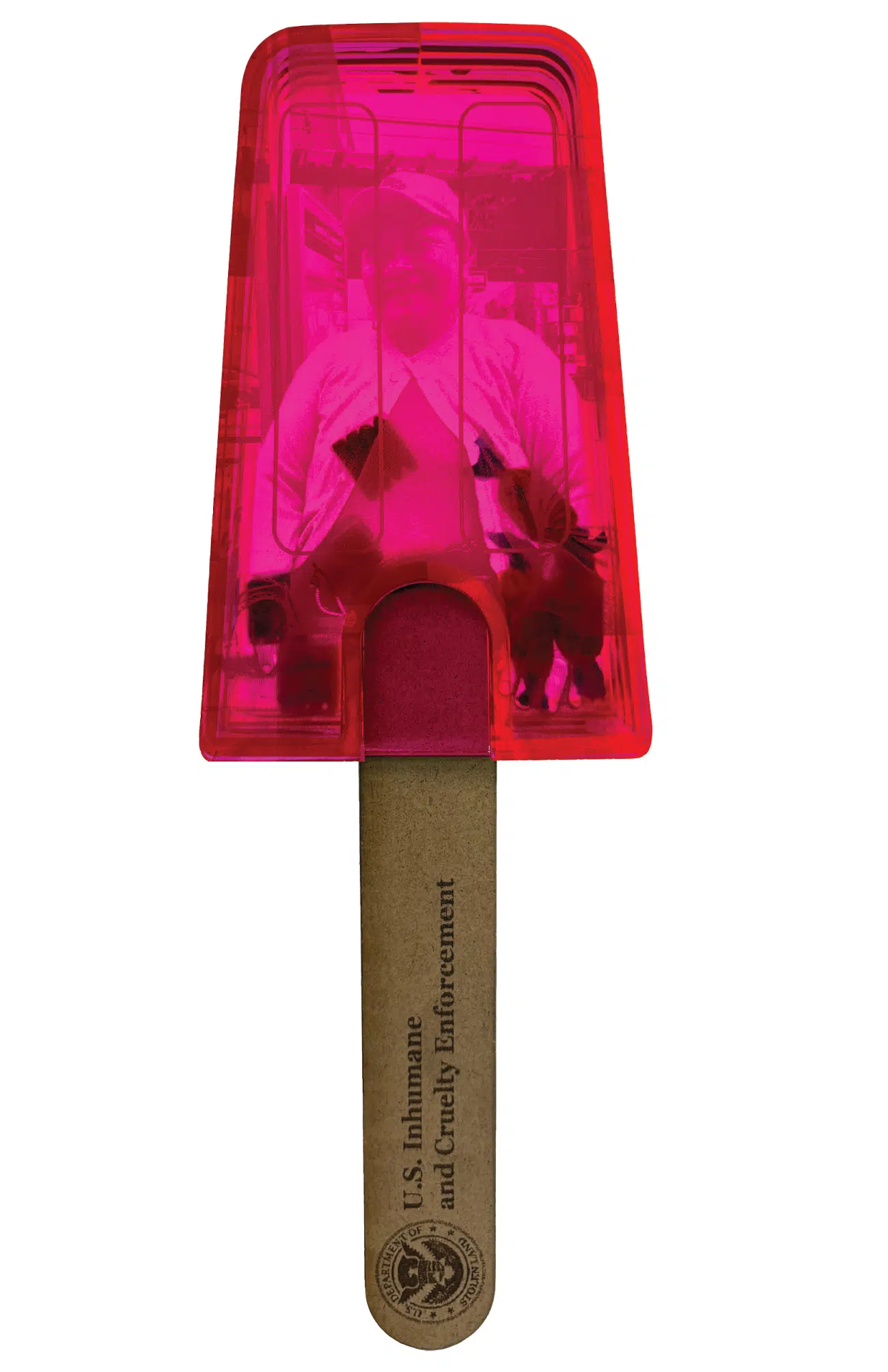
Can you tell us about your I.C.E Scream series? How does it connect to the rest of your practice?
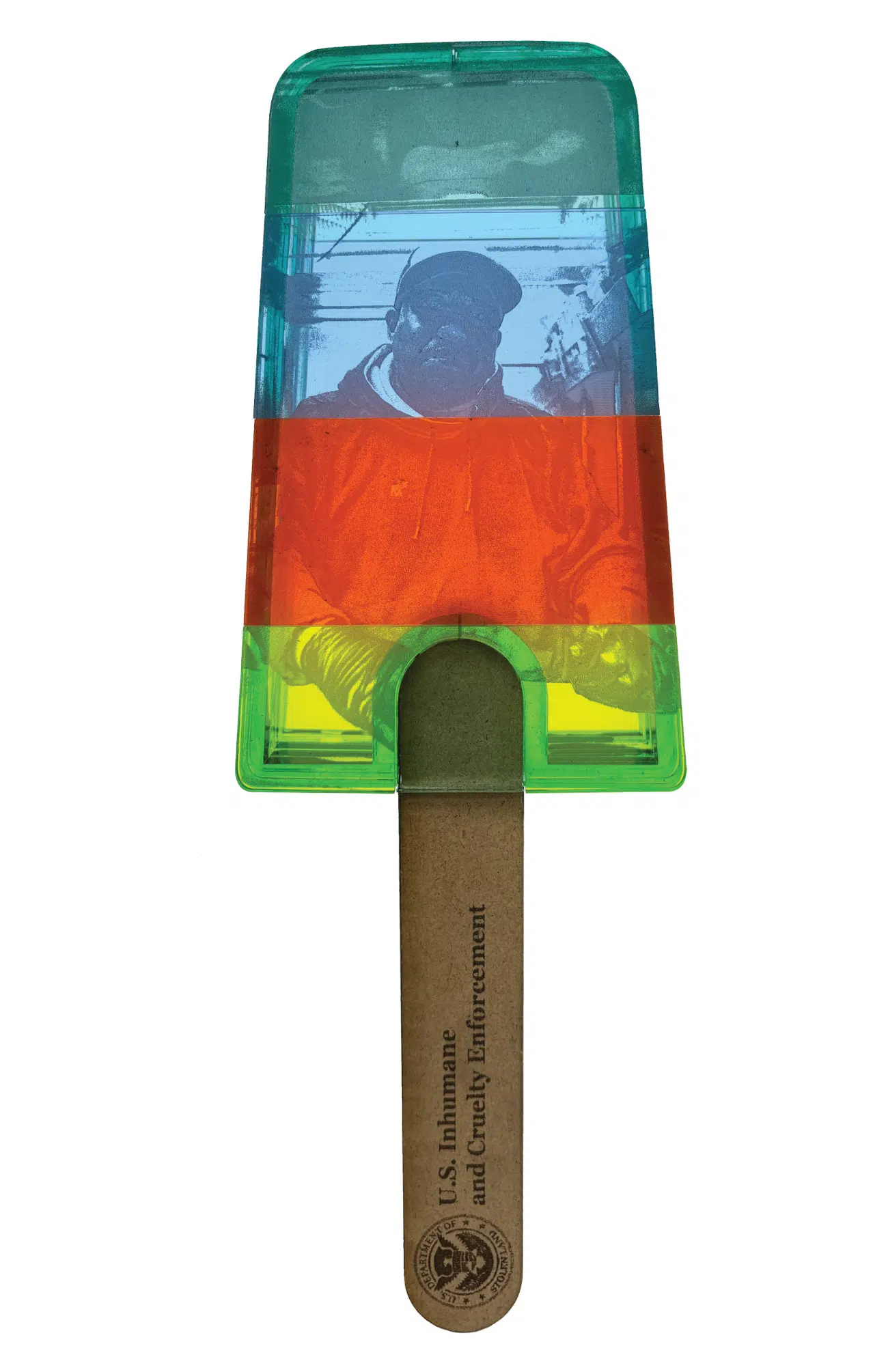
My I.C.E Scream series debuted at FRIEZE LA after receiving the Frieze Impact award in 2025. I wanted to create a piece that celebrates the beauty and humanity of immigrant cultures. Mexican Paletas (Popsicles) have always brought me joy since I was a child. The pieces are designed using bright colored acrylic that resemble fruit colors and flavors. They are illuminated using bright LED lights that expose prideful images of street vendors I’ve encountered in NY subway stations, cars, and busy street corners.
The popsicle stick has my version of the U.S. immigration I.C.E logo. It reads “U.S. Department of Stolen Land, U.S. Inhumane and Cruelty Enforcement.” The larger resin pieces have objects encapsulated inside. These objects tell a deeper story. The resin sculpture titled Limon Verde Flavor, Bitter Sweet has bullets and steel guns encapsulated that expresses the reason many immigrants leave their country because of violence and war often caused by foreign regimes and local government’s political corruption. The other resin pieces have steel handcuffs, and rosaries that symbolize the way immigrants are criminalized and the families we have lost.
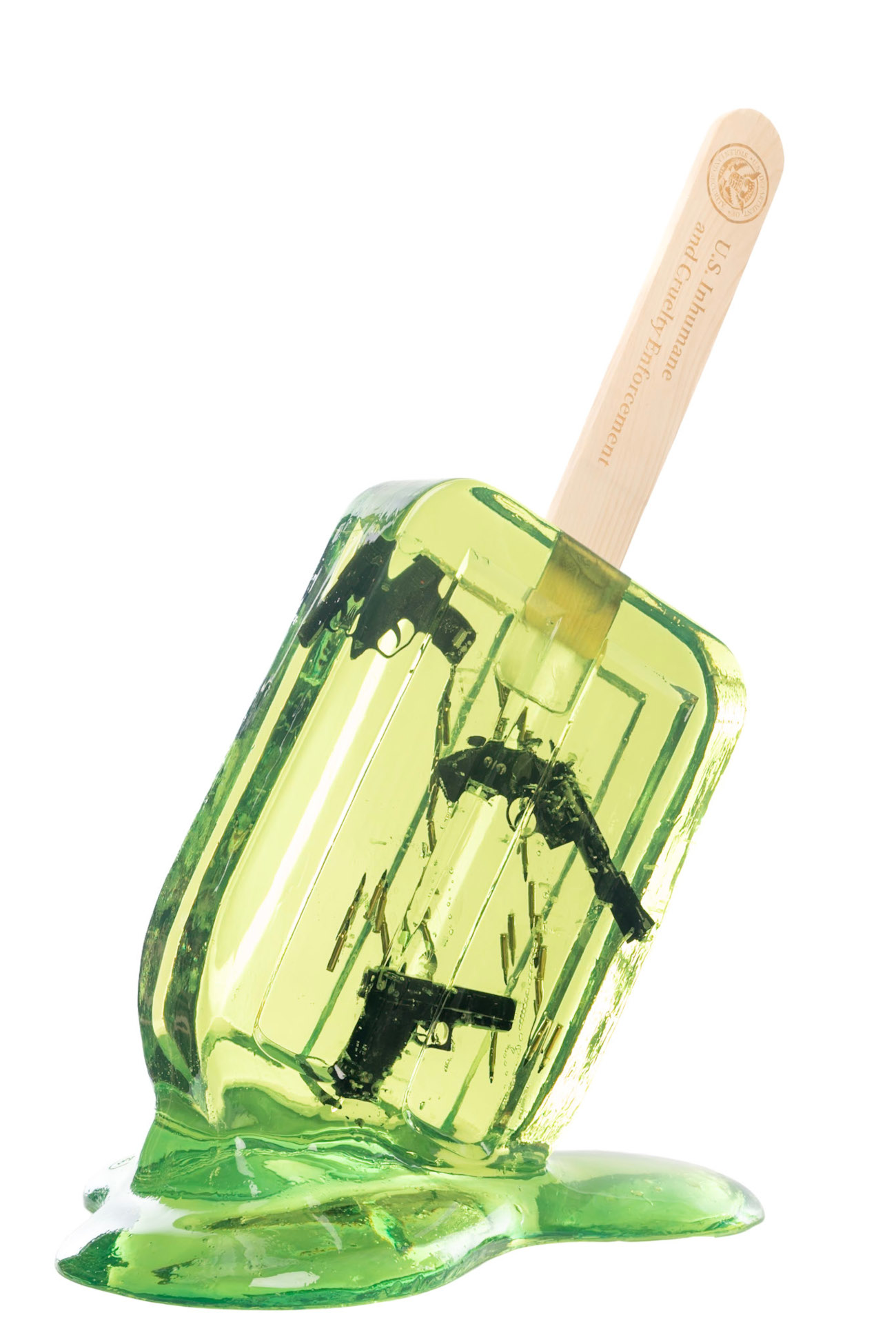
“Limon Verde Flavor, Bitter Sweet”
What do you hope people will take away from your work?
I create work for the purpose of creating empathy and awareness. I hope people look deep down into their humanity and see themselves, their children and loved ones when they see my work. I want to remind people what is at stake and that immigrants are what makes the U.S. special. Most importantly, everyone needs to wake up and hold this administration and its abuse of power accountable for the crimes they are committing against its own people and vulnerable communities.