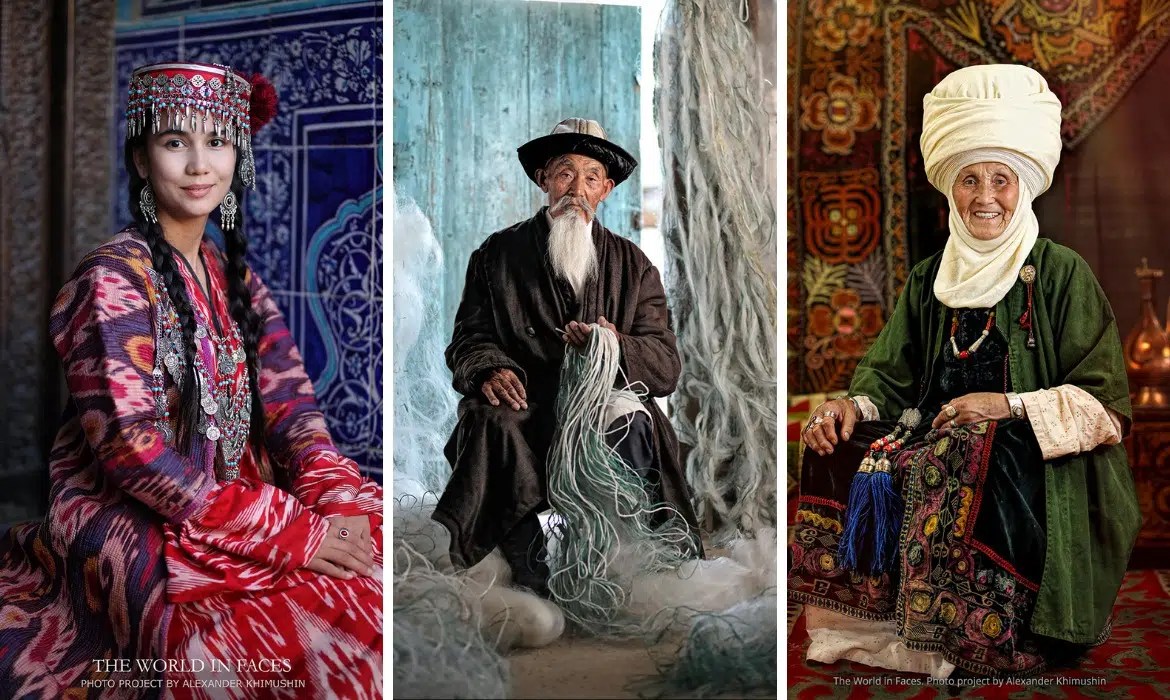
Photos: © Alexander Khimushin / The World In Faces
Since 2008, photographer and ethnographer Alexander Khimushin has been traveling the world to study Indigenous cultures. Khimushin, who grew up in the remote reaches of Siberia, has immersed himself in the culture of the 98 countries he has visited and, along the way, he’s captured stunning portraits that immortalize these Indigenous people.
Driven by his passion for photography and a need to explore, Khimushin left Yakutia’s frigid climate and set off on this incredible adventure, which he calls The World in Faces. Since the early days of his project, his work has captured the public’s imagination, not only for the quality of his photographs but also for the stories that accompany them.
Khimushin, who prefers to call himself a global citizen, isn’t one to dash in and out of locations. Instead, he spends upwards of six months integrating himself into the community and forging relationships with the people who sit for his photographs. As such, he’s able to pull out their personality with his striking visuals, and he accompanies them with incredible written commentary that reveals more about the sitter and their culture as a whole.
This mixture of incredible portrait photography and ethnographic studies has led Khimushin to see his work exhibited by international organizations like the UN, UNESCO, and the Council of Europe. From Cambodia to Tajikistan and beyond, Khimushin’s work is a fascinating window into traditional cultures around the world. His curiosity has led him to ask a 90-year-old monk from India the secret to longevity and climb jungle-covered mountains of Laos to capture the distinctive headwear of the Pixor people, and we are all better for it.
As he continues his travels, here is a selection of more recently published photos, along with portions of the original captions written by Khimushin. To keep up with new work, be sure to follow Alexander Khimushin on Instagram.
Since 2008, photographer and ethnographer Alexander Khimushin has traveled to nearly 100 countries to document Indigenous cultures.
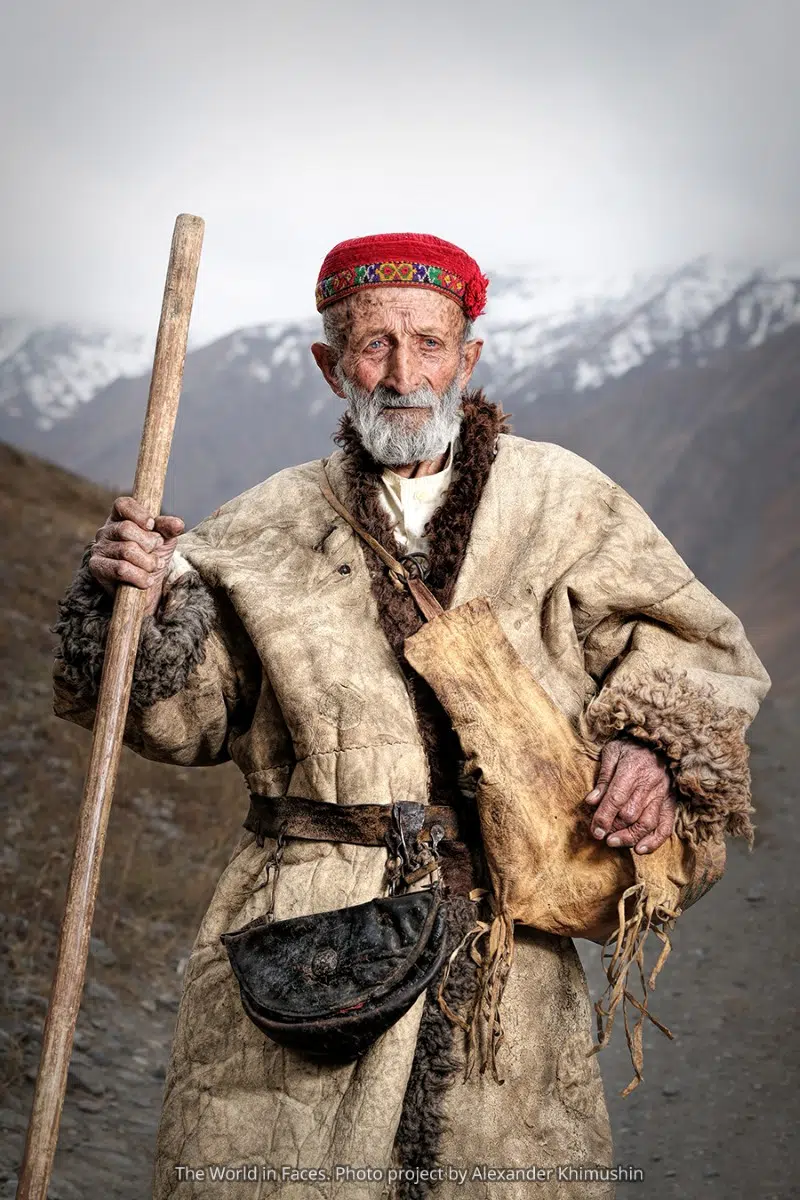
The Last Guardian of the Khufiji legends. Pamir Mountains, Tajikistan. Bakhtali has since passed away in early 2025.
“At 96 years old Bakhtali Sharifov is the oldest of the 1500 Khufij People living on this planet. Nestled high in the rugged embrace of the Pamirs – known as the “Roof of the World” – Bakhtali has spent his entire life in a remote village, surrounded by the whispers of ancient legends. He recounted to me tales of his encounters with what he called “big hairy humans,” leading me to believe he was speaking of the yeti. “They never harmed me,” he shared. “We were both afraid of each other. Each went our own way, guided by the spirits of the mountains who protect us.” The Khufij, or Khufs, are one of the smallest Indigenous groups of the Pamir region, residing in just two villages within a narrow valley that separates Tajikistan from Afghanistan.”
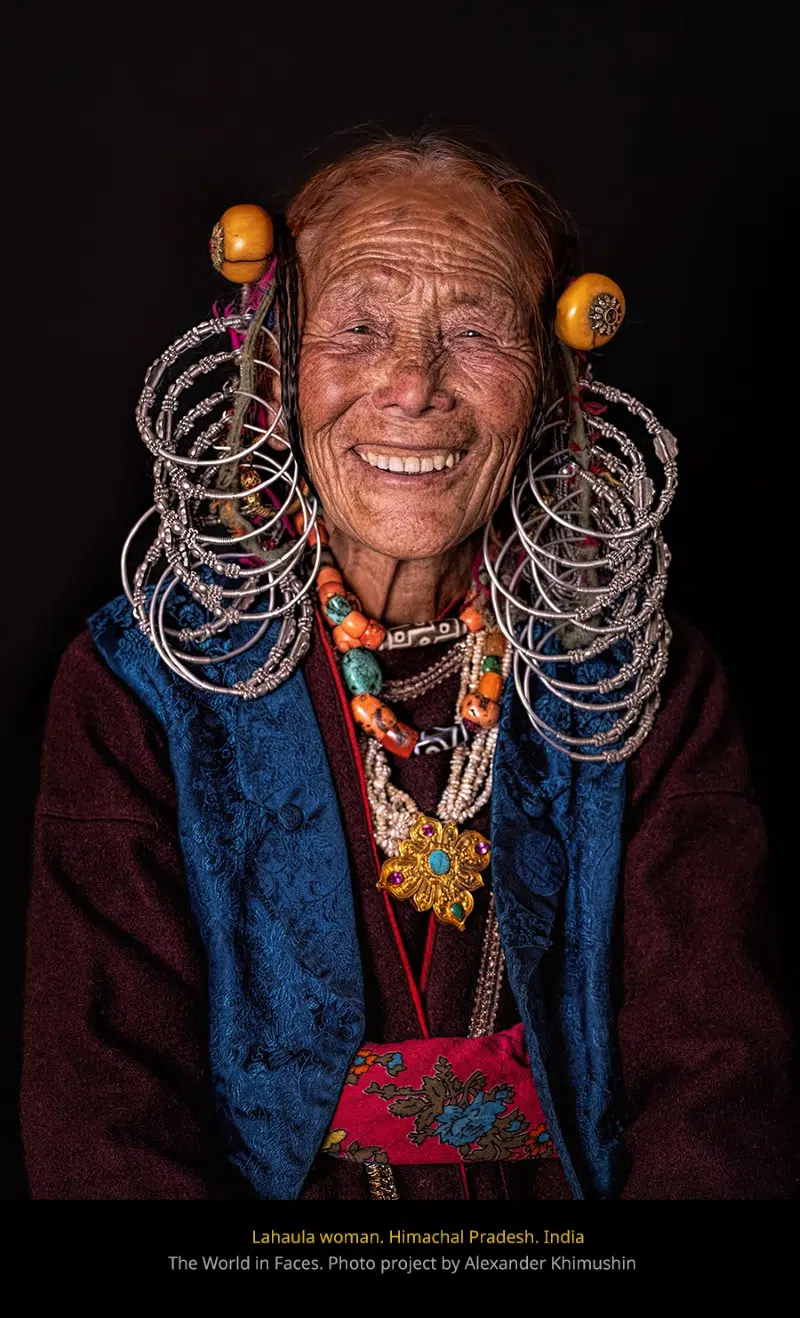
Lahaula Indigenous woman in traditional clothing and jewelry.
“For all of her humble life, 87-years-young Sonam Dolma has lived in Kwaring village of Lahaul—one of the most remote areas of the Himalaya Mountains. “The living conditions here are harsh, but that’s what keeps me active every day”, she says. When I came to meet her tonight Sonam was still in the fields—it’s a very busy time of the year to get the crops on steep terraces harvested before the first snow falls in the mountains. And here she is, smiling, in all her glory, with many braids that are usually done only for special occasions.”
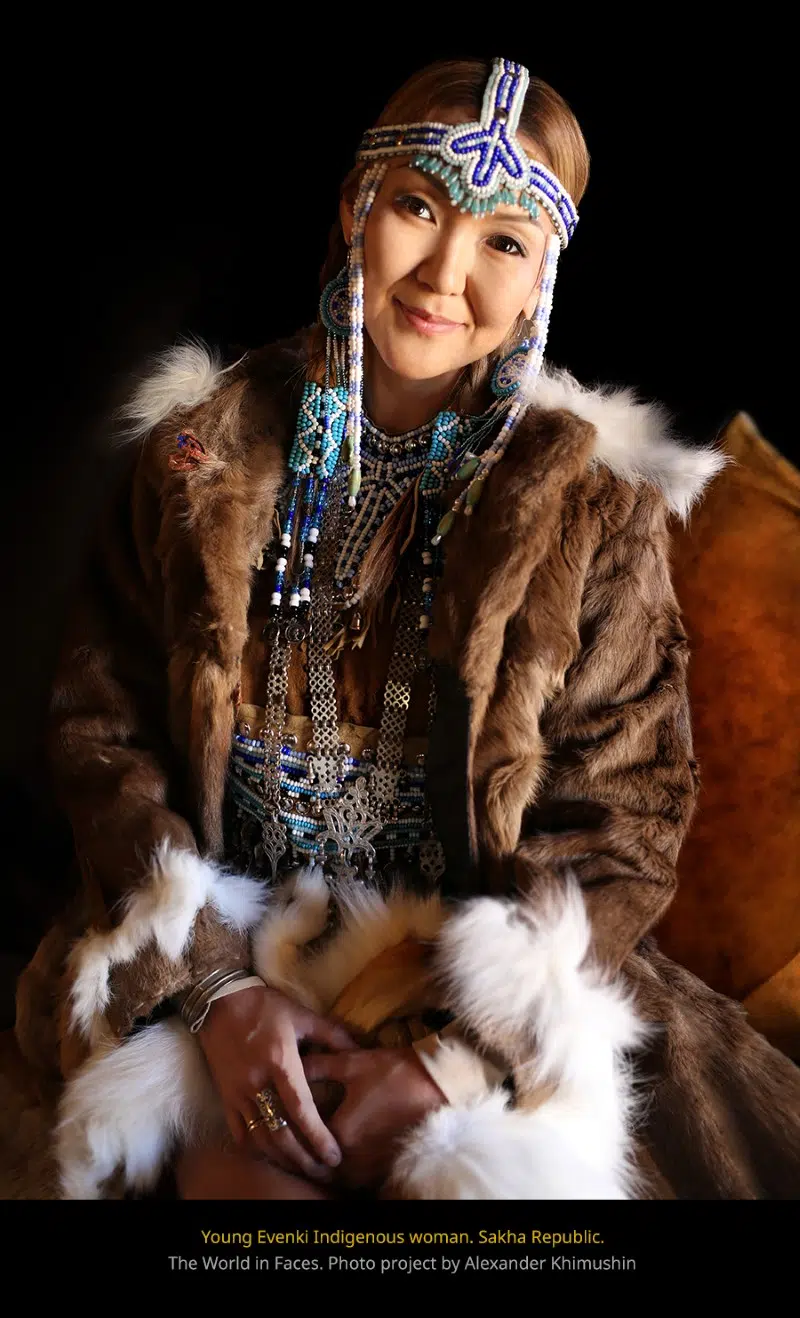
Young Evenki Indigenous woman from Sakha Republic.
“Sinilga is an ethno singer and belongs to the Evenki People of the Sakha (Yakutia) Republic, which is the coldest inhabited region in the world. Yakutia is also my homeland, where I was born and raised.
The Evenki People are reindeer herders scattered across vast lands in Northern Siberia. Their villages are often located thousands of kilometers/miles apart. The Evenki People are sometimes referred to as the “Aristocrats of Siberia” due to their beautiful traditional clothing.”
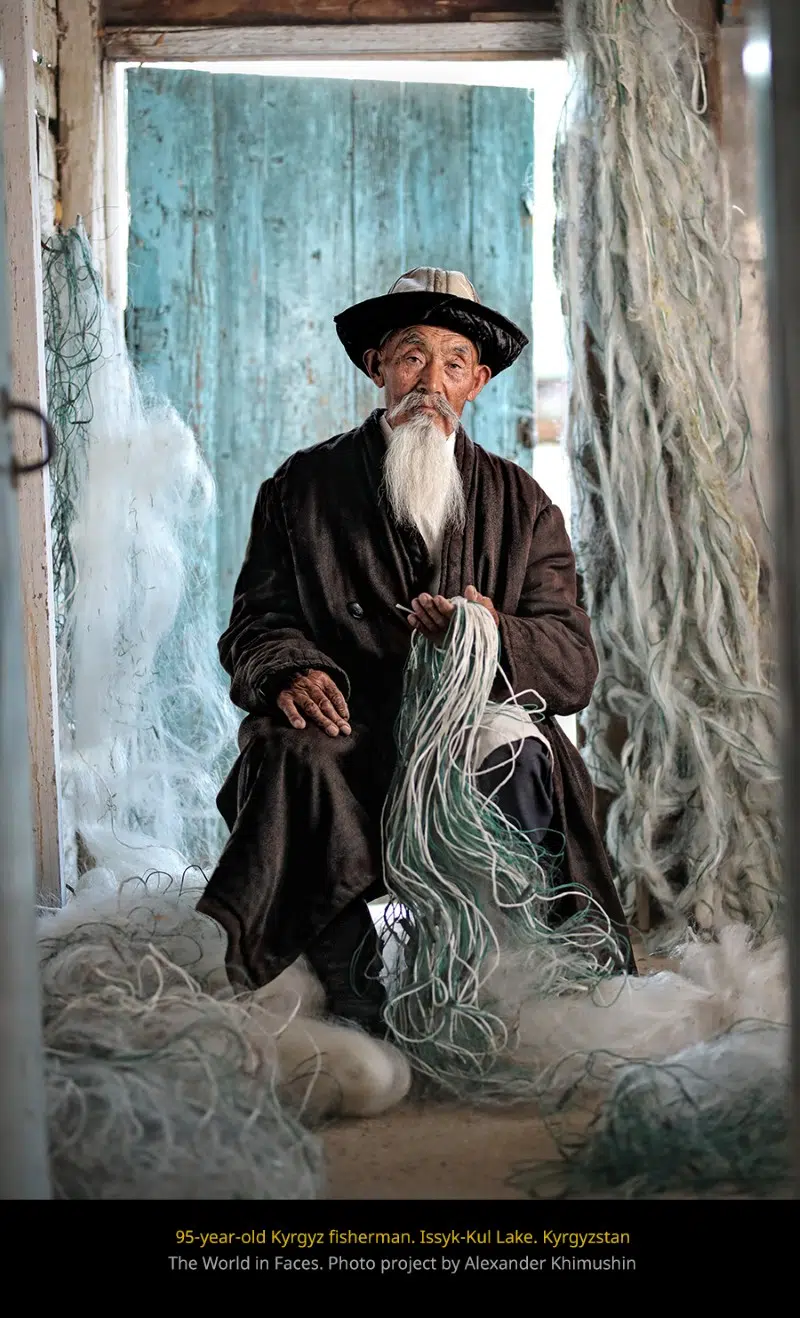
Saaly Kalykov, 95 years old.
“The man in this photo lives in a country that is landlocked and is also the farthest country from the sea in the world. Yet, he lives by the sea and has been a fisherman his entire long life. Let me introduce Saaly Kalykov, 95 years old (born in 1928). His modest home, where Saaly and his 91-year-old wife Sypat have lived their entire lives, is right on the shore of Lake Issyk-Kul in Kyrgyzstan, in a small picturesque bay located far from populated areas. The locals often refer to the vast mountain lake Issyk-Kul as a sea, it is known to anyone living in Central Asia. It’s no wonder – in terms of its volume, Issyk-Kul is among the top ten largest lakes in the world. Saaly says he was born right here, in this place, on the land of his ancestors. Here, in harmony with nature, he has lived a long and happy life.”
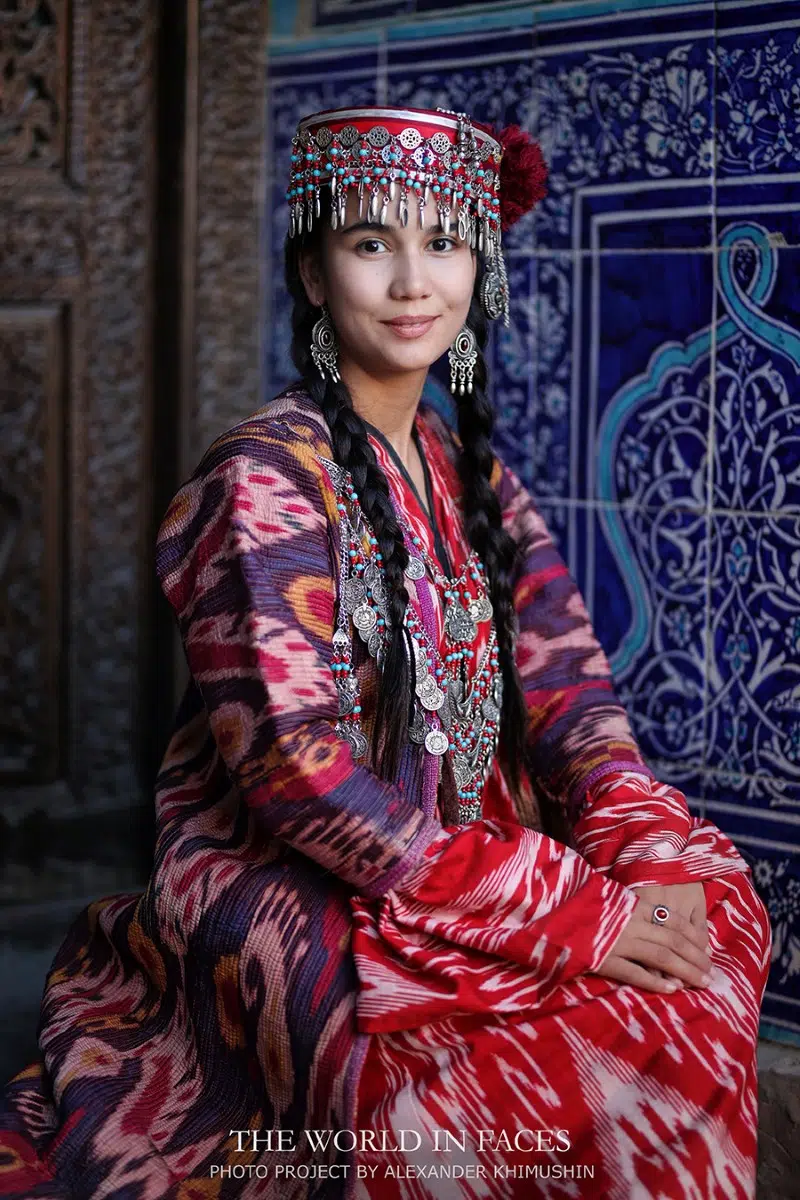
Young Khorezm Uzbek woman in traditional clothing.
“This is a portrait of Zulya Shanazarova, a 22-year-old Khorezm Uzbek woman from the kishlak (village) of Chokhnazey in the Khorezm region of Uzbekistan. The people living in the Khorezm region of Uzbekistan today are considered Uzbeks, although they speak a completely different dialect of the Uzbek language, which is often incomprehensible to residents of other parts of Uzbekistan. This is not surprising because the current inhabitants of the Khorezm oasis are the descendants of an ancient eastern civilization of Khwarazm, dating back 9000 years. An old city of Khiva, in the ancient streets of which this photograph was taken, is the last ancient capital of Khwarazm. In 1997, Khiva celebrated its 2500th anniversary.”
His portrait series The World in Faces has been exhibited at the United Nations and UNESCO, among other places.
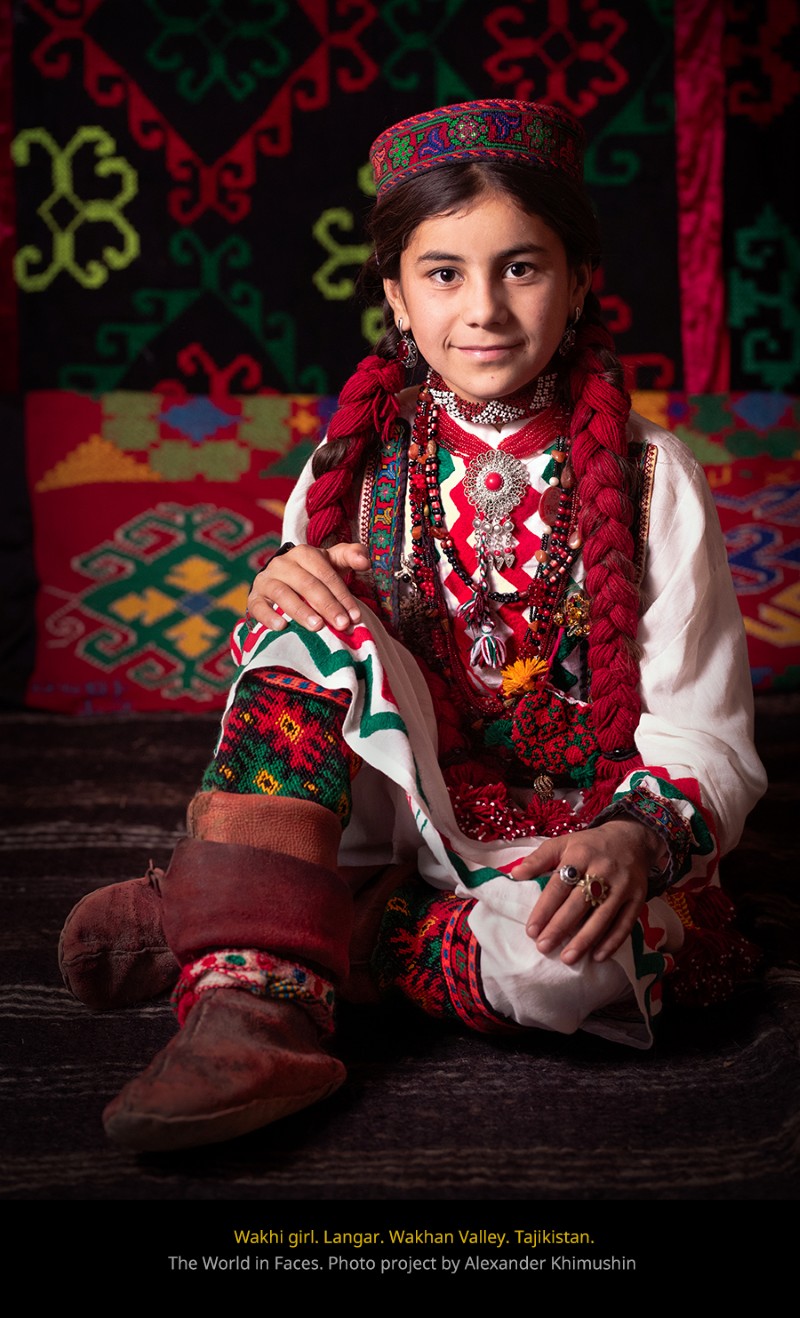
Wakhi Indigenous girl in traditional clothing. Pamir Mountains. Tajikistan.
“This is a portrait of cheerful 11-year-old girl Mokhera Ismailova, whom I photographed in the remote village of Langar of the Wakhan Valley. The village is located on the bank of the mighty mountain Panj River that serves as a border dividing Tajikistan and Afghanistan. The Khik People (also known as Wakhi) are an ethnic minority that inhabit the Wakhan Corridor – the narrow valley between two of the world’s highest mountain ranges – the Pamir and the Himalayas. Due to isolation until these days, the Khik People preserved their traditional culture, customs, and traditional clothing.”
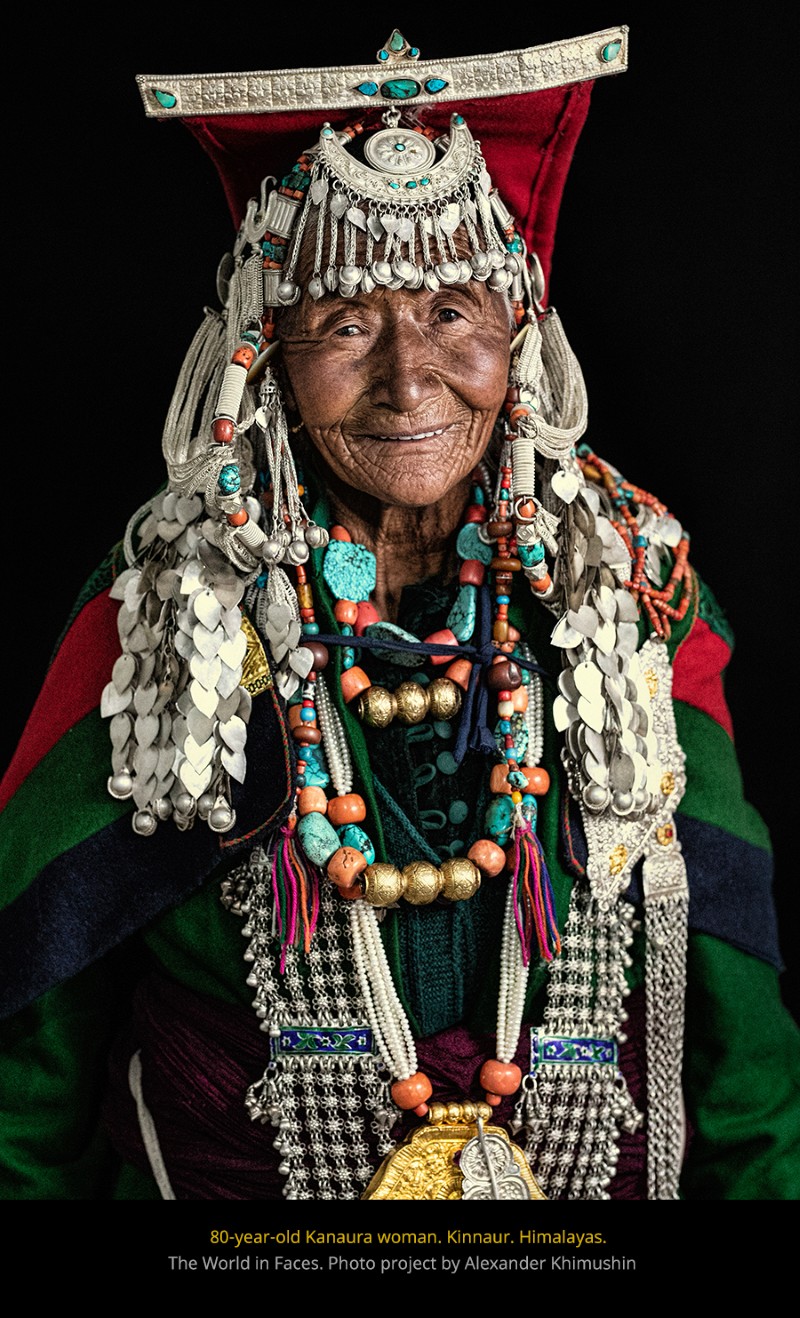
Dawa Ma, an 80-year-old Kanaura Tribe woman from Himalaya Mountains.
“Dawa Ma lives in a small 900-year-old Tashigang Village, located in Upper Kinnaur, Himachal Pradesh, India. It is situated at an Indo-Tibet border, at an altitude of 4650m (15,256 feet) above sea level, making it one of the highest villages in the world. Only six families live there, and in winter it remains cut off from the rest of the world due to heavy snowfalls.”
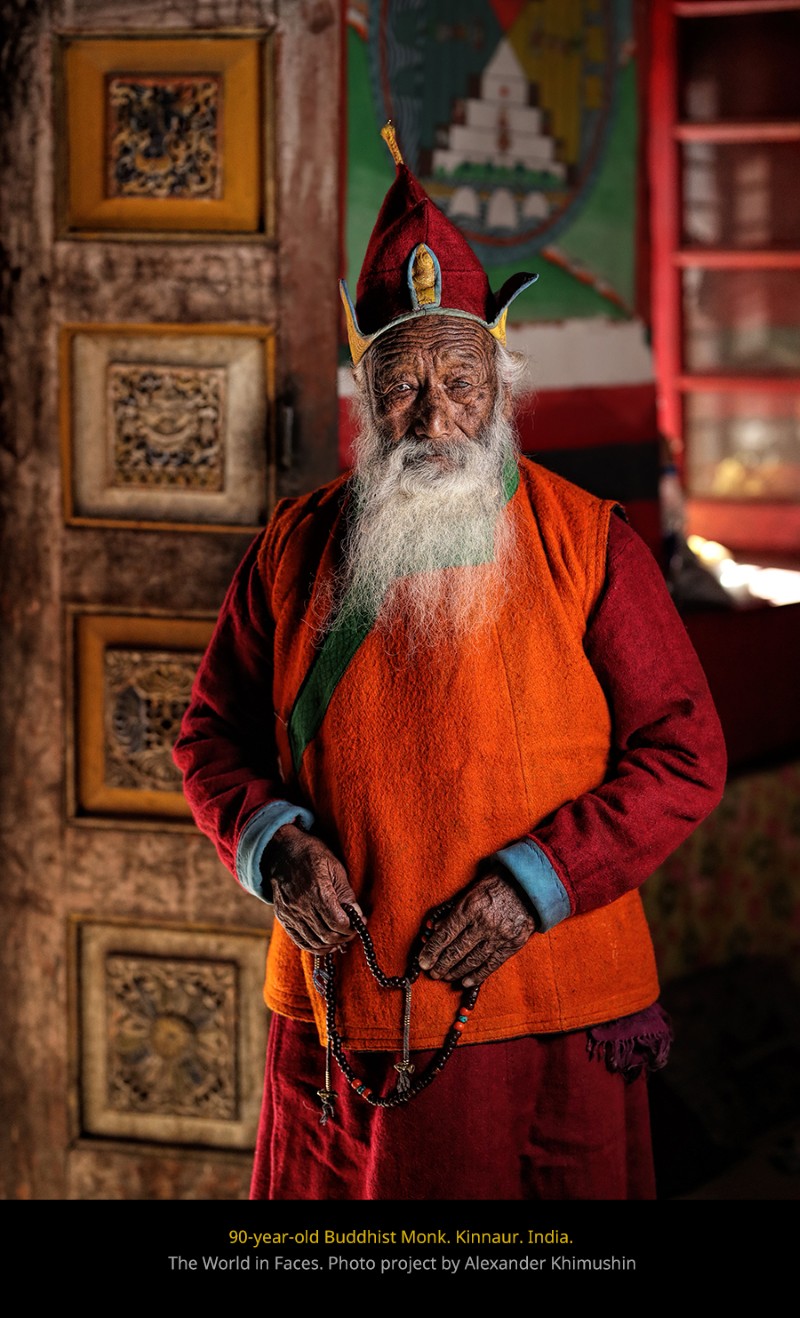
90-year-old monk, Rangrik Naljor at the Lotsawa Lhakhang temple in Himachal Pradesh, India.
“Rangrik was born in a remote Himalayan village and has been a monk for his entire life. Tangling is the last village of India on the way to the Shipki La mountain pass to Tibet (4720 m above sea level). Since ancient times, there has been a precipitous pathway, in some places suitable only for goats, as it was often pecked into a steep cliff, and one had to bend to proceed further. When Rangrik was young, he walked that journey several times to study Tibetan Buddhism.”
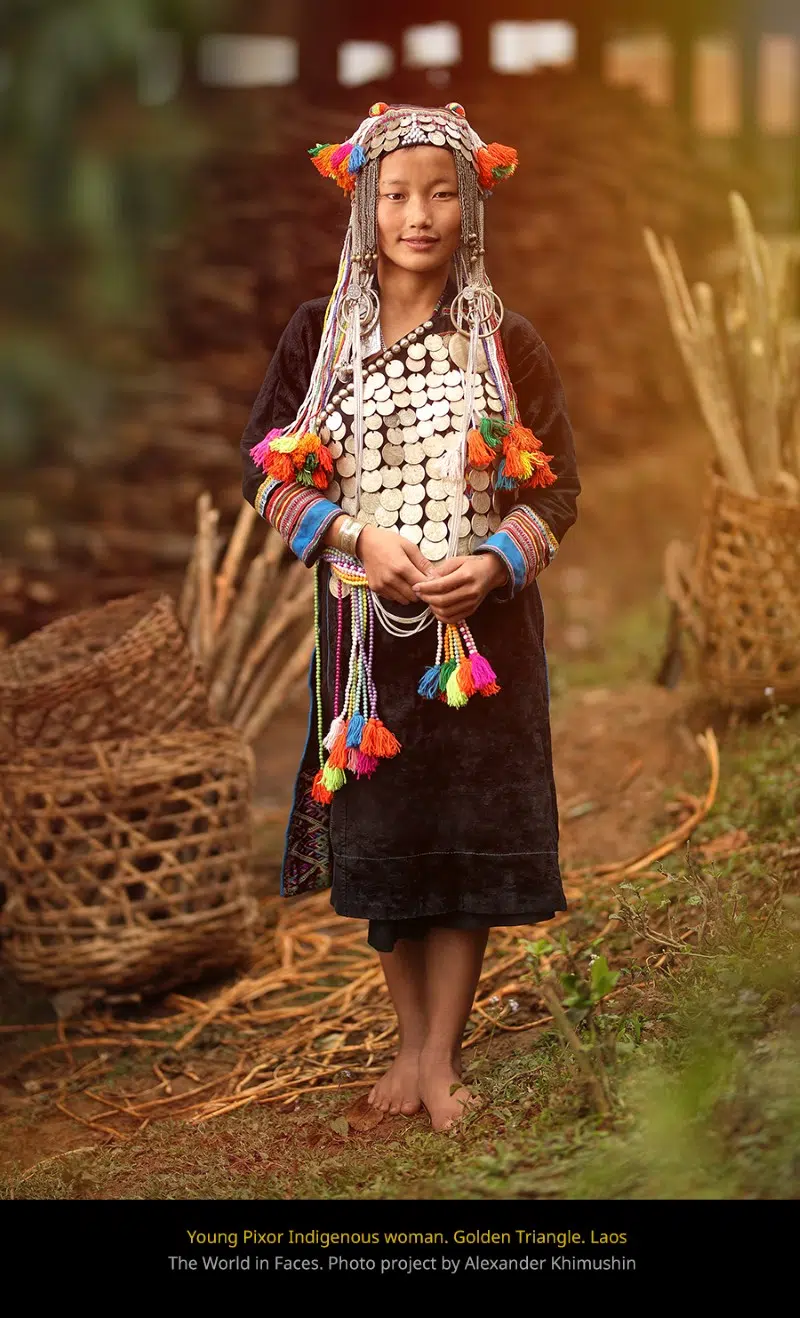
Young Pixor Indigenous woman from Northern Laos.
“This is a portrait of Nang Pone, a 16-year-old young woman from the Pixor Indigenous People in Northern Laos. The Pixor People are a small ethnic group residing in the jungle-covered high mountains of the Golden Triangle. They speak one of the dialects of the Akha language, which belongs to the Tibeto-Burman family. I photographed Nang Pone near her family stilt home in the village of Samakisay, located in the Phongsali Province.”
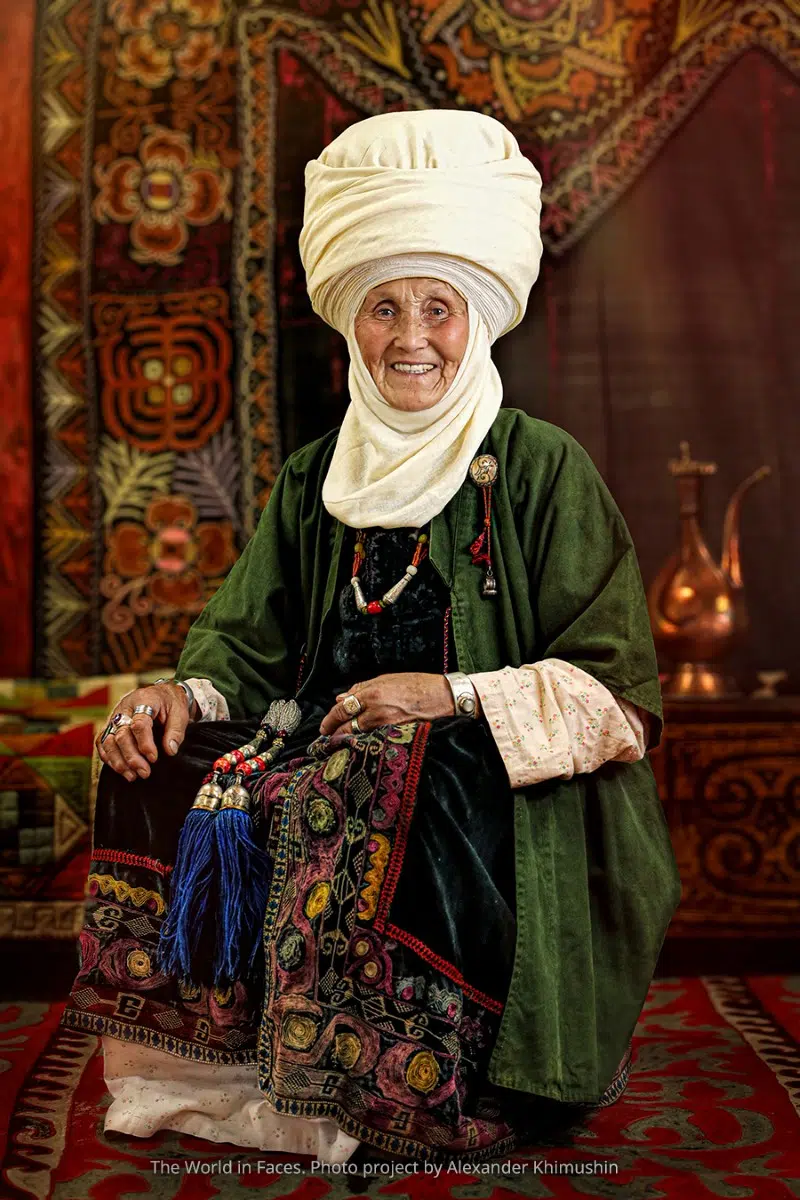
Erkim Kaldykeeva, 85, from Uch Bulak (Three Springs) village of Talas Region in Kyrgyzstan.
“When I was 14, I already could do almost anything. For example, I could make leather or fur items, from small ones to large pieces of clothing such as winter jackets – all stages from scratch, including tanning. When we were young, we appreciated and valued everything because it was made by our own hands. I remember I had one beloved dress for years until it was worn out completely. I was living in a large family, and I was always busy doing things. I am 85 now, but I am still full of energy and do lots of things, including sewing, embroidery, making felt carpets, anything related to our traditions, really. I am proud that this year I was one among a few people honored by our Minister of Culture for a contribution to the traditional culture of our homeland,” she told Khimushin.
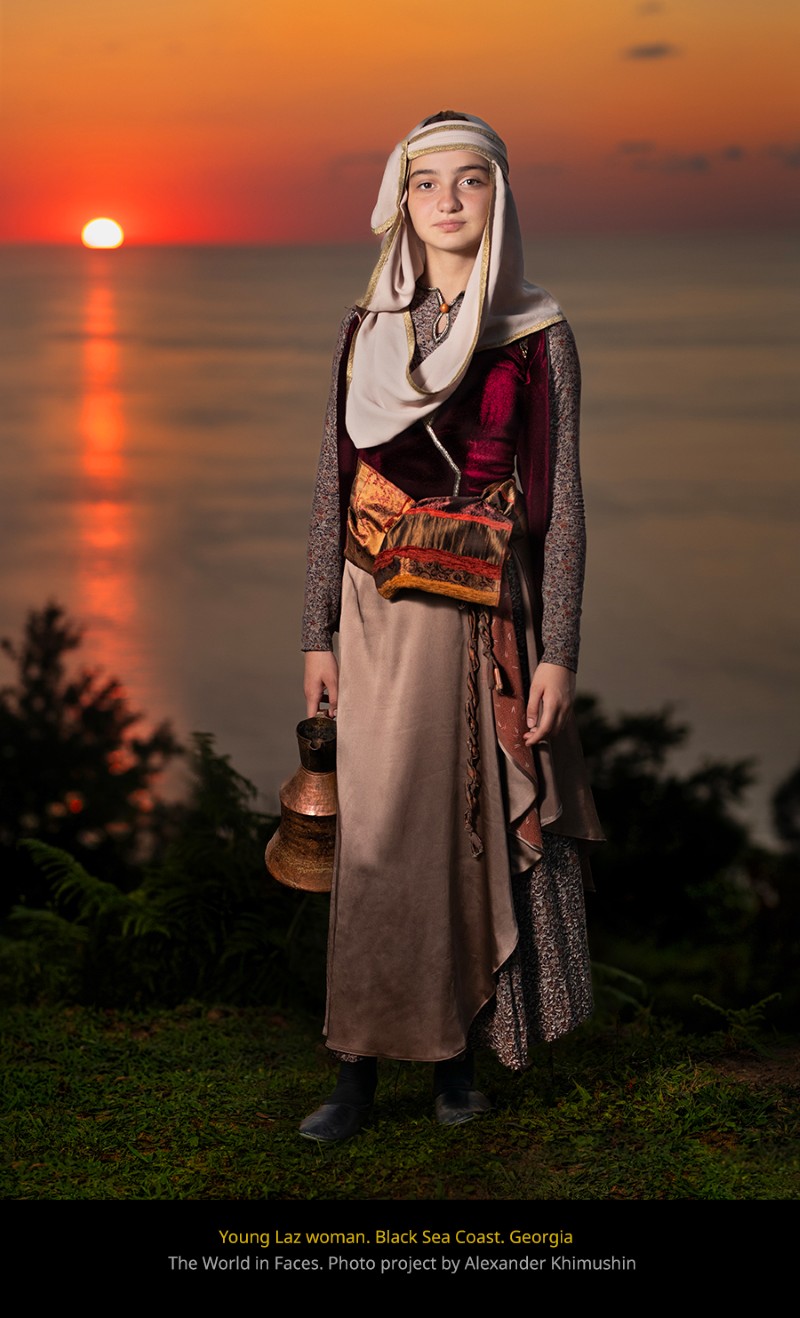
Young Laz woman in traditional clothing.
“This is a portrait of Sofia Tandilava, a cheerful teenage girl that I took in the lush green mountains overlooking Black Sea coast of Adjara, Georgia. Sofia is one of only about a thousand Laz People living in the ancestral lands in Georgia from the time immemorial. Sofia proudly participates in the World in Faces photo project, eager to share the captivating story of her Laz People with a wider world that often remains unaware of their rich history and culture.”
Alongside each portrait, he writes fascinating captions about the sitter and their culture, learned through his deep immersion in the cultures he visits.
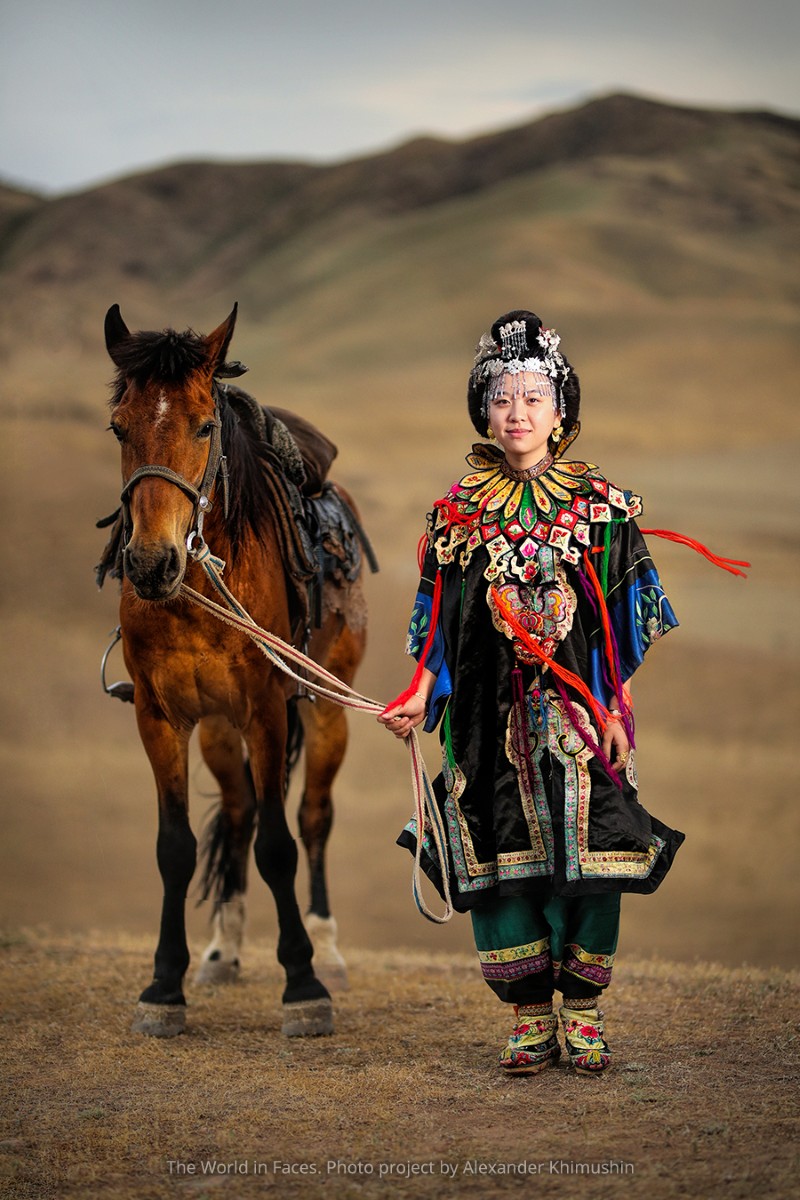
Dungan young woman from Sortobe, Kazakhstan.
“This is a portrait of Alina, a young Dungan woman. She is wearing something extremely rare to find these days: a full set of handmade, hand-embroidered traditional Dungan wedding attire and silver jewelry, all made over a hundred years ago. Alina is also wearing unique traditional shoes, as well as golden rings and earrings. I was so happy to gather all of these hard-to-come-by pieces from local people who supported me in every way while I was visiting the Dungan community. The Dungan community was incredibly hospitable; I was invited to stay with a local family and was invited to share meals with them every single day. You may have heard that Dungan cuisine is famous throughout Central Asia. It is incredibly delicious and, in my opinion, underrated!”
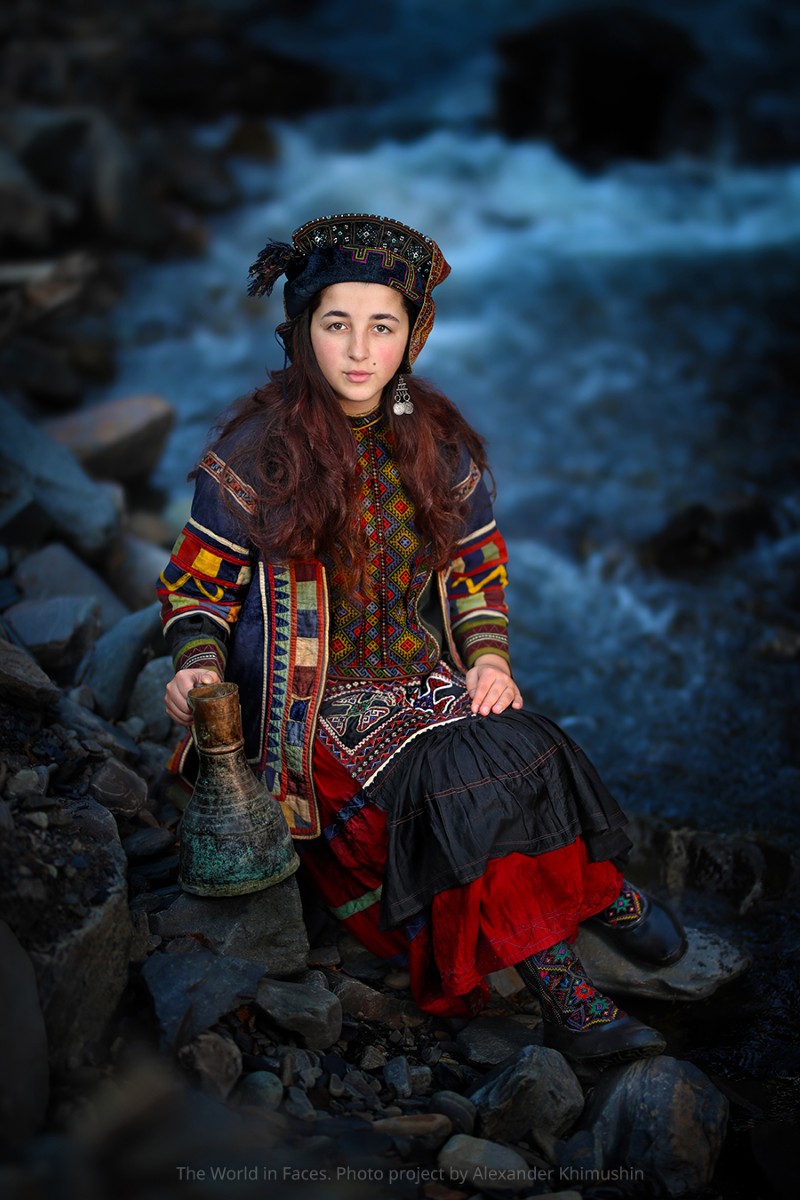
Young Khevsurian woman from Georgia.
“This is a portrait of Tekla Arabuli from Barisakho, a small village lost in the high Caucasus mountains of Khevsureti, one of the last untouched regions of Georgia (the country) and home to the proud and independent Khevsurian people (ხევსურები).
Until recently, and in some parts even today, Khevsureti has been a hard-to-reach part of Georgia. It was the last place where people continued to make and wear their unique handmade traditional clothing. In this photo, Tekla proudly wears traditional Khevsurian clothes.”
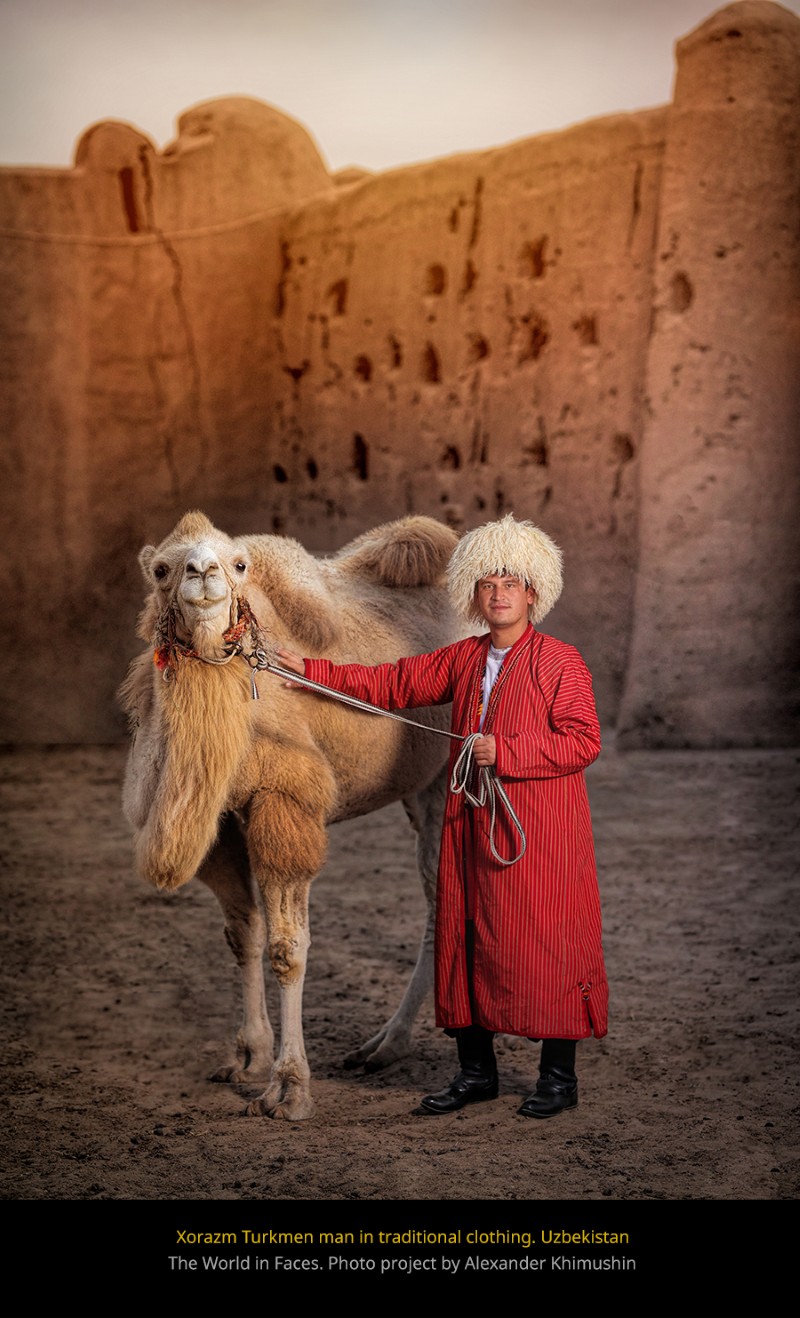
Young Turkmen man in traditional clothing.
“This is a portrait of Server Alimov, 23. I photographed him in a Turkmen mahallah (village) situated at the Khwarazm Oasis. Khwarazm (also spelled Xorazm), one of the ancient states of Central Asia, was located here from the 8th century BC until 1924. Nowadays, the territory of the oasis is mostly located in Uzbekistan, but also partly in Turkmenistan. Khwarazm has been home for both Uzbek and Turkmen People since ancient times. Turkmen People living in Uzbekistan are proudly keeping their ancient traditions, cultural heritage, and the language.”
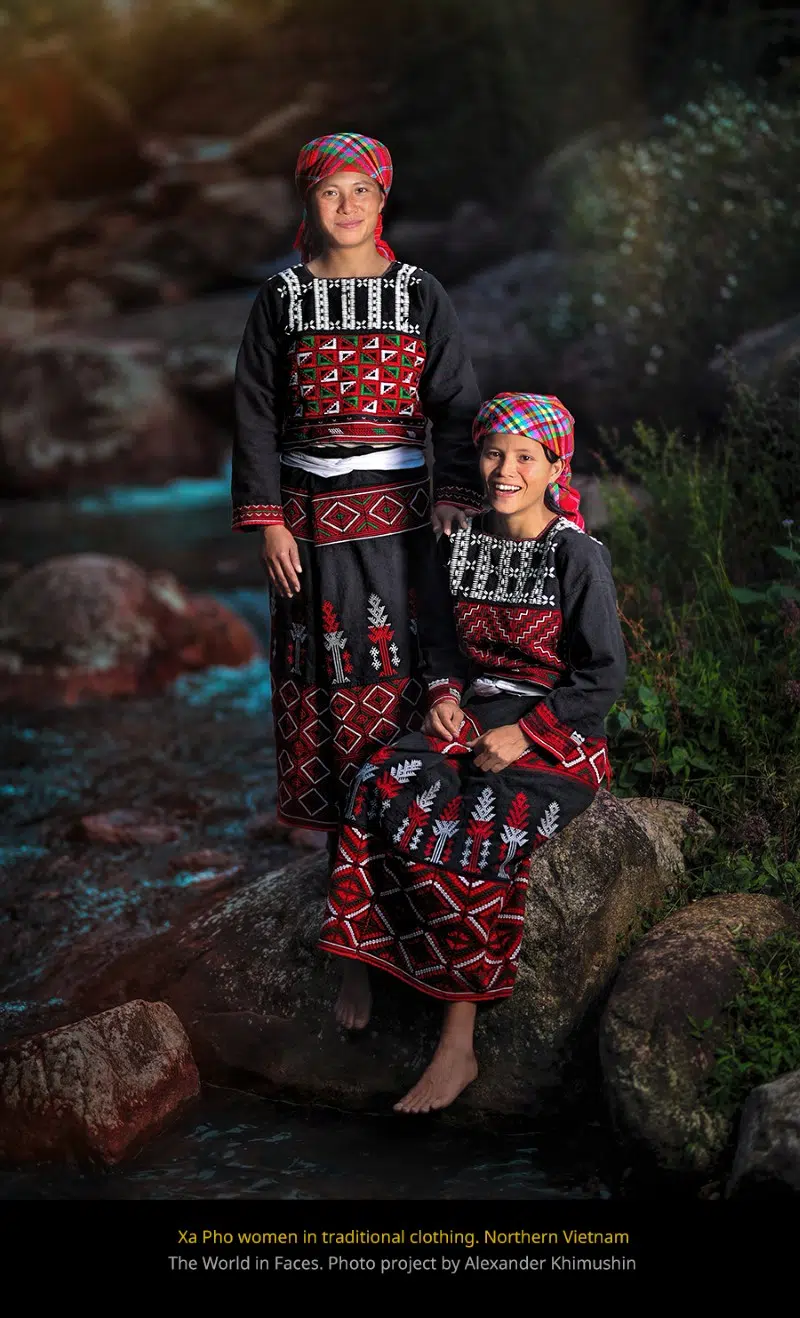
Xa Pho Indigenous women in traditional clothing.
“Let me introduce Za Mu Ma, 31, and Li He Pho, 30. I had the pleasure of capturing a portrait of these two cheerful young women in Nam Sai village, located in Lao Cai Province. They belong to the Xa Pho ethnic minority, which is one of the smallest ethnic groups living in the high mountains of Northern Vietnam. The total number of speakers of their native language, Laghuu (also known as Xa Pho or Phù Lá Lão), is only about 1,000 people. Laghuu belongs to the Sino-Tibetan language group and is spoken in just a few scattered villages across the vast territory of Northern Vietnam. Other ethnic minorities in this region do not understand Laghuu and sometimes compare its sounds to birdsong.”
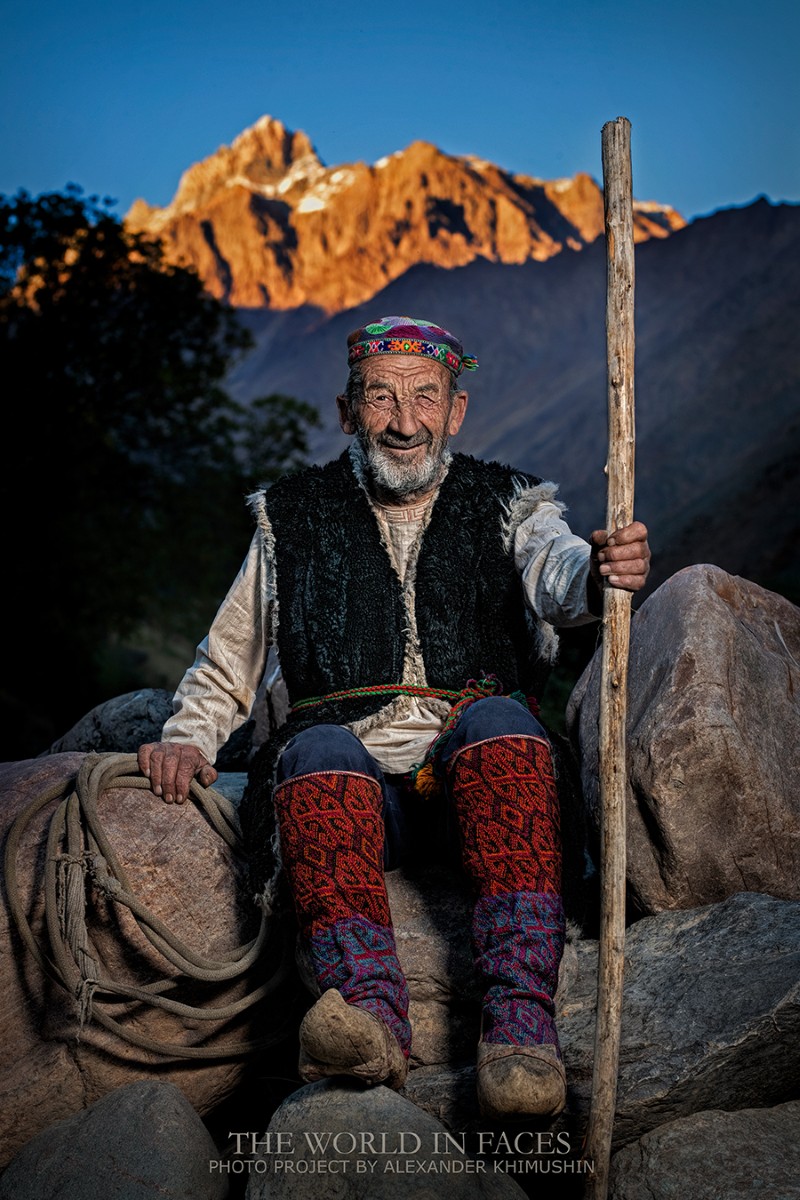
Gulzurkhon Morodbekov, an 85-year-old herder.
“Gulzurkhon laughs that he herds clouds instead of goats because his home is a rugged, high-altitude Bartang Valley in Pamir, one of the world’s highest mountain ranges. Gulzurkhon is one of a few thousand Bartang People living in this world. The Bartang People, also known as Bartangij, are one of the ethnic groups residing in the Pamir Mountains. They inhabit just three villages in the high-mountain valley of the Bartang River. The Bartang People speak their own language, which is distinct from several other languages spoken in the Pamir region of Tajikistan.”
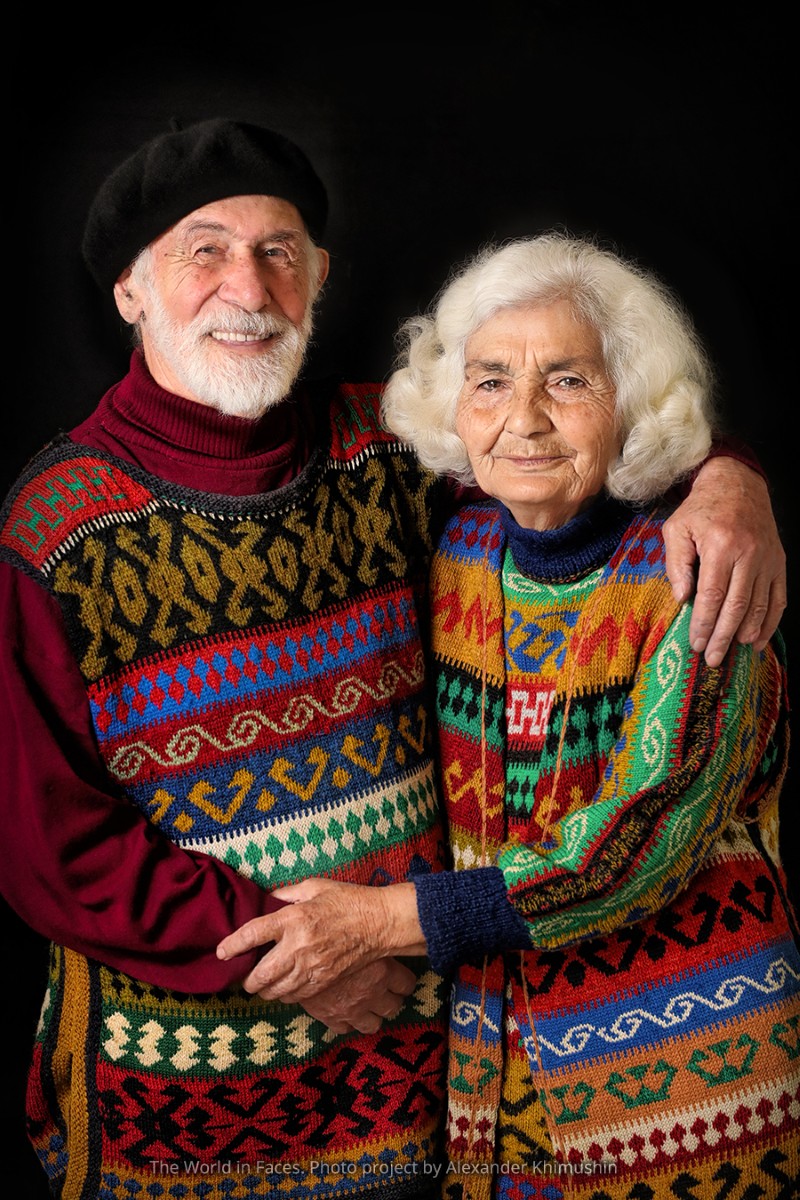
Lesing and Elmira.
“Today, I found myself in the enchanting remote town of Berd (Բերդ), nestled in the mountains of Tavush Province of Armenia—a place I had never heard of until yesterday. I’m fortunate to be a guest of an extraordinary couple, Lesing (85) and Elmira (85) Agakaryan, who have welcomed me with open arms. As we sip on a delightful cup of freshly brewed coffee, I can’t help but admire their vibrant jackets, knitted by Elmira in the 1970s using traditional Armenian patterns—a craft she has cherished all her life.”
Alexander Khimushin – The World in Faces: Website | Facebook | Instagram
My Modern Met granted permission to use photos by Alexander Khimushin.
Related Articles:
Photographer Captures the Unique Beauty of 500 Women Around the World
Stunning Photographic Prints Celebrate the Traditional Regalia of Indigenous Americans
Traveler’s Photos Capture the Beautiful Diversity of Remote Cultures Around the World
Photographer Spends 6 Months Traveling Alone to Photograph Siberia’s Indigenous People