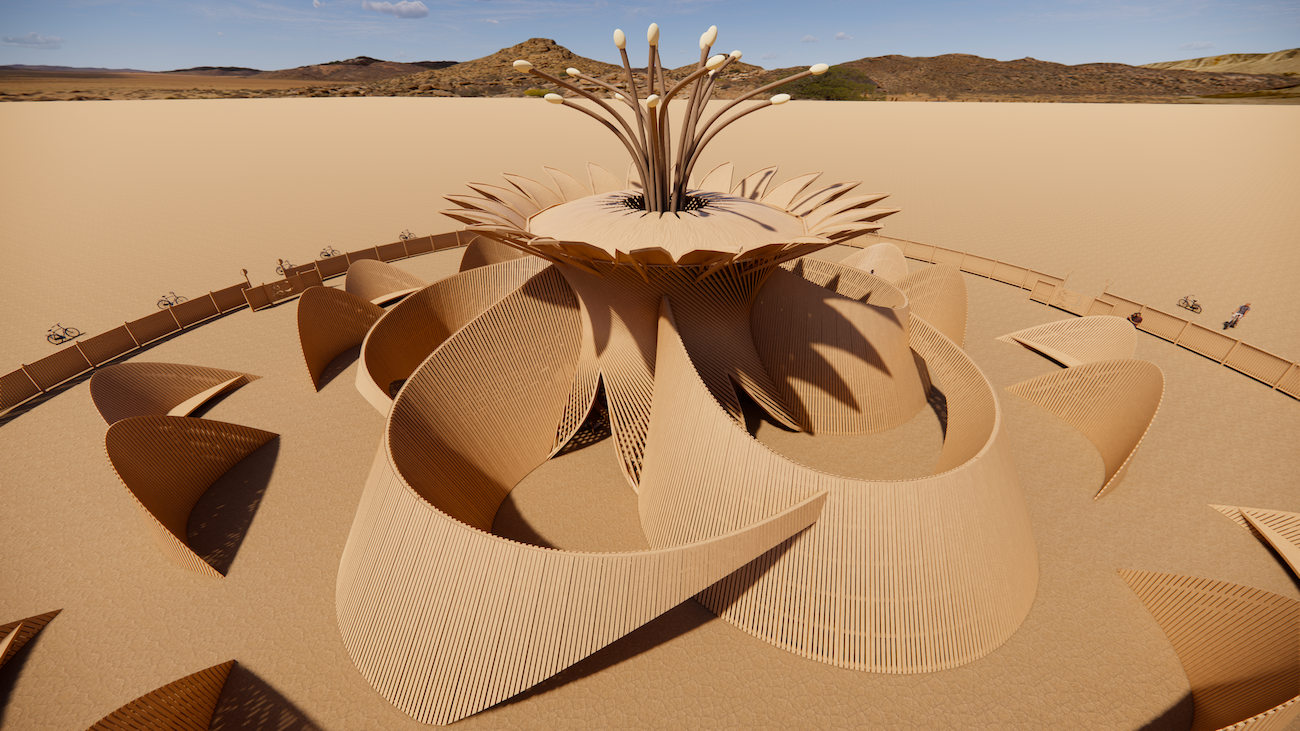
The legendary Burning Man is a temporary city that is reconstructed, in differing forms, year after year. Artists and architects build structures with the intention of removing them. How can they impart meaning to something that will soon be dismantled? For 2026, designer James Gwertzman approaches this challenge with the Temple of the Moon, a project that combines parametric design, environmental responsiveness, and ritual space. The forthcoming structure will be at the heart of this year’s event.
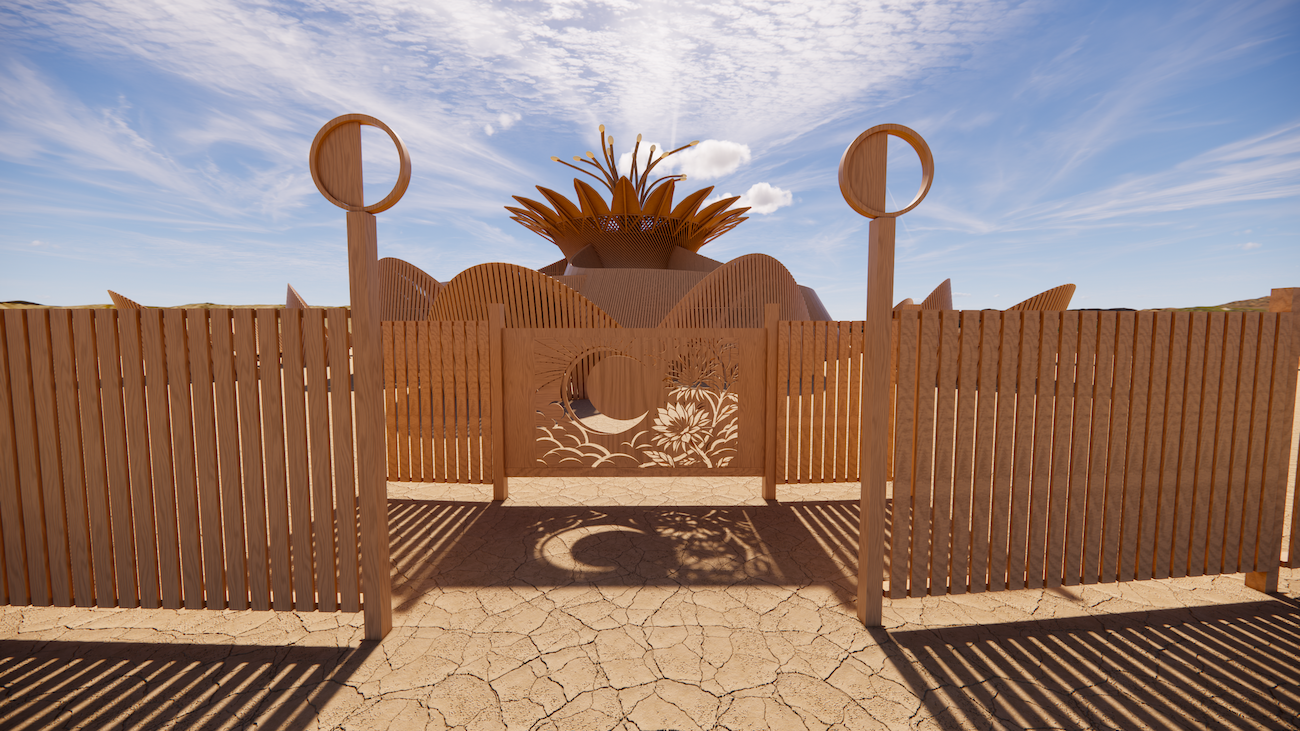
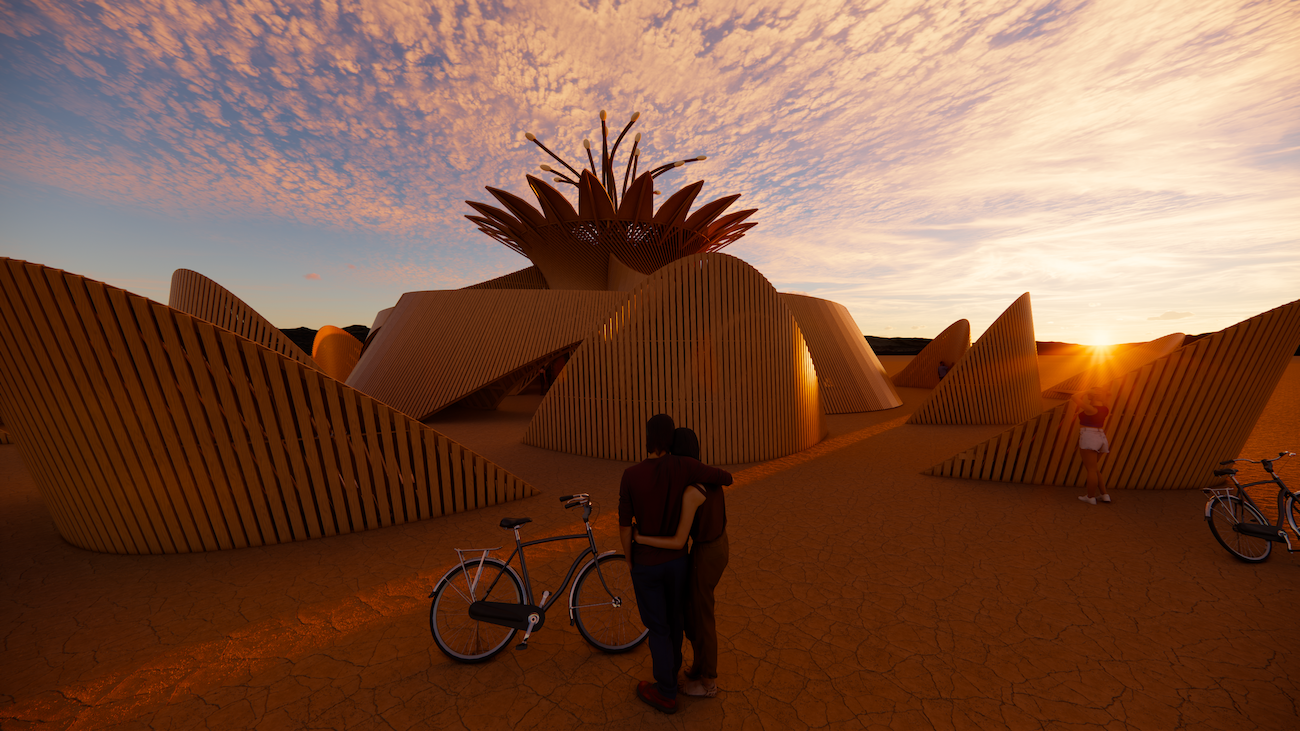
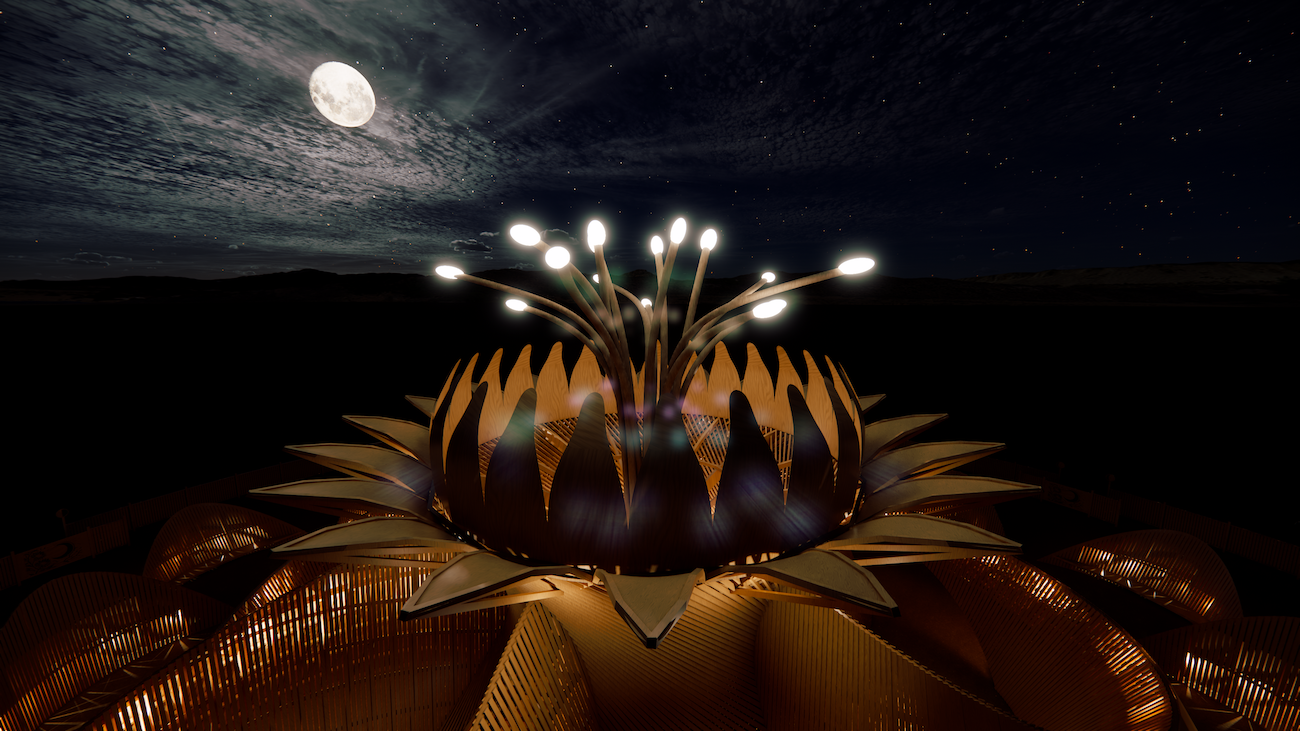
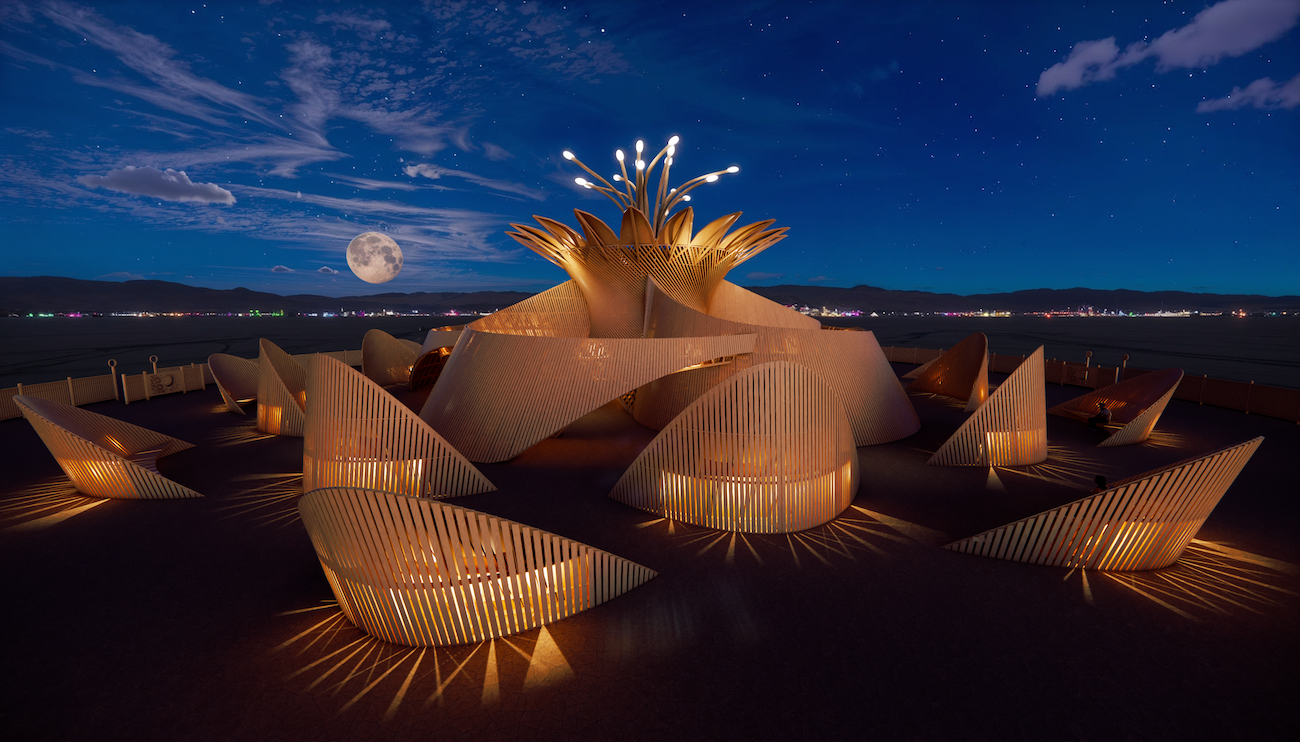
Gwertzman organizes the Temple of the Moon through a radial plan inspired by lunar cycles. He also draws from the Queen of the Night, a rare cactus flower that blooms for a single night, using its brief life cycle to inform both the structure’s form and its emphasis on impermanence. Parametric modeling shapes the temple’s curved geometry, with straight timbers to be assembled into sweeping arcs that resemble an unfolding flower.
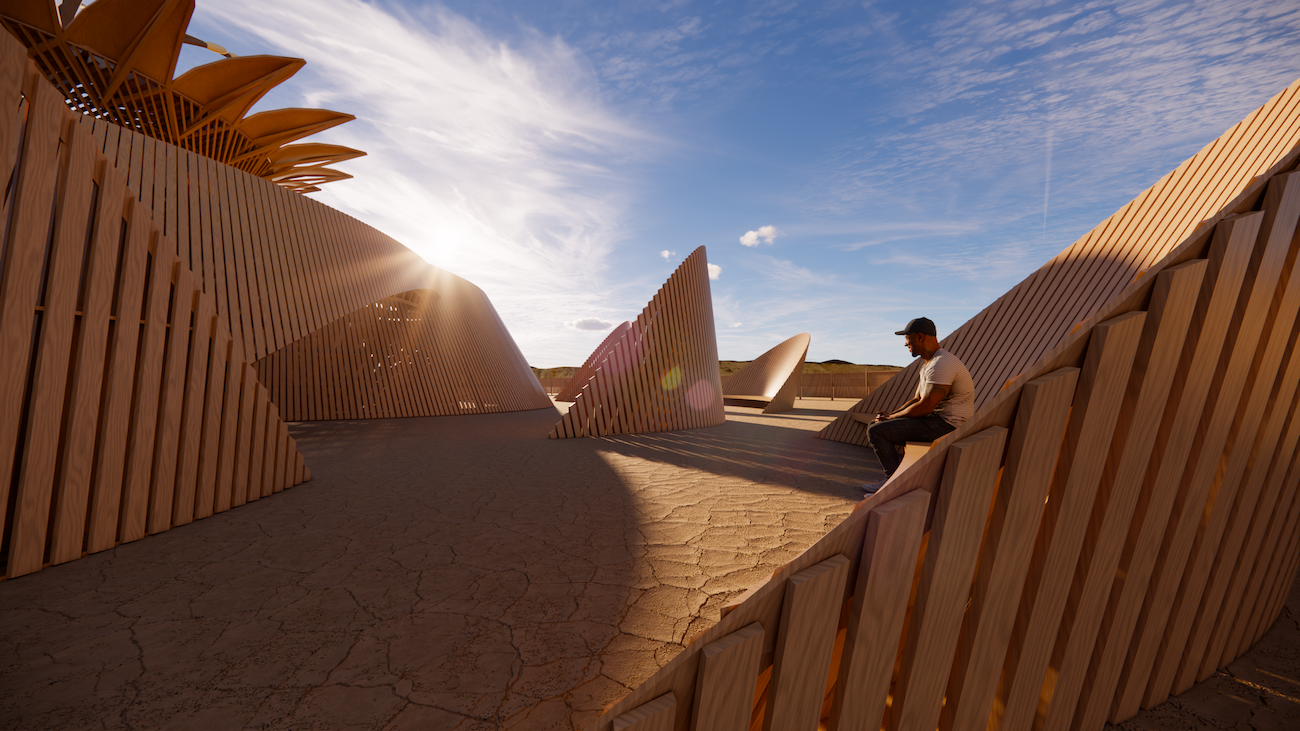
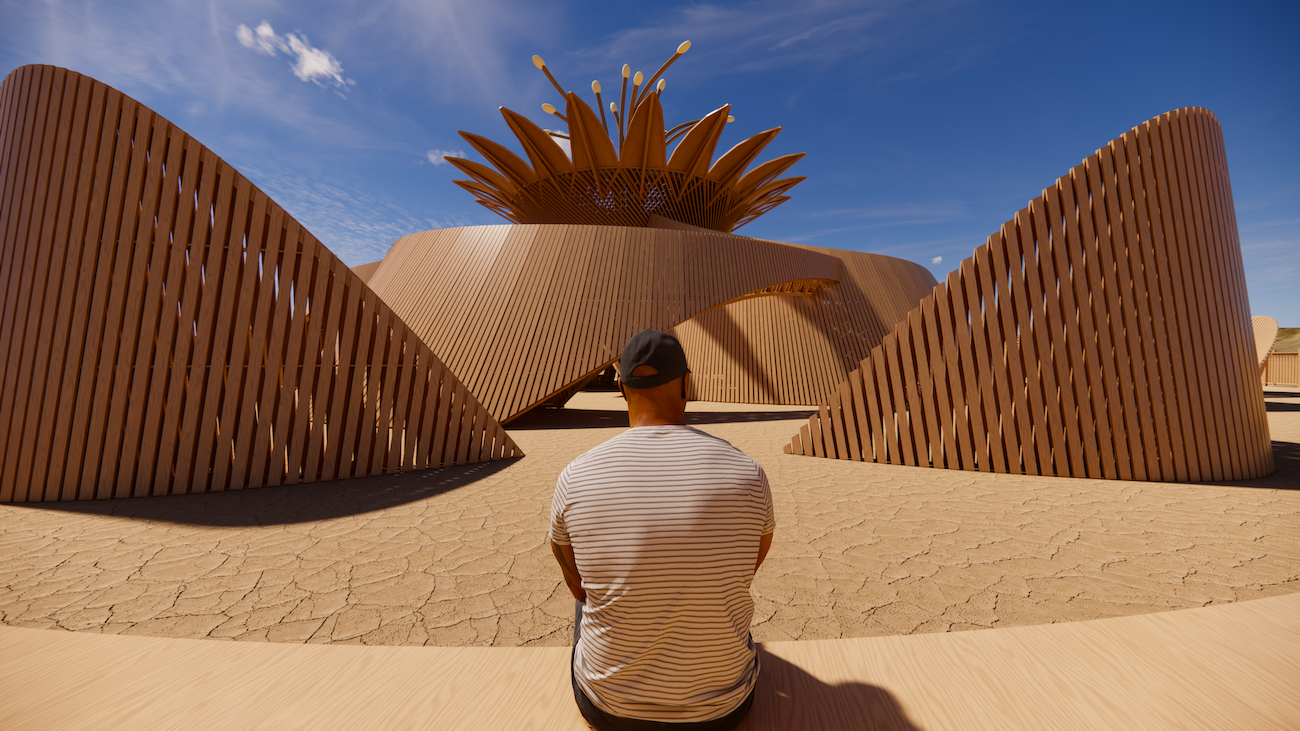
Instead of enclosing the temple within a single volume, Gwertzman will arrange the petal-like forms around a central core. These elements will extend outward and create a layer perimeter that filters movement, light, and sound. Consequently, the design will guide visitors through a gradual transition from the open desert into a more focused interior environment.
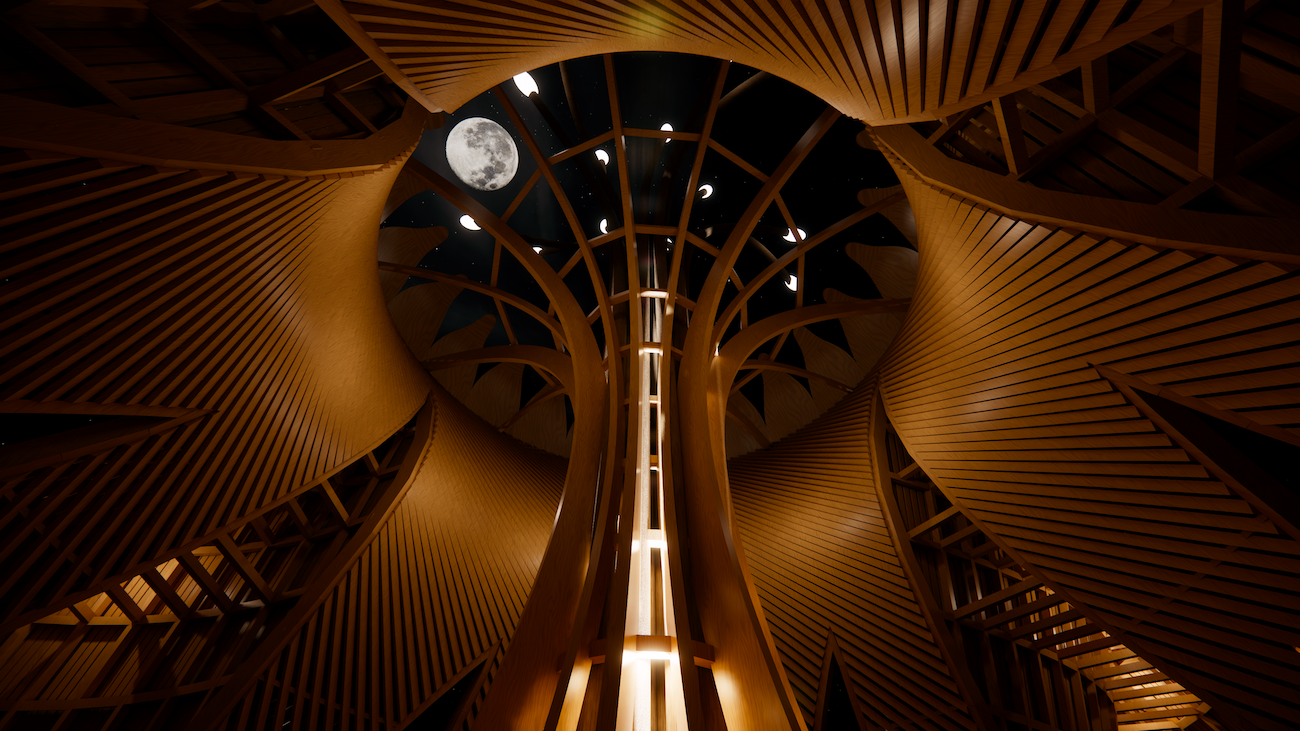
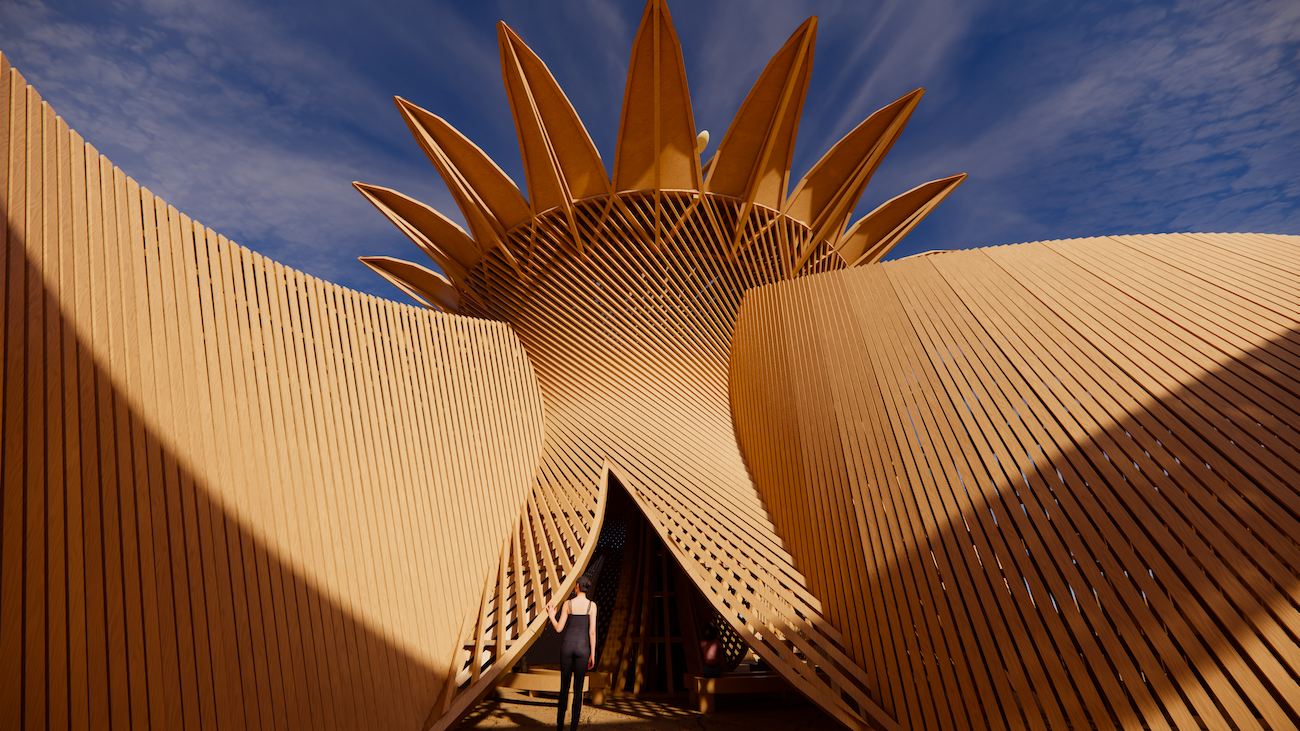
Light will drive the experience of the temple and define its atmosphere. Openings within the petal-like forms will capture changing light conditions throughout the day. As evening approaches, moonlight and starlight will enter the central chamber. Then, at sunrise, shifting shadows will reshape the interior.
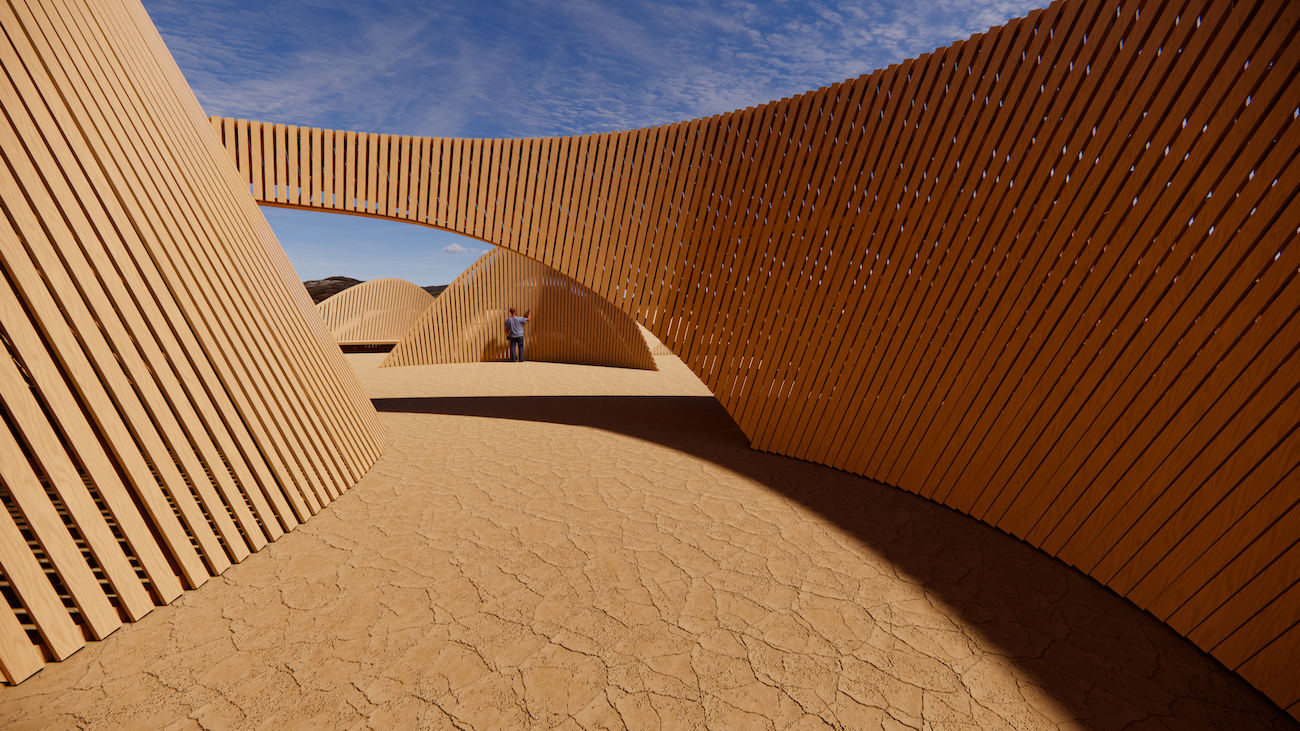
Gwertzman has designed the circulation as a winding path rather than a direct route. Visitors will move inward through moments of compression and release, which slows their pace and heightens awareness. Along the perimeter, smaller alcoves will offer semi-private spaces. Meanwhile, the central chamber is intended to support collective gathering around a vertical focal element.
As participants engage with the space, they will actively shape its meaning. They’ll leave messages, objects, and memorials across the structure’s surfaces. Over time, these contributions will transform the temple into a shared archive. In turn, the project will challenge traditional authorship by shifting control from the designer to the community.
At the end of Burning Man 2026, participants set the structure ablaze in a ceremonial act. This process removes the physical building but preserves its emotional impact. The Temple of the Moon, in this way, moves beyond function or monument, and instead frames space as a temporary yet powerful medium for collective experience shaped by time and light.
Designer James Gwertzman has shared his design for The Temple of the Moon, the 2026 Burning Man temple.
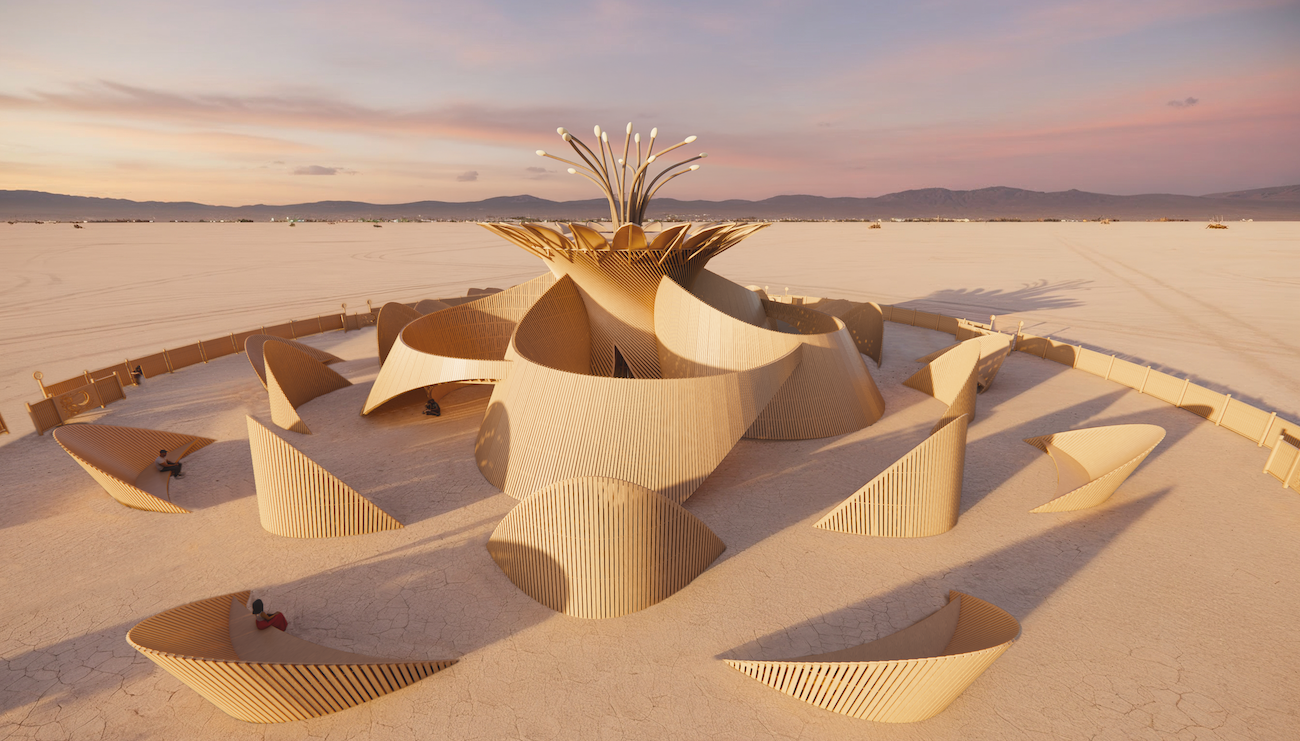
Gwertzman organizes the Temple of the Moon through a radial plan inspired by lunar cycles.
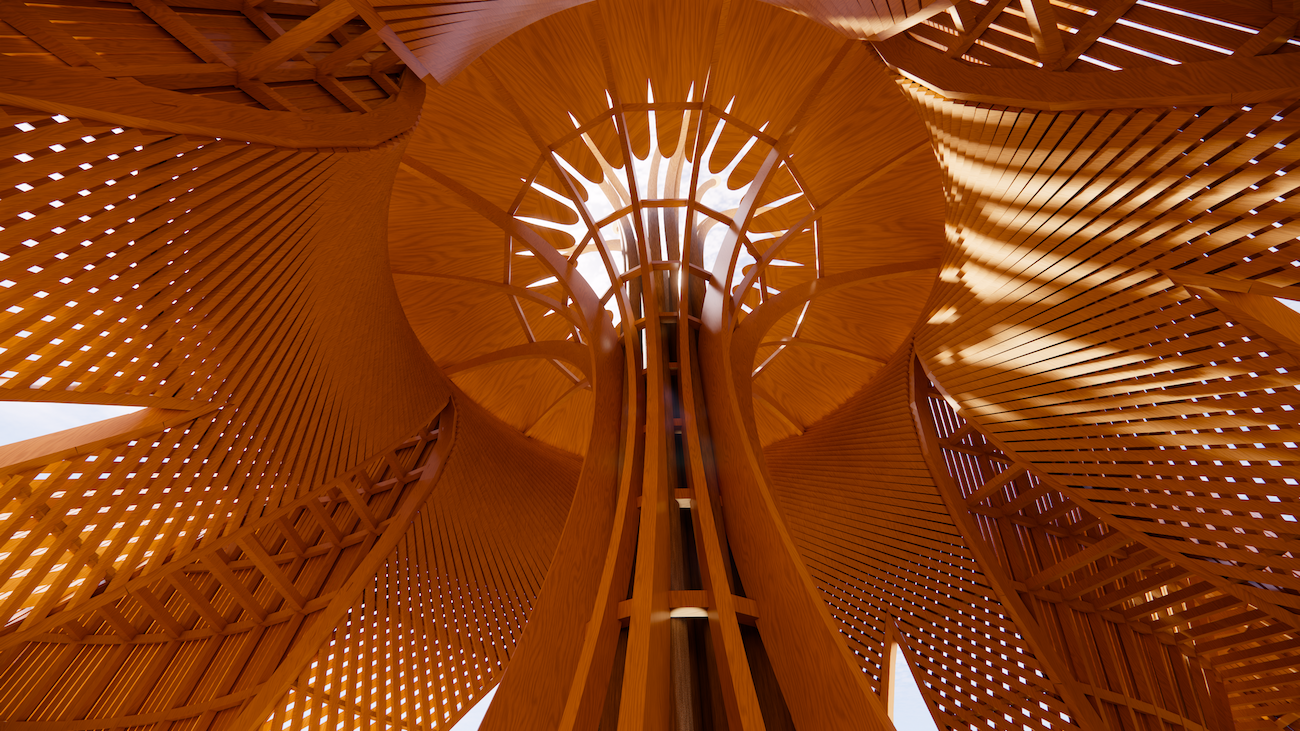
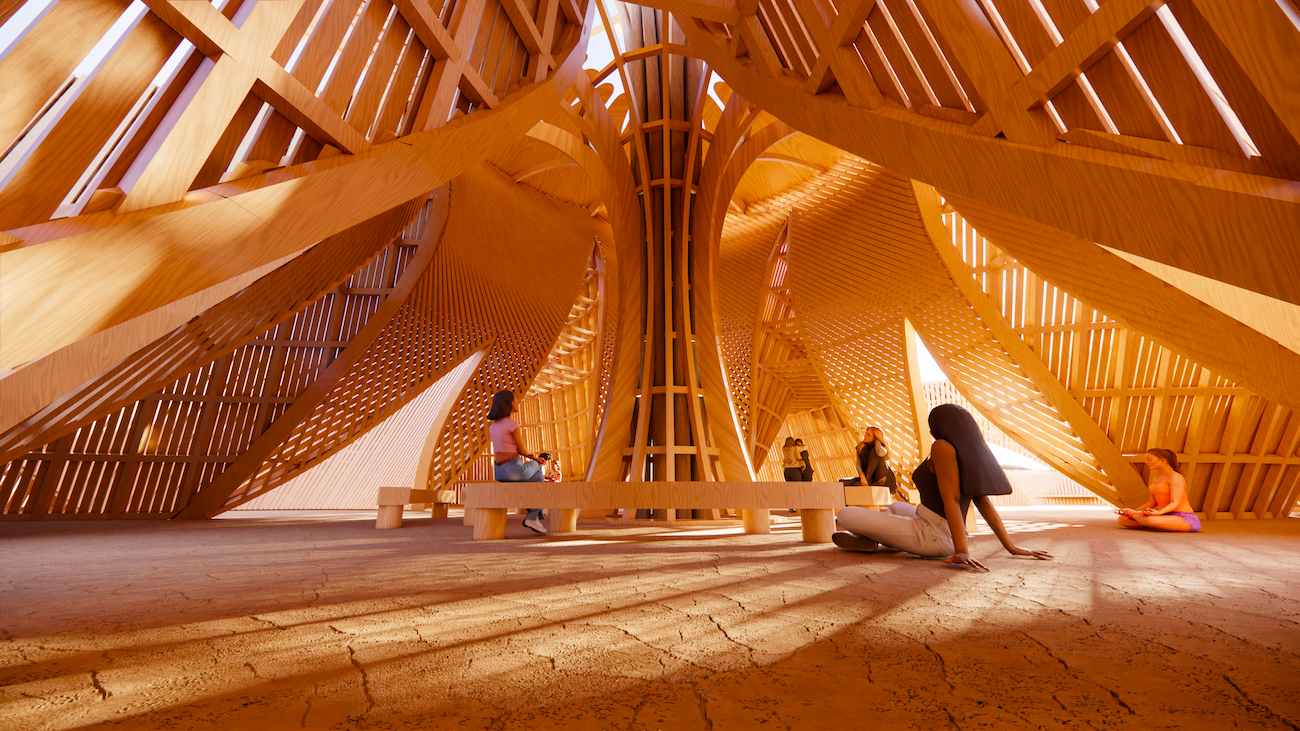
He also draws from the Queen of the Night, a rare cactus flower that blooms for a single night, using its brief life cycle to inform both the structure’s form and its emphasis on impermanence.
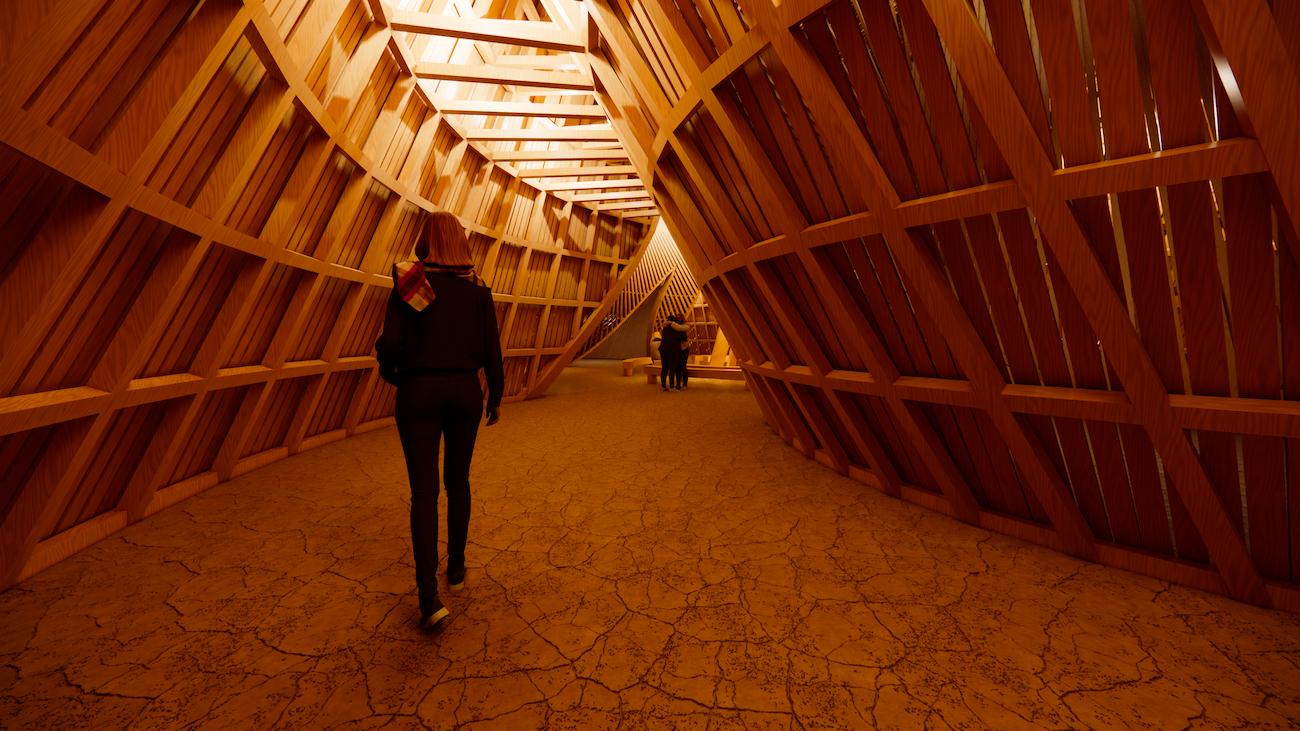
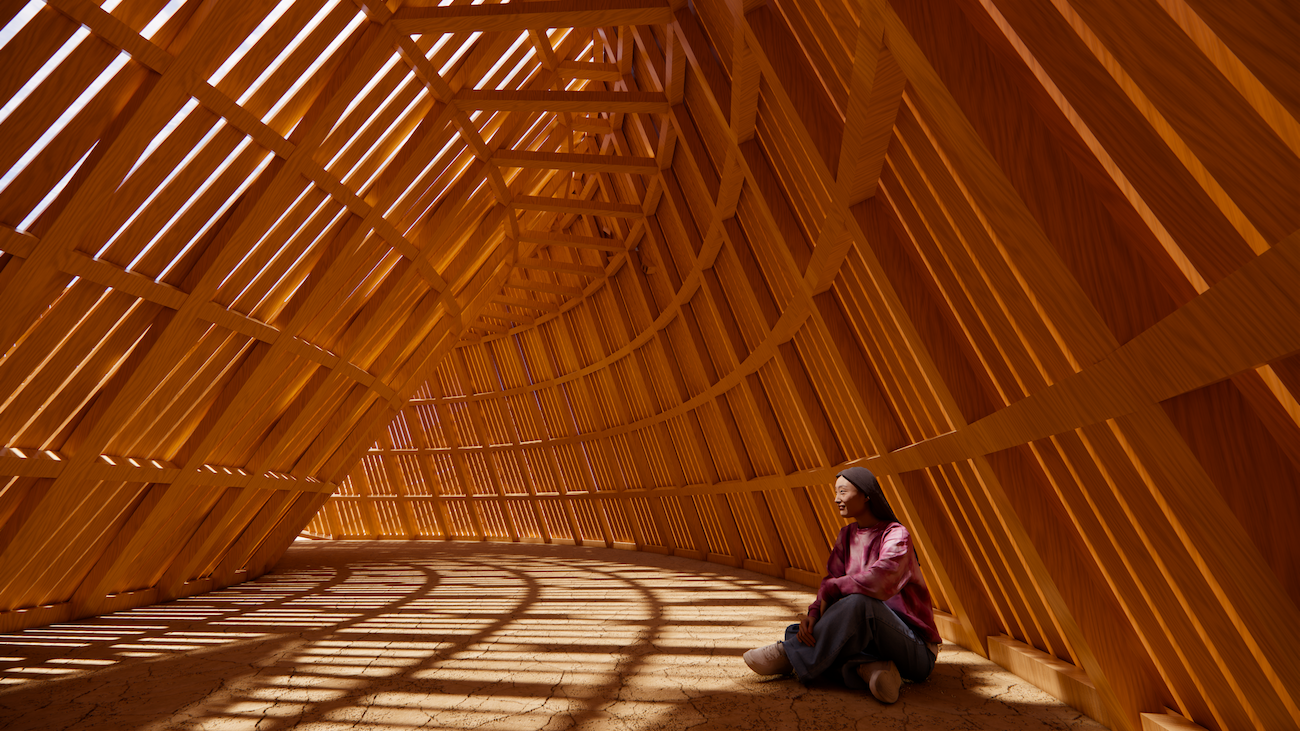
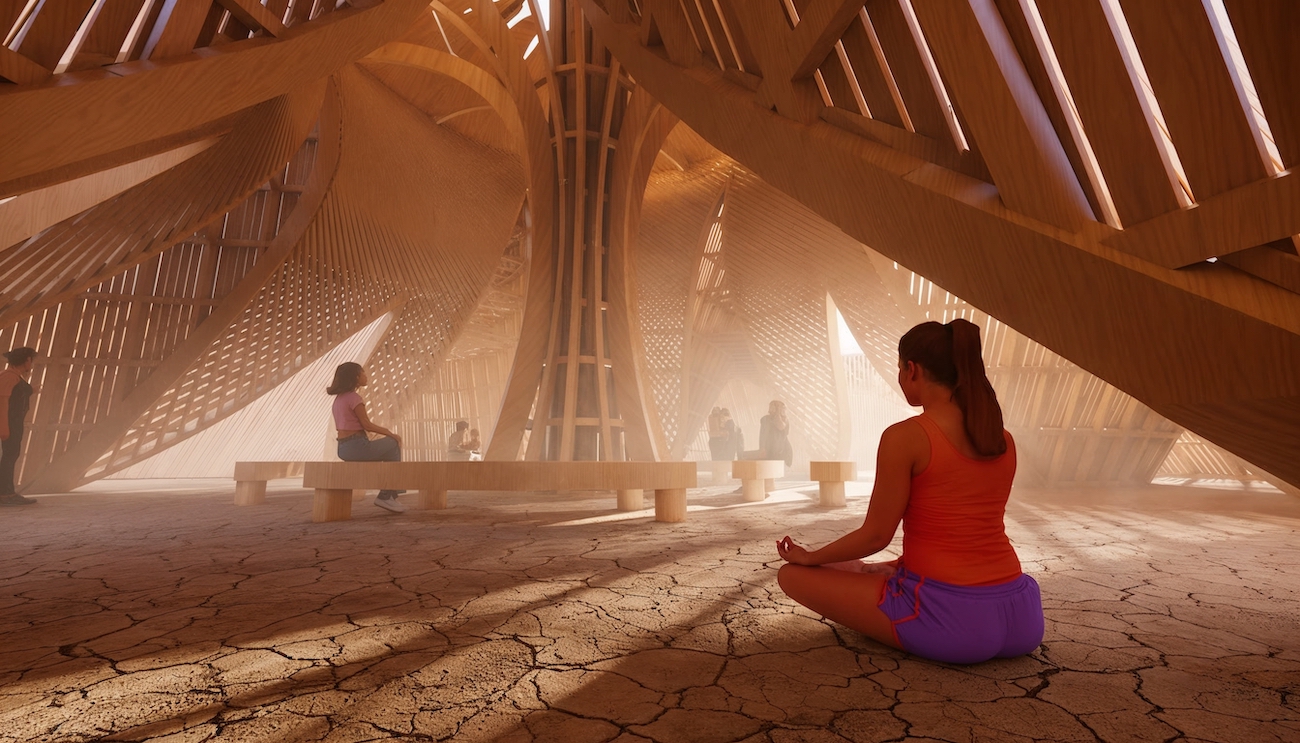
Gwertzman has designed the circulation as a winding path rather than a direct route.
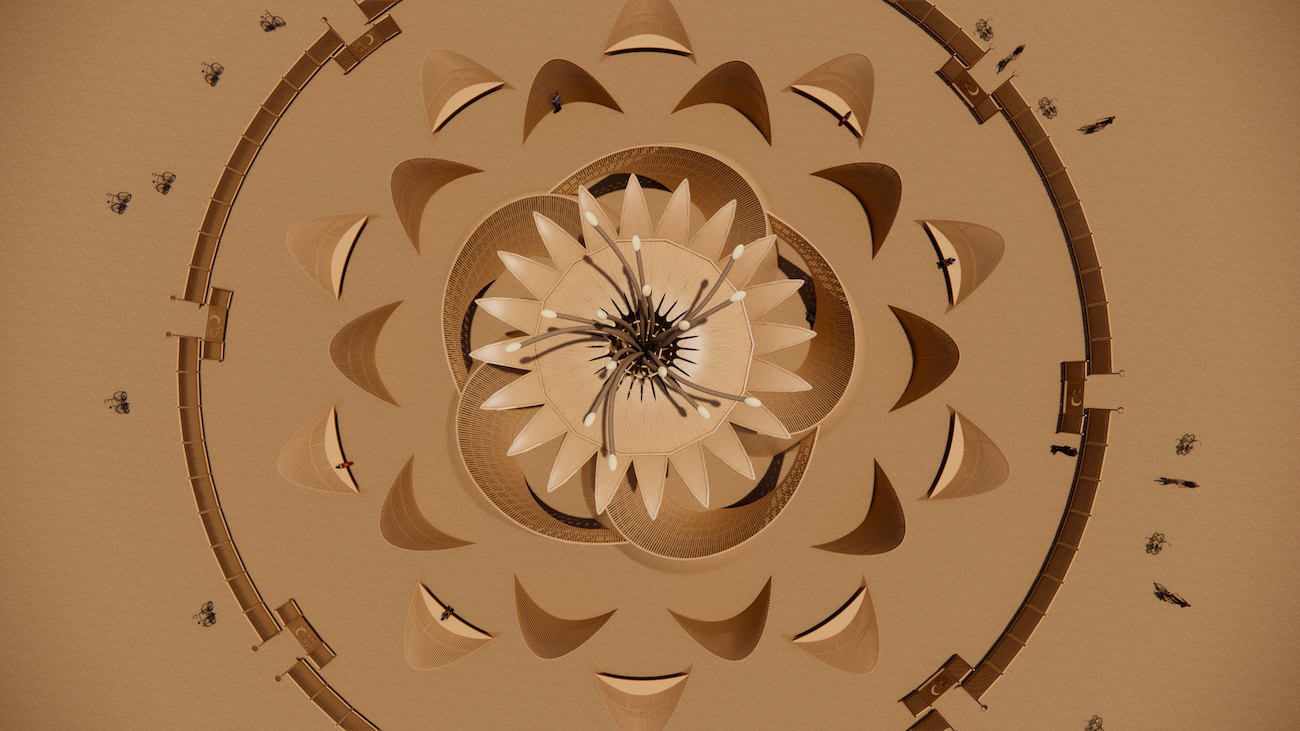
Visitors will move inward through moments of compression and release, which slows their pace and heightens awareness.