Astronomy

June 8, 2022

Five Planets Will Align in the Sky This Month and Here’s How to See It

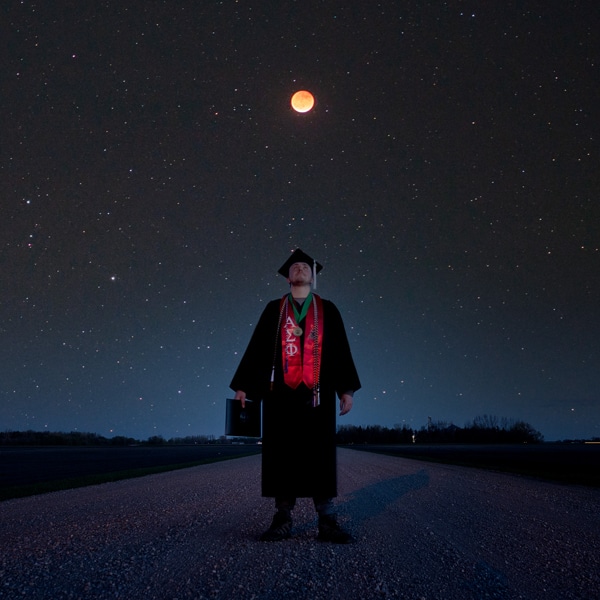
Sometimes the stars align, and other times the planets do. This month, a celestial dance will bring five planets—and eventually the Moon—into a graceful arc across the early pre-dawn sky throughout June. Beginning the weekend of June 3, 2022; Mercury, Venus, Mars, Jupiter, and Saturn will fall into alignment. On June 23, the Moon will join the party to complete the rare celestial event, which will be viewable with the naked eye.
Read Article


May 31, 2022

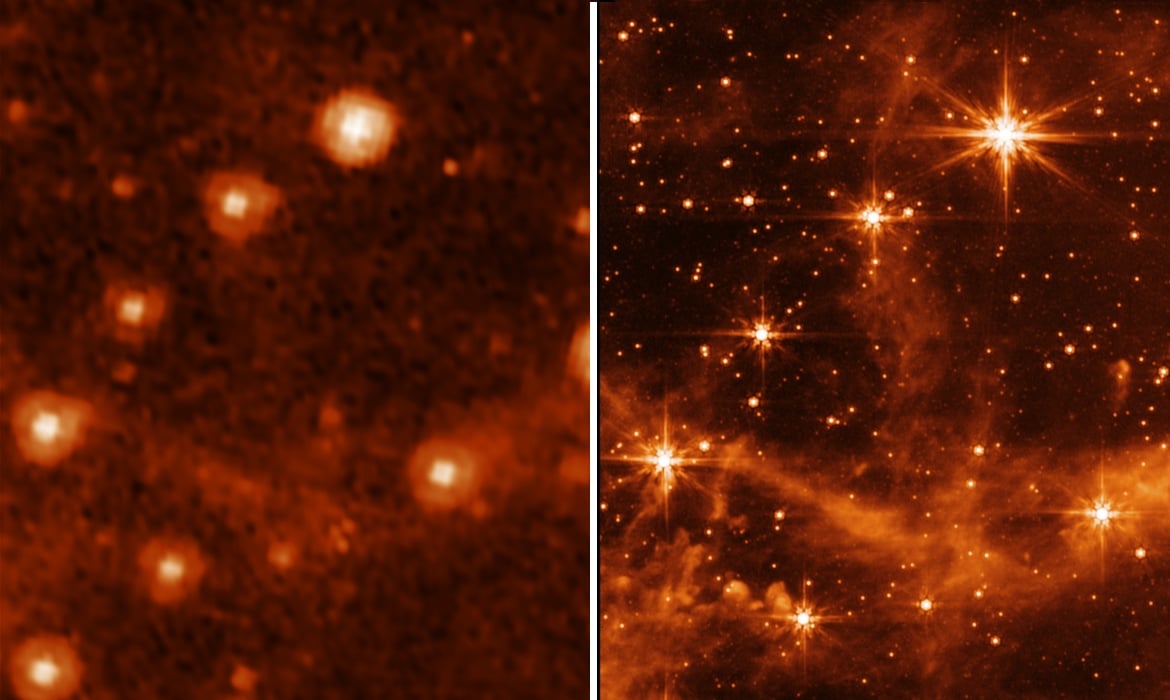
NASA Shows Superior Quality of Webb Telescope with Comparison Image

As the countdown to the James Webb Space Telescope‘s first observations dwindles down, NASA is treating us to more good news. All of the telescope's mirrors have been aligned and its four imaging instruments are performing far better than expected. To prove that point, NASA has released a new image comparing the quality of a photo taken by the Webb telescope against that of a decommissioned telescope. The results are astonishing.


Read Article


May 18, 2022

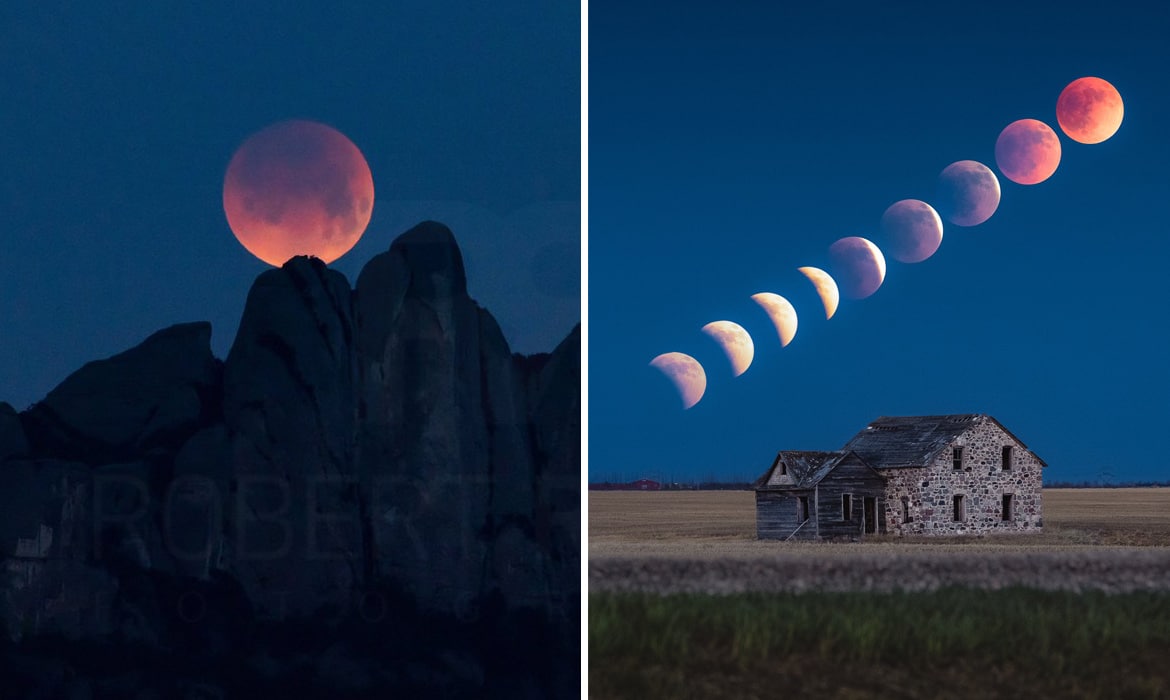
15+ of the Most Spectacular Photos From the Worldwide Total Lunar Eclipse

The Moon on the evening of May 15, 2022, was a spectacular sight. It wasn’t your typical showing of the celestial body; that night, the world witnessed a total lunar eclipse. Known as the Super Flower Blood Moon, it marked the longest total eclipse in 33 years and was totally visible in western Europe, Central and South America, most of North America, and much of Africa. The entire event lasted approximately five hours.

Read Article


April 22, 2022

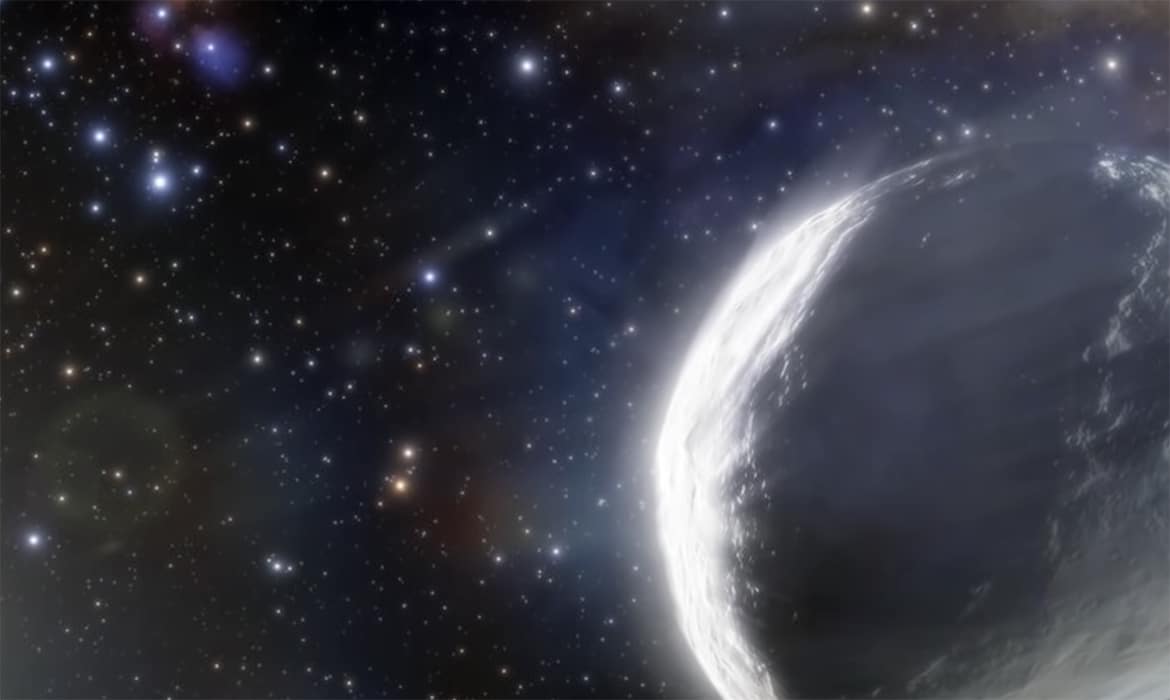
80-Mile-Wide Comet Hurtling Towards Earth Captured by NASA’s Hubble Telescope

Comets are basically icy space trash left over from the formation of the planets of our Solar System. While usually large by any normal usage of the word, they range widely in the circumference of their nucleus—the ball of ice and dirt at their center. NASA's Hubble Telescope has recently discovered the largest comet ever seen by astronomers—a comet larger than the state of Rhode Island.

Read Article