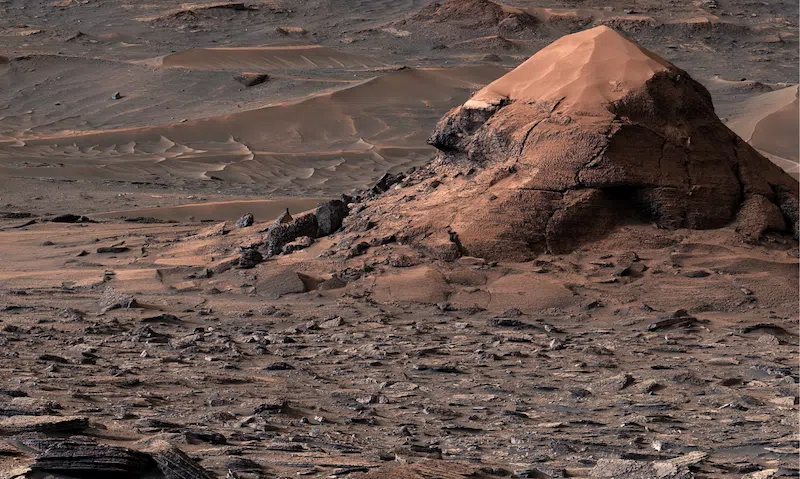
A close-up of a sand-capped butte found on Mars. (Photo: NASA/JPL-Caltech/MSSS)
Some of the most breathtaking landscape photography isn’t taken on Earth. NASA’s Curiosity rover has captured some remarkable high-resolution panoramas of a towering butte rising from the surface of Mars and a vast expanse of terrain with honeycomb textures, revealing the Red Planet in extraordinary detail.
One of the images, stitched together from 11 photographs taken by Curiosity’s Mast Camera on June 11, 2026, offers a striking view of an isolated rock formation nicknamed “Miraflores” as the rover continues its journey through Gale Crater. Standing roughly 20 feet (6 meters) tall, Miraflores was formed through millions of years of erosion, leaving behind a sand-capped butte that rises from an otherwise rocky landscape. NASA scientists combined the individual photographs into a panoramic image measuring 6,162 by 2,576 pixels, allowing viewers to zoom in and examine the intricate textures of the Martian terrain. The colors have also been adjusted to approximate what the human eye might see if standing on the planet’s surface.
Beyond the butte itself, another panorama reveals the landscape is dotted with thousands of small polygonal patterns etched into the ground. These honeycomb-like formations, each measuring roughly 1.5 to 3 inches (4 to 8 centimeters) across, extend in every direction—even wrapping around the base of Miraflores. Scientists believe the polygons preserve clues about ancient environmental conditions, though exactly how they formed remains an active area of research.
Both the butte and the polygon-covered terrain lie within Gale Crater, a 96-mile-wide impact basin that Curiosity has been exploring since 2012. Towering from the crater’s center is Mount Sharp, a mountain nearly 3 miles (5 kilometers) high whose layered rocks preserve billions of years of Martian history. Evidence gathered by the rover suggests the region was once home to lakes and streams, making it one of the most important sites for understanding whether ancient Mars could have supported microbial life.
Over the course of its mission, Curiosity has uncovered organic molecules and other chemical signatures left behind from Mars’ watery past. While these discoveries don’t prove that life once existed on the planet, they do suggest that ancient Mars possessed many of the ingredients necessary to support it. Images like these latest panoramas not only showcase the rover’s remarkable photographic capabilities but also provide scientists with valuable geological clues as Curiosity continues its climb across the slopes of Mount Sharp.
NASA’s Curiosity rover has captured a remarkable high-resolution panorama of a towering butte rising from the surface of Mars.
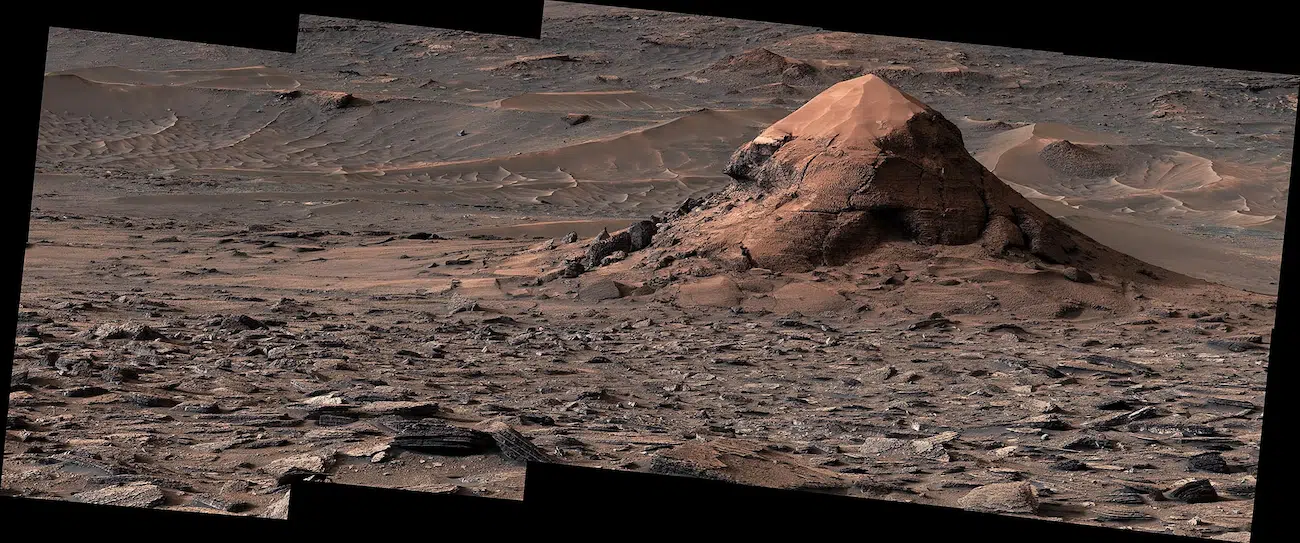
NASA’s Curiosity Mars rover captured this sand-capped butte, nicknamed “Miraflores,” estimated to be about 20 feet (6 meters) tall, on June 11, 2026. The surrounding area includes an expanse of terrain covered in surface features called polygons. (Photo: NASA/JPL-Caltech/MSSS)
In another panorama, the landscape can be seen in remarkable detail, revealing a field of honeycomb textures.
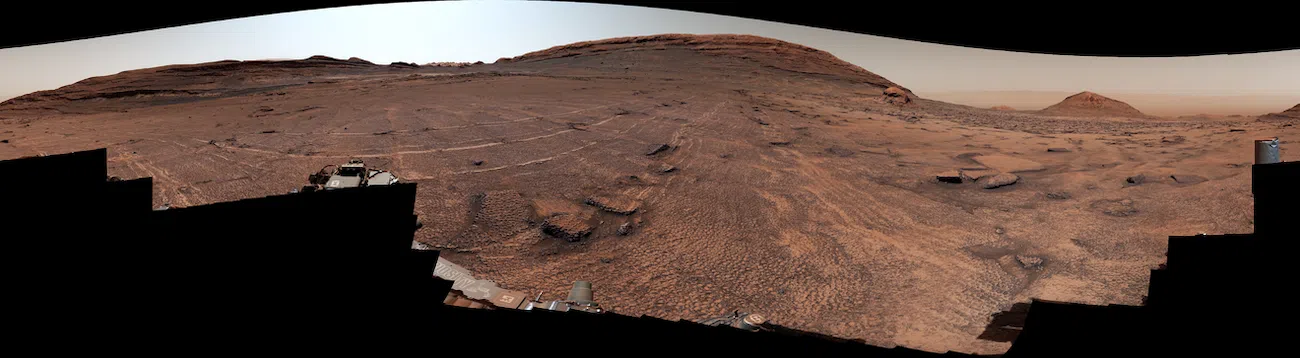
NASA’s Curiosity rover discovered an expanse of terrain covered in surface features called polygons. Scientists have never seen so many of these features in one place and are unsure how they formed. (Photo: NASA/JPL-Caltech/MSSS)
Scientists are still unsure how these textures formed, but both images provide valuable geological clues to Martian history.
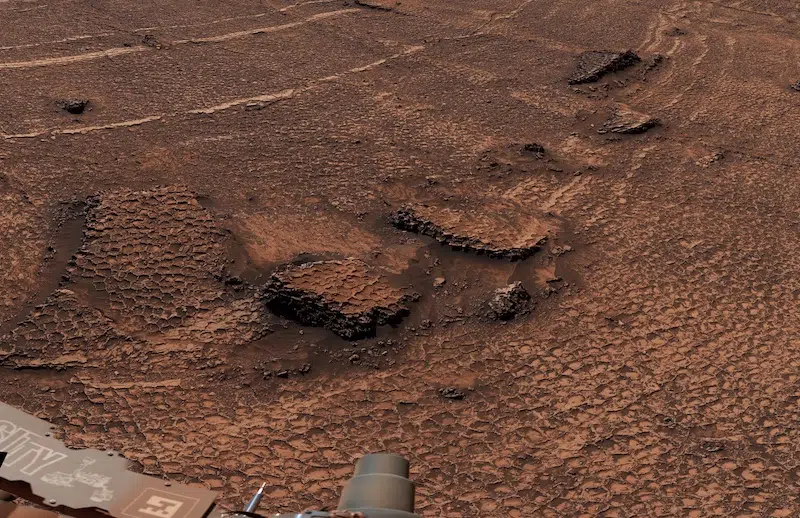
A close-up of the polygon fractures discovered by NASA’s Curiosity Mars rover highlights their honeycomb-like textures. (Photo: NASA/JPL-Caltech/MSSS)
Source: NASA’s Curiosity Views a Sand-Capped Butte; NASA’s Curiosity Mars Rover Discovers Field of Honeycomb Textures
All images via NASA/JPL-Caltech/MSSS.
Related Articles:
NASA’s Mars Reconnaissance Orbiter Has Snapped Its 100,000th Image of the Red Planet
NASA’s Perseverance Rover Has Discovered Potential Signs of Ancient Microbial Life on Mars
Check Out This Striking, Highly Detailed Panorama Taken From the Surface of Mars
Source: NASA’s Curiosity Mars Rover Discovers Field of Honeycomb Textures
Source: NASA’s Curiosity Mars Rover Discovers Field of Honeycomb Textures