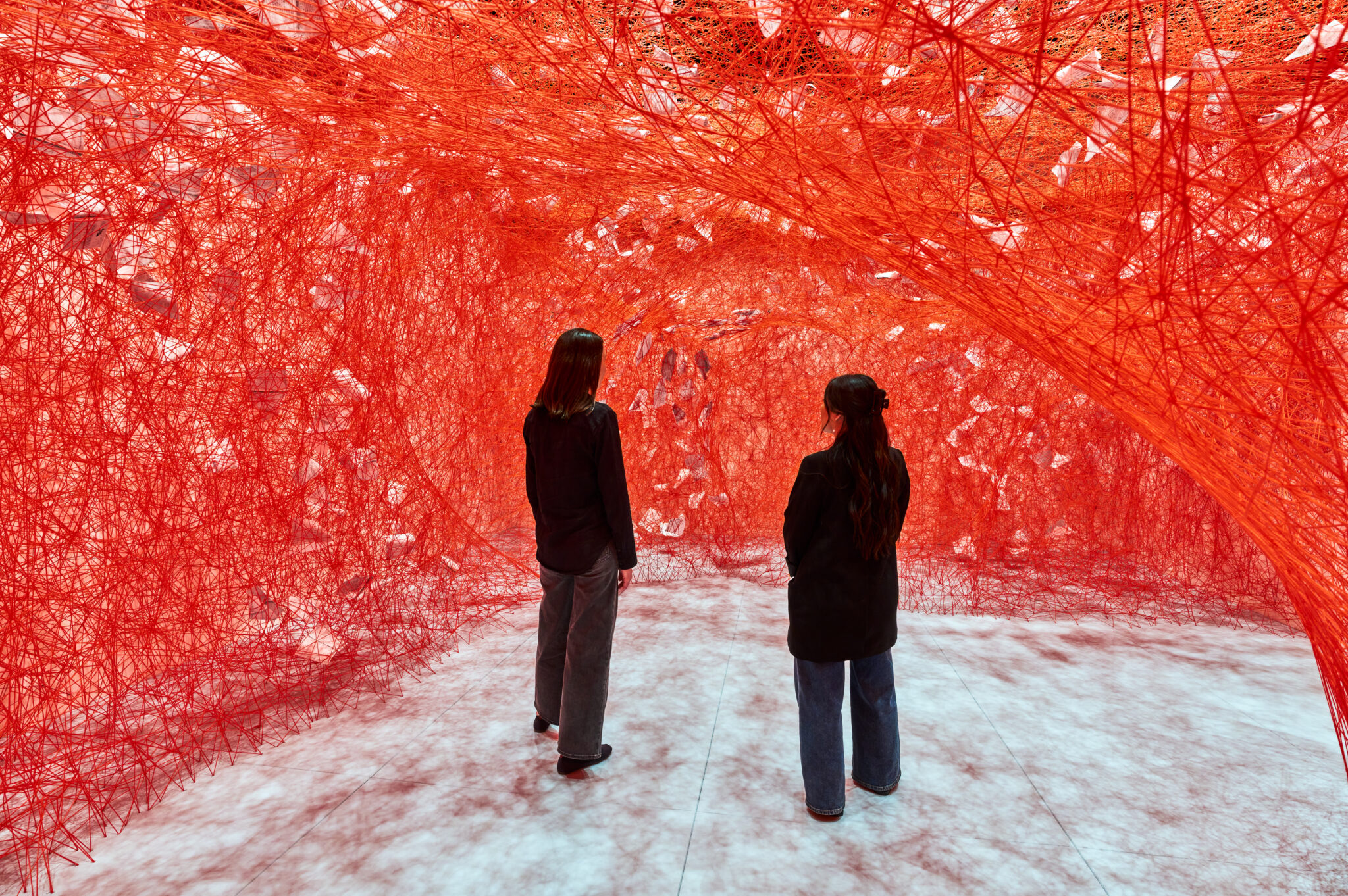
Installation view of “Two Home Countries” at the Asian Art Museum in San Francisco. (Photo: Kevin Candland)
In San Francisco, red threads now envelop a museum’s galleries. They criss-cross over ceilings; they trap delicate sheets of paper within their webs; and they stretch across wooden floors with ruby-colored tendrils. Entire worlds are conjured solely through thread—and Chiharu Shiota is their maker. In Two Home Countries, now on view at the Asian Art Museum, the Japanese artist doesn’t just want us to traverse these woven worlds. She wants us to encounter every memory they hold inside of themselves.
Two Home Countries landed at the Asian Art Museum earlier this month after a successful run at the Japan Society in New York. The solo exhibition, which stands as Shiota’s first in the Bay Area, presents several interventions by the artist, ranging from immersive installations and sculptures to video and performance-based works. No matter their medium, each piece traverses psychological terrains, contending with absence, embodiment, and history.
“Shiota’s work resonates because it makes emotional states visible,” Soyoung Lee, the director and CEO of the Asian Art Museum, remarks. “Her installations speak to the experience of living between places, histories, and identities—an experience that feels increasingly familiar to many people today.”
Perhaps nothing illustrates that fact better than Diary, an ambitious installation recreated specifically for the museum. Unfolding across an 88-foot pavilion, the monumental work is not so much viewed or perceived as it is experienced, inviting guests to wander beneath a passageway formed by red yarn. Glancing upward reveals handwritten diary pages, suspended by the intricate, threaded network. These pages are appropriated from personal journals written by Japanese soldiers during World War II and by German civilians in the postwar period. In this cocoon, a throughline slowly emerges, connecting us to a fraught moment in history as we travel through the installation. In so doing, the diaries exceed their status as static artifacts and instead become active agents, their stories transcending time and space to reach us—and each other.
“Shiota is interested in what remains after a person is gone,” chief curator Robert Mintz explains. “In Diary, the voices of individuals who never met are brought into conversation. The installation makes history feel personal, fragmented, and profoundly present.”
Beyond Diary, the exhibition also encompasses smaller installations, including the titular Two Home Countries. The work depicts two metal houses, both vacant with the exception of a cluster of red thread. Connecting the structures is a dress-shaped sculpture composed of red rope, its strands snaking not just toward the homes, but toward the ceiling. Taken together, Two Home Countries meditates upon the liminal, unanchored space Shiota herself occupies as someone who lives between Japan and Germany.
“When I am in Germany, I miss Japan, and when I return to Japan, I miss Germany,” Shiota has said of her predicament. “It is an in-between sensation.”
In that sense, there’s an uneasiness rippling beneath the exhibition’s surface. As we come face to face with Shiota’s artistic vision, history becomes immediate rather than forgone; fear becomes palpable rather than abstract; and our lives strike us as the ephemeral entities that they are. And yet that’s exactly the point. After all, Shiota views her own practice as a reckoning, as a confrontation between longing, vulnerability, memory, and, above all, our humanity.
“I make my art not as therapy,” Shiota once claimed, adding that fear is, in fact, “necessary to make art.”
Chiharu Shiota: Two Home Countries is currently on view at the Asian Art Museum in San Francisco through July 20, 2026.
Chiharu Shiota’s new solo exhibition at the Asian Art Museum invites visitors into intricate webs and cocoons teeming with red thread.
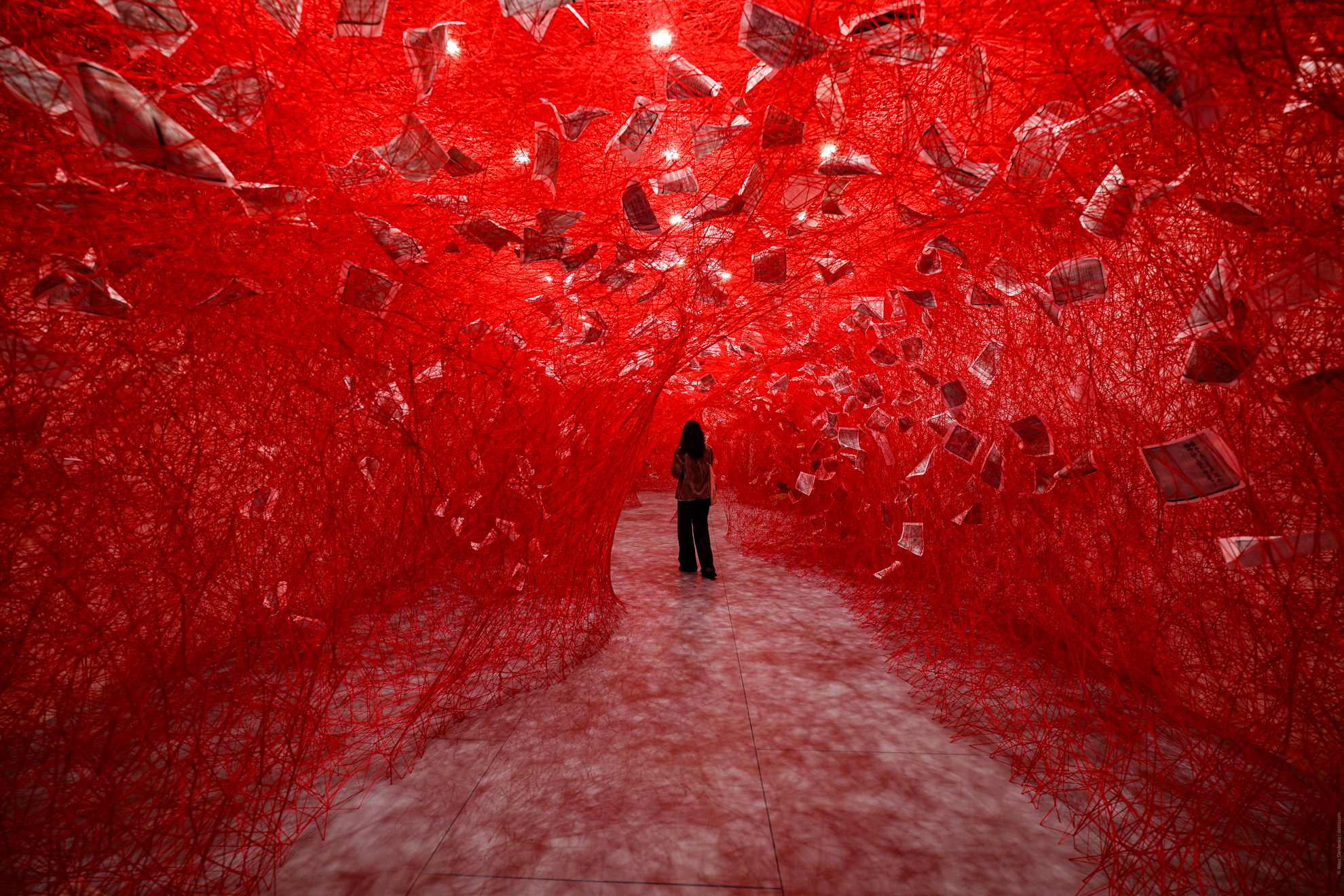
Installation view of “Two Home Countries” at Japan Society Gallery in New York, 2025. (Photo: Waso Danilenko)
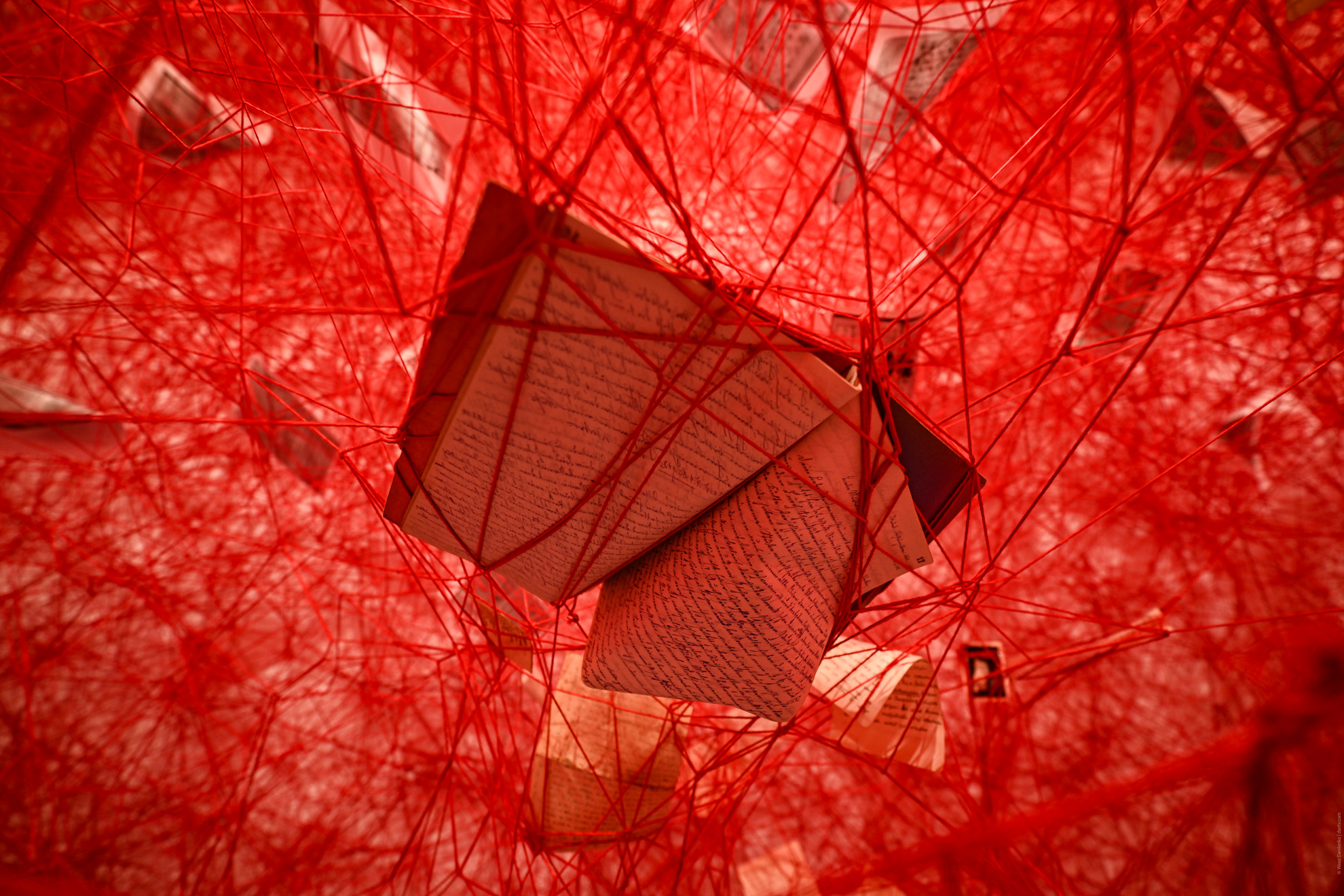
Installation view of “Two Home Countries” at Japan Society Gallery in New York, 2025. (Photo: Waso Danilenko)
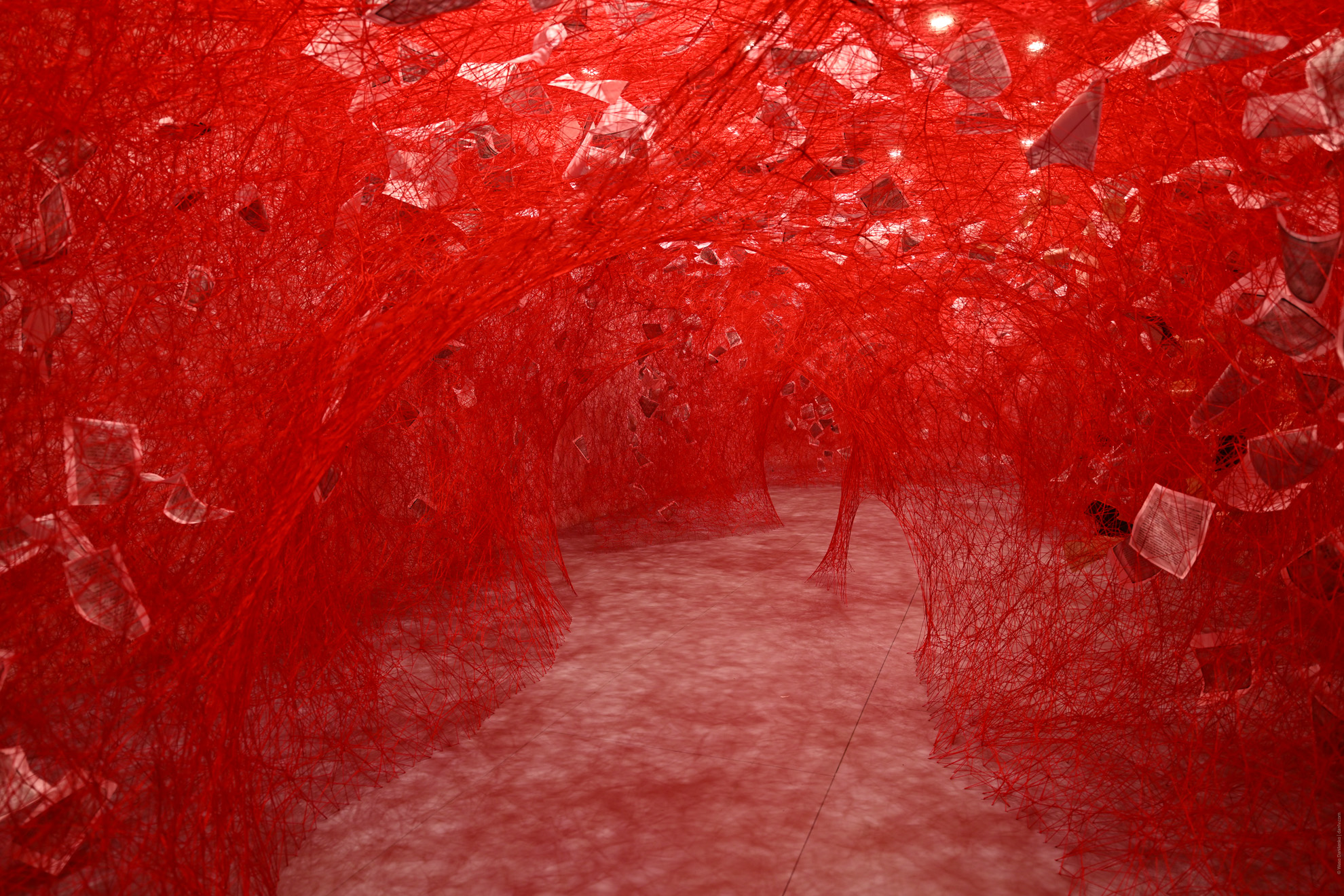
Installation view of “Two Home Countries” at Japan Society Gallery in New York, 2025. (Photo: Waso Danilenko)
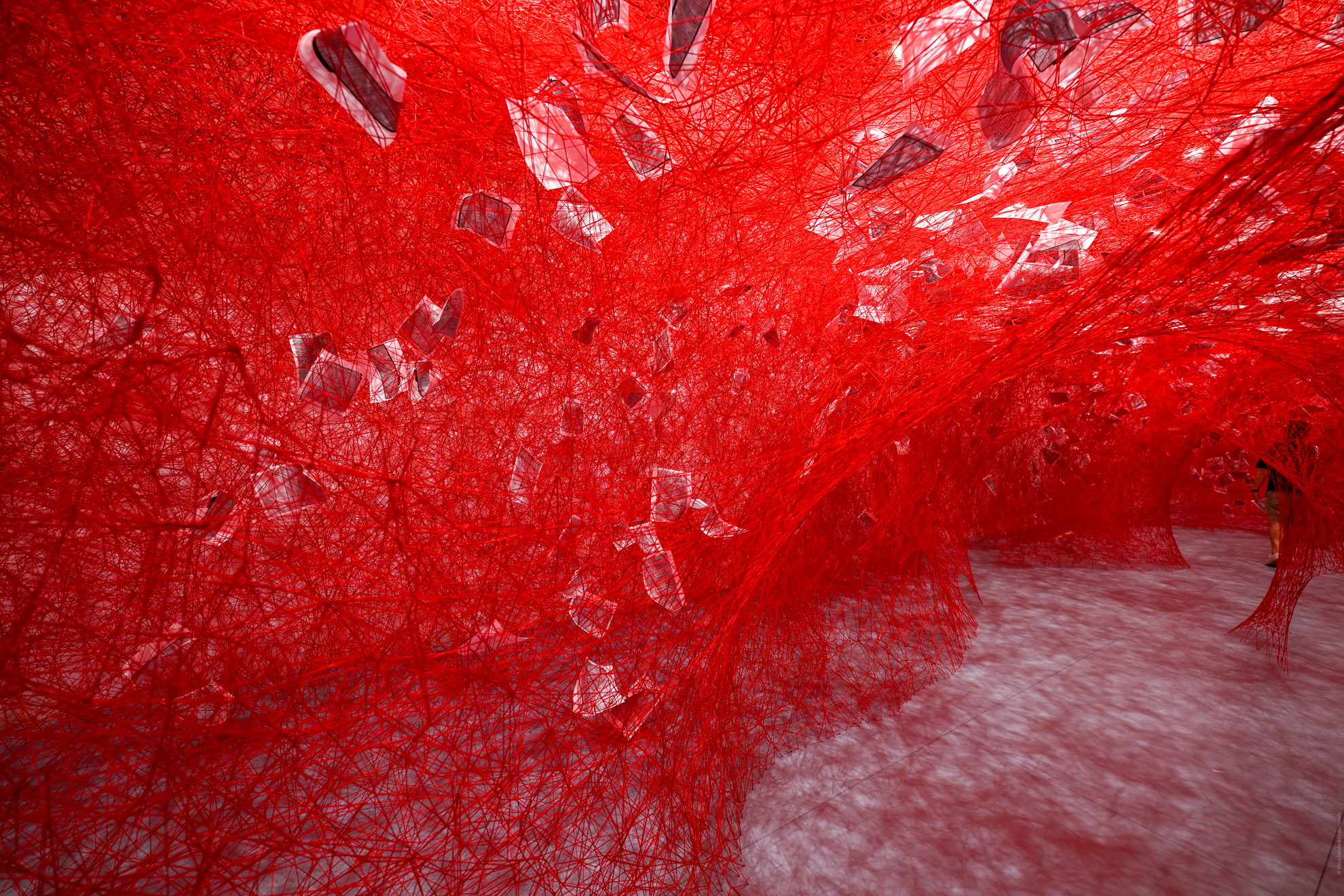
Installation view of “Two Home Countries” at Japan Society Gallery in New York, 2025. (Photo: Waso Danilenko)
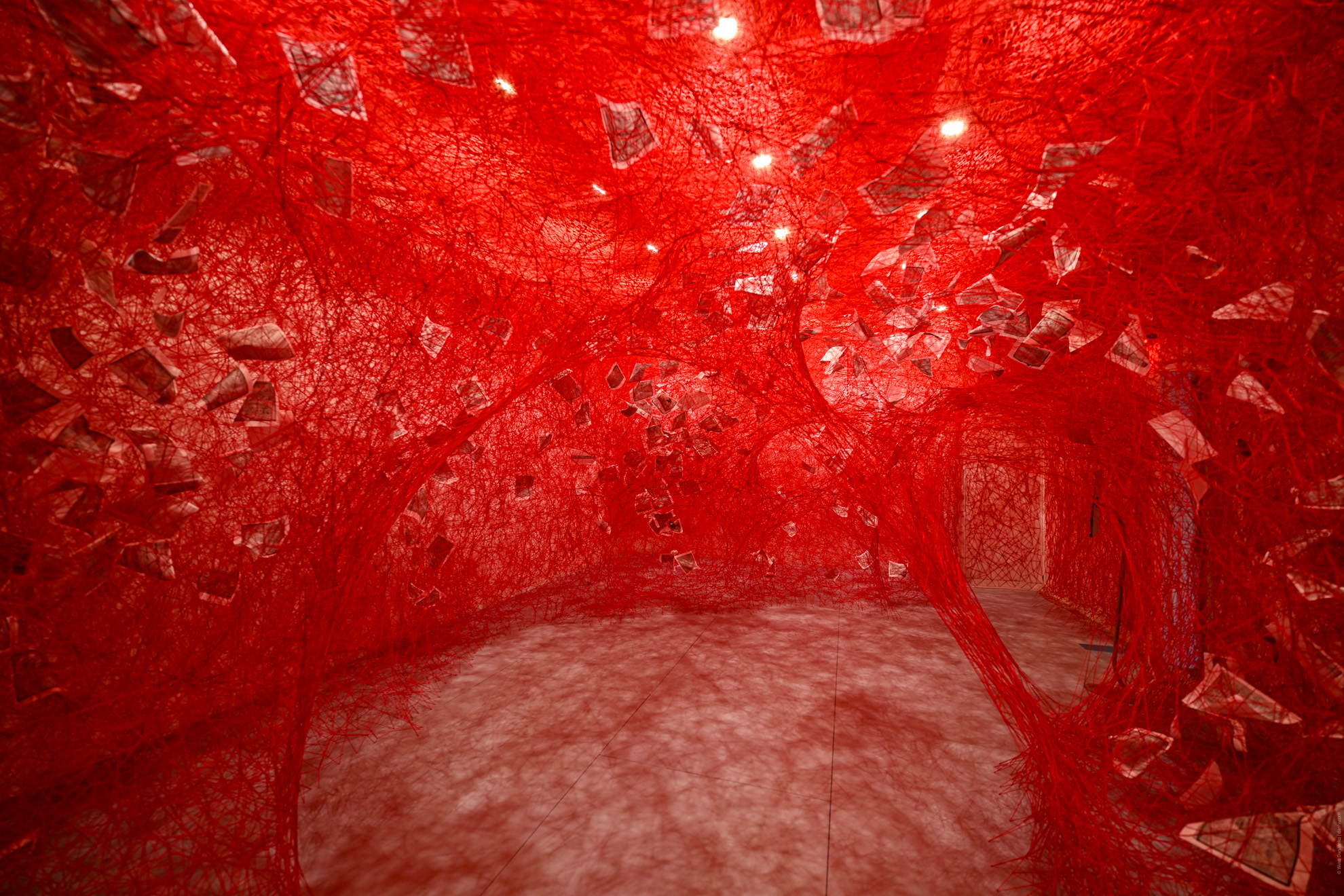
Installation view of “Two Home Countries” at Japan Society Gallery in New York, 2025. (Photo: Waso Danilenko)
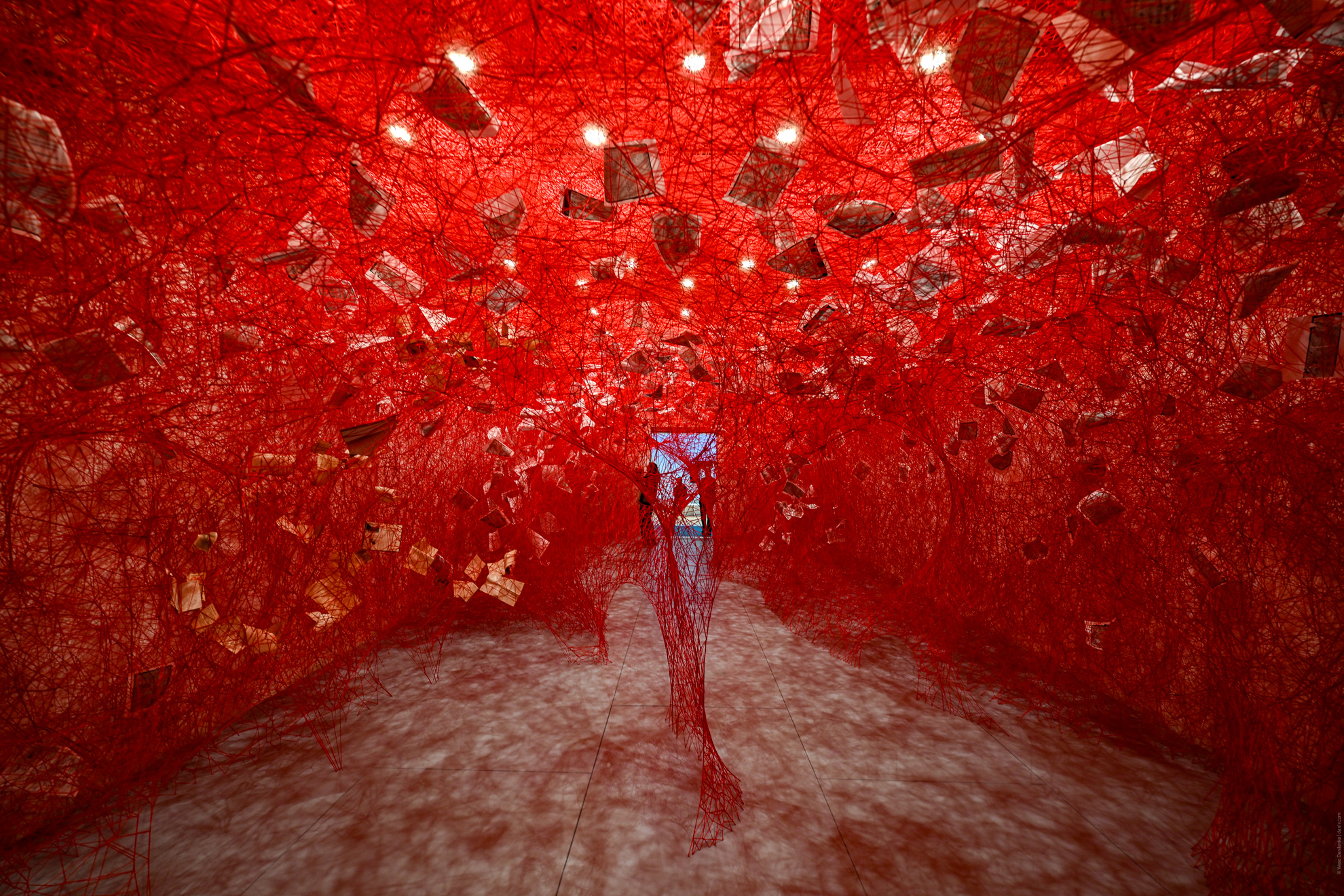
Installation view of “Two Home Countries” at Japan Society Gallery in New York, 2025. (Photo: Waso Danilenko)
Complete with ambitious installations, sculptures, video, and performance-based works, Two Home Countries offers a triumphant exploration of memory, history, and, above all, our humanity.
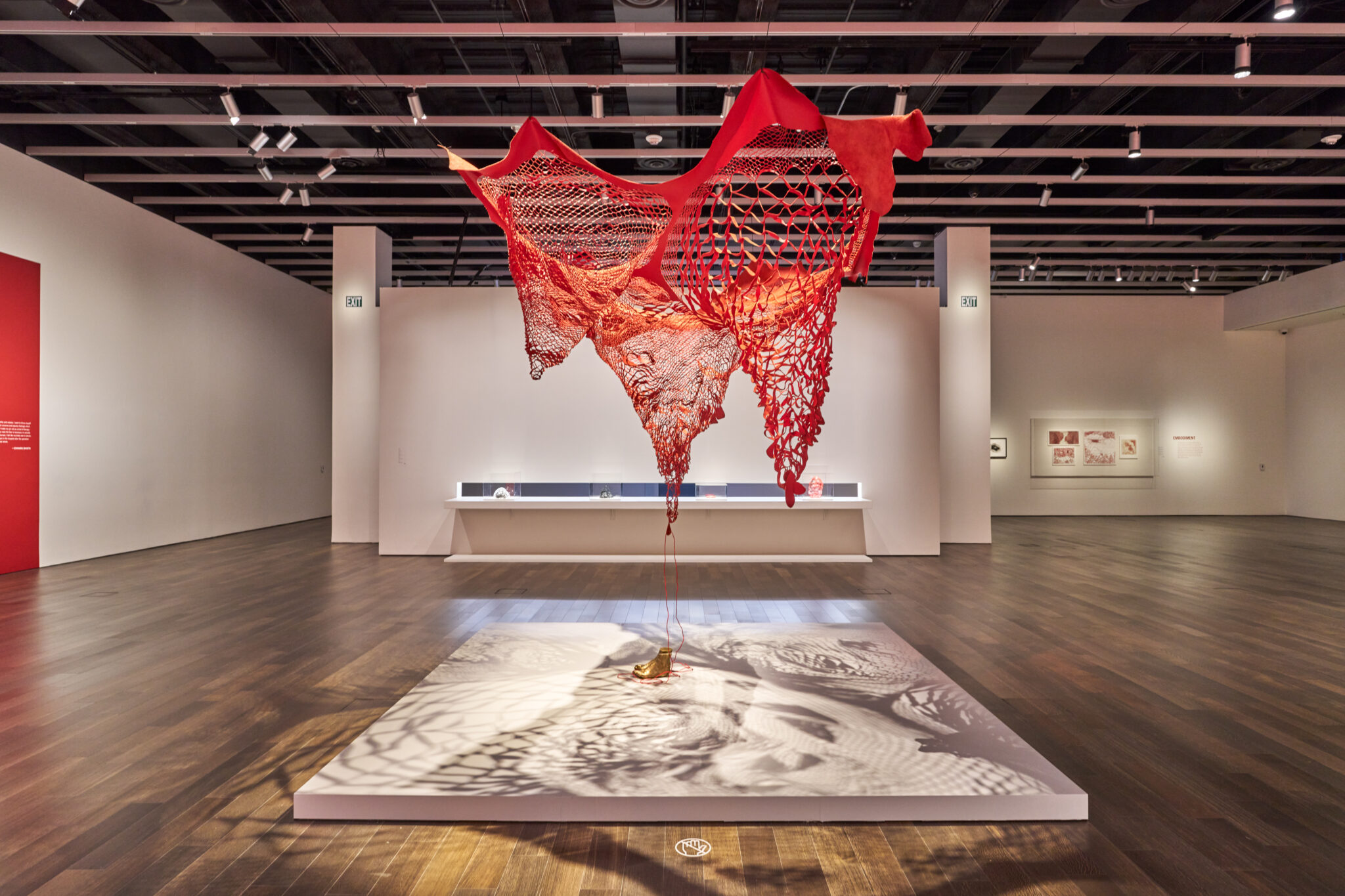
Installation view of “Two Home Countries” at the Asian Art Museum in San Francisco. (Photo: Kevin Candland)
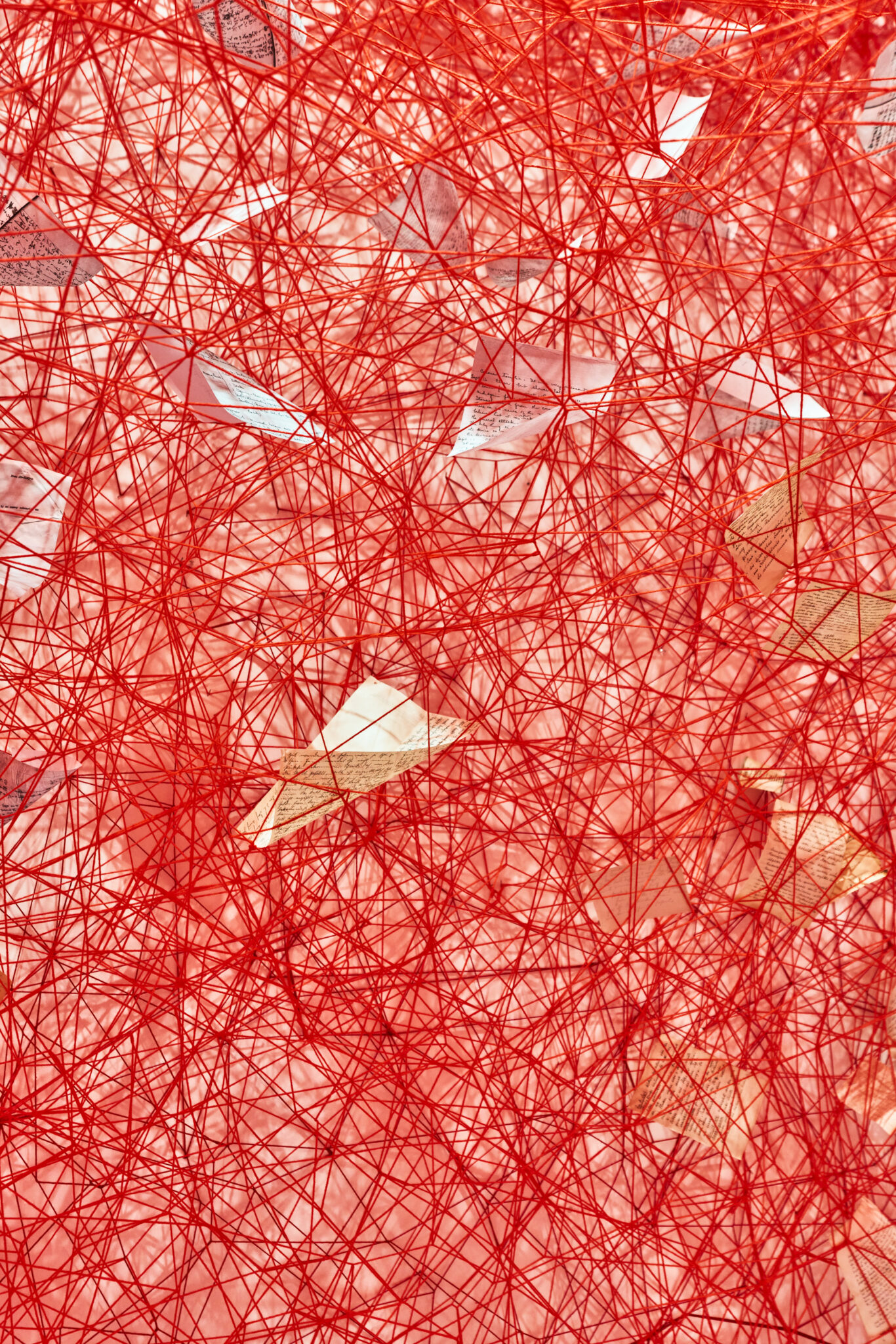
Installation view of “Two Home Countries” at the Asian Art Museum in San Francisco. (Photo: Kevin Candland)
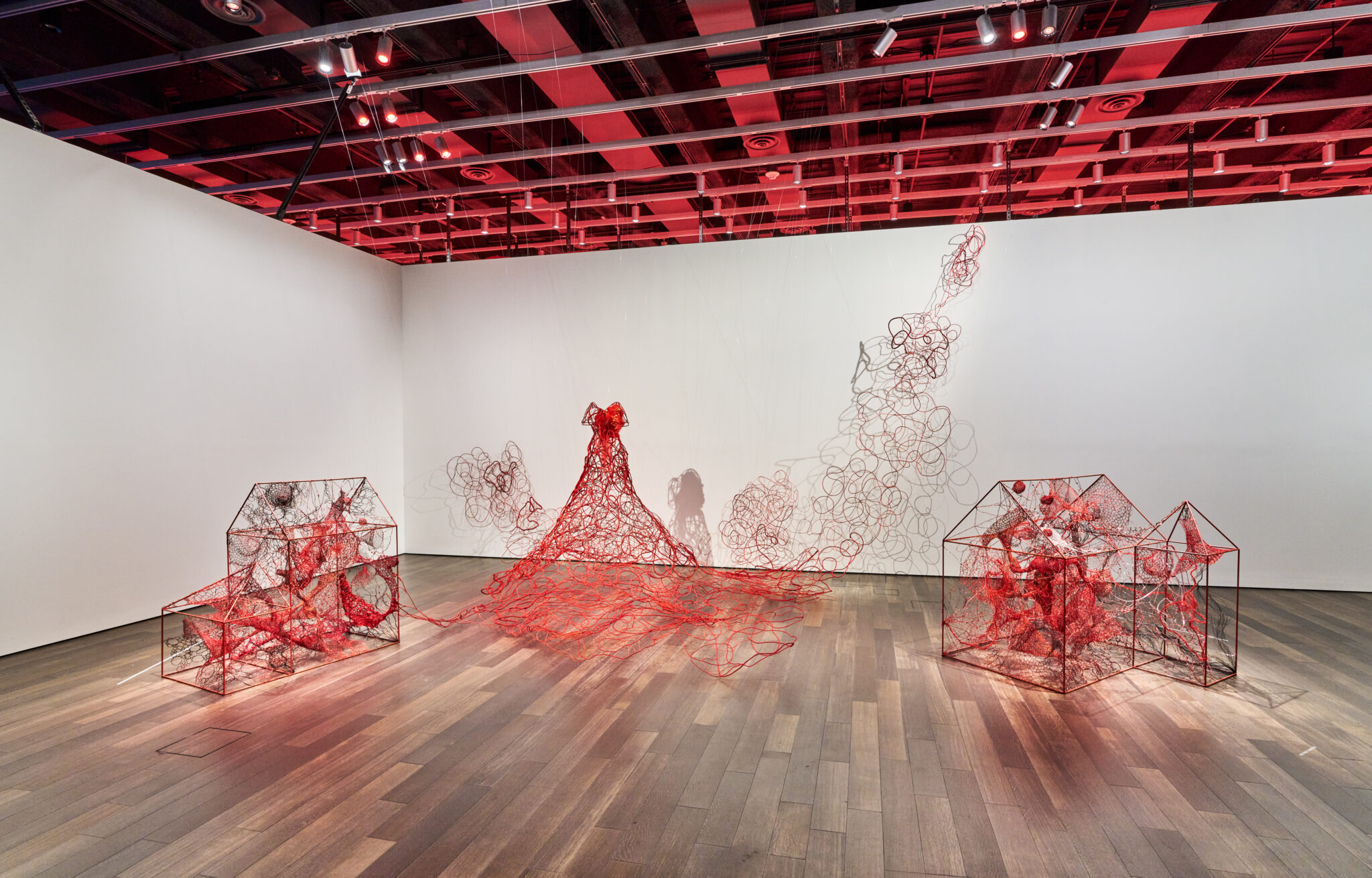
Installation view of “Two Home Countries” at the Asian Art Museum in San Francisco. (Photo: Kevin Candland)
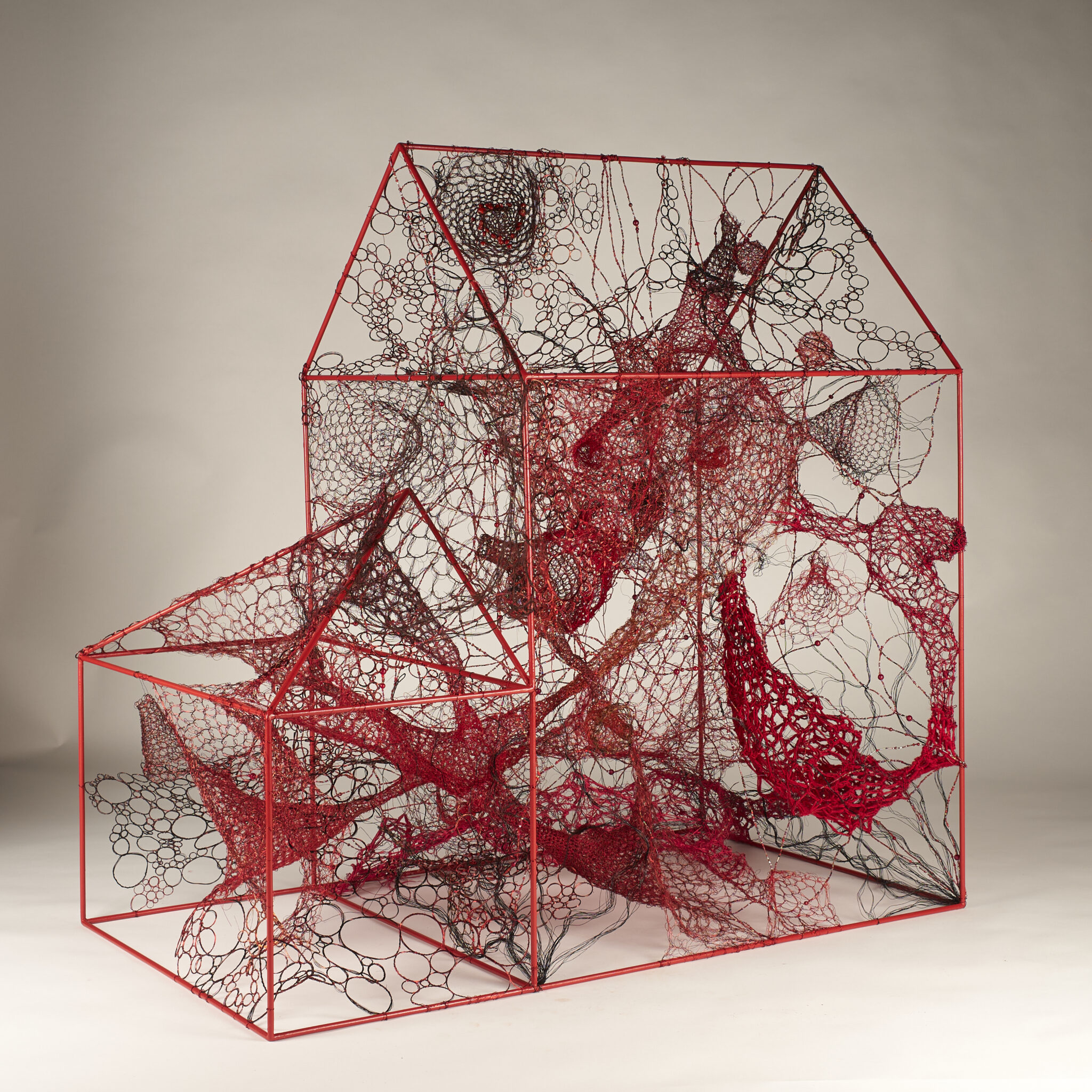
“Inner Home,” 2024. Metal frame, wire, and beads. (Photo: Sunhi Mang © ARS, New York, 2025 and the artist)
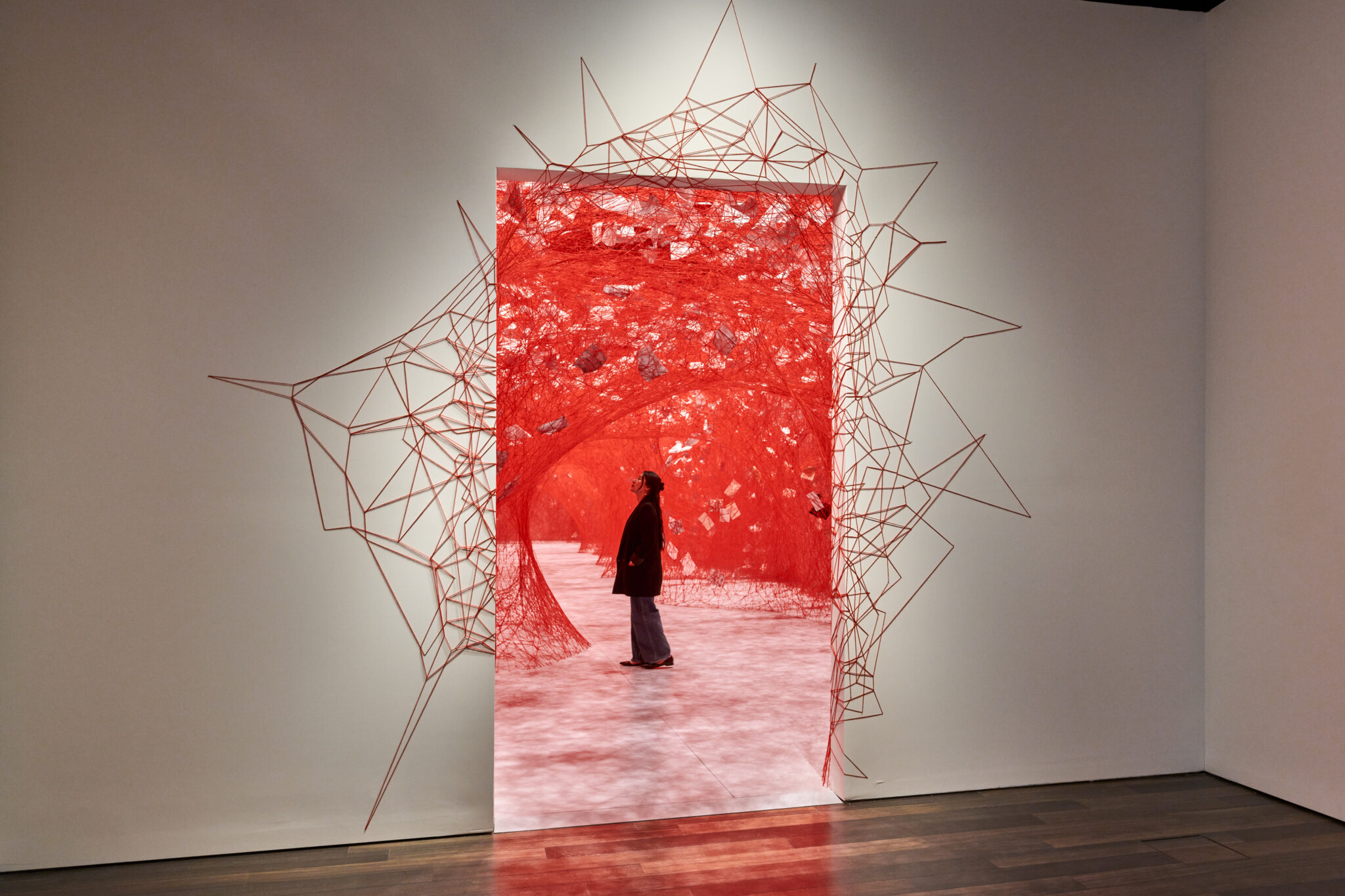
Installation view of “Two Home Countries” at the Asian Art Museum in San Francisco. (Photo: Kevin Candland)