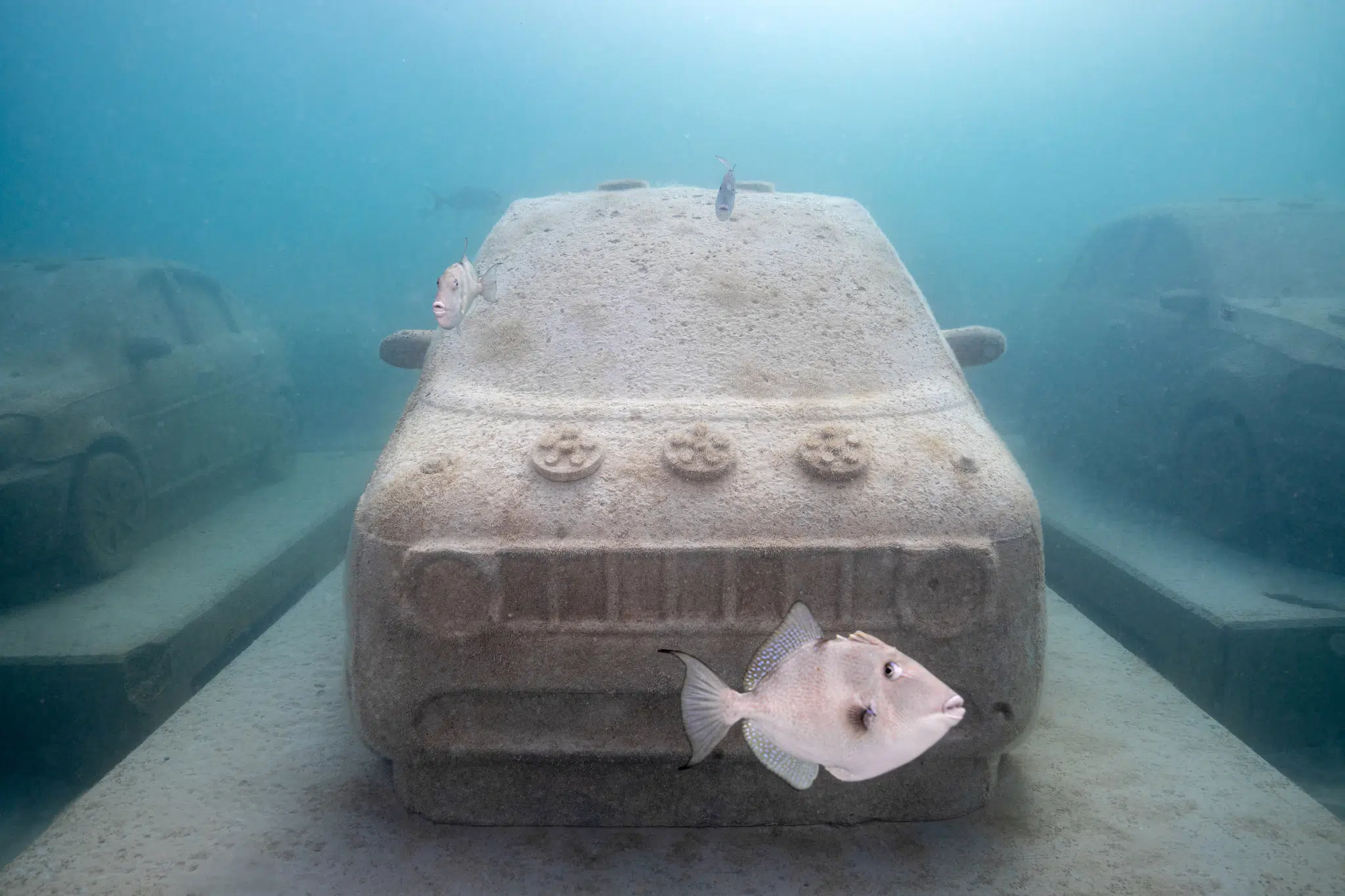
“Concrete Coral,” 2025, subaquatic installation featuring 22 concrete cars. (Photo: Nola Schoder)
Off the coast of Miami Beach, something unexpected has plunged into the ocean: a series of concrete cars. Created by conceptual artist Leandro Erlich, this aquatic traffic jam was unveiled earlier this month during Miami Art Week, and inaugurates the ReefLine, a new, 7-mile underwater sculpture park that merges ocean advocacy, site-specific art, and ecological restoration.
Aptly titled Concrete Coral, the installation consists of 22 life-size cars, each cast from marine-grade, pH-neutral concrete. This custom-engineered material actively promotes coral attachment, which, aside from sculptural innovation, is at the heart of the ReefLine’s mission. Founded by Argentinian curator Ximena Caminos in partnership with OMA / Shohei Shigematsu, the non-profit organization seeks to revitalize Florida’s coral population amid increased threats from climate change.
In that vein, Concrete Coral is not simply an artistic intervention. It will also provide critical underwater habitats for marine wildlife. As the work adapts to its environment, it will in turn accumulate coral and other aquatic plants, gradually being subsumed by the surrounding ecosystem. To ensure its long-term survival beneath the surface, the sculpture has been securely anchored to the seafloor and has been designed to withstand hurricane-strength wave conditions. The hoods of the cars have also been outfitted with Coral Lok, a system developed by ReefLine’s Miami Native Coral Lab that quickly secures coral fragments while minimizing stress. Once the seeded fragments begin to sprout, the cars will eventually boast a towering forest of octocorals.
That’s precisely why Erlich gravitated toward cars as the installation’s primary subject. On land, cars are a significant source of air pollution, with a typical passenger vehicle emitting about 4.6 metric tons of carbon dioxide per year. According to the 2025 State-of-the-Air report from the American Lung Association, more than 156 million people in the U.S. are exposed to unhealthy levels of air pollutants, much of which are contributed by cars and trucks. But, when submerged as part of the ReefLine, cars suddenly transform into symbols of regrowth, of environmental stewardship.
“The choice of cars is metaphorical: once carriers of pollution and speed, they now become vessels of regeneration. What once drove us away from nature becomes a stage for its return,” Erlich says of the project. “It’s not about transportation anymore; it’s about transformation. The car stands as a reminder of where we’ve been—and, once submerged, an invitation to imagine where we could go. In the end, art lives in interpretation; its magic lies in how it invites each of us to pause, reflect, and wonder.”
Colin Foord, ReefLine’s director of science, adds: “Visually, [the installation] will create the appearance of a forest overgrowing a traffic jam as nature reclaims it as its own.”
Aside from Concrete Coral, the ReefLine park will feature The Miami Reef Star by Carlos Betancourt and Alberto Latorre, which gathers 46 3D-printed stars of varying shapes and sizes. Inspired by the migration of starfish, the sculpture embodies what Betancourt and Latorre describe as the “symbiotic relationship between the ocean, land, and cosmos.”
“Nature and the environment have been part of many of our collaborative artworks,” the pair told My Modern Met in an interview last year. “We both grew up in the Caribbean, in Puerto Rico, where living and connecting with nature is a daily experience. Nature inspires constantly, and being surrounded by it is pure magic. We can't imagine not protecting it.”
The Miami Reef Star will be installed in 2026, alongside Petroc Sesti’s Heart of Okeanos, resembling a blue whale’s heart. To learn more about Concrete Coral and the artist, visit Leandro Erlich’s website. More information about the ReefLine and its upcoming installations can be found on the organization’s website.
During Miami Art Week earlier this month, artist Leandro Erlich installed Concrete Coral off the coast of Miami Beach.
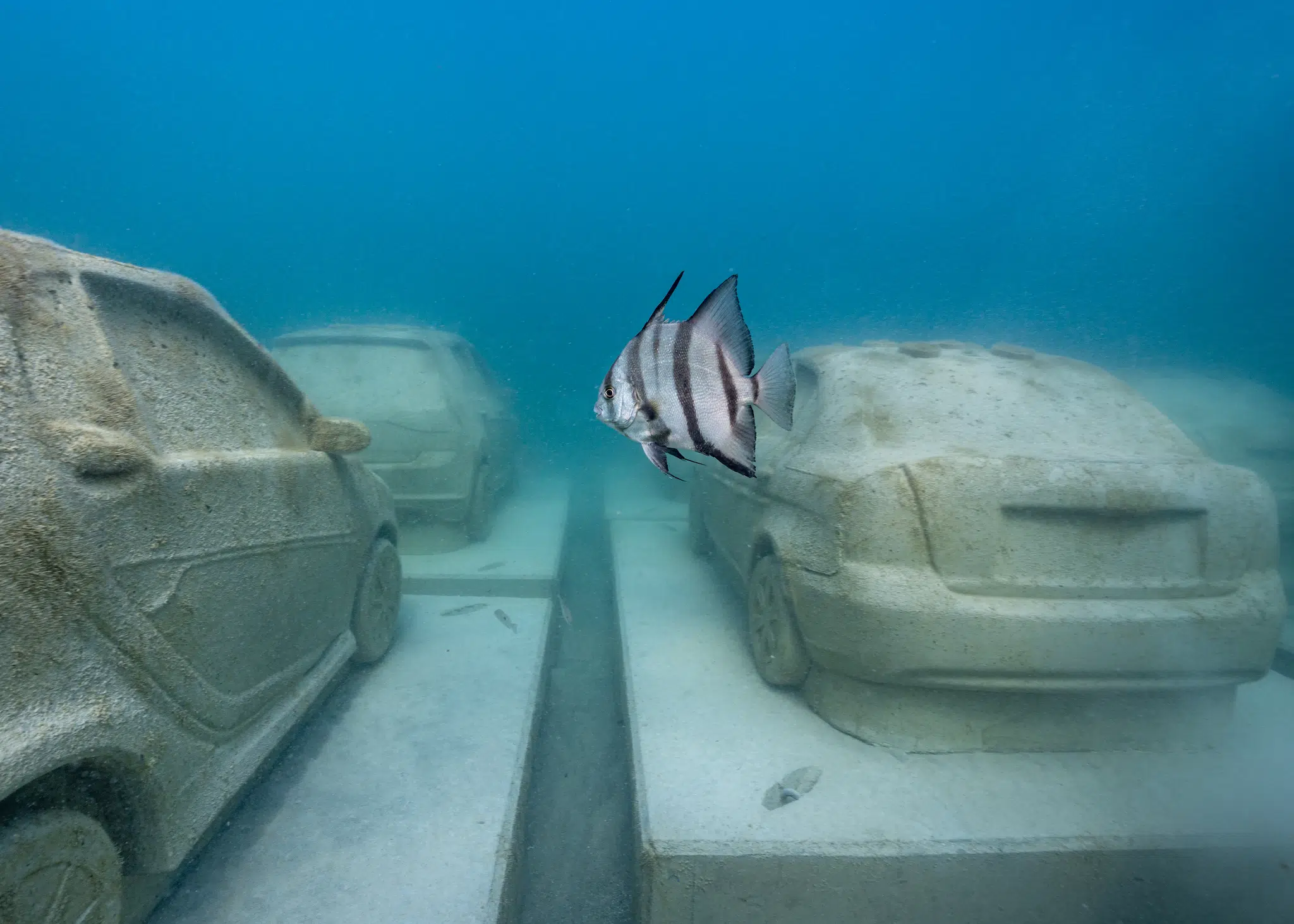
Photo: Nola Schoder
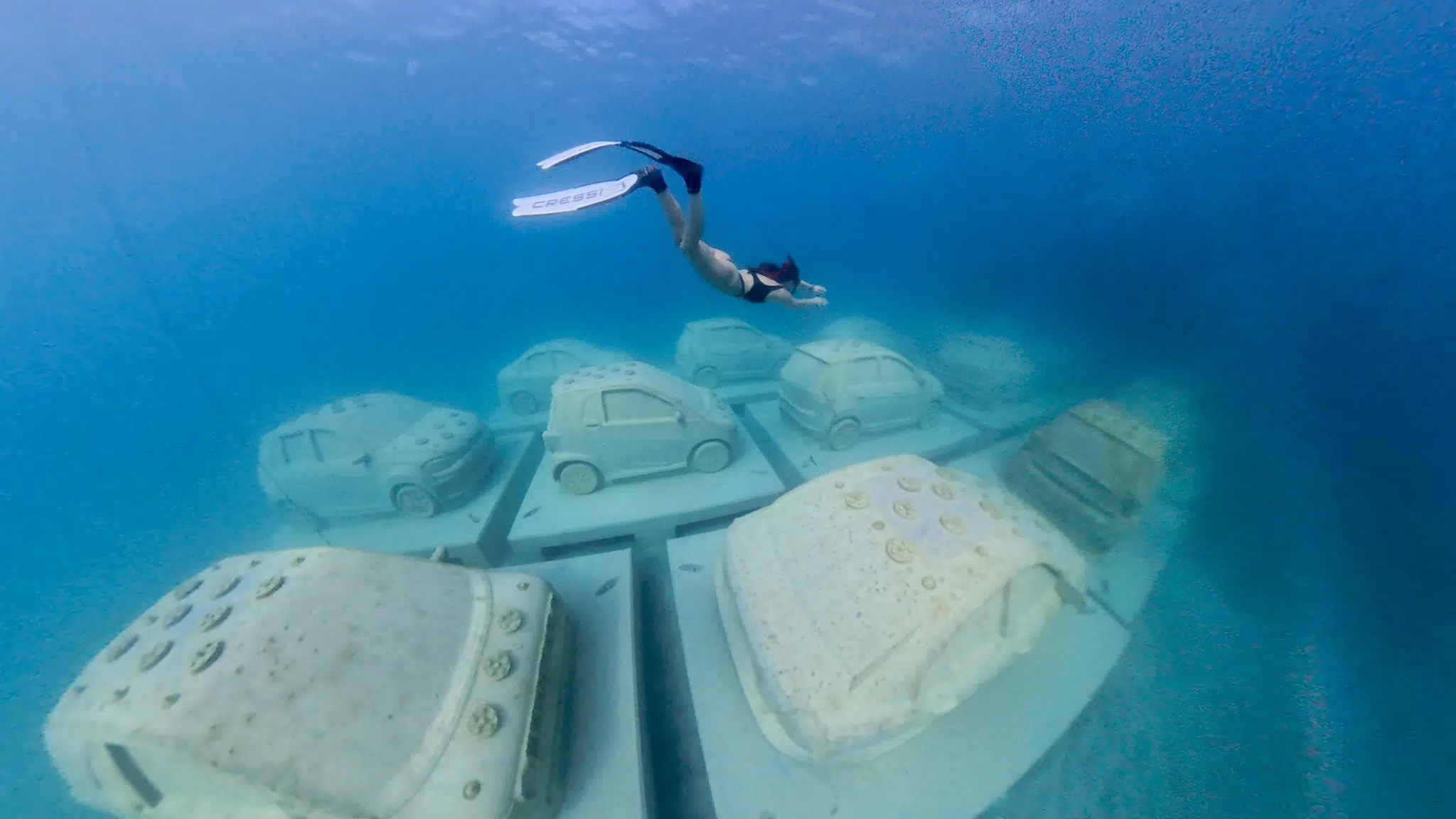
Photo: Brittany Weber
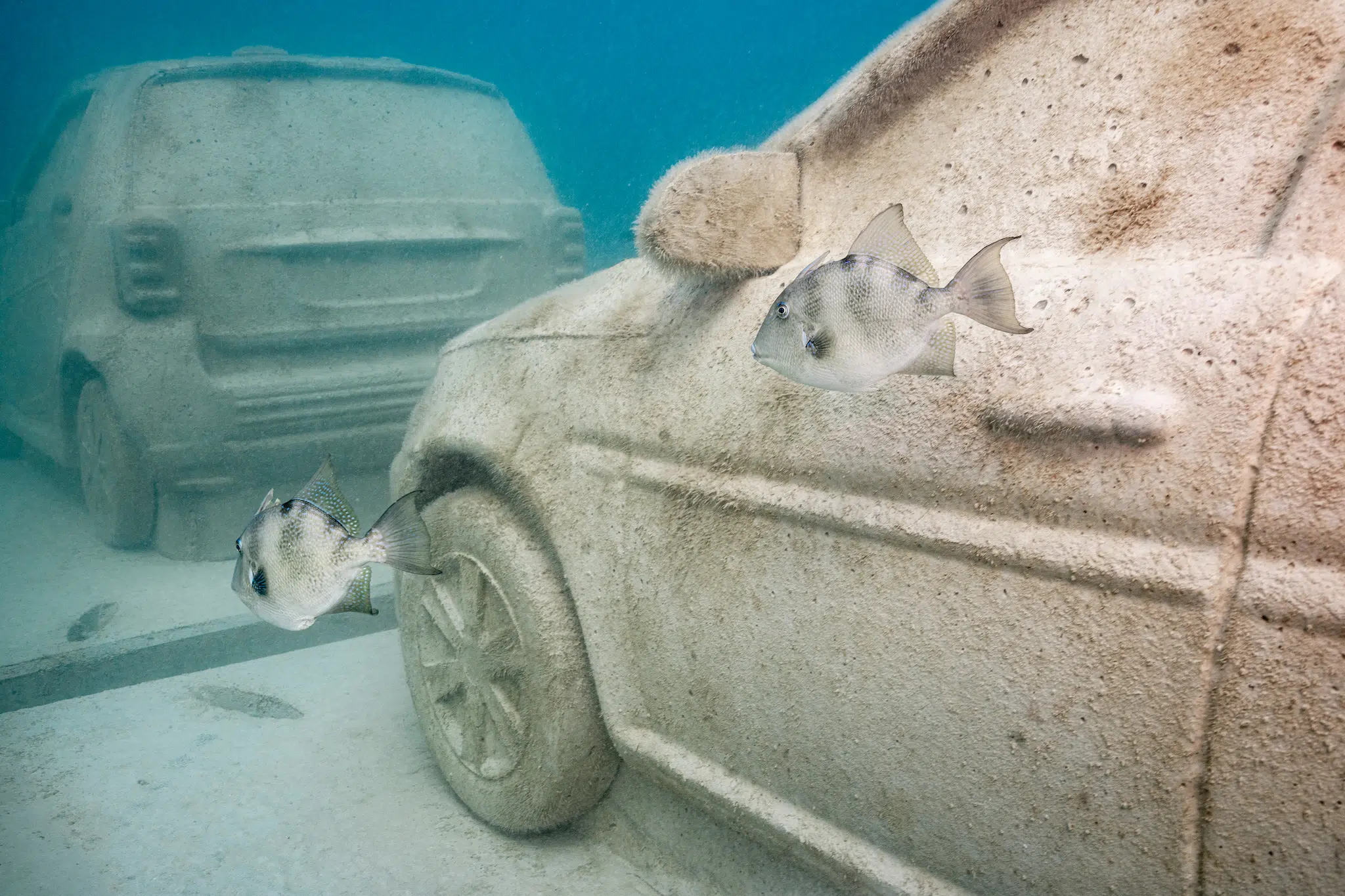
Photo: Nola Schoder
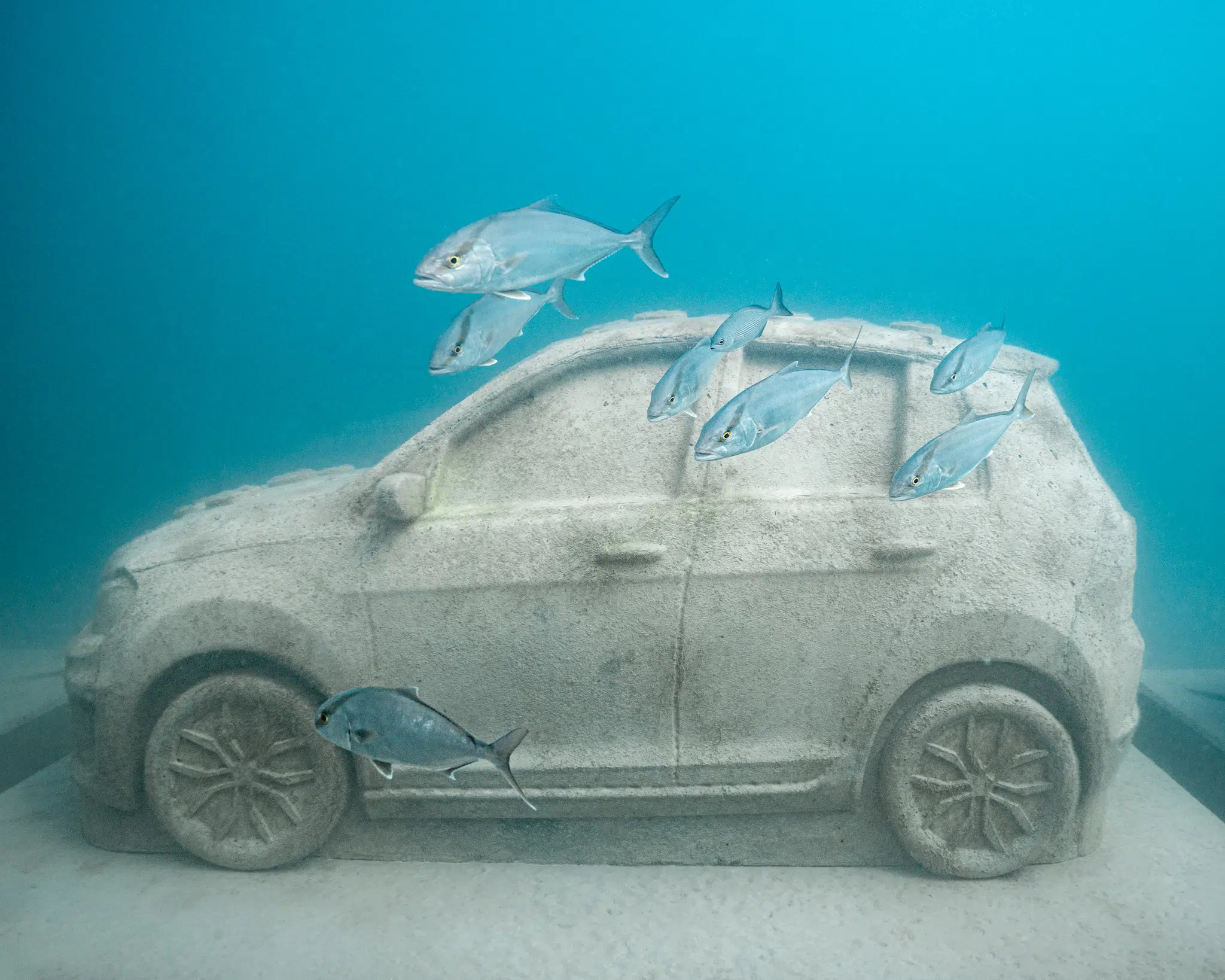
Photo: Nola Schoder
As part of the ReefLine underwater sculpture park, Concrete Coral aims to promote coral growth, while also providing critical underwater habitats for marine wildlife.
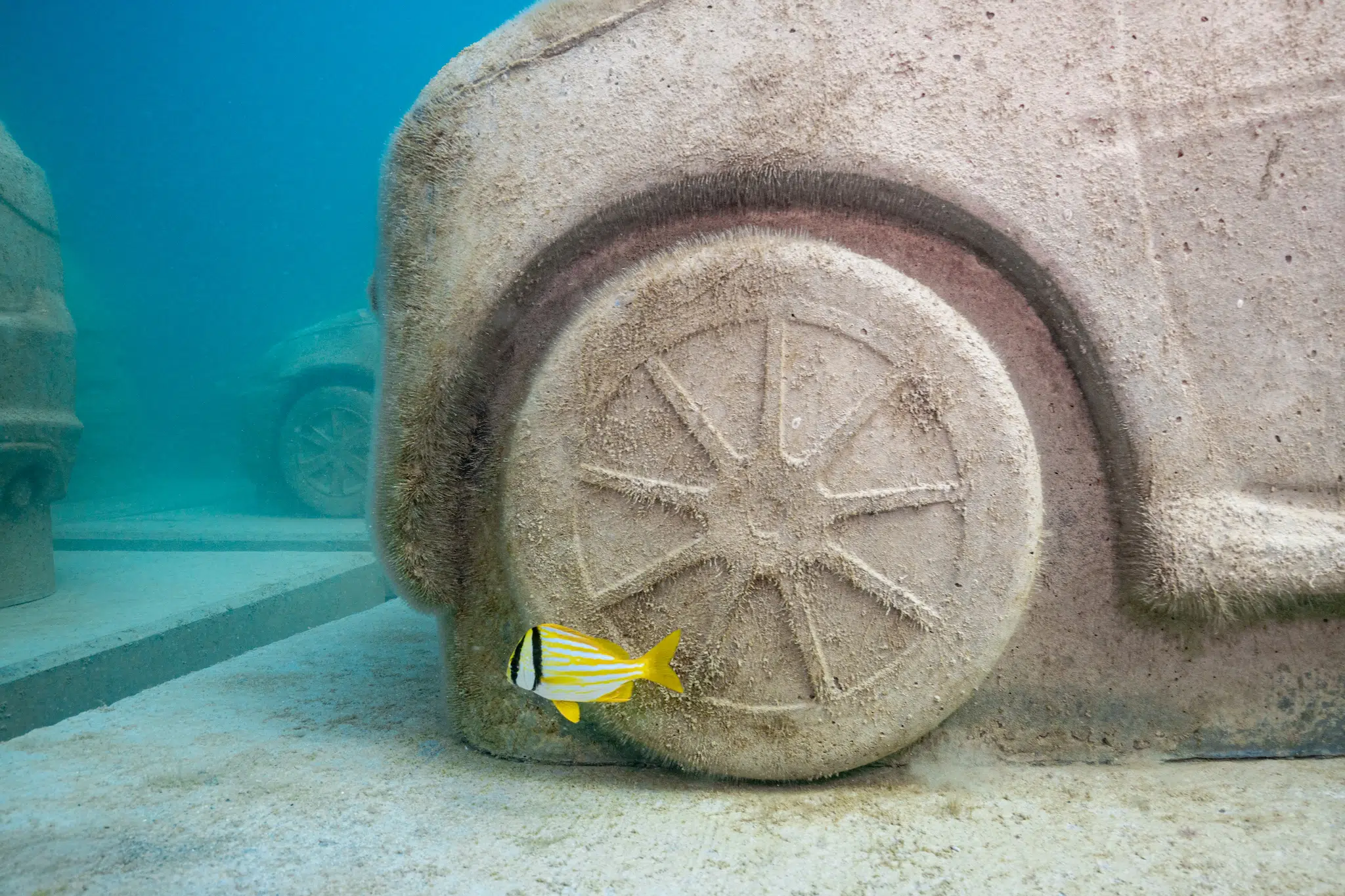
Photo: Nola Schoder
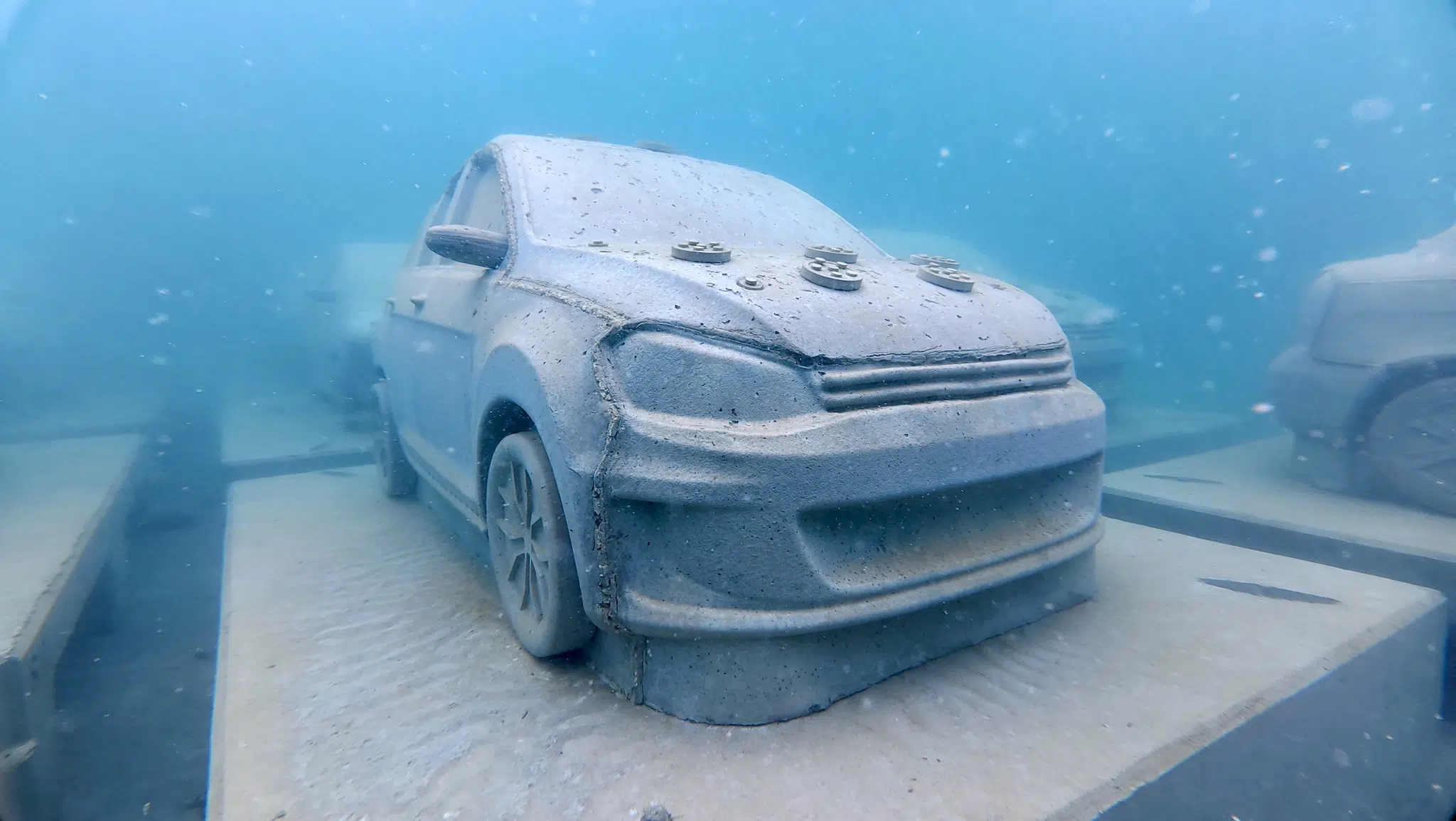
Photo: Christopher Uriarte
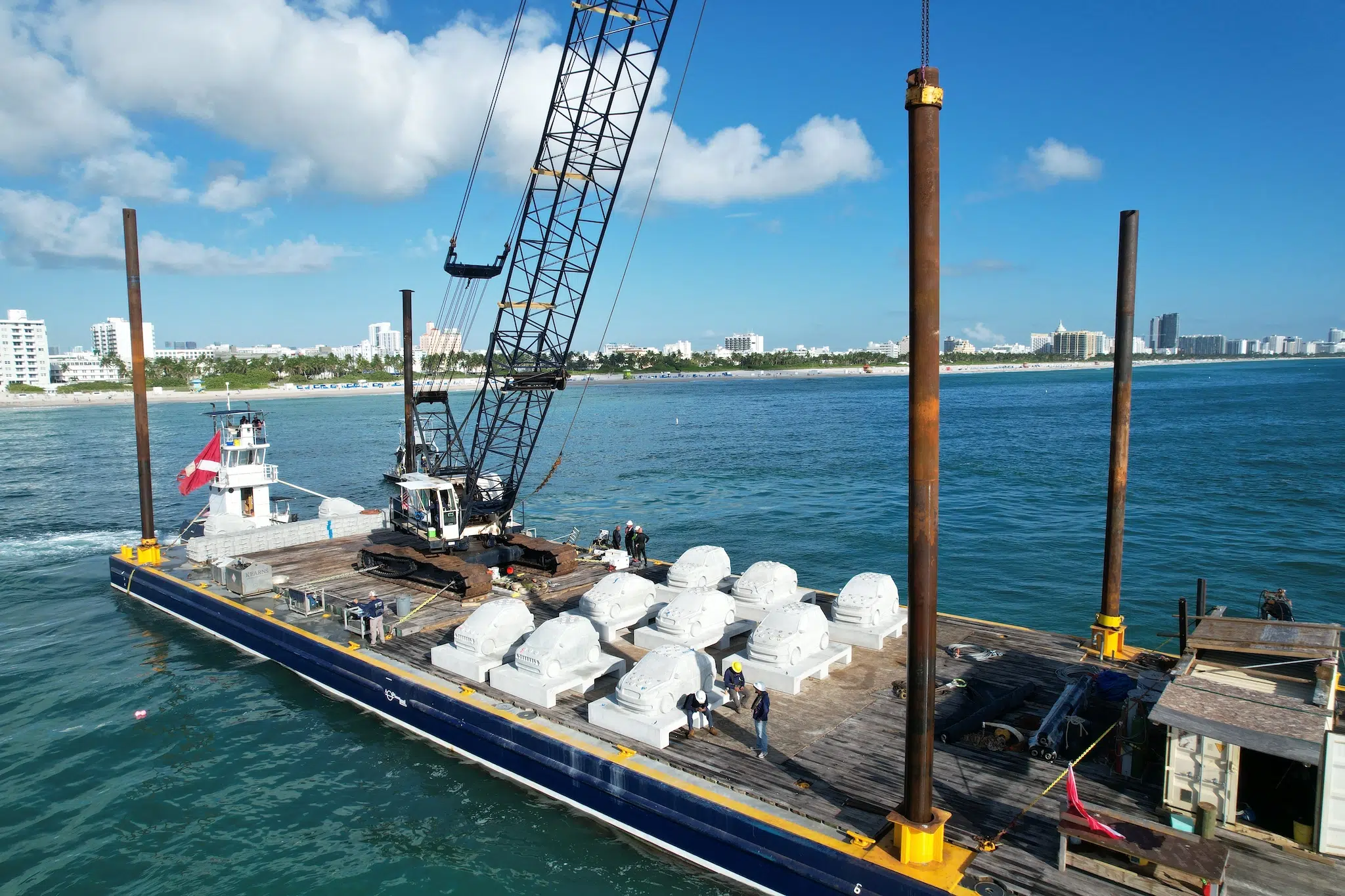
Photo: Nico Munley
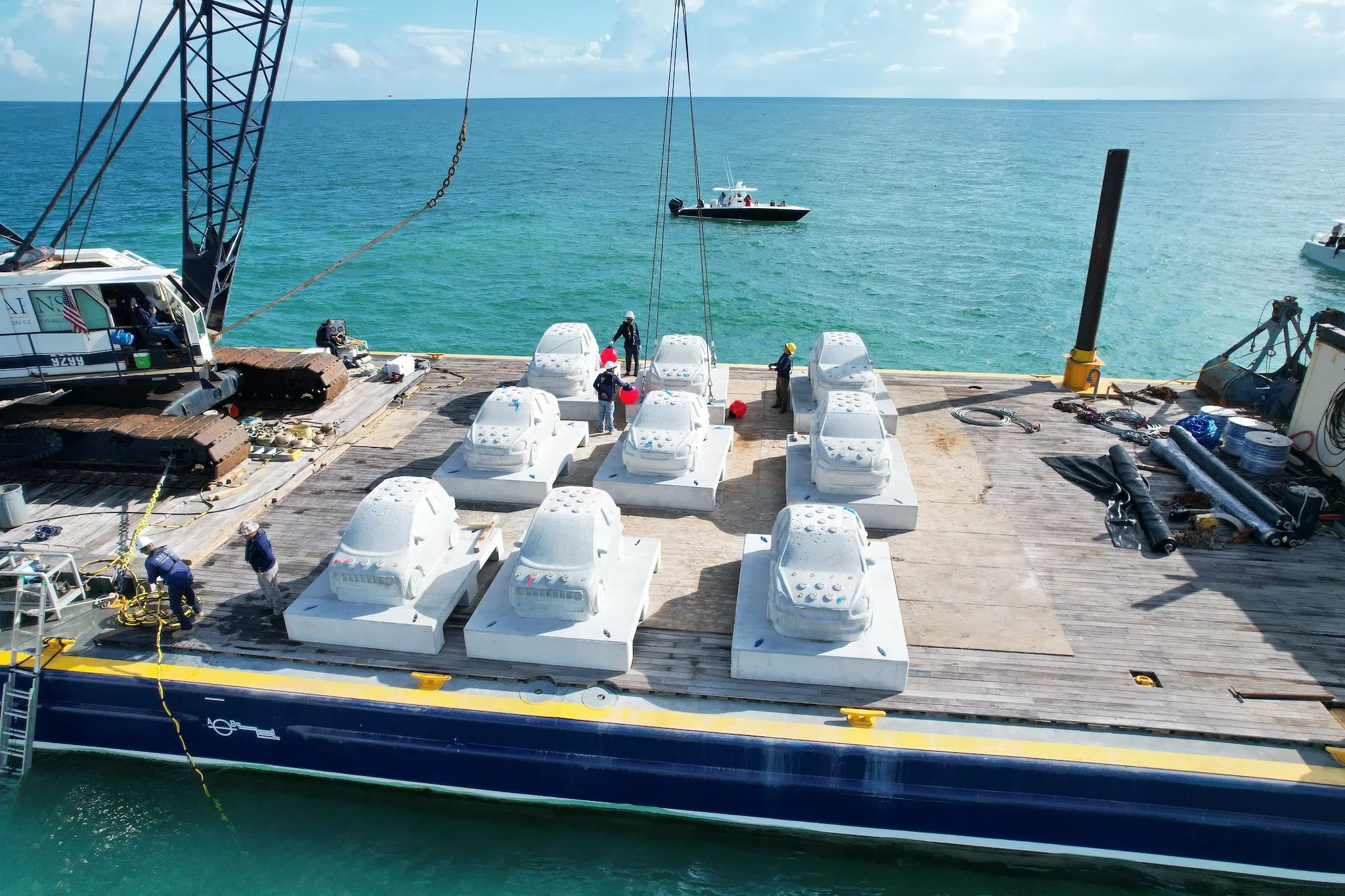
Photo: Nico Munley
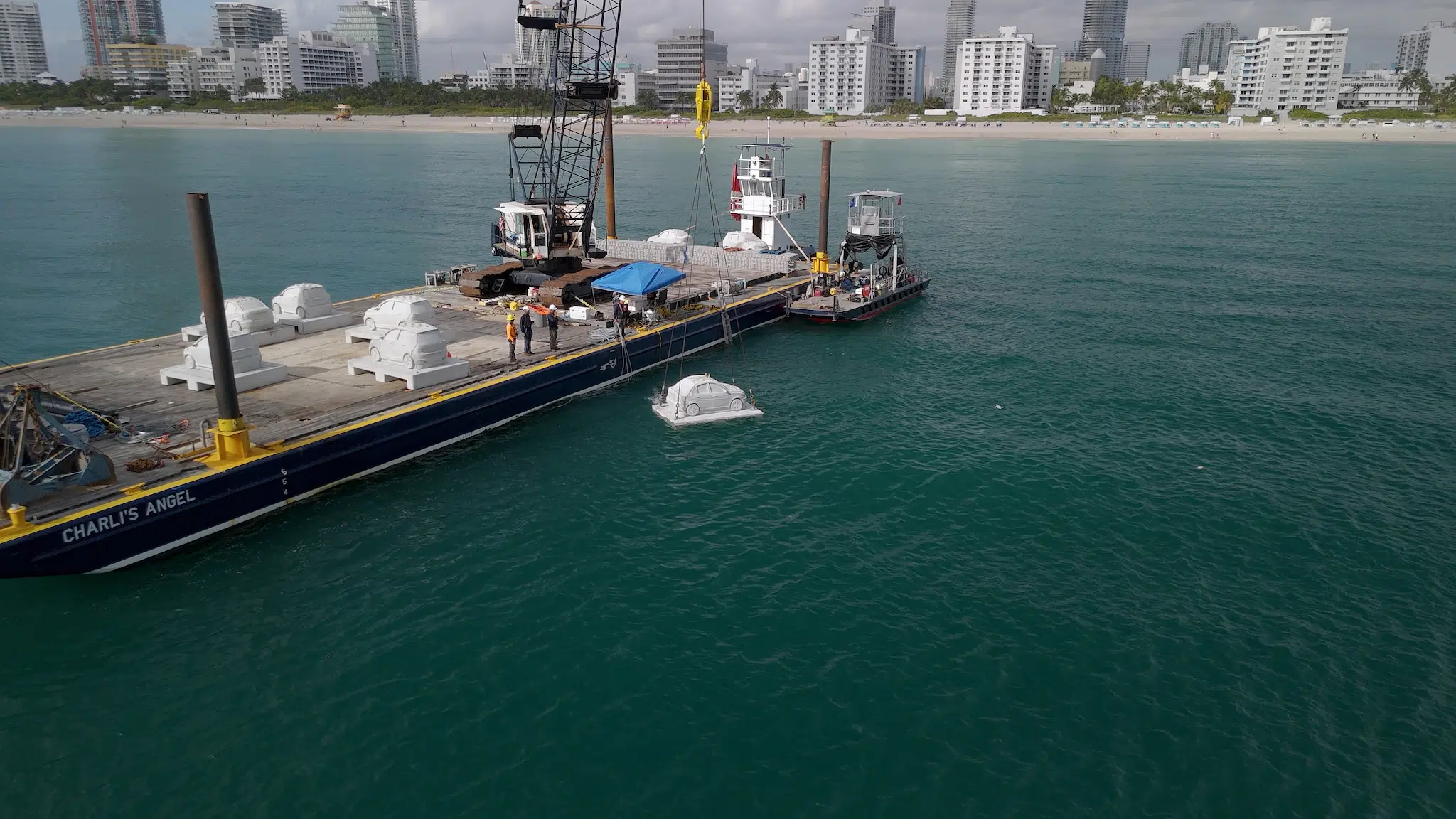
Photo: David Chavez