Photo: SIU Carbondale Communications
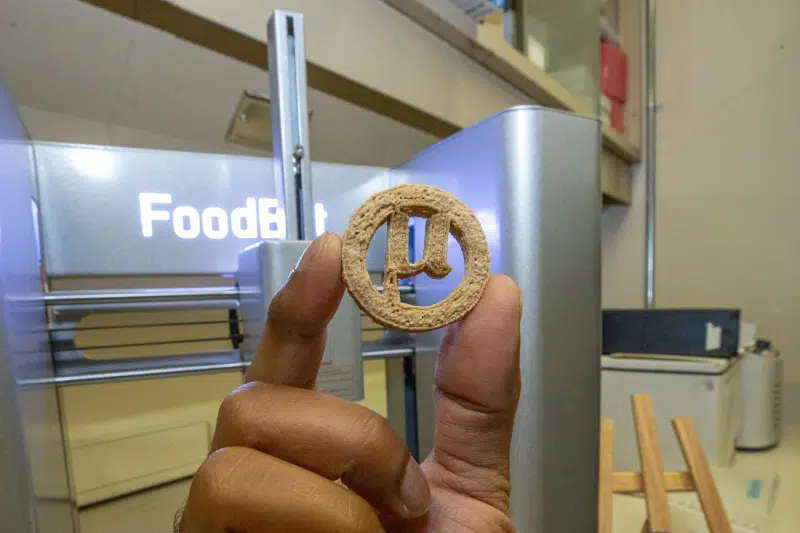
Plastic pollution and food insecurity are two of the biggest issues humankind will have to deal with in the coming decades. Worried about the outlook, a team of researchers at Southern Illinois University (SIU) Carbondale have gotten to work on a novel solution that can begin to tackle these two problems simultaneously. The scientists have turned plastic bottles into protein-rich, perfectly edible cookies.
To achieve this, the researchers turned to microbes; particularly, to programmed yeasts. These small organisms can turn plastic and agricultural waste into edible proteins, vitamins, and flavoring molecules. “We were trying to develop technologies for plastic upcycling to make more valuable products,” explains Associate Professor Lahiru Jayakody. “We thought, why not focus on making food? Because plastic is carbon and food is carbon … Microbes are very clever. So, we are using their traits to solve the problems we created.”
The plastic used on this project is polyethylene terephthalate (PET), one of the most common forms of plastic as it is used in soda and water bottles. Since it contains a lot of carbon, the team thought it could be reconstructed into something like a protein using a simple and environmentally friendly process rather than performing chemical reactions in a lab.
The PET plastic is mixed with discarded corn plant stalks and leaves, as well as other biomass and put through a process known as oxidative hydrothermal dissolution. This breaks down the material to microbe-accessible pieces using water and oxygen at high temperatures and pressure. After being fed to the programmed yeasts, new ingredients, including proteins, fats, and acids are created. To round out the process, the scientists add fiber, starch, and sweetener to the mix, which is then molded using a 3D printer.
The resulting product, known as µBites (pronounced “microbites”) are technically safe to eat, but they need institutional approval to carry out taste tests. So far, study participants have had a positive reaction to their aroma, and have said they would be willing to eat them in a situation where food is scarce.
That’s why the team’s next target is to make them more appealing in less extreme environments. For this, Jayakody worked with graduate student Sandhya Jayasekara to create yeasts that can produce more food additives like a vanilla flavoring created using baker’s yeast from plant biomass. Since this whole experiment was conducted as part of a project led by NASA, it could also become an option for deep-space exploration.
While these µBites may not be available to the public for several years, they shine a light on the scientific community’s race against time to prevent and fix environmental catastrophes. “Global food demand is expected to rise 35–56% by the year 2050, and about 30% of the world population will be at risk of hunger in the future,” Jayasekara explains. “The way to address that, I believe, is by using microbes.”
Sources: This cookie started its life as a plastic bottle
Related Articles:
Researchers in Japan Create Pumpkin Peel Film Better at Keeping Food Fresh Than Plastic Packaging
High Schooler Develops an Affordable Way To Filter Microplastics From Drinking Water
6-Year-Old Boy Saves Over 2,500 Plastic Tubs From Ending up in Landfills