According to the Food and Agriculture Organization of the United Nations, 30% to 40% of total food production is lost or wasted, with a significant portion being food loss during early stages like storage and transport before reaching retail markets. These losses can be as high as 40-50% for root crops, fruits, and vegetables. While plastics are often used to provide protection, this solution comes with a heavy environmental cost.
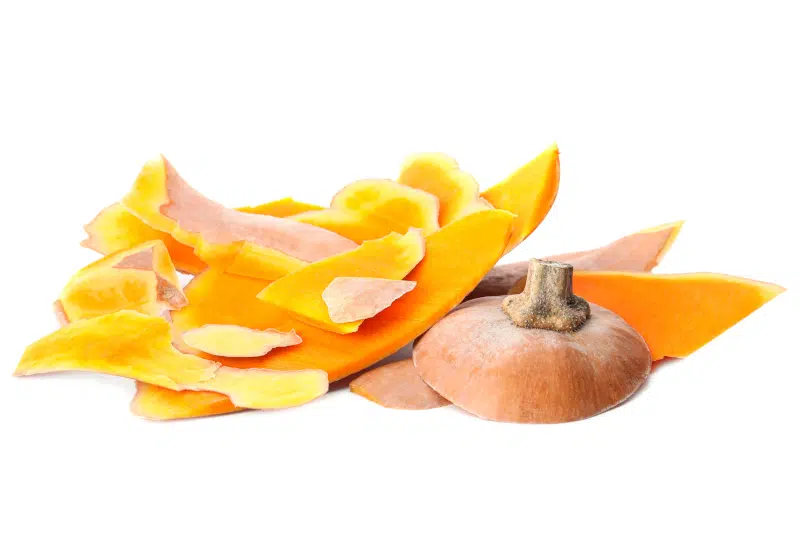
Now, researchers at Kyushu University in Fukuoka, Japan, have developed a new food preservation solution from a natural source. The team has synthesized a nanomaterial for food packaging using pumpkin peel as its raw material. The resulting product slowed the deterioration of fruit and other produce while reducing transport damage, as reported in the journal Food Research International. The pumpkin peel makes up roughly 10% of the fruit’s weight and is normally discarded.
“Our lab has long focused on extending the shelf life of agricultural produce while reducing reliance on petroleum-based plastics,” Fumihiko Tanaka, professor at Kyushu University’s Faculty of Agriculture, told the Kyushu University communications team. “Actually, this project began with the idea from a student of ours from Southeast Asia. Cold-chain logistics across much of Asia are still underdeveloped, so we hope our technology, which preserves food at ambient temperature, could help in places where that infrastructure is lacking.”
The peel used by the team was heated under high pressure, cooled, and freeze-dried to produce carbon quantum dots (CQDs), a fine black powder with antimicrobial and UV-blocking properties. Later, this element was mixed with carboxymethyl cellulose and gelatin to form a composite film that was resistant to vibration and impact during transport, and prevents spoilage from loss of moisture.
“Conventional antimicrobial packaging typically relies on metal nanoparticles like zinc oxide or silver, which carry a larger environmental footprint than CQDs,” notes associate professor Fumina Tanaka. “Ours are derived from organic matter and show good biocompatibility at effective concentrations, something critical for any food contact material.”
The scientists tested their creation with packaged cherry tomatoes, which are highly perishable, and compared it against both unpackaged and plastic-wrapped controls. They found that the pumpkin peel-based film suppressed microbial growth and slowed both weight loss and softening, doing a much better job at preserving freshness than the alternatives. The researchers add that the material can either be applied as a packaging film or sprayed directly onto produce, which would allow for partial covering of vulnerable spots, potentially reducing both excess packaging and costs.
“Beyond the environmental benefits, I’d also love for this material to bring a bit of fun to food packaging,” adds the associate professor. “Under UV light, the carbon dots fluoresce, and the color shifts with particle size. If we could eventually find a way to render text or illustrations with it, that would be pretty exciting too.”
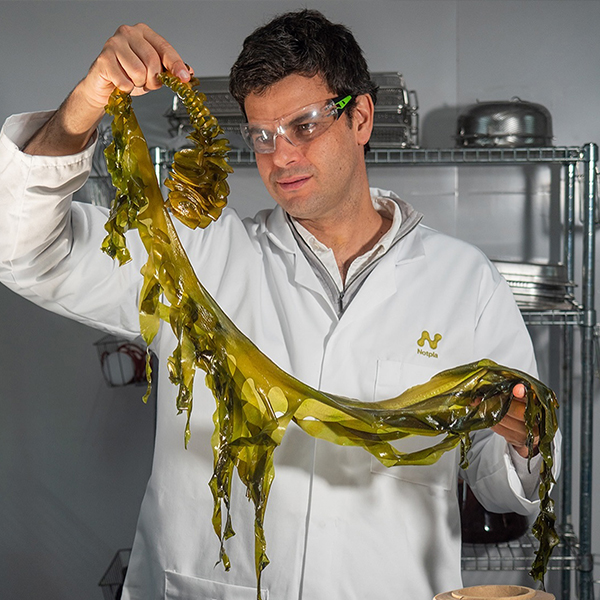
Researchers at Kyushu University in Fukuoka, Japan, have developed a new food preservation solution made of pumpkin peel.
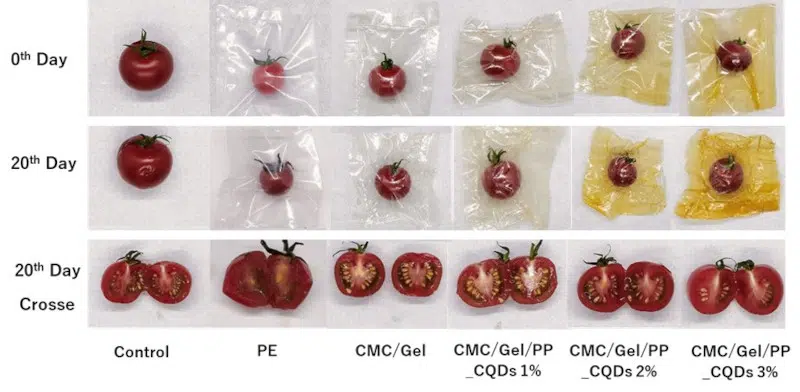
Cherry tomatoes packaged in different films over a 20-day storage trial. Films containing carbon quantum dots (CQDs) suppressed microbial growth and slowed weight loss and softening, preserving freshness significantly better than unpackaged or conventionally packaged controls. (Photo: Fumihiko Tanaka / Kyushu University, CC BY 4.0)
Sources: Wasted pumpkin peel can keep your food fresh; Development of active food packaging using carboxymethyl cellulose/gelatin composites reinforced with carbon quantum dots derived from pumpkin peel waste; Seeking end to loss and waste of food along production chain
Related Articles:
France Is the First Country in the World To Ban Supermarkets From Wasting Food
Research Reveals That Ancient Romans Liked to Eat Fast Food Just Like We Do
New Study Suggests Psilocybin May Significantly Improve Symptoms of Alzheimer’s Disease
New Study Finds That Early Exposure to Peanuts Helped 60,000 Children Avoid Allergies