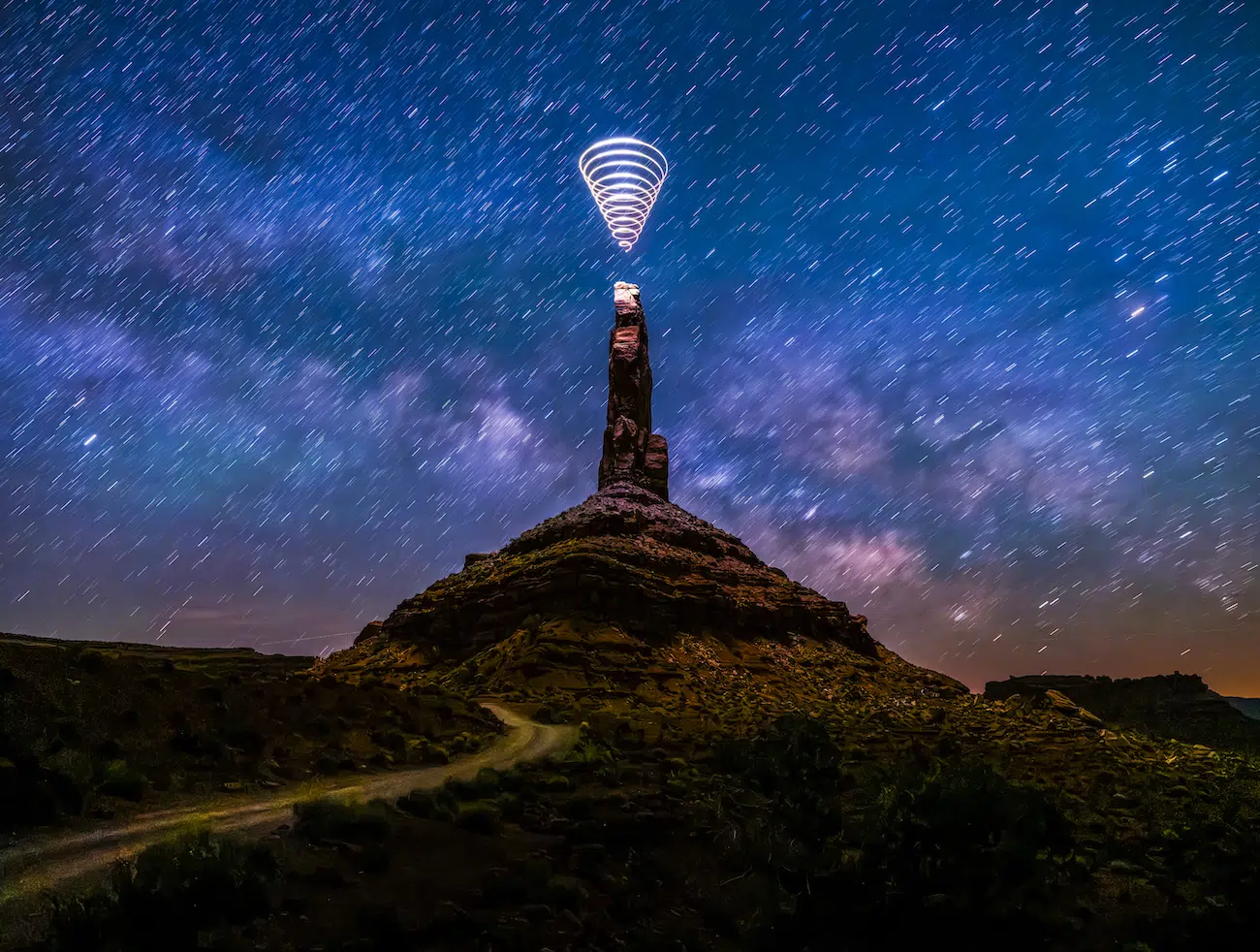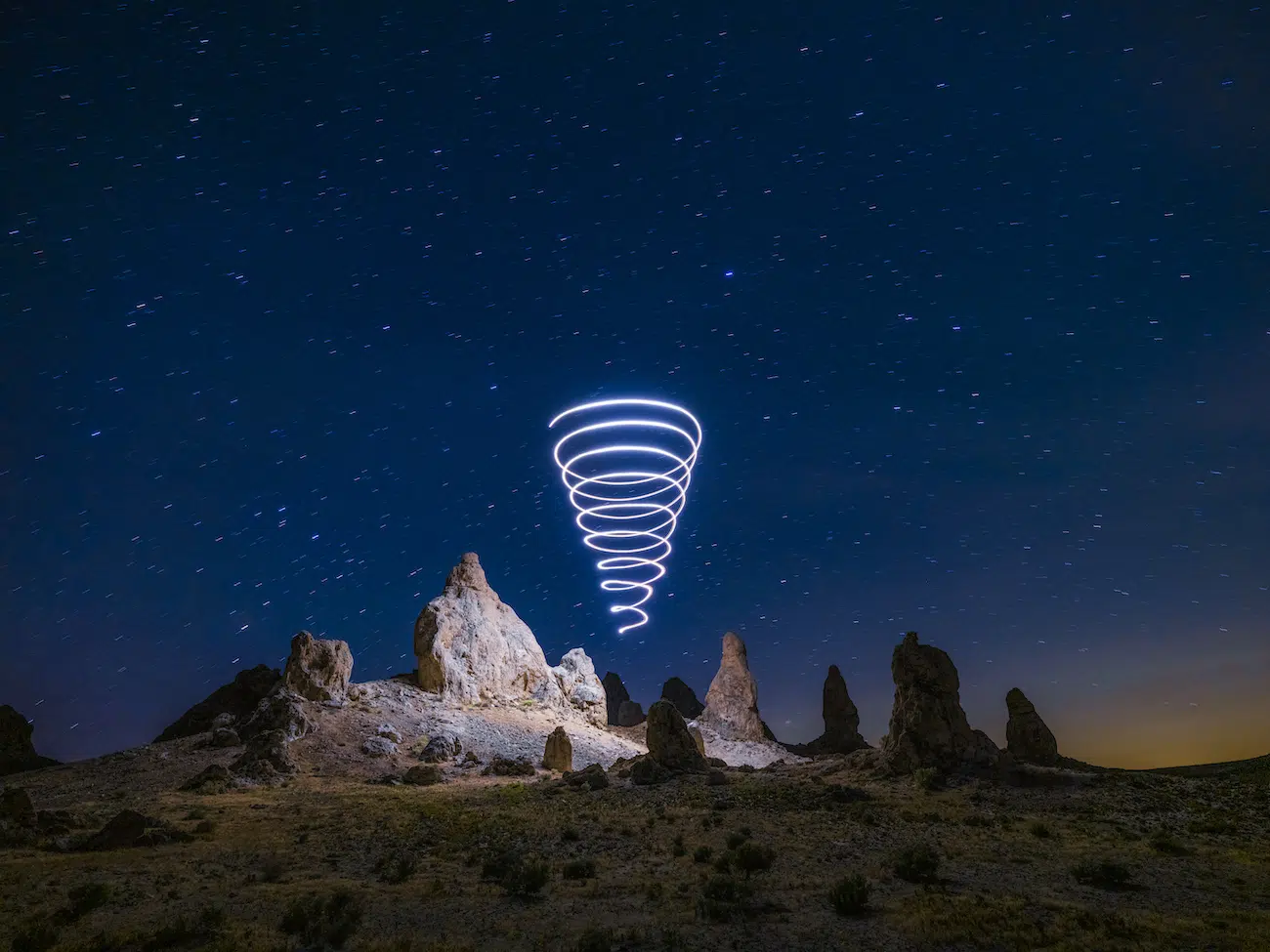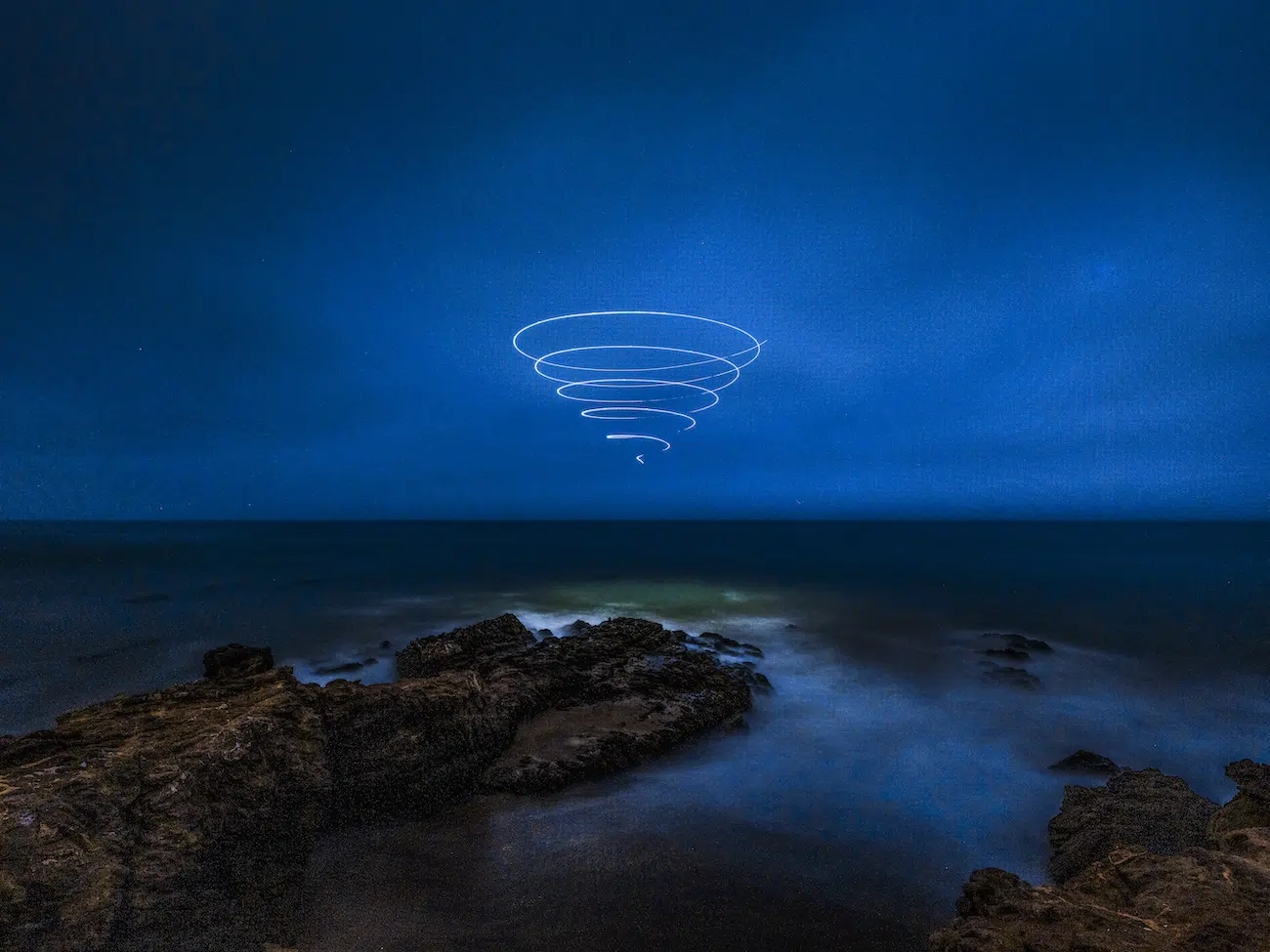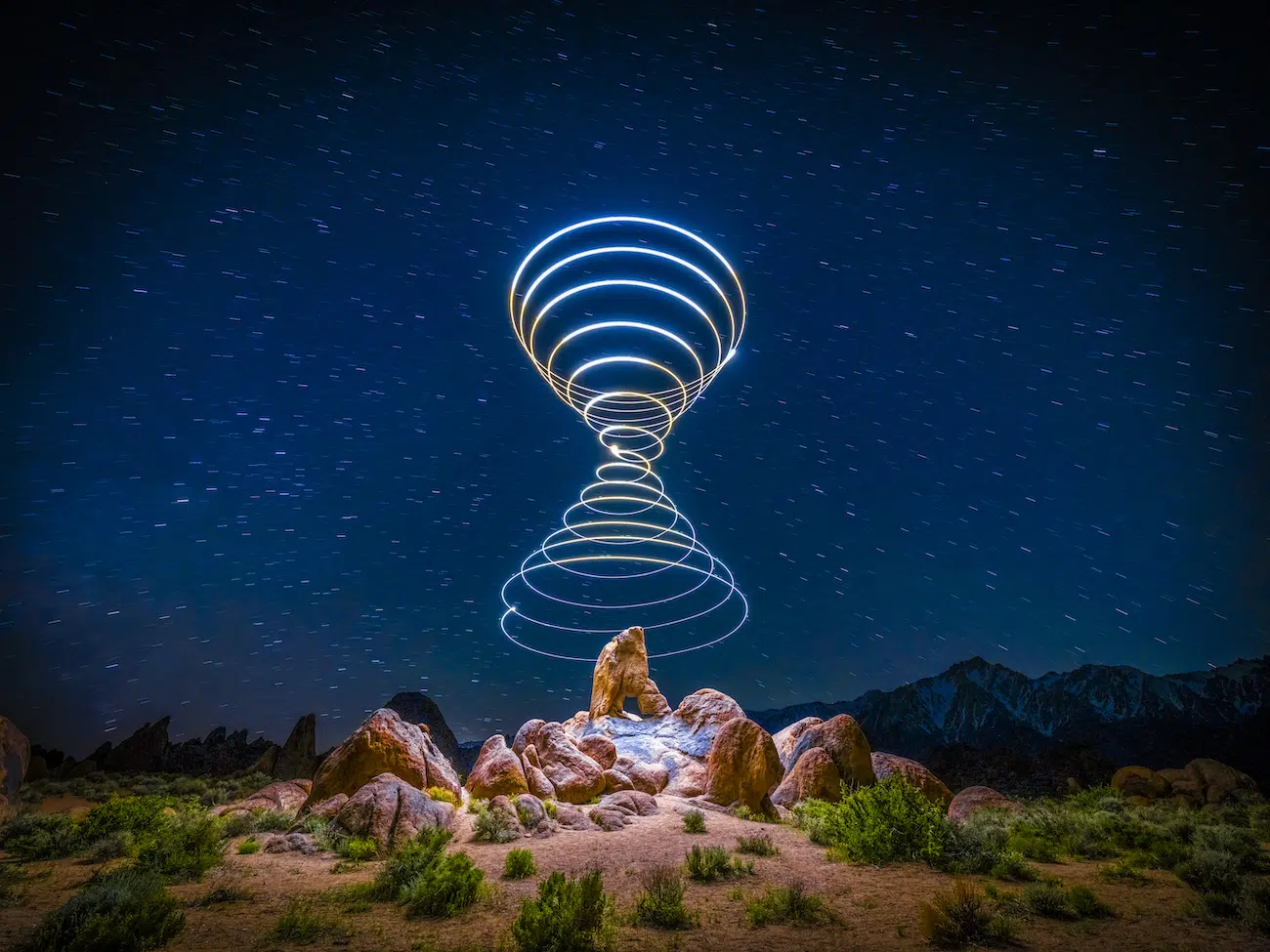
In the stillness of the American Southwest, sandstone arches frame the cosmos while the night sky stretches into apparent infinity. Against this vast backdrop, spiraling cones of light rise from the earth like apparitions. At first glance, they resemble ephemeral land art. They appear precise, luminous, and almost impossibly geometric. However, these radiant forms are not traditional sculptures. Instead, they visualize one of the most profound ideas in modern physics: the nature of spacetime.
To achieve this, physicist and fine art photographer Elliot McGucken translates the abstract mathematics of Einstein’s theory of relativity into something visible. Specifically, he programs drones to fly spiraling paths for long-exposure photographs. As the camera records their motion, the drones leave continuous trails of light. In this way, he quite literally writes with light, echoing the original meaning of photography.
More broadly, the project draws from ideas developed by Albert Einstein and mathematician Hermann Minkowski. In 1908, Minkowski introduced the concept of spacetime, uniting three dimensions of space with one dimension of time. Within this framework, the “light cone” describes how light moves through spacetime and how events relate to one another. In particular, it distinguishes which events can influence each other and which cannot, based on the constant speed of light.
At the same time, McGucken situates his work within a broader scientific lineage centered on light itself. Both relativity and quantum mechanics emerged from attempts to understand how light behaves. Max Planck’s work on energy quantization and Einstein’s explanation of the photoelectric effect reshaped modern physics, revealing that light can behave as both a wave and a particle. McGucken’s images do not simply depict light; they reflect its central role in shaping our understanding of reality.
Visually, the images do more than illustrate theory. Instead, they place it within the natural world. For example, McGucken captures these scenes in remote deserts in Utah and along the coast of California. In each setting, glowing cones appear suspended over rock formations and open landscapes. As a result, the compositions merge observation with artistic intention. In this context, he echoes Rembrandt van Rijn’s advice to “choose only one master: Nature.” Similarly, Einstein encouraged careful observation of the natural world as a path toward understanding.
Equally important is the process behind the images. Each photograph relies on long exposure, often lasting several minutes. During that time, a drone follows a carefully programmed spiral path. Meanwhile, the system depends on Global Positioning System (GPS) technology. Notably, GPS systems must account for relativistic effects predicted by Einstein’s theories in order to remain accurate. Therefore, the method itself reinforces the concept. Relativity does not remain abstract but instead operates within everyday technology.
McGucken’s approach also reflects the physics of light in a more classical sense. The behavior of light captured in photography can be traced to principles such as wave propagation, first described by Christiaan Huygens. These ideas help explain reflection, refraction, and image formation through lenses. By working directly with light over time, McGucken engages both the physical properties of light and its conceptual significance.
His work bridges art and science, connecting mathematical theory with visual experience. In doing so, McGucken follows a lineage that includes photographers such as Ansel Adams, who emphasized clarity, intention, and emotional depth in landscape photography. Here, however, the subject extends beyond the landscape to include the structure of reality itself.
The images also invite philosophical reflection. By placing precise geometric forms within vast natural settings, they suggest a relationship between human knowledge and the natural world. In fact, Minkowski expressed this shift clearly when he argued that space and time must be understood together as a unified whole. Consequently, his insight remains central to modern physics.
For McGucken, this exploration is also deeply personal. “Landscape photography is not only about how far we travel to explore the world,” he says, “but how far we travel to explore within.” In this sense, his nighttime journeys through the desert parallel his investigations into physics. Both seek to understand the unseen structures that shape experience.
Ultimately, these light cone images operate on several levels. On one hand, physicists recognize a visualization of spacetime structure. On the other hand, artists encounter studies of form, light, and duration. Meanwhile, general viewers experience something more immediate: a sense of wonder.
Fine art photographer Elliot McGucken used drones to visualize the geometry of Einstein’s theory of relativity in the desert.
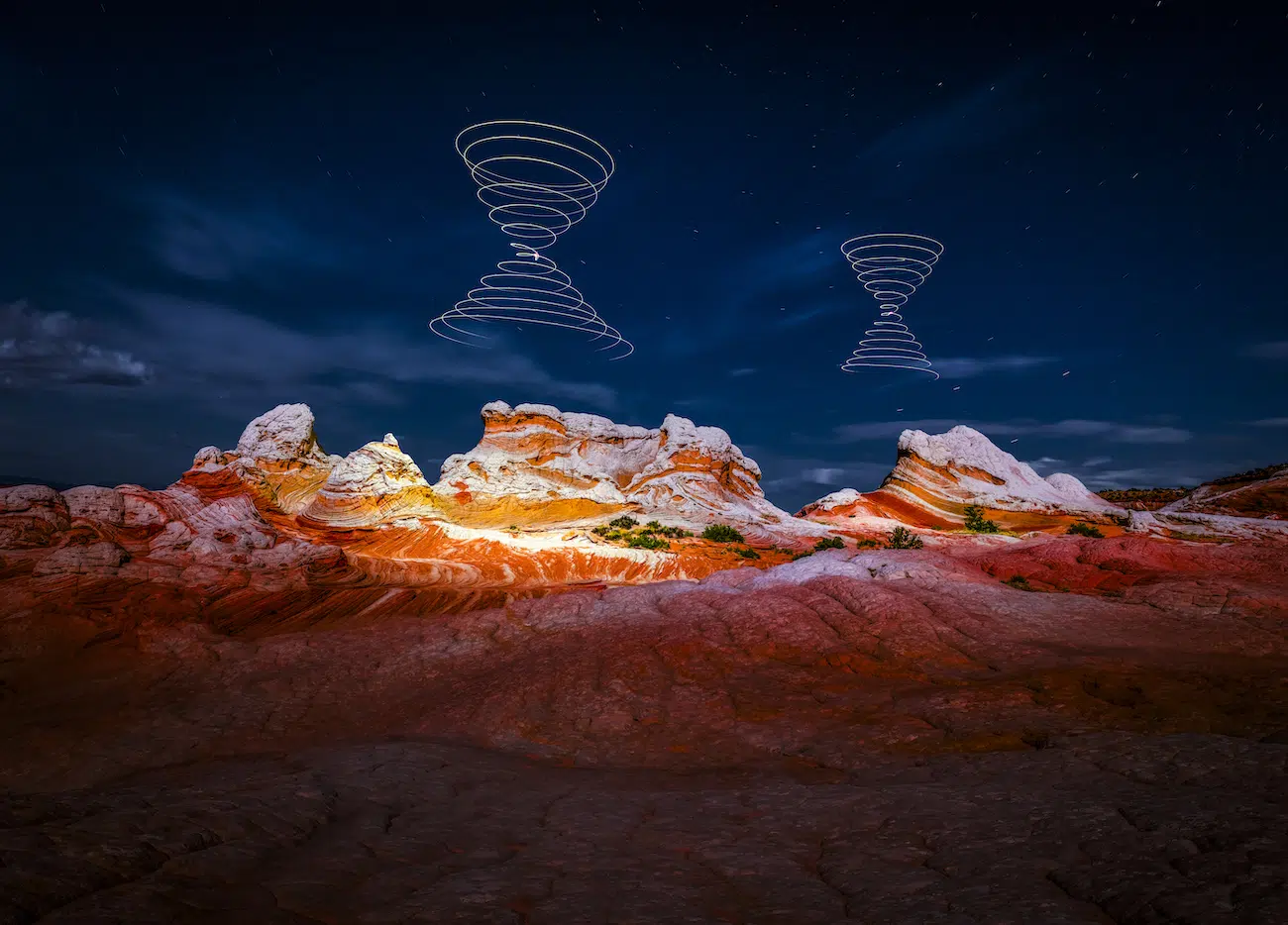
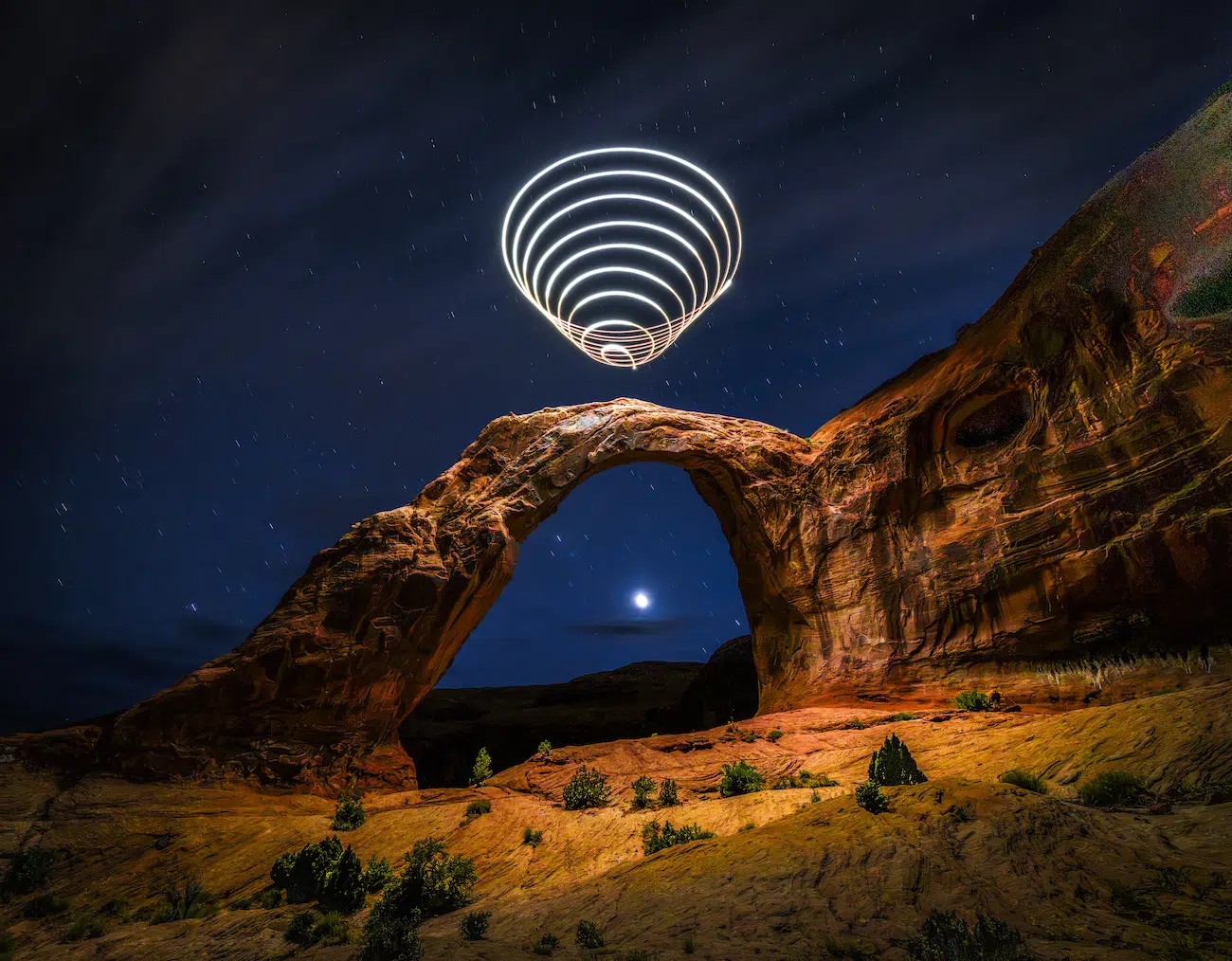
Rooted in the physics of light, the project connects Albert Einstein and Hermann Minkowski to contemporary long-exposure photography.
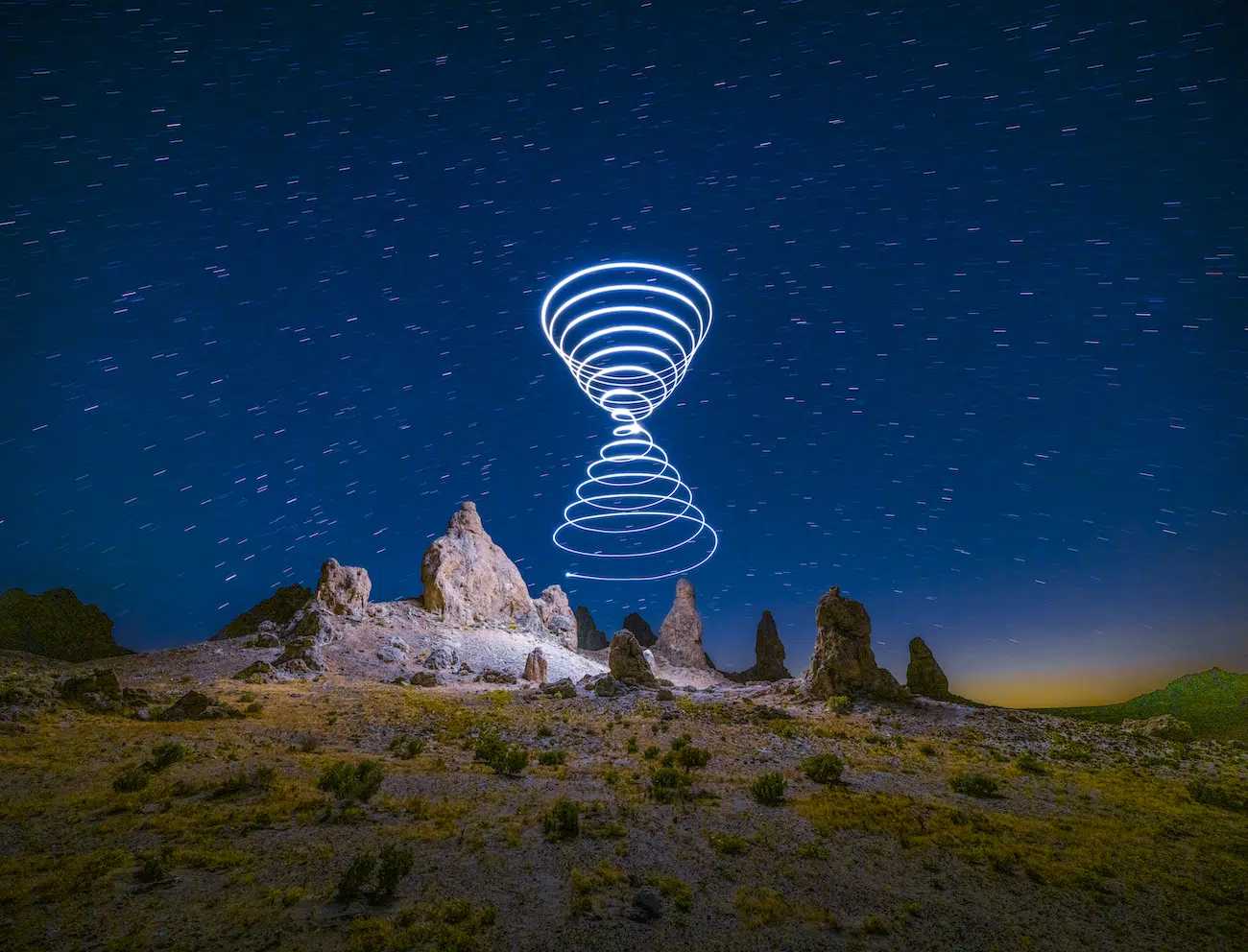
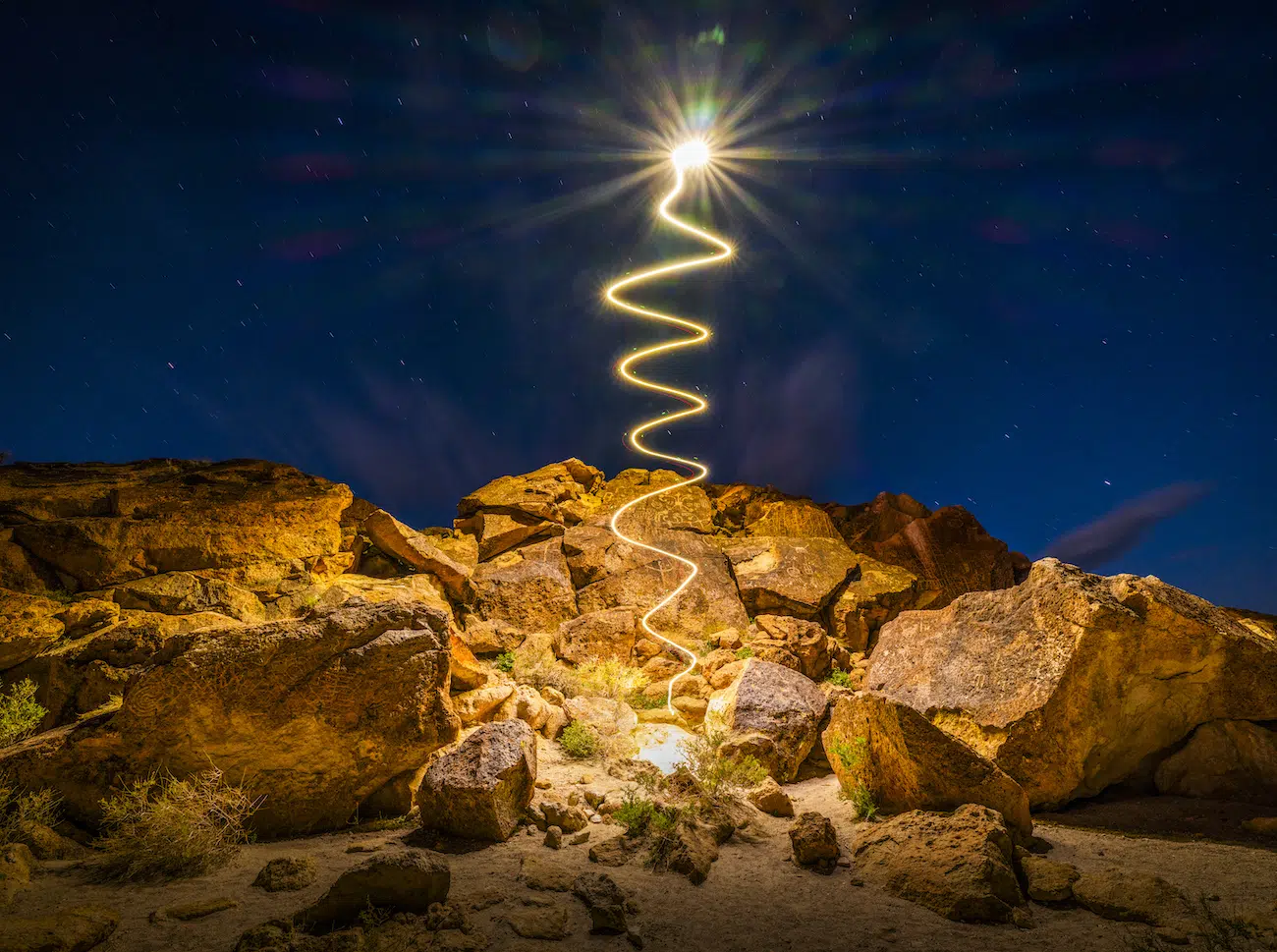
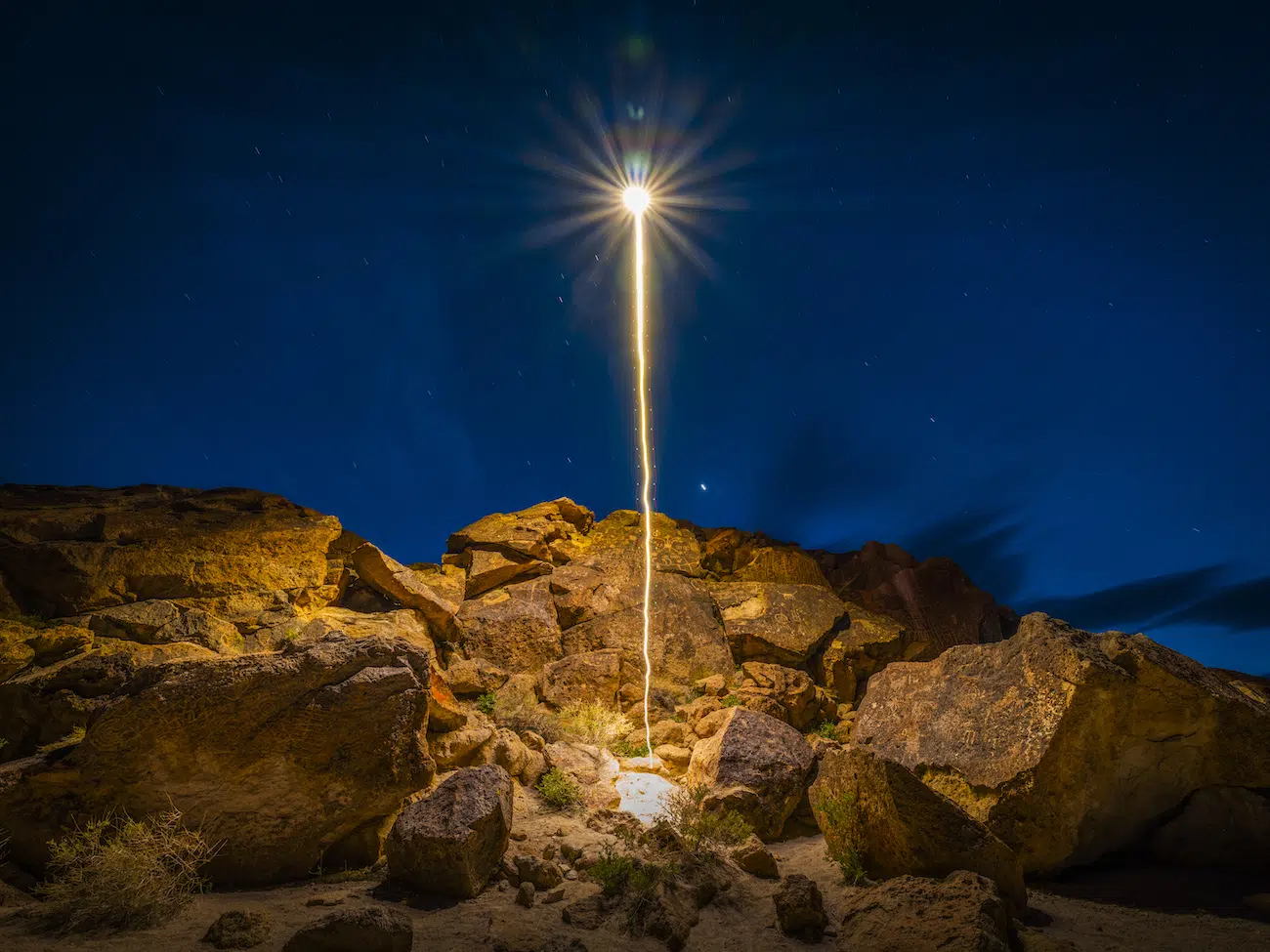
By merging science and nature into spectacular light cones in the sky, the images transform spacetime into a shared experience of wonder.