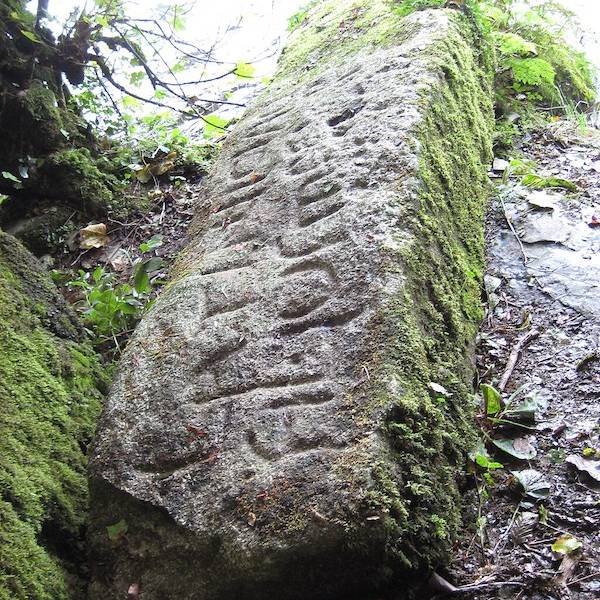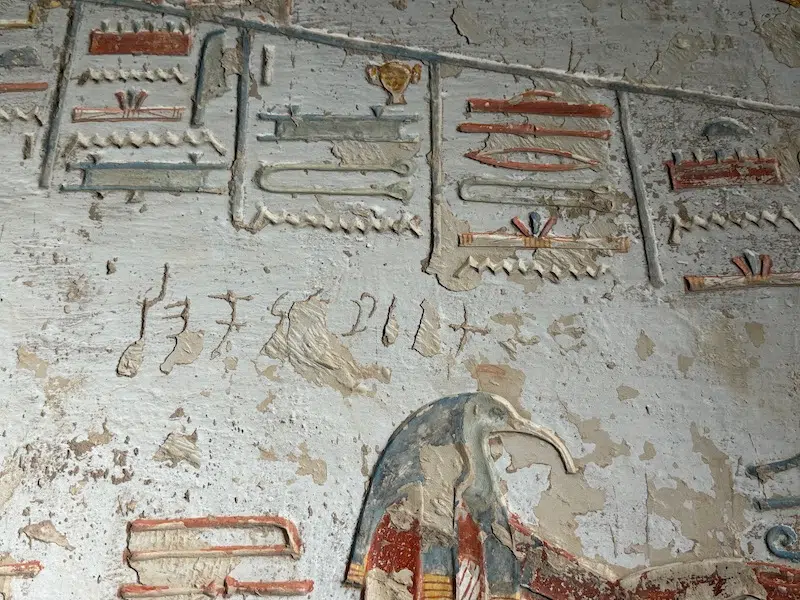
A 2,000-year-old inscription by Cikai Korran.
Deep within the desert cliffs of Valley of the Kings, where Egypt’s most powerful rulers were laid to rest, the walls of ancient tombs hold more than painted gods and sacred hieroglyphs. it turns out that later visitors carved quieter, less formal lines directly into the stone. At first glance, these markings seem incidental. Look closer, and they begin to tell a very different story, one that stretches across continents and centuries.
Recent research reveals nearly 30 inscriptions written in Tamil-Brahmi, along with traces of Prakit and Sanskrit. These markings point to South Asian travelers who reached Egypt around 2,000 years ago. By this time, Roman authorities governed Egypt, and the once-sealed burial ground had shifted into a place of curiosity and exploration. Visitors moved slowly through the tombs, taking in their scale and symbolism, and they left behind small but lasting impressions of their presence.
One name appears again and again, etched into the stone: Cikai Korran. His inscriptions appear across five separate tombs. In some cases, he repeated his name, as if to ensure no one would miss it. One inscription translates simply to, “Cikai Korran came here and saw.”
Maritime trade routes linked South India with Mediterranean lands, carrying spices, textiles, and precious goods into Roman Egypt. Red Sea ports acted as gateways for exchange, yet these carvings suggest movement that transcended commerce. The individuals who left their names were travelers, observers, and participants in the human experience of connection and curiosity.
Some inscriptions hint at specific identities, possibly envoys or figures linked to South Indian political networks, emphasizing that these ephemeral acts of recording were also acts of presence within a larger, enduring world.
What lingers most is the deeply human quality of these marks. Builders designed the Valley of the Kings to eternalize royalty and preserve the grandeur of pharaohs. Yet it is these smaller inscriptions that feel immediate, intimate, and astonishingly alive. A name scratched into stone records a fleeting moment, a transient experience that outlived the individual who inscribed them. However small, some traces left behind carry stories across centuries.
Graffiti carved by Indian travelers in the Valley of the Kings captures a moment of witness that has endured for 2,000 years.
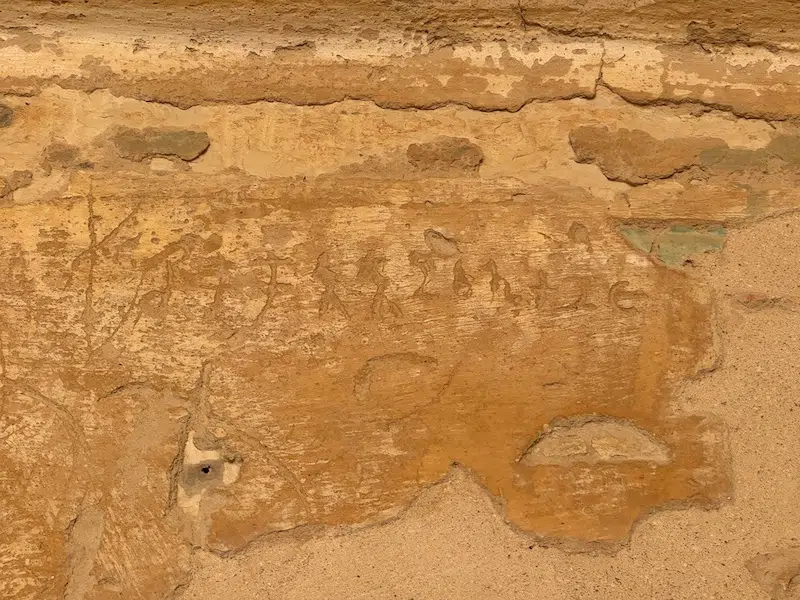
Twenty of the inscriptions, including this one, were written in Tamil.
Ancient Tamil-Brahmi inscriptions in Egypt reveal how fleeting human presence can become lasting historical evidence.
Sources: Tamil Brahmi inscriptions found in Egypt’s Valley of the Kings shed light on ancient trade links, ‘Cikai Korran came here and saw': Visitors from India graffitied dozens of Egyptian tombs 2,000 years ago, 2,000-year-old inscriptions found in Valley of the Kings offer fresh insight into Indian presence in Ancient Egypt, This Traveler From India Graffitied His Name on Five Ancient Tombs in Egypt’s Valley of the Kings 2,000 Years Ago
My Modern Met granted permission to feature photos by Ingo Strauch. All Images via Ingo Strauch and Charlotte Schmid.
Related Articles:
Restoration Uncovers Stunning Art and Inscriptions of 2,000-Year-Old Egyptian Temple
Discover 4,000-Year-Old Recipes in the Oldest-Known Cookbook From Ancient Babylonia
Linguists Are Creating the First-Ever Complete Dictionary of Ancient Celtic Languages