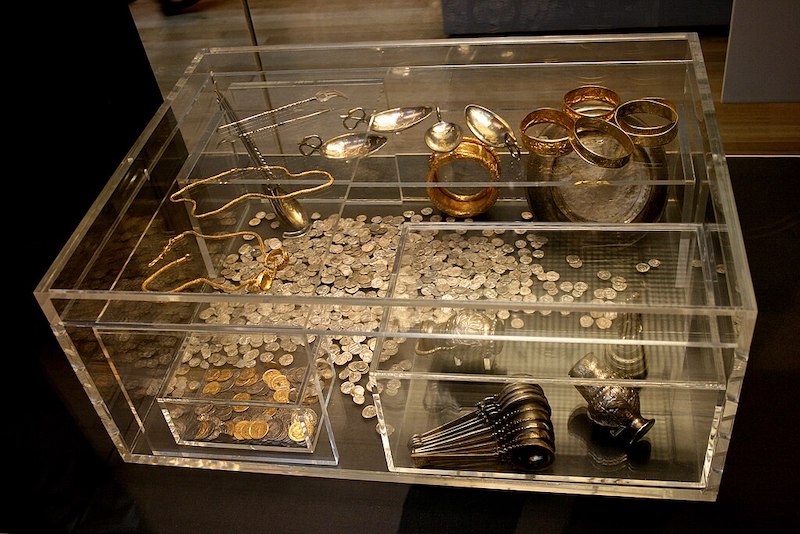
Display case at the British Museum showing a reconstruction of the arrangement of the hoard treasure when excavated in 1992. Photo: Mike Peel via Wikimedia Commons, (CC BY-SA 4.0.)
On November 16, 1992, a quiet field near Hoxne in Suffolk became the setting for an astonishing discovery. Retired gardener Eric Lawes had agreed to help his friend, farmer Peter Whatling, search for a missing hammer. He brought along a metal detector, expecting to locate a simple tool. Instead, the device signaled something far more unusual beneath the soil.
When Lawes began digging, he uncovered silver spoons and gold coins. These objects clearly did not belong to modern farm life. They pointed to a much deeper history buried just below the surface. That moment marked the beginning of the Hoxne Hoard, the largest collection of late Roman treasure ever found in Britain.
Lawes quickly realized the importance of what he found, stopping immediately to contact local authorities. The next day, archaeologists arrived to take control of the site. The excavation team worked with precision. They removed large sections of soil intact so they could examine the objects later in controlled conditions. This careful approach preserved how the items had been arranged underground. As a result, the hoard retained its archaeological context, something rare for discoveries made with metal detectors.
The scale of the hoard stunned researchers. It contained more than 15,000 Roman gold and silver coins, most dating to the late 4th and early 5th centuries CE. Alongside the coins were roughly 200 pieces of jewelry and silver tableware. While a visual splendor, the dazzling pieces offered a rare glimpse into life at the end of Roman rule in Britain. The worn coins revealed heavy circulation and economic strain. The luxury items pointed to the wealth, status, and refined tastes of elite Romano-British families.
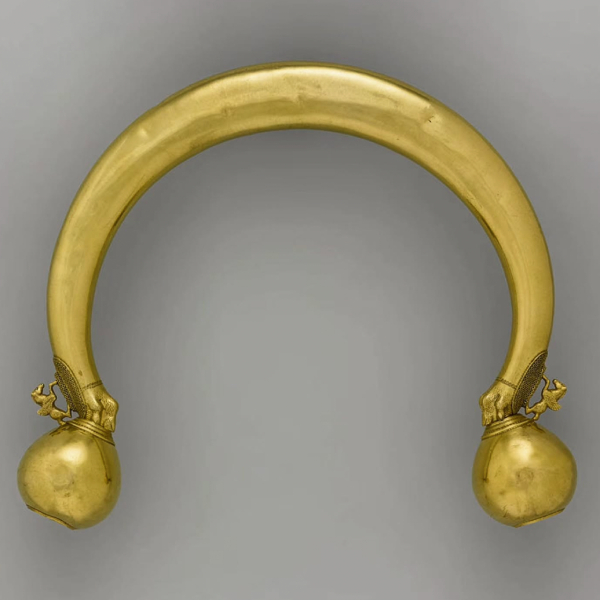
These objects more specifically included necklaces, bracelets, rings, spoons, bowls, ladles, and ornate pepper pots. Archaeologists also found traces of the wooden chest and smaller boxes that once held the treasure. The careful packing suggested deliberate burial rather than accidental loss, as if someone had hidden these valuables with intention. Historians believe the owners buried the hoard during a period of growing instability. Roman authority was weakening, and uncertainty shaped daily life. The treasure reflects both fear and foresight, as people tried to protect what mattered most in turbulent times.
Today, the Hoxne Treasure forms a cornerstone of the British Museum’s Roman Britain collection. Visitors can see many of its most striking pieces on display. What began as a search for a lost hammer has become one of the most significant archaeological finds in British history. The hoard continues to shape how we understand the final days of Roman Britain.
What started as a simple search in a Suffolk field quickly revealed glimmers of gold and silver buried for more than 1,500 years.
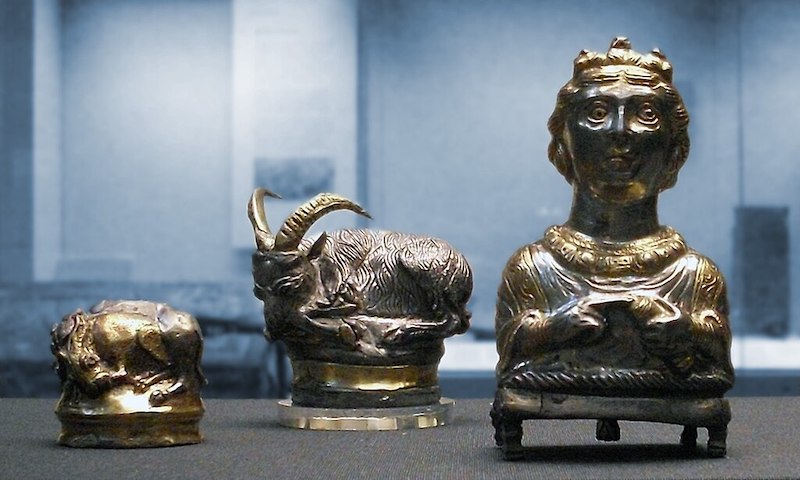
Three silver-gilt Roman piperatoria or pepper pots from the Hoxne Hoard on display at the British Museum. Photo: Wikimedia Commons, (British Museum, Public Domain)
Archaeologists uncovered thousands of Roman coins and luxury objects, preserved by a decision that protected their history as much as their beauty.
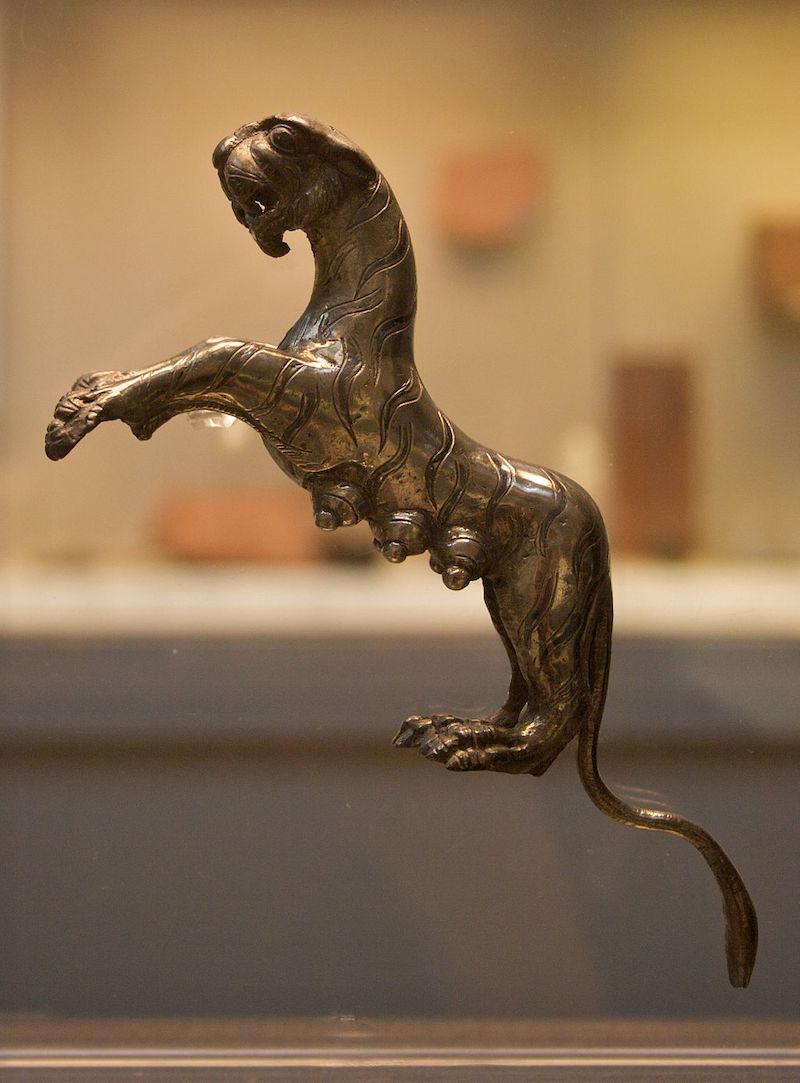
Handle in form of a tigress from the Hoxne hoard. Photo: Mike Peel via Wikimedia Commons, (CC BY-SA 4.0.)
Now housed in the British Museum, the Hoxne Hoard continues to reshape our understanding of Roman Britain’s final days.
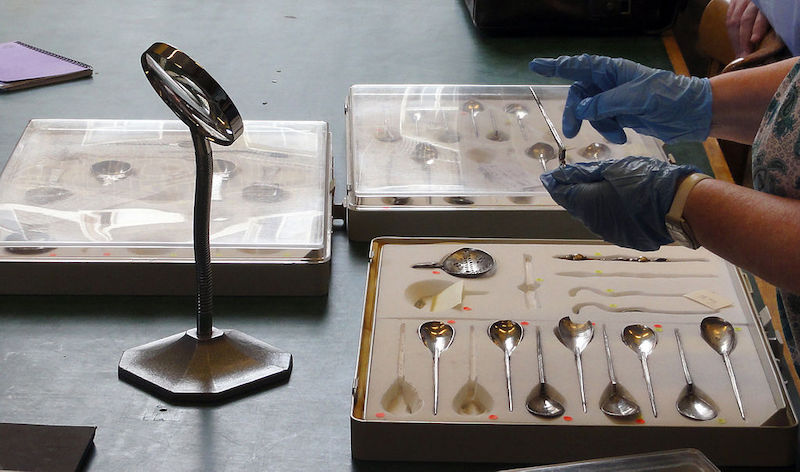
Photo taken during behind-the-scenes workshop with curators and Wikipedians. Photo: Wikimedia Commons, (CC BY-SA 3.0.)
Source: In 1992, A Man Looking For A Lost Hammer Accidentally Found An Ancient Roman Hoard Worth £1.75 Million, A Search for a Lost Hammer Led to the Largest Cache of Roman Treasure Ever Found in Britain, Hoxne Treasure
Related Articles:
Archeologists Open 2,600-Year-Old Etruscan Tomb Unearthing Ancient Treasures
17th-Century Silver Thimble With Romantic Inscription Is Discovered in Wales
Vatican Museums Open Ancient Roman Necropolis of ‘Via Triumphalis’ to the Public
Incredibly Rare Ceramic Head Helps Uncover Previously Unknown Roman Settlement in Britain