Before Walt Disney, the internet, and entertainment as we know it today, Victorian-era children had the phenakistoscope. The name has origins in the Greek word phenakisticos and means “deceiver of the eye.” This ingenious pioneer of animation featured a spinning disk that, when moved, created the illusion of fluid movement, thanks to the evenly spaced slits around the edges.
The phenakistoscope was invented independently by two separate physicists, Joseph Plateau and Simon von Stampfer, around the same time between 1832 and 1833. However, its polysyllabic pronunciation isn’t very fun to say, and it has gone by alternative names throughout its history, such as the fantascope or stroboscopic disks.
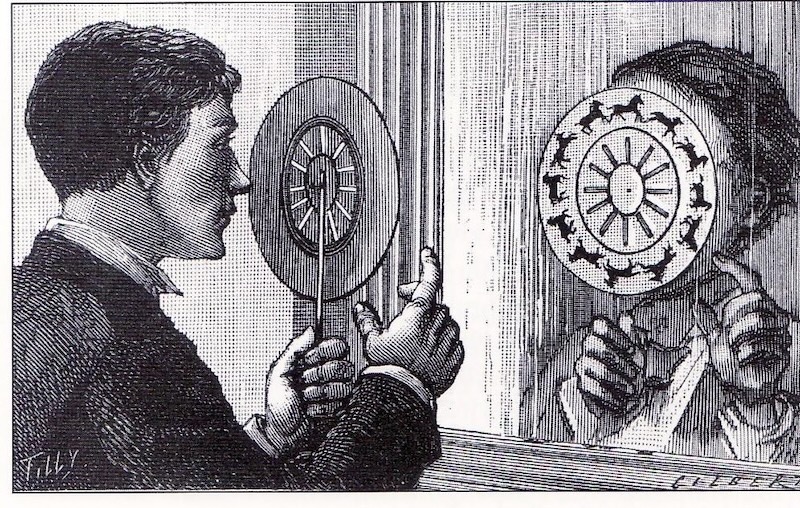
The animation device is used by facing the disk at a mirror and looking through the slits while it spins at the reflection. These slits create pauses between the frames, so you can't follow the picture, and the illusion is kept up. Done properly, your brain should be tricked into believing the subject is truly moving.
Early phenakistoscopes showcased fun subjects like people dancing, frogs jumping, or other amusing scenes. It was followed by the zoetrope in 1865, which was a cylinder with slits along the sides. Now, we have all of them at our fingertips, figuratively, as we don't have to be the ones spinning them. But they are entirely DIY-able and may be a way to show off your animation skills or keep kids off phones at least a little bit longer.
The phenakistoscope is a paper disk with evenly spaced slits to give the illusion of movement when spun.
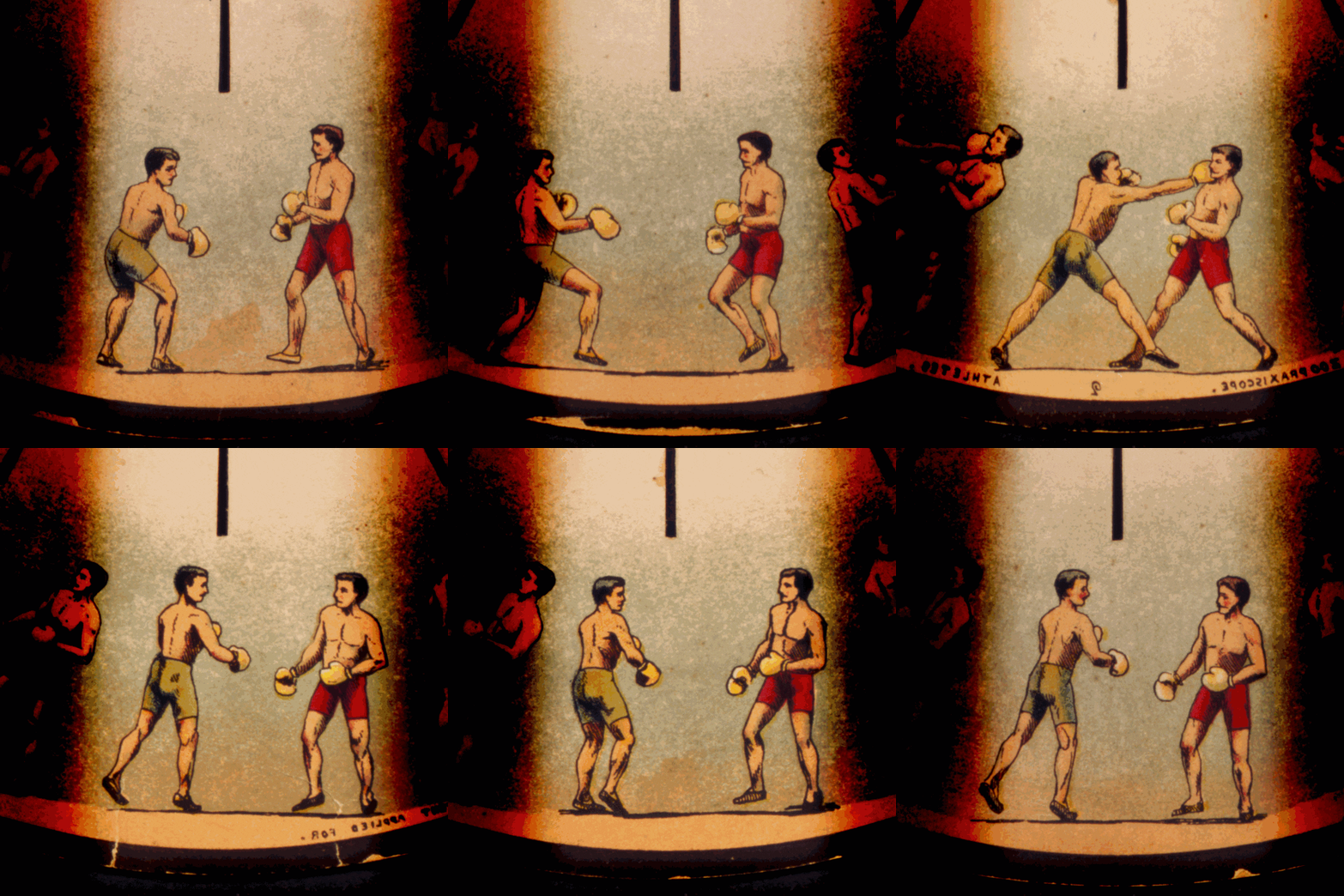
Detail of the “Athletes, boxing” phenakistoscope in motion. (Photo: Eadweard Muybridge via Wikimedia Commons, Public domain)
The slits are meant to be looked through as the spinning disk is reflected in a mirror to give your brain a pause between frames.
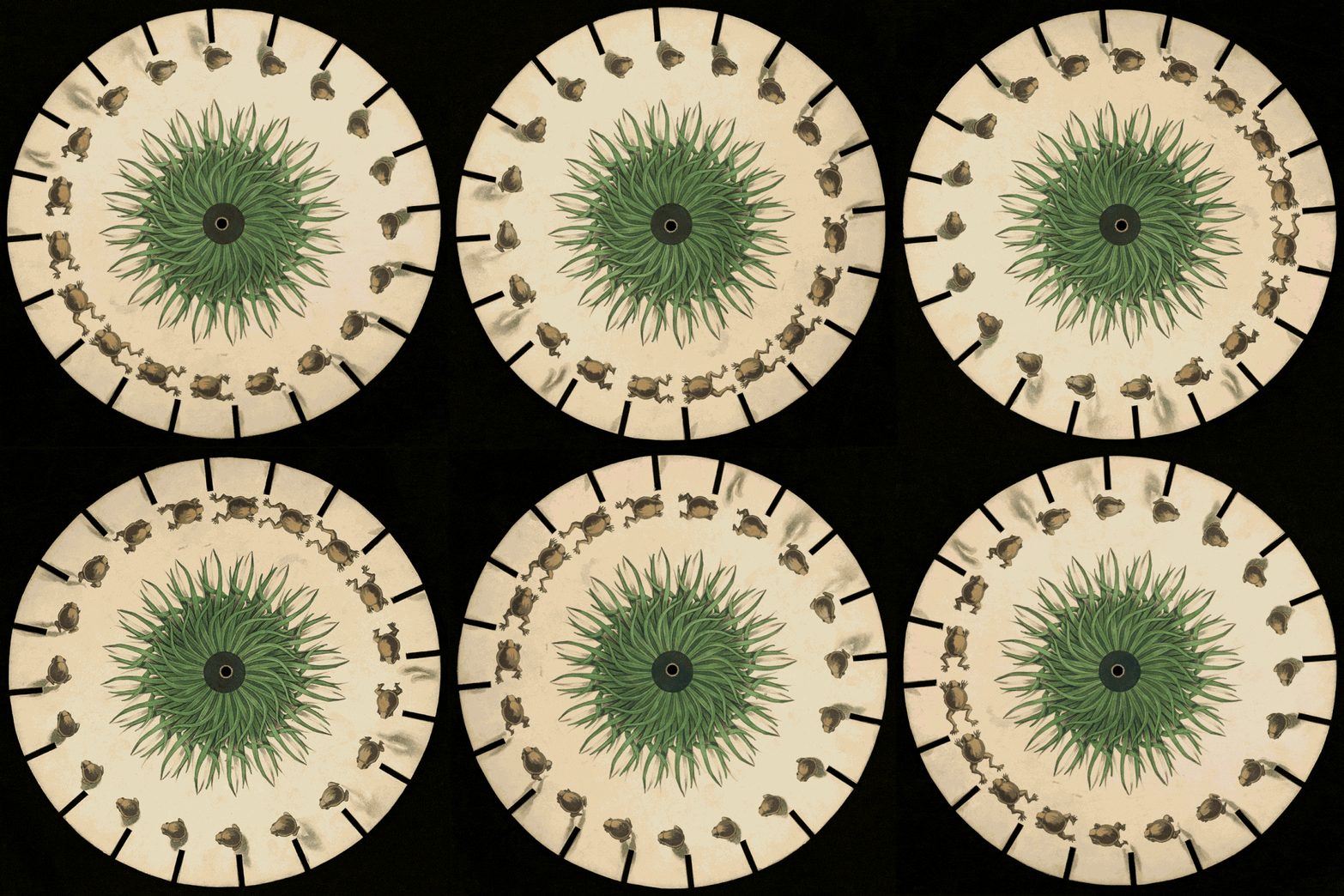
Animated Phenakistiscope/Phantasmascope disc by Joseph Plateau, manufactured by Ackermann and co. (Photo: Joseph Plateau via Wikimedia Commons, Public domain)
These devices entertained Victorian children and showcased dancers, animals, athletes, and more, and can even be created at home.

Animated Phenakistiscope/Phantasmascope disc by Joseph Plateau, manufactured by Ackermann and co. (Photo: Joseph Plateau via Wikimedia Commons, Public domain)
Want to make your own phenakisticope? This video will show you how.
Source: The 1830s Device That Created the First Animations: The Phenakistiscope
Related Articles:
Colorful Animation Comes to Life as You Drive by 600-Foot-Long Street Mural
Circling the Zoetrope, a Victorian Animation Toy That Helped Shape the Future of Cinema