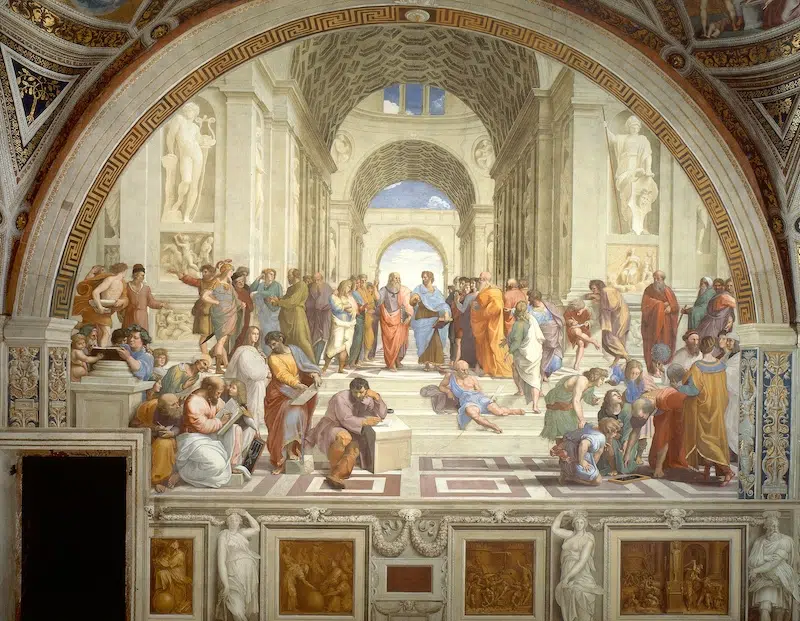
If you have an interest in history, philosophy, or art, the names Socrates, Plato, Aristotle, Raphael, and Michelangelo may sound familiar. But beyond the topical connections some of these figures might have with others, how are they all related? The answer is simple while simultaneously layered, and it starts with a fresco titled The School of Athens.
Located in the Vatican City’s Apostolic Palace, The School of Athens was painted by one of the most influential artists of the Renaissance, Raphael. It depicts a scene of philosophers, scientists, and mathematicians from different periods of ancient Greece engaging with each other in an idyllic space. Key figures represented in the fresco include Socrates, Pythagoras, Archimedes, Euclid, and perhaps even Hypatia. At the center of it all are Plato and Aristotle, two of philosophy’s biggest titans.
Raphael painted the fresco as part of a series in the Apostolic Palace of Vatican City. But The School of Athens was more than just an idealized representation of numerous classical thinkers. It aligned these ancient Greek philosophies and concepts—which were considered pagan—with Christian theology in a legitimate manner. The Renaissance saw a revival of humanism and rational thought, and this fresco was a way for Raphael to engage with it in a way deemed appropriate by Christian ideology.
The last character of our tableau, Michelangelo, was another key player of the Renaissance, and a contemporary of Raphael. Michelangelo was also working for the Vatican’s Apostolic Palace at the same time as his counterpart, on a little project called the Sistine Chapel. Experts believe Raphael painted Michelangelo and Leonardo Da Vinci (who was also active at the time) in The School of Athens, as the philosophers Heraclitus and Plato, respectively.
By painting his peers as stand-ins for the great minds of antiquity, Raphael wasn’t just honoring them; he was weaving past and present into one grand conversation. The School of Athens captures the spirit of the Renaissance as a celebration of knowledge, curiosity, and creativity across time. It reminds us that ideas don’t just live in books or classrooms, but through people who imagine, question, and create.
Raphael's fresco, The School of Athens, is perhaps one of the most famous works of Renaissance art.
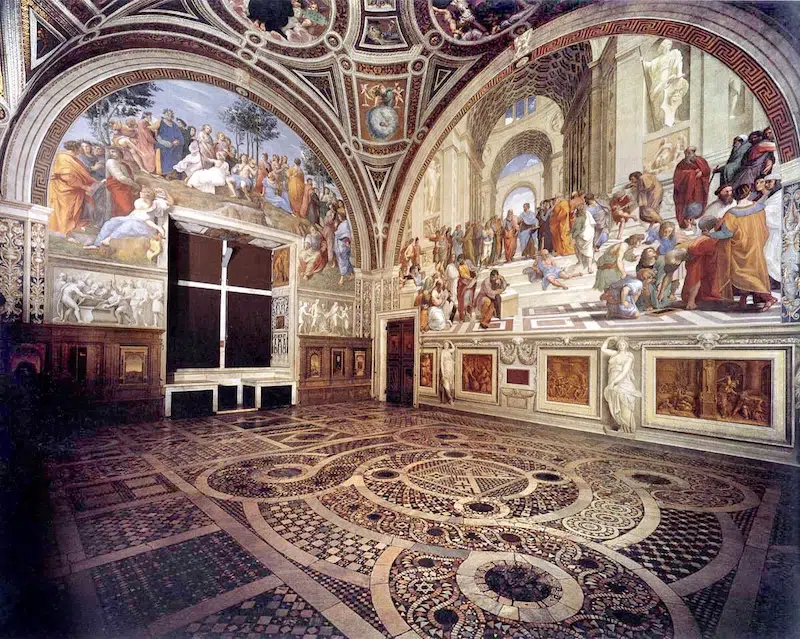
It depicts an idealized scene of numerous ancient Greek thinkers like Plato, Socrates, Aristotle, and more, convening in an idyllic space.
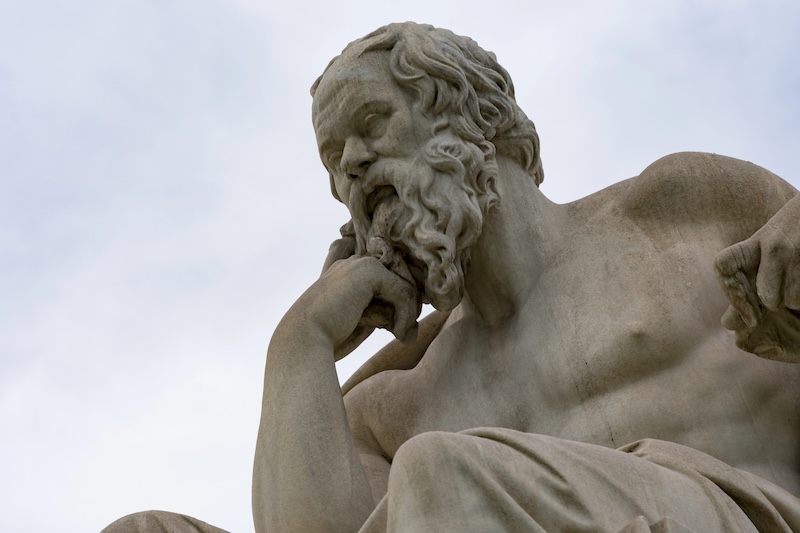
Raphael also painted himself, Michelangelo, and Leonardo Da Vinci as stand-ins for some of the ancient philosophers.
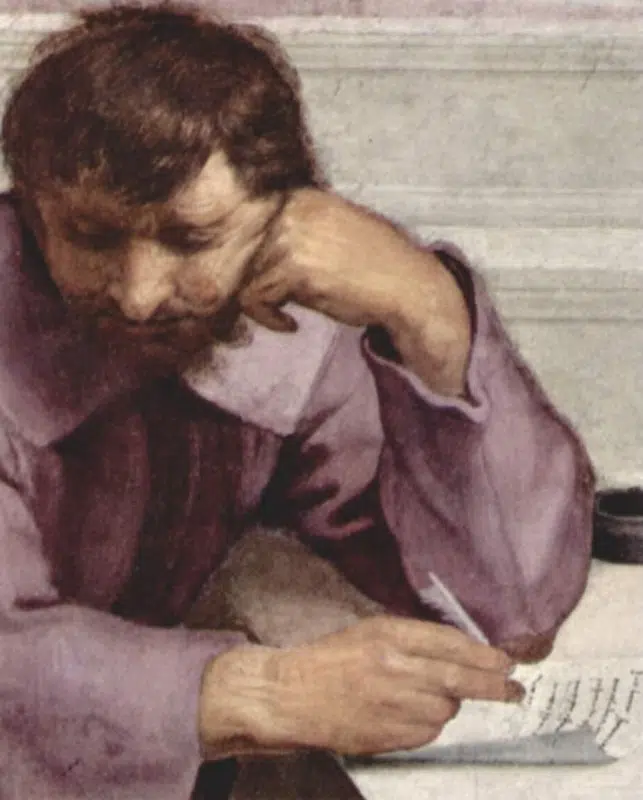
Photo: Raphael; The Yorck Project (2002) 10.000 Meisterwerke der Malerei (DVD-ROM), distributed by DIRECTMEDIA Publishing GmbH.via Wikimedia Commons (Public domain)
Watch the video by Great Art Explained below to learn more about this famous fresco.
Sources: Plato, Aristotle & Other Greek Philosophers in Raphael’s Renaissance Masterpiece, The School of Athens
Related Articles:
8 Interesting Facts About Raphael, Master of the Italian Renaissance
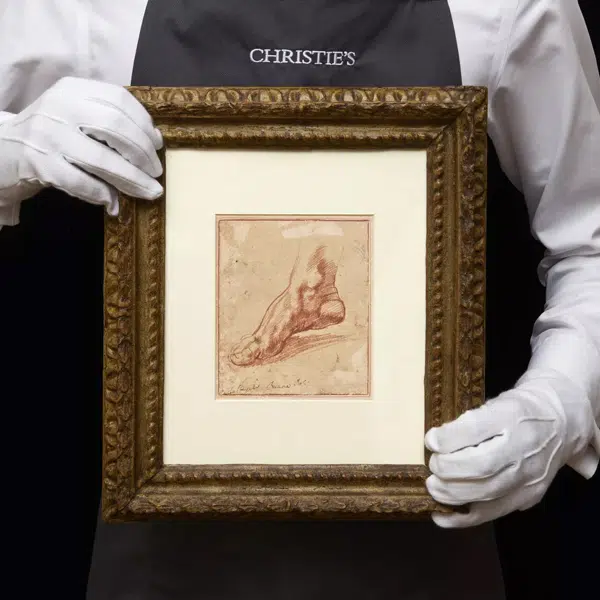
Previously Unseen Sketches of the Sistine Chapel by Michelangelo Make Their U.S. Debut
Take a Virtual 3D Tour of St. Peter’s Basilica Created by the Vatican Using 400,000 Images and AI