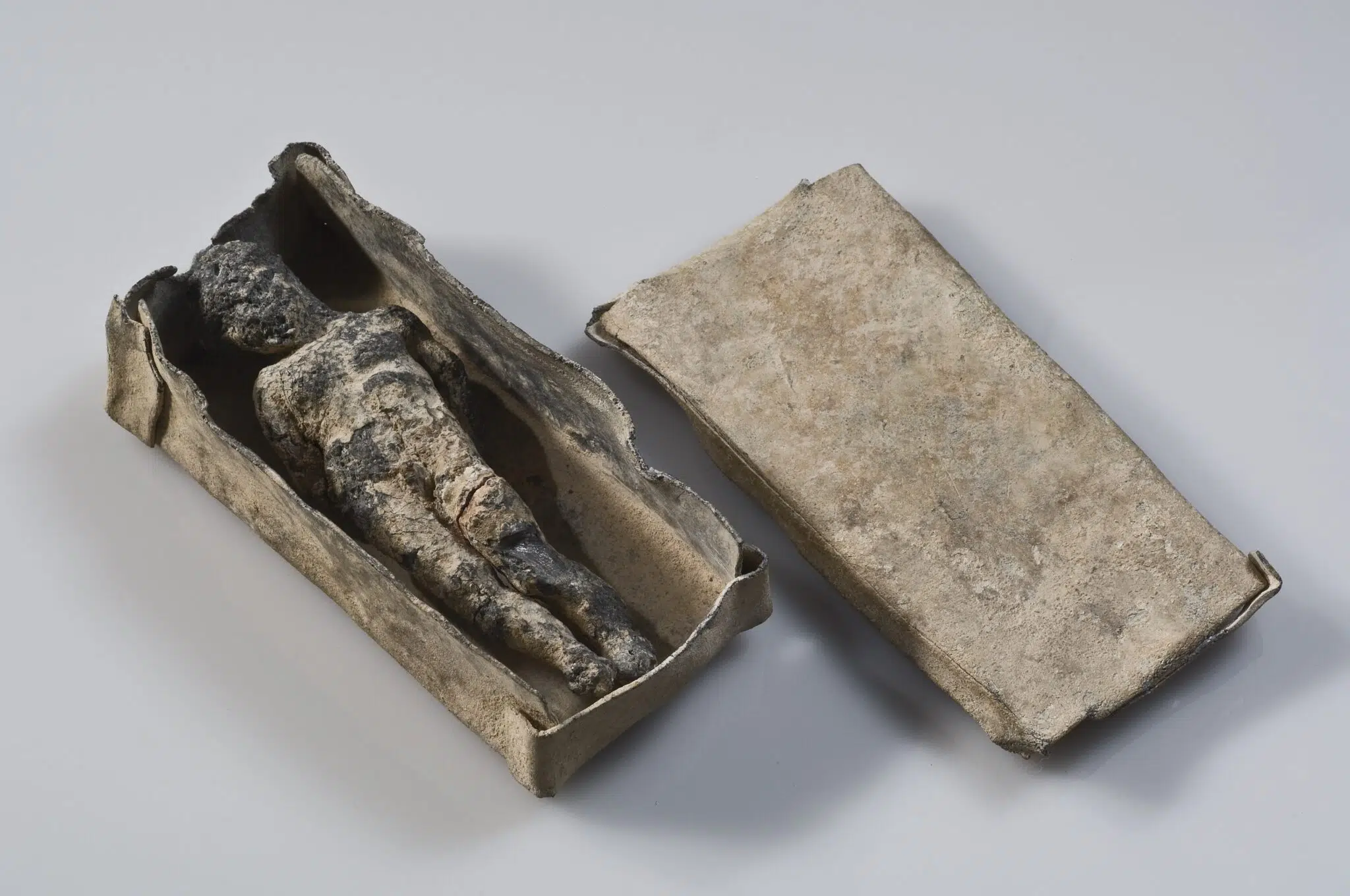
Miniature coffin with curse figure. Greek, 4th century BCE. Lead. (Photo: Image Studio, Royal Museums of Art and History, Brussels)
This spring, Disney World will probably have to give up its crown as the “most magical place on Earth” and hand it over to the Toledo Museum of Art. That’s because the Ohio museum will soon open an exhibition dedicated solely to magic and its crucial functions throughout the ancient world.
Opening on March 21, 2026, Cursed!: The Power of Magic in the Ancient World will showcase some 75 works from antiquity, ranging from ivory wands and papyrus spellbooks to amulets decked out in semiprecious stones, gold, and silver. These objects chart a compelling history between the years 2000 BCE and 300 CE, exploring magic’s integration into religious traditions in Mesopotamia and Egypt, as well as its marginal and often illicit status in Greece and Rome. Whether it protects against demonic harm, heals medical ailments, attracts lovers, or curses enemies, each featured work offers an essential glimpse into the ritualistic, spiritual, and supernatural practices that guided ancient civilizations.
“Cursed! reveals that magical beliefs were very ancient, passed down over thousands of years, although continuously evolving as cultures interacted and exchanged ideas,” says Dr. Jeffrey Spier, the exhibition’s guest curator and former senior curator of antiquities at the Getty Museum. “I hope visitors will recognize that magic in the ancient world was not an illusion or sleight of hand but a serious, deeply held belief system that helped people navigate uncertainty and suffering.”
For Spier, the exhibition isn’t just about revisiting various belief systems or tracing their development across time. It’s also a rare opportunity to encounter some unexpected—and even unsettling—artifacts. “I think visitors will be surprised by most of the objects, which are rarely seen and probably quite unfamiliar,” he explains.
One such object is a miniature lead coffin from Athens containing a bound curse figure. Its likely purpose, according to Spier, was to assist in a legal dispute, conjuring maladies that would afflict its owner’s rivals. Taken in its entirety, the work complicates the perception of classical Greece as a “rational, philosophical culture,” in Spier’s words. “Even if the Greeks and Romans often disapproved of magic, the large number of curses and amulets that survive show that magic was very popular and widely used,” he adds.
Ahead of the exhibition’s opening, we spoke with Jeffrey Spier about his curatorial vision, the objects featured in Cursed!, and what he hopes audiences will take away from the experience.
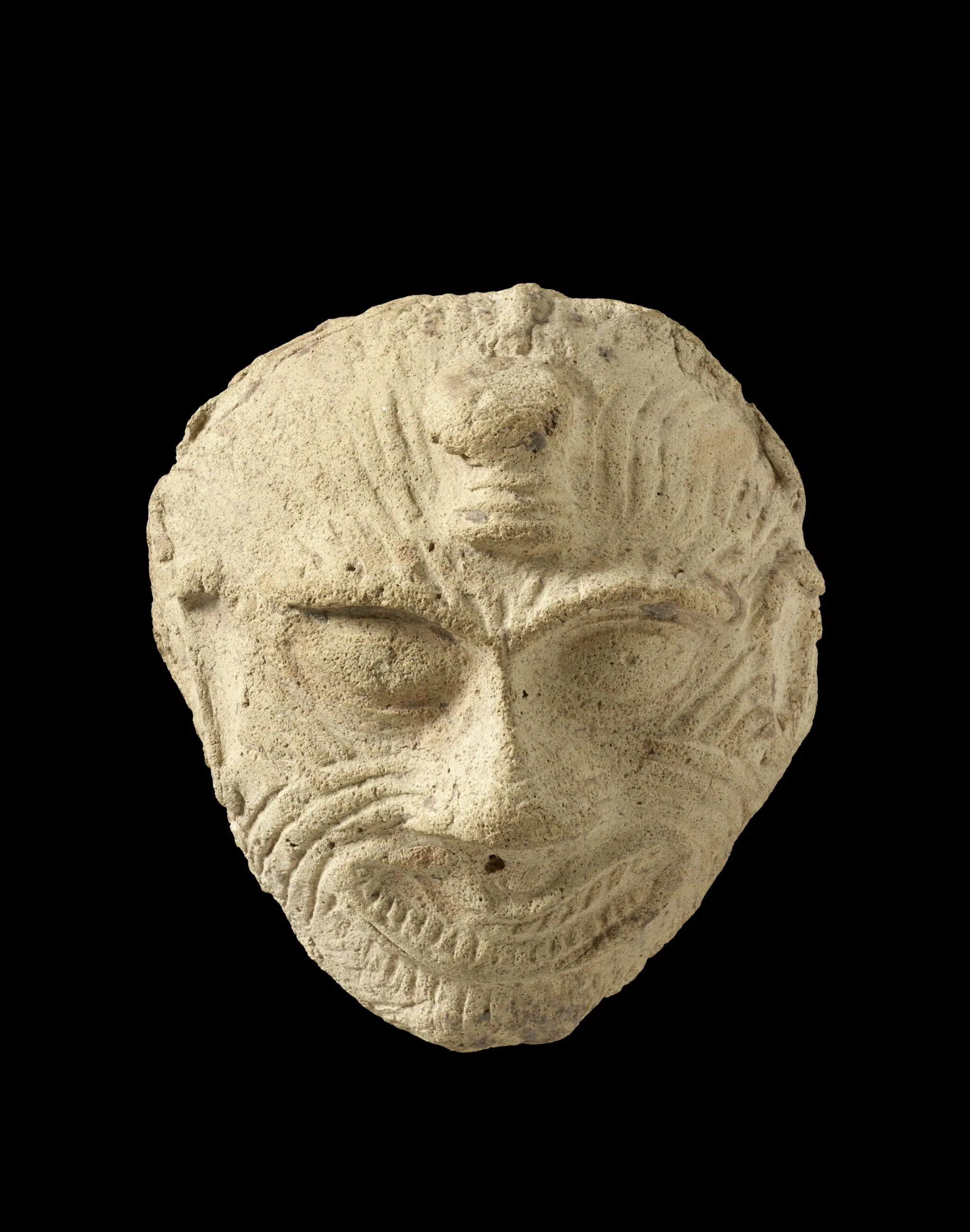
Mask of Humbaba. Old Babylonian, 2000-1700 BCE. Fired clay. (Photo: The Trustees of the British Museum)
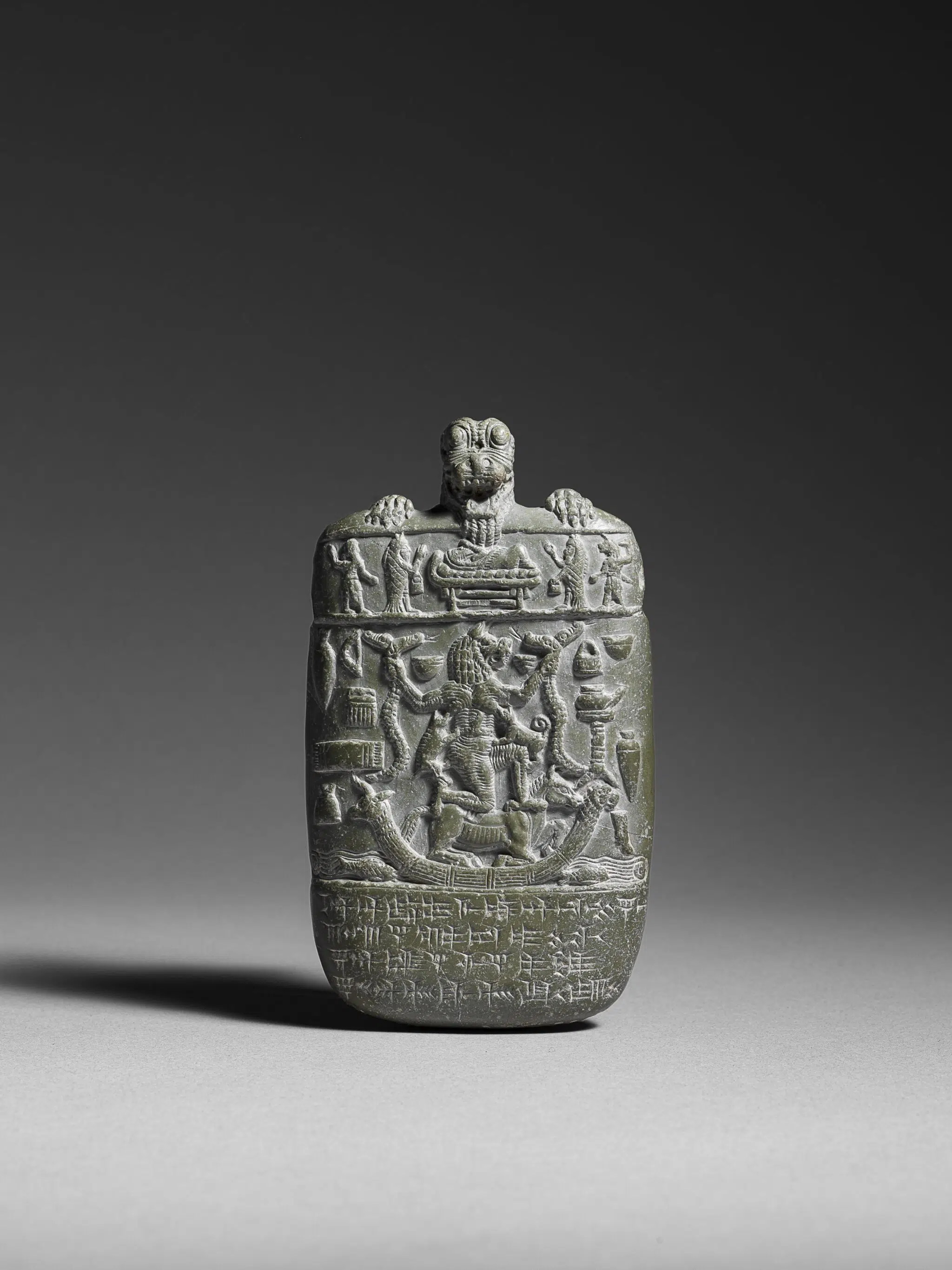
Amulet with the demon Lamashtu. Neo-Assyrian, 700-600 BCE. Green stone. (Photo: Private collection, U.K.)
What was the inspiration behind Cursed!, and what originally drew you to magic as an art historical subject?
I’ve been interested in ancient Greek and Roman magic for many years and particularly fascinated by the so-called “magic gems” carved from semiprecious stones with images of strange deities and inscribed with magical words. I then turned to other objects with inscriptions, including curse tablets, amulets on gold and silver, and the actual books that were written on papyrus found in Egypt. The amulets were functional tools that people genuinely believed could protect them from harm, cure illness, or secure a lover’s affection.
The inspiration for Cursed! came from wanting to bring together the remarkable archaeological evidence for magical practices across the ancient Mediterranean from Egypt and Mesopotamia to Greece and Rome. Magic was woven into the fabric of ancient societies.
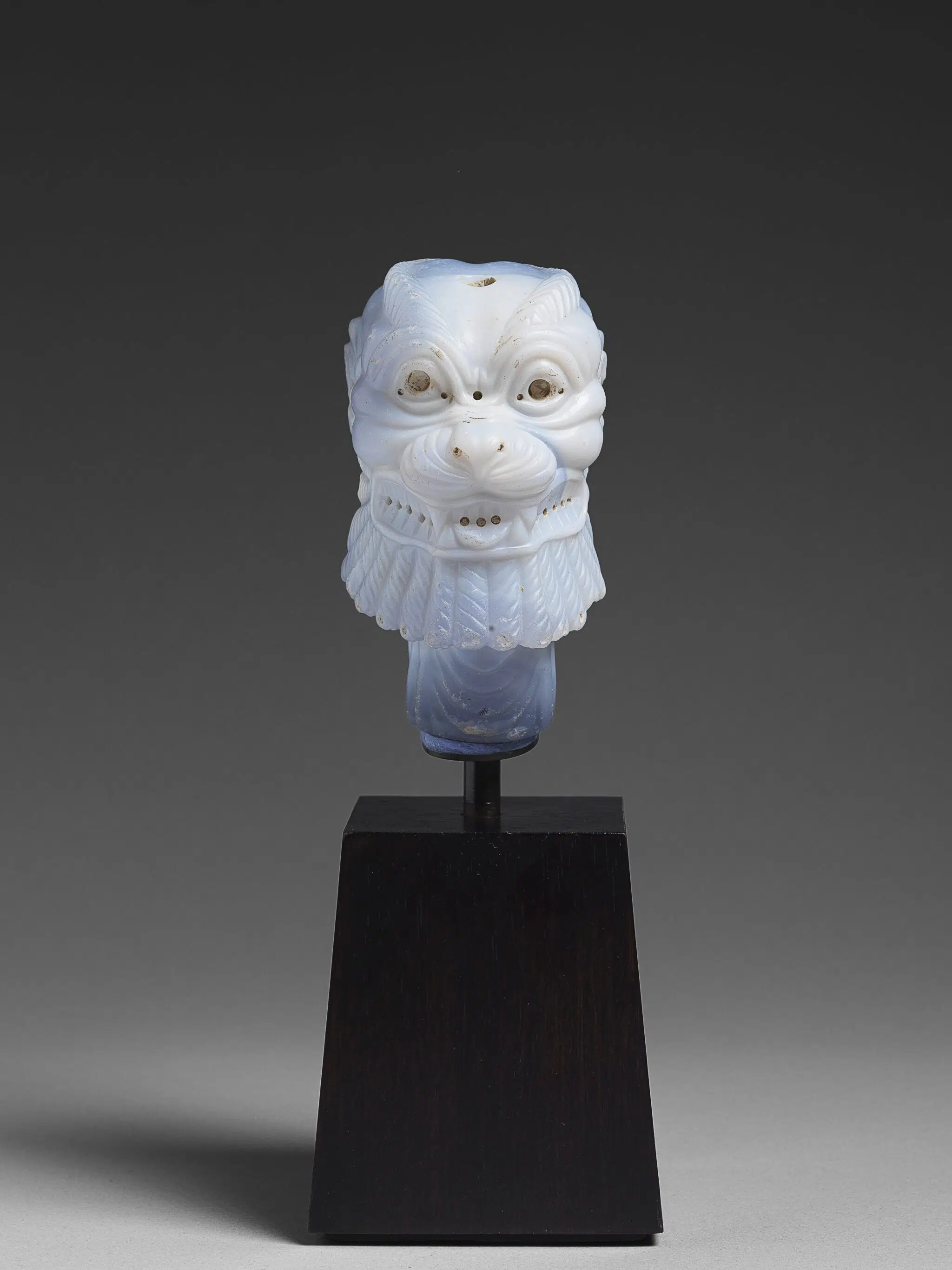
Amulet with the demon Pazuzu. Neo-Assyrian, 681-627 BCE. Chalcedony. (Photo: Private collection, U.K.)
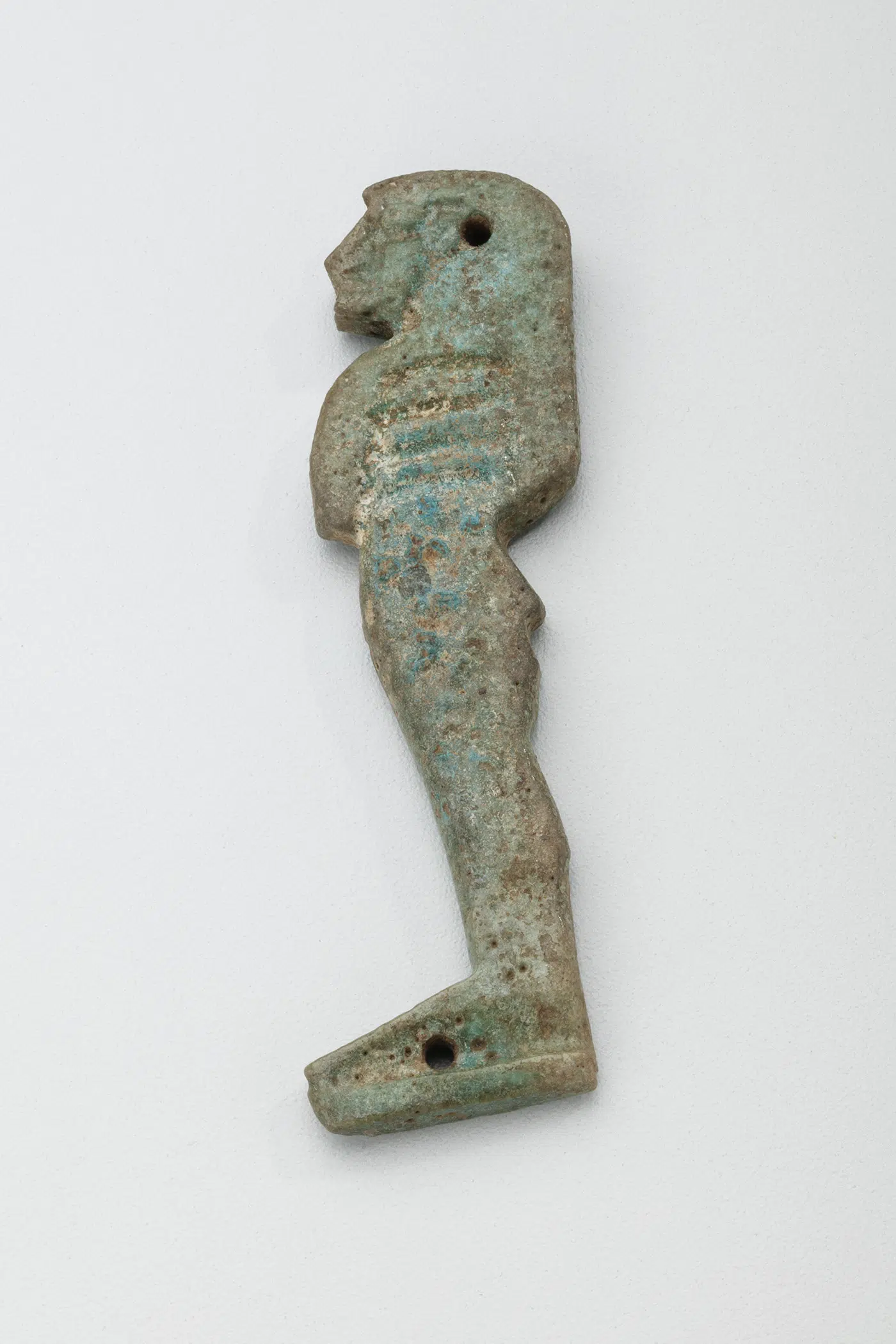
One of four amulets in a set depicting the sons of Horus. Egyptian, 23rd-25th Dynasties, 818-664 BCE. Faience. (Photo: Toledo Museum of Art)
What was the process of curating Cursed!, and how did it differ from your previous projects, if at all?
This exhibition required an unusually broad geographic and chronological scope—spanning more than two millennia and four distinct cultural traditions: Egypt, Mesopotamia, Greece, and Rome. That meant consulting specialists whose expertise complemented my own.
I was fortunate to collaborate with Foy Scalf on Egyptian magic and Gina Konstantopoulos on the ancient Near East for the catalogue. The process also involved securing loans from a range of international institutions, including the British Museum, the Louvre, and the Metropolitan Museum, as well as the rich collection of papyri at the University of Michigan.
Cursed! tells a complex story, tracing how magical beliefs evolved as different cultures came into contact, particularly following Alexander the Great’s conquests.
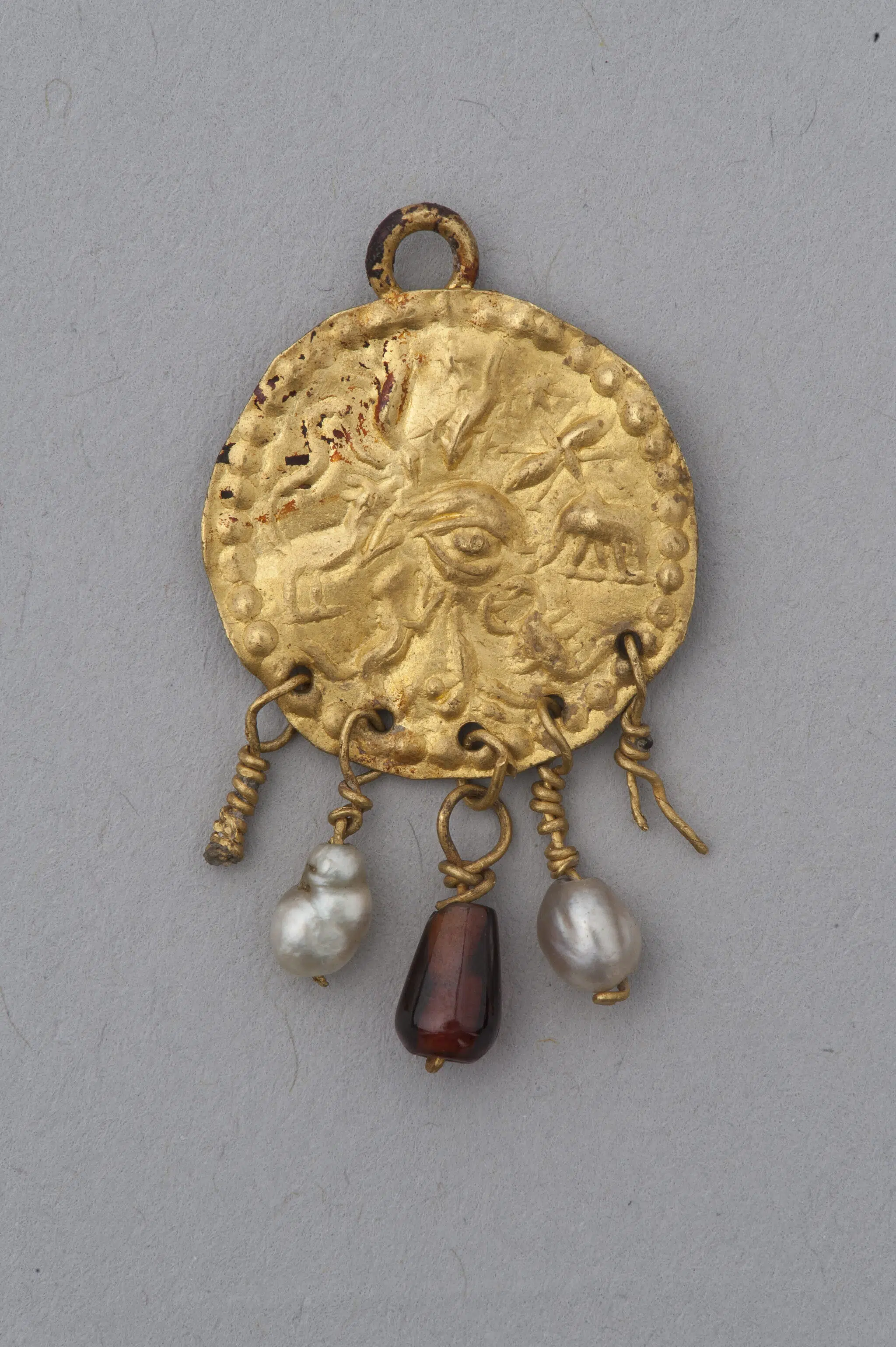
Pendant amulet against the evil eye. Roman, 2nd century CE. Gold, pearls, and amethyst. (Photo: Johns Hopkins Archaeological Museum)
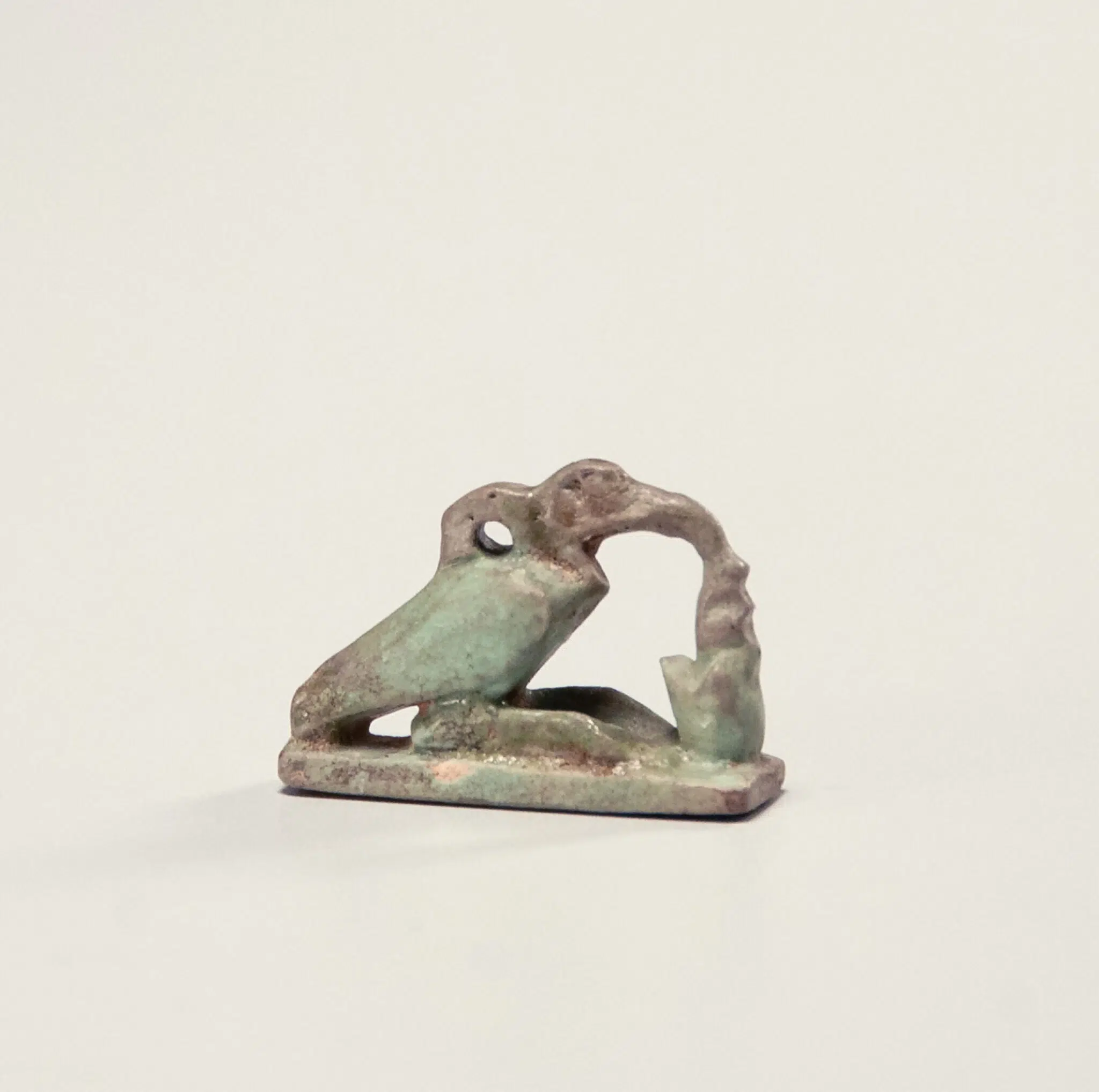
Ibis amulet. Egyptian, 25th-31st Dynasties, 747-332 BCE. Faience. (Photo: Toledo Museum of Art)
In your opinion, what’s the most unexpected or surprising object featured within the exhibition?
I think visitors will be surprised by most of the objects, which are rarely seen and probably quite unfamiliar. But I think they will particularly be struck by the Pazuzu head amulet.
Pazuzu was an Assyrian demon with a snarling leonine face who, though fierce, actually served a protective function to ward off another demon, Lamashtu, who preyed on pregnant women and infants. It’s a powerful example of how Mesopotamian magic operated: demons weren’t simply good or evil, but could be directed toward helpful ends.
Another object that surprises people is the miniature lead coffin from Athens containing a bound curse figure, which was probably intended to assist in a legal dispute—tangible evidence that even in the rational, philosophical culture of classical Greece, people were actively commissioning curses against their rivals.
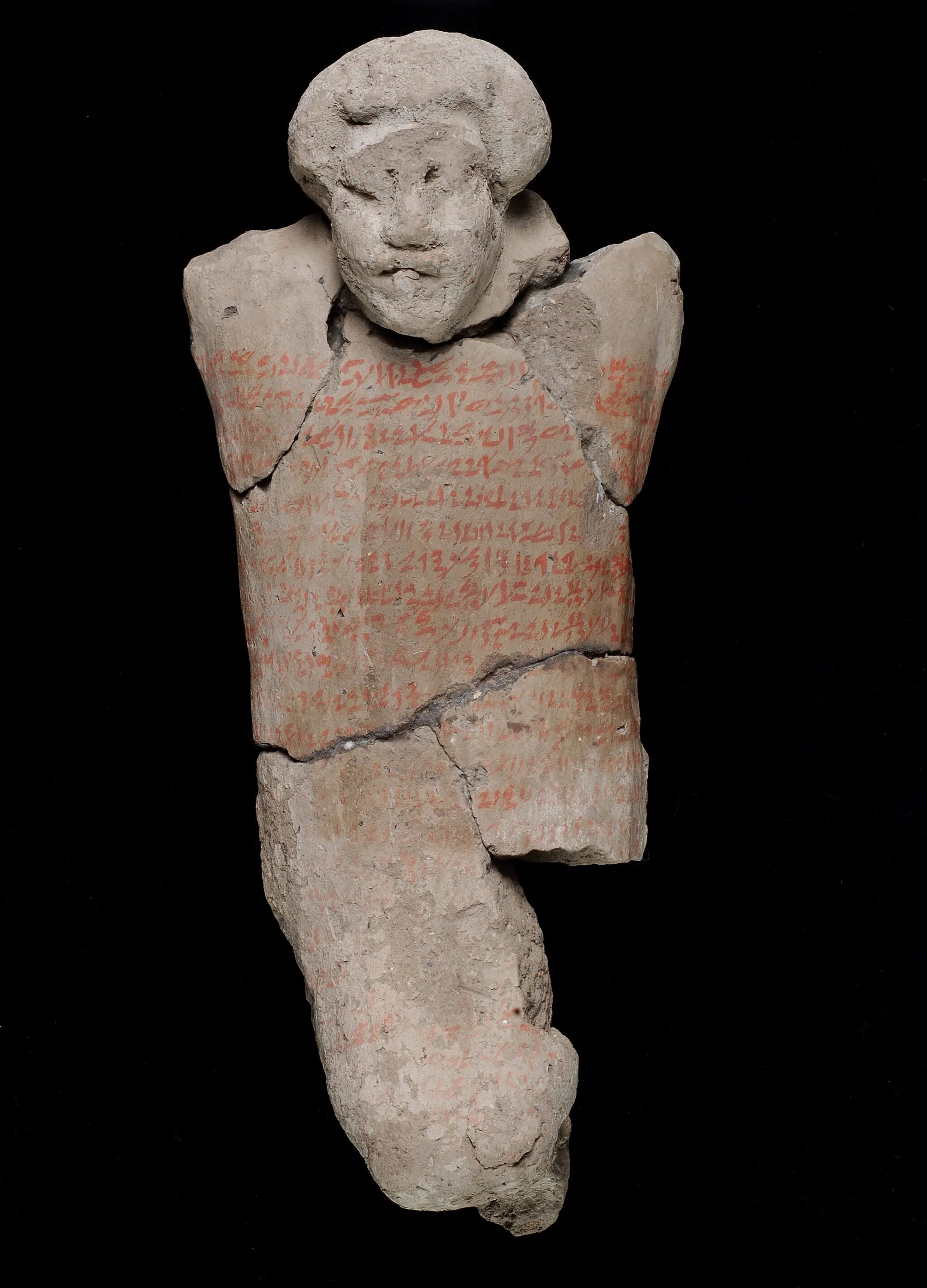
Curse figure. Egyptian, Middle Kingdom, 12th Dynasty, 1991-1802 BCE. Clay with red pigment. (Photo: Image Studio, Royal Museums of Art and History, Brussels)
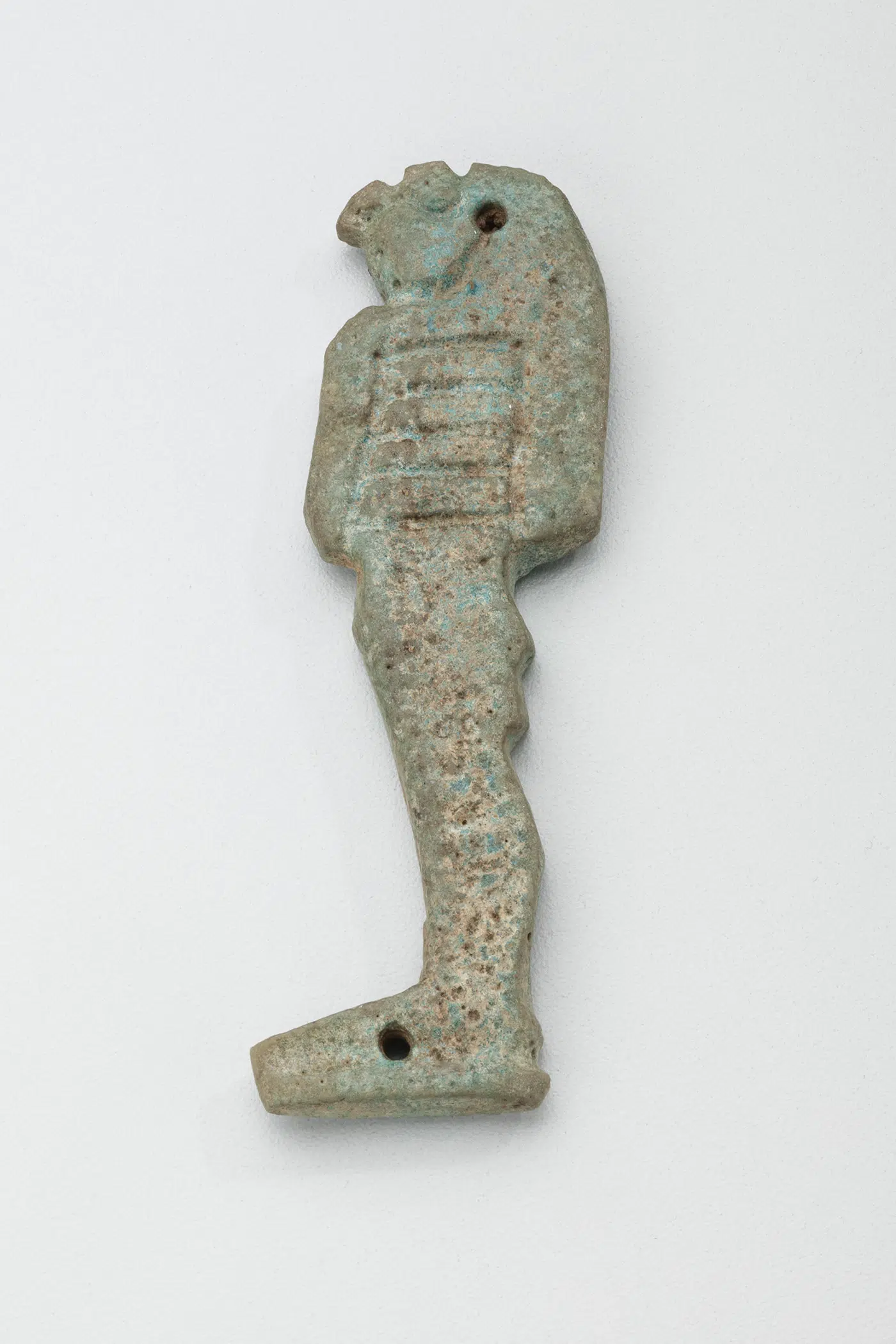
One of four amulets in a set depicting the sons of Horus. Egyptian, 23rd-25th Dynasties, 818-664 BCE. Faience. (Photo: Toledo Museum of Art)
What does Cursed! reveal about the history of magic and its evolution across time and place?
The exhibition reveals that magical beliefs were very ancient, passed down over thousands of years, although continuously evolving as cultures interacted and exchanged ideas. In pharaonic Egypt and ancient Mesopotamia, what we call “magic” was inseparable from official religion; priests performed healing rituals and made protective amulets as part of their conventional duties.
In Greece and Rome, however, similar practices were viewed with suspicion and often attributed to foreigners or disreputable outsiders. Maybe the most fascinating transformation occurred after Alexander’s conquests, when Egyptian, Babylonian, Persian, Jewish, and Greek traditions merged in cosmopolitan cities like Alexandria to create what I call “international magic”—a new synthesis documented in the magical papyri and the proliferation of amulets inscribed with names and symbols from multiple traditions.
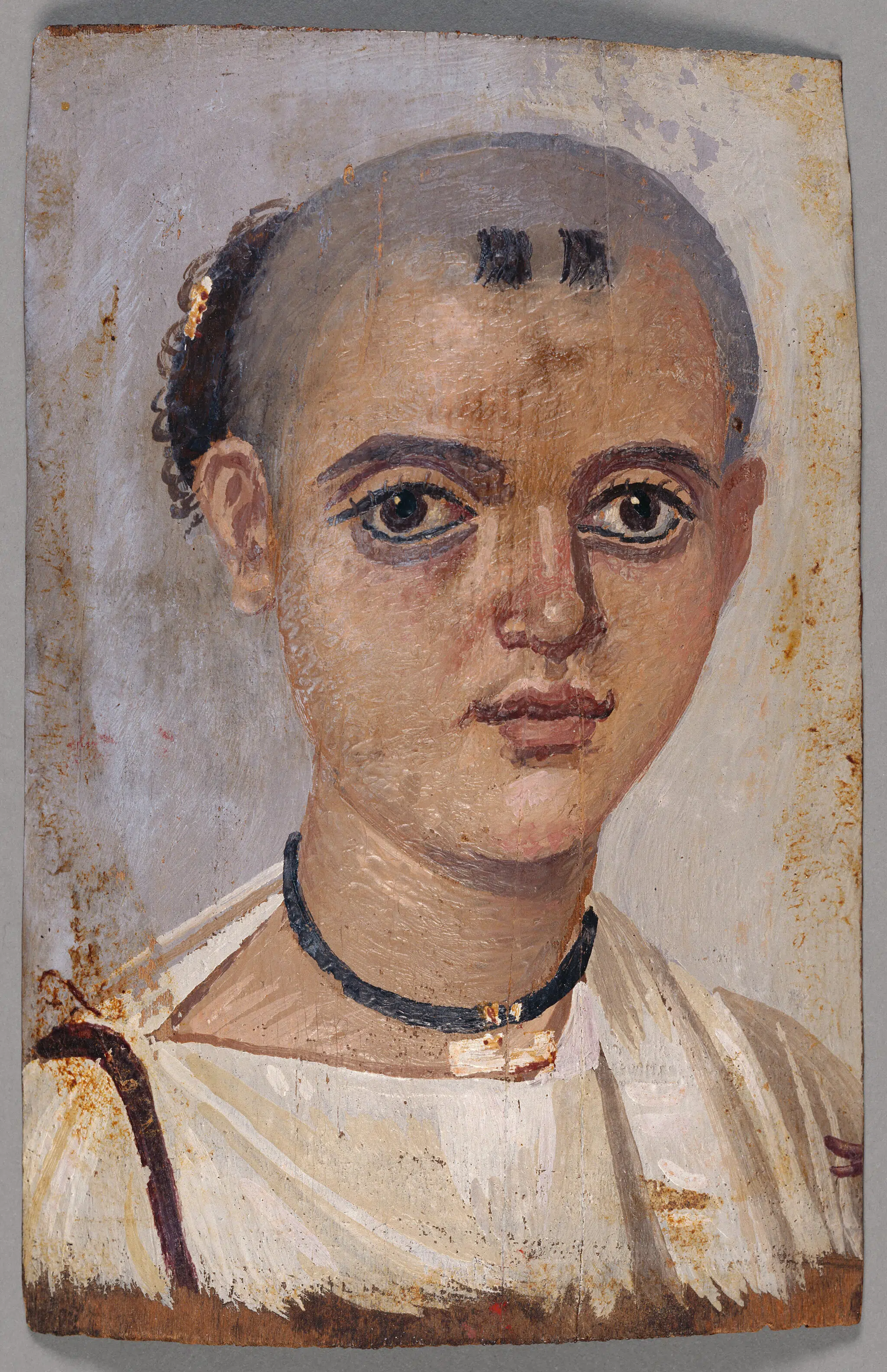
Mummy portrait of a youth wearing an amulet. Egyptian, 150-200 CE. Encaustic on linden wood. (Photo: Getty’s Open Content Program)
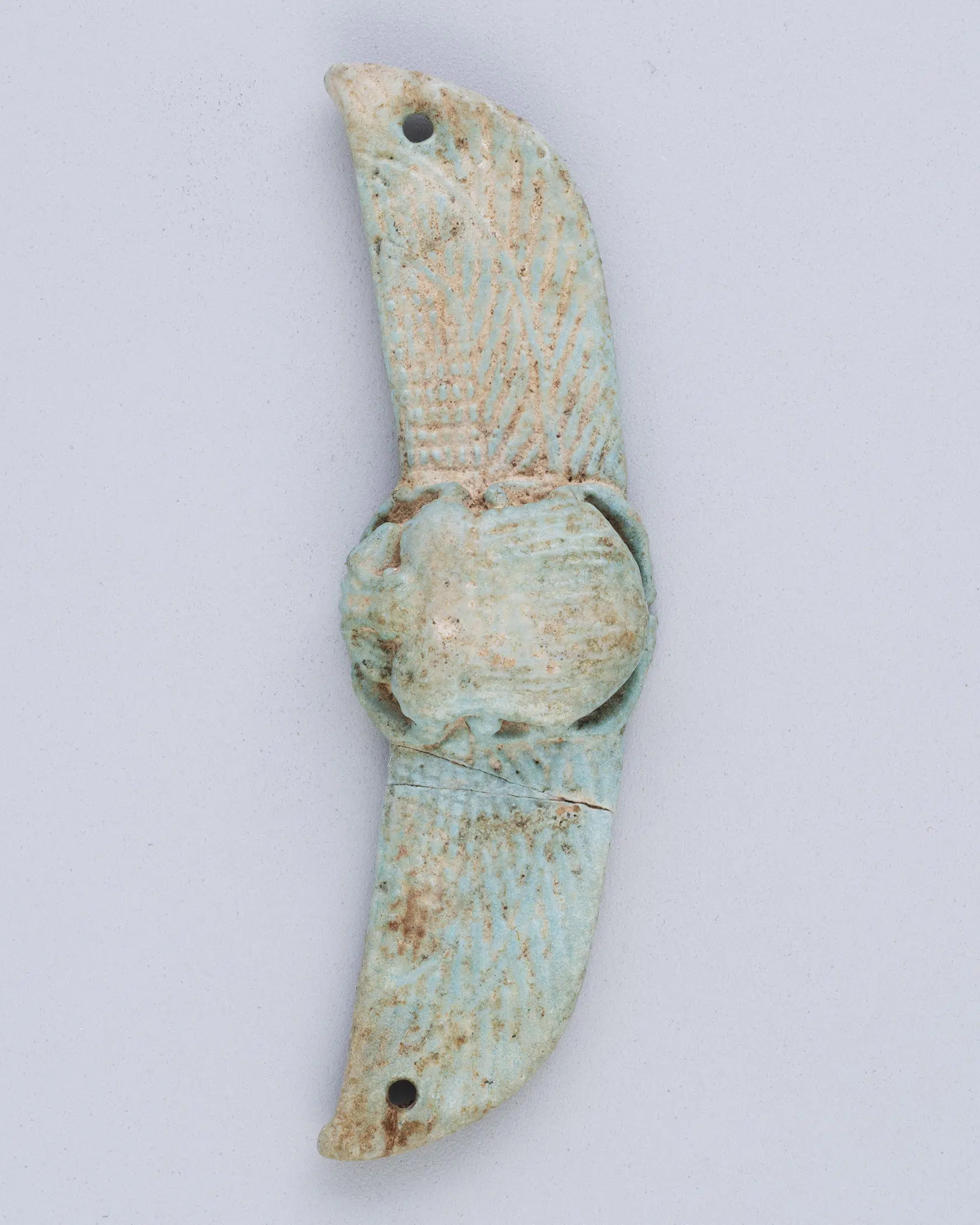
Winged scarab amulet. Egyptian, 25th-31st Dynasties, 747-332 BCE. Faience. (Photo: Toledo Museum of Art)
How does the perception of magic differ around the world, and how does the exhibition reveal those differences?
The contrasts are striking. In Egypt, heka—the creative force we translate as “magic”—was a fundamental aspect of the universe, made use of by the gods. Egyptian magic was entirely orthodox. Similarly in Mesopotamia, trained exorcists (āšipū) combated witchcraft and demons with the full authority of state religion.
But when we turn to Greece and Rome, we find magic portrayed as something foreign and morally suspect—embodied by figures like the sorceresses Circe and Medea. “Magic” was seen more in the way we see it today, usually as outside the bounds of respectable behavior. The exhibition makes these differences visible through the objects themselves, from officially sanctioned Egyptian healing statues and Mesopotamian anti-witchcraft rituals to the secretly deposited Greek curse tablets. But even if the Greeks and Romans often disapproved of magic, the large number of curses and amulets that survive show that magic was very popular and widely used.
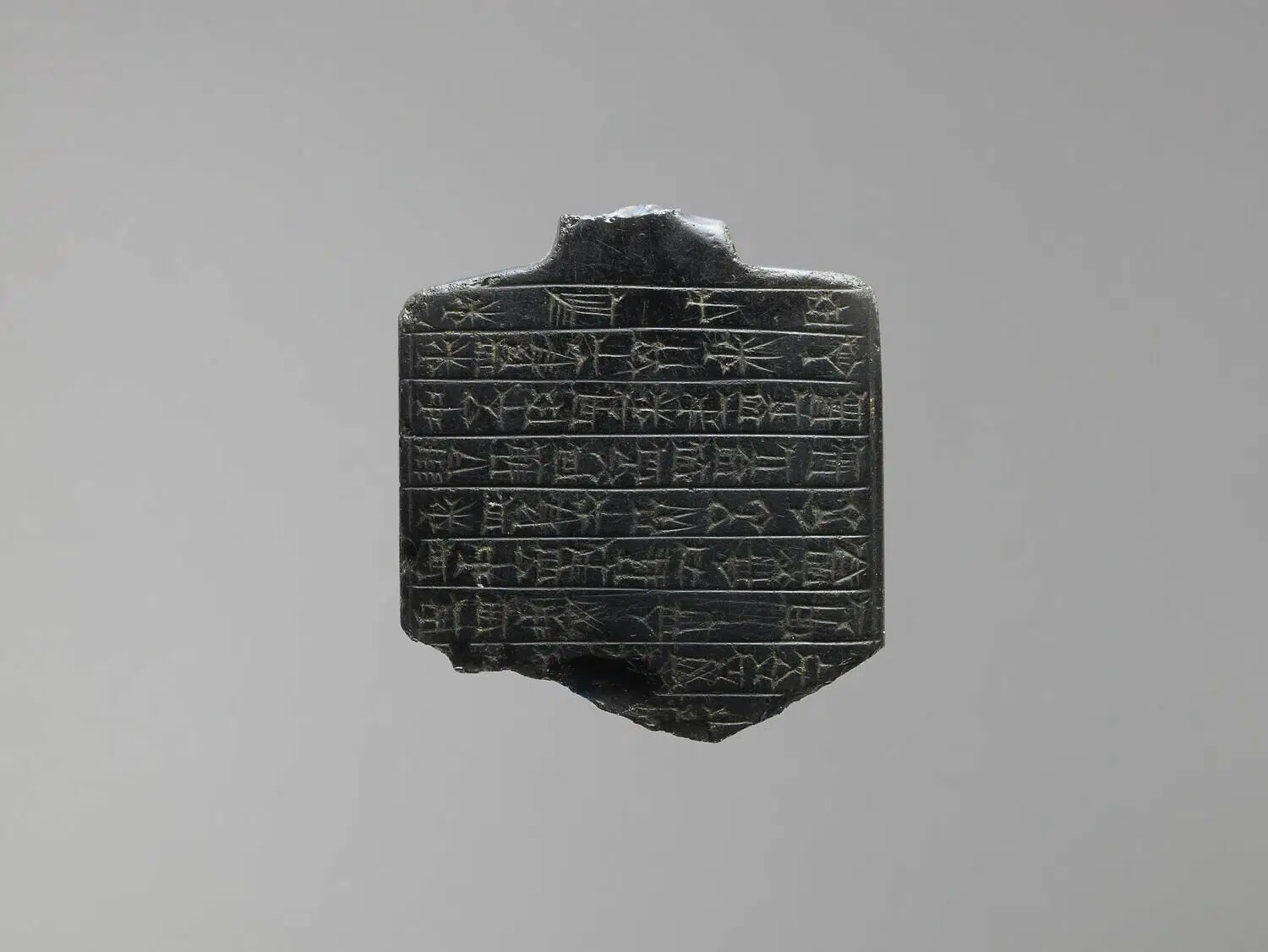
Amulet with the demon Lamashtu depicted on the front. Neo-Assyrian. Obsidian. (Photo: Louvre Museum)
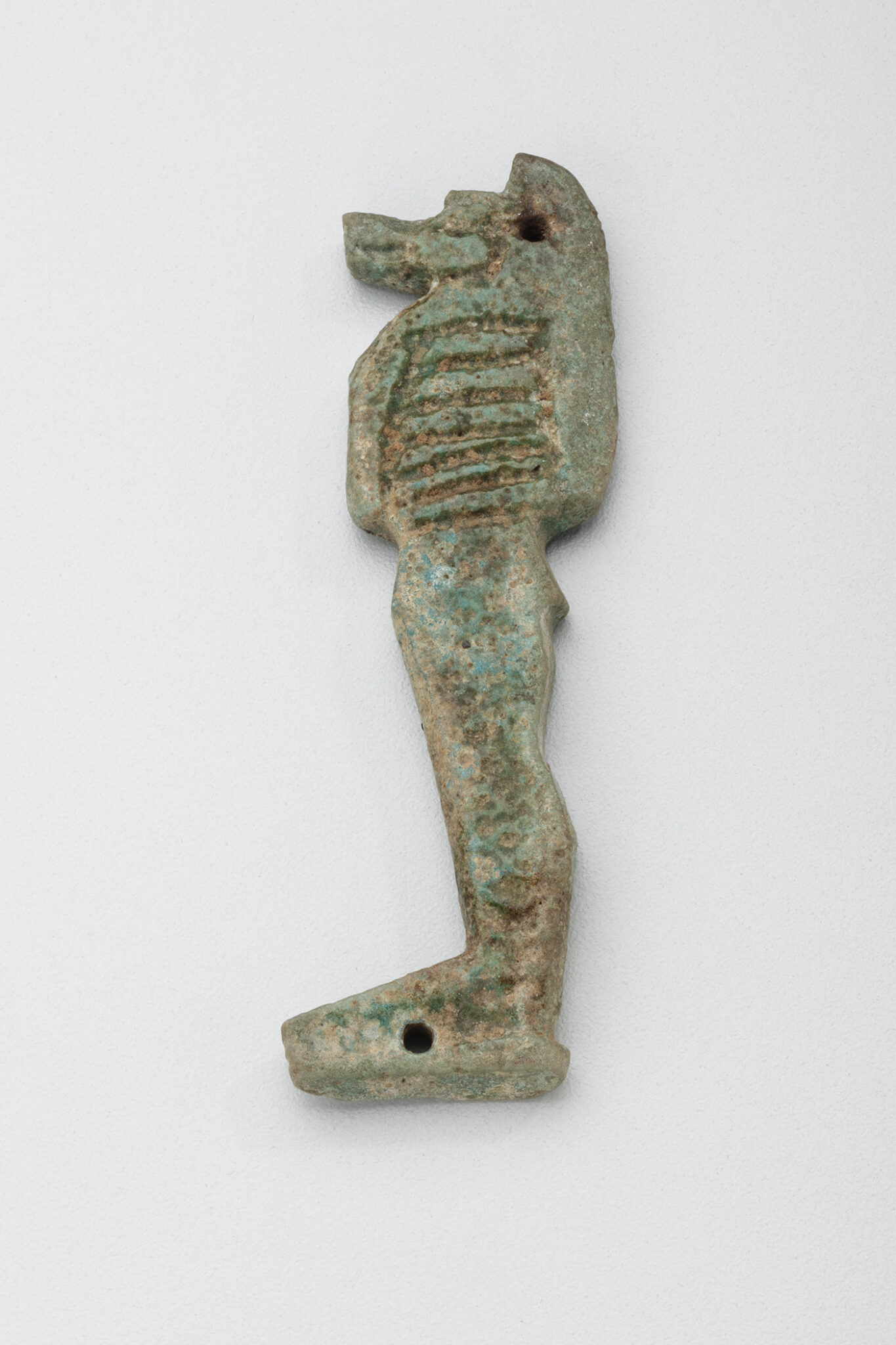
One of four amulets in a set depicting the sons of Horus. Egyptian, 23rd-25th Dynasties, 818-664 BCE. Faience. (Photo: Toledo Museum of Art)
Do you have a favorite object in the exhibition? If so, what is its story and what makes it unique to you?
It’s difficult to choose, but I do like the magical healing statue from Egypt that shows the child-god Horus triumphing over dangerous creatures. The object is completely covered in hieroglyphic magic spells for healing. Pilgrims would pour water over these inscribed statues and drink the resulting liquid, believing the sacred words would transfer their healing power. These objects functioned as the medical technology of their time—they represent a profound human desire to take agency over suffering.
I’m also fascinated by the London Magical Papyrus, a third-century priest’s compilation of spells found near Thebes. It’s written in both Greek and Demotic Egyptian, which tells us something important: Egyptian priests weren’t just preserving ancient traditions but actively engaging with Greek magical texts and clients as well. The papyrus contains spells for divine revelation, protection, and healing, blending Egyptian, Greek, and Jewish divine names. It’s essentially a working professional’s handbook—a window into how magic was actually practiced.
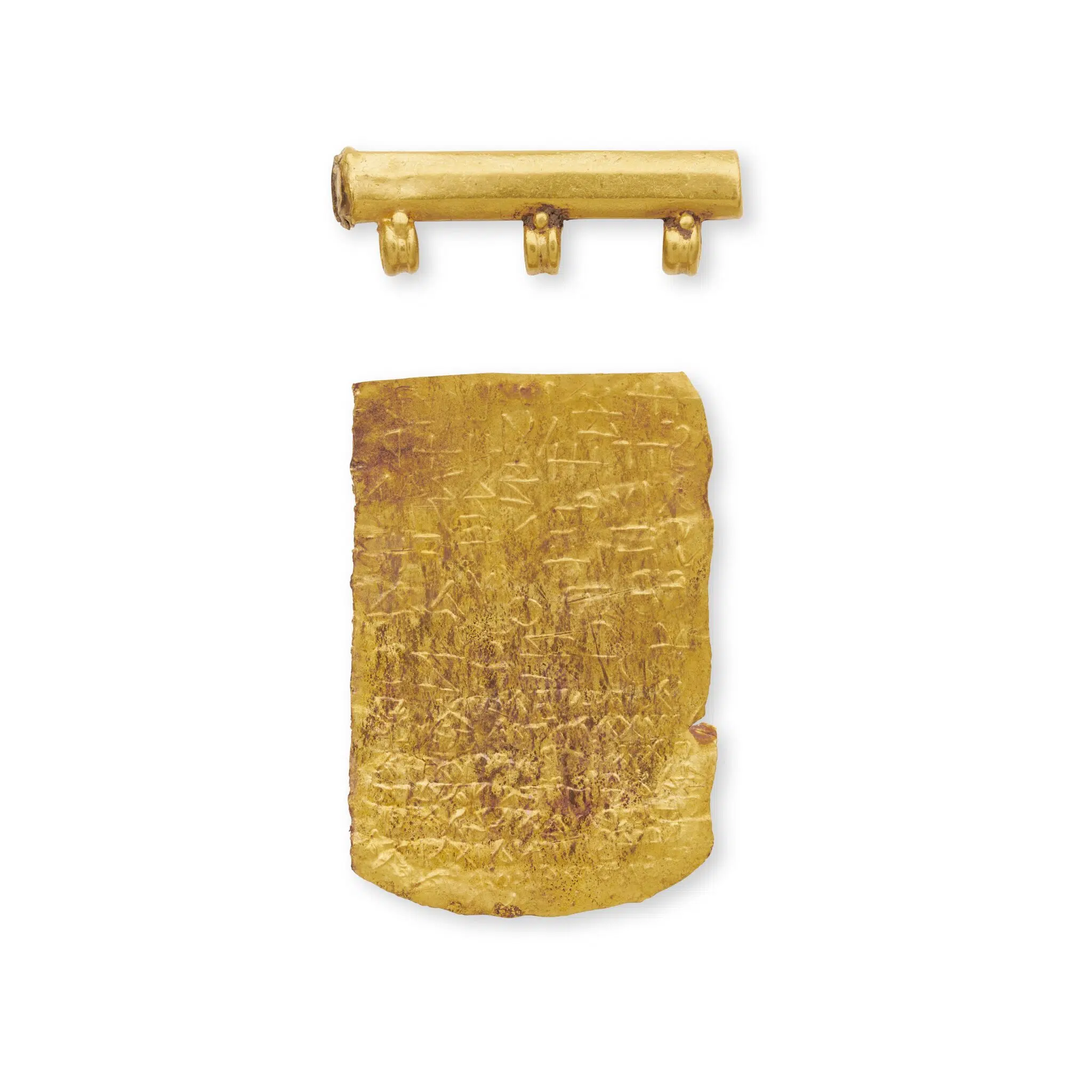
Womb amulet and case. Roman, 1st century CE. Gold. (Photo: Bibliothèque nationale de France)
What do you hope audiences will take away from Cursed?
I hope visitors will recognize that magic in the ancient world was not an illusion or sleight of hand but a serious, deeply held belief system that helped people navigate uncertainty and suffering. Whether protecting a newborn child, healing an illness, cursing a legal opponent, or seeking love, people turned to magic as a way to act—to have agency when facing forces beyond their control. That impulse hasn’t disappeared, and people today can sympathize quite easily.
Exhibition Information:
Cursed!: The Power of Magic in the Ancient World
March 21–July 5, 2026
Toledo Museum of Art
2445 Monroe St, Toledo, OH 43620
Toledo Museum of Art: Website | Instagram
My Modern Met granted permission to feature photos by the Toledo Museum of Art.
Related Articles:
Expansive Surrealist Exhibition Lands in the U.S. To Celebrate the Art Movement’s Centenary
New Exhibition Contends With Black Heritage Through Layered, Evocative Textile Art
Frank Lloyd Wright’s Furniture Design Is Front and Center in Pioneering Chair Exhibition