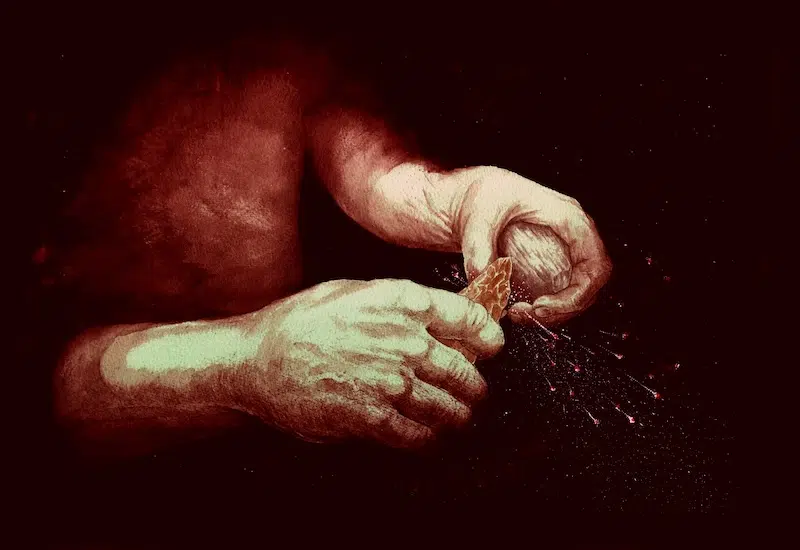
Artist’s impression of fire at Barnham around 400,000 years ago. (Photo: Craig Williams © The Trustees of the British Museum)
For decades, the earliest hard evidence that humans could make fire dated back only 50,000 years, to a site in northern France. But new evidence from the UK suggests the origin of fire-making should be pushed back by 350,000 years, to roughly 400,000 years ago.
The timeline for human advancement is greatly defined by the discovery of fire. Though we have evidence our hominin ancestors used naturally occurring fire for over a million years, this finding is the first evidence of humans creating and controlling fire themselves.
The new finding predates Homo sapiens’ migration out of Africa, so scientists infer that it was Neanderthals who were innovating ways to create fire. We know our sister species was clever and complex. Fire-making would have been extremely important to them, since they no longer needed to wait for naturally occurring fire, nor did they have to keep it constantly alive. It would have provided the warmth necessary for further exploration north; heat for cooking food, which increased brain and teeth size, killed bacteria and parasites, and neutralized toxins for easier digestion; and served as a gathering point for bonding, teaching, storytelling, and tool making, as the researchers saw in Suffolk.
The site, located in the village of Barnham, was originally a clay pit, supplying resources for local brick buildings in the late 19th century. Early excavators there unearthed unusual animal remains, including the bones of elephants, macaque monkeys, fish, and bison—finds that set the scene of what was once a thriving wetland ecosystem half a million years ago.
For the last decade, archaeologists have been excavating the site for its plethora of artifacts, bones, and tools. They also found strong evidence of two distinct toolmaking traditions at the site: one group used flint to make simple cutting tools, while a second group chipped carefully away at the flint to carve more intentional hand axes. This second group left behind clusters of flint shards that were cracked and reddened, which are signs of heat damage. At this stage, however, researchers had no way of knowing whether the heat that affected the flint and sediment was intentional or caused naturally, by lightning, for example.
The next big clue came when they unearthed pyrite, also known as fool’s gold. This shiny yellow mineral does not occur naturally in Barnham, meaning it had to have been intentionally brought there by early humans. Striking flint against pyrite would generate the sparks needed to start a fire.
The researchers’ working theory is that Neanderthals were generating and controlling fire at a prehistoric gathering place, making tools around the campfire. Professor Nick Ashton, curator of Palaeolithic Collections at the British Museum, called it the most remarkable discovery of his career, saying: “It’s incredible that some of the oldest groups of Neanderthals had the knowledge of the properties of flint, pyrite, and tinder at such an early date.”
Dr. Rob Davis, project curator of Pathways to Ancient Britain at the British Museum, said, “The implications are enormous. The ability to create and control fire is one of the most important turning points in human history with practical and social benefits that changed human evolution. This extraordinary discovery pushes this turning point back by some 350,000 years.”
Scientists found 400,000-year-old evidence of humans making fire in an old clay pit, along with unusual animal remains.

Excavation of 400,000-year-old pond sediments at Barnham, Suffolk. (Photo: Jordan Mansfield, courtesy of Pathways to Ancient Britain project)
Before the groundbreaking discovery in Suffolk, scientists’ earliest evidence of human fire-making was only 50,000 years ago.
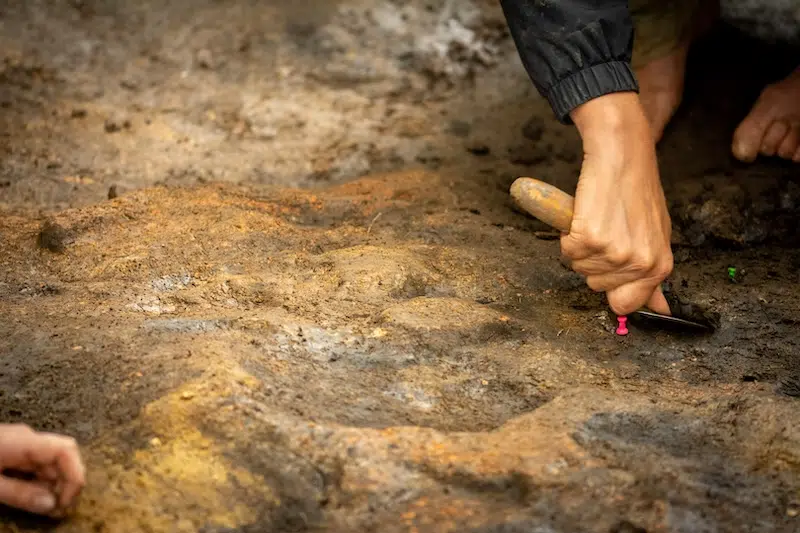
Excavation of area adjacent to 400,000-year-old campfire at Barnham, Suffolk. (Photo: Jordan Mansfield, courtesy of Pathways to Ancient Britain Project)
The finding dates back to before Homo sapiens left Africa, so scientists infer that it was Neanderthals who were innovating ways to create fire.
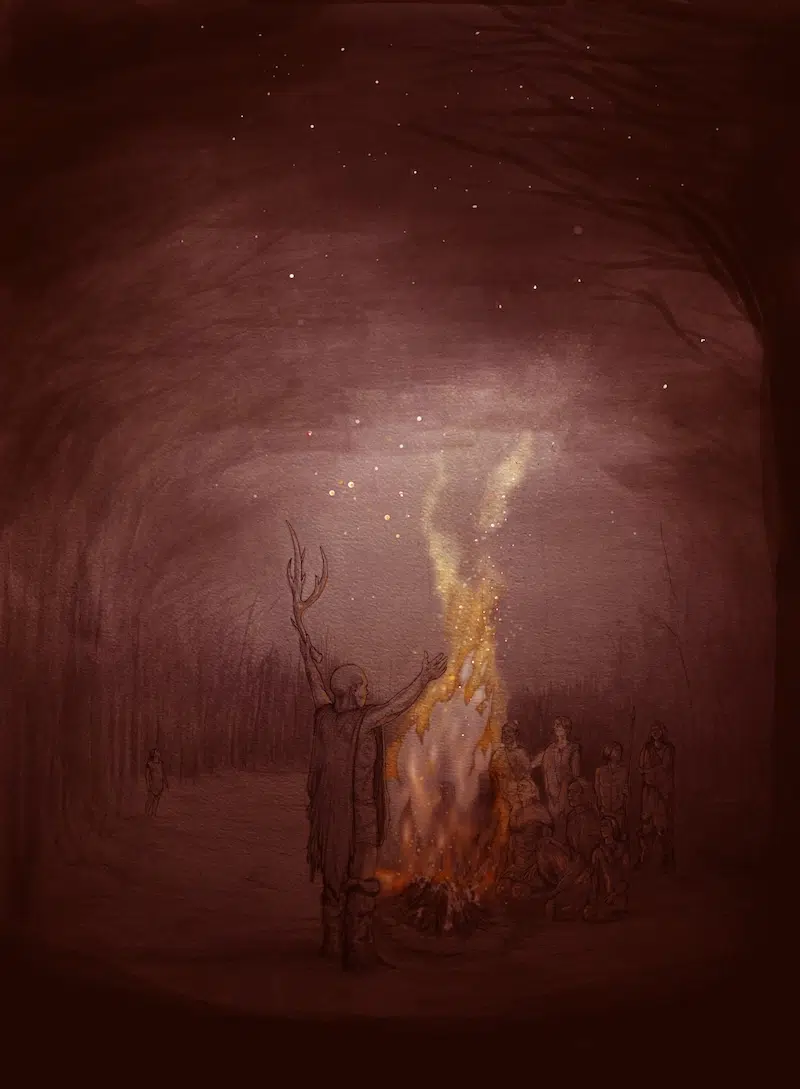
Artist’s impression of fire at Barnham around 400,000 years ago. (Photo: Craig Williams © The Trustees of the British Museum)
The discovery of pyrite at the scene was crucial evidence, as it is not naturally occurring in these regions, indicating Neanderthals deliberately brought it over.
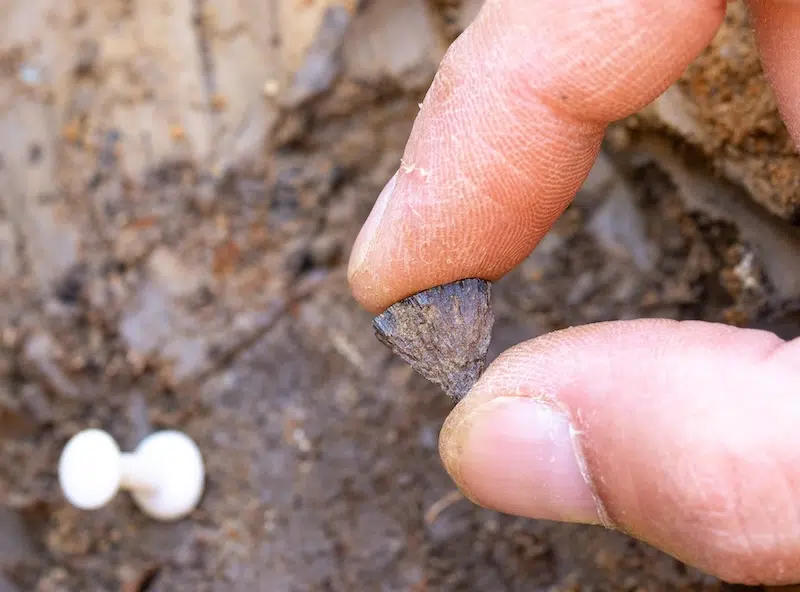
Discovery of the first fragment of iron pyrite in 2017 at Barnham, Suffolk. (Photo: Jordan Mansfield, courtesy of Pathways to Ancient Britain project)
When struck against flint, the pyrite can be used to create sparks and start a fire.
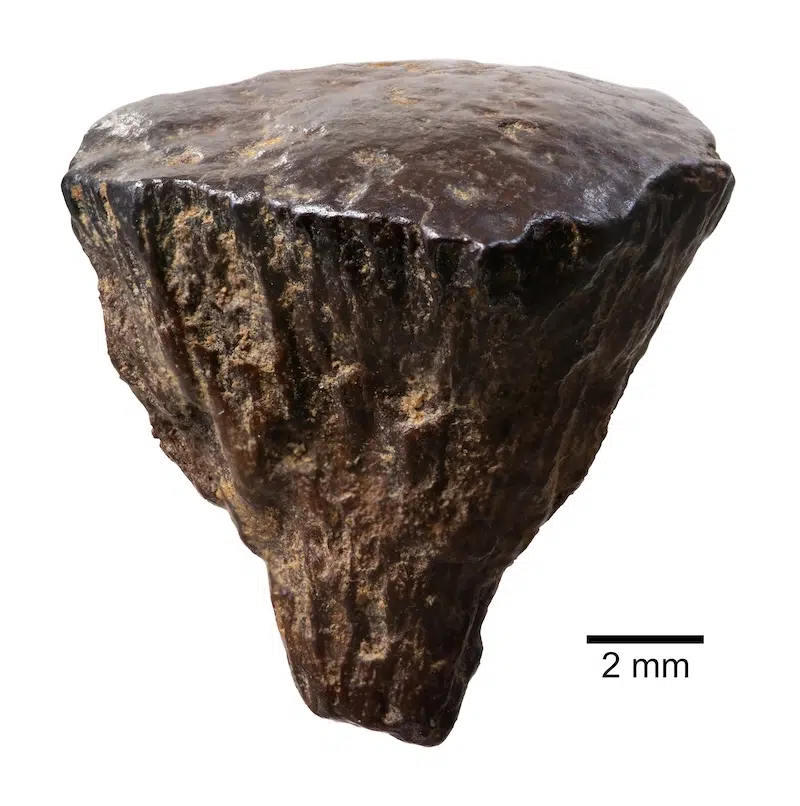
Fragment of iron pyrite discovered at Barnham, Suffolk, in 2017. (Photo: Jordan Mansfield, courtesy of Pathways to Ancient Britain project)
Collections of flint shavings with signs of repeated heat damage indicated the Neanderthals sat around the fire shaping their tools.
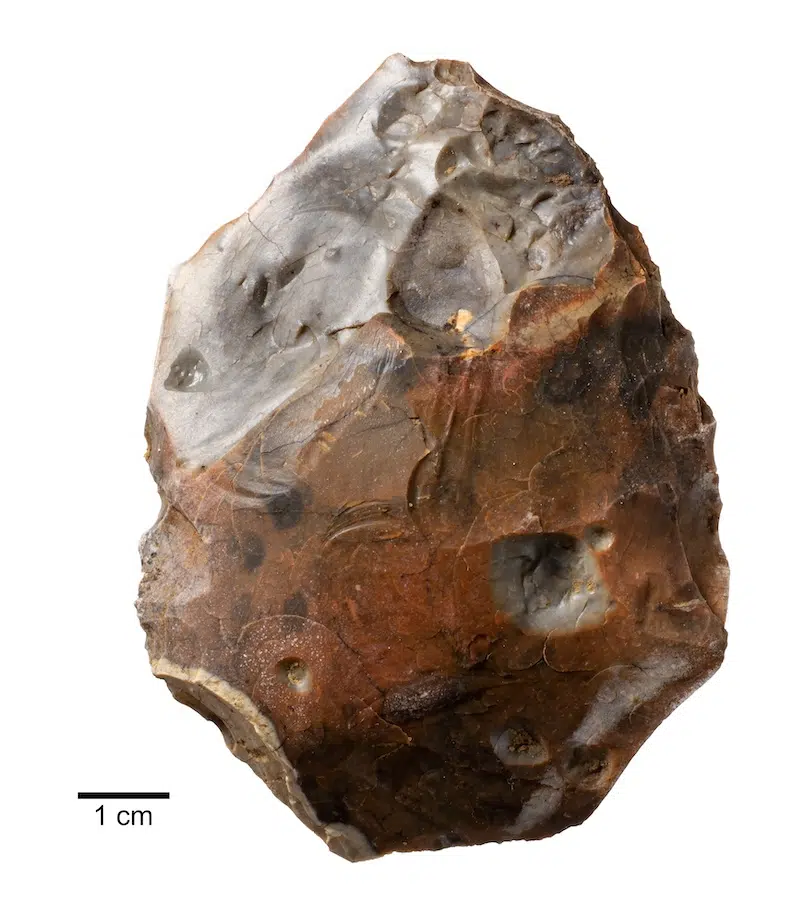
Heat-shattered handaxe found adjacent to 400,000-year-old campfire at Barnham, Suffolk. (Photo: Jordan Mansfield, courtesy of Pathways to Ancient Britain project)
Sources: Groundbreaking discovery shows earliest evidence of fire-making, Earliest evidence of making fire, The moment the earliest known human-made fire was uncovered
All images via Pathway to Ancient Britain / British Museum.
Related Articles:
Fossil of Extinct North American Rhino Offers Evidence Challenging Our Knowledge of Arctic History
Archaeologists Discover 15,000-Year-Old Clay Jewelry With Children’s Fingerprints on Them
800-Year-Old Notebook Found in Shockingly Good Condition in a Medieval Toilet