Under the vast glass canopy of Paris’s Grand Palais, visitors encounter a world of swirling forms, luminous color, and symbols that blur the boundary between the material and the spiritual. Hilma af Klint: Paintings for the Temple (1906–1915) marks the first major exhibition devoted to the pioneering Swedish artist in France, bringing together nearly the entirety of her ambitious spiritual cycle. Organized by the Grand Palais and Centre Pompidou and curated by Pascal Rousseau, the exhibition remains on view through August 30, 2026.
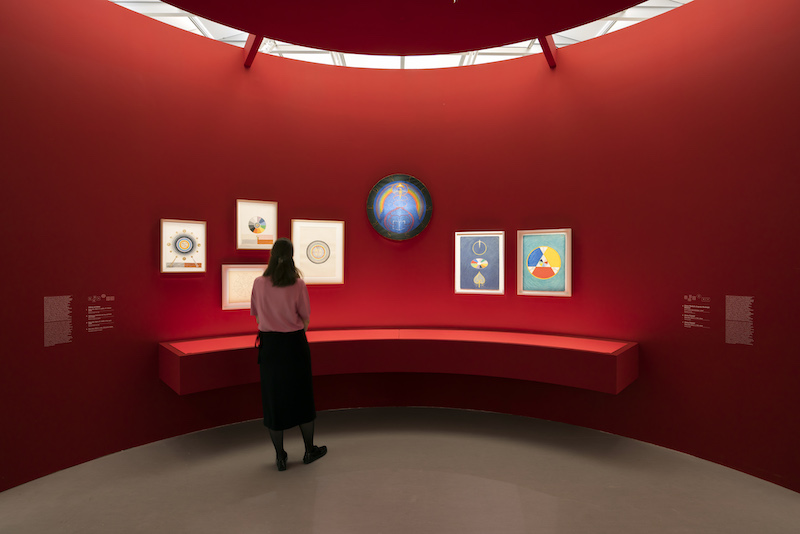
Created between 1906 and 1915, Paintings for the Temple comprises 193 works that af Klint conceived as a single artistic and spiritual project. The exhibition opens with af Klint’s early notebooks, diagrams, and spiritual drawings. These works introduce the visual language that would come to define her practice. Spirals suggest growth and evolution. Circles represent unity and balance. Botanical forms intertwine with geometric structures. Together, they reveal an artist searching for ways to visualize forces that exist beyond ordinary perception.
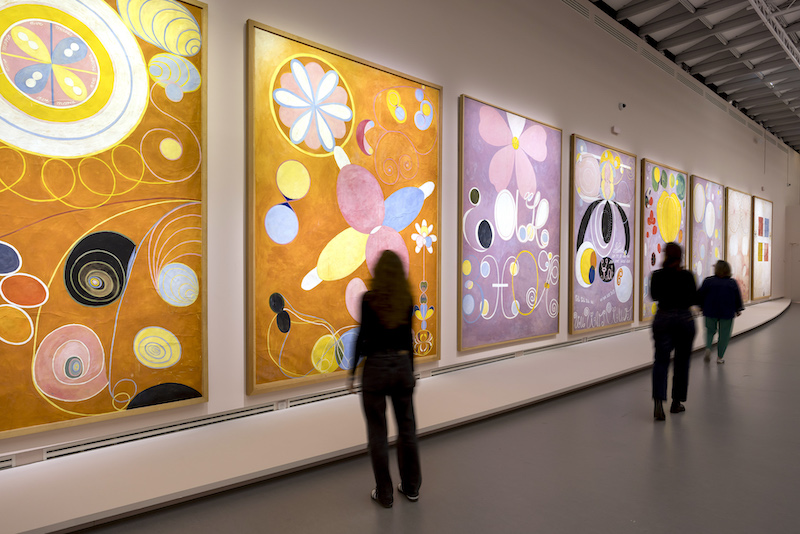
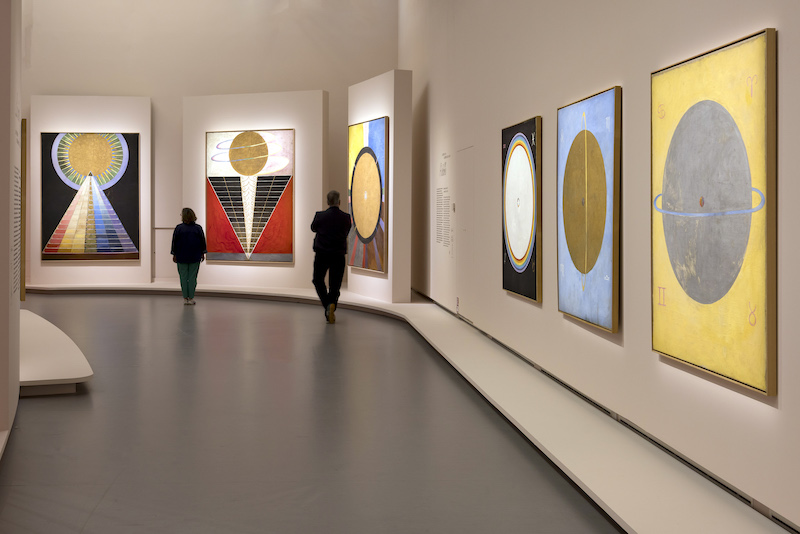
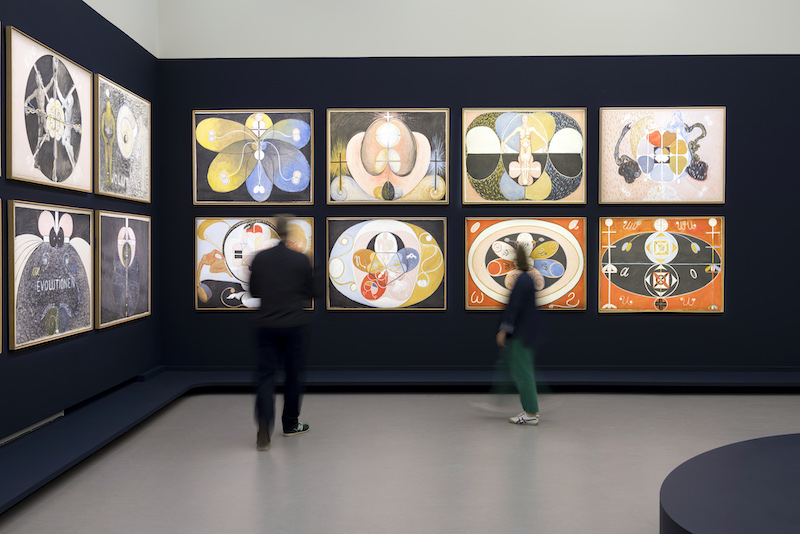
From there, the exhibition expands dramatically. Monumental canvases rise across the galleries, immersing visitors in af Klint’s distinctive universe of color and symbolism. Organic shapes float across luminous surfaces. Delicate lines weave through fields of pink, blue, yellow, and violet. Scientific observation, spiritual inquiry, and artistic experimentation converge in compositions that still feel remarkably contemporary.
At the center of the exhibition stands The Ten Largest (1907), a series that remains among the most astonishing achievements of early 20th-century art. Towering more than ten feet high, the paintings trace the stages of human life from childhood to old age through sweeping forms and vibrant color. Petal-like shapes bloom across the surfaces. Spirals unfurl in every direction. Layers of symbols overlap and intertwine. The paintings possess a physical presence that reproductions can never fully capture.
As visitors progress through the exhibition, recurring motifs emerge and evolve. Cellular structures echo planetary systems. Geometric diagrams transform into organic forms. Microscopic and cosmic worlds appear to mirror one another. Af Klint drew inspiration from spirituality, science, and nature.
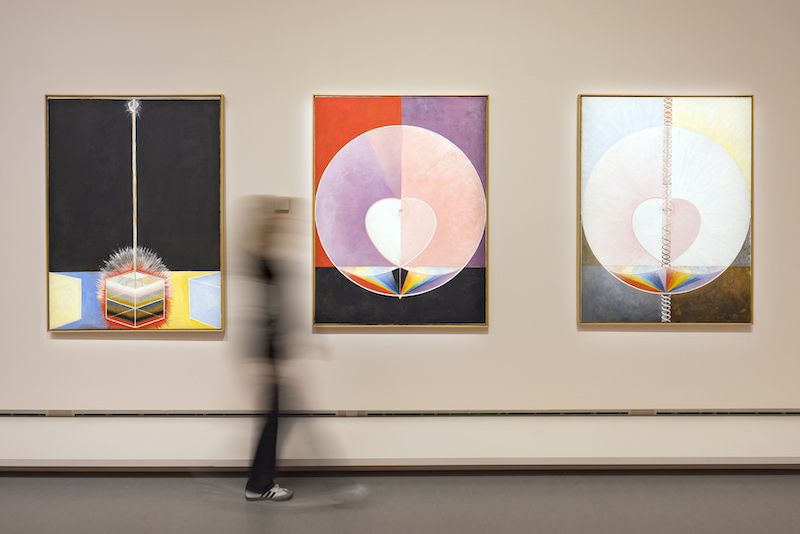
The exhibition culminates with the Altarpieces of 1915, three luminous works that af Klint conceived as the spiritual summit of the entire cycle. Gold and silver surfaces catch the changing light while triangles, circles, and radiant forms converge into images of ascension and unity. After moving through room upon room of symbols and revelations, visitors arrive at these works almost as pilgrims reaching a destination.
Although af Klint’s remarkable biography often accompanies discussions of her art, the Grand Palais exhibition places the focus squarely on the paintings themselves. Seen together, the works reveal the scale of her vision and the coherence of her ideas. What emerges is not simply the story of an overlooked artist, but a vast and deeply considered project that sought to connect the material world with something larger, more mysterious, and more universal. More than 100 years after af Klint created these paintings, they continue to invite reflection and wonder.
Hilma af Klint: Paintings for the Temple (1906–1915) remains on view at the Grand Palais in Paris through August 30, 2026.
Hilma af Klint: Paintings for the Temple (1906–1915) at the Grand Palais in Paris presents the Swedish artist’s nearly complete 193-work spiritual cycle in its first major monographic exhibition in France.
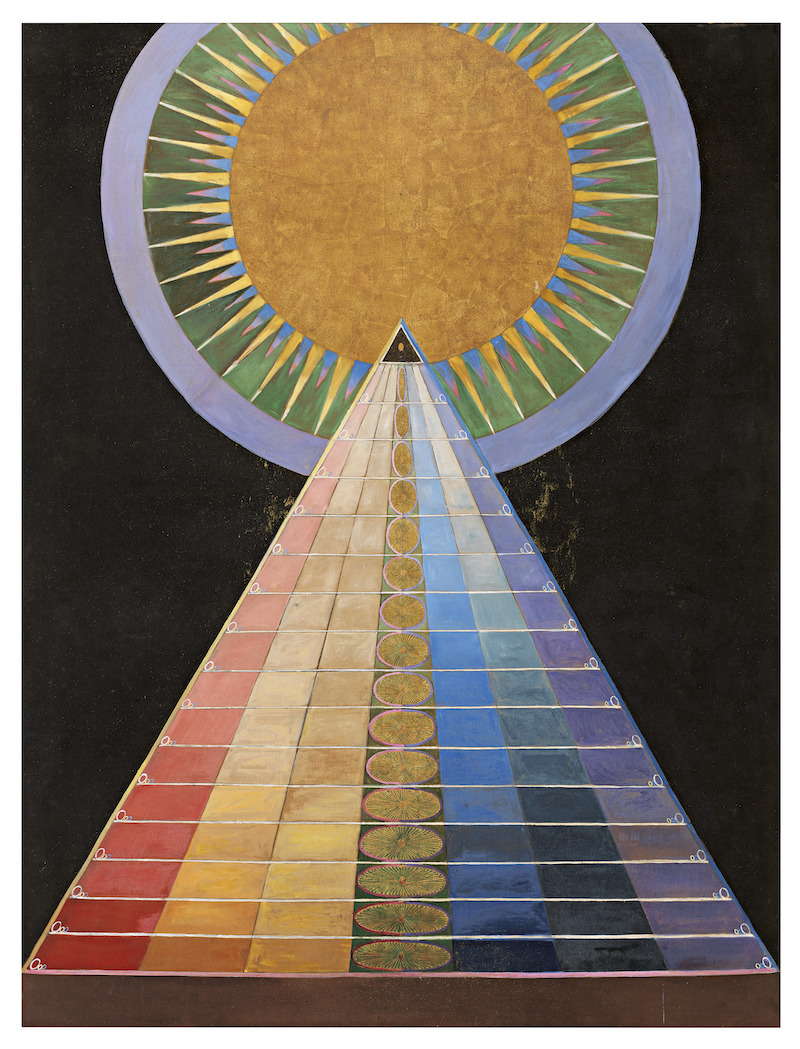
Retable, n° 1, 1915, huile et feuille d’or sur toile, 237,5 × 179,5 cm, HаK187. By courtesy of the Hilma af Klint Foundation / photo The Moderna Museet, Stockholm
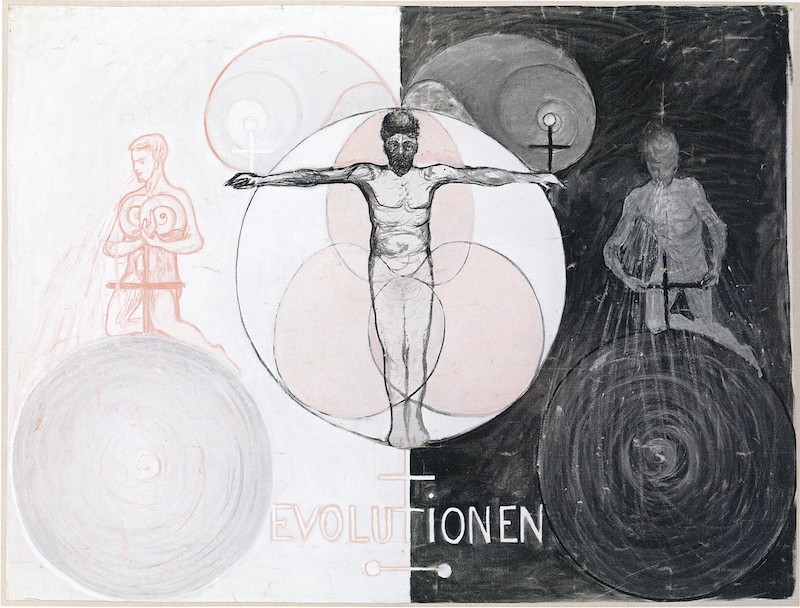
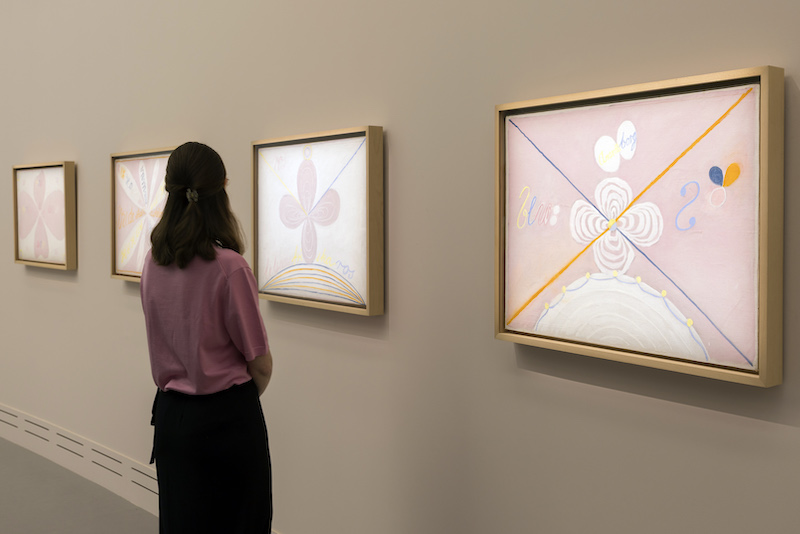
Évolution, n° 1, 1908, huile sur toile, 102,5 × 134,5 cm, HaK069. By courtesy of the Hilma af Klint Foundation / photo The Moderna Museet, Stockholm
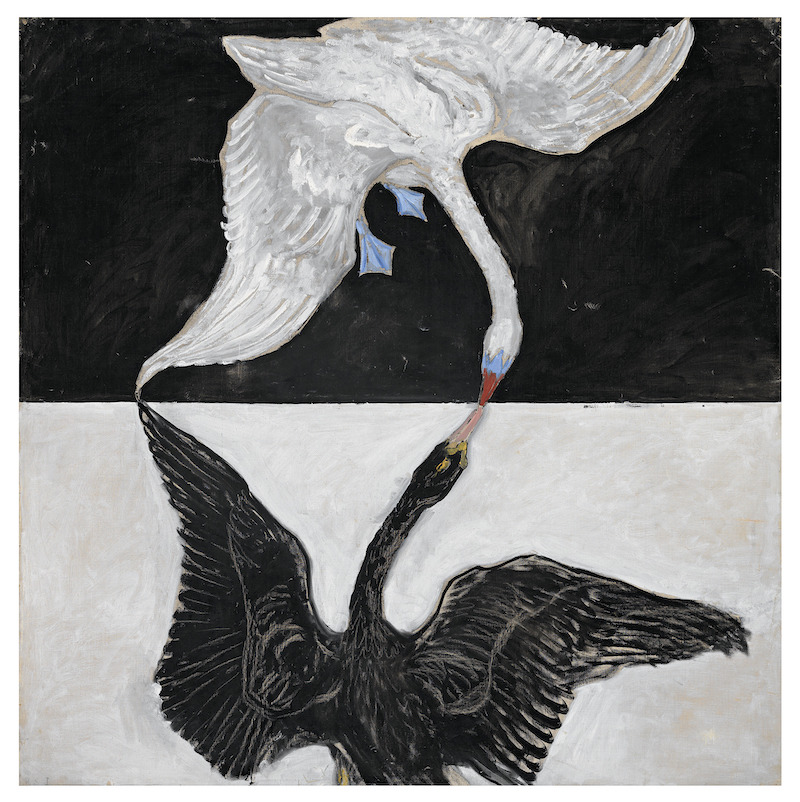
Cygne, n° 1, 1914-1915, huile sur toile, 150 × 150 cm, HaK149. By courtesy of the Hilma af Klint Foundation / photo The Moderna Museet, Stockholm
Curated by Pascal Rousseau and organized by the Grand Palais and Centre Pompidou, the show follows af Klint’s original structure for the series, staging the works as a sequential journey through her imagined temple.
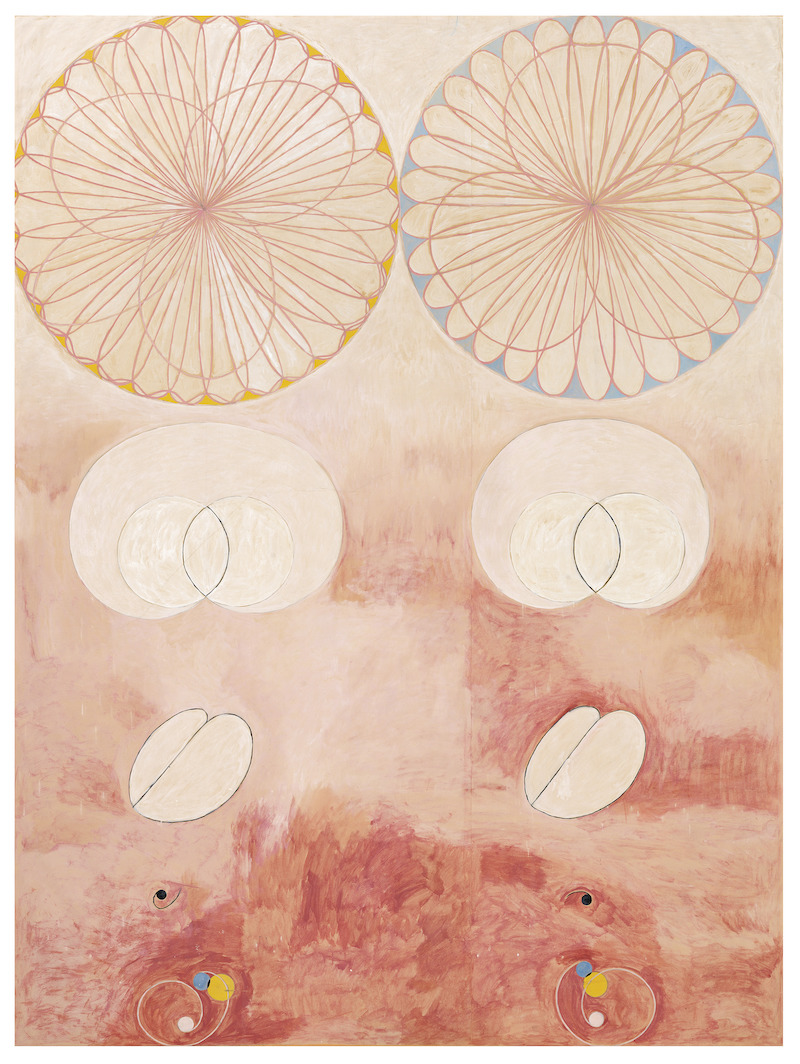
Les Dix plus grands, n° 9 (Vieillesse), 1907, tempera sur papier contrecollé sur toile, 320 × 238 cm, HaK110. By courtesy of the Hilma af Klint Foundation / photo The Moderna Museet, Stockholm
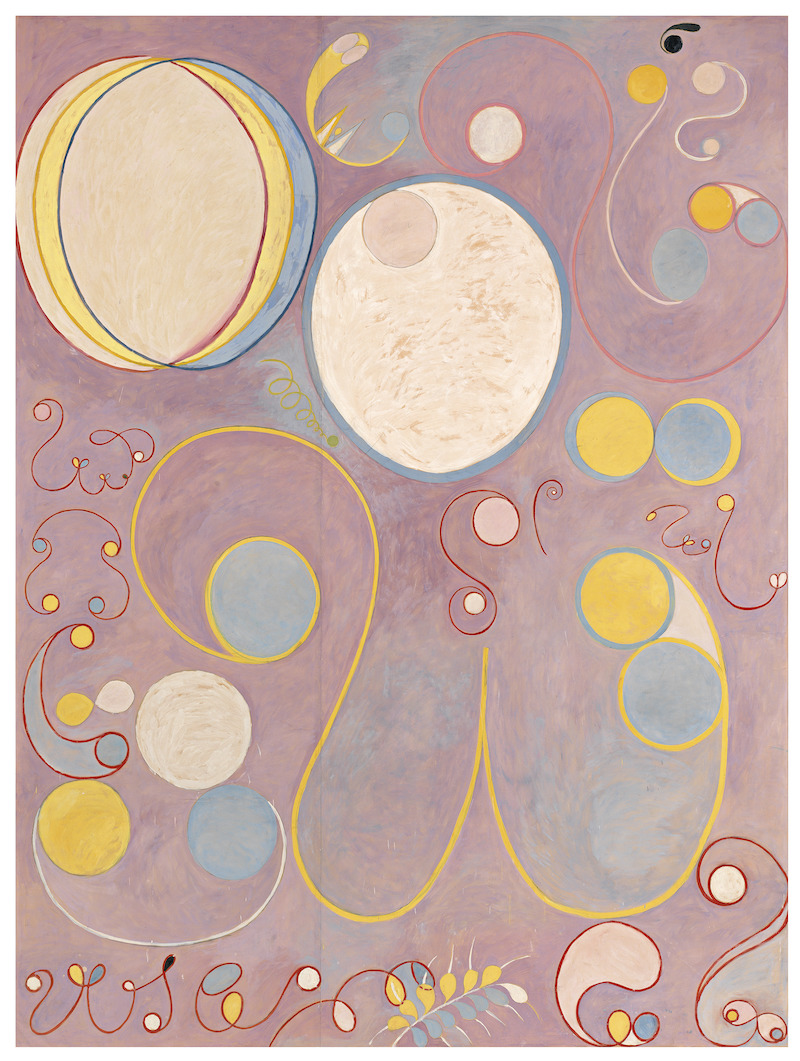
Les Dix plus grands, n° 8 (Âge adulte), 1907, tempera sur papier contrecollé sur toile, 322 × 239 cm, HaK109. By courtesy of the Hilma af Klint Foundation / photo The Moderna Museet, Stockholm
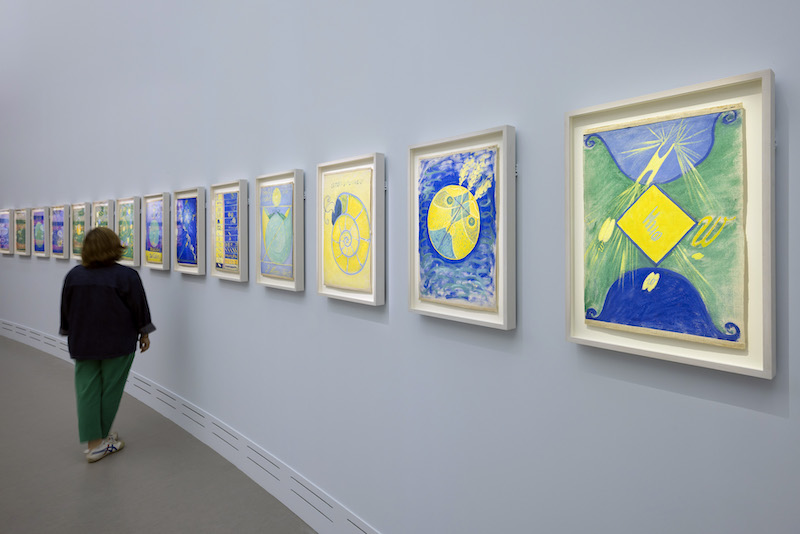
The exhibition begins with notebooks and spiritual drawings that establish the symbols, color codes, and geometric structures that guide the entire cycle.
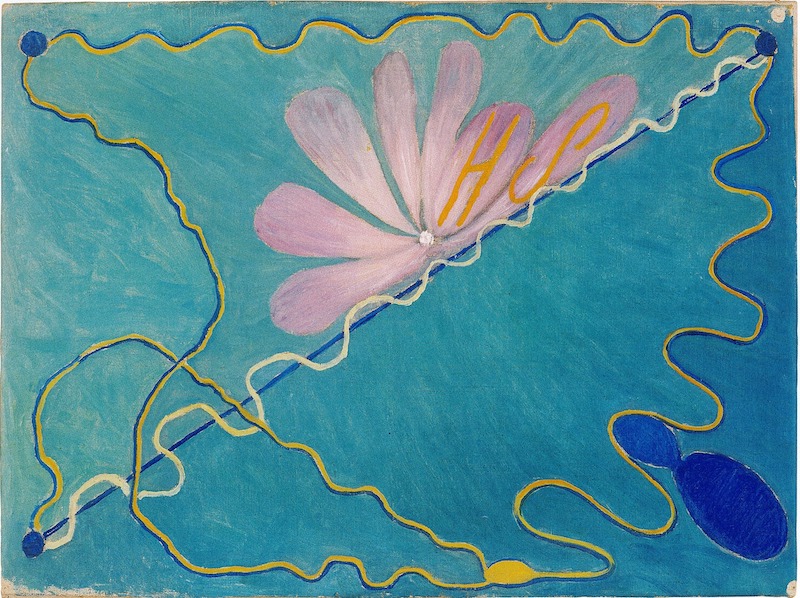
Éros, n° 1, 1907, huile sur toile, 58 × 78 cm, НHaK027. By courtesy of the Hilma af Klint Foundation / photo The Moderna Museet, Stockholm
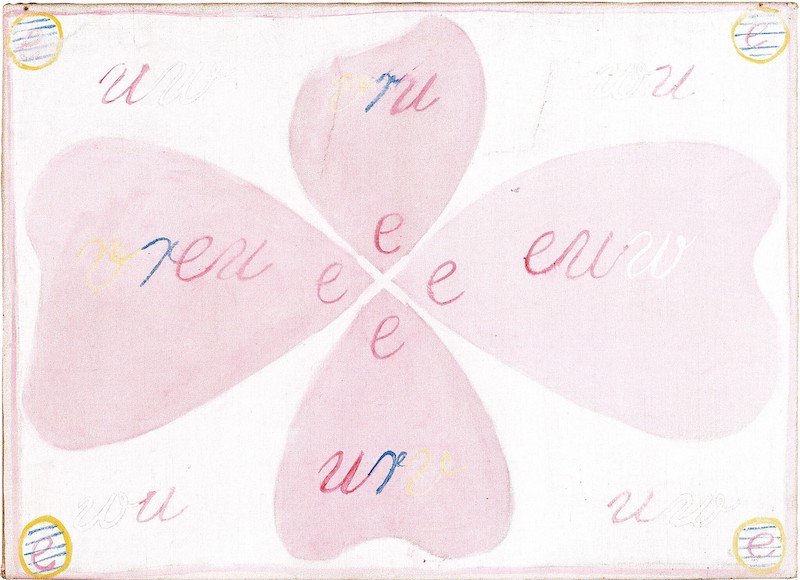
Éros, n° 4, 1907, huile sur toile, 58 × 79 cm, HaK030. By courtesy of the Hilma af Klint Foundation / photo The Moderna Museet, Stockholm
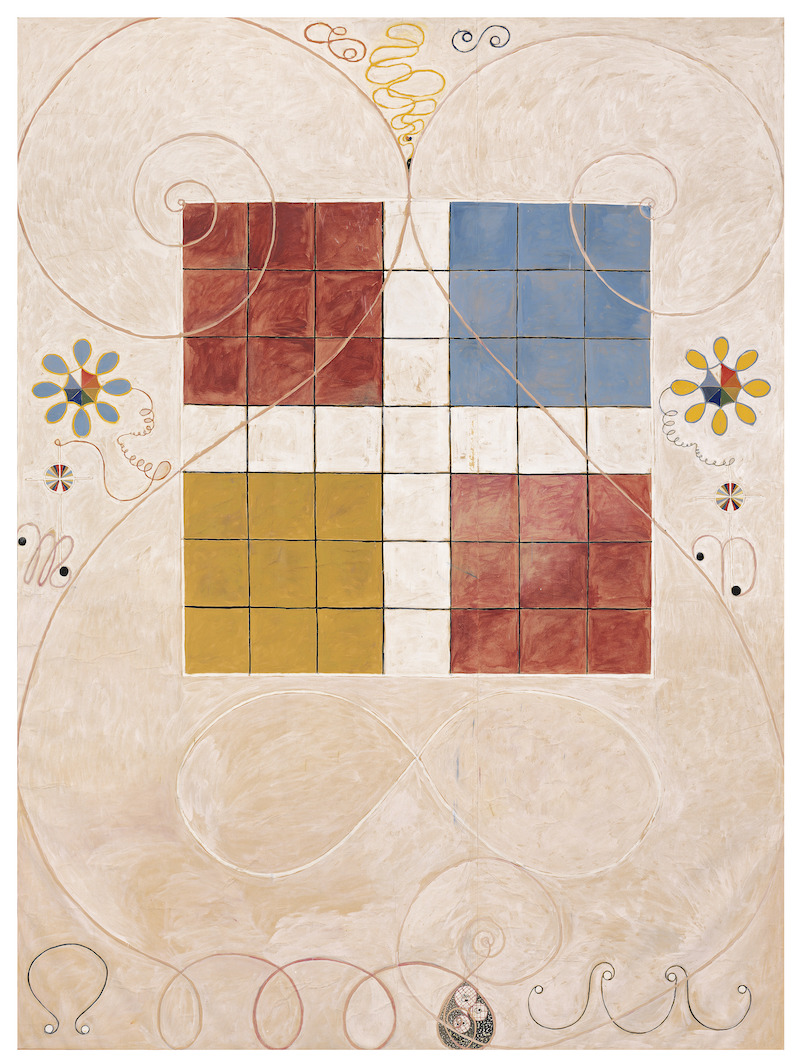
Les Dix plus grands, n° 10 (Vieillesse), 1907, tempera sur papier contrecollé sur toile, 320 × 237 cm, HaK111. By courtesy of the Hilma af Klint Foundation / photo The Moderna Museet, Stockholm
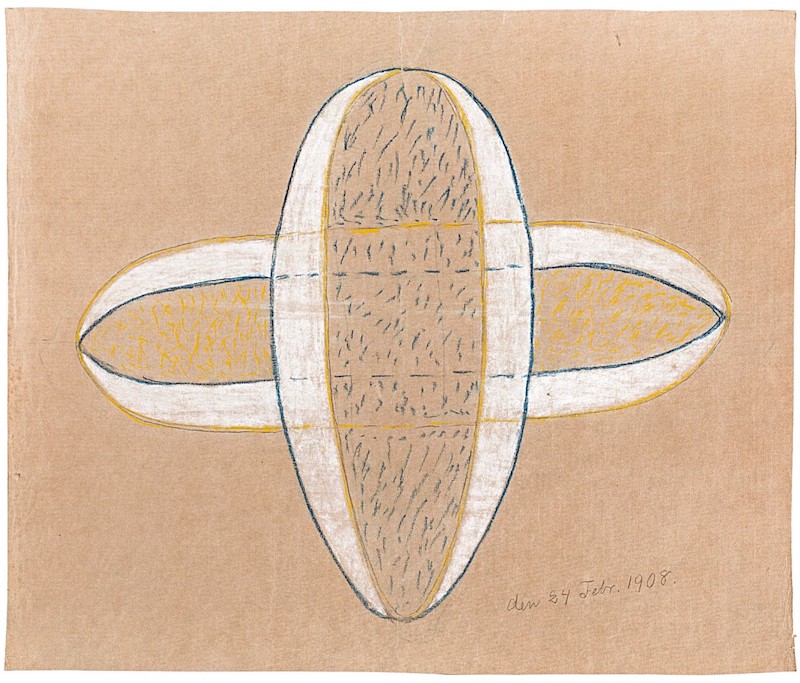
Les Cinq, Sans titre, 1908, 53 × 63,5 cm, HaK1252. By courtesy of the Hilma af Klint Foundation / photo The Moderna Museet, Stockholm
The exhibition concludes with three gold and silver leaf altarpieces that bring the cycle to its final point of convergence, completing the visitor’s movement through af Klint’s spiritual system, on view at the Grand Palais through August 30, 2026.
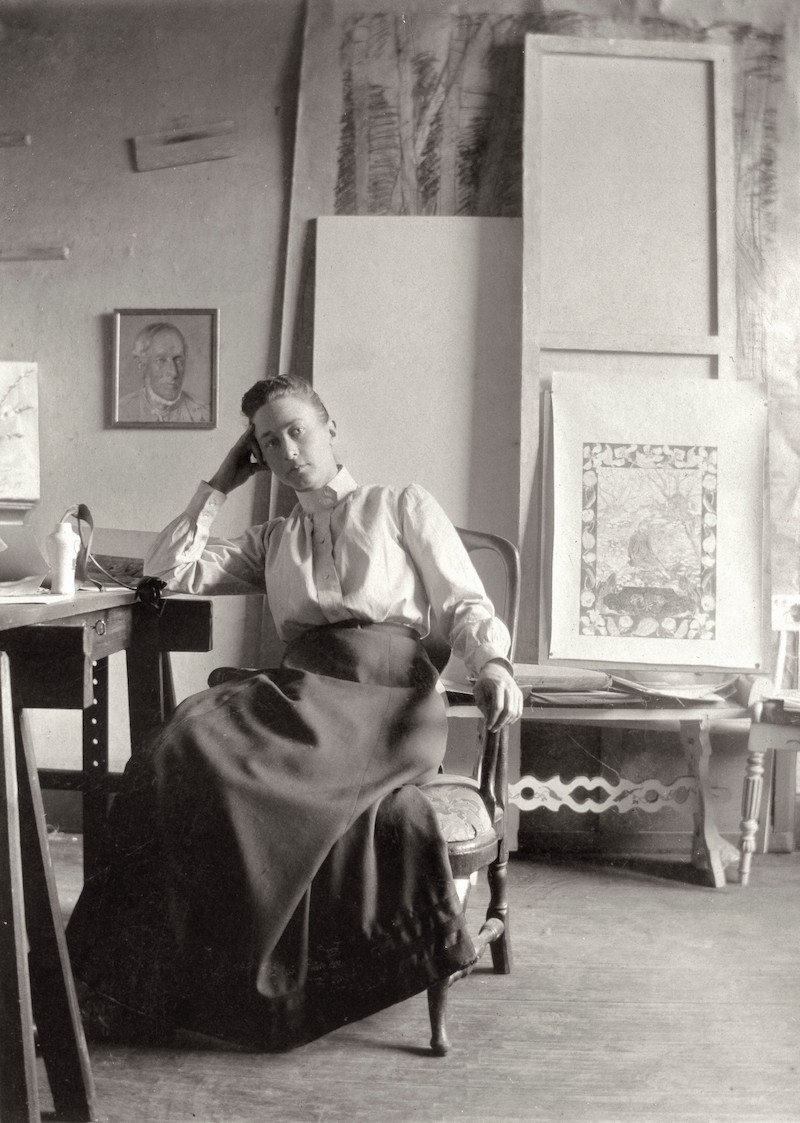
Hilma af Klint, vers 1895, photographie. By courtesy of the Hilma af Klint Foundation / photo Moderna Museet, Stockholm, Suède
Exhibition Information:
Hilma af Klint
Hilma af Klint: Paintings for the Temple (1906–1915)
May 6–August 30, 2026
Grand Palais, 3 Avenue du Général Eisenhower, Paris, France
Grand Palais: Website | Instagram
My Modern Met granted permission to feature photos by Grand Palais.
Related Articles:
Hilma af Klint’s Botanical Illustrations Are Now On View For the First Time
See the Paintings That a 19th-Century Artist Created While Guided by Spiritual Forces
New York City’s 600-Foot-Long Subway Mural Recalls Hilma af Klint’s Astounding Mysticism
Notre-Dame’s New Stained-Glass Windows on Display at Grand Palais