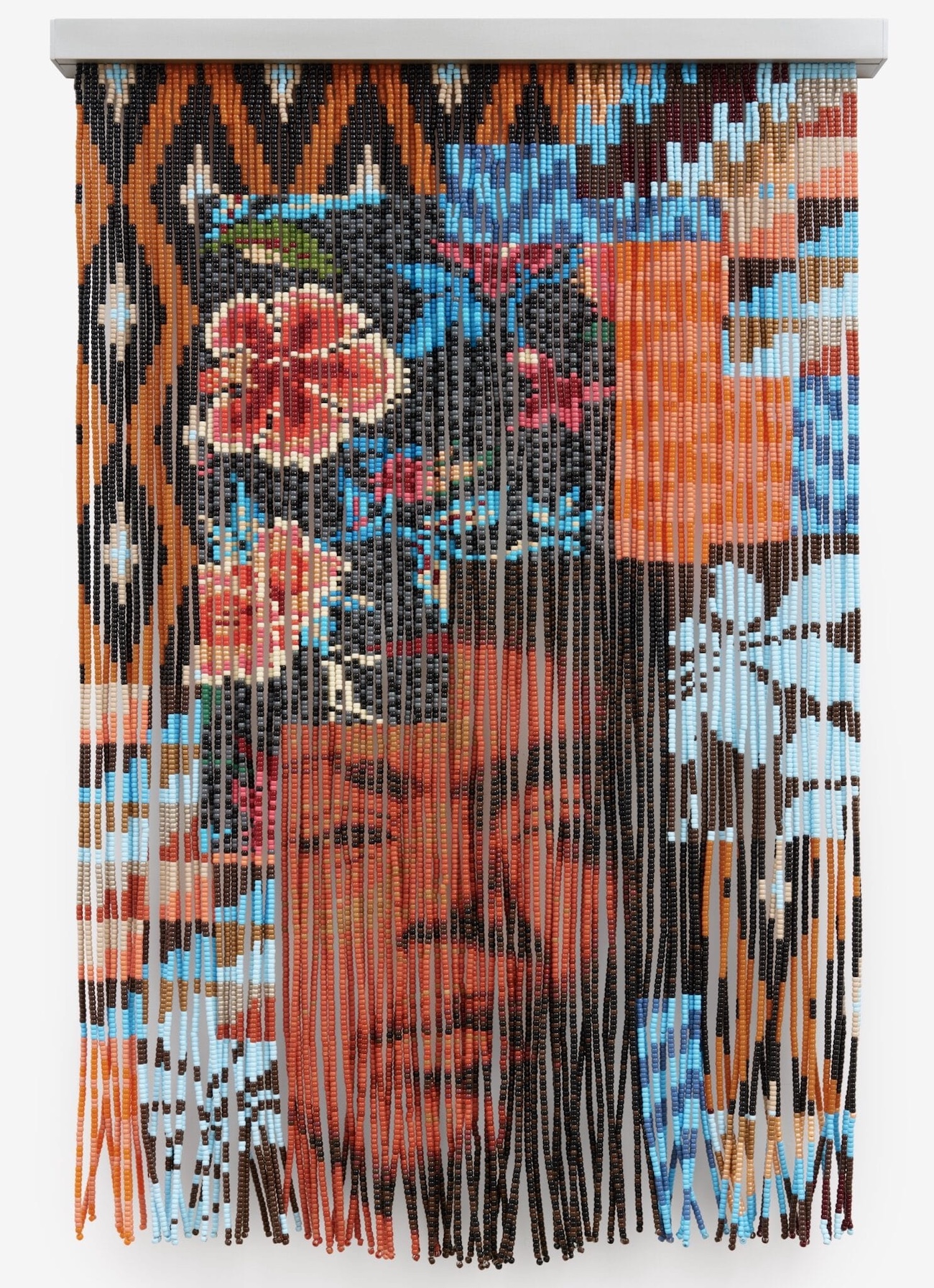
“Let’s Dance, Ailey” (2025) Hairbeads on coated wire with aluminum rod, H: 60.5 in x W: 41in x D: 4in.
In his intricate beaded portraits, multidisciplinary artist Felandus Thames spotlights historically marginalized figures, reclaiming their stories in defiance of the systems that have sought to erase their resistance. Composed of thousands of brightly colored and patterned hair beads, his large-scale wall-hung works transform individual beads into striking portraits that pulse with texture, depth, and emotion.
Drawing on personal memory and the cultural significance of everyday materials, Thames arrived at hair beads through an exploration of objects that shaped his childhood and identity. Functioning like pixels, each bead becomes part of a larger visual language, allowing him to weave together portraiture, history, and collective memory. The resulting works evoke both nostalgia and resilience, suggesting that both personal and cultural identity is built from countless interconnected moments.
Thames’ practice is also informed by Black Studies and the Black Radical Tradition, particularly the work of scholar Dr. Cedric Robinson, whose writings examine the histories of resistance to racial capitalism and imperialism. These ideas underpin Thames’ portraits of historical figures, which seek to recover stories that have often been marginalized while exploring the enduring legacy of resistance across the Black diaspora.
Born in Jackson, Mississippi, Thames now lives in Connecticut, where he creates his work in his West Haven studio. My Modern Met had the opportunity to speak to Thames about his process, discovering hair beads as his signature medium, and how his practice seeks to recover histories that have too often been overlooked, and his work’s evolution over time. Scroll down to read our exclusive interview.
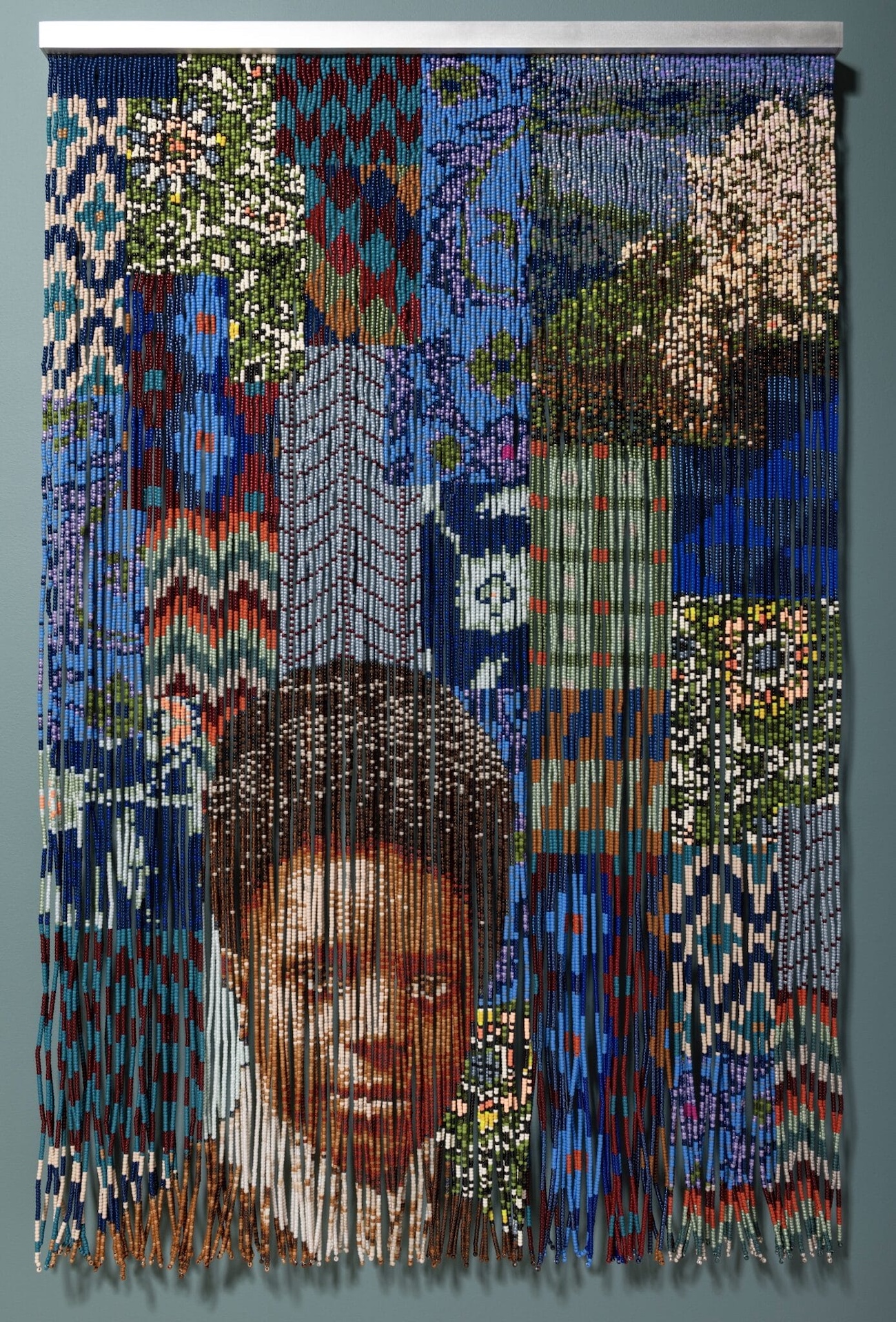
“Believed to be Jenny Freeman in her Sunday’s best” (2024-2025), plastic beads, coated wire, and aluminum, 92 1/2 x 60 x 4 inches.
What originally drew you to hair beads as an artistic medium?
About 14 years ago I did a serious inventory of my childhood, thinking through the vestiges of memories and materials associated with a fleeting sense of Afrocentric present in my early memories. Couple that sensibility with my desire to revisit my earliest impulses of making, portraiture. I began gathering materials which held emotional or social currency during my adolescence. The materials that I accumulated in my studio had a through line. They were either related to ideas around gathering or memory.
It became clear to me that the vehicle to deliver the ideas that I was exploring needed to have historical and cultural significance. My arrival to beads as the facilitator of that set of ideas came as an epiphany. When I made the conceptual leap to move from a primarily text based practice to an image based strategy, I needed a material that could function as a pixel. Beads became the material.
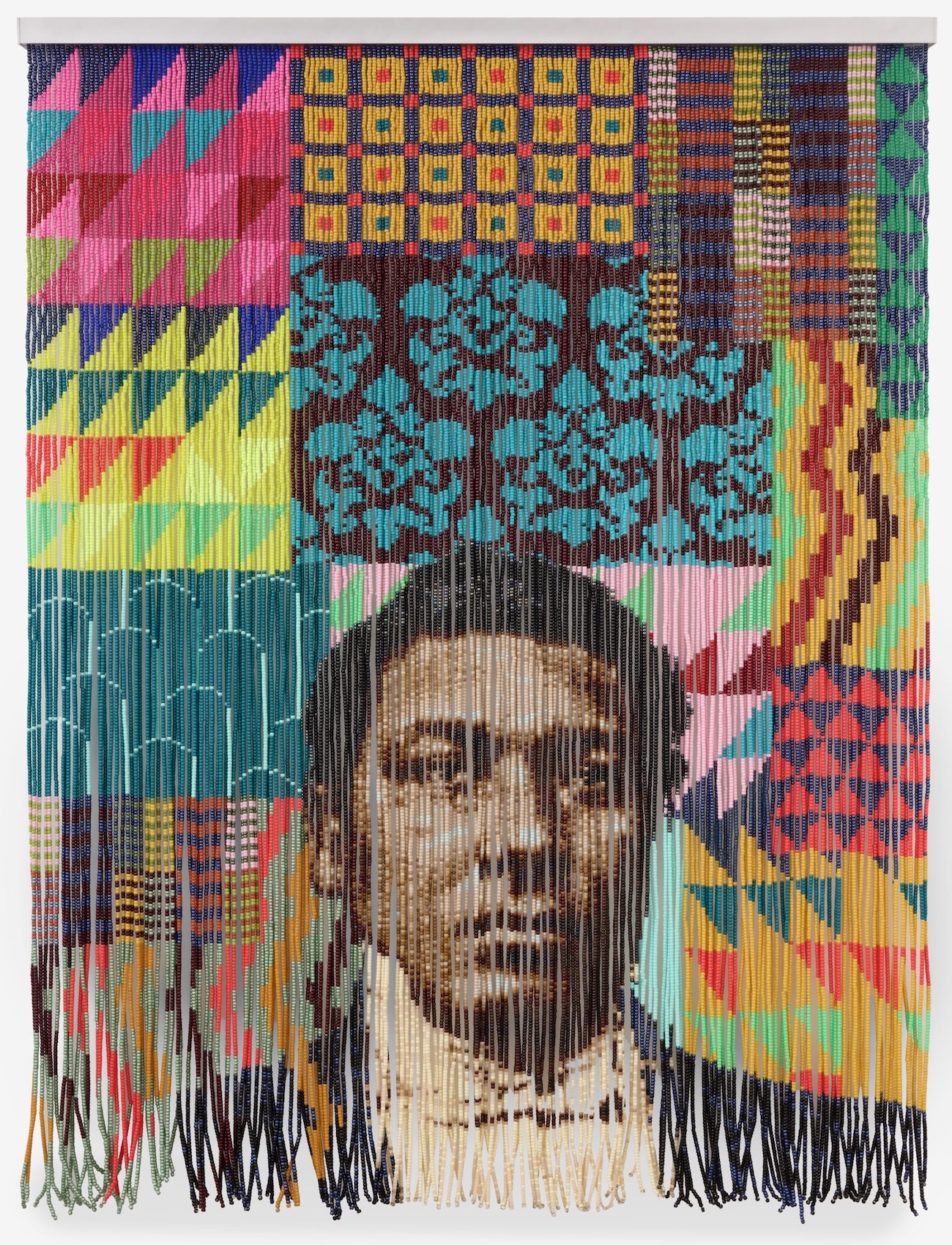
“Wail on Whalers (portrait of Amos Haskin)” (2024), beads on coated wire and aluminum rod, 95 x 72 x 4 inches.
What is the process of creating one of your beaded portraits, and how do you develop the ideas behind your pieces?
I don’t have a set process of how they come together. However, color theory and composition are the main drivers of the strategy. Pieces are typically informed by a color relationship or a compositional idea from art history. Loose studies are made but many are informed by improvisation after the initial idea laid. The patterns are sourced from my walks through museum collections and archives, paintings, tapestries, fashion, and media. I leave a certain amount of space in the process for discovery and pieces often undergo radical transformations before completion.
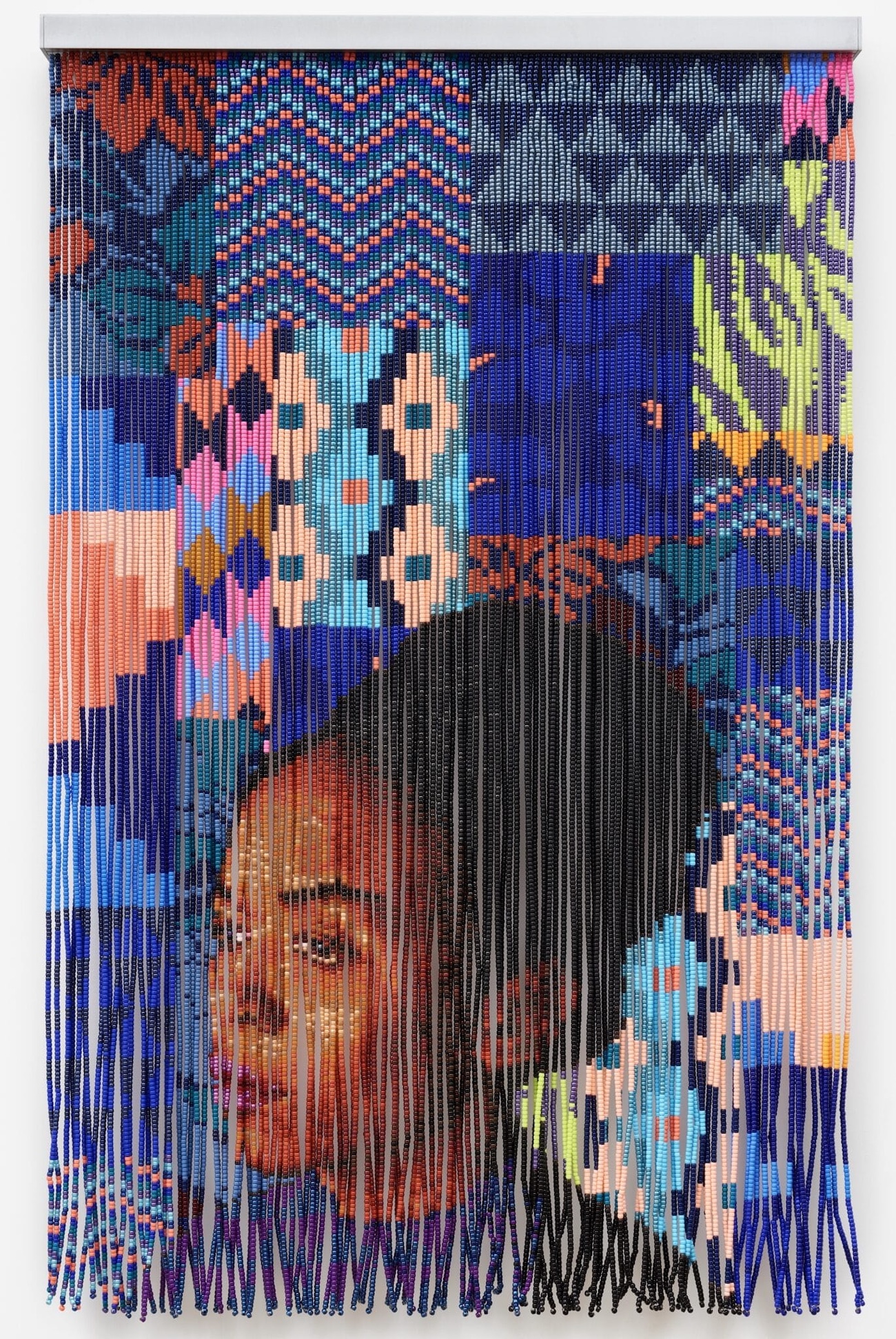
“She did what she could (portrait of Dorie Ladner)” (2025), beads on coated wire with aluminum rod, 76 1/2 x 48 x 4 inches.
How does the Black radical tradition and Black diaspora inform your artistic practice, and how are they intertwined with the hair beads you use in your art?
I try never to be tied to dogma or a specific pedagogy because it generally accompanies stale, formulaic work. Capacious thinking requires that I only engage with what’s useful in any set of ideas in service of the work.
In the process of developing the visual as articulated by Dr. Cedric Robinson, a foundational theorist of Black Studies, the Black Radical Tradition is a collective historical consciousness forged in opposition to racial capitalism, imperialism, patriarchy, and the violence of global subordination. My praxis is fundamentally occupied with illuminating key figures who have taken up this mantle, using visual language and material strategies to actively recover the histories and ontological totality that these oppressive structures have attempted to erase. By refusing to operate within the established “terms of order,” my work visually maps the enduring legacy of diaspora resistance.
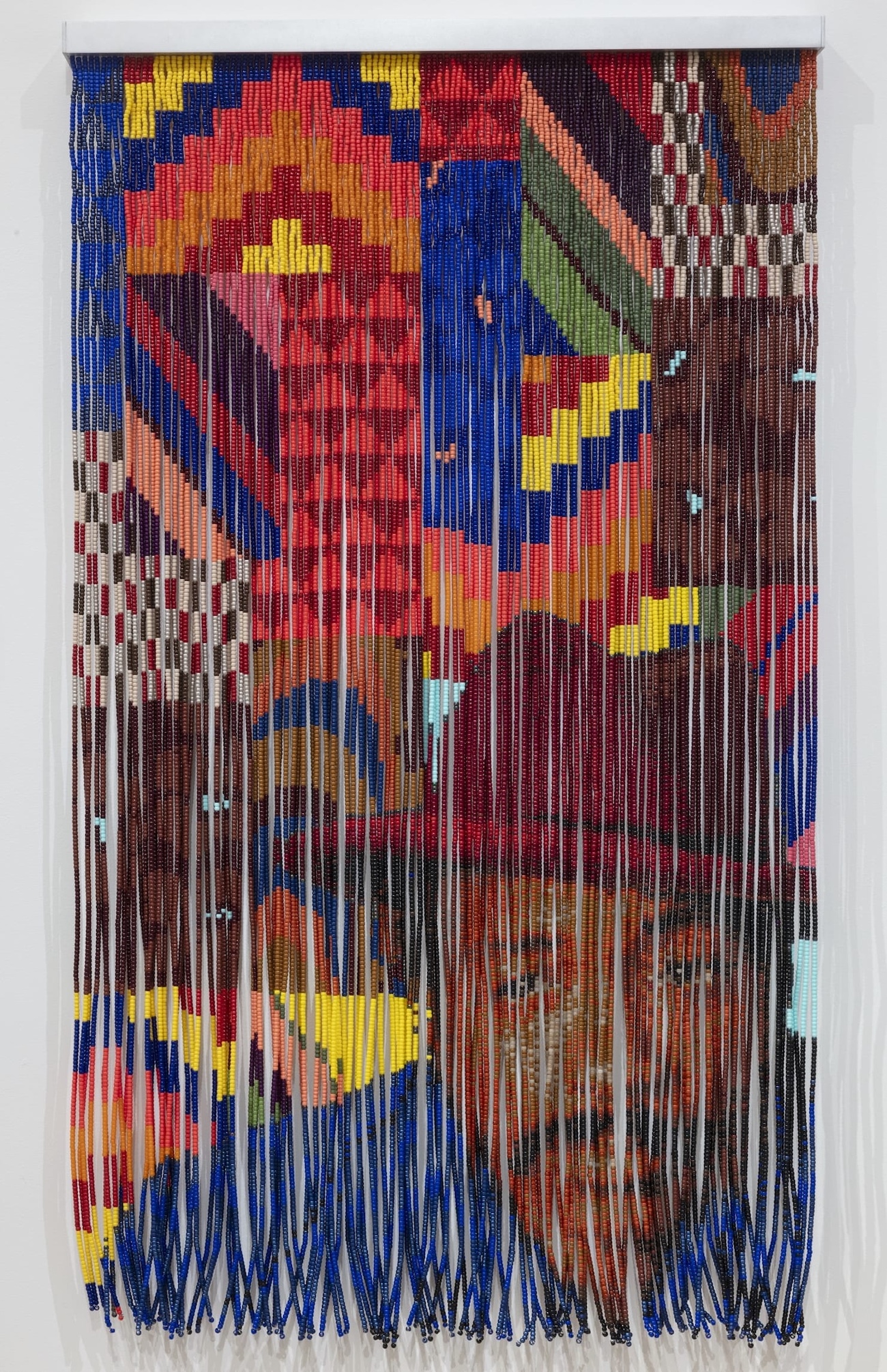
“King David of Harlem” (2024), beads on coated wire with aluminum rod, 85 3/4 x 48 x 4 inches.
What do you hope people will take away from your work?
I never have a specific read or outcome that I want the viewer to draw from the work. When I make work, I’m much more interested in the dialogue the viewer has as they bring their experiences to my work. My strategy has been to create works from multiple points of entry and to allow the viewer to have their experience with the work.
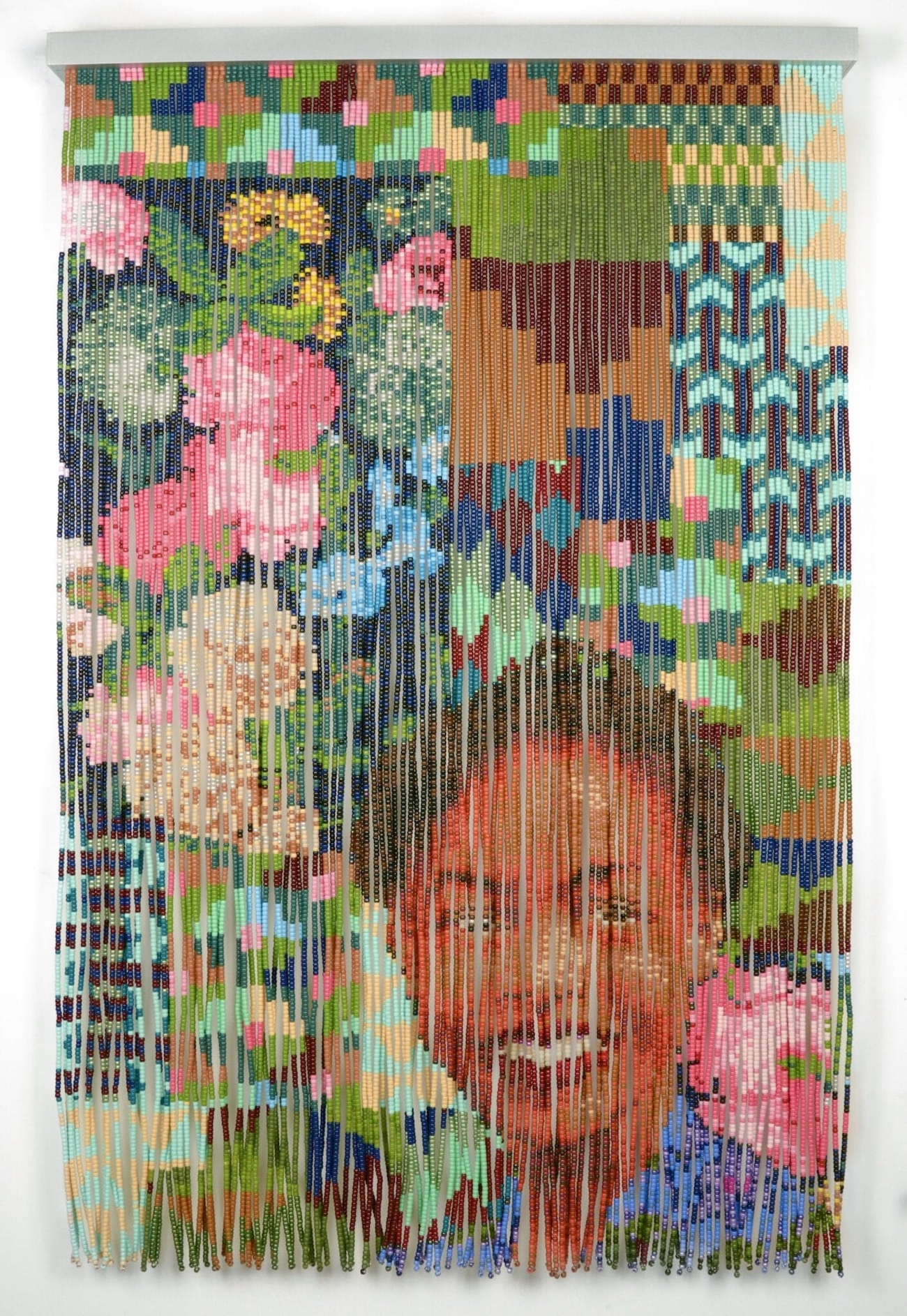
“Jubilee” (2025), hair beads on coated wire with aluminum rod, 84.x 48 x 4 inches.
Falendus Thames: Website | Instagram | Facebook
My Modern Met granted permission to feature photos by Falendus Thames.
Related Articles:
Artist Honors Filipino Heritage With Expressionist Techniques and Playful Compositions [Interview]
How This Artist Pivoted Into Surreal Sculpture After Decades of Photography [Interview]
Cut Paper Artist Offers a Peek Into How She Creates Her Impossibly Intricate Works [Interview]