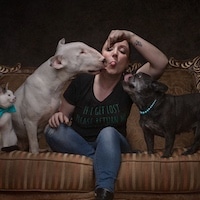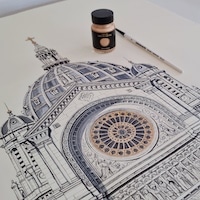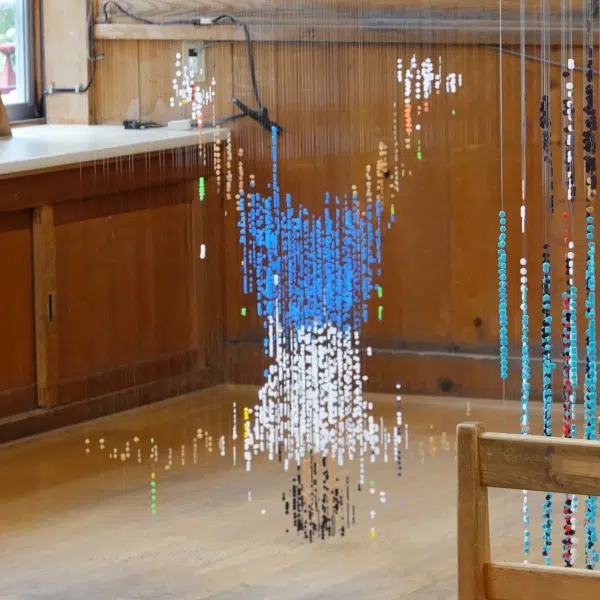
“concentration in bits,” 2011, from the series “In the Absence of Others.” Archival Inkjet on Somerset watercolor paper. (Photo: Erin Cluley Gallery, Dallas)
For decades, Nic Nicosia was known first and foremost as a photographer. Throughout the 1980s, the artist rose to prominence for his surreal, highly theatrical images, pairing humor and whimsy with elaborate sets, casts, and crews. By 1983, Nicosia’s aesthetic vision gained even greater recognition, thanks in no small part to the Whitney. That year, his work was featured in the museum’s biennial, alongside that of other pioneers of the so-called Pictures Generation, including Cindy Sherman, Eileen Cowin, and Ellen Brooks.
In the latter years of the 20th century, Nicosia continued to earn notice through prestigious exhibitions like Image Fabrique at the Centre Pompidou in 1983 and Documenta IX in 1992, among others. But by the early 2000s, things started to change. Nicosia more or less withdrew from the public-facing art world; he shifted away from photography, instead favoring a solitary studio practice. He began constructing models of rooms, collaging them with images shot elsewhere, and populating the sets with sculpted installations. Eventually, he realized that sculpture was the logical next step within the full arc of his practice.
“After more than a couple of decades of making fabricated pictures, it was no longer interesting or challenging to me,” Nicosia tells My Modern Met. “I started making sculptures and sculptural objects to stage in these sets I was making. For a while I continued like that, making sculptures to photograph.”
Now, following several years of exploration within this new medium, Nicosia is preparing for his largest museum exhibition since 2000. Everyday Surreal, which is slated to open on May 16 at the Nasher Sculpture Center in Dallas, will trace the artist’s career through more than 70 works in varied media, with a special emphasis on his sculptures. Boasting everything from three-dimensional pieces and drawings to photographs and films, the survey is ambitious in its scope, illustrating the creative evolution of a celebrated artist across time.
“Everyday Surreal is the first major retrospective of my sculpture and drawing,” Nicosia says. “The exhibition has helped to define my art as conceptual and demonstrates how I have progressed from a strict photographic practice.”
Ahead of the exhibition’s opening next month, My Modern Met had the chance to chat with Nic Nicosia about his beginnings as an artist, his gradual transition from photography to sculpture, and what’s next for him.
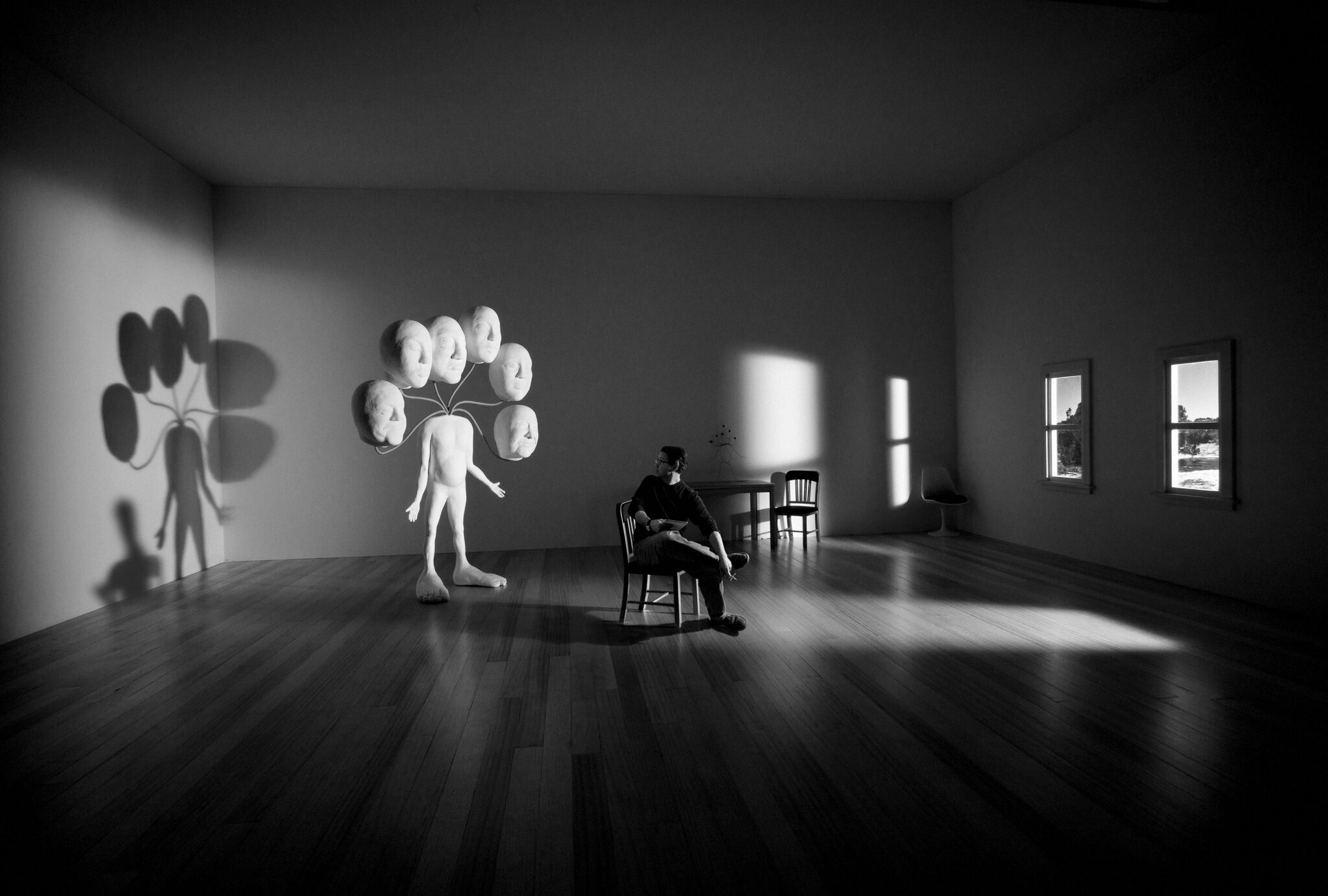
“aggregates,” 2013, from the series “Stories.” Archival inkjet on Hahnemühle 308 rag paper. (Photo: Erin Cluley Gallery, Dallas)
What first drew you to photography, and what was your experience working within the medium as part of the Pictures Generation?
In the 1970s, I studied television and film at the University of North Texas, but once I graduated, I couldn’t find a workable path to the movie business the way I hoped for. I had network and corporate TV offers, but nothing I hoped for a career. My father suggested I consider a retail store. There was only one camera shop in Denton, where I was living at the time, and they charged students full retail while other shops in nearby Dallas were discounting. So, I thought, maybe I should open a camera shop—and so I did. That’s how I learned to use a still camera.
Four years later, I was bored out of my mind with retail, so I sold the shop and started taking pictures full time. I even returned to a graduate program for a couple of semesters.
I approached still photography as one would making a movie: building sets, hiring actors, manipulating imagery. Somewhere down the line, I became categorized with other artists making fabricated images, but I can’t recall the term Pictures Generation during that time. When Cindy Sherman, Eileen Cowin, Ellen Brooks ,and I were included in the 1983 Whitney Biennial we were known as staged photography artists. Everything we made was made for the camera.
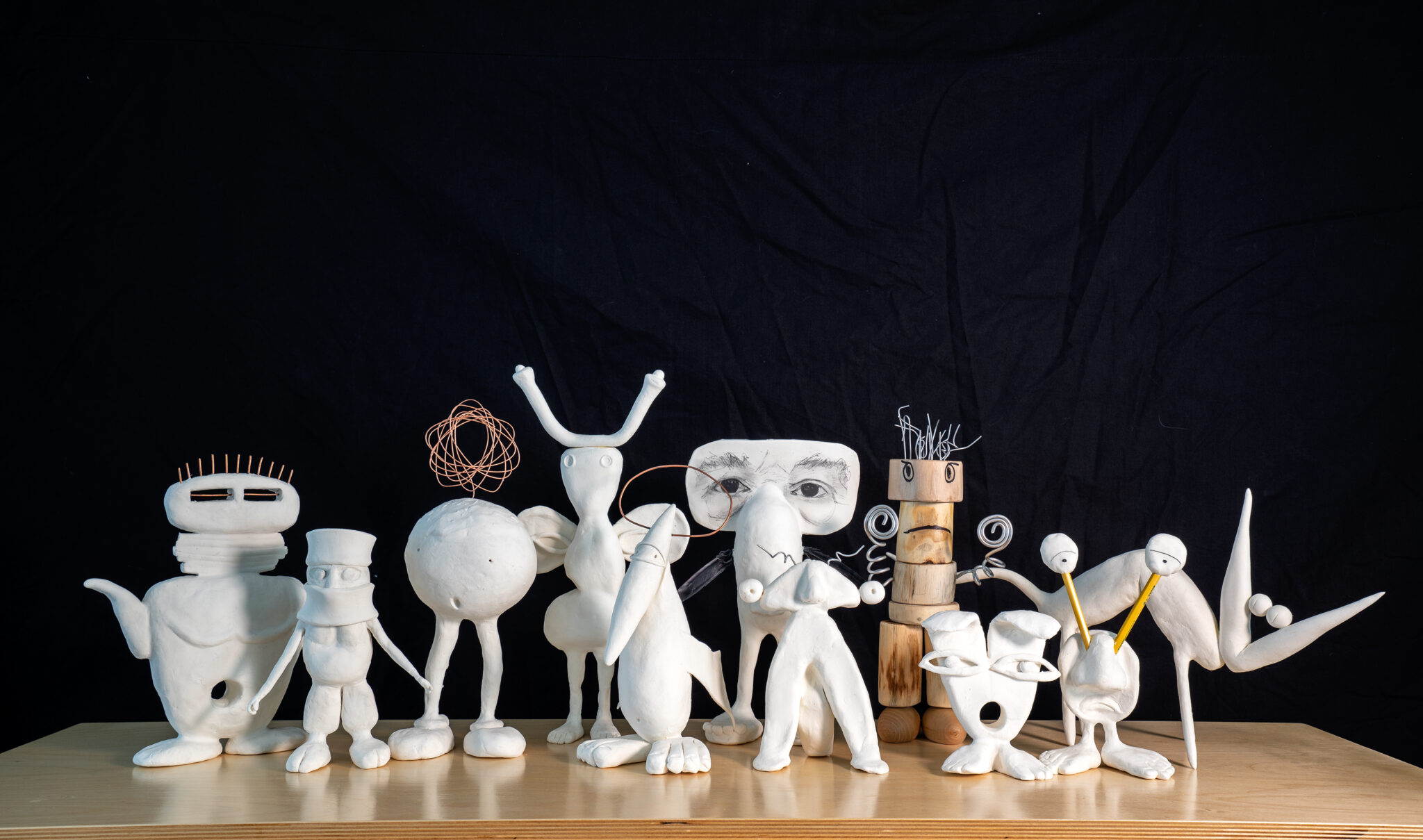
“Dreamboats 2,” 2017–18. Paperclay and mixed media. (Photo: Erin Cluley Gallery, Dallas)
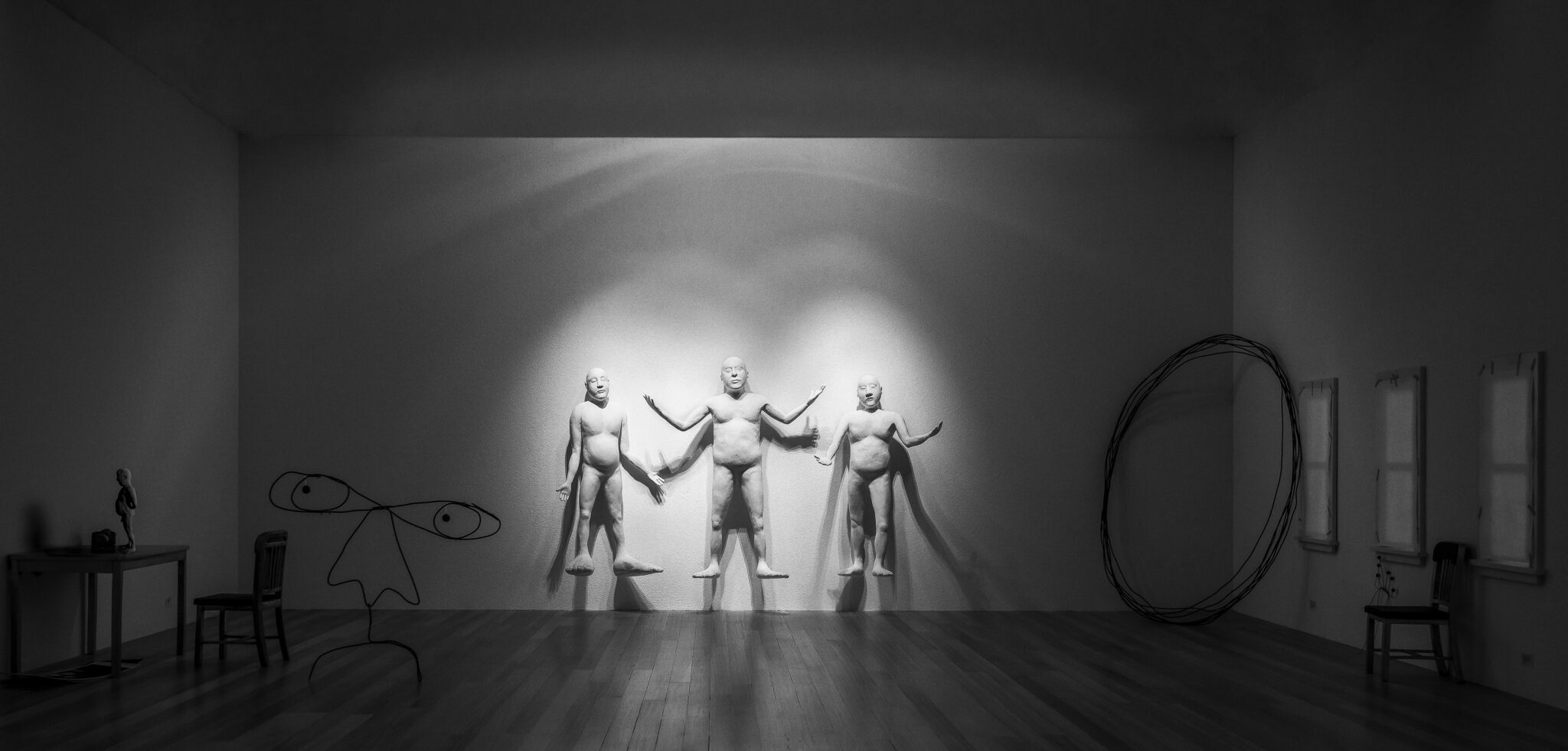
“whatwhyseriously,” 2013, from the series “Stories.” Archival inkjet on Hahnemühle rag paper. (Photo: Erin Cluley Gallery, Dallas)
Your work often plays with surrealist imagery and themes. What compels you about these visuals, and how has your surrealist style evolved over time?
Picasso said it best: “The artist is a receptacle for emotions that come from all over the place: from the sky, from the earth, from a scrap of paper, from a passing shape, from a spider’s web.”
I add; things I see, hear, feel, and experience all go into a work. I’m a dreamer. Daydreaming was my pastime in elementary school. I never thought in terms of being a surrealist or borrowing that kind of imagery. It’s just the way I think and the way I see.
I made one series, Sex Acts, where I focused on Surrealism, because I was interested in the work of René Magritte. Honestly, I was more interested in his theatricality and sense of humor than his connection to surrealism.
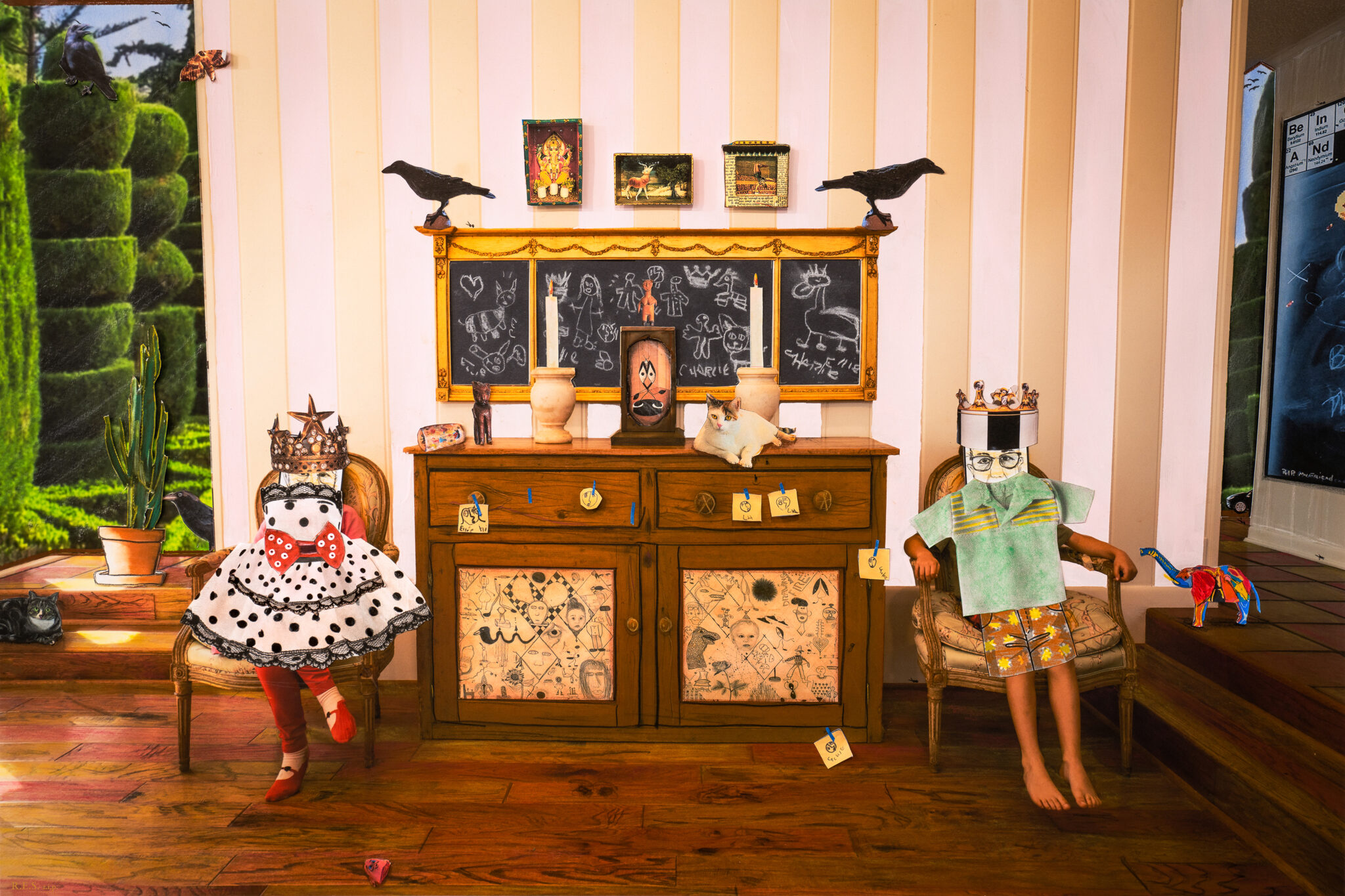
“homemade stories #14 (figure 2),” 2023. Archival inkjet. (Photo: Erin Cluley Gallery, Dallas)
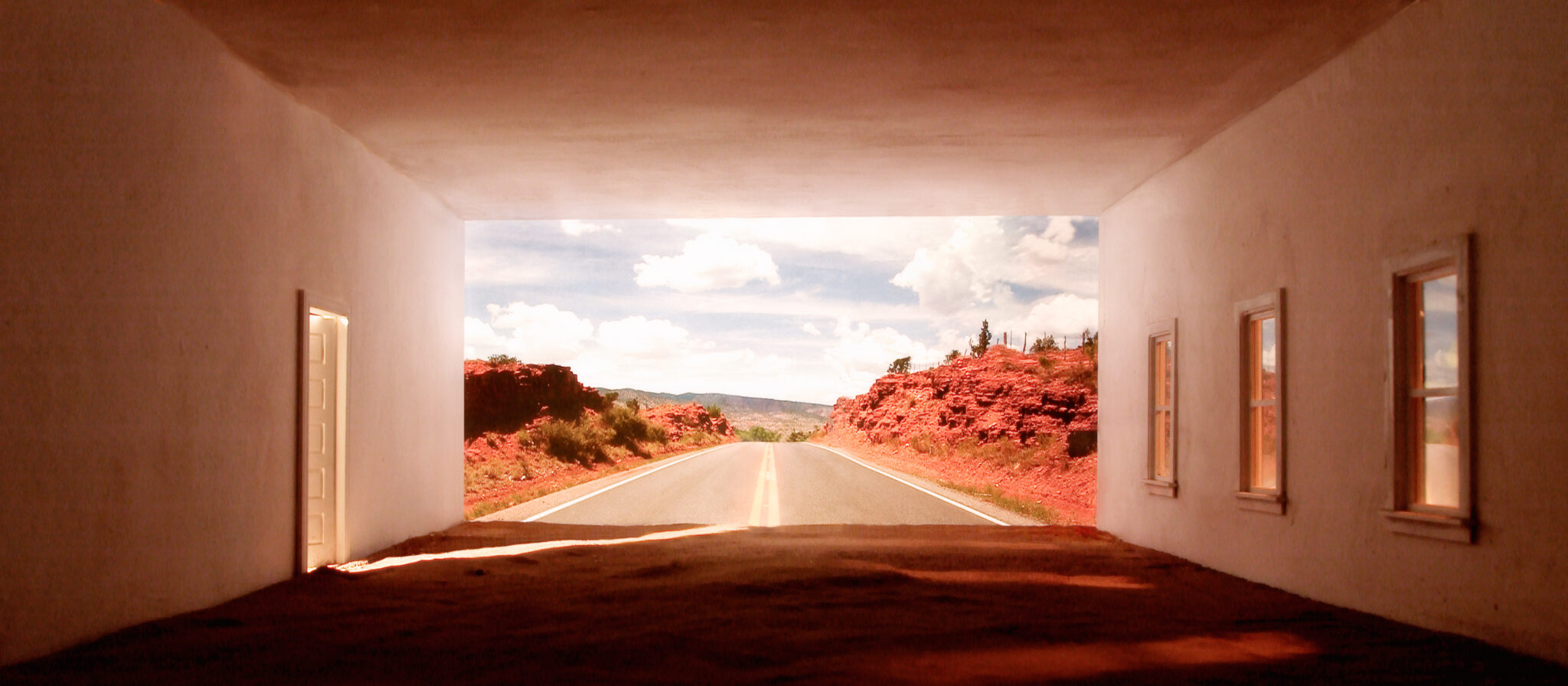
“Untitled Landscape #2,” 2003. Archival inkjet on Somerset Watercolor Paper. (Photo: Erin Cluley Gallery, Dallas)
Why did you move away from photography and instead embrace sculpture at the turn of the century?
After more than a couple of decades of making fabricated pictures, it was no longer interesting or challenging to me. For about five years, I went back to making motion pictures and short films, until I was offered a solo exhibition at SITE Santa Fe. I remember waking up one morning with seven complete images crossing my mind like a slideshow and realized those photographically for the SITE show. I didn’t know where they came from. I still don’t. I’m not even sure I was totally awake.
For these seven images, I started building small-scale sets, much smaller than the ones I worked with before. And I started making sculptures and sculptural objects to stage in these sets I was making. For a while I continued like that, making sculptures to photograph. It wasn’t until later that I exhibited my sculptural work as complete works.
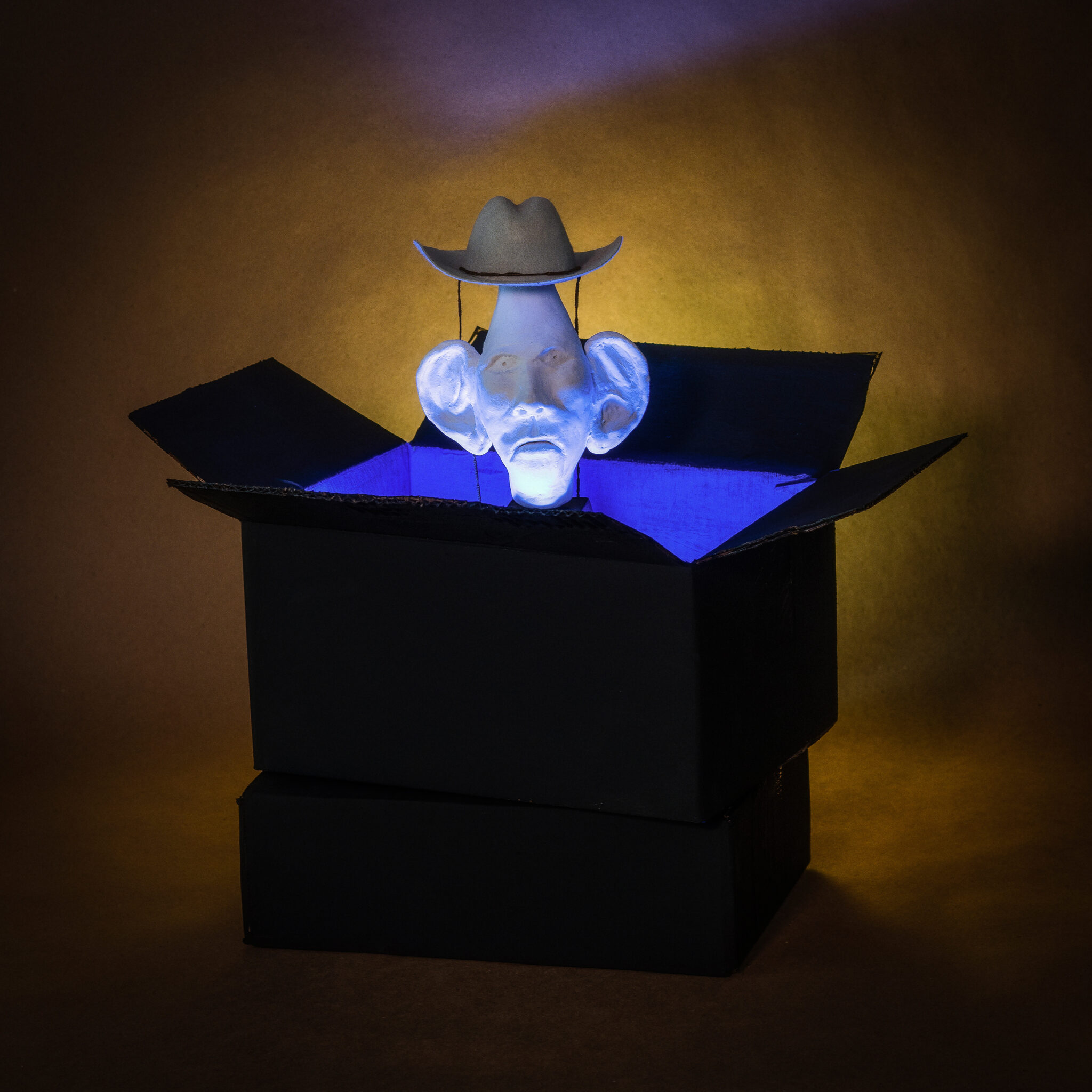
“mad little mad (in a picture),” 2018. Archival inkjet on Hahnmühle paper. (Photo: Erin Cluley Gallery, Dallas)
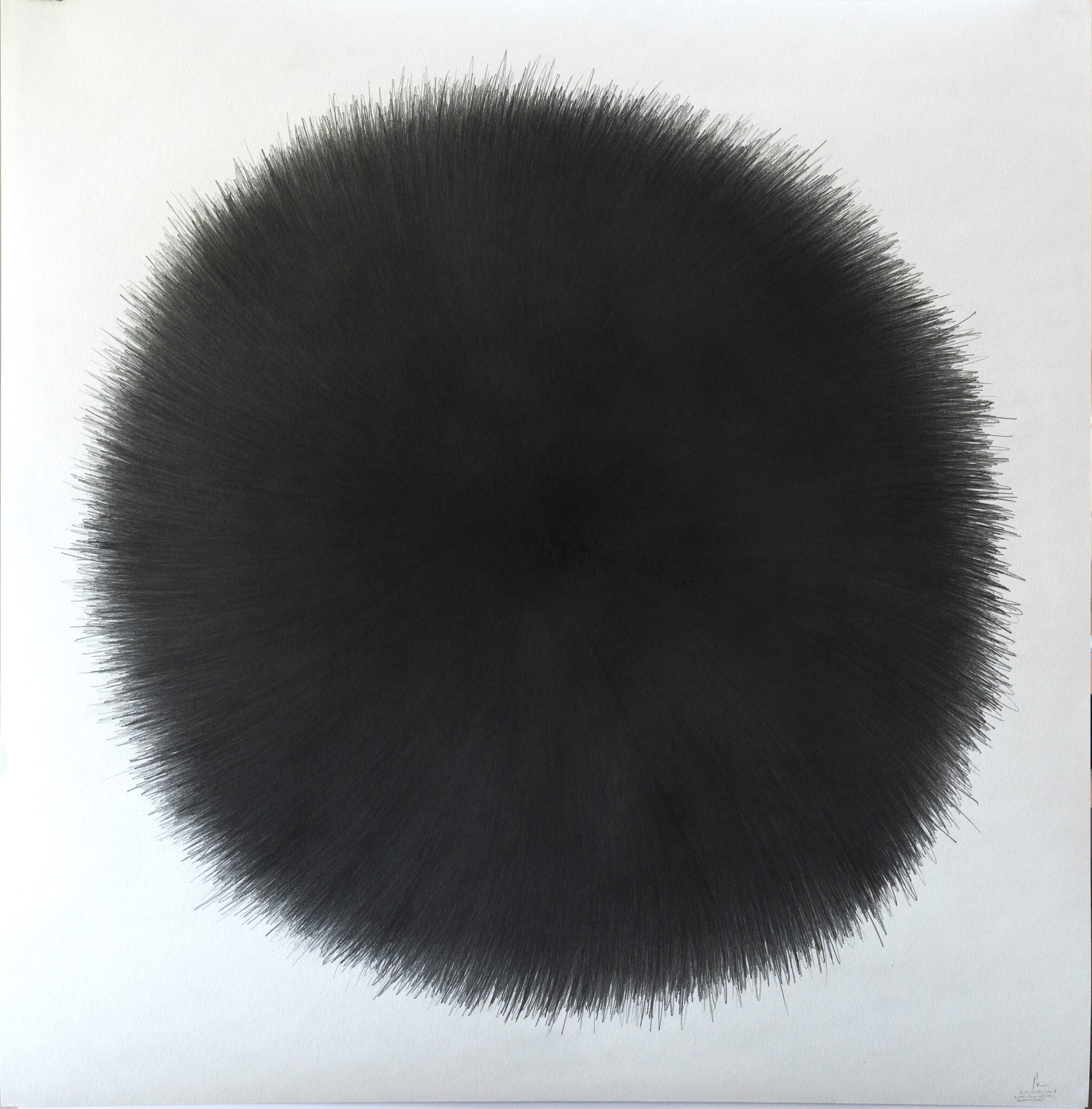
“every day-all day,” 2018. Graphite on watercolor paper. (Photo: Erin Cluley Gallery, Dallas)
What was the process of learning to sculpt, and how did you develop your own sculptural language?
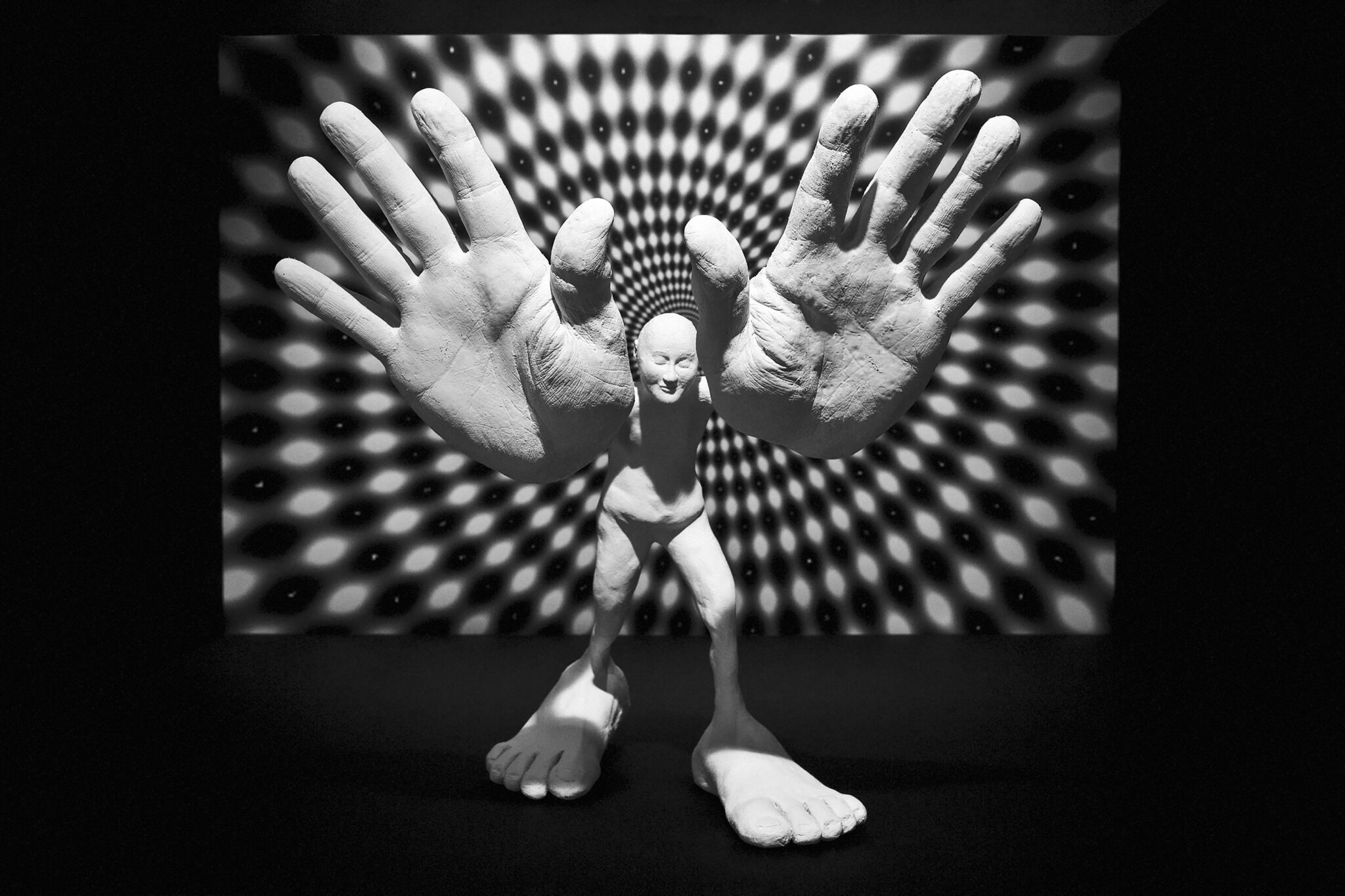
Learning may not apply here. At the recommendation of an art supply store manager, I bought a few bricks of Creative Paperclay to make characters for a series of photographs. The series was titled In The Absence of Others, and there was no learning process except how long the clay took to dry and how to make it stronger.
As far as developing a sculptural language, I’ve never taken the time to overintellectualize it. Overthinking an artist’s work is someone else’s job (I think).
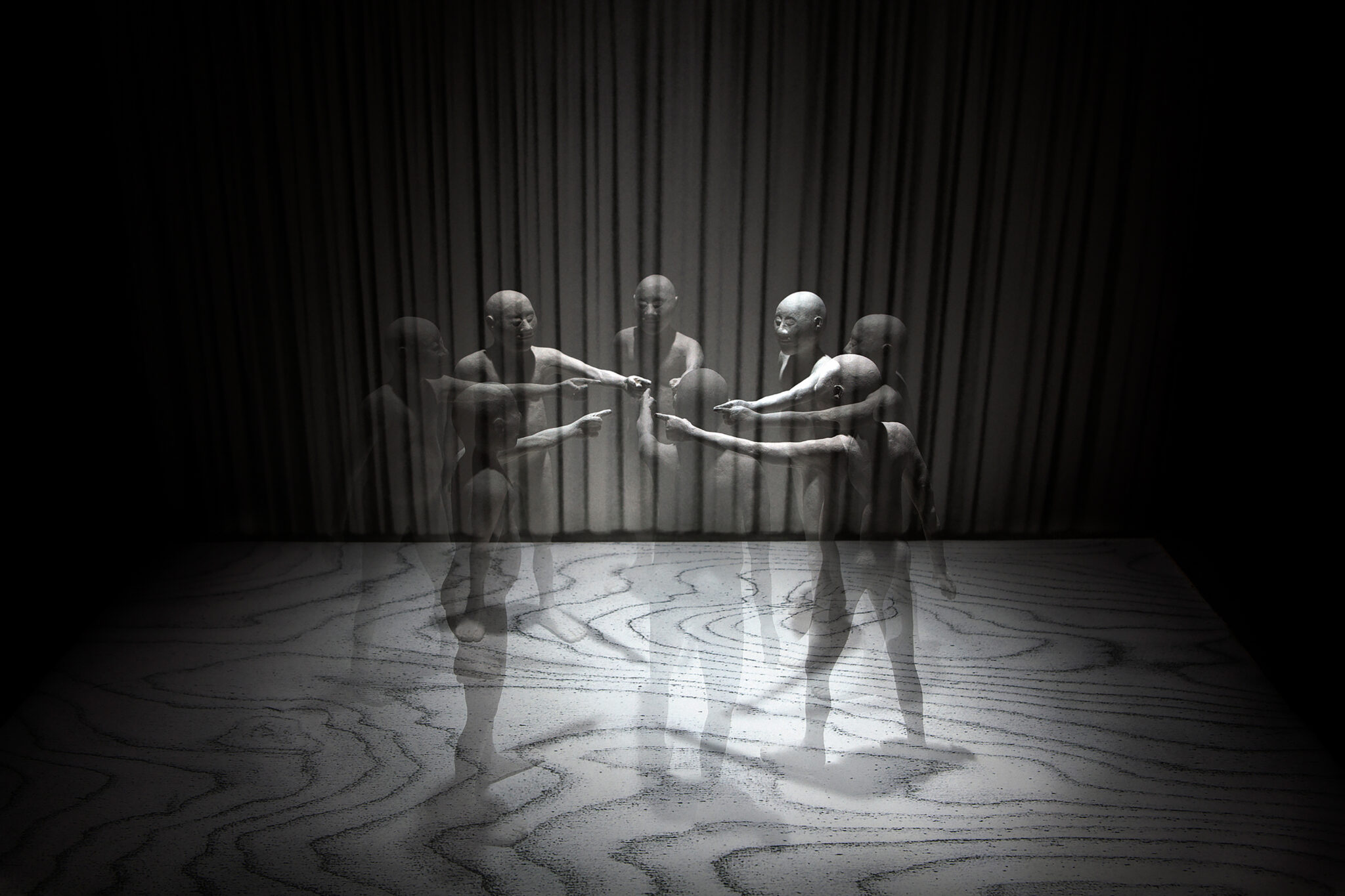
“circle of possibilities,“ 2011, from the series “In the Absence of Others.” Archival Inkjet on Somerset Velvet. (Photo: Erin Cluley Gallery, Dallas)
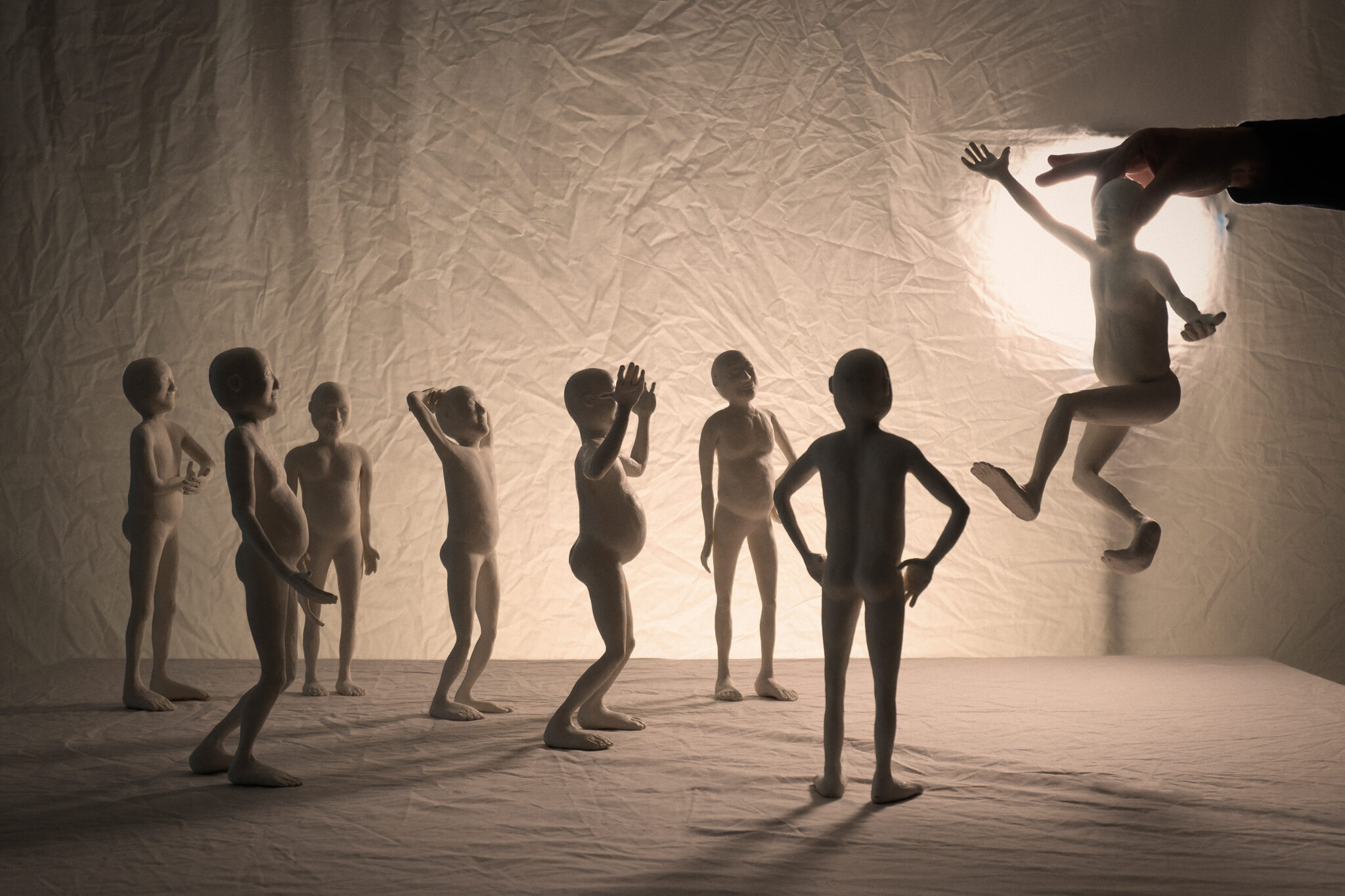
“7 whys and big thankyou (in a picture),” 2018. Archival inkjet on Hahnmühle paper. (Photo: Erin Cluley Gallery, Dallas)
Is your sculptural practice informed by your photographic practice? How do the two mediums complement each other, if at all?
My sculptural figures originated to represent my emotional state and life situation at the time. Of course, they feed into each other, but exist separately.
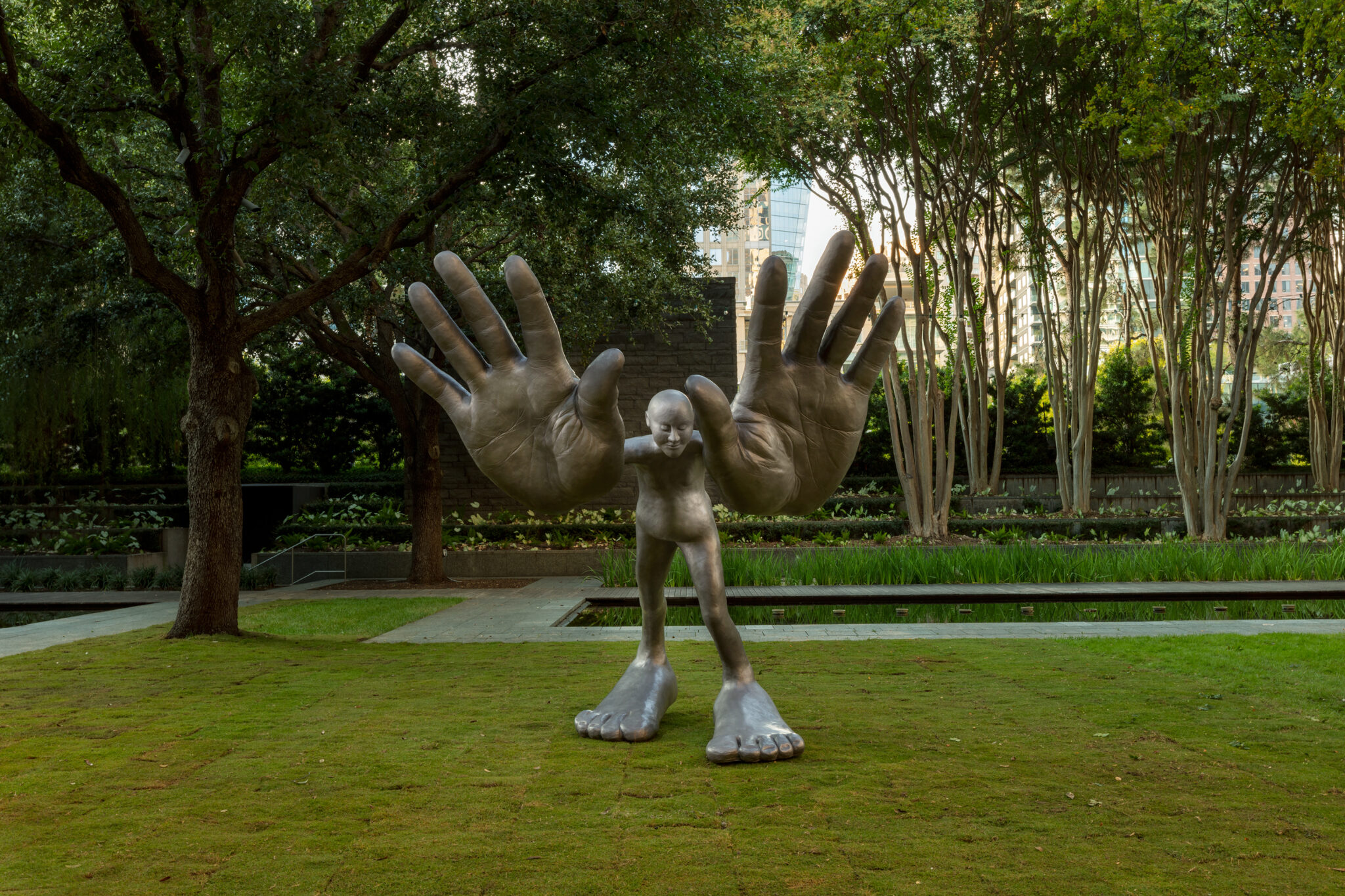
“bighands,” 2010, enlarged and cast in 2020. Stainless steel. (Photo: Kevin Todora)
What was the process of mounting Everyday Surreal, and what do you hope the exhibition reveals about your career as it has become more multidisciplinary?
My process was 25 years of making photographs, drawings, and sculpture. Mounting the exhibition was handled mostly by Jed Morse, the chief curator at the Nasher Sculpture Center and assistant curator, Sydney Smith.
Everyday Surreal is the first major retrospective of my sculpture and drawing. I had a traveling retrospective in 1999 of my photographs shot between 1979-1999, but up until now there hasn’t been a survey of my practice outside of photography. The Nasher’s upcoming exhibition of the last two-and-a-half decades of my work has helped to define my art as conceptual and demonstrates how I have progressed from a strict photographic practice. I realize the concepts that come to me. At some point, probably 25 years ago, maybe earlier, realizing these concepts required something other than photography.
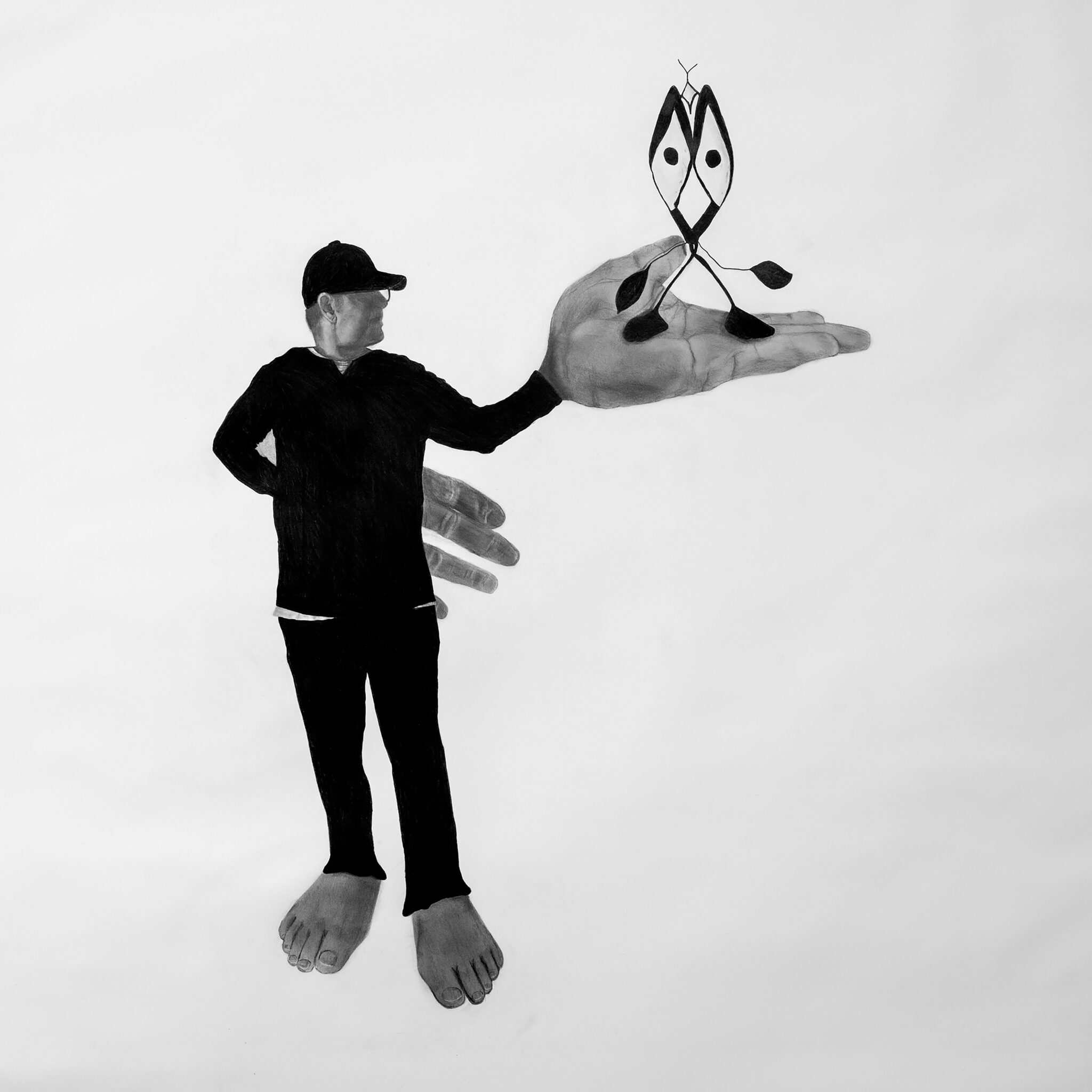
“mehands #2,” 2021. Graphite and white conti on Bristol. (Photo: Erin Cluley Gallery, Dallas)
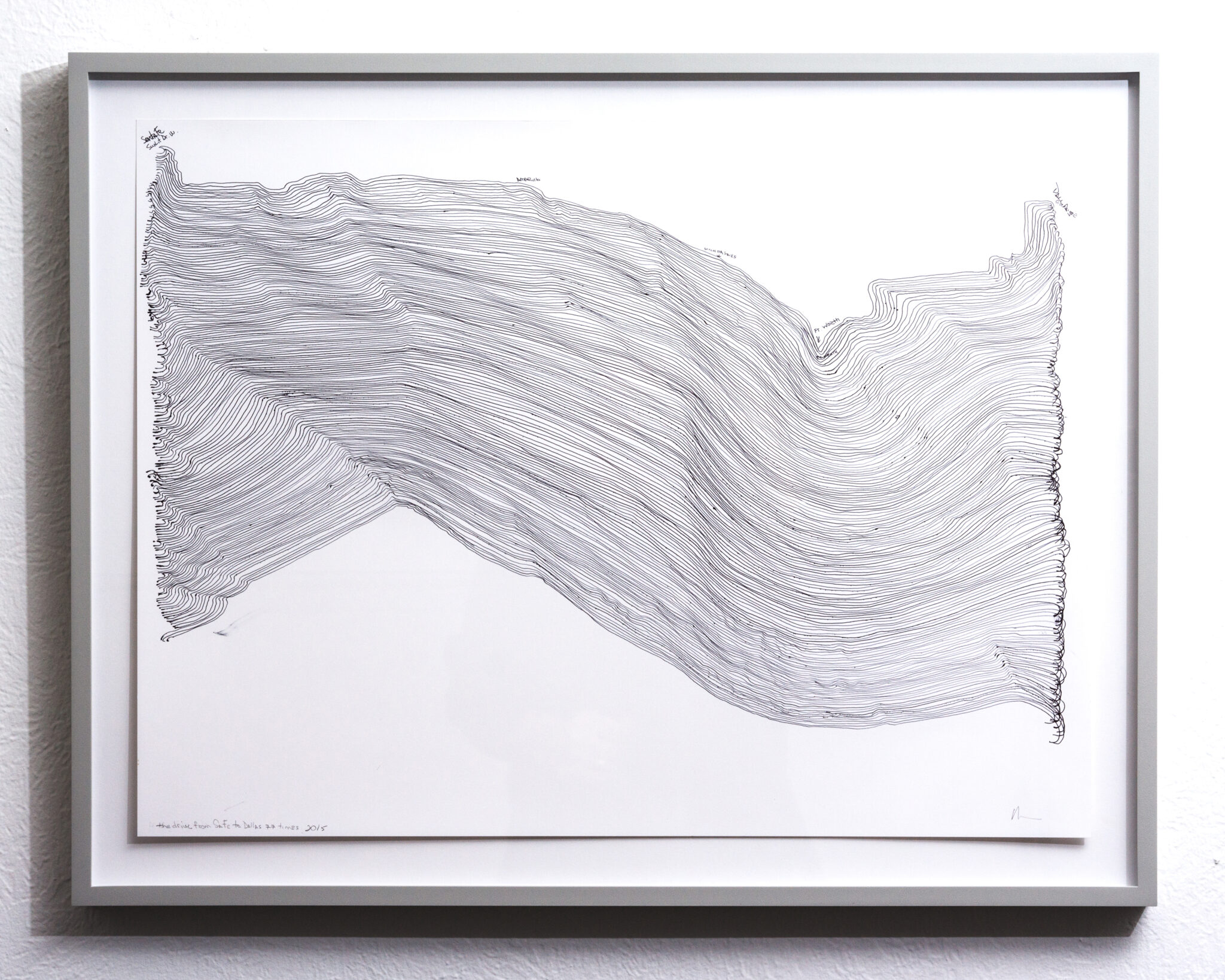
“the drive from Santa Fe to Dallas 77 times,” 2015. Unique ink on Bristol paper. (Photo: Erin Cluley Gallery, Dallas)
What has the shift from photography to sculpture taught you not just about yourself and your thematic interests, but about artistic production as a whole?
Most artists have the ability to use whatever material is necessary to realize their vision. We’re all very good at hand-eye coordination: it’s just part of the job. So, once I got over the idea that I was known only as a photographer, that I could only please the art world by making more pictures, I was free to do whatever I wanted.
More than anything I’m thankful for the gallerists, collectors, and curators who supported my career during the transition to sculpture and drawing. I keep saying to art dealers, you have to trust your artists. If they’re fucking up, let them fuck it up. It’s just transitional work. They’ll get there eventually.
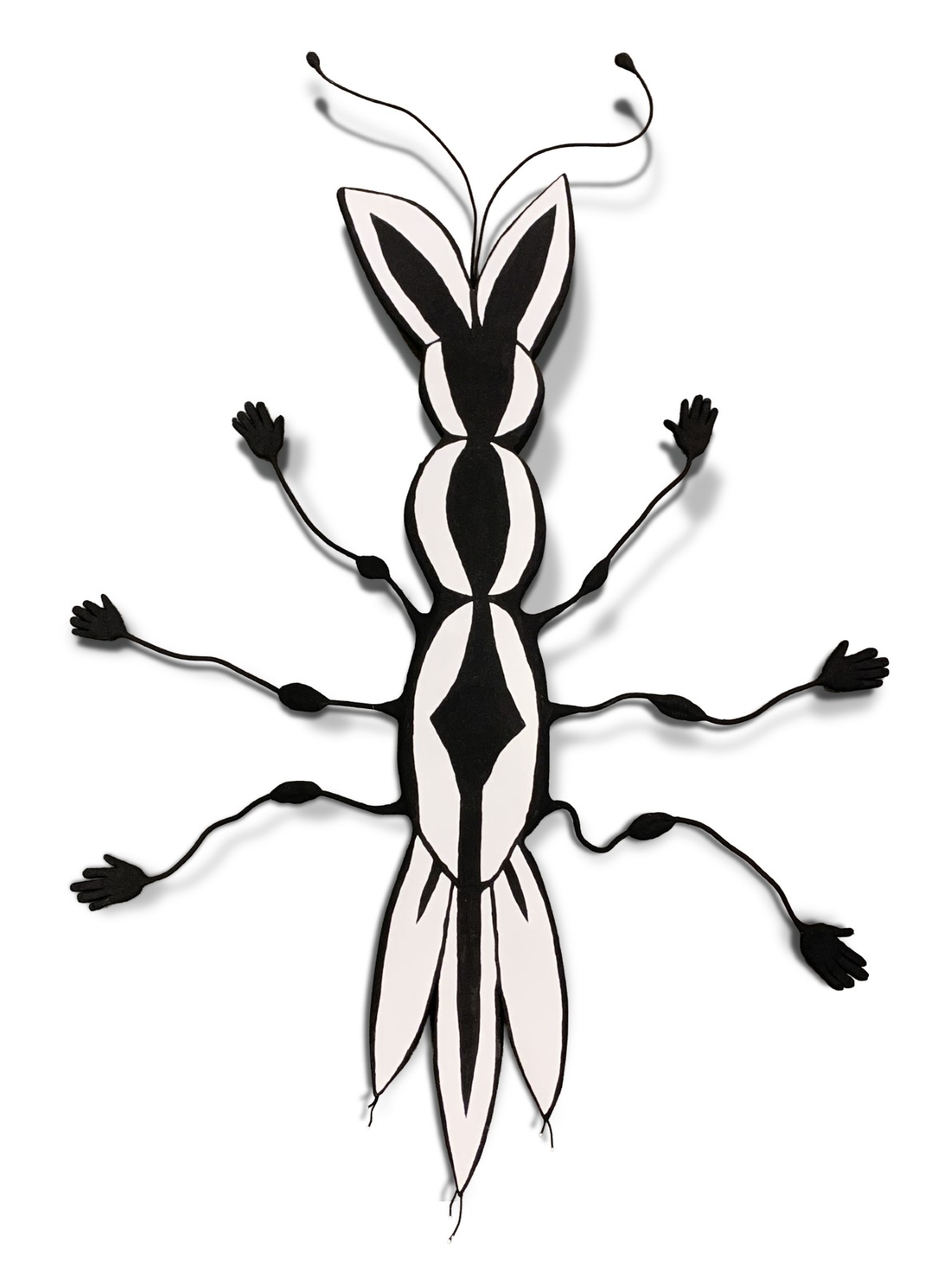
“dreamboat #28,” 2020. Sign foam, copper, paperclay, and acrylic paint. (Photo: Erin Cluley Gallery, Dallas)
Exhibition Information:
Nic Nicosia
Everyday Surreal
May 16–August 16, 2026
Nasher Sculpture Center
2001 Flora Street, Dallas, TX 75201
Nic Nicosia: Website | Instagram
My Modern Met granted permission to feature photos by Sutton Communications.
Related Articles:
Luminous Paper Sculptures Are Hand-Cut Portals to Fantastical Worlds Informed by Memories
Chiharu Shiota Returns to New York With Innovative Web-Like Sculptures
Artist Kara Walker Transforms Toppled Confederate Monument Into Haunting Sculpture