Japanese artist Fujiko Nakaya has spent more than five decades creating sculptures from something that can never hold a permanent shape. Since unveiling the world’s first fog sculpture at Expo ‘70 in Osaka, she has transformed mist into an artistic medium at museums and landmarks around the world, including the Guggenheim Bilbao, the Exploratorium in San Francisco, the Grand Palais in Paris, and Philip Johnson’s Glass House in Connecticut. Now, the 92-year-old artist has brought her signature practice to the Bourse de Commerce – Pinault Collection in Paris, where a new installation turns the museum's iconic rotunda into a shifting cloudscape.
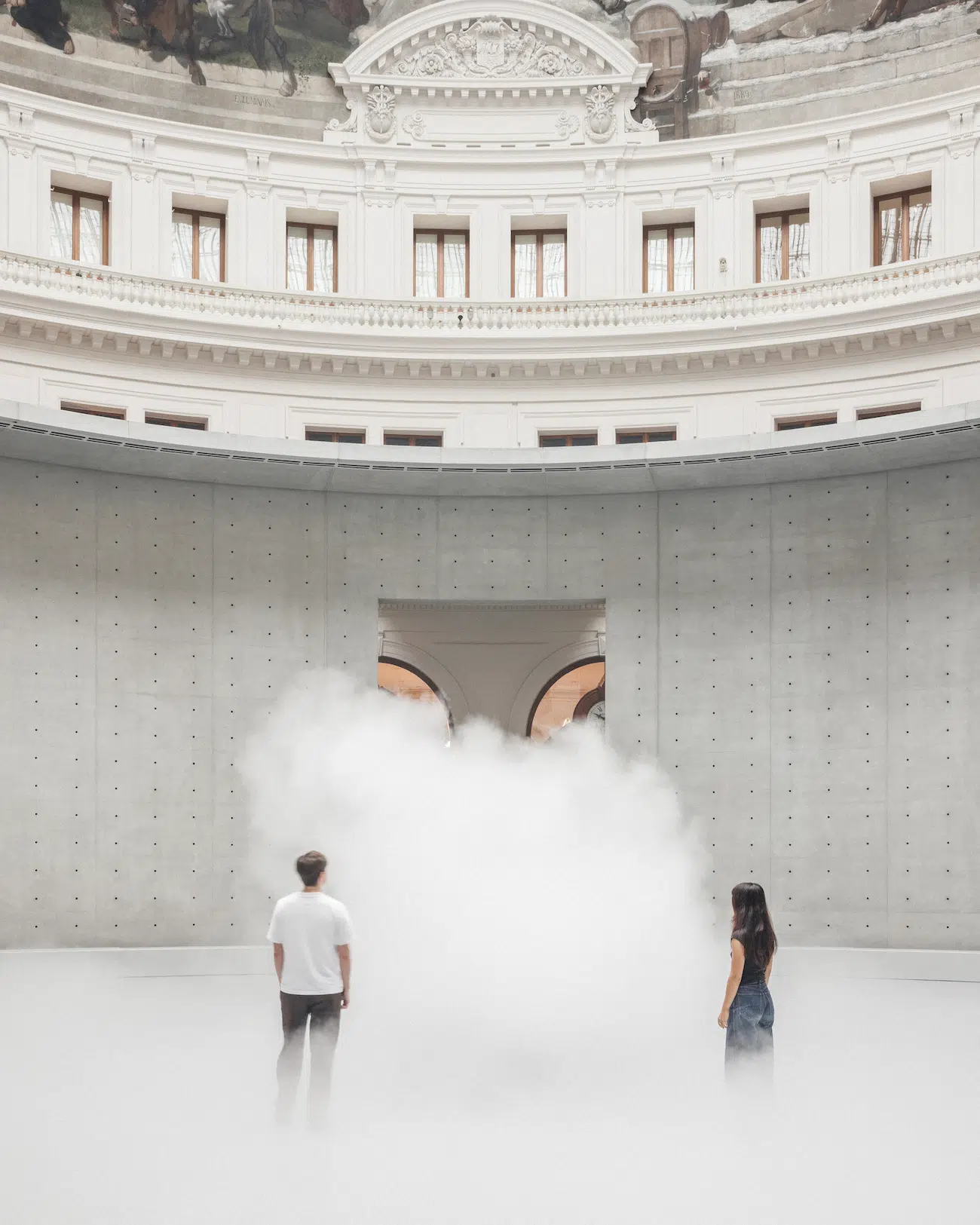
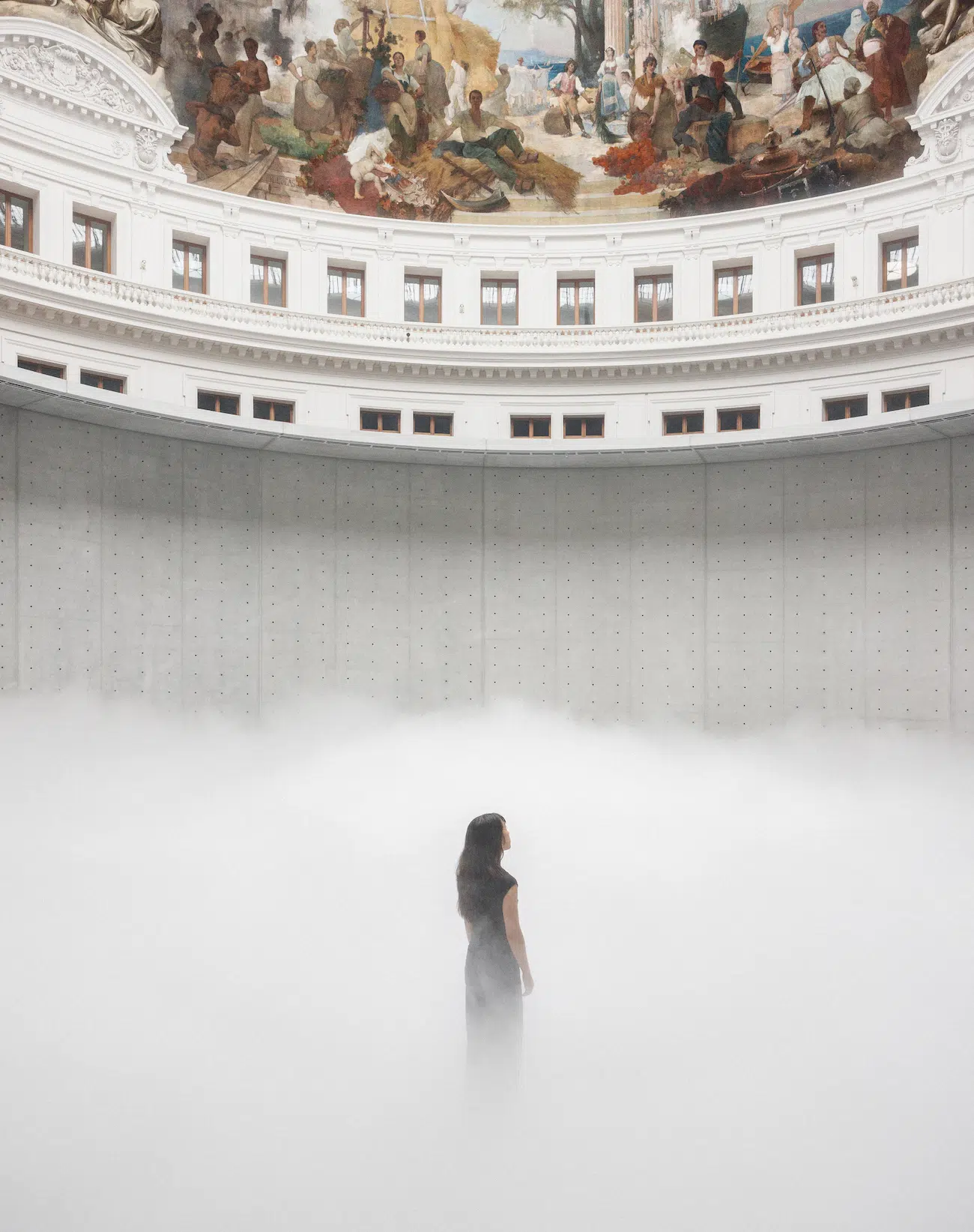
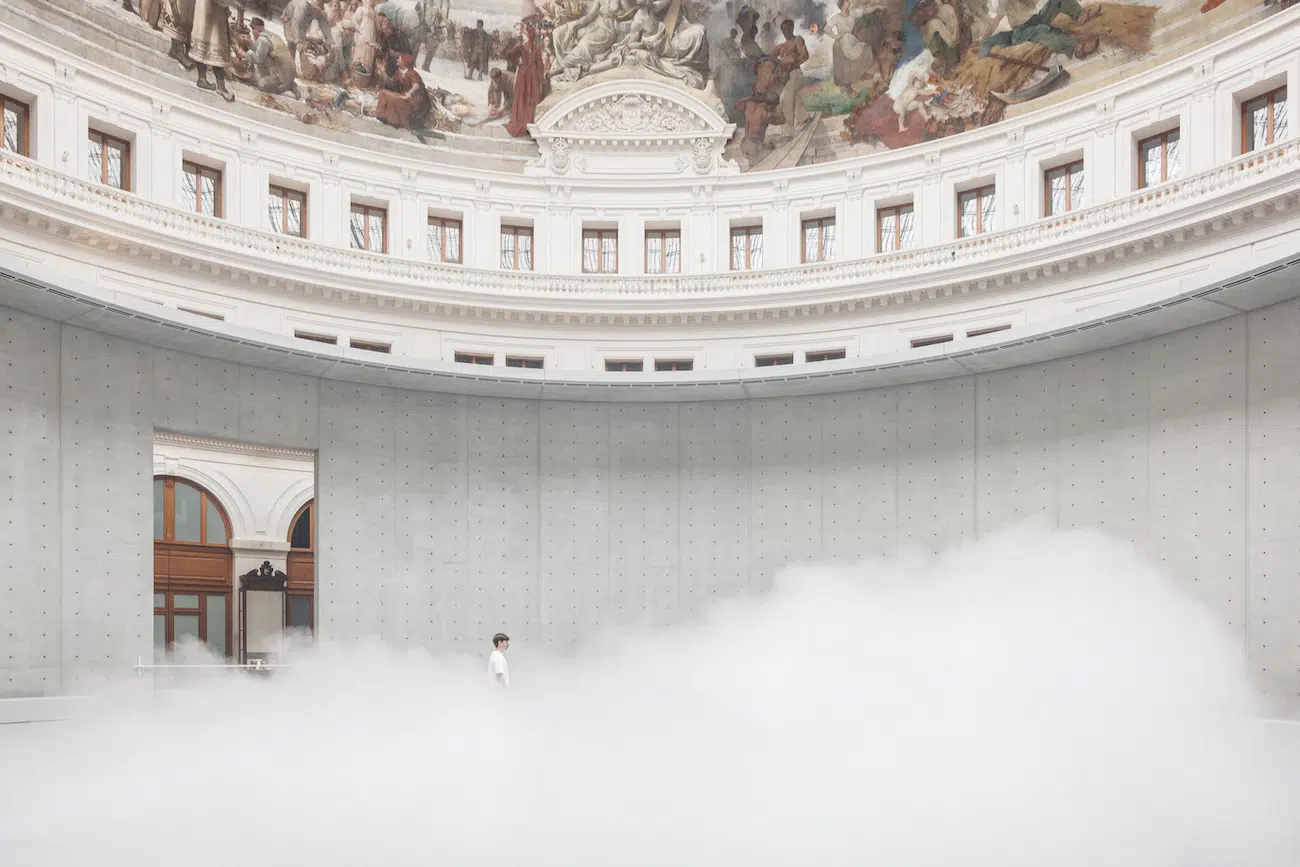
Titled Cloud #07156, the site-specific work fills the museum’s circular rotunda with dense fog. The installation responds directly to the building’s architecture, including the striking concrete cylinder designed by architect Tadao Ando during the museum’s renovation. While Ando’s intervention emphasizes structure and geometry, Nakaya’s fog softens those boundaries, transforming space into a visible, ever-changing presence.
The installation’s title comes from the meteorological station closest to the museum’s address on Rue de Viarmes, linking the artificial cloud indoors to the weather conditions unfolding above Paris. The reference also reflects Nakaya’s longstanding interest in science. Her father, Ukichirō Nakaya, famously created the world’s first artificial snowflake in 1936 while studying snow crystals.
To create the work, Nakaya uses only water. High-pressure pumps force water through specially designed nozzles, producing droplets between 20 and 30 microns in diameter, roughly the same size as those found in natural clouds. As a result, the fog appears as a sculptural mass from afar while offering an immersive experience for visitors who walk through it.
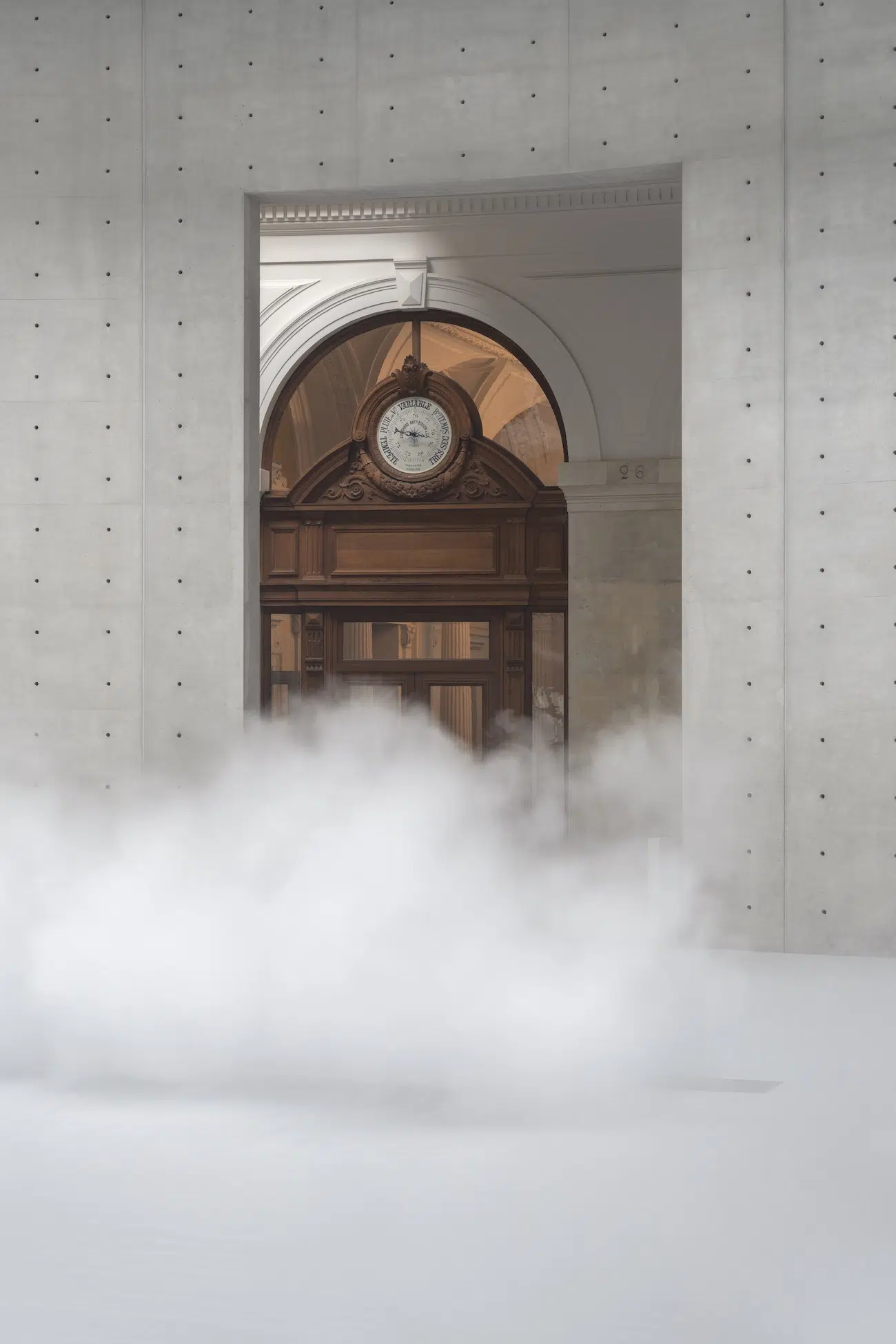
The interaction between fog and architecture forms the heart of Cloud #07156. As mist gathers around Ando’s concrete cylinder and drifts through the rotunda, familiar sightlines disappear and reemerge. Visitors catch fleeting glimpses of the painted dome above before they dissolve again into white haze.
Rather than controlling every outcome, Nakaya embraces unpredictability. Temperature, humidity, air currents, and even visitors moving through the space continuously reshape the fog. At the Bourse de Commerce, the museum’s ventilation system also becomes an active participant, revealing airflows that normally remain invisible.
Cloud #07156 serves as the centerpiece of the exhibition Clair-obscur, curated by Emma Lavigne and art historian Anne-Marie Duguet. The exhibition explores themes of visibility, ambiguity, and transformation through works by artists including Trisha Brown, Bruce Conner, Frank Bowling, and Wolfgang Tillmans.
The installation also reflects the Japanese concept of ma, often understood as the meaningful space between objects. Throughout her career, Nakaya has used fog to give physical form to emptiness, encouraging viewers to notice the spaces that architecture typically leaves unseen. In the rotunda, surrounded by Ando’s concrete cylinder and the building's soaring glass-and-iron dome, that idea becomes especially powerful.
At the Bourse de Commerce, the building’s history adds another layer. Before Ando’s intervention and before Pinault’s collection arrived, the rotunda functioned as a trading floor—a space organized around the movement of commodities and the exchange of material things. Nakaya fills it now with something that costs nothing and weighs less than breath, a cloud that forms and disperses dozens of times each day, taking no fixed form, leaving no permanent mark.
Clair-obscur runs through August 24, 2026, at the Bourse de Commerce – Pinault Collection, 2 rue de Viarmes, Paris.
Japanese artist Fujiko Nakaya’s Cloud #07156 is installed inside the rotunda of the Bourse de Commerce – Pinault Collection in Paris as part of the group exhibition Clair-obscur, on view through August 24, 2026.
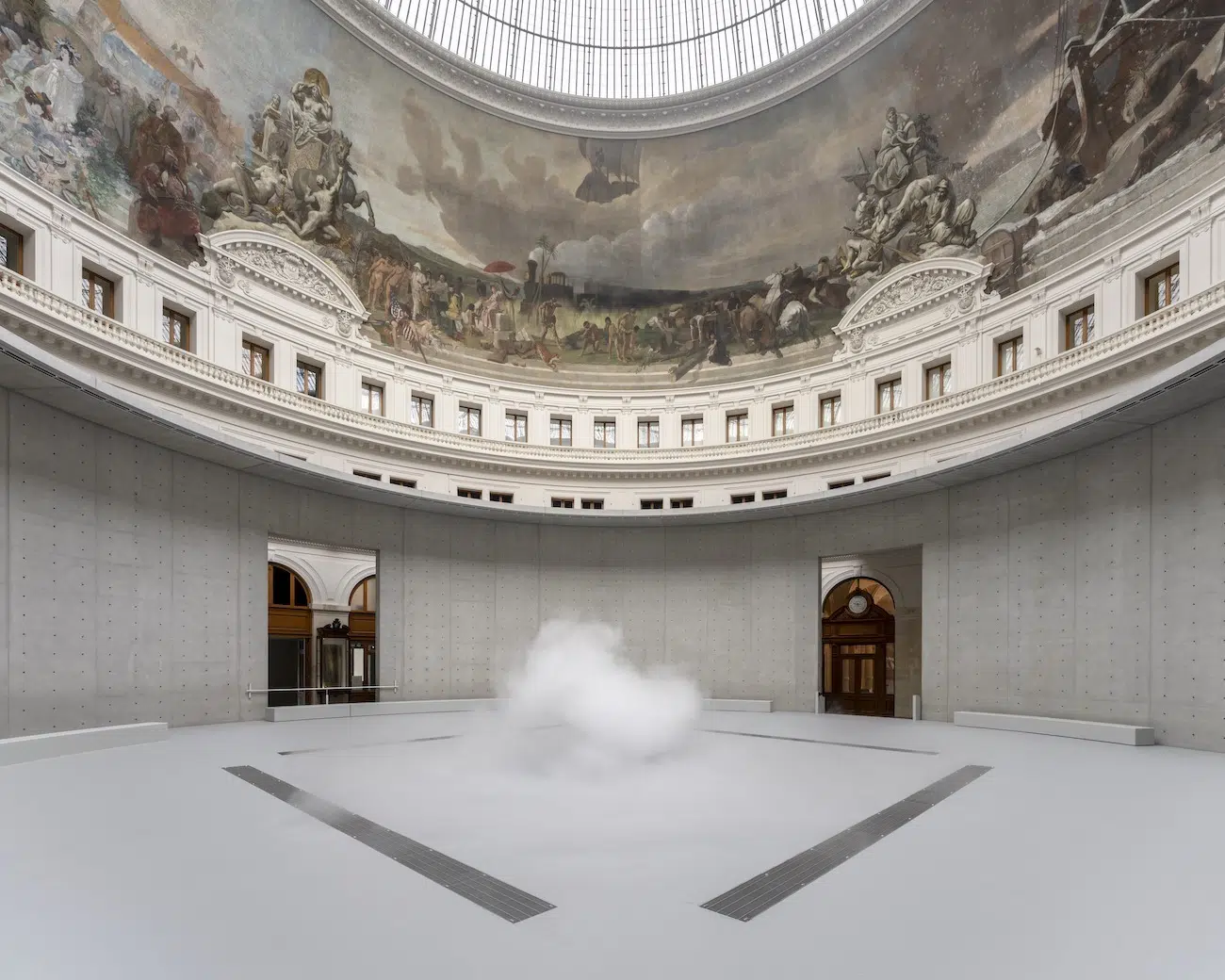
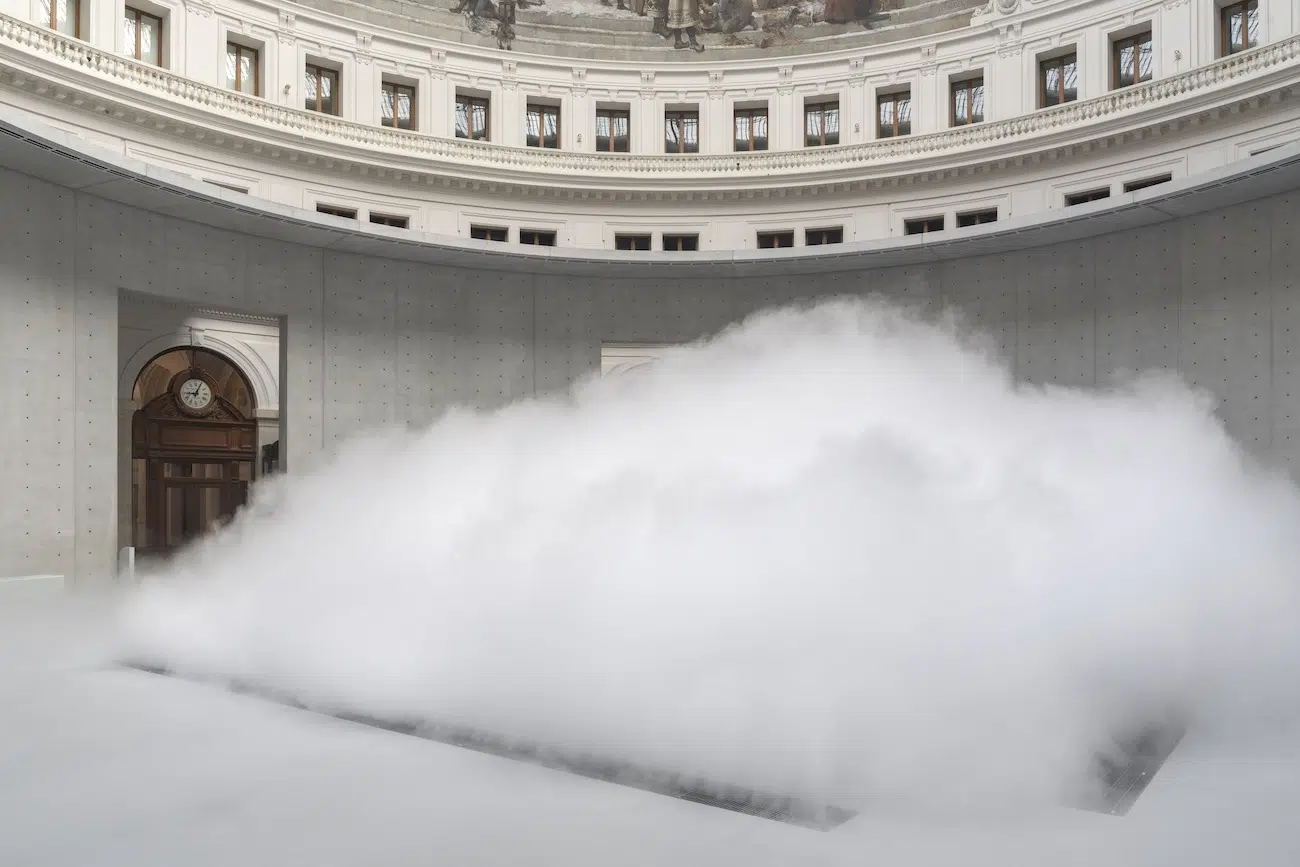
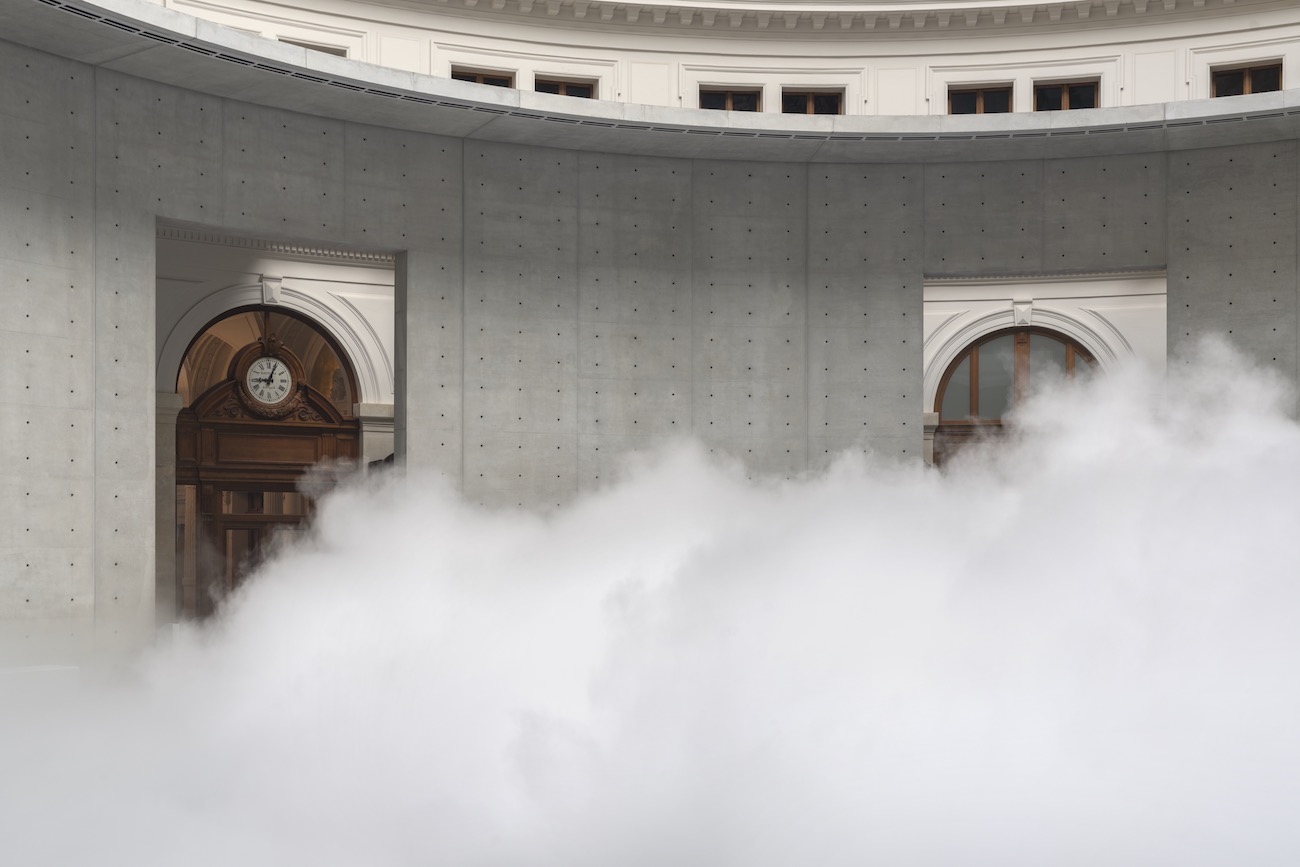
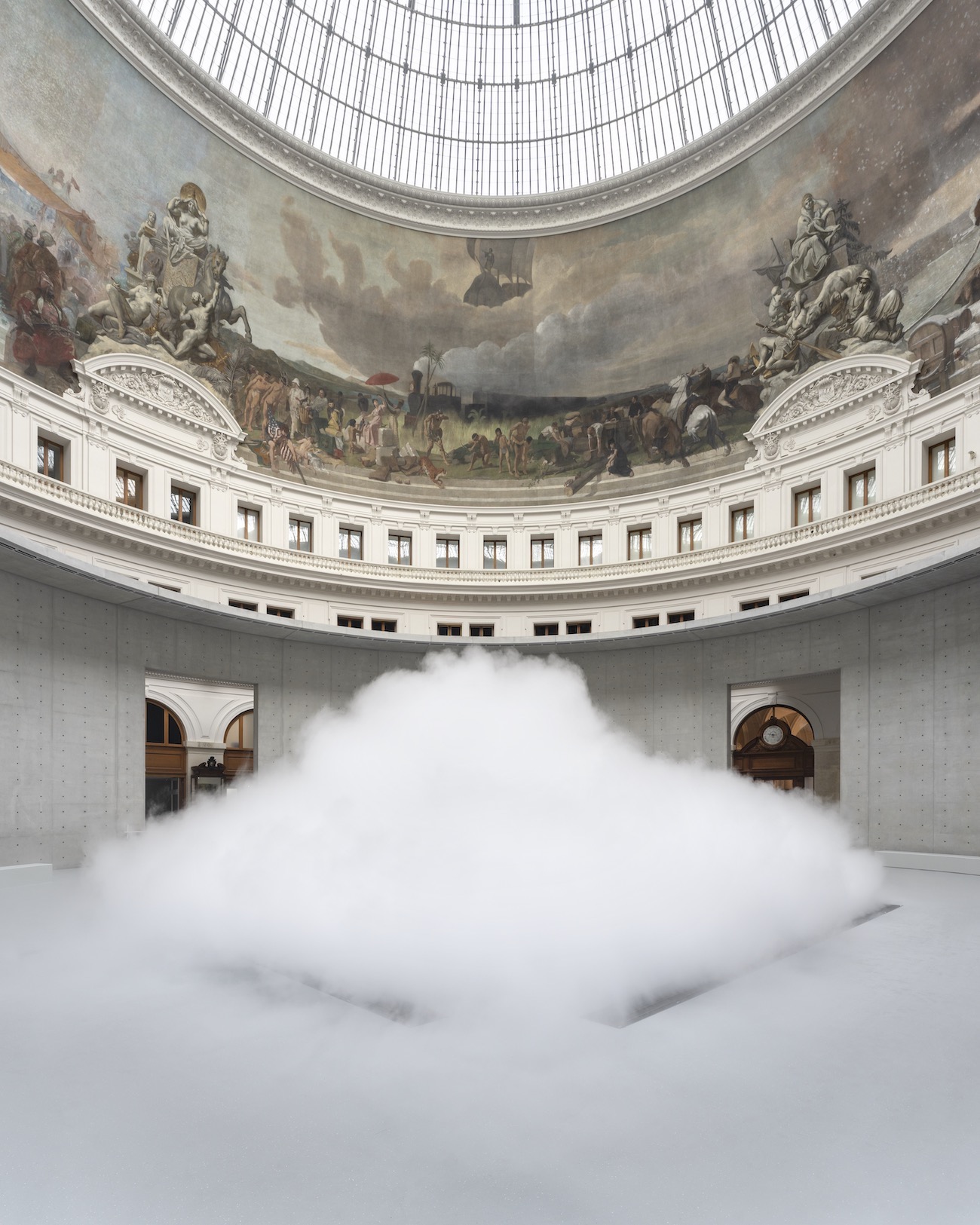
The site-specific fog sculpture uses high-pressure nozzles to fill the circular space with pure-water mist that envelops Tadao Ando’s concrete cylinder and constantly shifts in response to ventilation, humidity, and visitor movement.
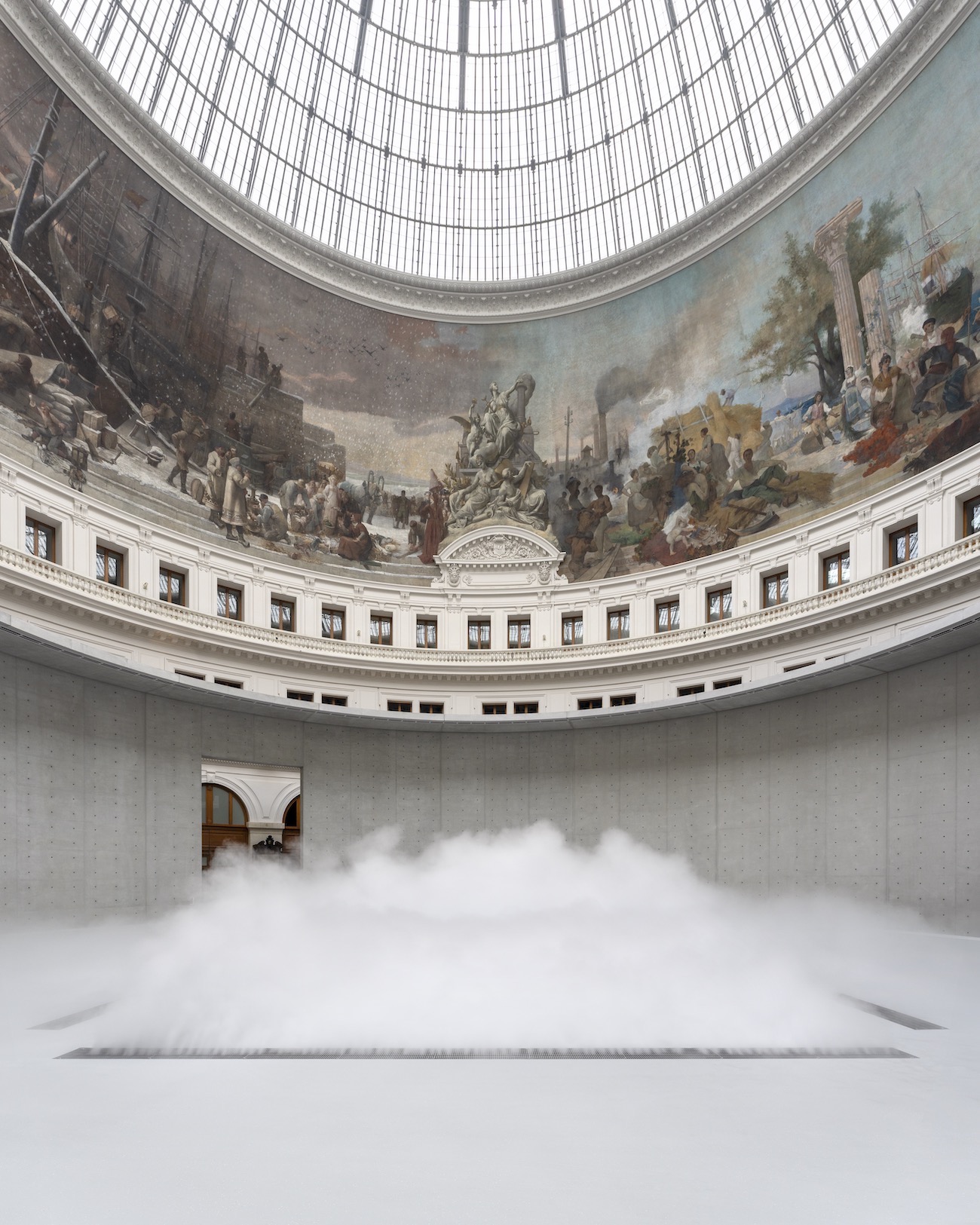
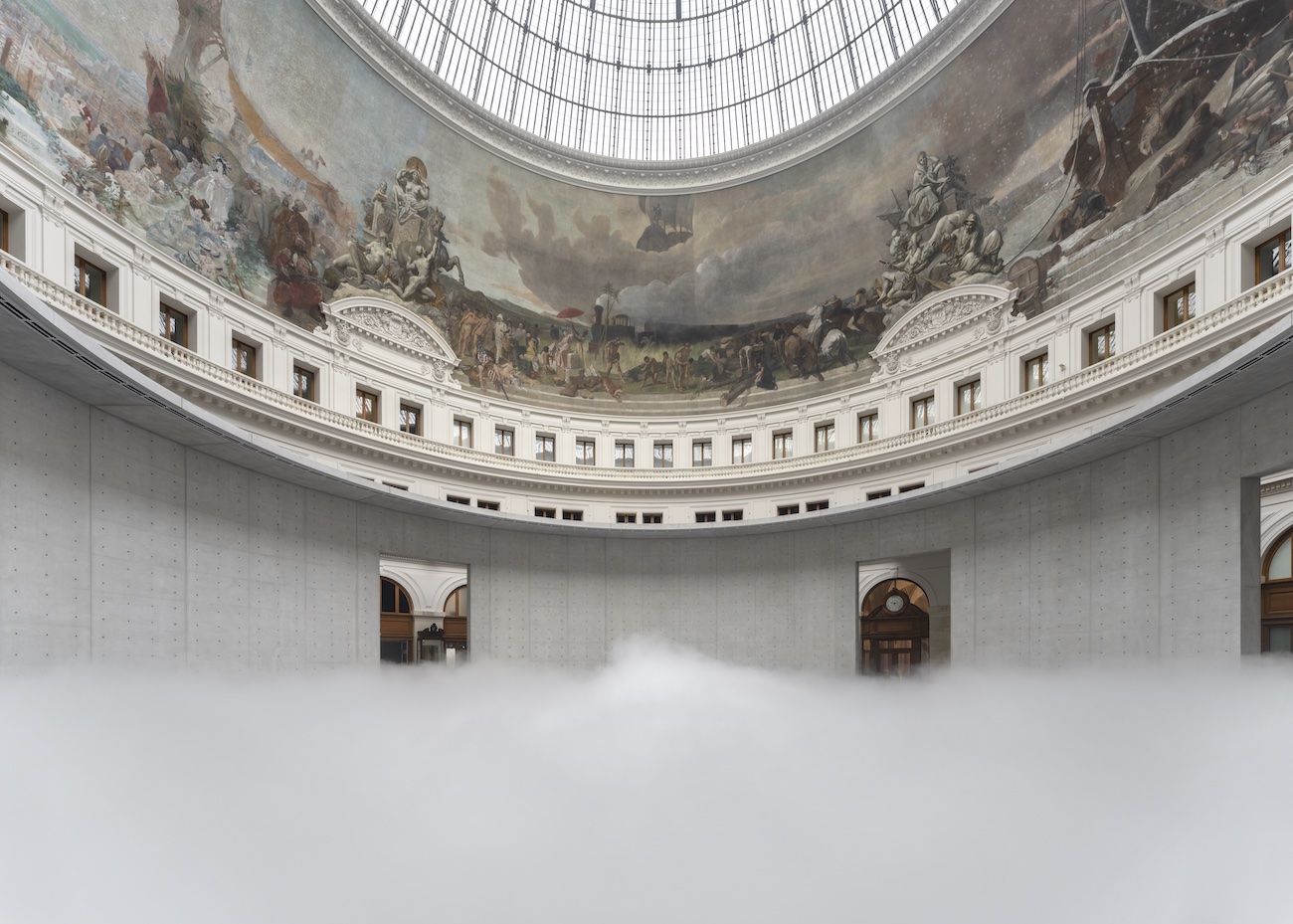
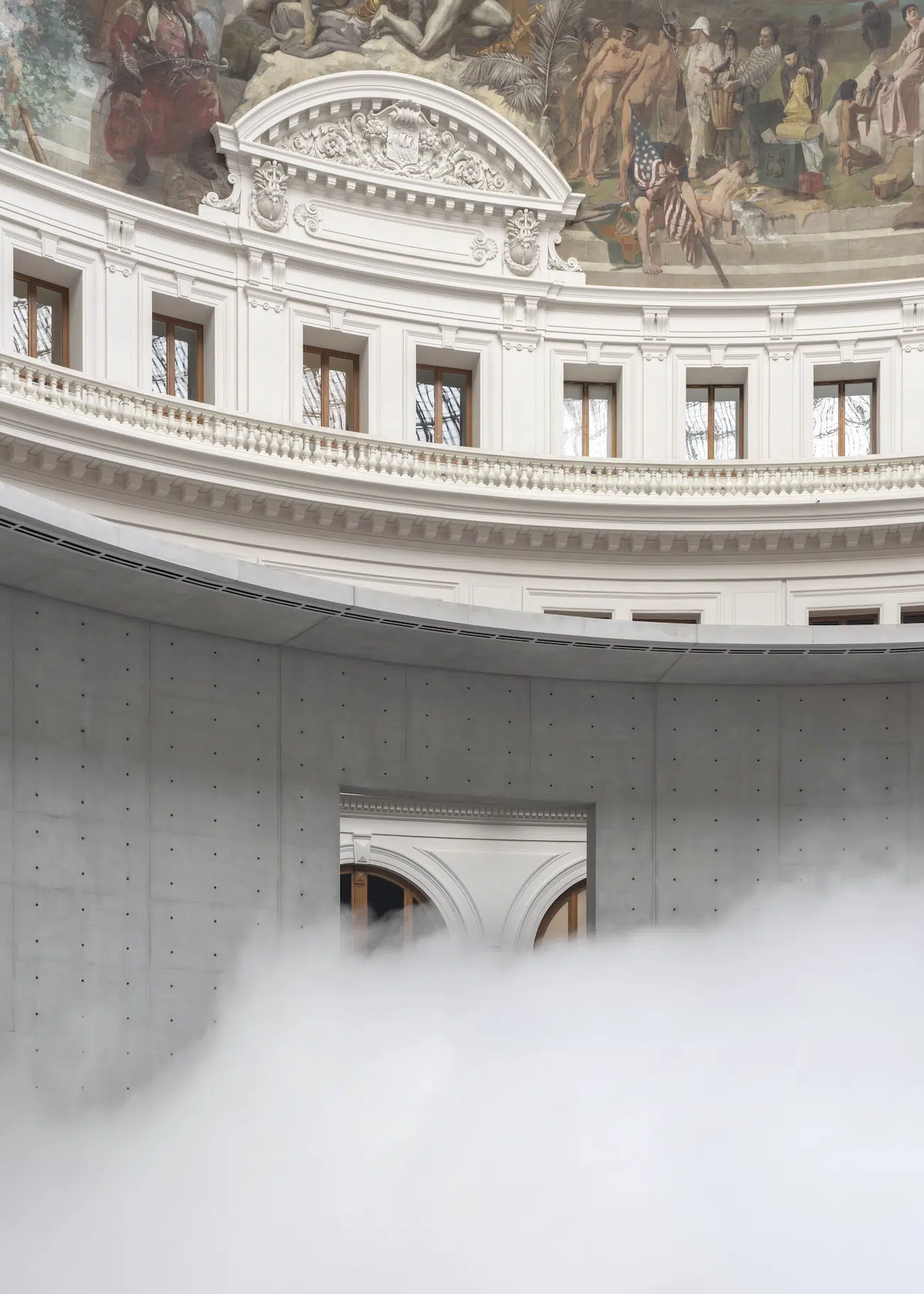
By responding to the building’s ventilation system, climate conditions, and visitor movement, the installation makes the rotunda’s invisible air currents visible, reinforcing Clair-obscur’s focus on the shifting boundary between presence and absence.