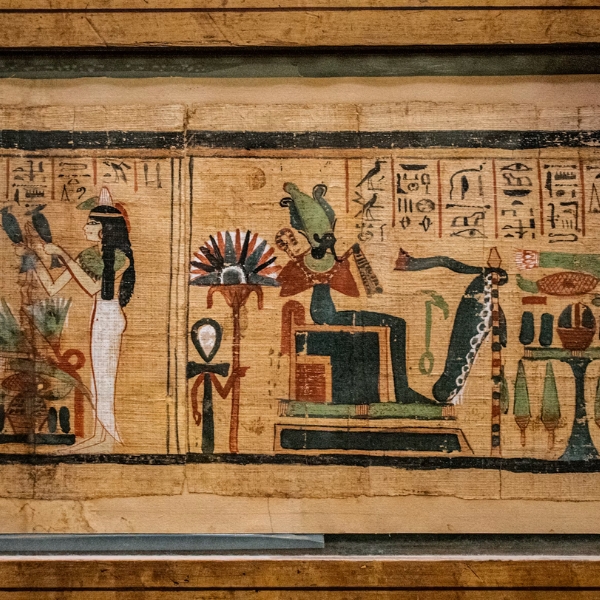
Nearly everything in the supermarket today either comes with an expiration date or isn’t considered fresh for very long. That’s why it may be hard to believe but there is one natural product that, with the right conditions, can last hundreds, or even thousands of years—honey. Over the years, archeologists have come across pots of unspoiled, perfectly safe to eat honey in ancient Egyptian tombs. While hard to believe, this is the result of a very precise chemical balance that no other food item has.
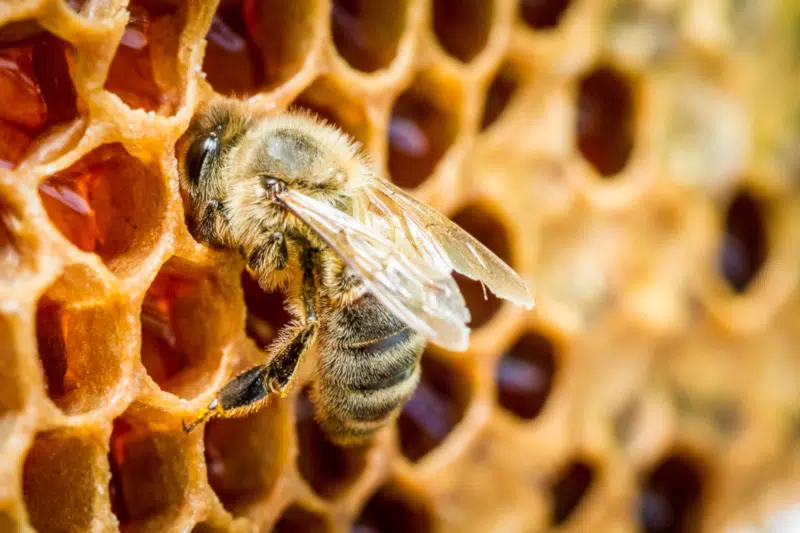
Firstly, in its natural form, honey is very low in moisture, thanks to the bees flapping their wings to dry out the nectar they extract from the flowers. “Very few bacteria or microorganisms can survive in an environment like that, they just die. They’re smothered by it, essentially,” Amina Harris, executive director of the Honey and Pollination Center at the Robert Mondavi Institute at University of California, Davis told Smithsonian Magazine. In an environment with little to no water, there’s no place for something that could spoil the honey.
Honey is also acidic nature; it has a low pH between 3 and 4.5, which will kill off almost anything that attempts to grow on it. And anything that would potentially survive, wouldn’t stand a chance against honey’s ultimate power: hydrogen peroxide. This is thanks to the chemical processes that takes place within the bees’ stomachs. These creatures boast an enzyme known as glucose oxidase (GOx). When they regurgitate the nectar from their mouths to make honey, this enzyme mixes with the nectar, which is then broken into two by-products: gluconic acid and hydrogen peroxide.
This delicate dance of components has also earned honey a place in the medical realm for millennia. Thanks to its antiseptic quality, there are records of it being used to treat burns and cuts in Sumerian clay tablets that date back to approximately 2100–2000 BCE. Meanwhile, the ancient Egyptians employed medicinal honey often, preparing ointments to treat skin and eye diseases. At the same time, they treated it with the utmost reverence, as honeybees were thought to have originated from the tears of their sun god Re.
Understandably, these chemical miracles don’t work on their own, so likely the most important element for its near-supernatural preservation is keeping it in a sealed container. The more industrial one found in supermarkets will keep its alluring quality thanks to a heating and straining process that removes all particulates, while the more artisanal one may still crystalize. But as long as it is sealed, it is good to go. That’s why, always make sure your pot of honey has been closed properly, and who knows? It may become an archeological treasure to be excavated by future civilizations in a few thousand years.
Sources: The Science Behind Honey’s Eternal Shelf Life
Related Articles:
Ava Roth Collaborates with Honeybees to Transform Beeswax into Art
Turkish Beekeeper Turns Honey-Stealing Bears Into Taste Testers
Scientists Develop a Vaccine That Could Help Save the Honey Bees
Stunning Prints of Nepalese Honey Hunters Support WWF For World Bee Day