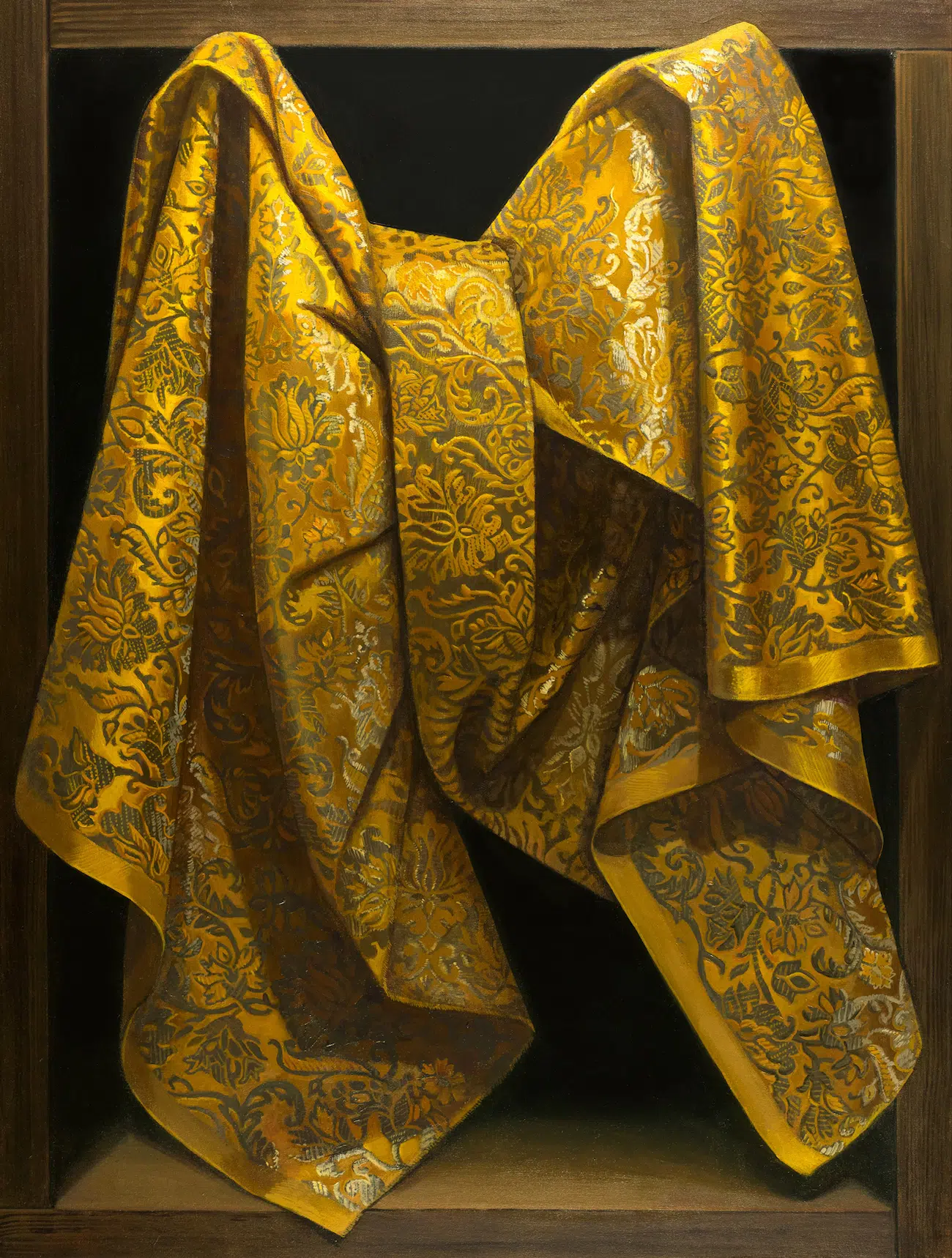
Parrhasius No. 34 (Helios), 24×18″, oil on panel, 2023
What if a curtain could hide nothing and still make you want to look behind it? Artist Leeah Joo explores that question in Parrhasius, a series of meticulously painted draperies that seem to hover in front of an endless black void. The folds appear tangible. Light catches the fabric as it would in real life, revealing its weight and movement. Yet there is no room behind the curtain. No wall. No hidden figure waiting to emerge.
Joo creates these illusions with oil paint, working directly from carefully arranged fabrics in her studio. She paints each composition at a 1:1 scale, allowing the finished work to mirror the physical setup in front of her. The result is a tension between what appears real and what could only exist within a painting. The series takes its name from the ancient Greek painter Parrhasius.
The story of Zeuxis and Parrhasius, written by the Roman author Pliny the Elder, is about two painters who competed to determine who could create the most convincing illusion. Zeuxis painted grapes so realistically that birds attempted to eat them. Parrhasius then presented what appeared to be a curtain covering his painting. When Zeuxis asked him to pull it aside, he discovered that the curtain itself was painted.
“The legend of Zeuxis and Parrhasius encapsulated everything I love about painting,” Joo tells My Modern Met. The story offers more than a lesson in technical skill for the artist, who was drawn to “the allure of virtuoso technique coupled with a touch of mystery.” She first encountered the story at a trompe-l'œil exhibition at the New Britain Museum of American Art. It captured her longstanding fascination with concealment and the human desire to see what lies beyond the surface. At the time, she was painting curtains with figures reflected in window glass. Over the years, she gradually removed those elements until the fabric became the sole subject.
Rather than painting a curtain as one element within a larger scene, she gives it the entire frame. There is nothing else for the viewer to interpret. That simplicity makes the paintings more psychologically charged. The fabric suggests that something exists beyond it, while the blackness refuses to confirm that possibility.
This idea of concealment has shaped Joo’s work for more than 25 years. Her earlier paintings featured partially hidden figures behind curtains. Other works wrapped objects so that their identities remained uncertain. With Parrhasius, she removed the hidden subject entirely.
“Rather than painting something behind the drapery, such as the back of the box or the wall, I want to leave it as a void so that one element of the painting appears fictional,” Joo explains.
The decision creates an unusual contradiction. The curtain feels intensely physical, yet the space behind it feels impossible. Joo has created an object that appears to occupy space without giving viewers a believable space for it to occupy. She connects this approach to the dramatic black backgrounds of Caravaggio, whose figures often emerge from darkness without a clearly defined setting.
“I think of Caravaggio’s black background, how it eludes time or place,” Joo says. For her, the darkness also serves as a connection to the history of painting. “I want the illusion of the drapery to be convincing like it is there, but the black void to say it is not,” she explains.
Before Joo begins painting, she searches for textiles that offer something visually distinctive. “I am constantly searching for fabrics based on color combinations, textures, and patterns or motifs,” Joo says. Her interest goes beyond their appearance. Each textile has its own physical character, which changes the way it behaves under light. “I think of each fabric as a portrait,” she explains. “The characteristics of each fabric are enhanced with lighting.”
Vietnamese silk, for example, tends to be lightweight and fluid. Its folds form soft, curving shapes. Indian silk brocades have more weight, while their elaborate embroidery creates sharper creases and broader geometric forms. Joo uses light to heighten those distinctions. A highlight might skim across a raised pattern, while a deep shadow can make a fold appear almost architectural.
Once she selects a fabric, she drapes it in different formations until she finds an arrangement with the right visual rhythm. She then adjusts the lighting to emphasize the movement within the folds.
The artist also paints each work at the same scale as the physical setup. Her Parrhasius compositions measure 24 by 18 inches, matching the dimensions of the arrangements she observes in her studio.
Joo works without a preparatory drawing. Instead, she begins directly on a gessoed panel. She first establishes broad tonal areas that define the highlights, mid-tones, and shadows. She then maps the design of the fabric with a thin brush. From there, the process becomes increasingly detailed. Joo works from left to right, returning to the surface in multiple passes over the course of several weeks. Each layer strengthens the illusion of depth and texture.
“I love artwork that embraces and stretches the limitations of a medium,” Joo says. For her, hyperrealism provides an opportunity to make viewers more aware of paint rather than less. She often asks her students to consider a fundamental question: “Is it about paint or imagery?” Her own work refuses to choose between the two.
Joo connects this interest to German visual artist Gerhard Richter. “From photographic realism to impasto abstraction, his career has shown us paint really can do anything,” she says.
Joo could paint a room behind the fabric, or reveal the object hidden within it. Instead, she gives viewers a void. That choice changes the way we look. The curtain becomes a threshold. It suggests another space without ever providing one. This connects the series to Joo’s broader interest in concealment, but it also returns the viewer to the story of Parrhasius. Like Zeuxis, we encounter an image that seems immediately understandable. Then we realize that our assumptions have become part of the illusion.
To keep up to date with the artist’s work, you can follow Leeah Joo on Instagram.
Korean-American artist Leeah Joo creates hyperrealistic oil paintings of draped fabric in her ongoing Parrhasius series, turning curtains into enigmatic studies of illusion and perception.
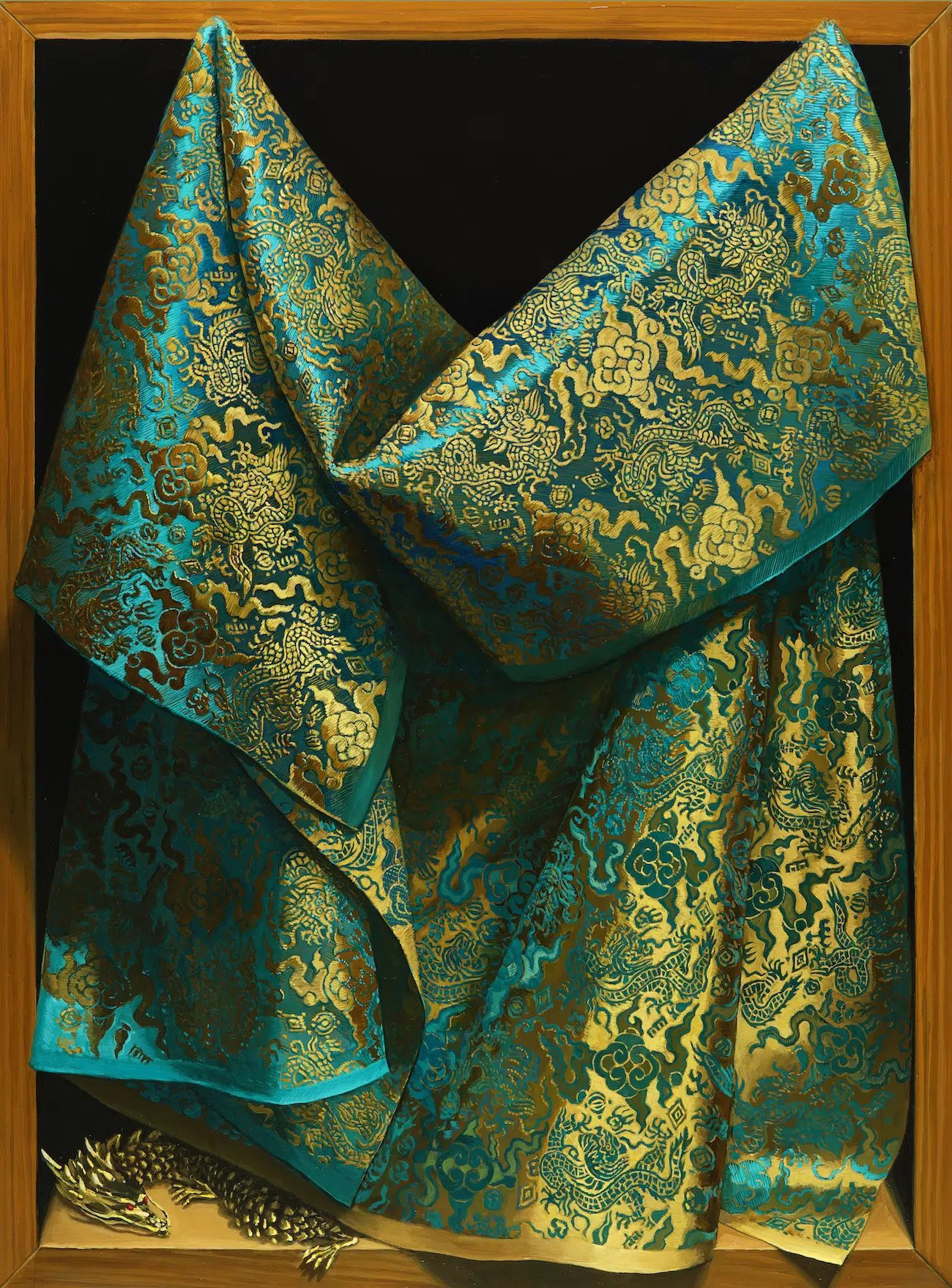
Parrhasius No. 63 (Imugi), 24x18x2″, oil on panel, 2025
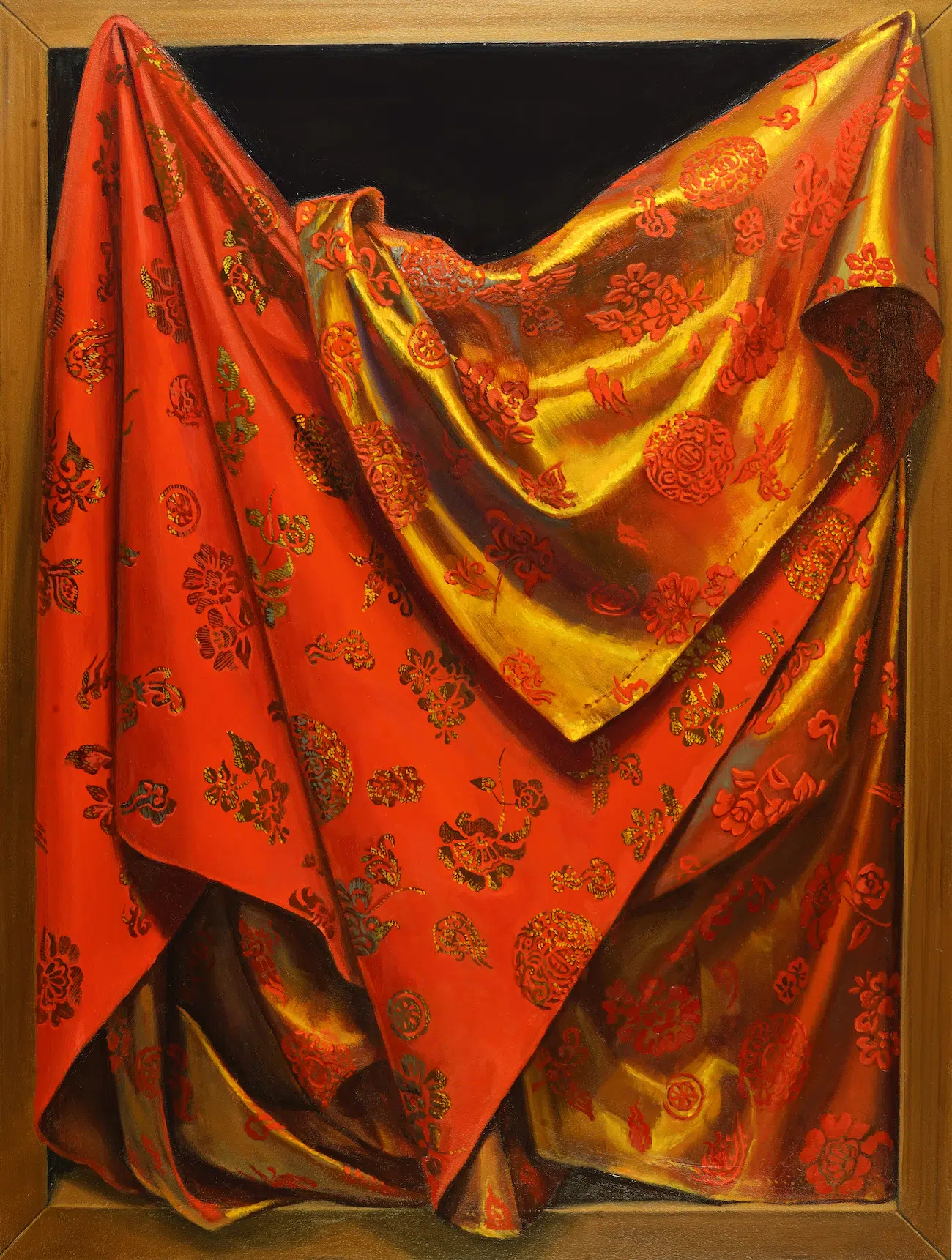
Parrhasius No. 57 (Cinnabar), 24x18x2″, oil on panel, 2024
Inspired by the ancient Greek story of Zeuxis and Parrhasius, Joo uses a black void behind each textile to explore her longstanding fascination with the human desire to see what lies beyond the surface.
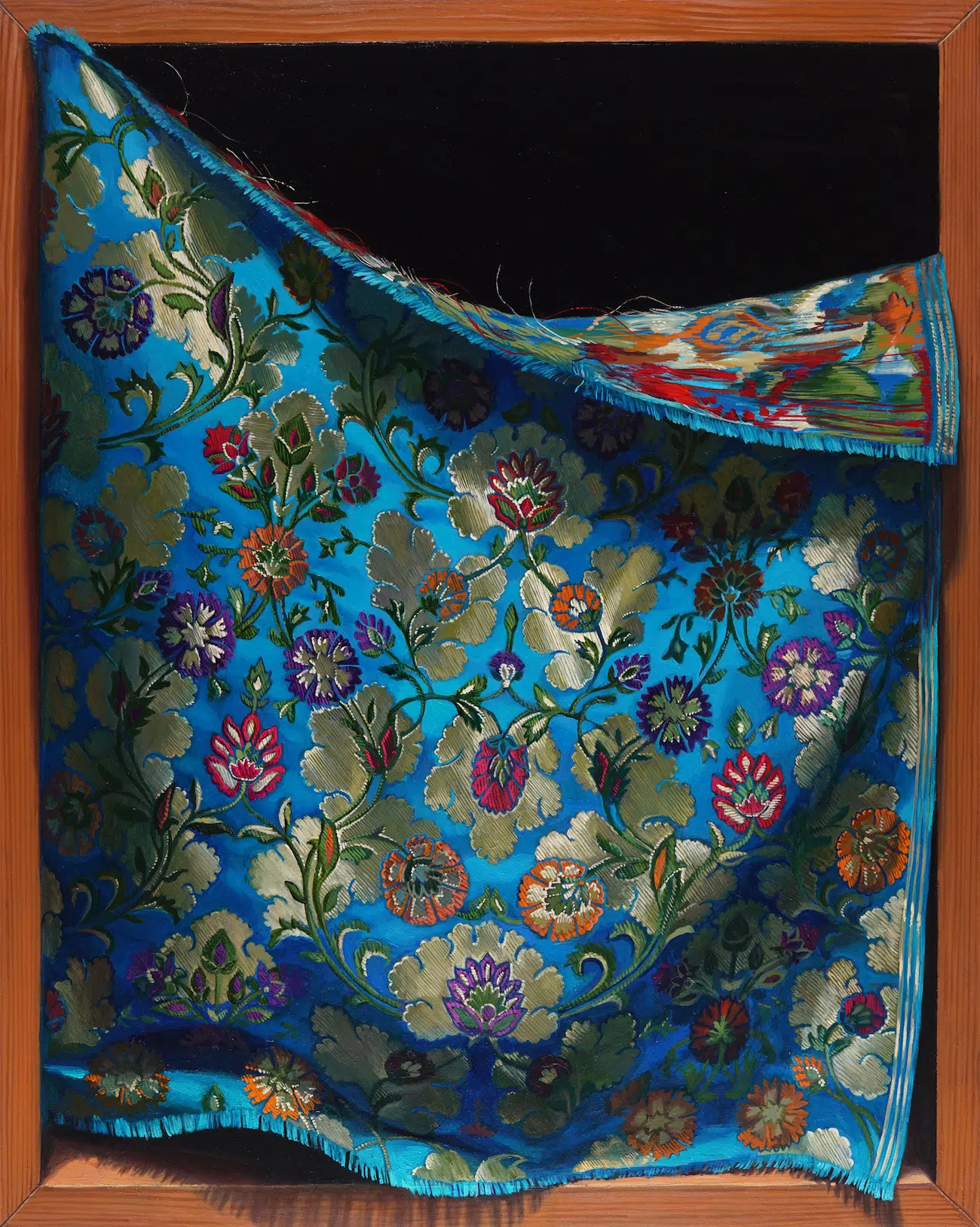
Parrhasius No. 74 (Solstice), 20×16″, oil on panel, 2026
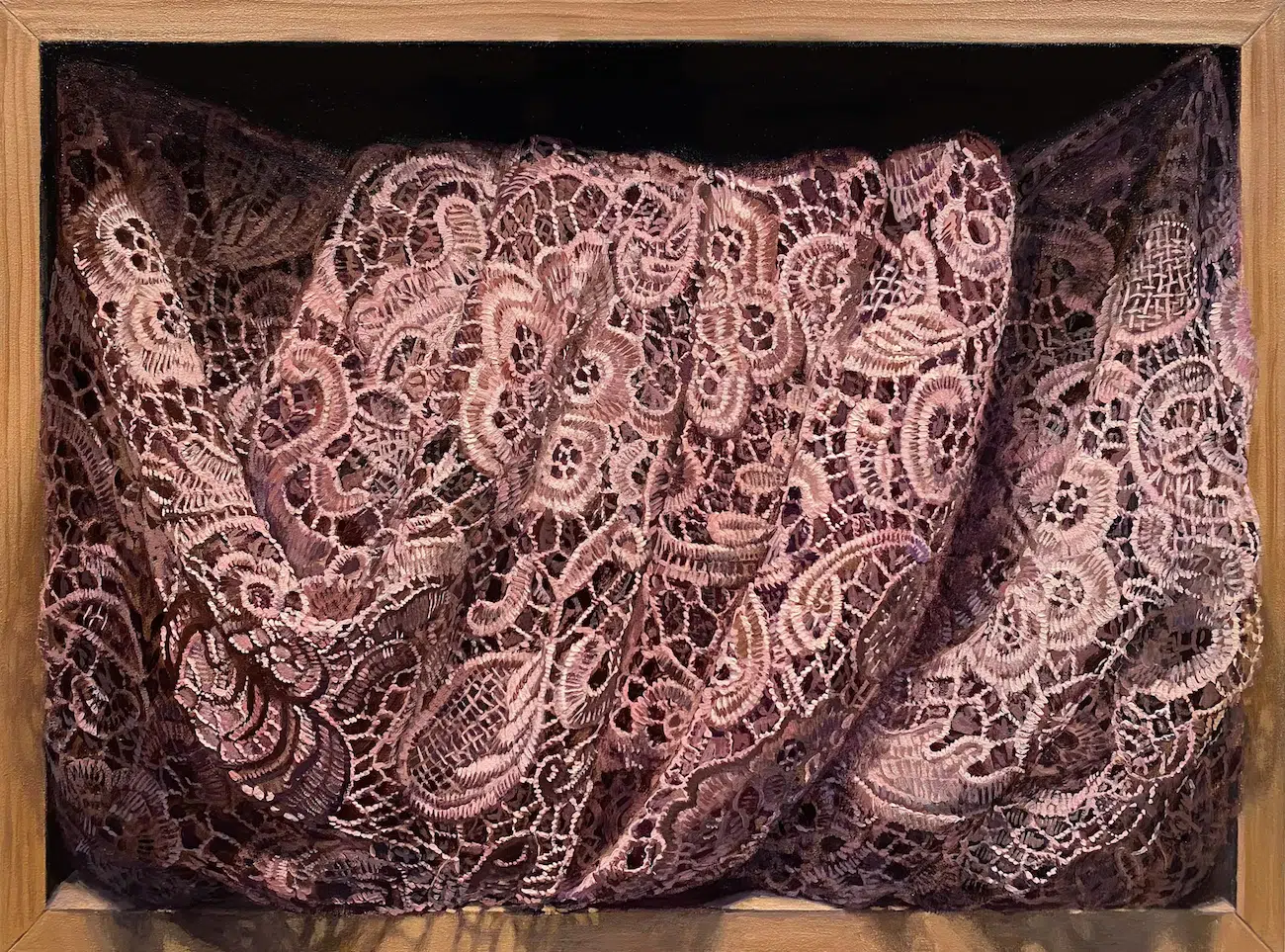
Parrhasius No. 73 (Adore), 12×16″, oil on panel, 2026
Working from carefully arranged fabrics in her studio, Joo paints each composition from observation and uses dramatic lighting to emphasize each material.
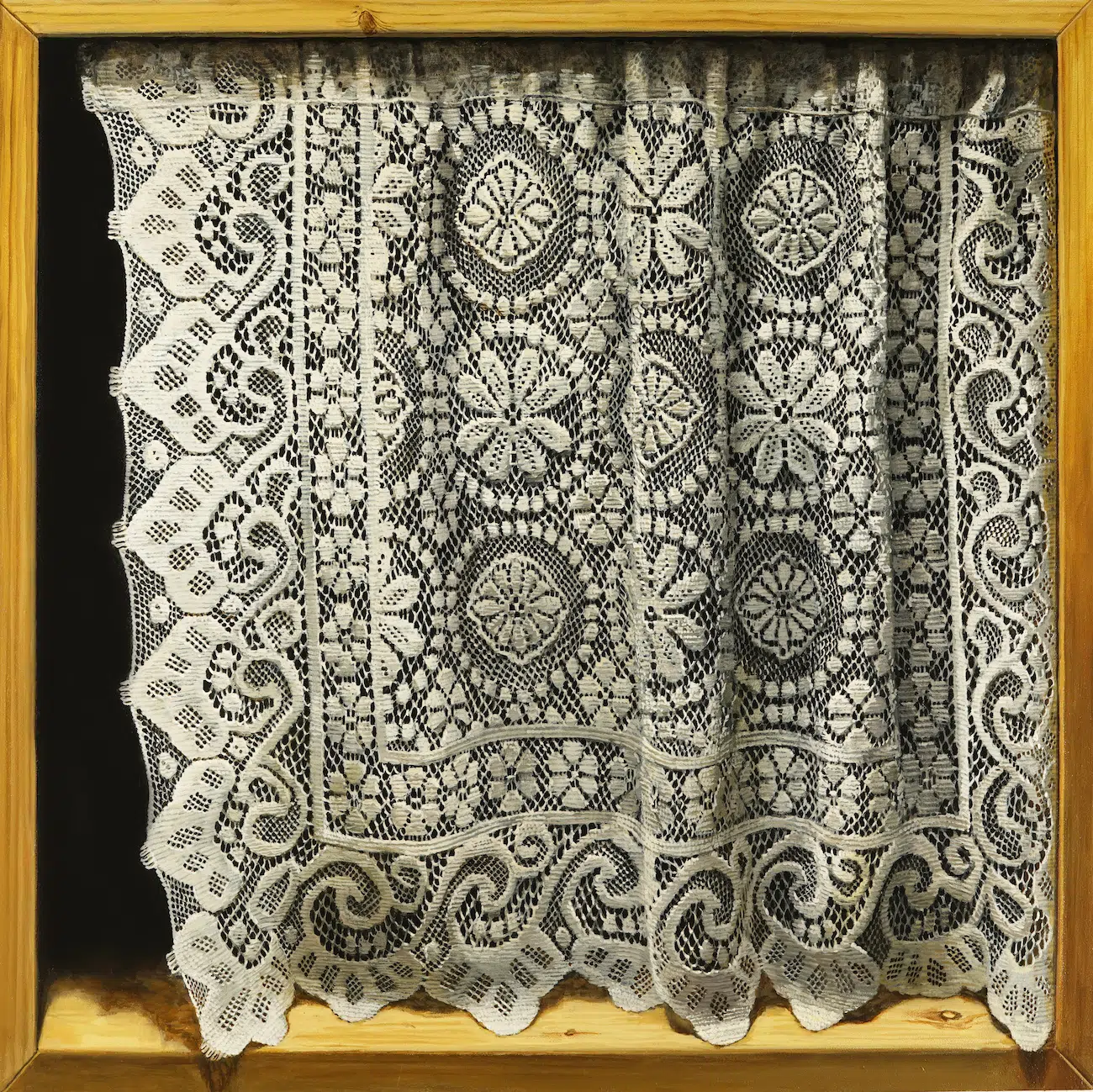
Parrhasius No. 59 (Bliss), 24×24″, oil on panel, 2024
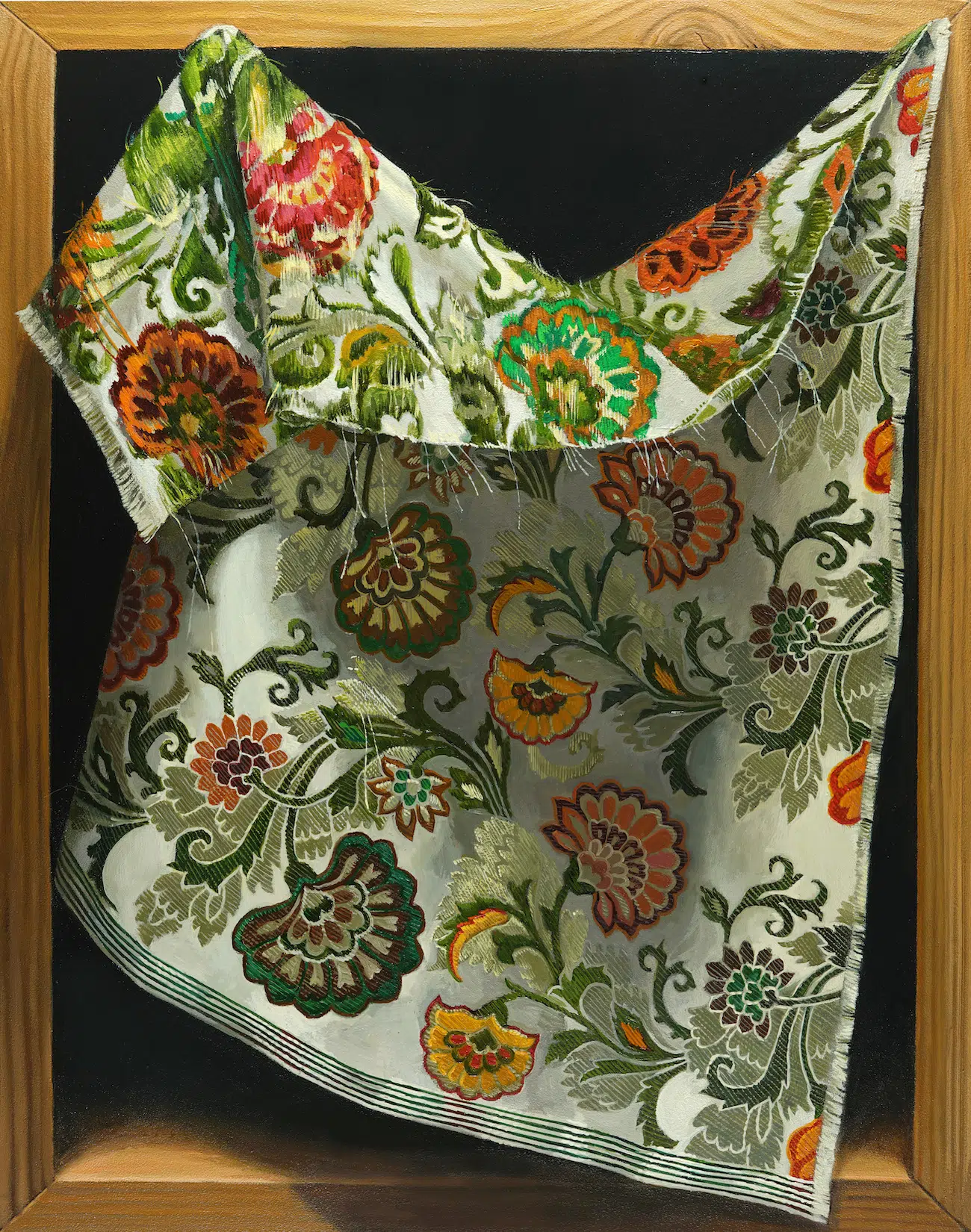
Parrhasius No. 71 (Sprite), 18×14″, oil on panel, 2026
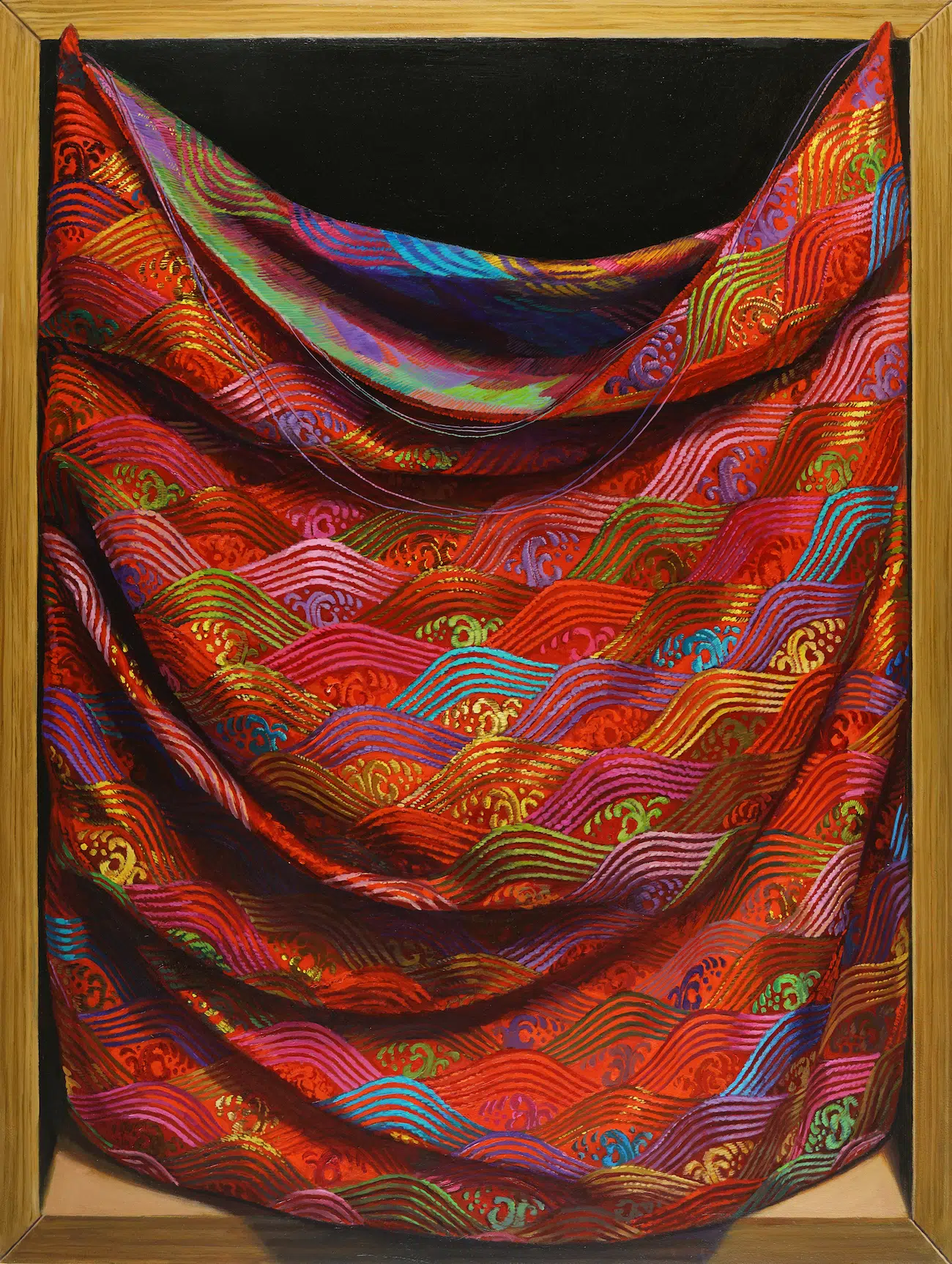
Parrhasius No. 65 (7th Wave), 24x18x2″, oil on panel, 2025
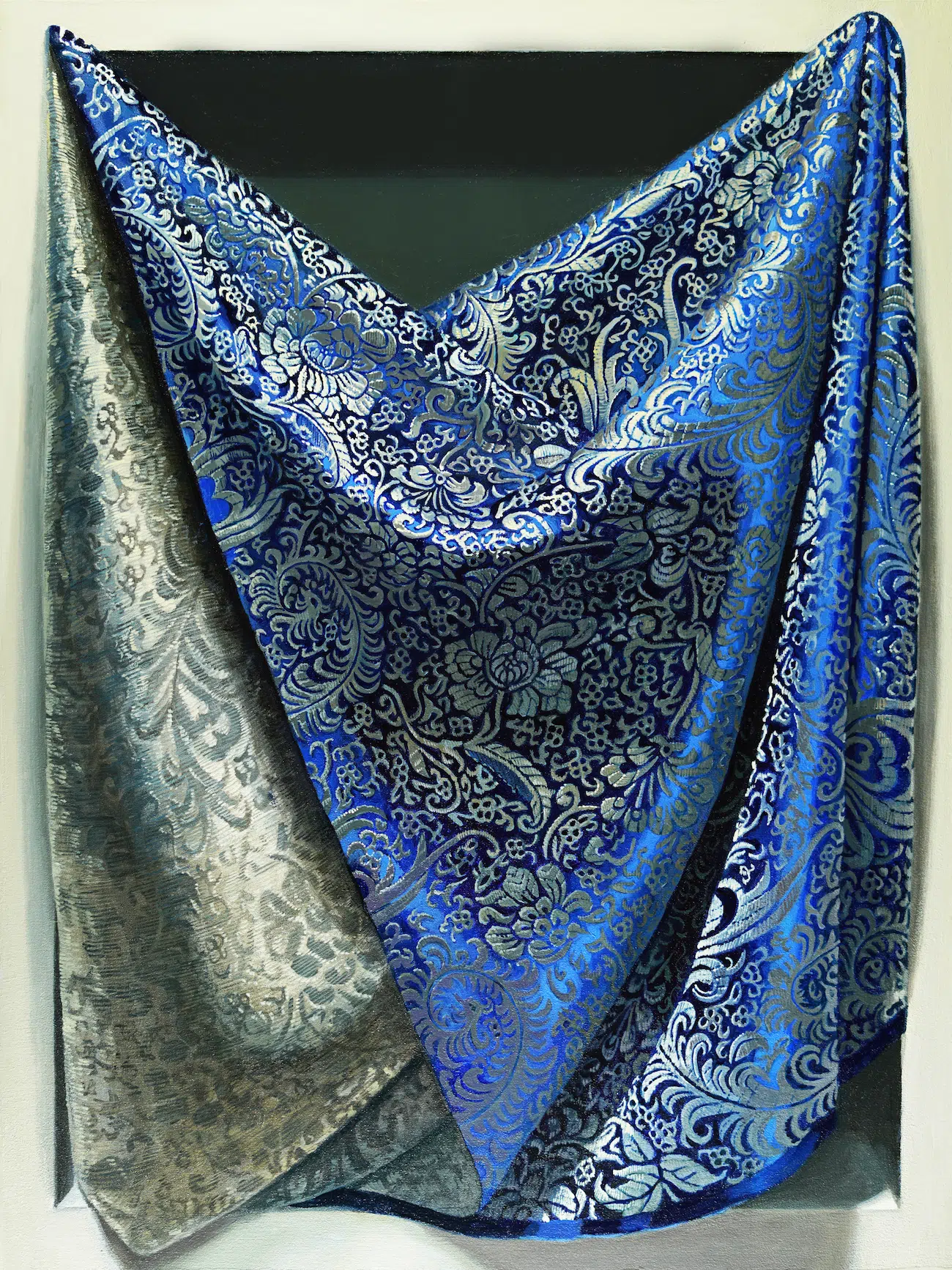
Parrhasius No. 49 (Lazuli), 24x18x2″, oil on panel, 2024
Parrhasius blurs the boundary between image and object while asking viewers to question what is real and imagine what might remain hidden.
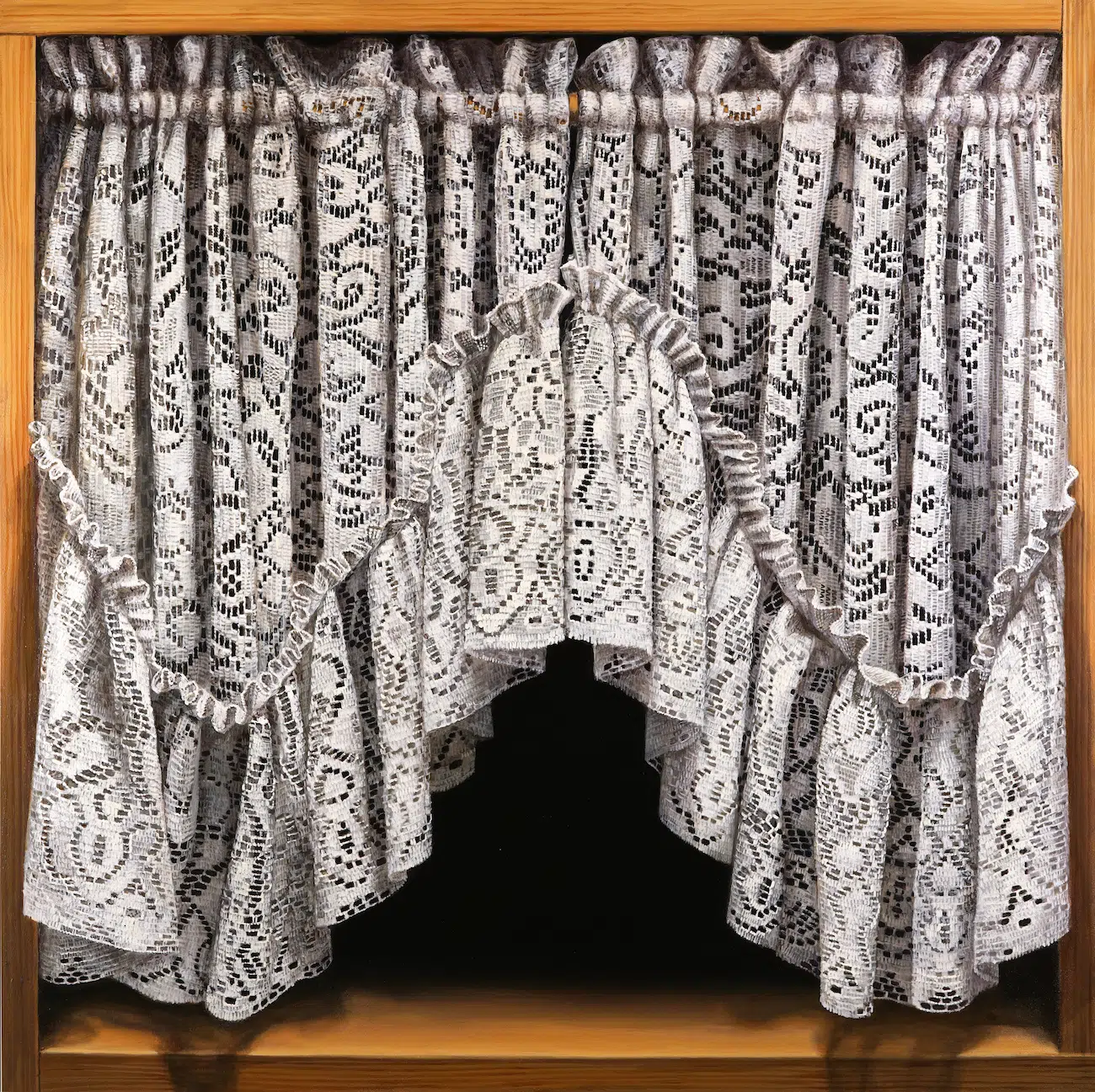
Parrhasius No. 75 (Leto), 24×24″, oil on panel, 2026
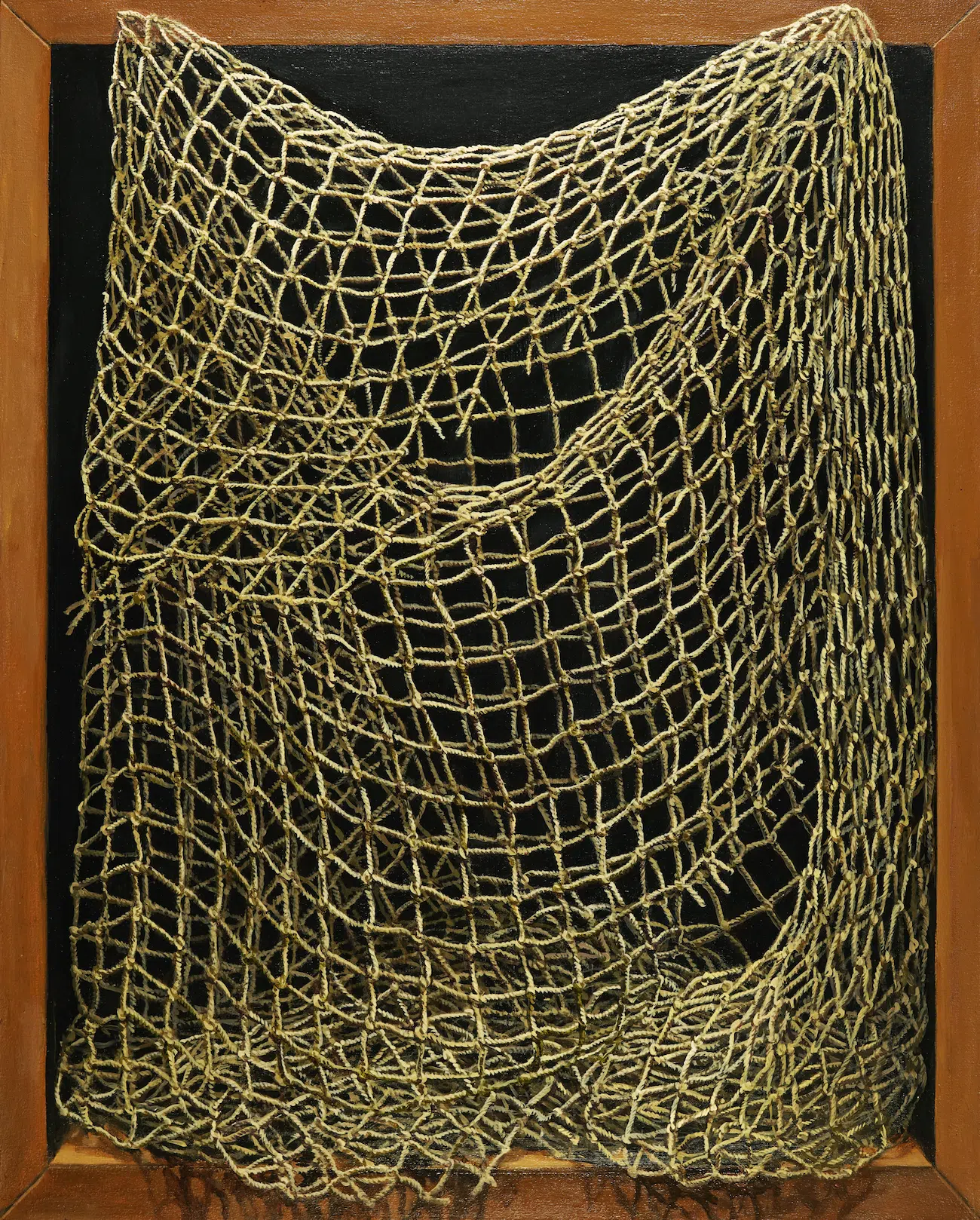
Parrhasius No. 50 (Graziella), 20×16″, oil on panel, 2024
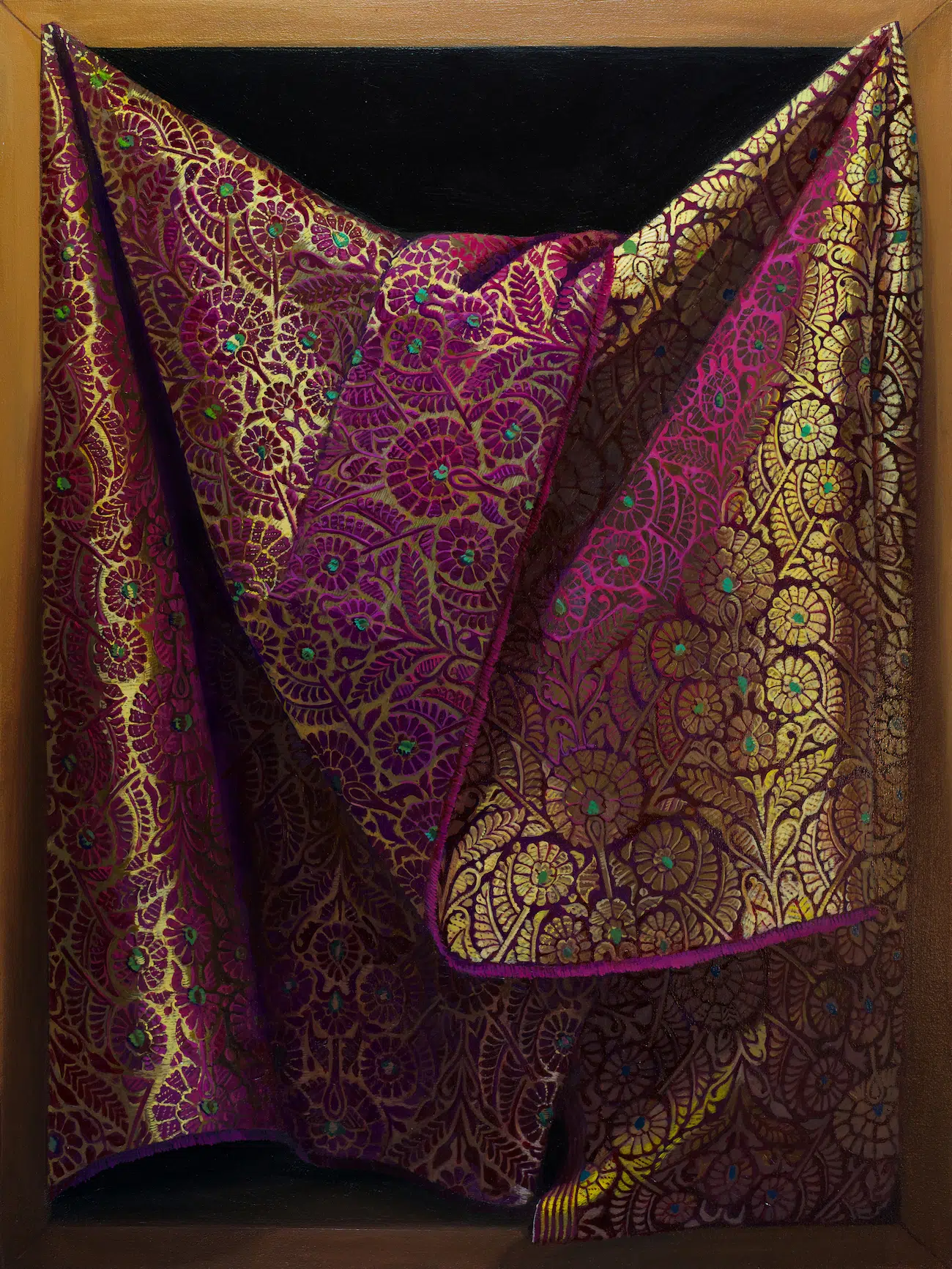
Parrhasius No. 47 (Josephine), 24x18x2″, oil on panel, 2024