Photo Credit: NASA/Joel Kowsky
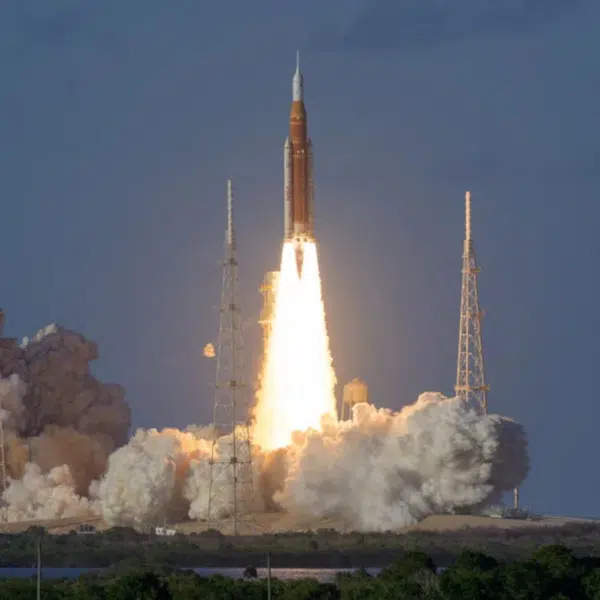
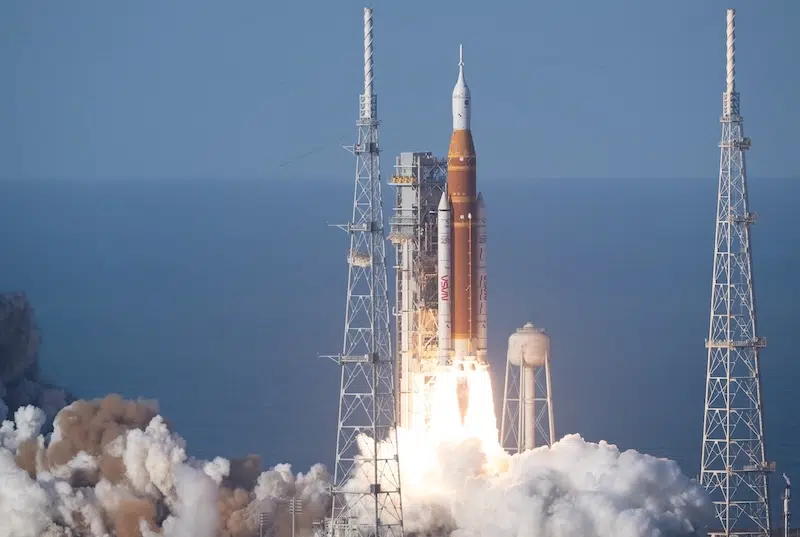
On Wednesday, April 1, 2026, at 6:35 p.m., the world watched as the Orion spacecraft began its launch. As part of NASA’s historic Artemis II mission, the ship carrying four astronauts was a feat of engineering and a celebration of the boundless curiosity of the human spirit. While many came to witness the launch at the Kennedy Space Center in Florida, no one got as close to the action as National Geographic did. The magazine set up a high-speed, remote-operated camera that captured 7.5 seconds of the launch in fascinating slow motion.
National Geographic used the Ember s2.5k camera by Freefly Systems to photograph a staggering 2,000 frames per second, all in high-resolution. The camera was placed about 1,500 feet from the launch pad; it was so close that the rocket’s flames weren’t safe enough for humans to work near the camera. Instead, the National Geographic team attached a 60-pound lead-acid marine battery and programmed the camera to start recording once NASA’s official launch countdown clock began.
The resulting video, which compiles all of the images, gives us a peek into the engineering marvel that is the Orion spacecraft. We see bright flames, which are the two solid rocket boosters. Each generates a staggering 3.6 million pounds of thrust—about 75% of the entire force needed to lift the 5.75-million-pound rocket from the pad.
As it ascends, billowing smoke reverberates acoustic shock waves that have to be dampened with water sprayed on the pad. Any birds near the site are seen clearing out, their silhouettes fluttering to safety as Orion roars to life.
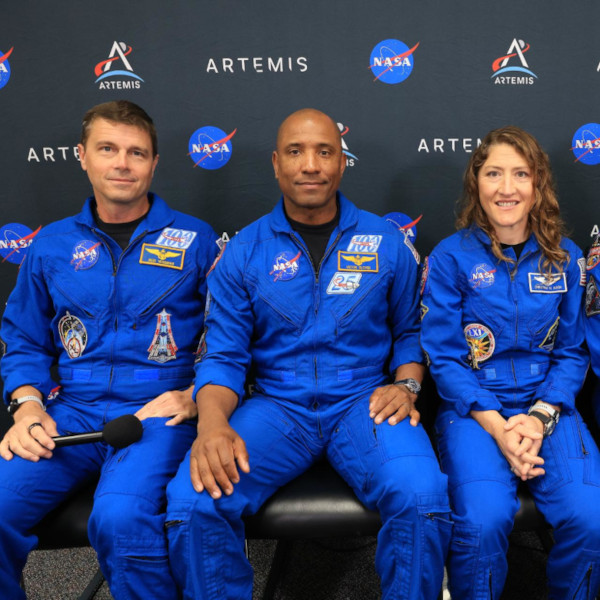
Watch Orion lift off in slow motion, below. Then, learn about the four astronauts manning the ship as it makes its way to the moon and back.
National Geographic captured 7.5 seconds of the Orion spacecraft launch in fascinating slow motion. Watch it here.
National Geographic: Website | Instagram | Facebook
Related Articles:
Watch Artemis II Astronaut Deliver an Uplifting Easter Message From Outer Space
Artemis II Astronauts Preparing for the Moon Say They’re “Ready for Every Scenario”
Gold-Coated Visor Designed for Artemis III Astronauts by Oakley and Axiom Space
NASA Selects 10 Astronauts From More Than 12,000 Applicants To Join Artemis Mission