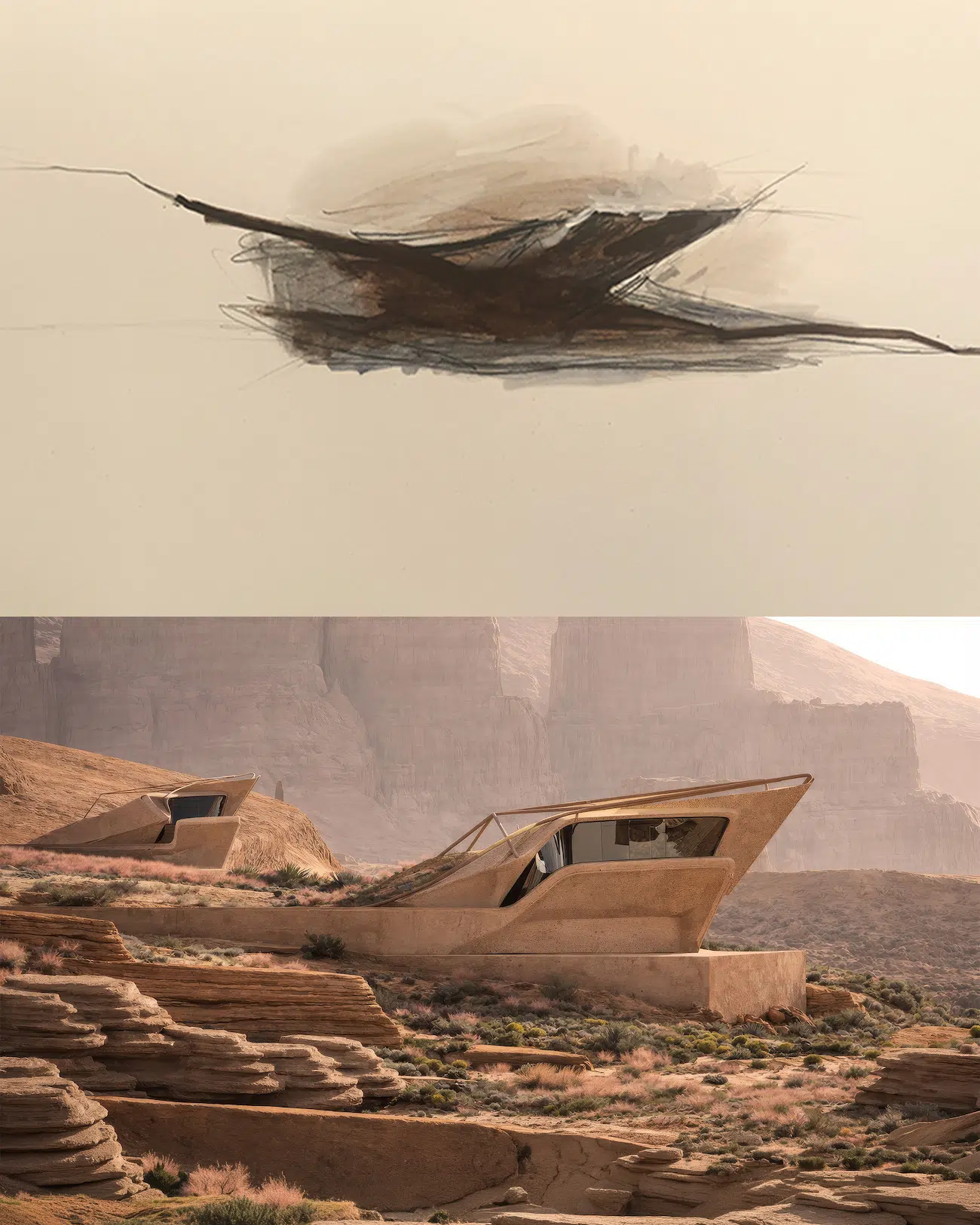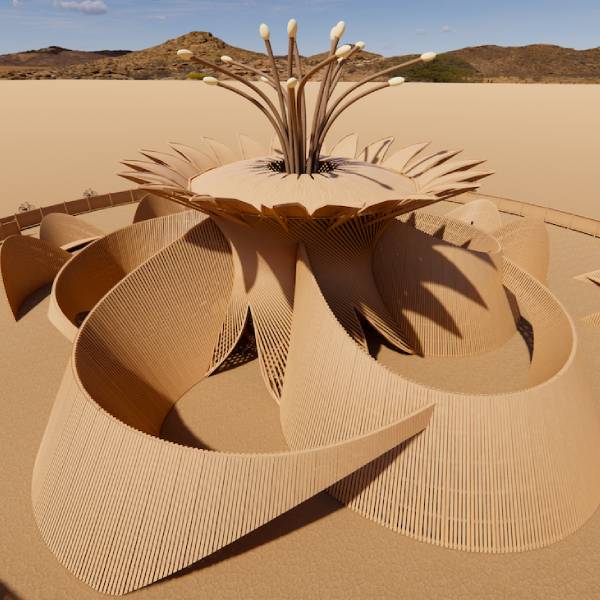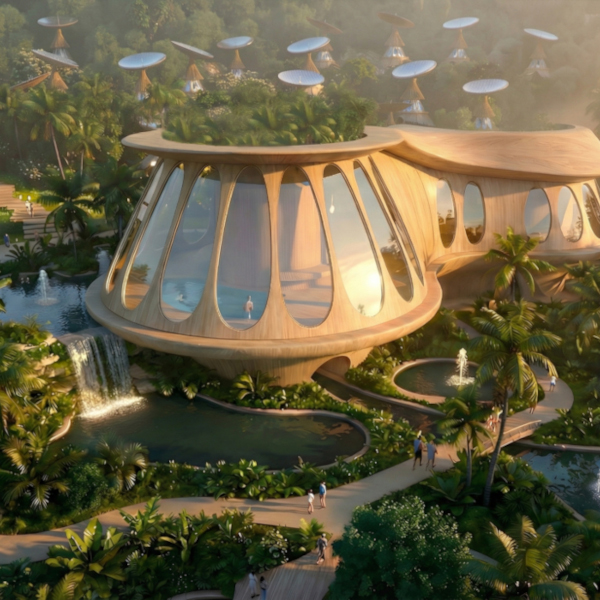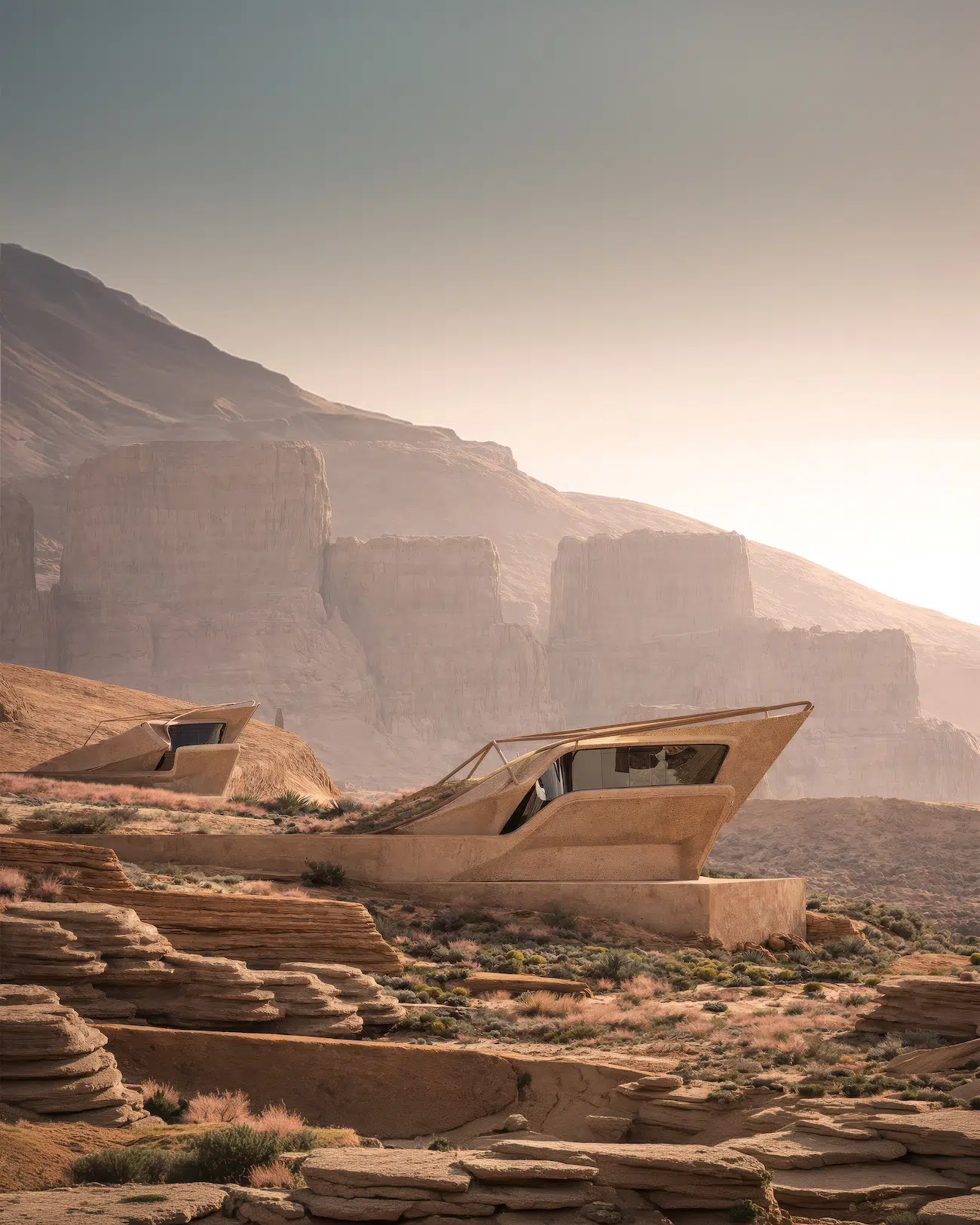
In the remote landscape of the Utah desert, architecture blends seamlessly with geology. This is epitomized by the conceptual Desert Observatory House, a dwelling that appears to emerge directly from the earth. Designed by the firm Vrantsi, the project features low, angular volumes that echo mesas, plateaus, and eroded canyons. As a result, the structure reads like a natural formation shaped over time.
Appearing jagged like a rock facing, the building stretches across the site as a series of elongated prisms. Each form features sharp, inclined planes that mirror the surroundings and avoid rigid symmetry. These angles create a strong visual connection to the desert’s rugged terrain. The color palette, for instance, draws directly from the hues of Utah’s soil. Textured surfaces resemble layers of sediment and natural erosion, further camouflaging the structure.
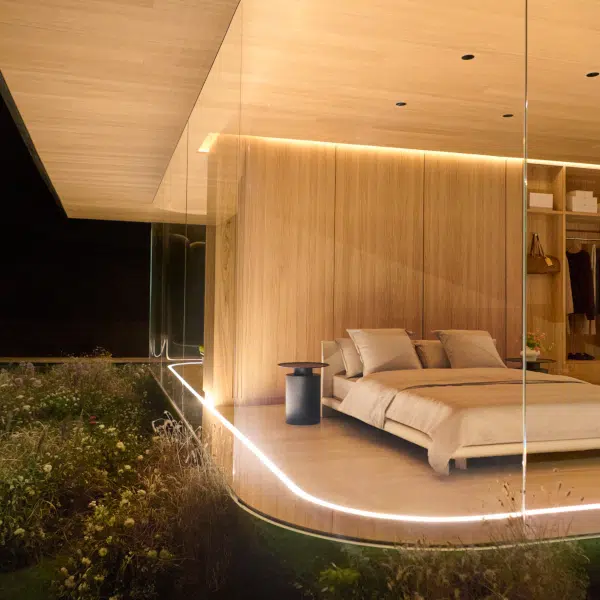
Parts of the home sit underground. This strategy improves thermal performance and keeps interior spaces cool. It also reinforces the idea that the building belongs to the land. Once inside, the layout supports both privacy and openness. Bedrooms and private areas sit below ground level, where temperatures remain stable. These spaces feel protected and quiet. But as visitors move through the home, the spaces gradually open up. Living areas and observatory rooms extend outward and upward, and large openings frame a wide view of the land.
The design also introduces a series of small, self-sufficient desert capsules. These units operate off-grid and minimize environmental impact. Passive strategies like solar orientation, shading, and natural ventilation reduce energy use. Photovoltaic panels sit in a separate ground-mounted field. This keeps the architecture visually clean while maximizing solar efficiency. Water recycling and conservation systems further support sustainable living in the desert.
Ultimately, the Desert Observatory House treats the landscape as a collaborator. It does not interrupt the terrain but continues it. Through form, material, and environmental strategy, the project creates a powerful connection between architecture and the natural world.
The rammed-earth observatory house is designed to blend seamlessly with the Utah desert landscape.
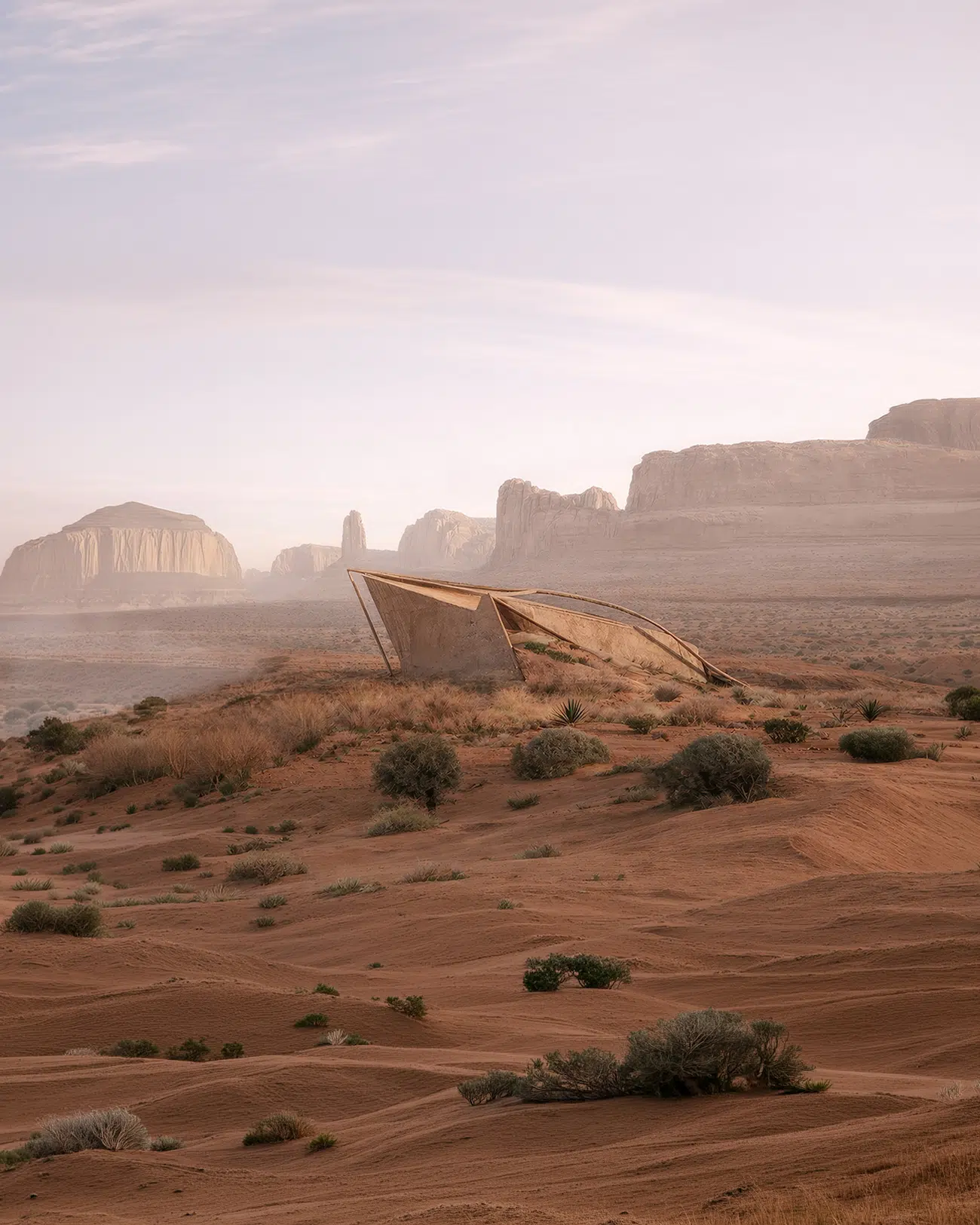
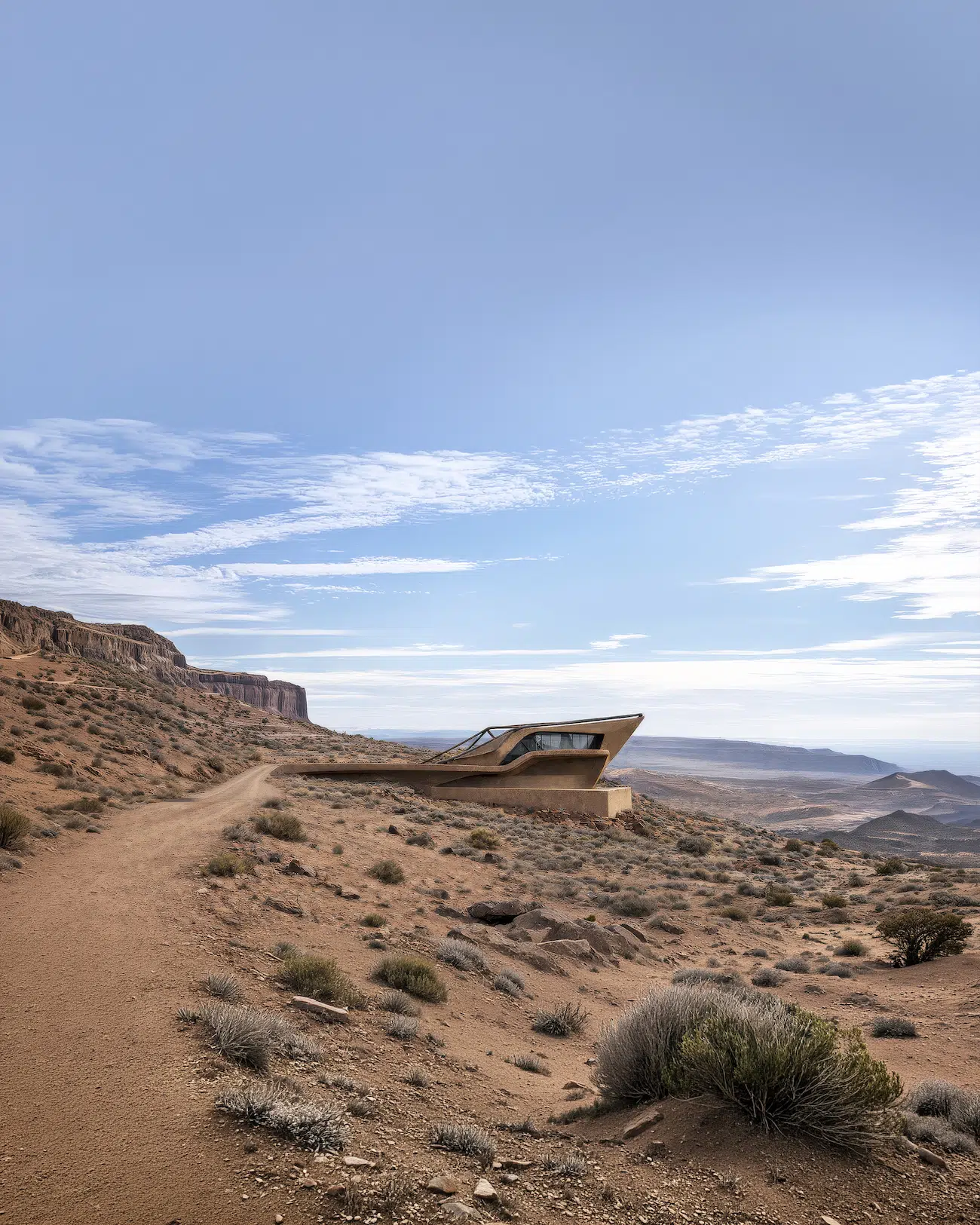
Partially subterranean volumes improve thermal performance and provide privacy for occupants.
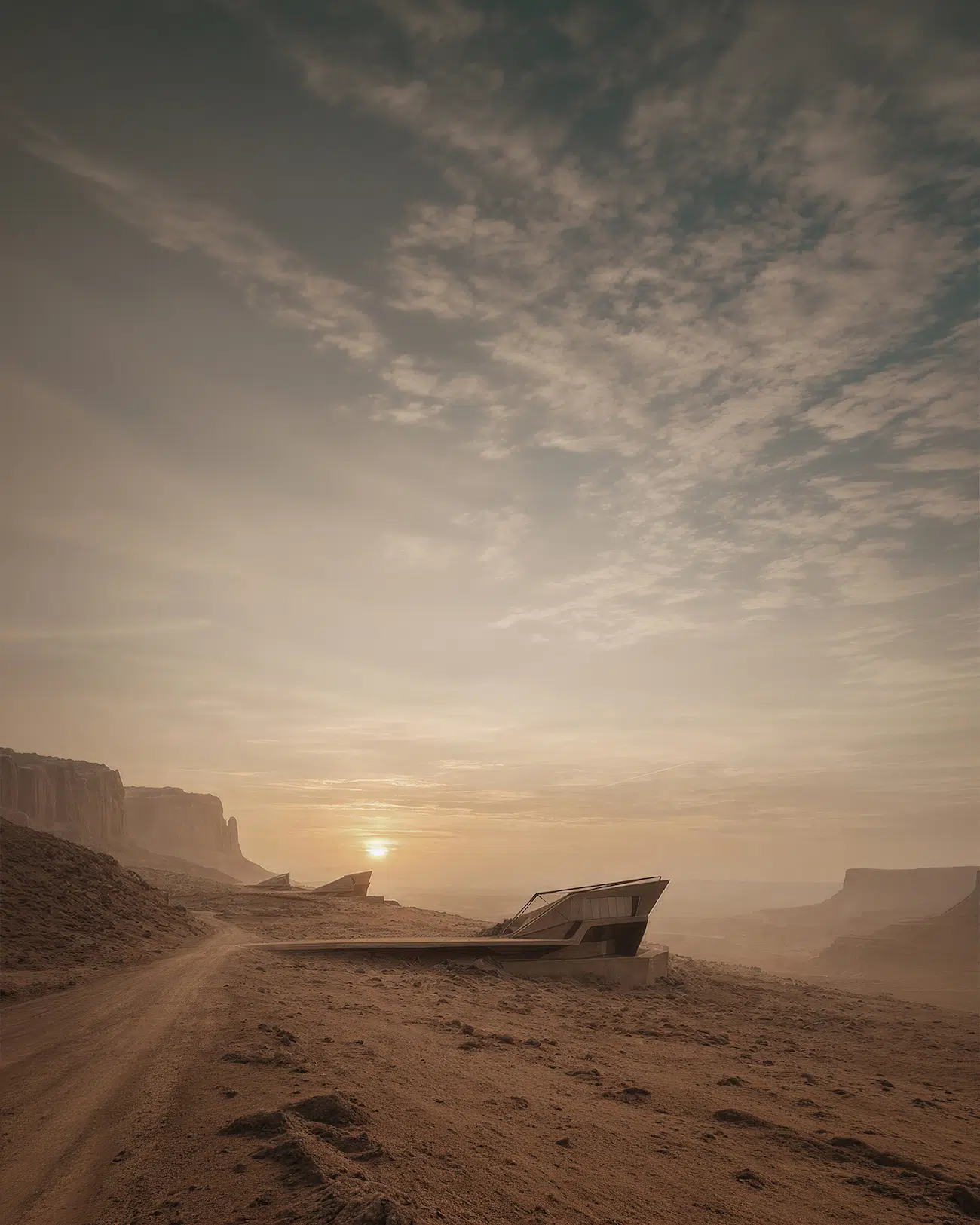
The elevated observatory spaces offer panoramic views of the surrounding mesas and canyons.
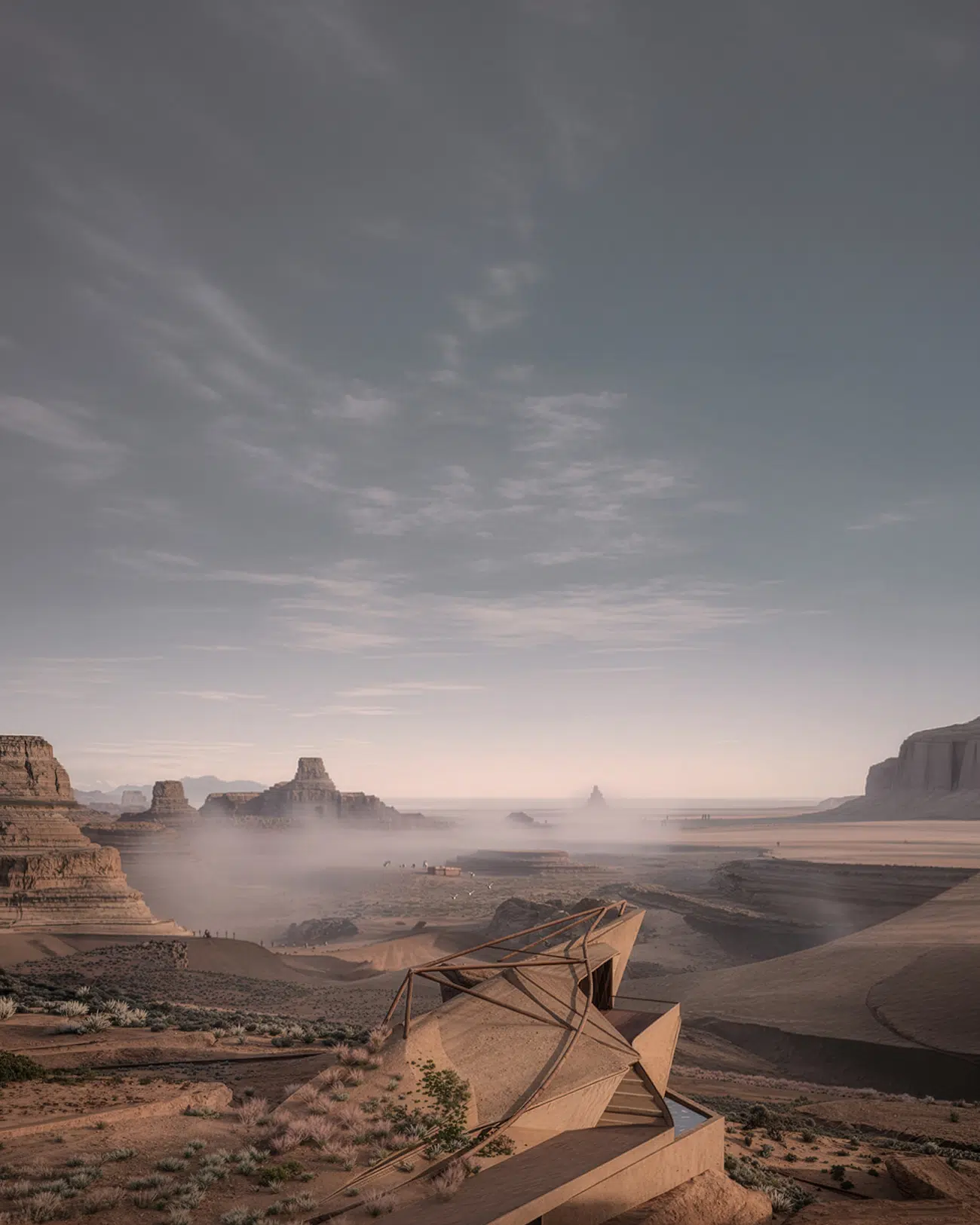
This project demonstrates how architecture can integrate with and respond to extreme desert conditions.