Photo: Jerome Valton
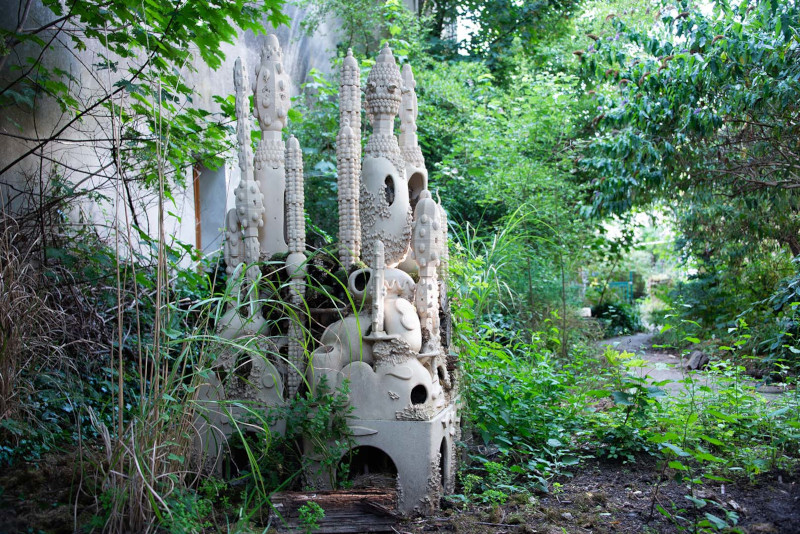
Biology and architecture may seem like two distant disciplines, but in the work of Raphaël Emine, they are an inseparable duo. The French artist creates elaborate ceramic sculptures with organic shapes. But aside from their unique aesthetic, what makes them stand out even more is their purpose. Filled with pathways and rooms, these artworks are meant to be taken over by insects and other small creatures as their homes. The result makes each piece as complex inside as it is outside.
Emine's ornate sculptures have an earthly aesthetic that blends with the lush landscapes where his works are usually placed. To achieve this level of intricacy, the artist mixes traditional materials and techniques with state-of-the-art 3D printing. The varying resources have also allowed Emine to create pieces with a smaller environmental footprint.
The influences and topics that have come to shape Emine's artistic vision are as varied as the shapes that appear in his work. The artist has named botany, math, design, and entomology as sources of inspiration, on top of revering sophisticated structures found in nature, such as beehives and spiderwebs.
All in all, Emine's work explores how the organic and the manmade can not only coexist but also interact to create a utopia, of sorts. By offering sweeping dwellings to small beings, the sculptor puts art at the service of nature, developing a real-world application to the theoretical knowledge he has accumulated throughout his life. In turn, he shows us what is possible in the realm of architecture and design for us humans, too.
My Modern Met had the chance to speak to Emine about working with ceramics, incorporating technology into a timeless medium, and the blurred lines between sculpture and installation. Continue reading for My Modern Met's exclusive interview.
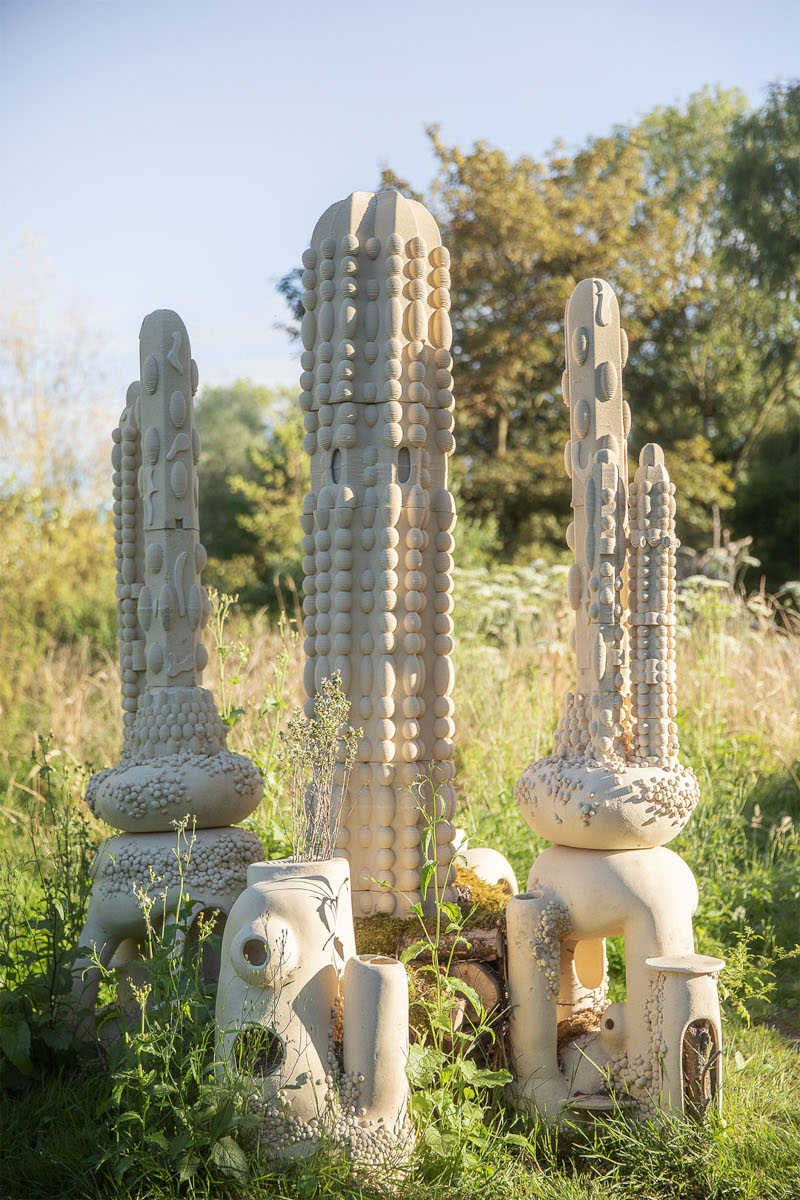
Photo: Yann Monel
How does your art journey begin?
In the morning, I go straight to the studio to review what was done the previous day. I take a coffee and I set up the space and tools for the work ahead.
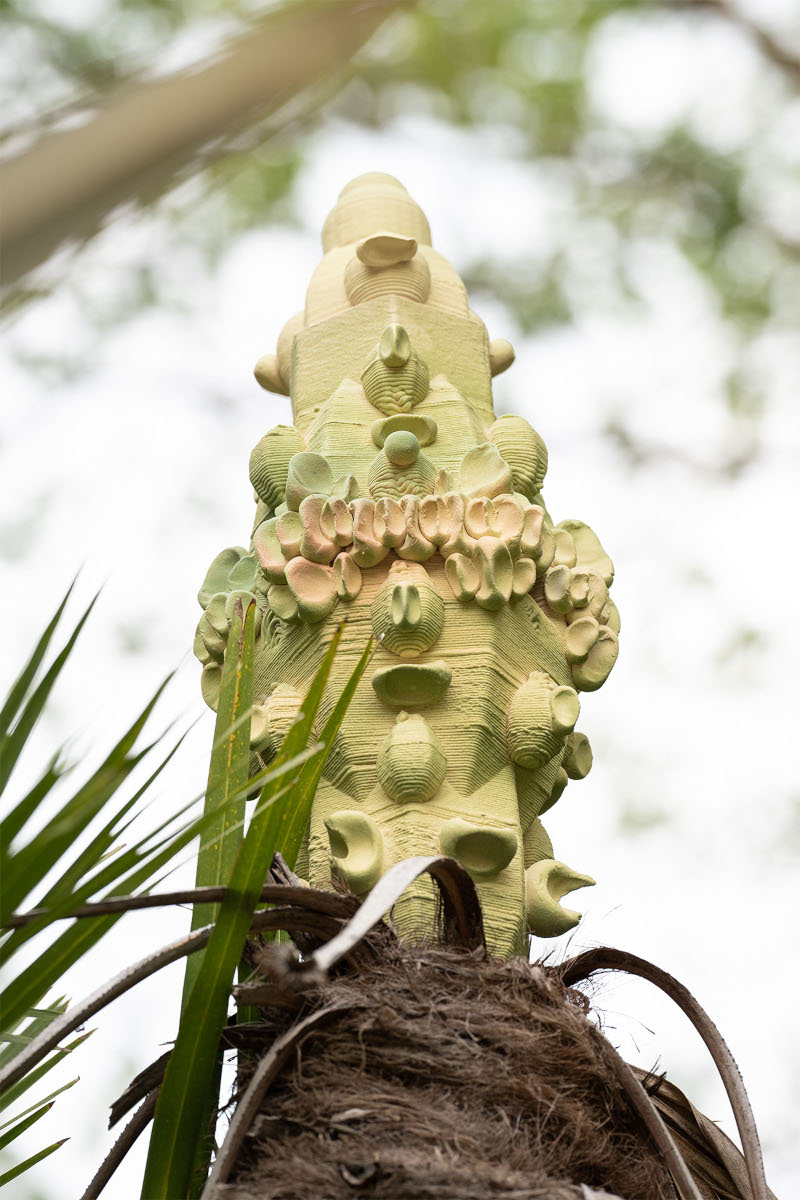
Photo: Claudia Goletto
What does your creative process look like?
After an initial phase of research and sketching, my process becomes highly intuitive, with decisions unfolding organically as I work.
Some pieces—particularly the Nest series and Entomological Utopias—are specifically designed to host insects within carefully considered biotopes. In these cases, I imagine their architectures as habitats conceived for particular species. However, there is no fixed blueprint. These works are intentionally modular and adaptable, meant to be configured in various ways depending on the site and the experience being proposed.
On the other hand, I also create sculptures developed through research on a smaller scale, such as the Studies series. This approach allows me to experiment with new 3D models, textures, and other material explorations.
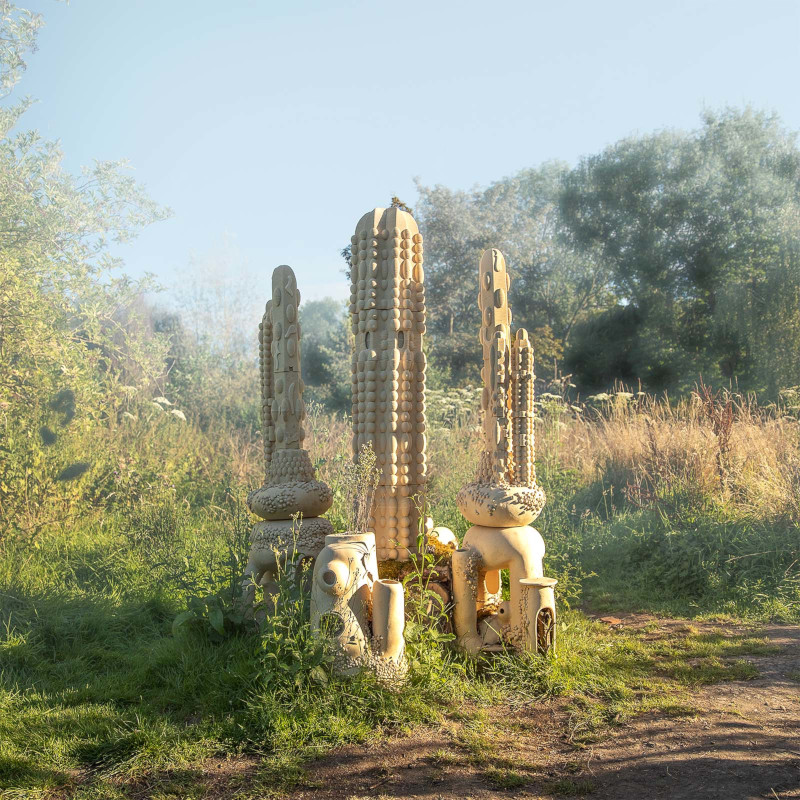
Photo: Yann Monel
What inspires your compositions?
My shapes and motifs emerge from the intersection of various influences: architecture (both human and non-human), biology, scientific imagery, decorative arts, comics, video games, animation films, science fiction, and more.
I love syncretism and hybridity—it allows me to feed my visual vocabulary and never get bored.
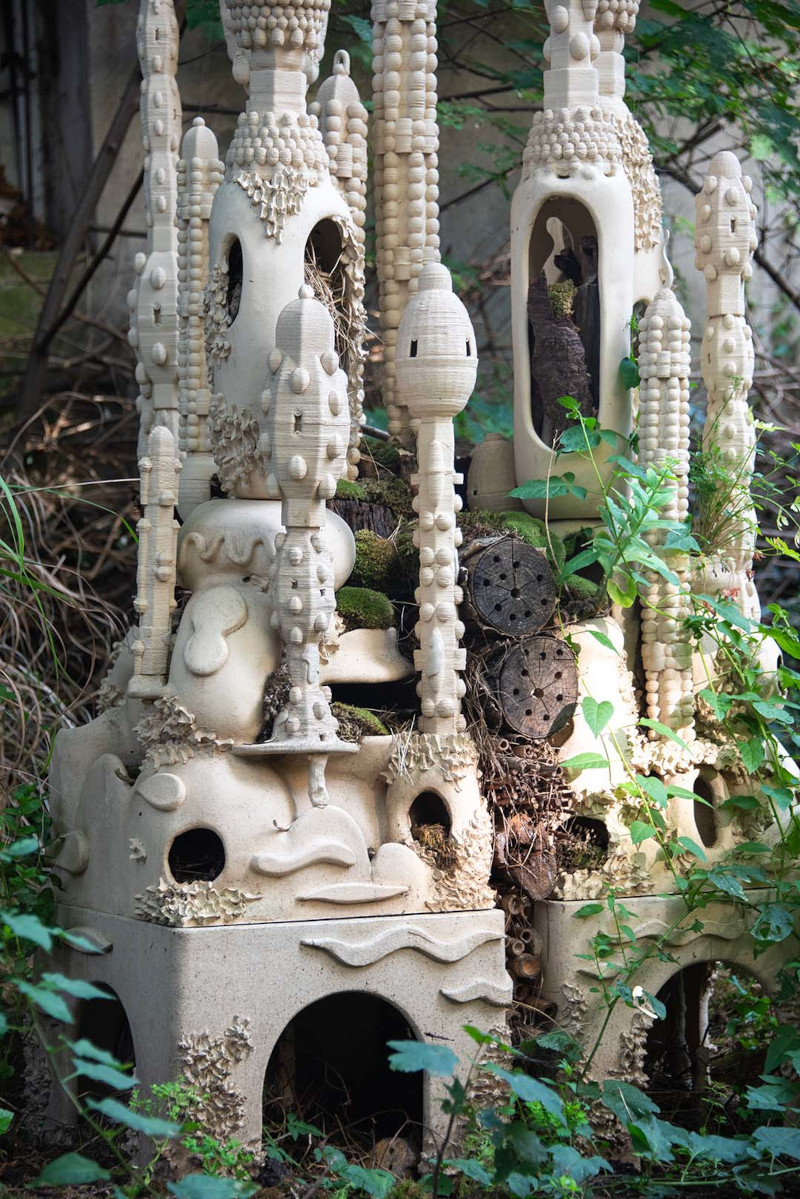
Photo: Jerome Valton
As an artist, what do you like about ceramics and working with clay?
I began working with ceramics as a self-taught artist, developing my visual language and technical approach through a largely empirical process. My practice emerged from intuitive, hands-on experimentation with the material—never with the intention of creating “art” per se. Like an alchemist, I dissected the substance through a series of improvised experiments, drawing fragmented, often inconclusive insights through trial and error. In the beginning, I was also engaged in similar explorations, but through glass and metal materials, so I was juggling different mediums.
What ultimately led me to focus more deeply on clay was its mineral nature. Clays are malleable rocks whose plasticity evokes a surprising resemblance to organic matter. It was this paradox that captivated me. I began to imagine my works as mineral vessels—settings for organic lifeforms.
My decision to dedicate myself to ceramics also came after years of working with various polluting materials. Ceramics, in contrast, can reenter the slow, geological cycle of returning to the earth without causing environmental harm. In some cases, the process can even enrich a local ecosystem. That’s the intention behind my practice: creating sculpture as a form of ecological repair.
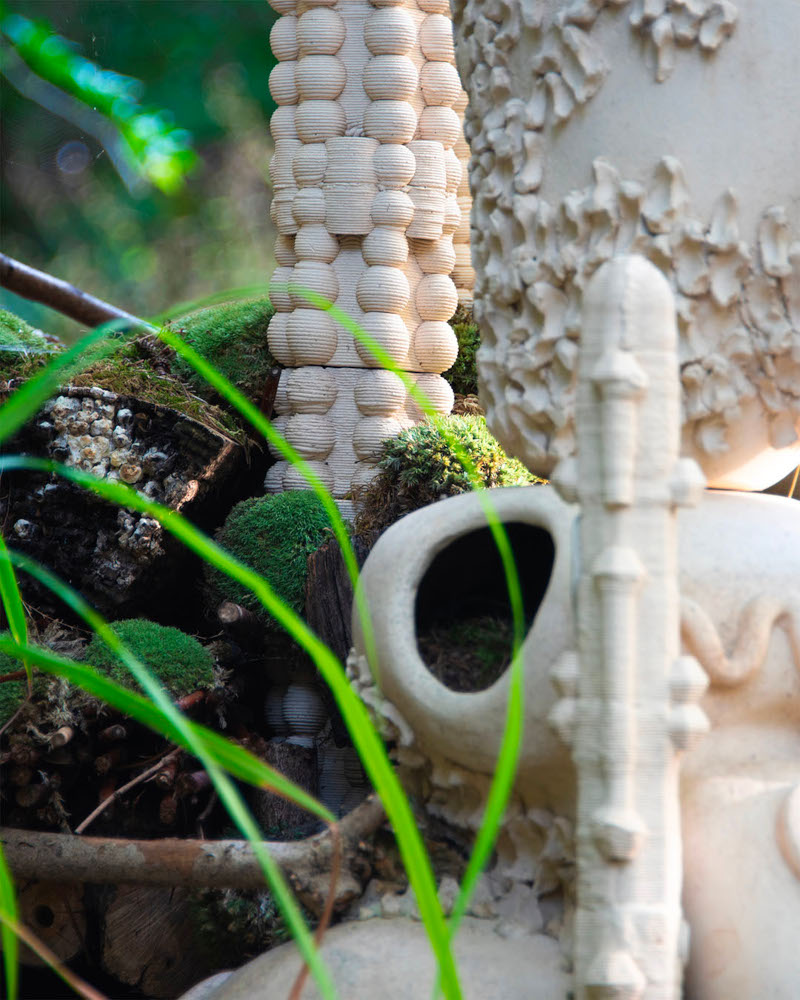
Photo: Jerome Valton
How has it been to mixing 3D printing with more traditional mediums, like ceramics?
It was the Entomological Sculptures project that first led me to explore 3D printing. My early research was inspired by natural architectures such as hives and termite mounds. I saw in this technology a way to create intricate internal structures within my sculptures—with a level of precision suited to the scale of small arthropods. I have no formal training in 3D modeling and had very little prior experience, but today’s tools and the wealth of shared knowledge online make it possible to reach specific goals quickly, without the need for deep specialization.
My sources of inspiration range widely, from 19th-century botanical illustrations to contemporary electron microscope imagery. I compile this visual material using digital tools like 3D modeling software and, more recently, generative AI. I then test these designs through printing, often refining them manually afterward when necessary.
Through the Entomological Sculptures, 3D printing has become integrated into my creative process. It’s now leading me toward other proposals that take advantage of this technique’s specific possibilities, while still being combined with more traditional craft methods. Overall, I view new technologies not as a break from tradition, but as a natural extension of it.
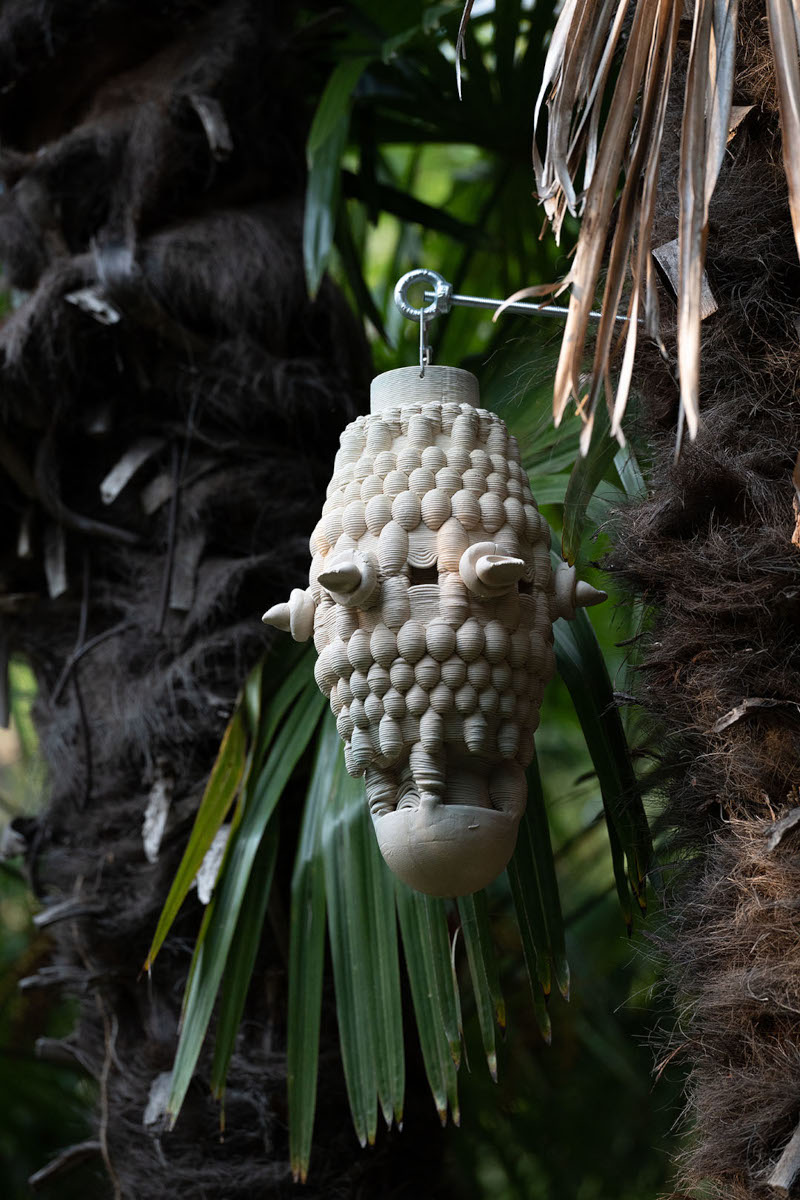
Photo: Claudia Goletto
Would you say your work transcends sculpture and goes into the realm of installations?
I enjoy working at different scales. Some of my works are series of sculptures, while others are interspecies setups designed for outdoor environments. In those cases, they function as laboratories —tools for exploring relationships with non-human life. They are never truly finished, because the goal isn’t to design objects, but to design relationships.
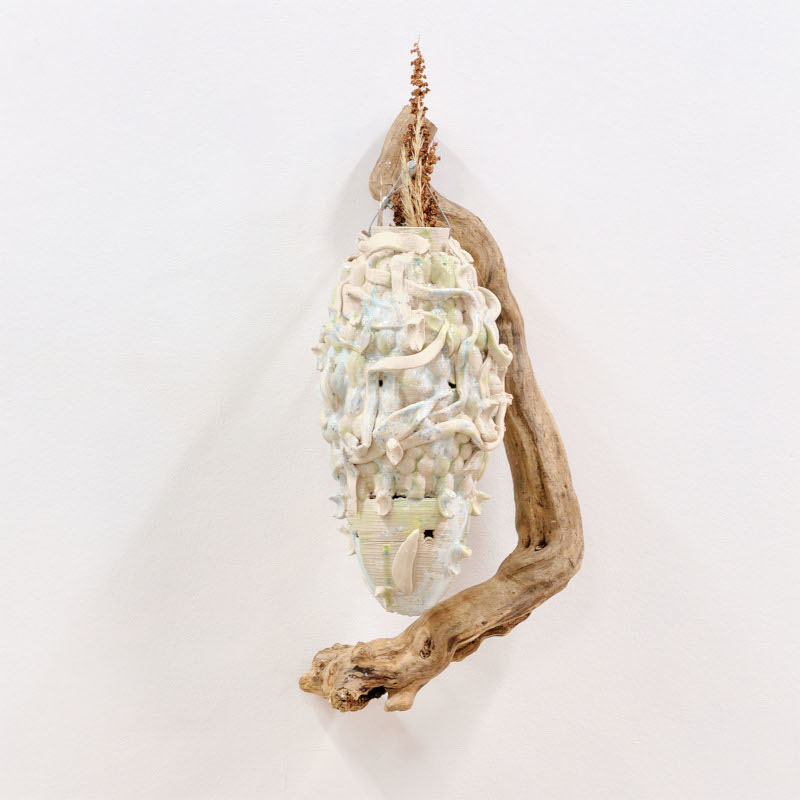
Photo: Luc Bertrand

Photo: objets pointus
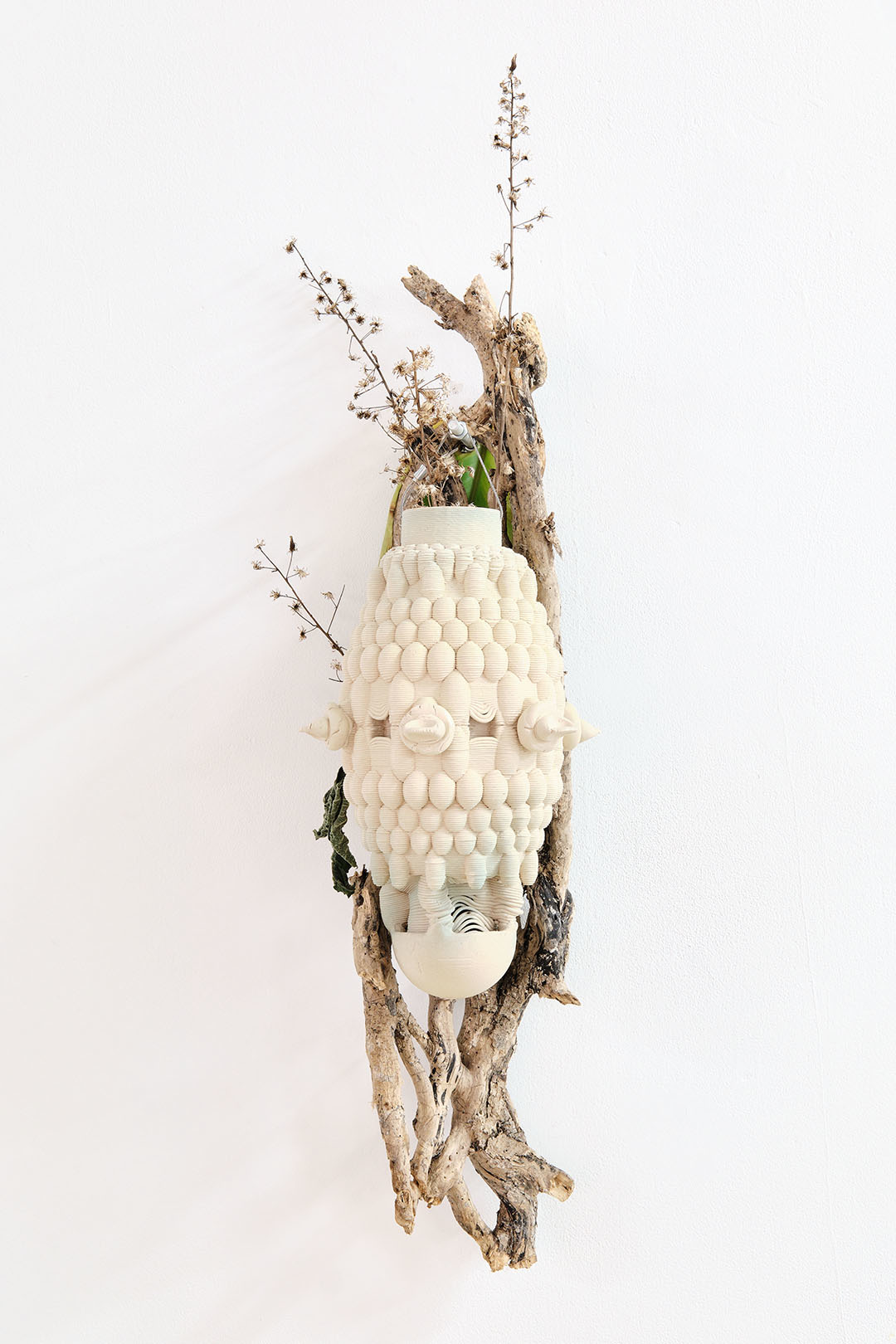
Photo: Luc Bertrand
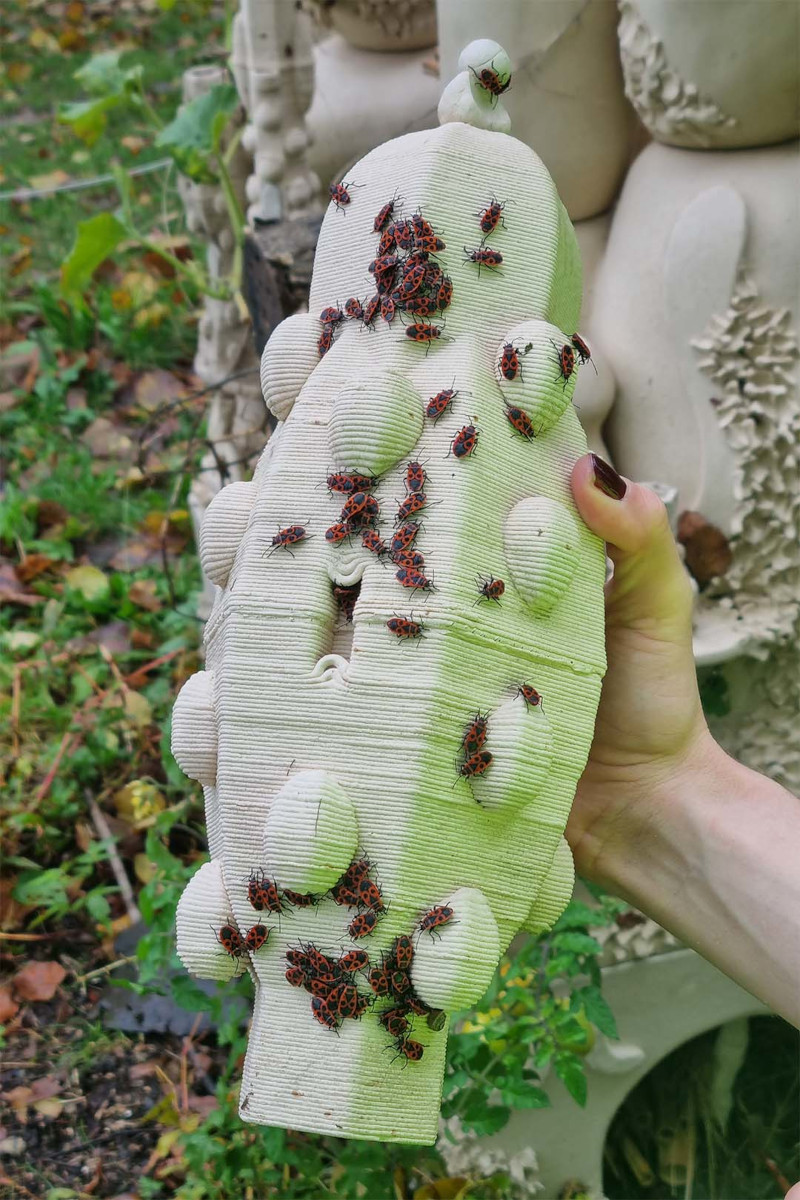
Photo: objets pointus
Raphaël Emine: Website | Instagram
My Modern Met granted permission to feature photos by Raphaël Emine.
Related Articles:
Thousands of Tiny Vases Come Together To Form Monumental Sculptures
Striking Mirrored Sculptures Reflect Various Forms of Human Connection
Kinetic Sculpture Changes Throughout the Day To Bring You the Latest Weather Report
Surreal Sculptures of Fragmented People Inspiring Self-Reflection [Interview]