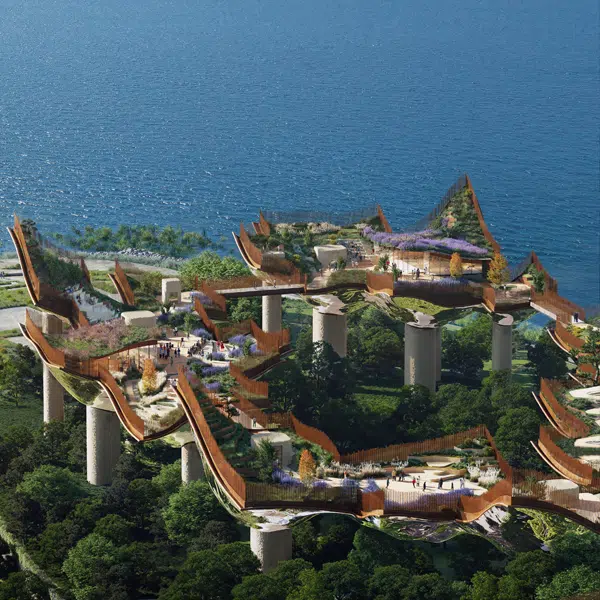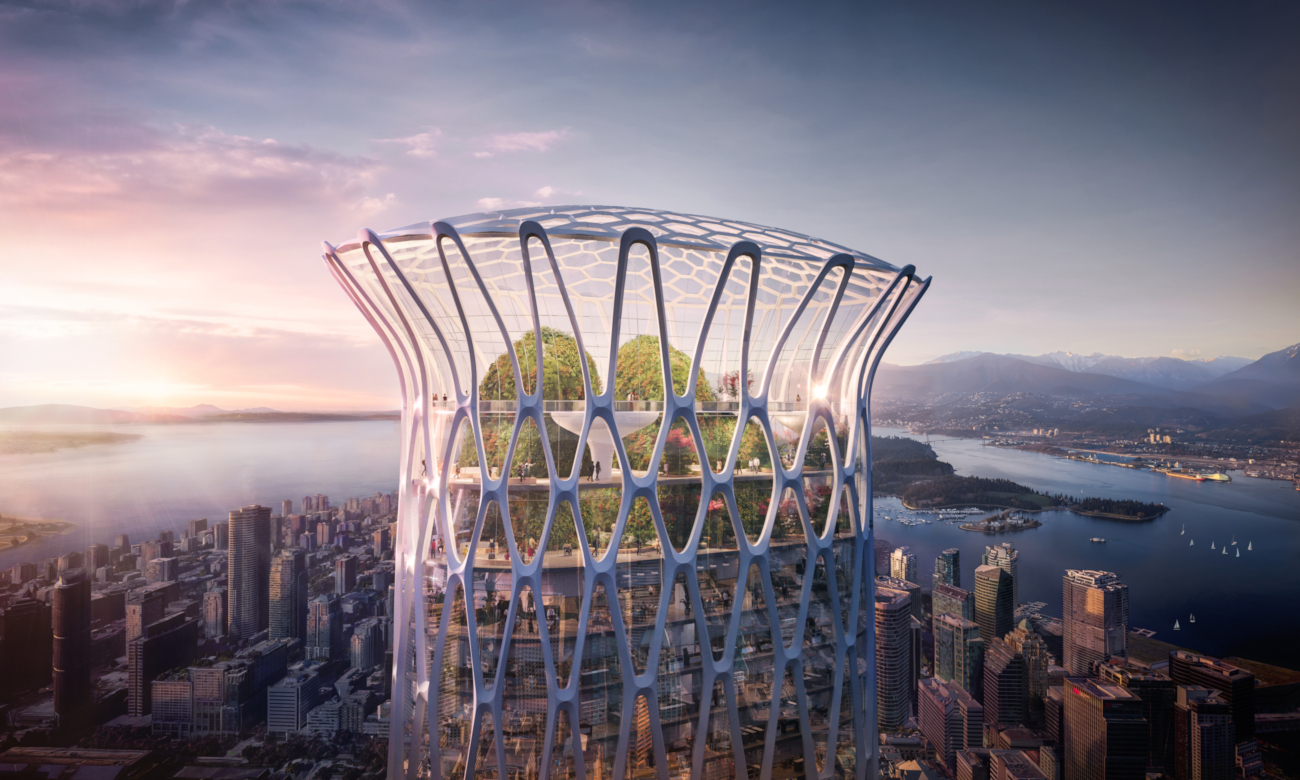
View of Observation Deck looking West
Many architects are inspired by nature, but few projects have dared to make a nearly manmade replica of its source. The upcoming 595 West Georgia Street, planned for downtown Vancouver, draws influence from sea sponges—specifically, the Venus’ flower basket found primarily in the nearby Pacific Ocean. (The species is viewed with such reverence that the creatives behind the design even attach an image of the critter in their press materials as a reference.) The result is an exciting building that proves that nature is the greatest architect of them all.
Designed by Henriquez Partners Architects, 595 West Georgia Street is meant to be part of the larger Georgia & Abbott development brought to life by the Holborn Group. Made up of four buildings, this one is the crown jewel of the project. With a proposed height of 1,033 feet, it would become Vancouver’s tallest building, standing out in a city known for its glittering skyscrapers overlooking the mountains and the ocean.
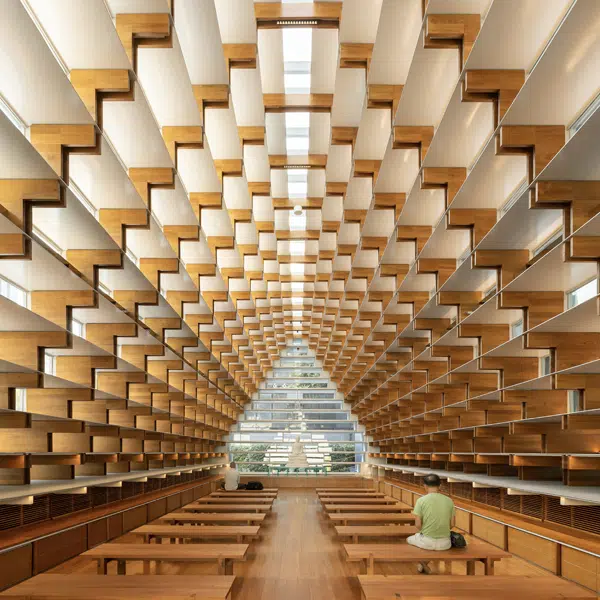
The sea sponge inspiration will take the form of a diagrid exoskeleton. It will wrap the building and provide much of the supporting structure in an earthquake-prone area, and allow for expansive column-free interiors while minimizing material use. This element was developed in collaboration with international engineering leader Arup and draws from the skeletal lattice of sea sponges, a feature that is currently being researched at Harvard for its groundbreaking structural efficiency.
Atop 595 West Georgia Street, which will be home to a hotel, the architects also envisioned a publicly accessible observation deck. Designed by PFS Studio, it is described as a “forest in the sky” with unbeatable views of the city. By comparison, the Vancouver Lookout at Harbor Centre, considered the best observation deck in the city, is only 482 feet tall—less than half of the proposed height of this new building. On the ground level, a 17,000-square-foot public plaza will connect it with its three sister buildings, and it will feature retail and restaurant pavilions, a cultural center, and Indigenous art.
The other buildings in the complex are also fascinating. While 595 West Georgia Street boasts its oceanic inspiration via its sponge-like exoskeleton, the neighboring 501 West Georgia Street, which is made up of two buildings, will feature sculptural balconies and screens that evoke the texture and complexity of the sponge’s filigree form. The former will contain residential space, along with a shared rooftop amenity deck, while the latter will have social housing, an art gallery, and daycare.
“In total, the development will create more than 1,900 new homes, a 920-room hotel, 70,130 square feet of much-needed conference space, Indigenous-led reconciliation through art, and introduce significant public amenities across both sites. This project will serve as a major economic catalyst for downtown Vancouver, creating thousands of construction and permanent jobs,” the architects share. “The architectural expression of the project tells a story that is unique to British Columbia and inspired by rare and ancient glass sea sponge reefs—living structures found off the BC coast that demonstrate strength and adaptability.”
The proposed project has been submitted to the city of Vancouver, so time will tell if this marine-inspired architectural daydream will become a reality. To stay up to date, follow Henriquez Partners Architects on social media.
Henriquez Partners Architects designed a building inspired by Venus’ flower basket, a sea sponge found in the Pacific Ocean. It’s proposed for downtown Vancouver.
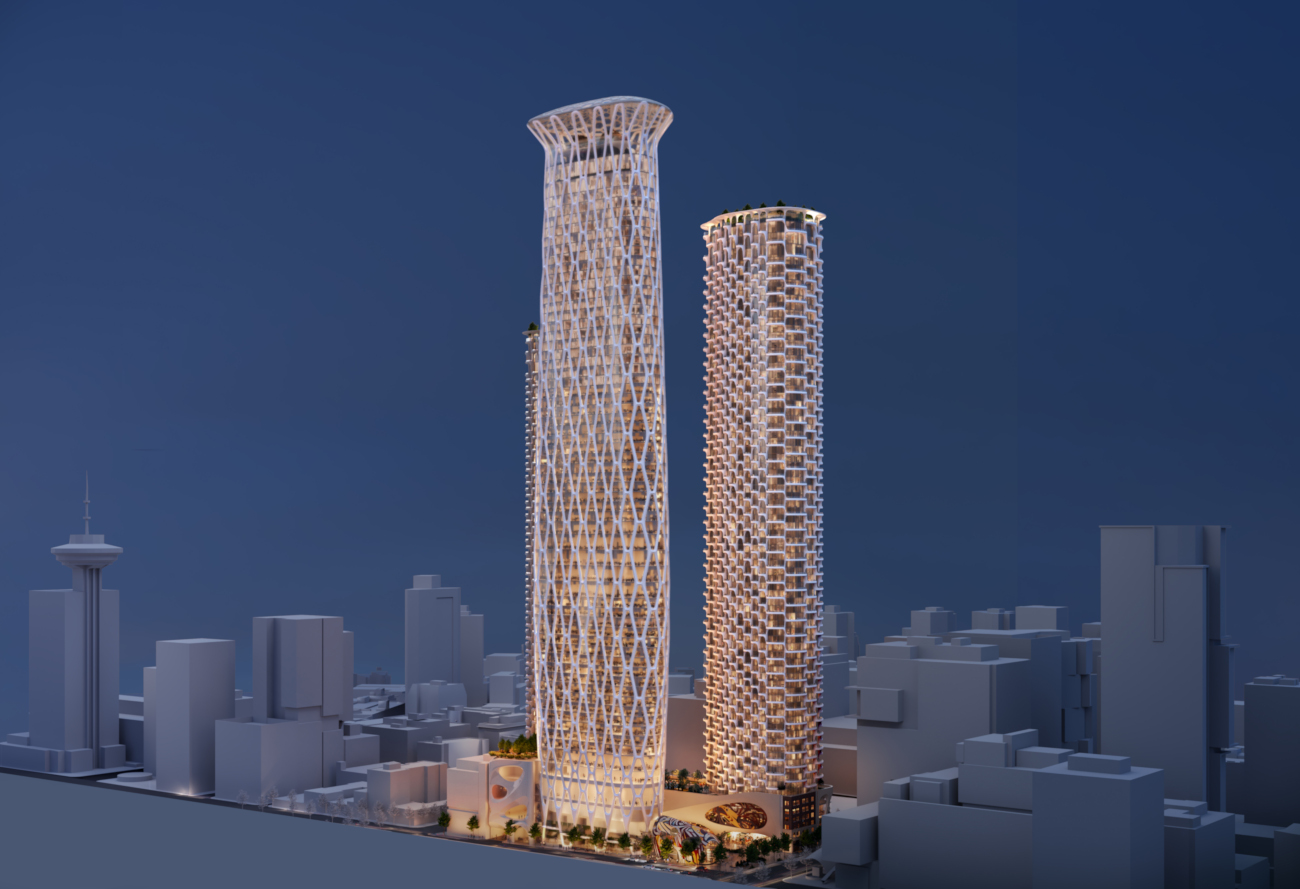
Sectionional view from Seymour Street looking East
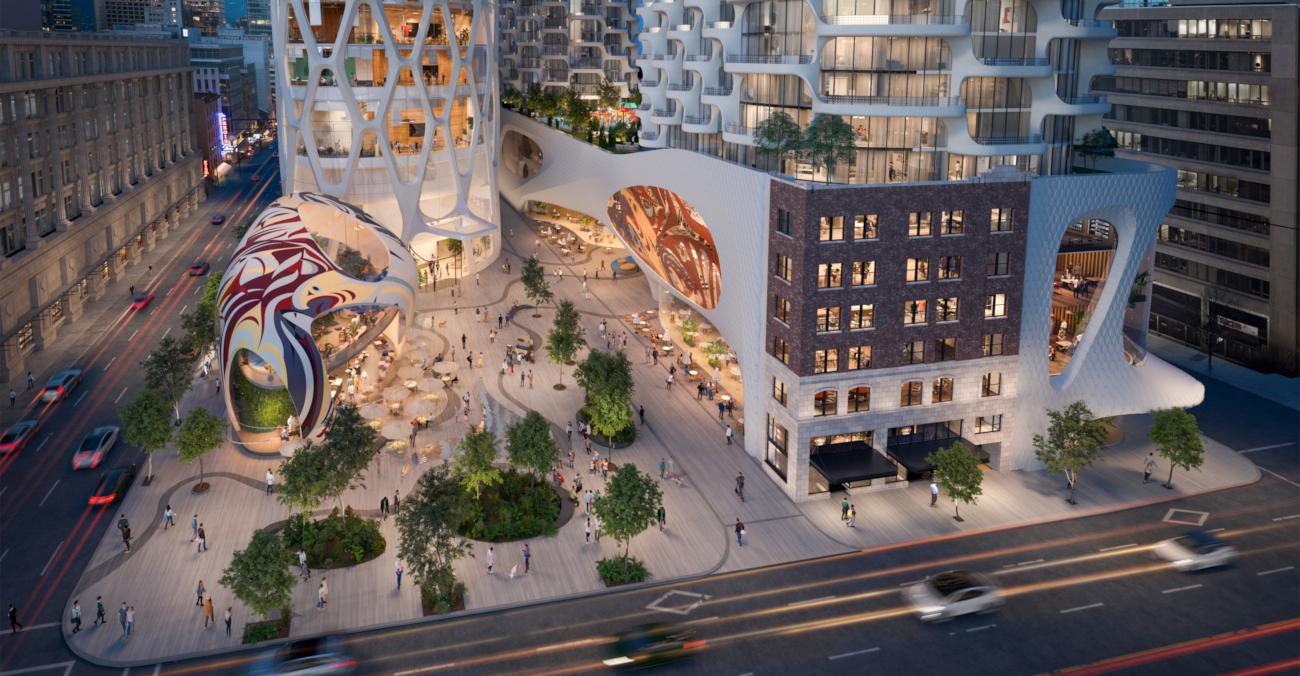
View of Plaza at Seymour and West Georgia Streets
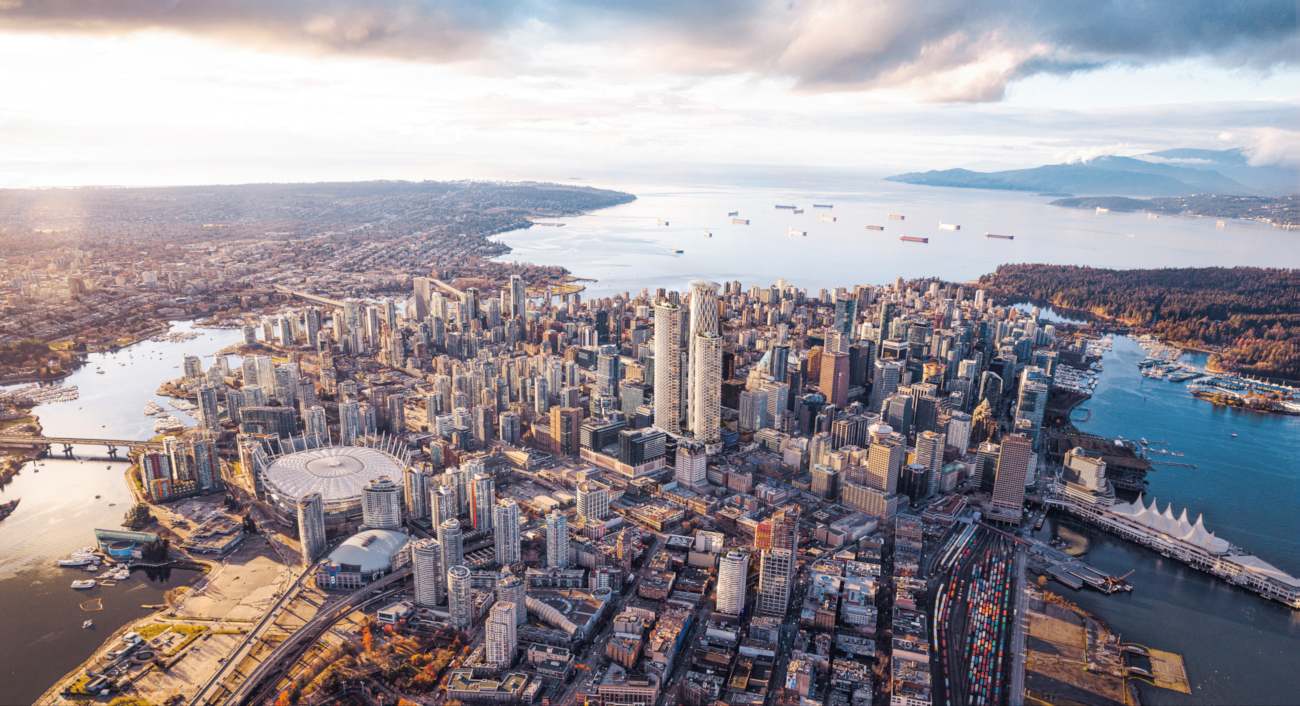
Aerial View of all sites looking West
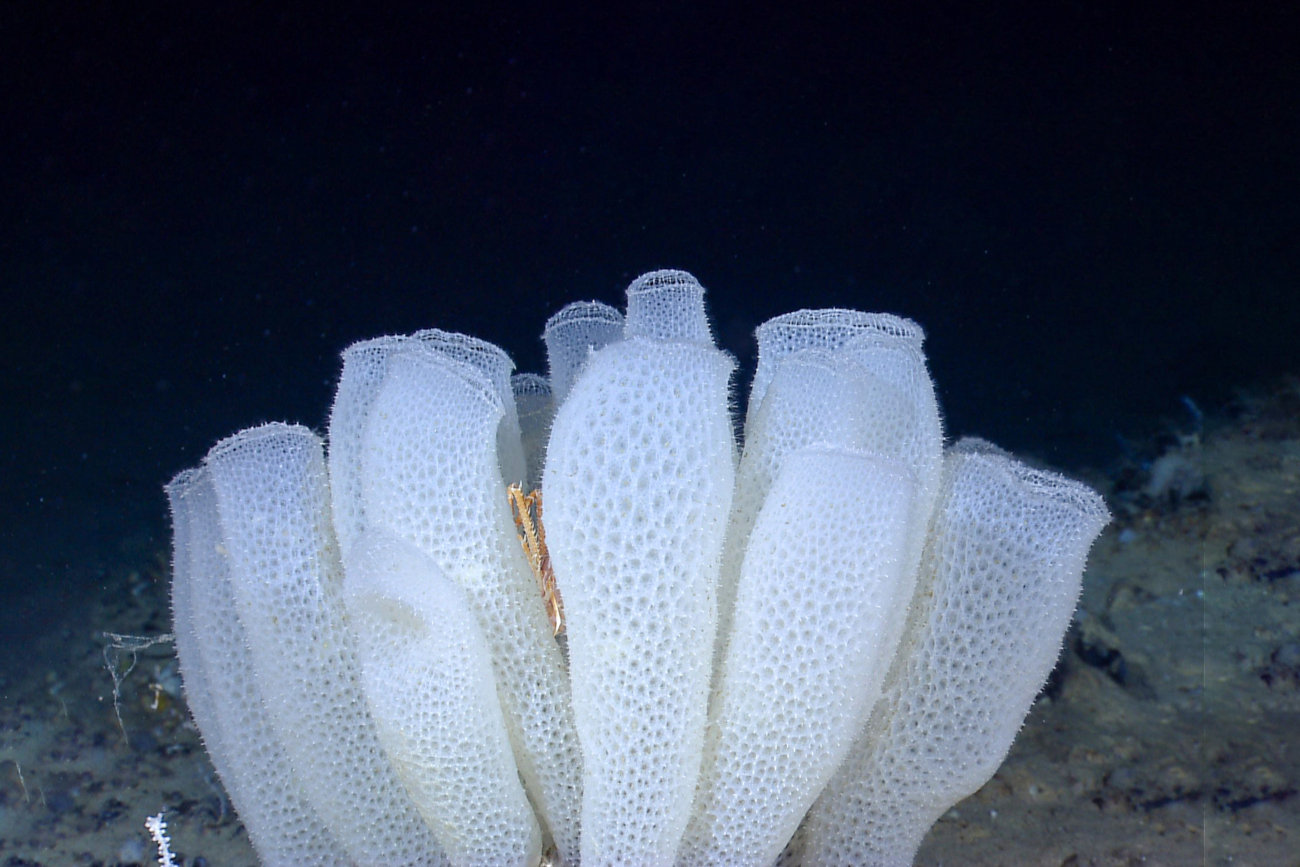
Glass Sea Sponge-Venus Flower Basket (via NOAA)
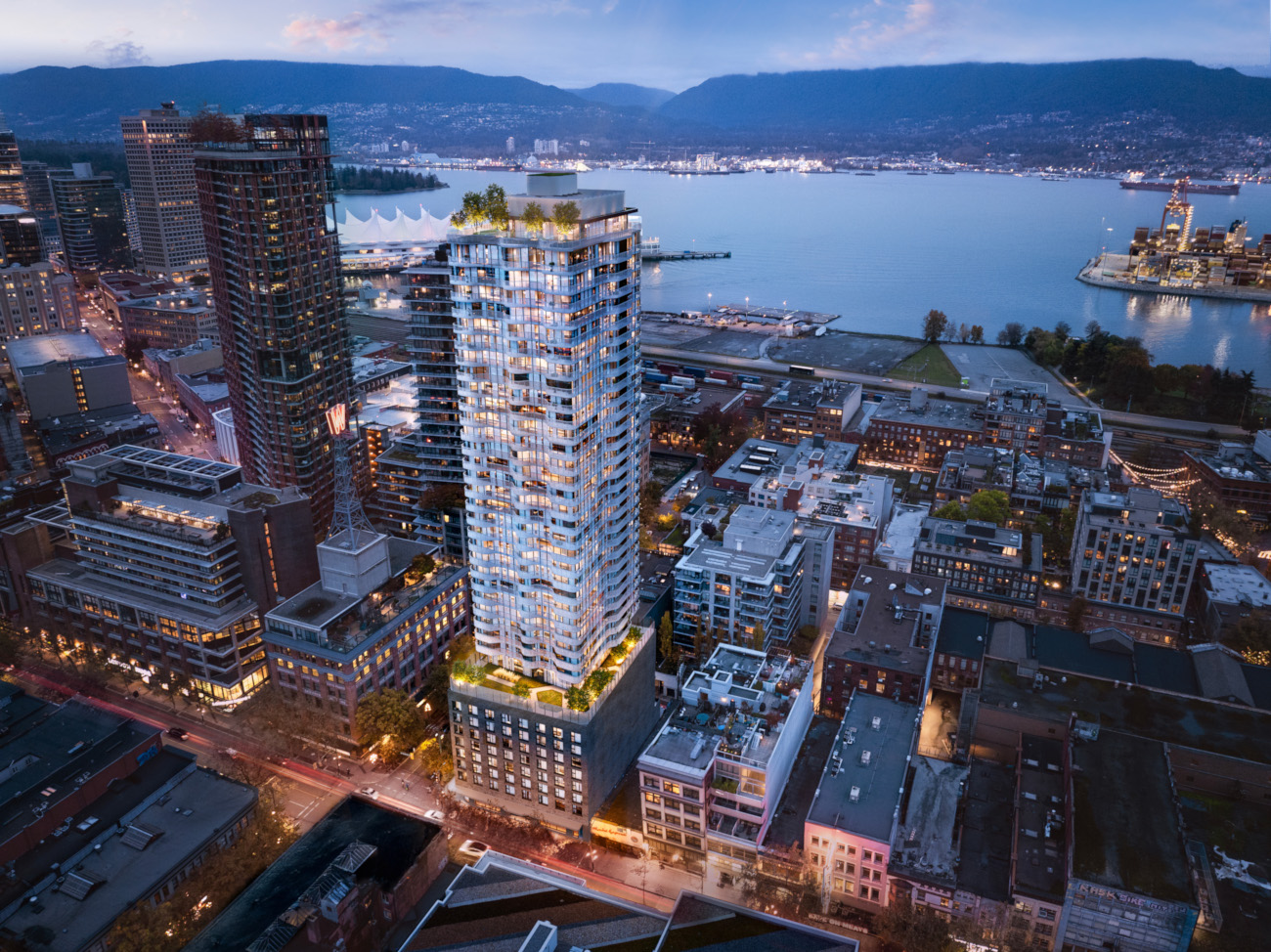
View of 388 Abbott Street