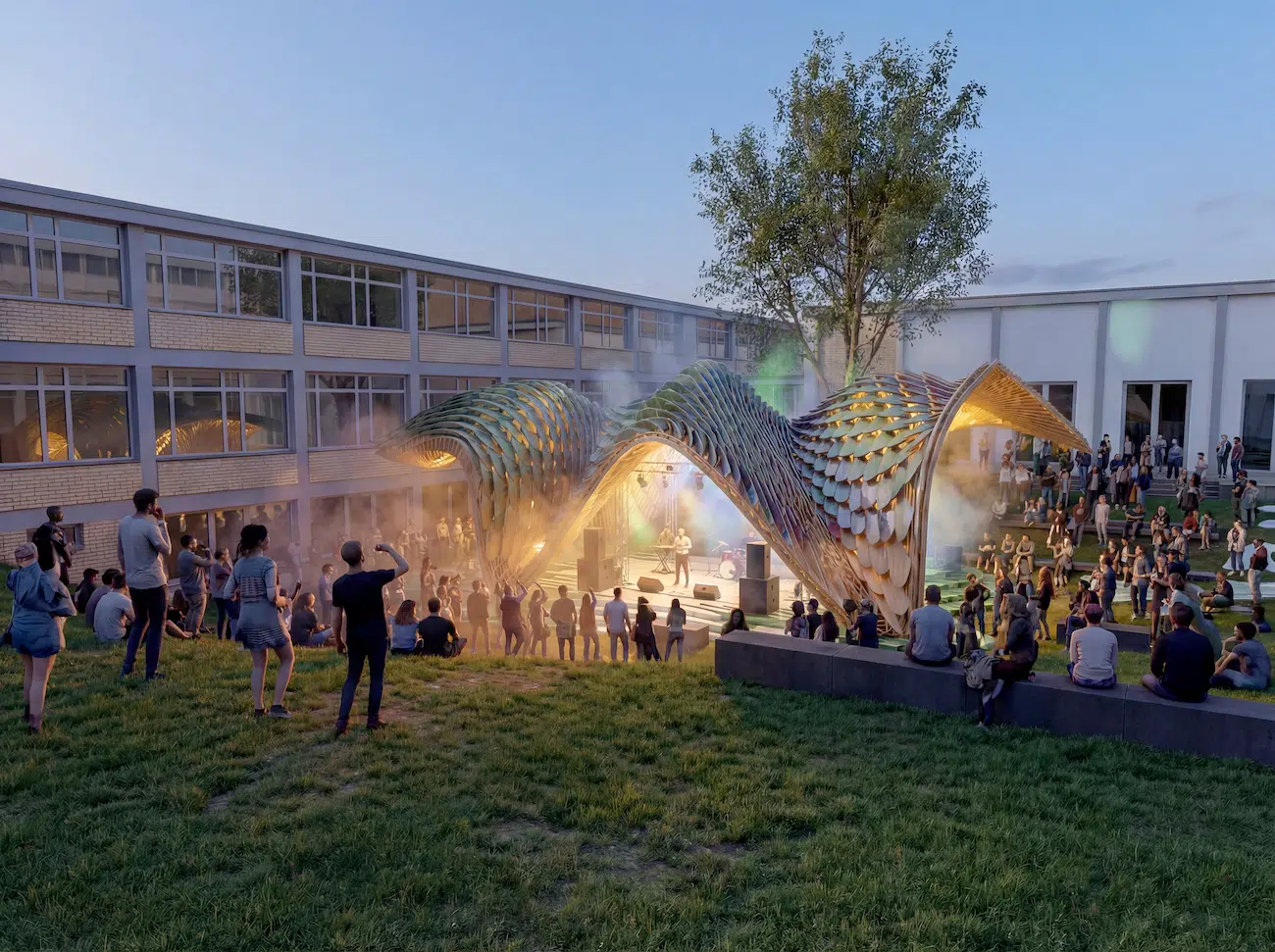
Every two years, the World Design Organization bestows the title of World Design Capital on a city (or region). The 2026 World Design Capital (WDC) is Frankfurt Rhein-Main in Germany, with pioneering projects and programming to explore the depths of design and its potential. Temporary architecture (pavilions) is one part of WDC, and beginning April 30, 2026, the Spanish Design Pavilion will open its doors to the public.
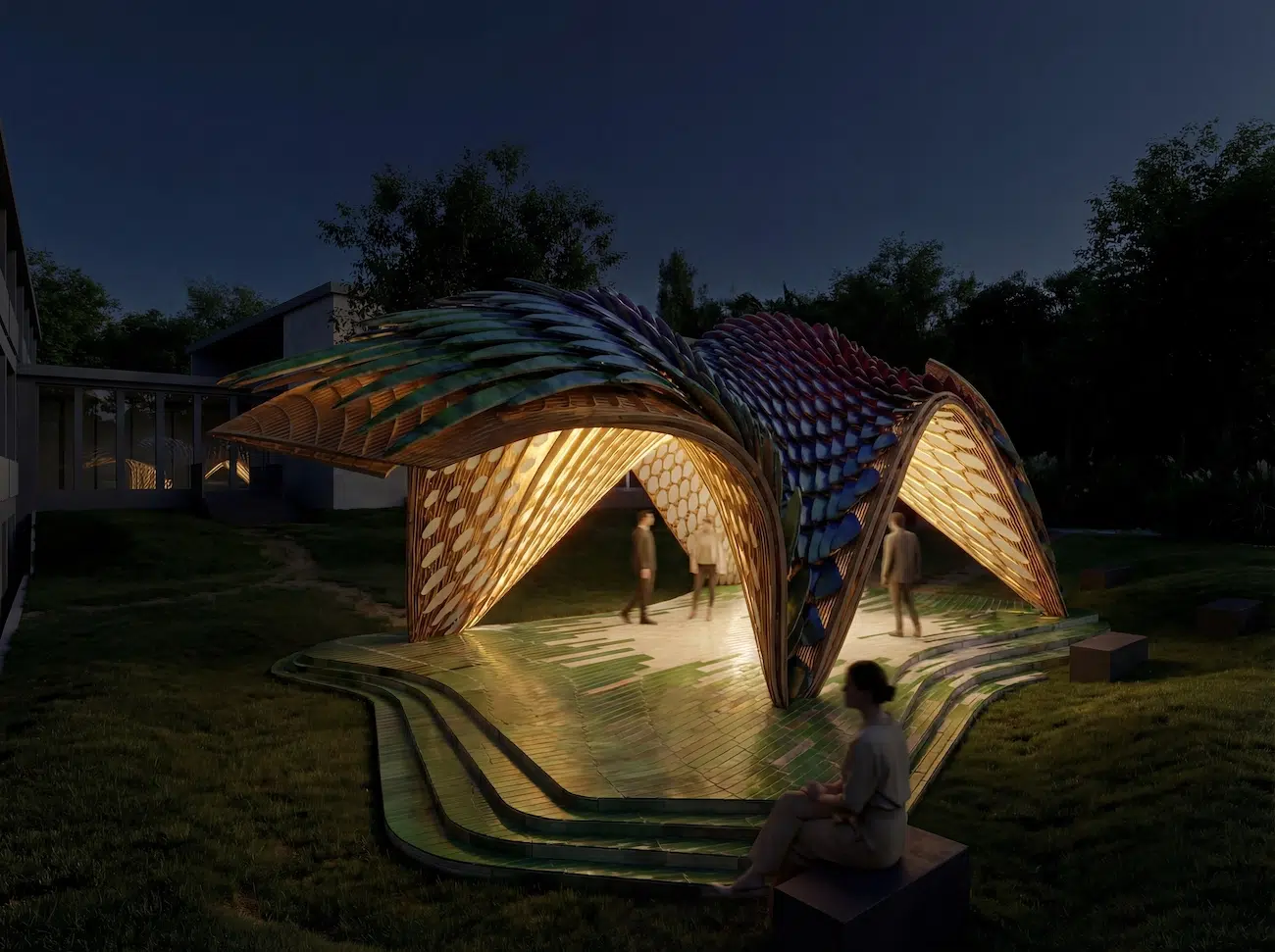
Spain’s reversible pavilion redefines temporary architecture as a circular, public system. The project positions architecture as an adaptable infrastructure for cultural exchange rather than a fixed object, and it activates its Instituto Cervantes garden as a site for exhibitions, performances, and public gatherings.
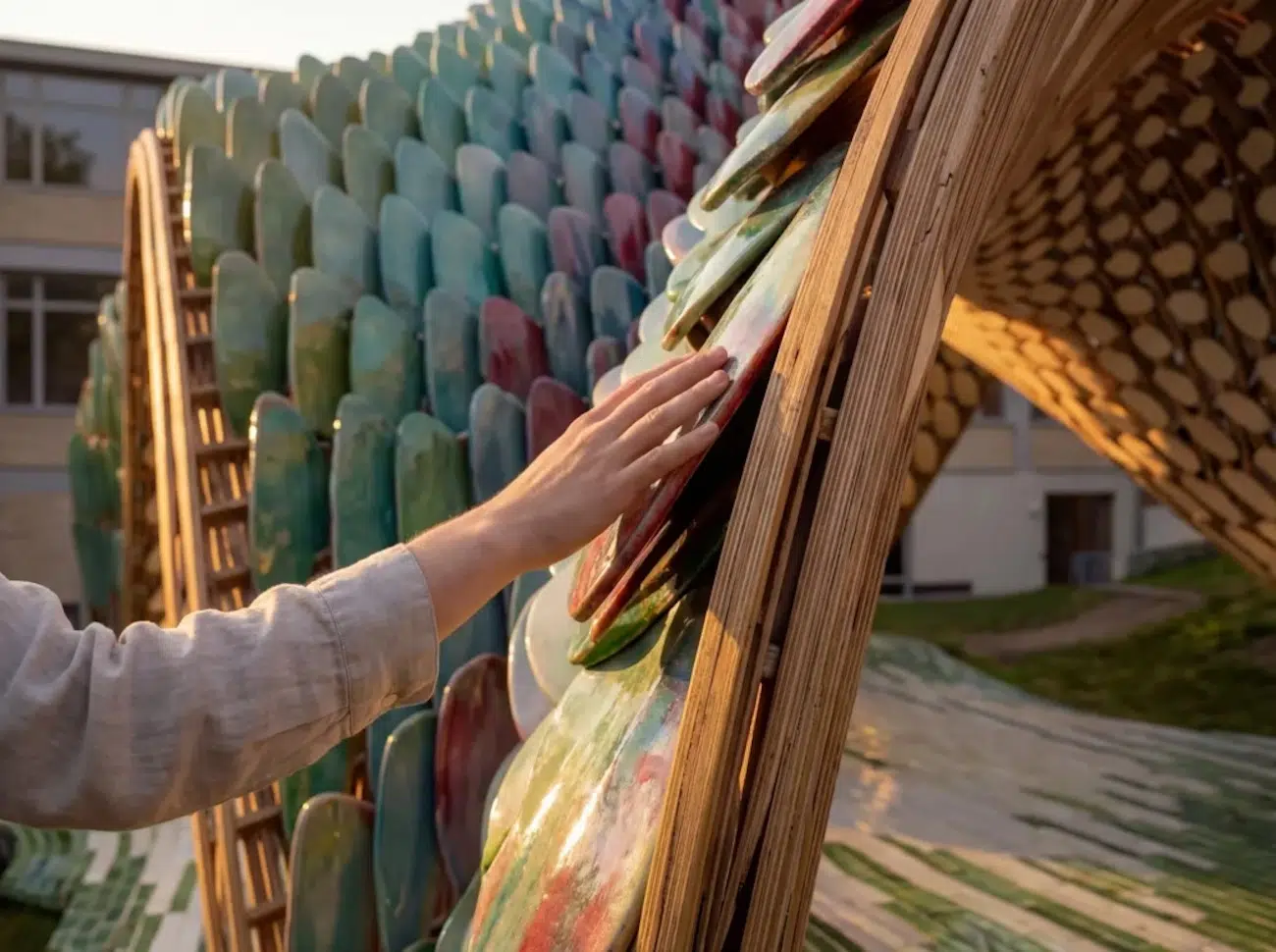
Architects José Ramón Tramoyeres and Javier Cortina designed the pavilion as a fully reversible structure that disassembles, relocates, and reassembles without generating architectural waste. They organized the system through modular components in wood, ceramic, and textile, which establishes a lightweight structural logic and enables repeated cycles of construction and deconstruction. This approach shifts emphasis from permanence to material efficiency and reuse within temporary cultural infrastructure.
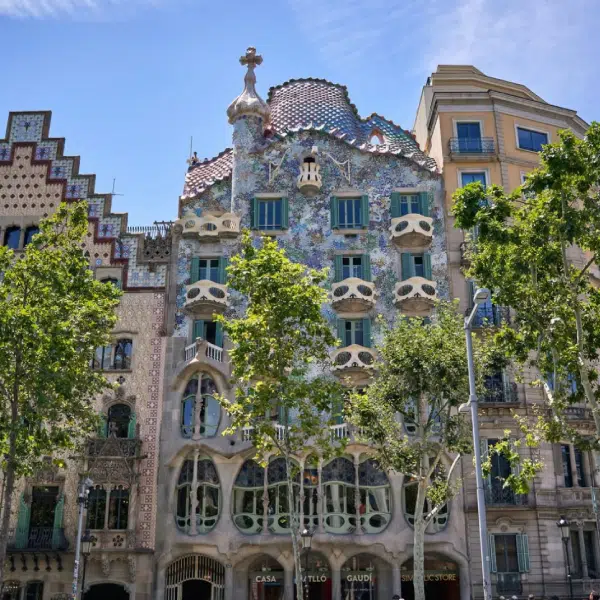
The design draws from Antoni Gaudí’s spatial and structural principles, particularly his integration of geometry, material behavior, and structural continuity. The architects translate these references into a modular framework that produces continuous curved forms through repetition rather than mass carving. They embed historical reference into a contemporary system that prioritizes fabrication logic and adaptability over imitation.
The pavilion will showcase exhibitions, performances, and civic dialogue throughout its installation period. Its open configuration encourages circulation and interaction, and it integrates environmental responsiveness through filtered light, ventilation, and low-energy illumination that shifts the spatial atmosphere between day and night. This programmatic flexibility aligns the structure with the broader goals of WDC 2026.
The project advances a model of architecture defined by reversibility, mobility, and material recovery rather than permanence. It establishes a framework in which temporary structures operate as repeatable systems that adapt to multiple contexts over time. The pavilion demonstrates how circular design principles can transform cultural architecture into a transferable methodology rather than a singular object.
The Spanish Design Pavilion opens in Frankfurt on April 30, 2026, as a temporary cultural structure for World Design Capital 2026.
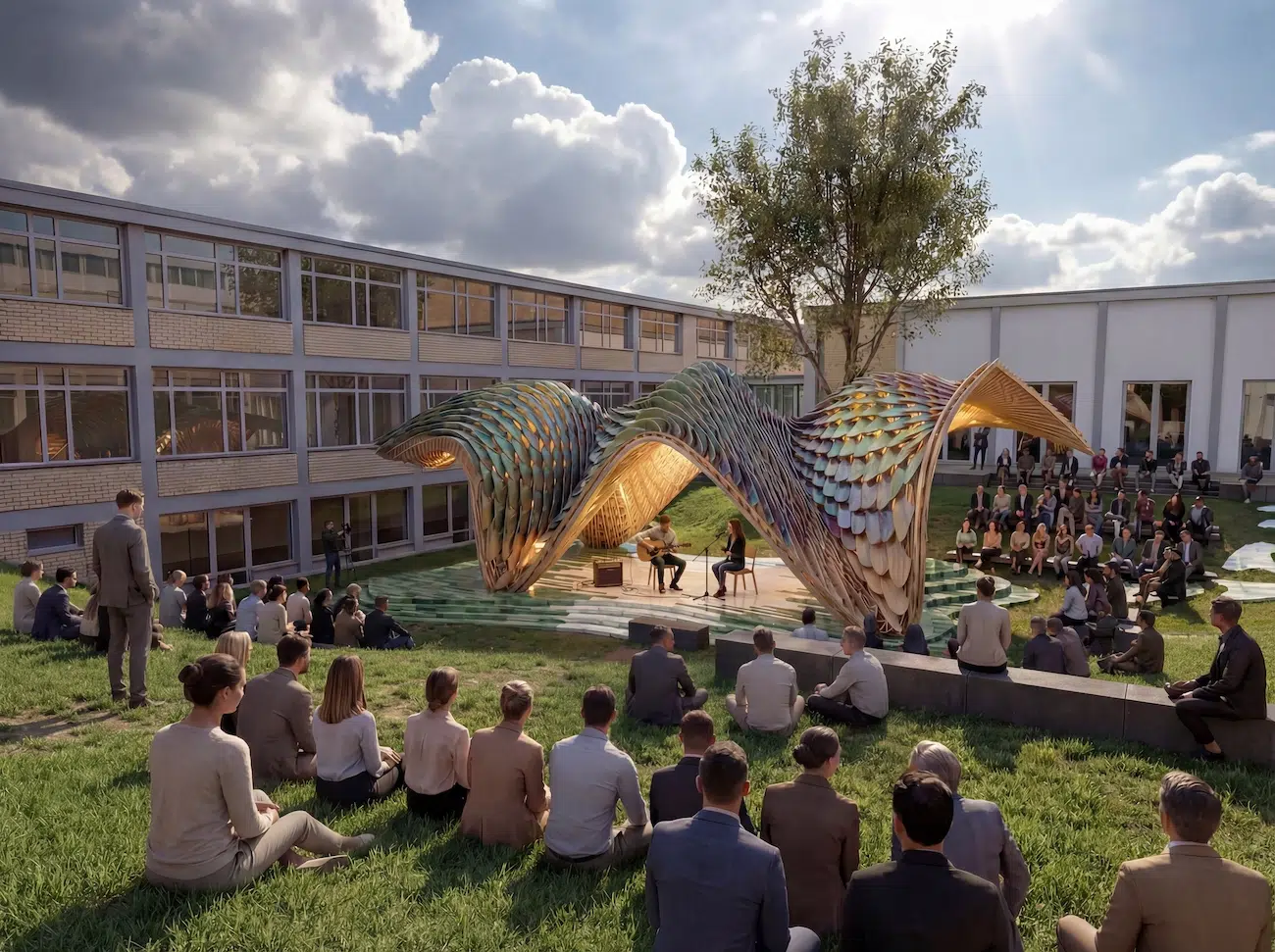
It showcases reversible, modular architecture in a public setting.

The design translates Gaudí’s geometric and structural principles into a lightweight system of wood, ceramic, and textile components that form a flexible and reusable pavilion for exhibitions and events.
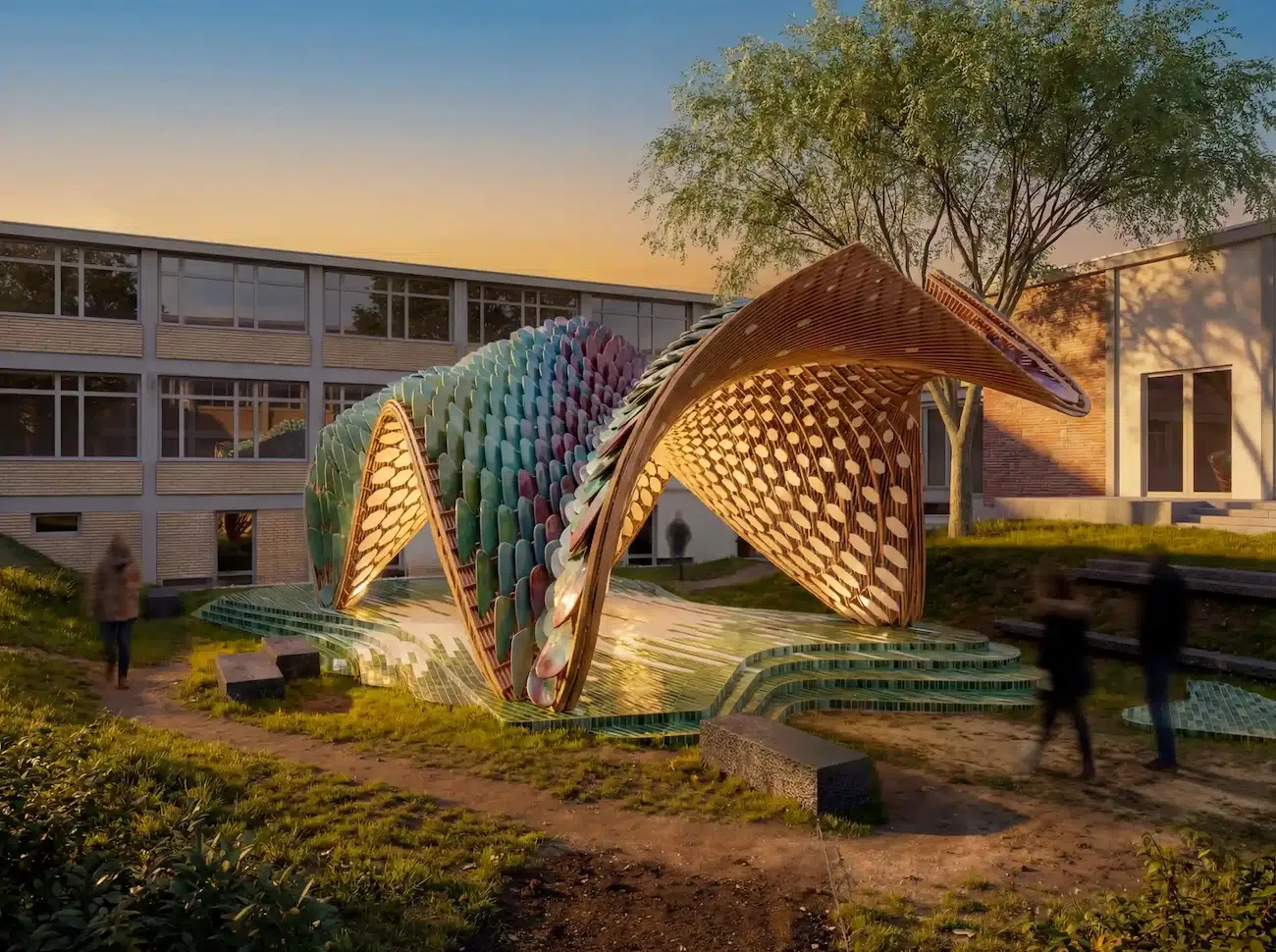
The pavilion demonstrates how reusable architecture can extend beyond a single site by relocating and reconfiguring itself across future contexts without relying on permanence.