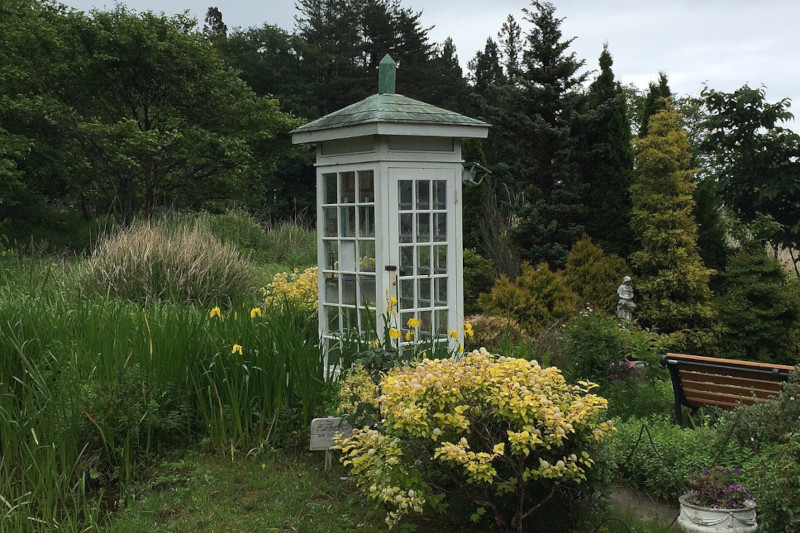
In 2010, a man named Itaru Sasaki lost his beloved cousin to cancer. A garden designer by trade, Sasaki incorporated his expertise into a memorial; one that not only honored his relative, but also allowed him to process his pain. The result became known as a Wind Phone, a disconnected public phone that allows you to “call” a deceased loved one.
“Because my thoughts couldn’t be relayed over a regular phone line,” Sasaki told NHK Sendai, “I wanted them to be carried on the wind.” Located on a beautiful expansive garden on a hill that overlooks the town of Ōtsuchi, Sasaki felt the surrounding scenery would help him exercise mindfulness and come to terms with his feelings.
A year later, tragedy struck Japan when an earthquake and tsunami left over 16,ooo people dead in the Tōhoku region, where Sasaki built his Wind Phone. Hoping to help mourners make sense of such a devastating loss, the Wind Phone was opened to the public. Over 35,000 people have visited the phone since, giving them a moment of reflection and solace.
“It is intentional that there are no signs, no maps and no guides telling you how to get here,” Sasaki told LitHub. “It’s in the very act of wandering—losing yourself in the landscape, uncertain of where you are and when you’ll arrive—that people end up thinking about many things, reformulating their memories of the person they have lost. And it’s in this mood, a sort of meditation, that they encounter the Wind Phone. They get here in a fuller and more aware state. They are ready.”
Given the phone’s location, it has been damaged by the elements, which includes corrosion and having its roof blown off by strong winds. After providing solace to many throughout the years, carpenters quickly joined in to help restore the structure and people from all over donated money for its repairs. This prompted Sasaki to give the Wind Phone a sturdier aluminum frame.
Many people from around the world have also visited the Wind Phone, inspiring them to build them in their own communities. Artist Antje Rook took one of Britain’s iconic red telephone boxes and placed it on a hill in Dorset in the UK, drawing from Sasaki’s mindset on the need of an inspiring view. “Grieving is like suffering a trauma and it’s a very difficult time for people so through research we found this really helped,” she told the BBC.
“Life goes by so fast and most of us find it unthinkable that our bonds with those around us might expire before we do,” says Sasaki. “And so we need to cultivate imagination, starting from childhood. The Wind Phone doesn’t work without a good imagination. Rather than valuing only what we can see, hear and touch, we need to also recognize the value in things that don’t have a shape, a form, an audible voice.”
Sources: How Japan’s Wind Phone Became a Bridge Between Life and Death; ‘Wind phone’ ‘installation to help with grief; The Phone Booth for Japanese Mourners
Related Articles:
Japan’s “Tsunami Stones” Have Been Warning Residents of the Dangers of Earthquakes for Centuries
Japanese Man Who Lost His Wife in 2011 Tsunami Learned to Dive to Look for Her in the Ocean
Victims of 2019 Ethiopian Airlines Crash Honored With Contemplative Memorial Park