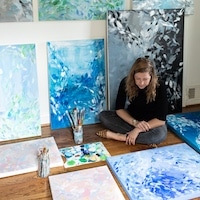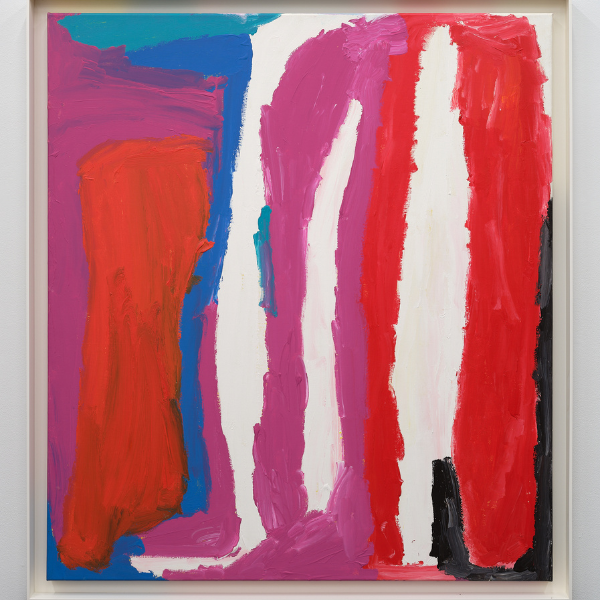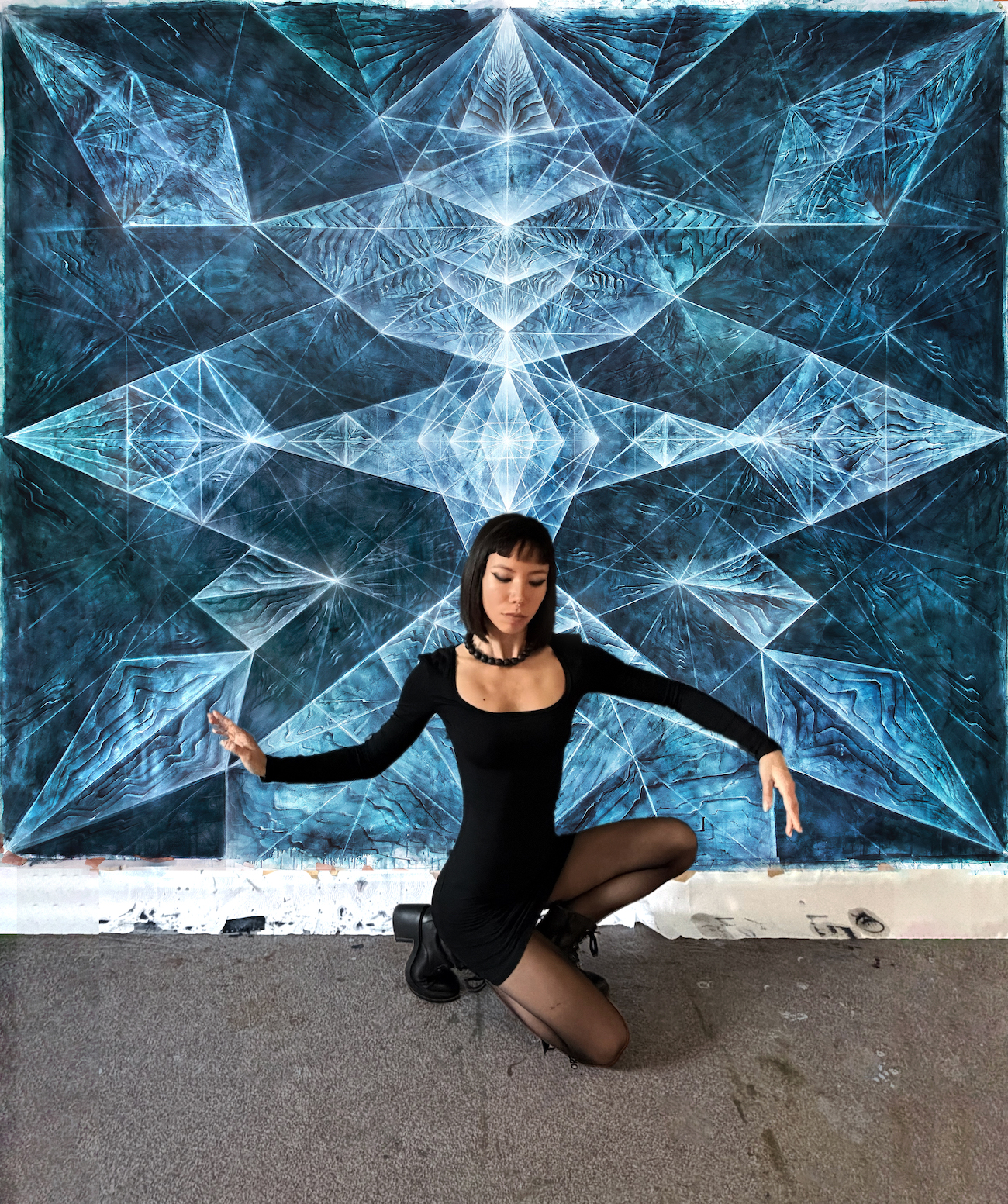
There is a moment, standing before the paintings of Anthea Xin, when scale begins to dissolve. At first, the works appear as abstract fields of sweeping indigo and mineral pigment. Gradually, they reorganize into something both bodily and astronomical. Gestural arcs suggest the curvature of a spine and the orbital pull of distant celestial bodies. In Xin’s work, the human figure is not depicted directly. Instead, it is implied through movement, rhythm, and trace. The canvas becomes a site of convergence, where the microscopic and the infinite collapse into a shared visual language.
At the core of Xin’s practice is a guiding idea: “The human form and the wider cosmos exist as a singular system in flux,” she tells My Modern Met. Drawing from Taoism and Buddhism, she explores the link between microcosm and macrocosm. This concept shapes both her thinking and her process. Before painting, Xin enters a meditative, liminal state. She allows perception and bodily awareness to shift. “Without breaking trance,” she notes, she translates these internal states into “spontaneous, embodied movements.”
This immediacy is visible across the surface of her work. Sweeping arcs and dense layers of pigment feel released rather than planned. Each painting reads as a record of motion, not a fixed image. “I don’t see my work as ‘painting a picture’ in the conventional sense,” she says. “Rather, it is an indexical recording of a physical presence moving through space within a wider system.” The canvas acts as both surface and instrument. It captures the movement of a body attuned to forces beyond itself.
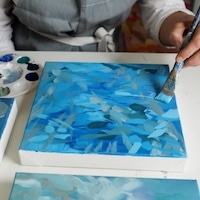
Her materials strengthen this connection between the earthly and the cosmic. Xin works with indigo, lapis lazuli, bronze, and earth ochres. These pigments form through geological and atmospheric processes. They carry a sense of time and material history. “Using these pigments is a symbolic act,” she explains. “I am physically painting with the earthly to represent the celestial.” Deep blues suggest vast night skies, while metallic traces flicker like suspended light.
Xin describes the body as a “celestial interface.” She approaches painting as somatic research. The body becomes both tool and recorder. “Every mark on the canvas are the data of that interface,” she says. “It is the physical record of the cosmos expressing itself through the human soma.” This view shifts gesture from expression to evidence. The body becomes a conduit for larger systems. This idea shapes the visual language of her work. Branching forms recall neural pathways and cosmic filaments. Curving gestures echo both limb movement and gravitational arcs. Xin studies “universal laws and geometric constants that have self-similarity across biological and cosmological scales.” She lets her own range of motion guide the composition. The result becomes what she calls “a dance between human chaos and cosmic precision.”
Ritual plays a central role in her process. Through meditation and somatic practice, Xin accesses what she describes as “a deeper, cohesive form of embodied knowledge.” This knowledge arises from the body’s own intelligence. It is not abstract, but felt. She also engages with environments of vast scale, including geological and archaeological sites. These experiences inform how she translates large-scale phenomena into physical gestures.
Her work also redefines the sacred. Xin does not locate it in distant or transcendent realms. Instead, she finds it within material and bodily experience. “The ‘sacred’ isn’t something ‘out there,’” she reflects. “It is the raw elegance of the prima materia… pulsing directly within us.” Her paintings reveal this interconnected structure. They act as moments of recognition rather than representation.
This approach resists the pace of contemporary life. Xin responds to a world shaped by fragmentation and digital overload. She emphasizes slowness and presence. “By slowing down and accessing bodily receptivity,” she says, “we re-center the self within a sacred, wider interdependent context.” Painting becomes a way to reclaim connection and belonging.
She also draws clear parallels between biological and cosmic systems. “Whether we are looking at the delicate surface of a human cell or the massive edge of a black hole, we are seeing matter respond to invisible laws,” she explains. She highlights striking similarities across scale. “The way a biological cell divides… looks almost identical to the gravitational tidal tails formed when two galaxies collide and merge.” These parallels reveal a shared structural logic.
For Xin, art becomes a tool for reorientation. “Art holds the ability to re-orientate us, to shake us awake and break through our collective numbness,” she says. Her work invites viewers to shift their perception. It encourages recognition of our place within a larger system. As she notes, we are “integral components of a monumental and changing universe.”
Her paintings function as both records and propositions. They trace an ongoing inquiry into existence. At the same time, they invite participation. To stand before them is not simply to observe. It is to enter a field of relations between body and cosmos, matter and movement, self and system. Within this space, perception expands.
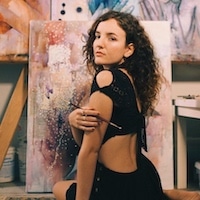
Contemporary artist Anthea Xin creates immersive works shaped by meditation and somatic practice, drawing deeply from Eastern philosophy.
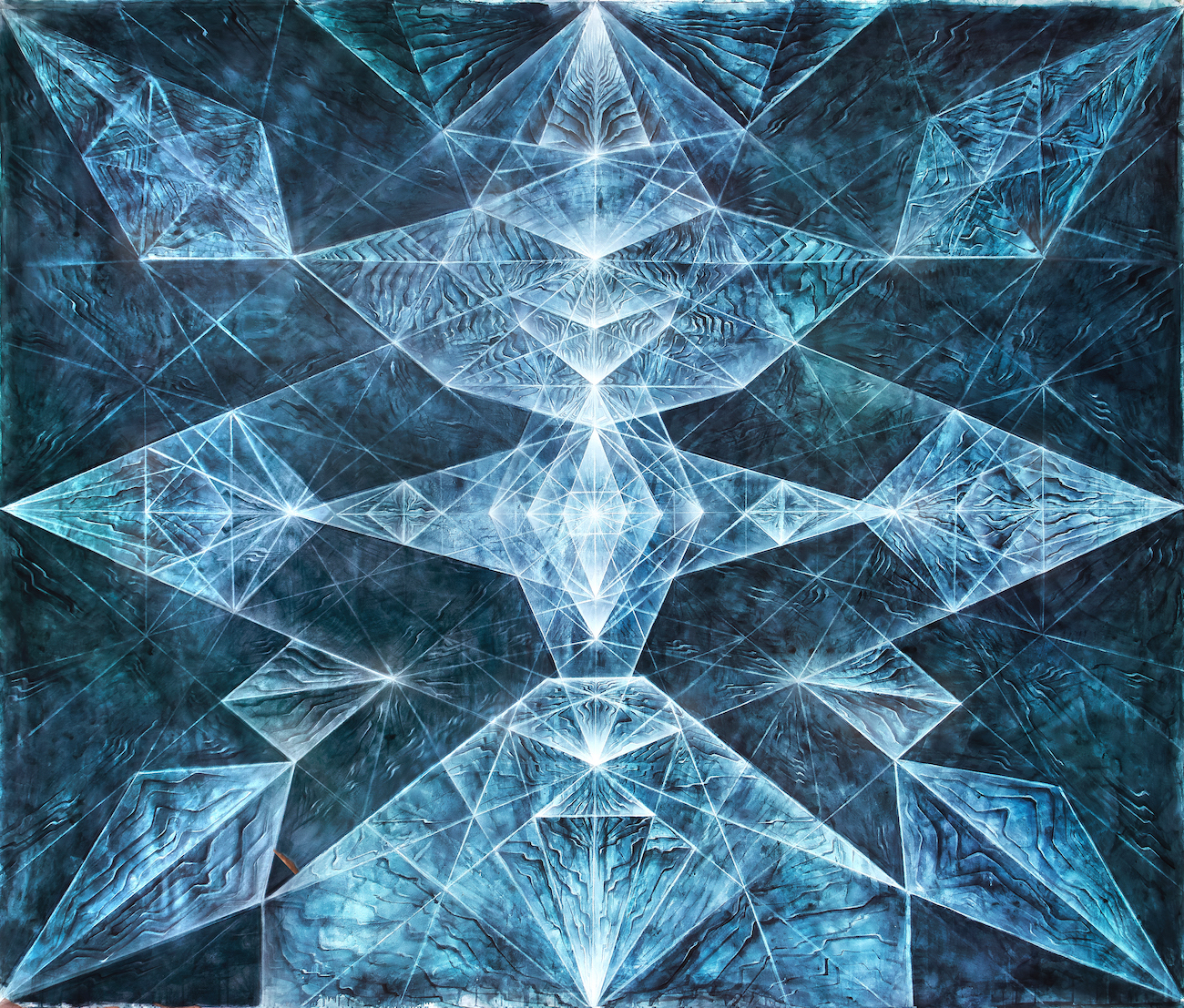
Ruliad, 240x200cm, Acrylic, Oil & Airbrush on Canvas (Natural Indigo), 2026
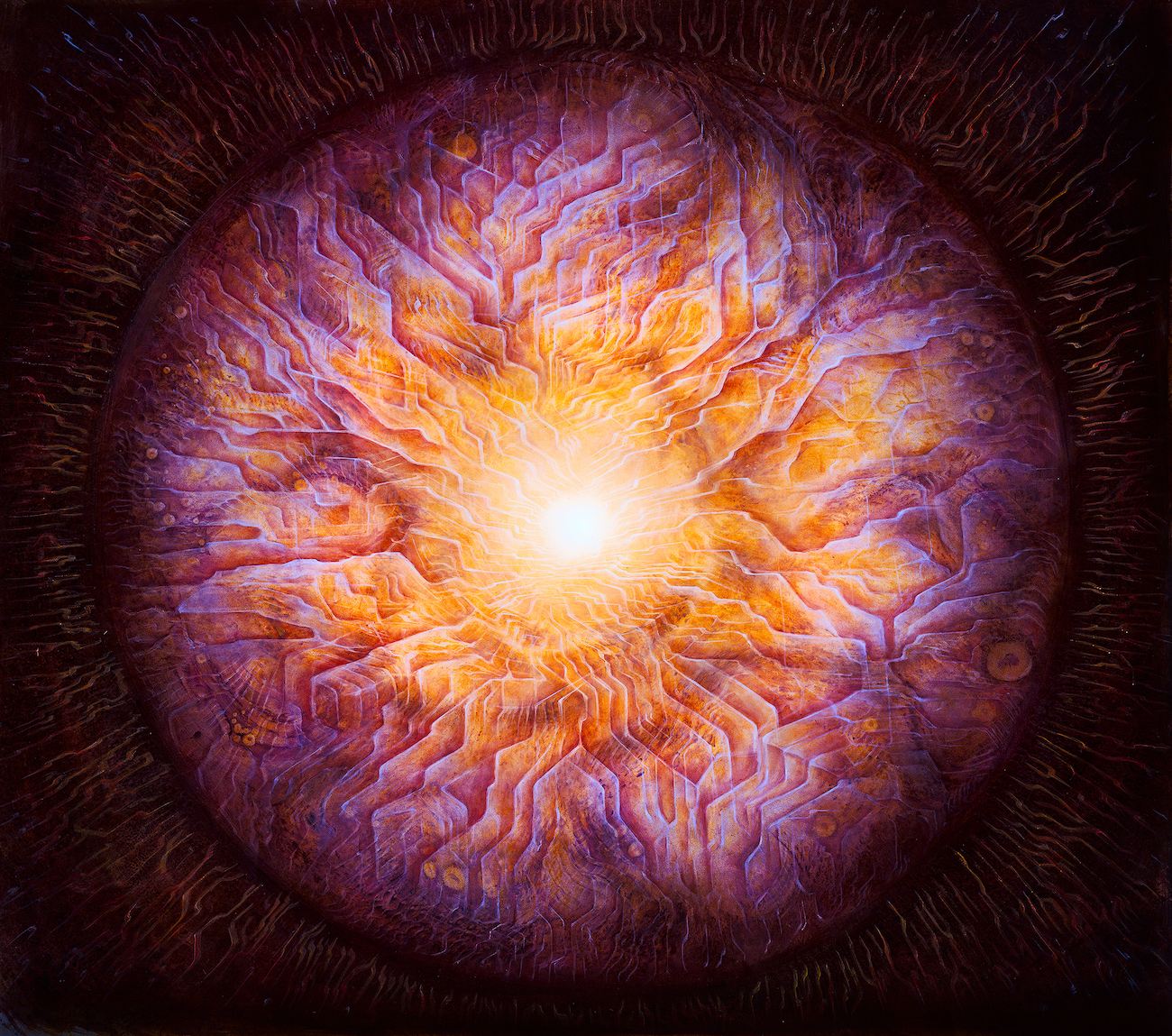
Alpha Centauri, 206x182cm, Acrylic, Oil & Airbrush on Canvas, 2026
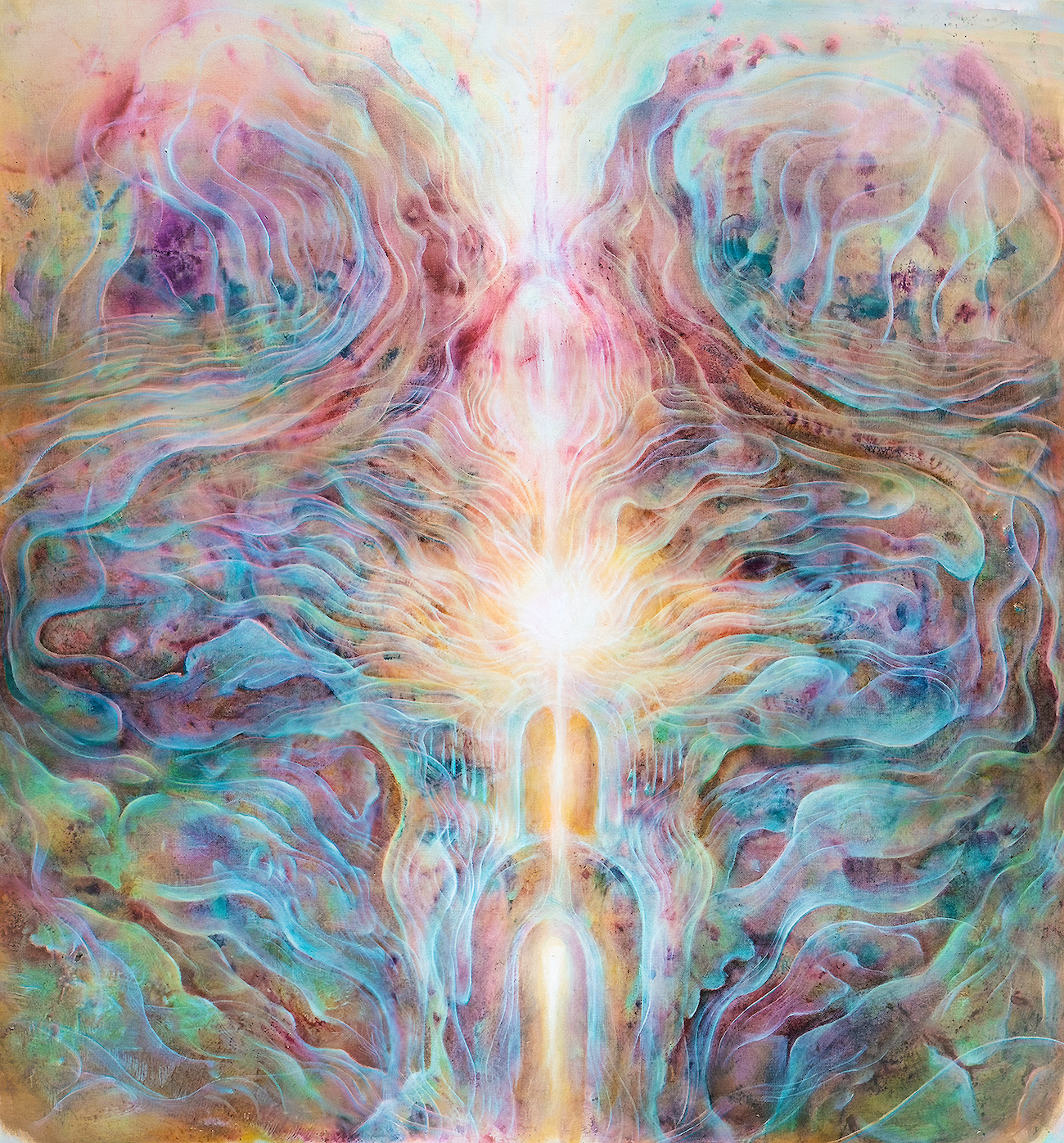
Soloma, 75x79cm, Acrylic & Oil on Canvas (Natural Turquoise), 2026
Rooted in Taoism and Buddhism, her work reveals how bodily experience extends into vast cosmological systems.
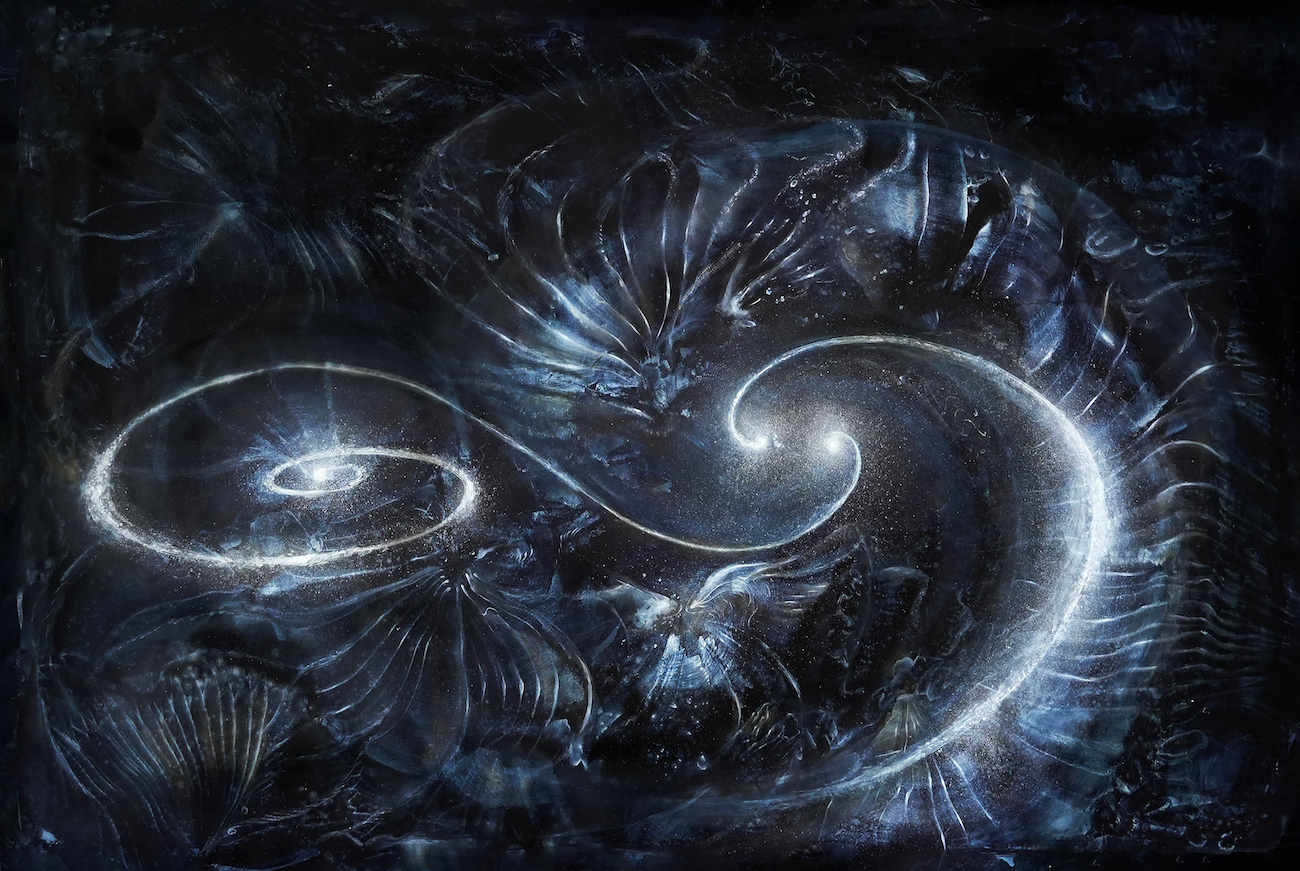
Merge. 120 x 70cm, Oil on Canvas (Natural Indigo), 2024
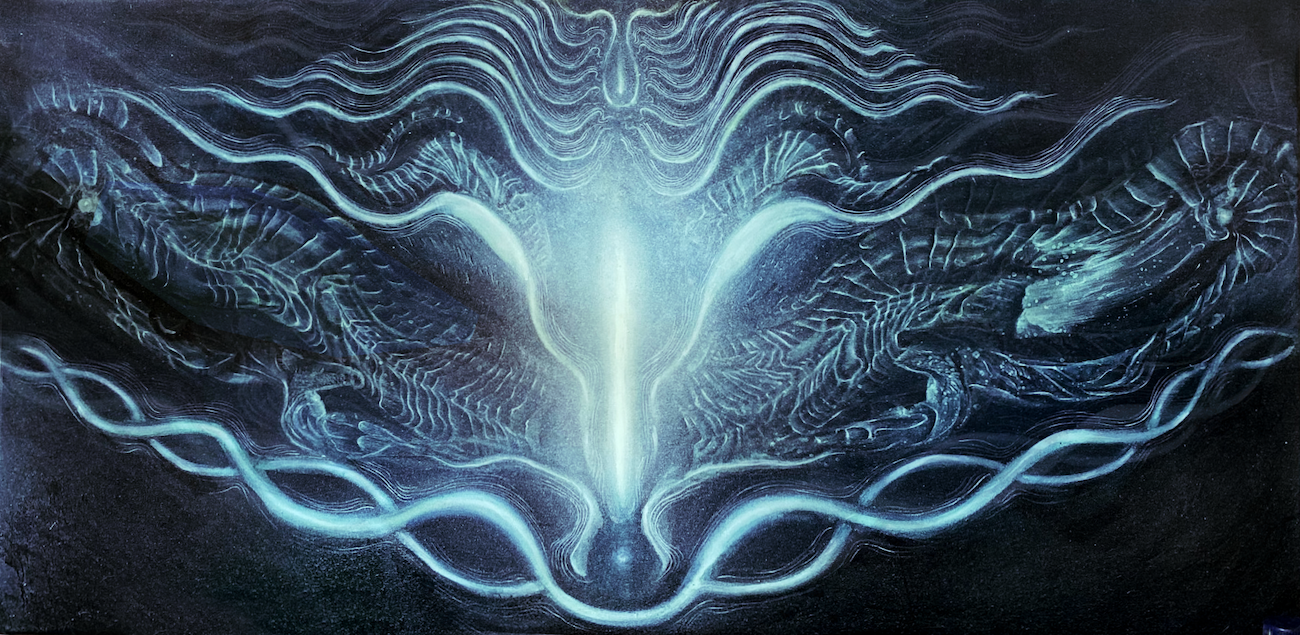
Conscious Conception Tech I, Oil on Canvas (Natural Indigo), 2024
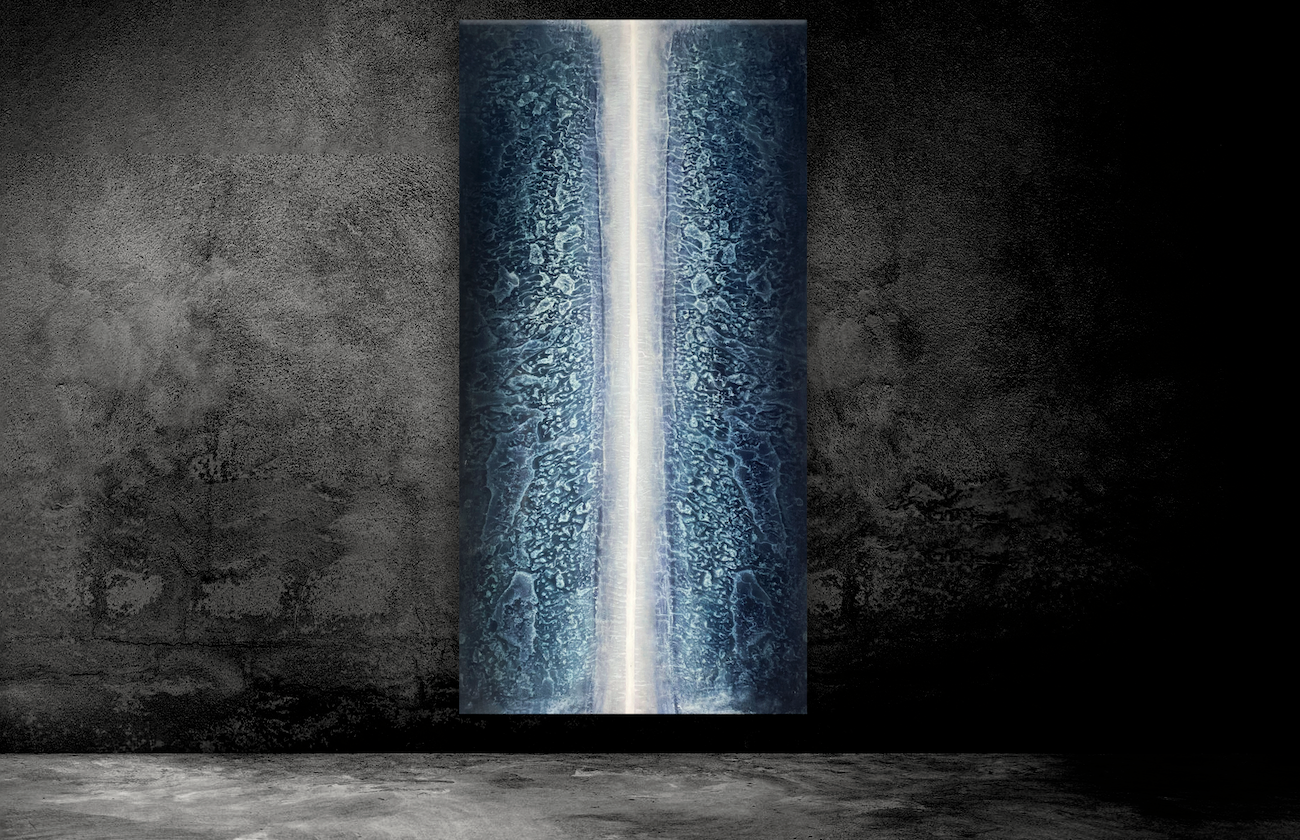
Cellular Beds. 90×190, Acrylic & Oil on Canvas (Natural Indigo), 2025
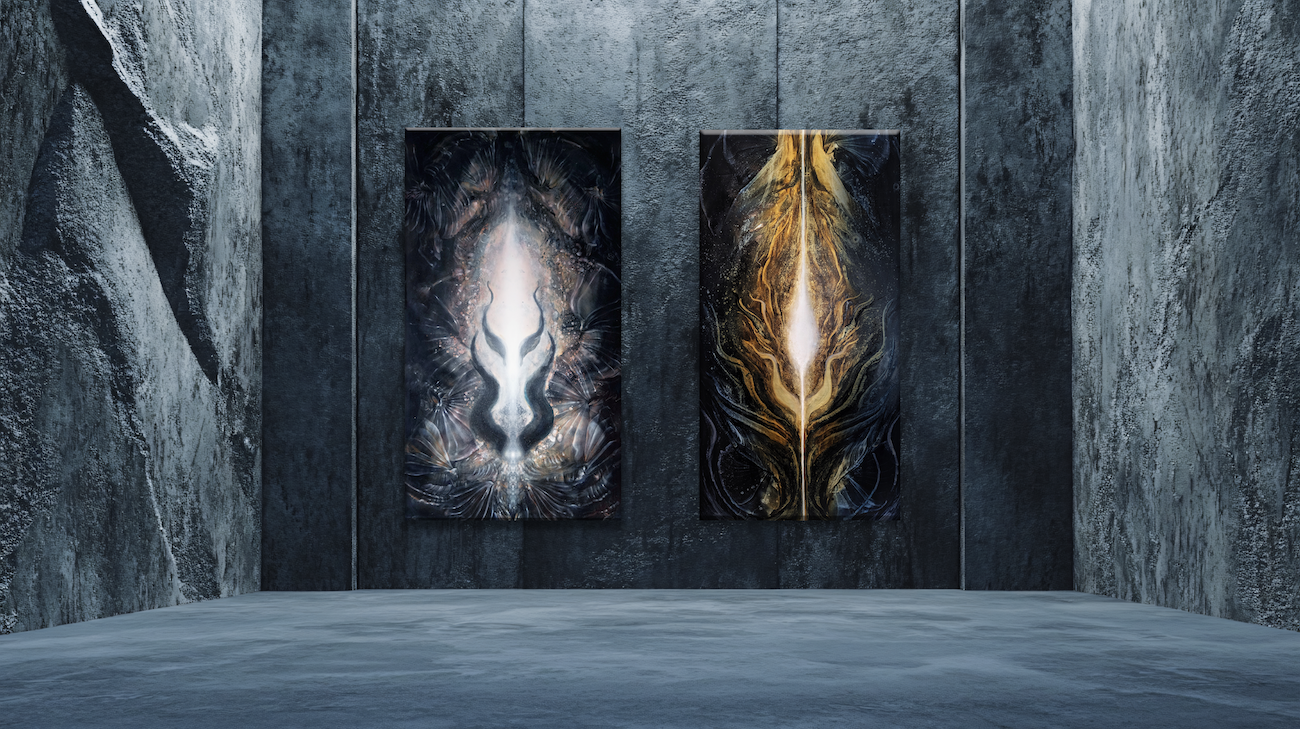
These abstract paintings explore how the human body reflects cosmic systems through movement, gesture, and natural materials.
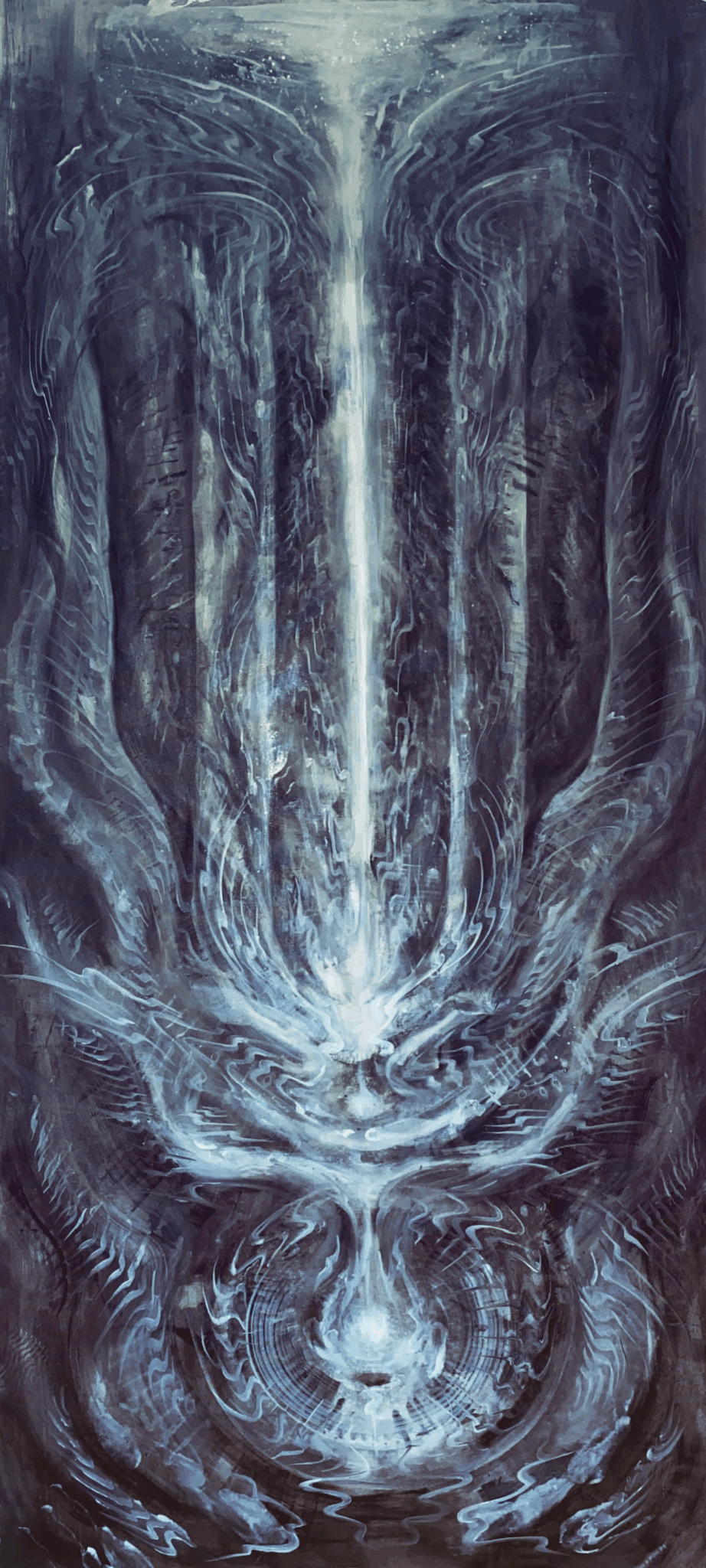
Sushumna. 130 x 60cm, Acrylic & Oil on Canvas, 2024
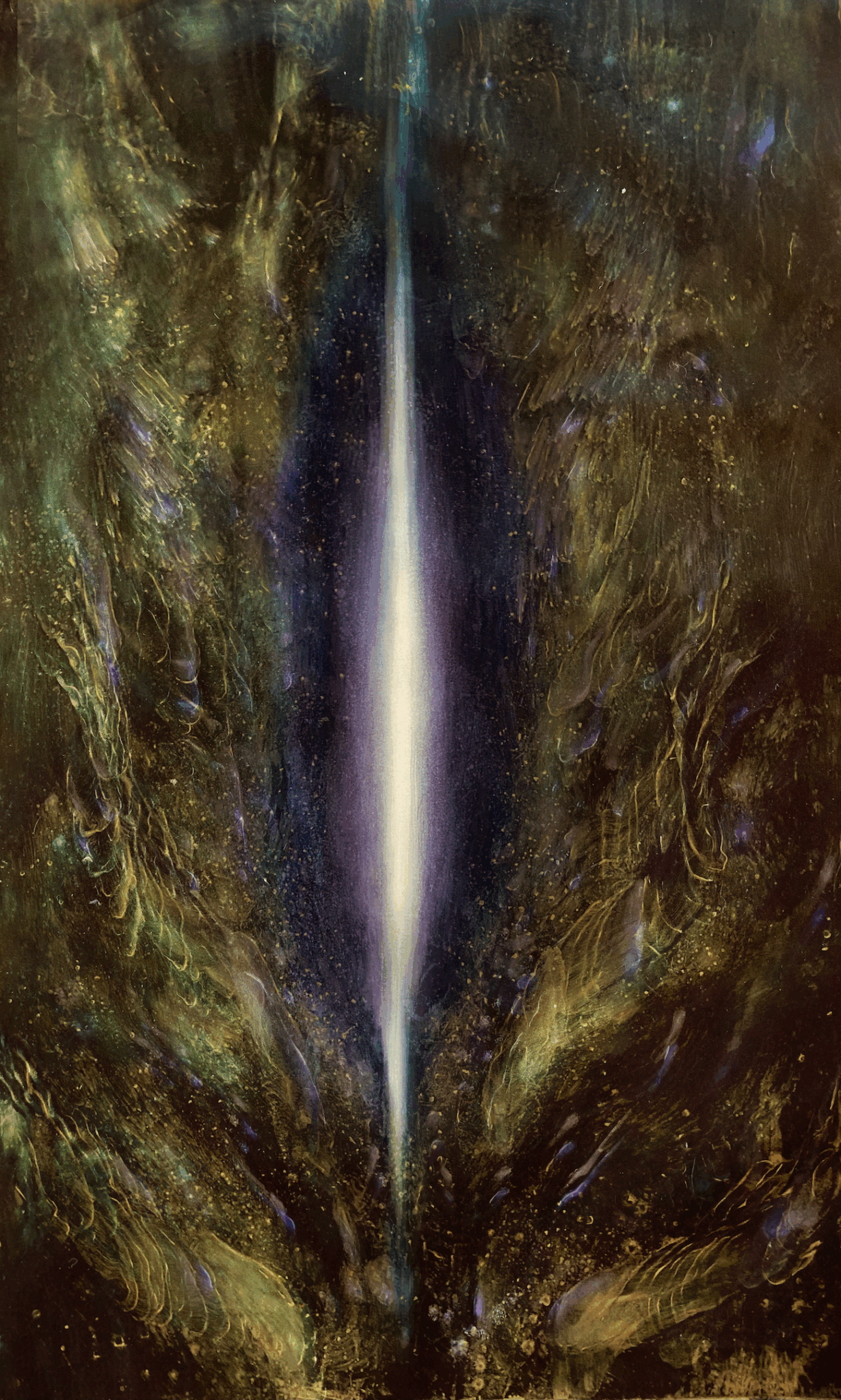
Blade, A2, Oil on Canvas (Natural Indigo & Bronze), 2024
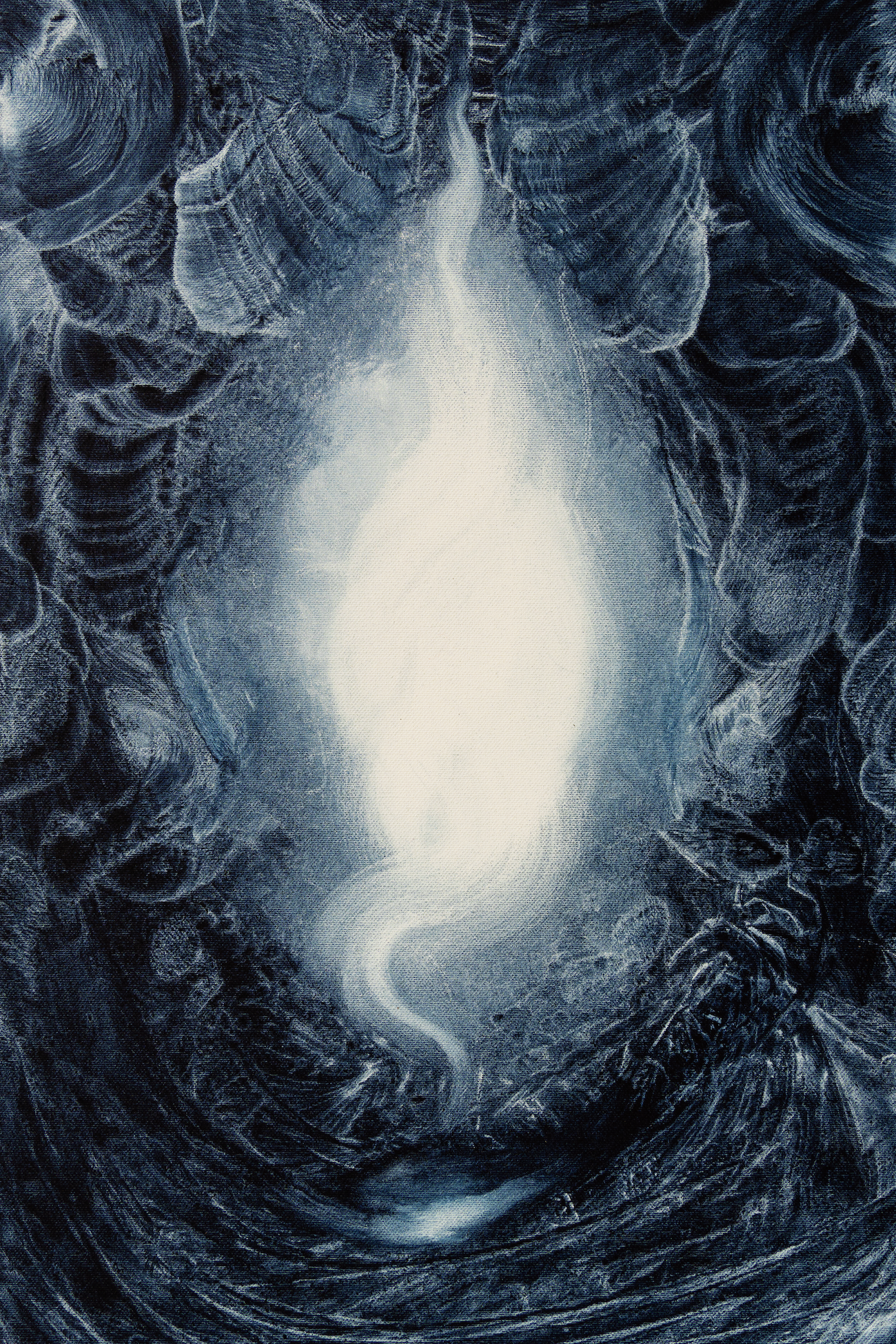
Birth, A3, Oil on Canvas (Natural Indigo), 2024
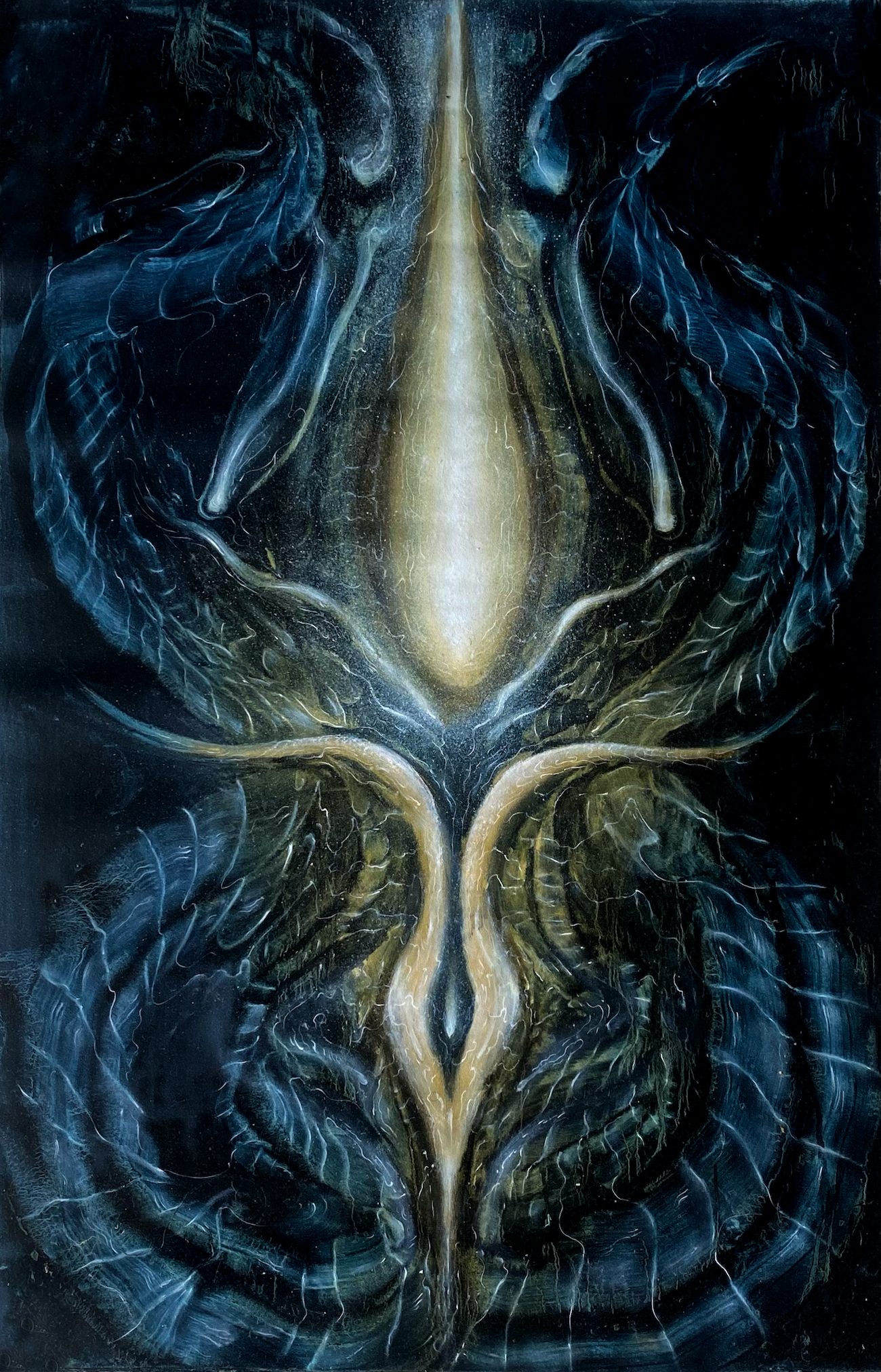
Aetos, A1, Oil on Canvas (Natural Indigo & Bronze), 2024