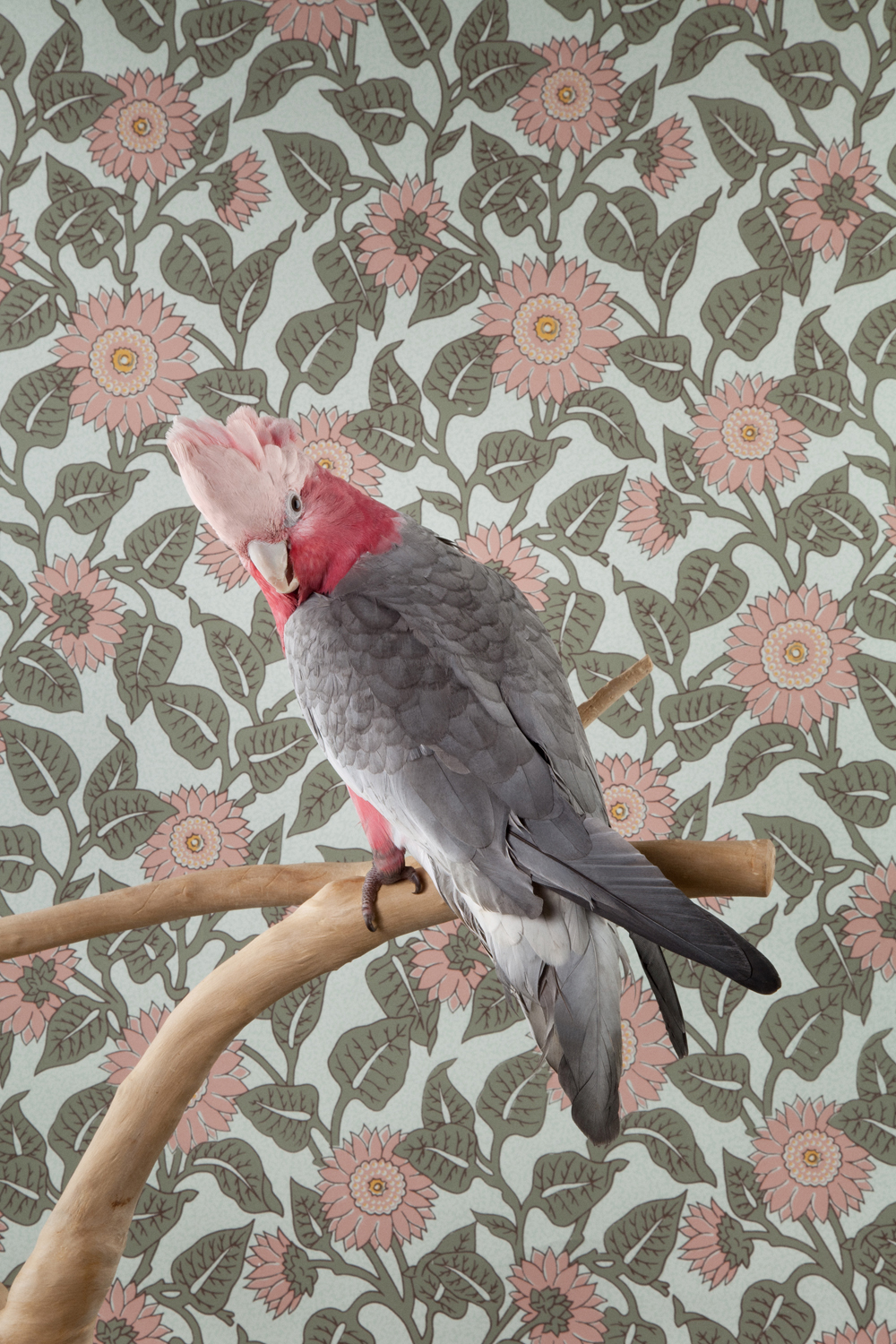
“Galah Cockatoo, No. 7461, English Arts and Crafts Paper” (Photo: Courtesy of the photographer and Warwick Editions)
The 18th-century naturalist and ornithologist George Edwards once claimed that “art and nature, like two sisters, should always walk hand in hand, so they may reciprocally aid and assist each other.” In Claire Rosen’s work, that philosophy has undoubtedly found new life. For years, the photographer has produced whimsical portraits of animals, ranging from bears and camels chowing down on elaborate banquets, to cats playfully exploring replicas of pool bars and artist studios.
“Animals are now at the center of my creative process,” Rosen tells My Modern Met. “Each encounter is sustained by fascination, admiration, and patience.” But these encounters are also sustained by the unity for which Edwards advocated.
Rosen deftly navigates the natural and photographic worlds, combining both in an effort to explore art history as well as her surroundings. Perhaps nothing embodies that idea better than her Birds of a Feather series, in which a wide assortment of avian species are photographed against intricate backdrops. One image, for instance, sees a lanner falcon perched upon a branch, its dappled plumage mirroring the acanthus leaf paper behind it. Within this setting, the bird seamlessly blends into the surrounding wallpaper, one that also recalls nature through its organic motifs. For Rosen, the collision between her avian subjects and her wallpapers aren’t just about achieving visual harmony. It’s also about dramatizing the transformation of a wild animal into a domestic subject.
“Over time, I began to see wallpaper as a symbol for the man-made interiors these birds inhabit when we acquire them as pets,” Rosen says. “While the birds may appear in harmony with their carefully curated backgrounds, it is a far cry from the environments they call home.”
There is, therefore, a “dislocation” occurring in these photographs. Birds become subsumed and ultimately controlled by human desire, much like other remnants of the natural world. The wallpapers, too, reference a time in European history when colonization similarly led to the violent separation between people, animals, objects, and their places of origin.
“As ‘discoveries’ were displaced to Europe and the Americas, they fueled aviary collection and display as part of an impulse to collect and catalog the natural world,” Rosen explains. “These images highlight beauty while inviting a deeper reflection on our relationship with the natural world, encouraging viewers to consider not only what we admire, but also the consequences of our desire to possess it.”
Even though we can’t possess the birds themselves, we can, on the other hand, possess their photographs, thanks to Rosen’s newest book. Published last December by Warwick Editions, Birds of a Feather compiles some 120 images from the titular series, depicting everything from hawks, flamingos, and penguins, to chickens, owls, and macaws.
“If the work offers even a brief moment of connection—encouraging viewers to notice and care—then it has achieved what I had hoped,” Rosen says. “As we admire what nature has inspired in art, I hope we might also consider what art can do for nature in return.”
My Modern Met had the chance to speak with Claire Rosen about her photographic practice, her theoretical underpinnings, and her Birds of a Feather series. Read on for our exclusive interview with the photographer.
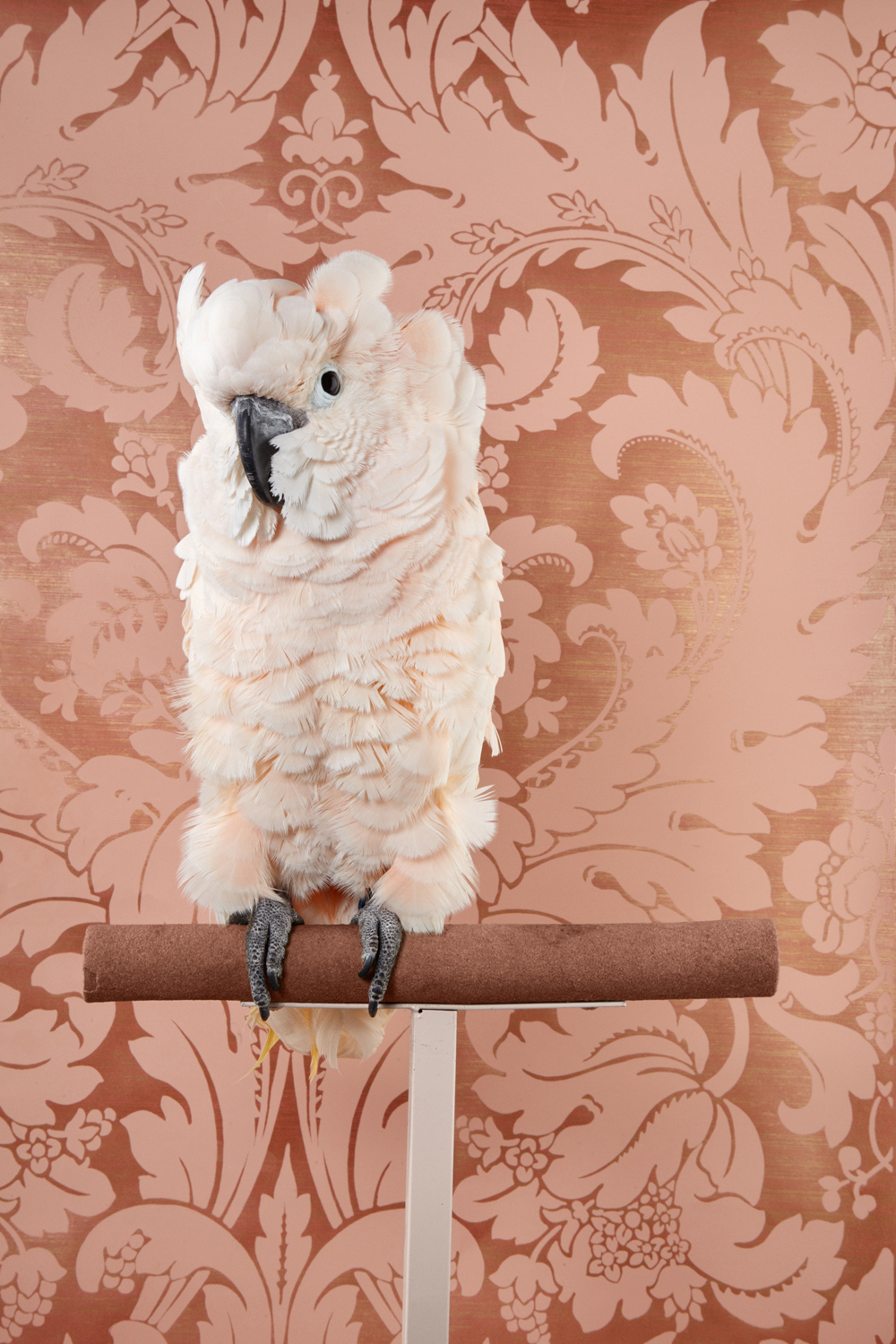
“Moluccan Cockatoo, No. 7696, Damask Paper” (Photo: Courtesy of the photographer and Warwick Editions)
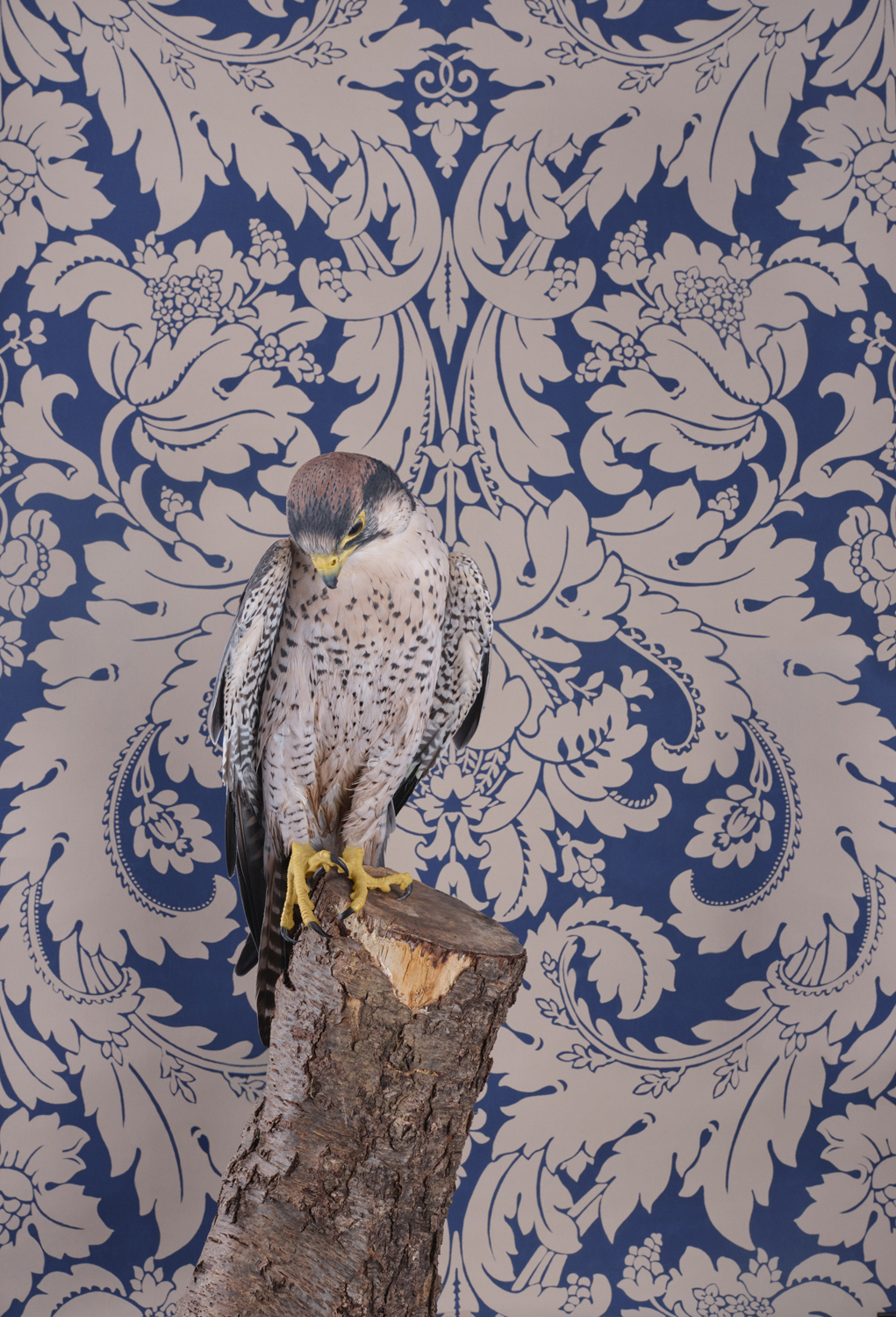
“Lanner Falcon, No. 7234, Acanthus Leaf Paper” (Photo: Courtesy of the photographer and Warwick Editions)
What originally drew you to photography as your primary artistic medium?
I have a vivid memory of my first time in the darkroom, watching with astonishment as an image emerged from a blank sheet of paper. I remember thinking, this is pure magic. I was completely captivated.
I had always been drawn to the arts, yet I was never particularly patient or naturally skilled at drawing or painting. I often felt frustrated by my inability to translate what I imagined onto the page. The camera, however, offered a tool that felt both intuitive and immediate.
Photography provided a path to build a world shaped by my own imagination, one filled with unique experiences and encounters with the subjects that fascinated me. Making pictures allows me to explore the world, to understand how I feel about it, and to find my place within it. Through the lens, I discovered not only a medium, but a means of inquiry.
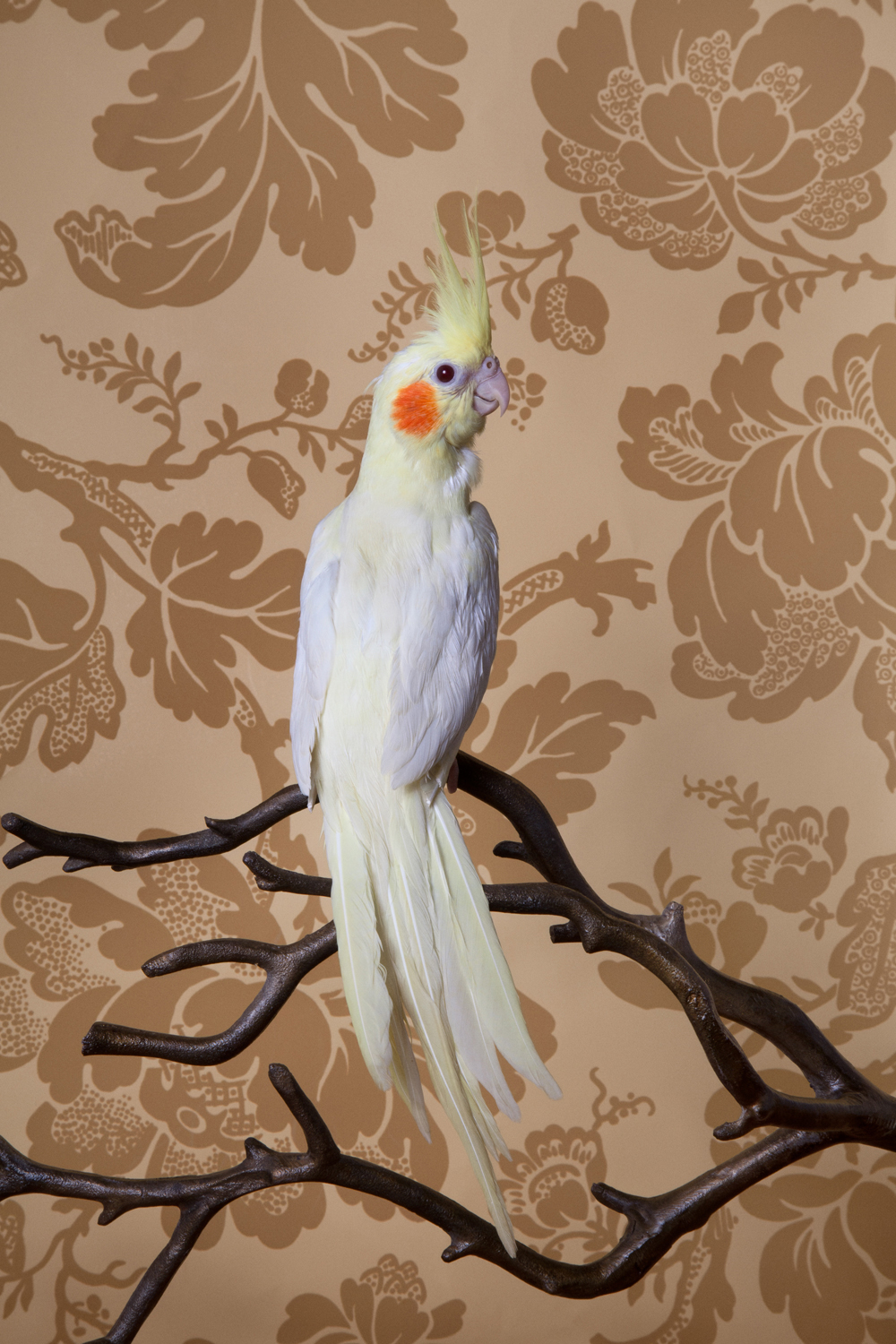
“Lutino Cockatiel, No. 7874, Damask Motif Paper” (Photo: Courtesy of the photographer and Warwick Editions)
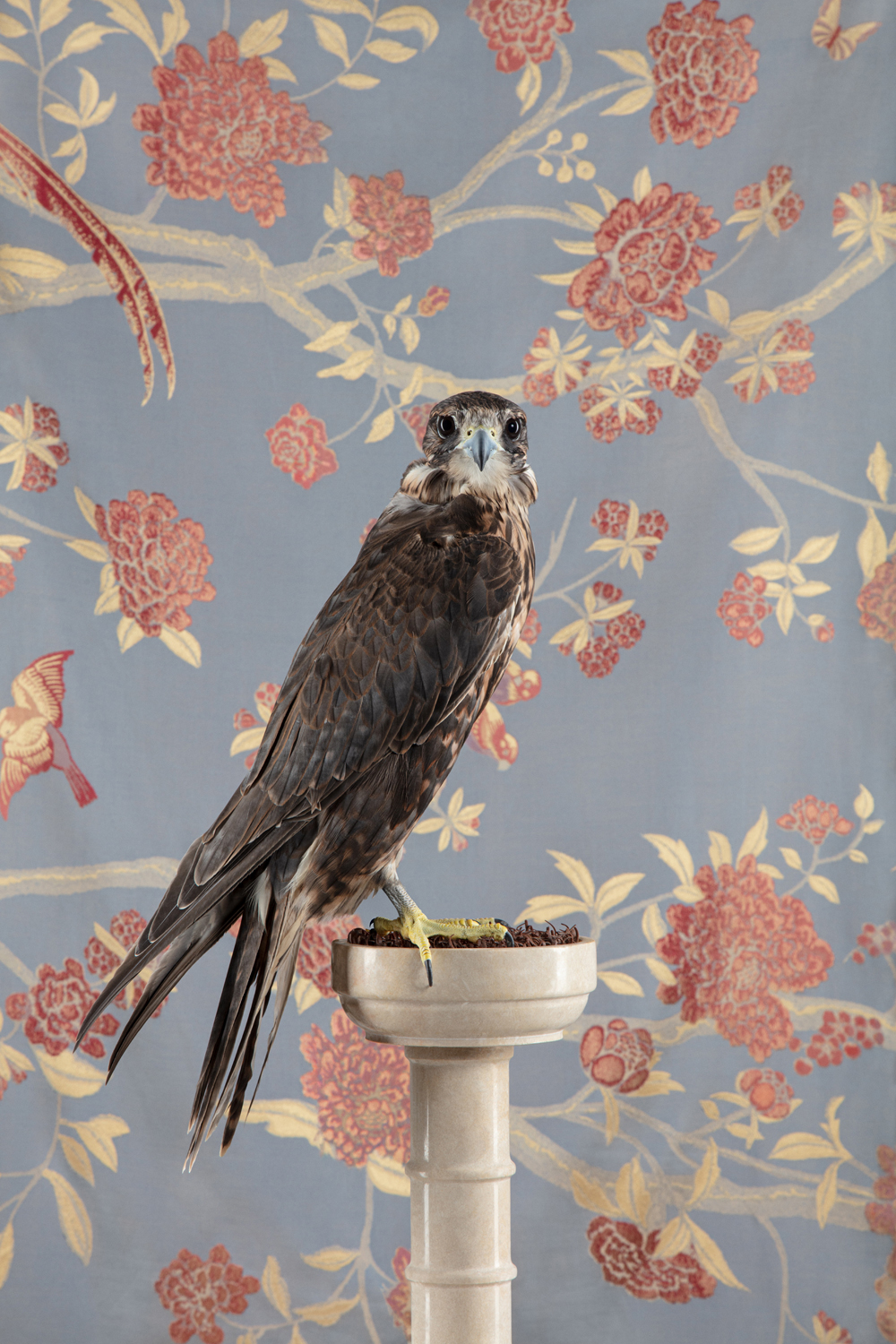
“Saker Falcon, No. 4338, Floral Brocade Textile” (Photo: Courtesy of the photographer and Warwick Editions)
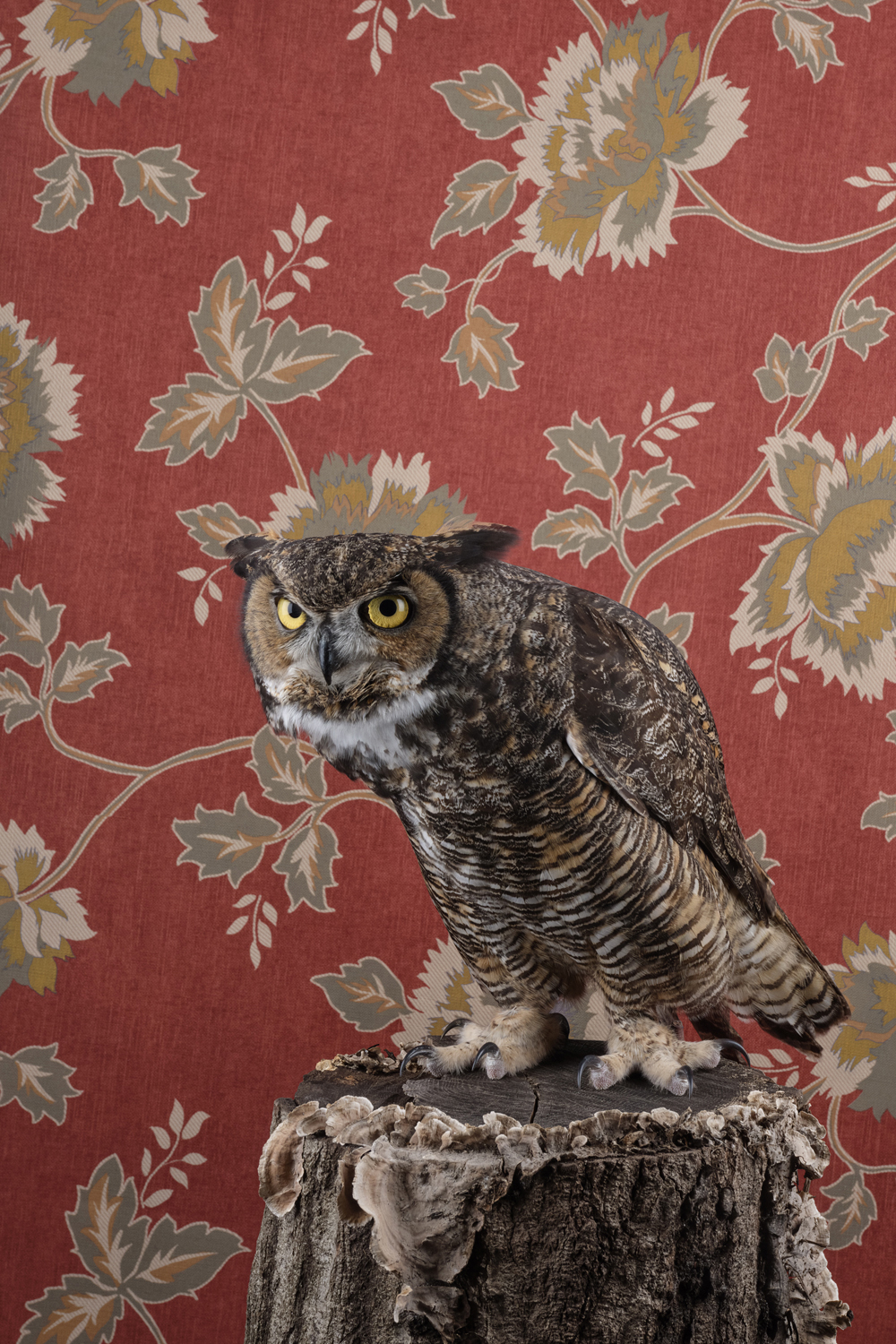
“Great Horned Owl, No. 2514, Printed Floral Textile” (Photo: Courtesy of the photographer and Warwick Editions)
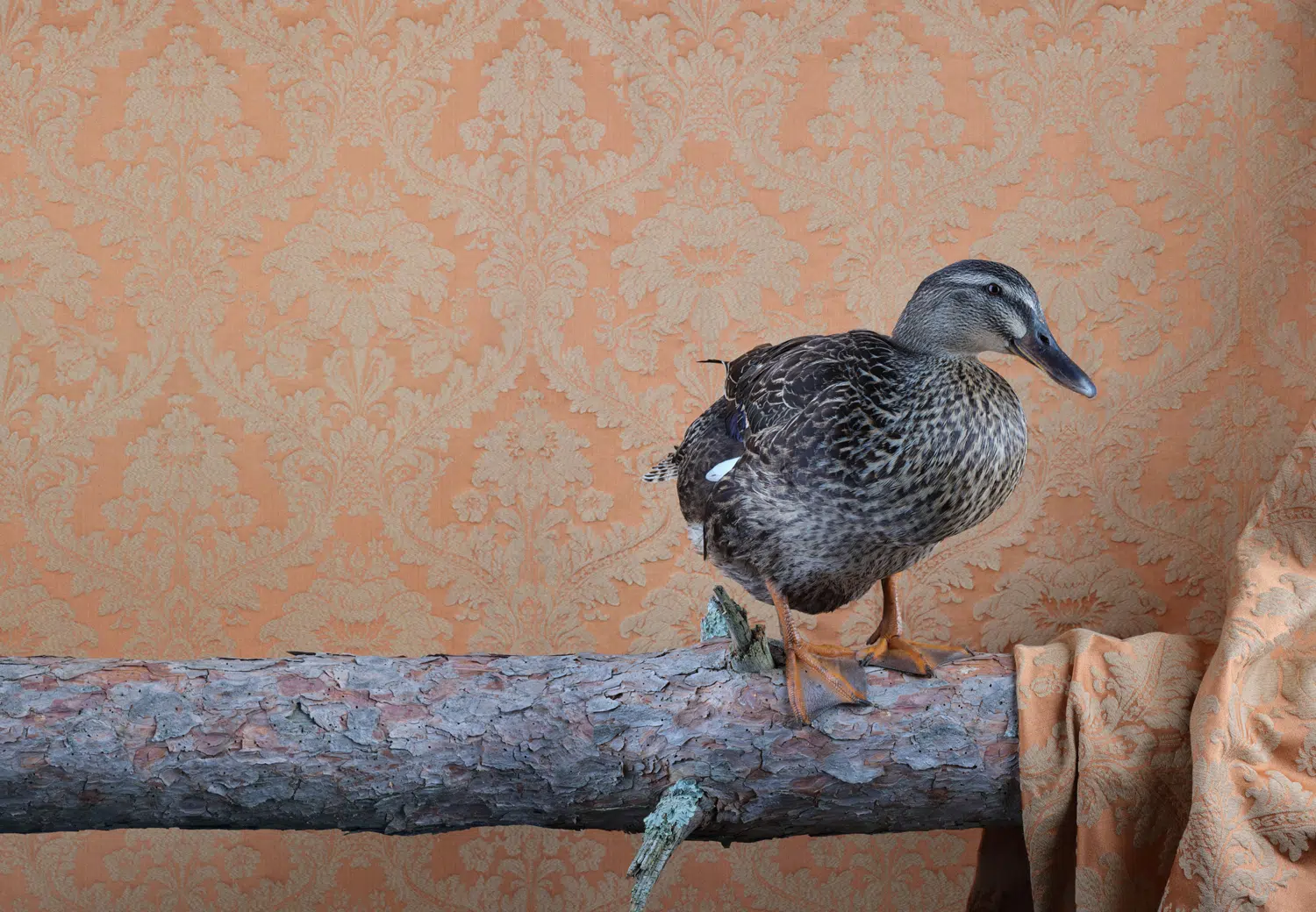
“Duck, No. 0166, Damask Textile” (Photo: Courtesy of the photographer and Warwick Editions)
When did you first begin photographing animals, and what inspired that decision?
From an early age, I was captivated by creatures big and small, real and imagined. My earliest photographic work consisted of fairytale-inspired self-portraiture and conceptual fashion shoots, and whenever the opportunity arose to include an animal, I eagerly embraced it.
While preparing for a commercial assignment, I visited a bird store to meet a toucan. I remember wandering through the space in awe, hypnotized by the extraordinary colors and sculptural forms of the birds. Around that same time, I came across a wallpaper design filled with avian motifs and wondered if I could create my own version by photographing birds in front of patterned backgrounds. I conducted a small test with my own parakeets and was pleased by the result.
I persuaded the bird shop to allow me to photograph their birds. The lobby was transformed into a makeshift portrait studio. As the birds were brought in, I paired each one with a background, aiming to complement their colors and personalities.
The process was enthralling. Each bird revealed a unique personality: some were curious and inquisitive, others playful and dramatic, while a few seemed indifferent to the entire endeavor. The unpredictable nature of the shoot kept me engaged, as did the trial and error of matching backgrounds to my feathered models. By the end of that first session, I was exhausted yet deeply fulfilled. It felt nothing short of magical, and I remember thinking with certainty, this is how I want to spend my time. That moment marked the beginning of what would become Birds of a Feather.
Animals are now at the center of my creative process, and each encounter is sustained by fascination, admiration, and patience.
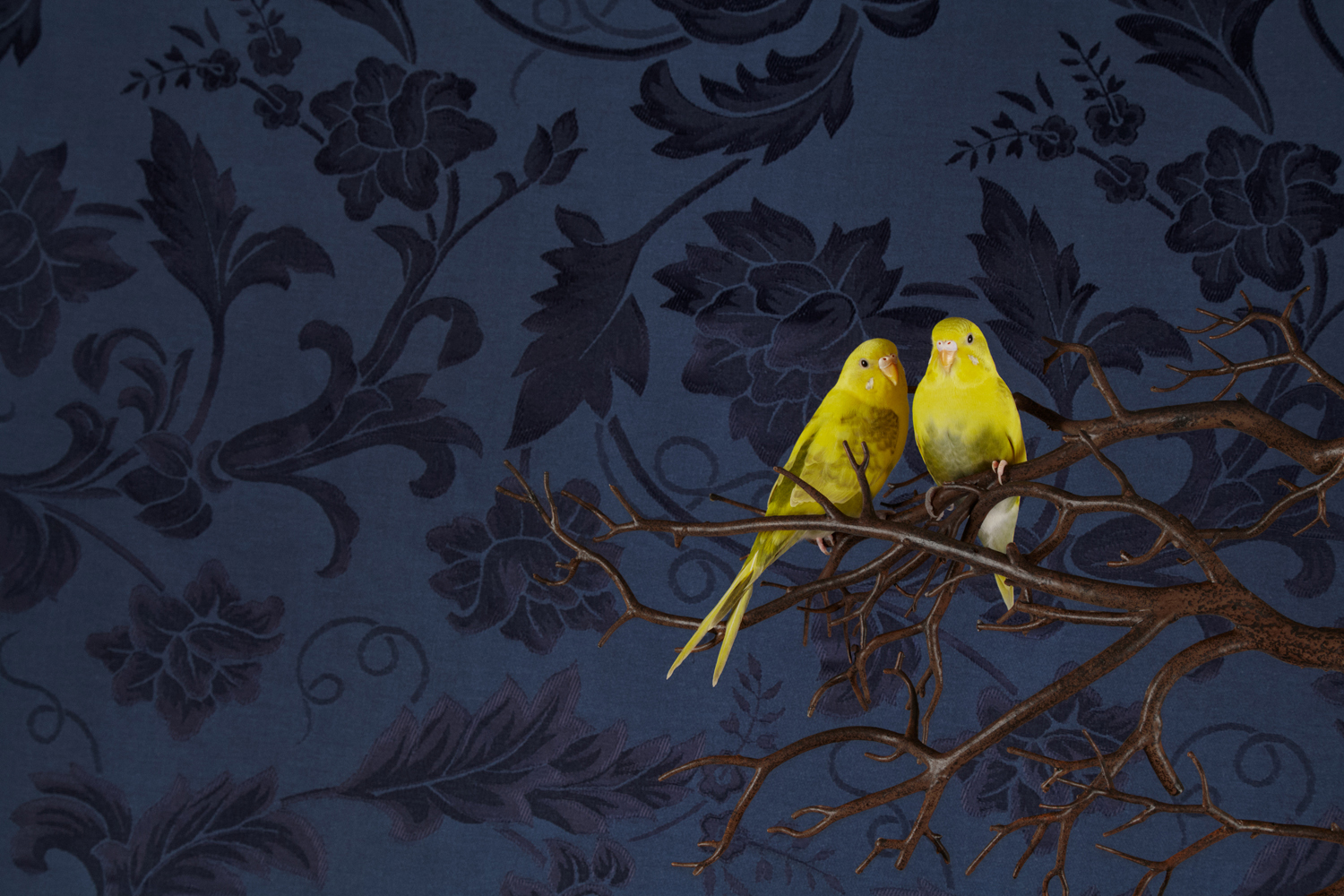
“Budgerigars, No. 9947, Floral Damask Textile” (Photo: Courtesy of the photographer and Warwick Editions)
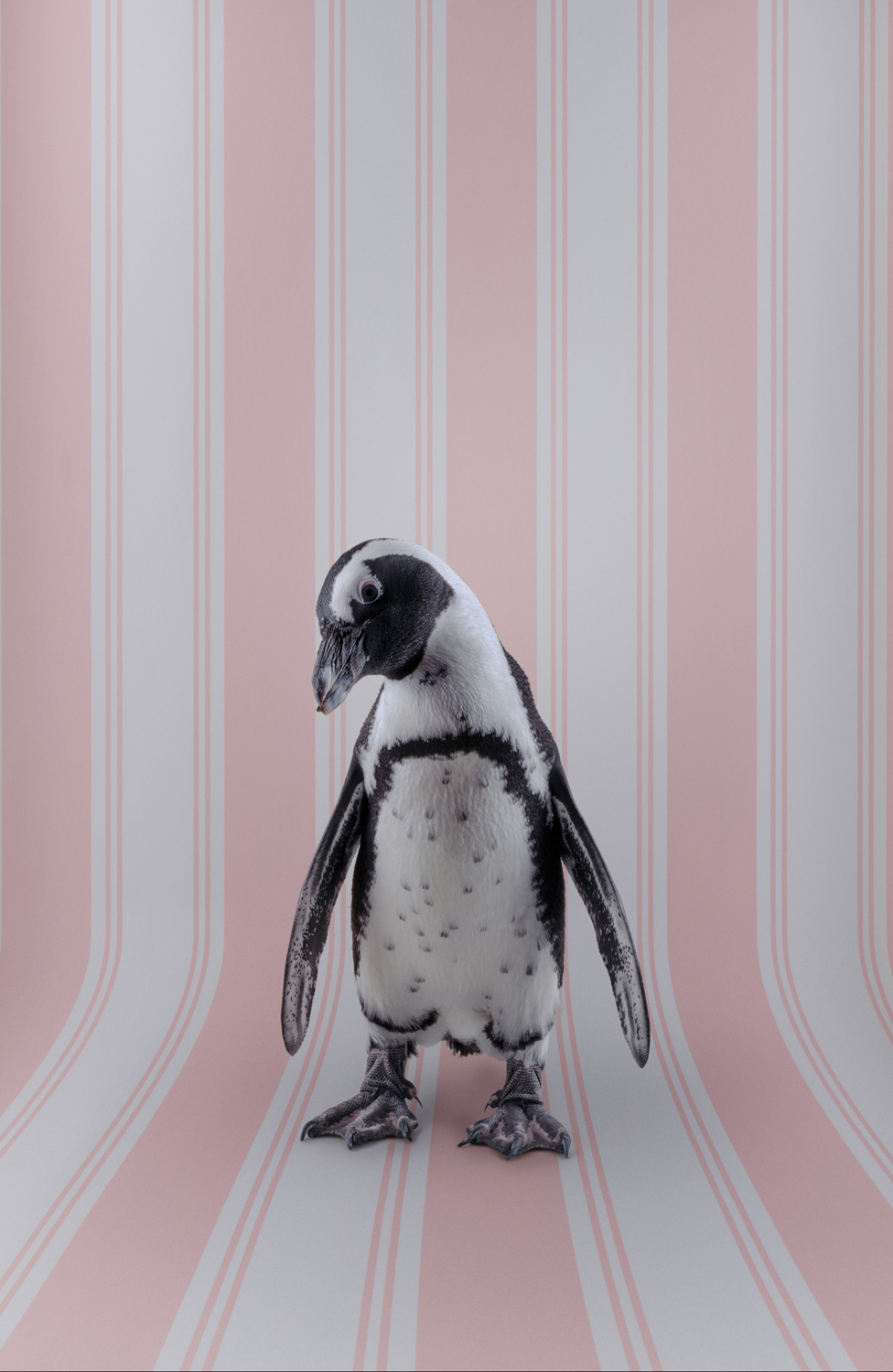
“African Penguin, No. 7125, Striped Paper” (Photo: Courtesy of the photographer and Warwick Editions)
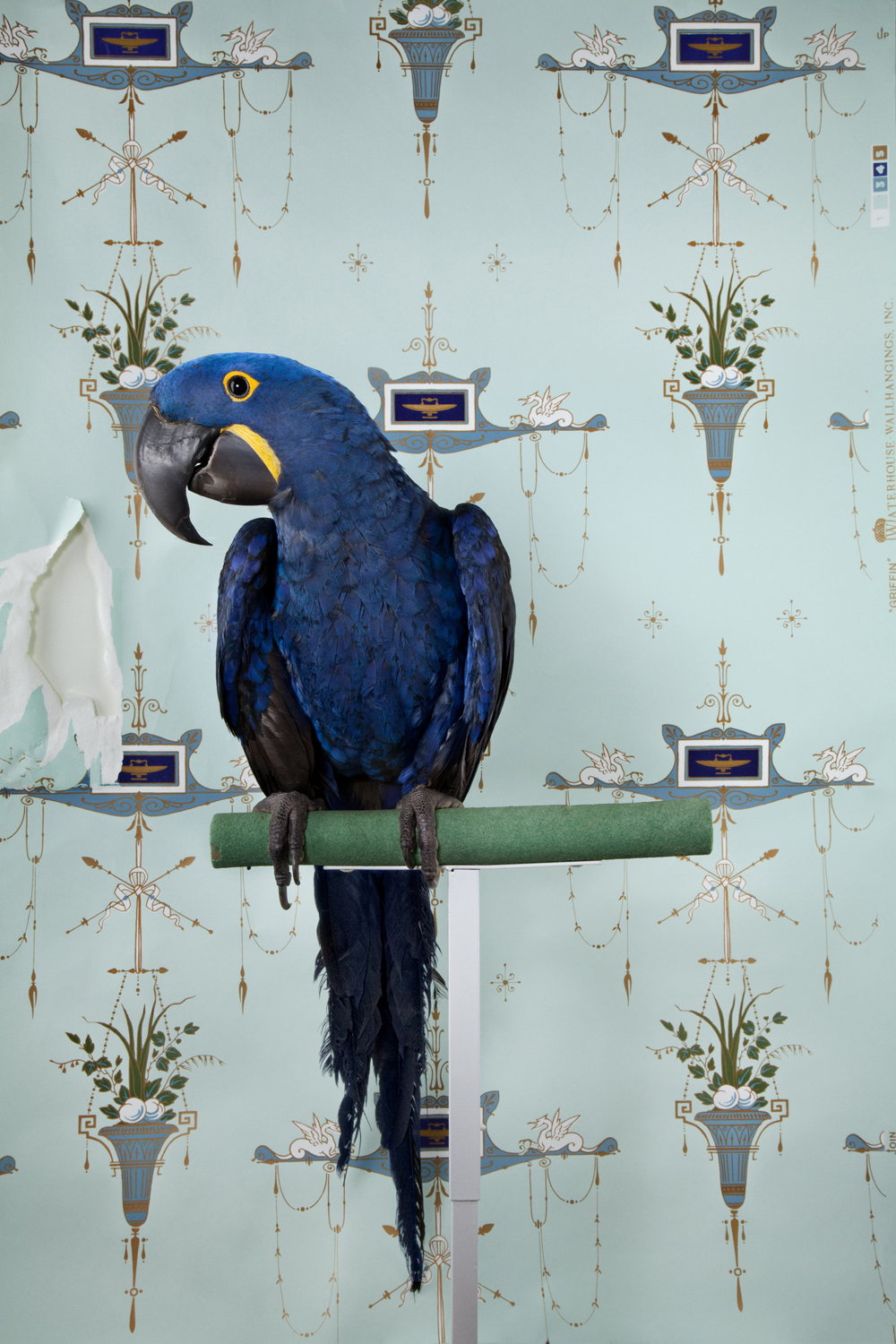
“Hyacinth Macaw, No. 7677, Ornamental Neoclassical Paper” (Photo: Courtesy of the photographer and Warwick Editions)
Your style is influenced by Beatrix Potter and the Dutch still-life tradition. What compels you about these two influences, and how have you reimagined them in your own work?
As a child, I was enchanted by the world of Beatrix Potter, with her charming animal characters set within the beauty of the pastoral countryside. Her artwork was deeply formative for me, establishing an aesthetic language of childlike wonder infused with thoughtful observation. What continues to resonate is the empathy she was able to engender through her creatures, each with distinct personalities that feel relatable.
In my adult years, particularly since moving to the countryside and learning more about Potter’s life, my admiration has only deepened. She was not only an extraordinary storyteller but also a dedicated conservationist, using the profits from her work to protect the natural landscapes she cherished. Living and working on a farm, I feel a strong connection to that mission.
In series such as The Burrow of Warwick and Curious Cats, many of the animals I photograph are part of my own world—pets or creatures encountered in the surrounding landscape—presented within carefully constructed miniature sets. Like Potter, I aspire to create work that speaks across generations, inviting both children and adults into a space of imagination, empathy, and connection with the natural world.
The Dutch still-life tradition offers a complementary influence. I am drawn to the light, beauty, and reverence for everyday objects. There is a quiet joy that springs from the cheerfulness of a blooming flower or ripened fruit, and my photographic series rooted in this tradition seek to elevate that simple pleasure while engaging with a rich history of symbolism and existential reflection. Sixteenth- and 17th-century Vanitas painters communicated the impermanence of life through visual feasts infused with moral meaning: rotting foods, fading flowers, and other sensory delights serving as reminders of the brevity of earthly existence. Objects from the natural world carried layered symbolism: the butterfly signifying transformation, the ant representing diligence, and the skull or wilting bloom evoking the inevitability of mortality.
In our contemporary age, this message feels more relevant than ever. The fleeting beauty of flowers is more than a metaphor for the brevity of human life. It’s also a warning of the fragility of the natural world in the face of human impact. My compositions follow the Baroque masters, focusing on light, color, texture, and atmosphere to create contemplative spaces that invite viewers to pause. Rather than competing with the rapid pace of our digital lives, these images aim to hold attention and encourage reflection on what is essential, the dignity and beauty of the natural world and the inevitable truth of our impermanence.
While these influences are most evident in series such as Fantastical Feasts, The Burrow of Warwick, Curious Cats, and Persephone’s Feast; the Birds of a Feather series draws more directly from Victorian bird illustrations and the decorative wallpaper patterns of the same era. These references emphasize both the impulse to catalogue the natural world and the human desire to domesticate and aestheticize it, reinforcing the conceptual framework of the series.
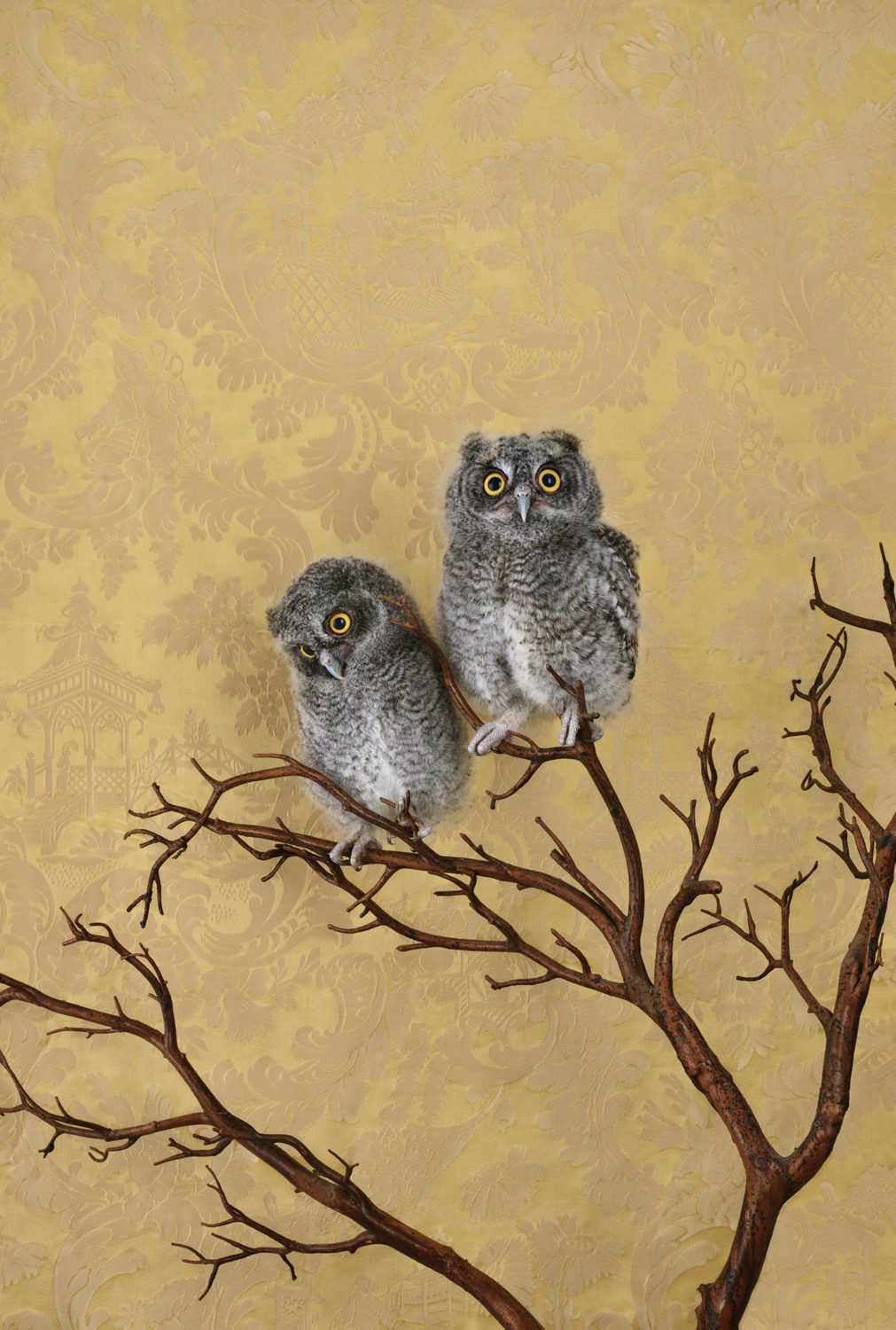
“Spotted Eagle Owlets, No. 7711, Chinoiserie Damask Textile” (Photo: Courtesy of the photographer and Warwick Editions)
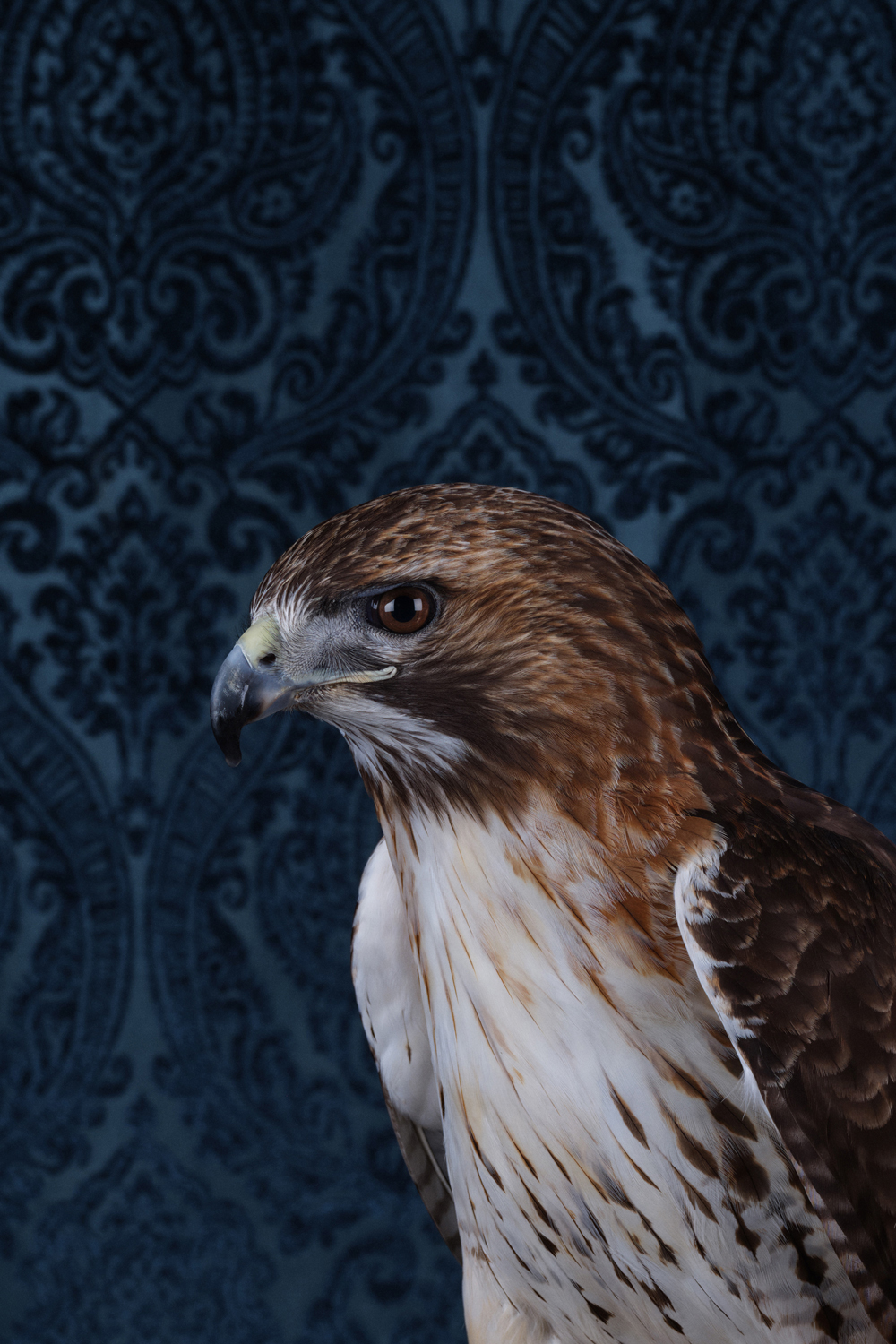
“Red Tailed Hawk, No. 5324, Cut Velvet Damask Motif Textile” (Photo: Courtesy of the photographer and Warwick Editions)
Much of your work features animals placed within intricate, heavily patterned settings. How do you source these visuals and backdrops, and when did you first develop this aesthetic language?
I developed this aesthetic language during the planning stages of Birds of a Feather. As mentioned above, while sourcing materials for another project, I came across a wallpaper design filled with illustrated birds, which inspired the idea of photographing my own parakeets against a patterned background. I visited a wallpaper warehouse, spending hours rummaging through mountains of discontinued swatches. Seduced by color and pattern, I accumulated a heap of historically inspired Victorian motifs and left with more than 200 samples in hand—feeling as if I had just found the golden goose.
The wallpapers are selected to complement each bird’s colors and personality, creating a sense of visual harmony. Over time, I began to see the wallpaper as a symbol for the man-made interiors these birds inhabit when we acquire them as pets. The series seeks to capture that desire to possess the beautiful, wild, and exotic—a possession that permanently changes the object of desire through its dislocation. While the birds may appear in harmony with their carefully curated backgrounds, it is a far cry from the environments they call home.
The richly ornamented background becomes a character in its own right, amplifying the themes of beauty, domestication, and the human desire to weave nature into daily life. The wallpapers reference a time in European history when colonization was unleashed across the globe and with it, the brutal domination of faraway places, creatures, and cultures. As “discoveries” were displaced to Europe and the Americas, they fueled aviary collection and display as part of an impulse to collect and catalog the natural world.
Through this juxtaposition, the images work on both aesthetic and conceptual levels. They highlight beauty while inviting a deeper reflection on our relationship with the natural world, encouraging viewers to consider not only what we admire, but also the consequences of our desire to possess it.
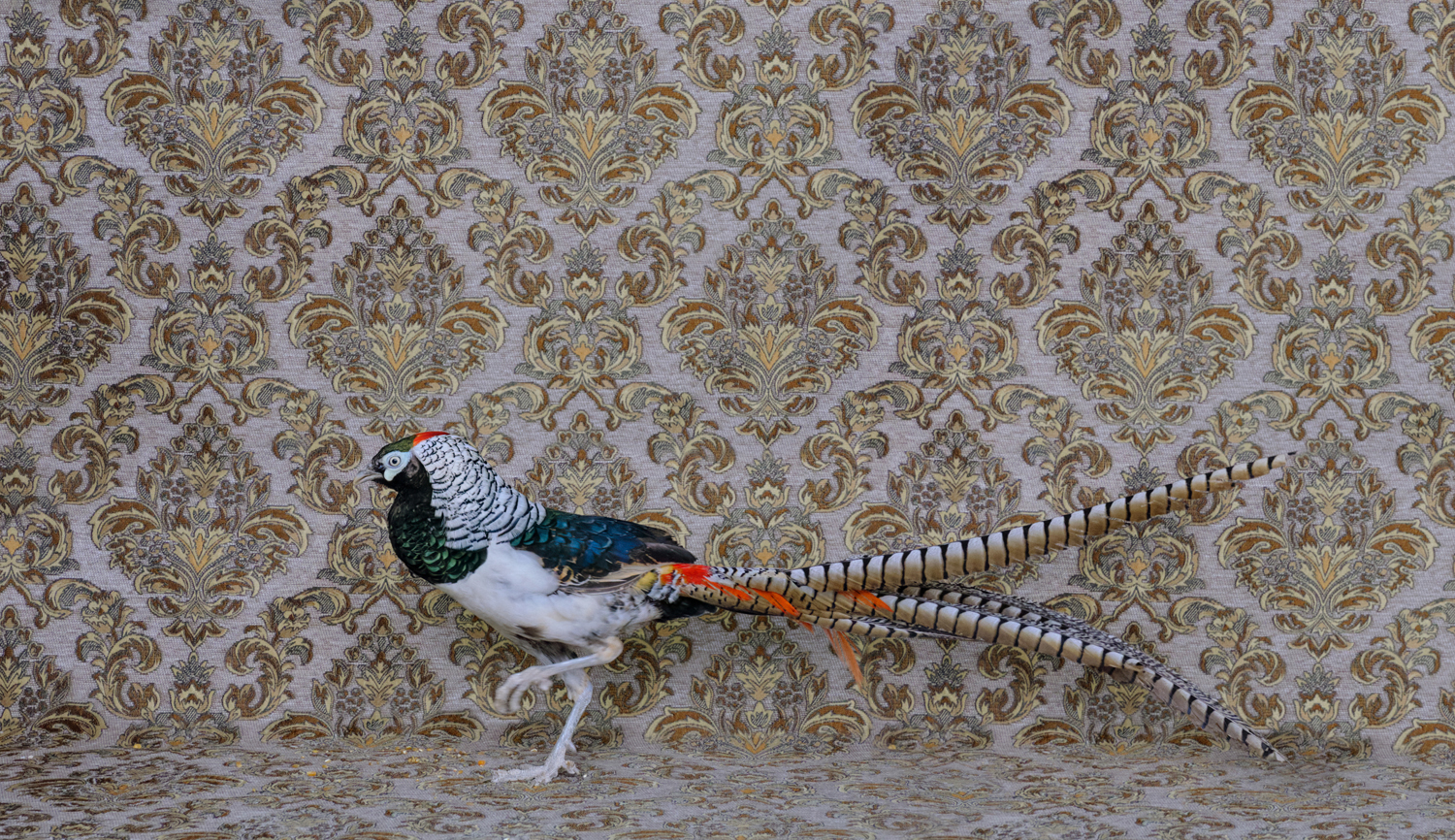
“Lady Amherst Pheasant, No. 9590, Damask Brocade Textile” (Photo: Courtesy of the photographer and Warwick Editions)
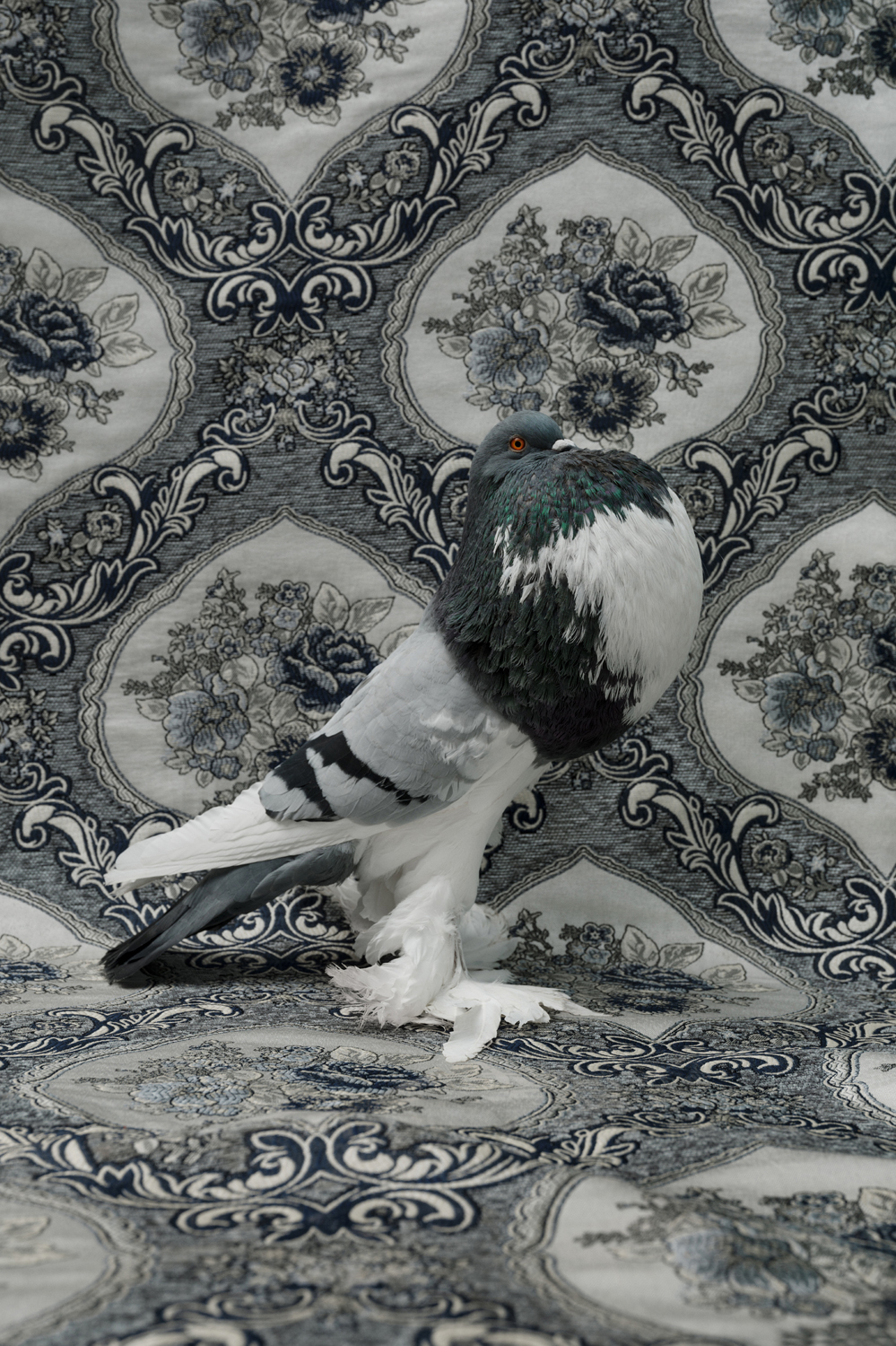
“English Pouter Pigeon, No. 9564, Victorian Floral Textile” (Photo: Courtesy of the photographer and Warwick Editions)
What differentiates photographing birds from other animals?
The comfort and safety of the animals are paramount in all my photo shoots. I keep all animals’ time in front of the camera to a minimum and am always guided by their willingness to participate.
Photographing birds presents distinct challenges, particularly when they are able to fly. Many of the birds I work with live in some form of captivity and cannot return to the wild, so they are generally accustomed to being around humans. That said, smaller birds—and common among prey animals—tend to be more wary, requiring a calm and patient approach to ensure they feel secure. The larger parrots and raptors are extraordinarily intelligent, and it is so interesting to observe them as they assess their surroundings, trying to understand what is unfolding. Much like interactions between people, establishing rapport and trust is essential.
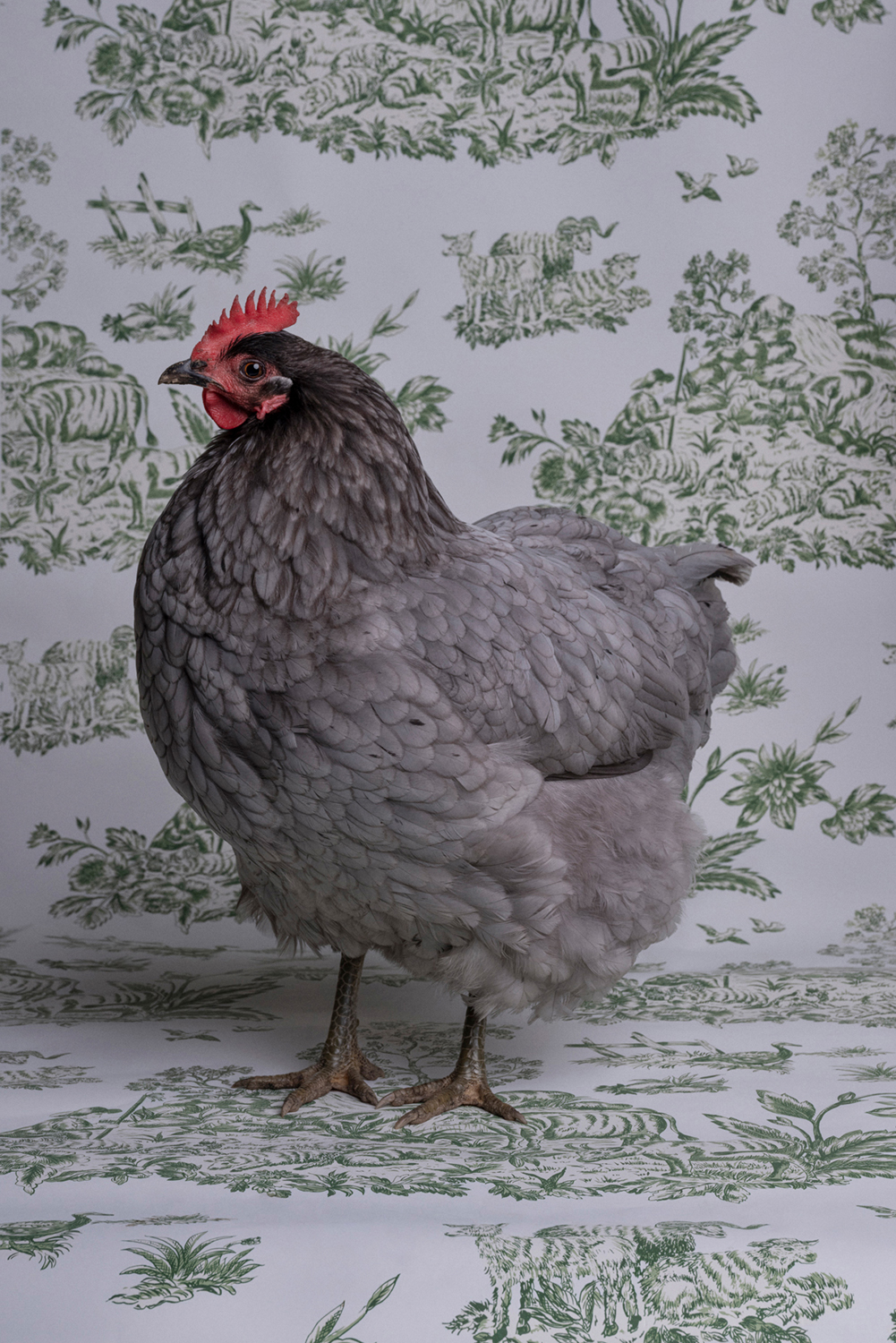
“Blue Americanus Chicken, No. 6178, Toile Paper” (Photo: Courtesy of the photographer and Warwick Editions)
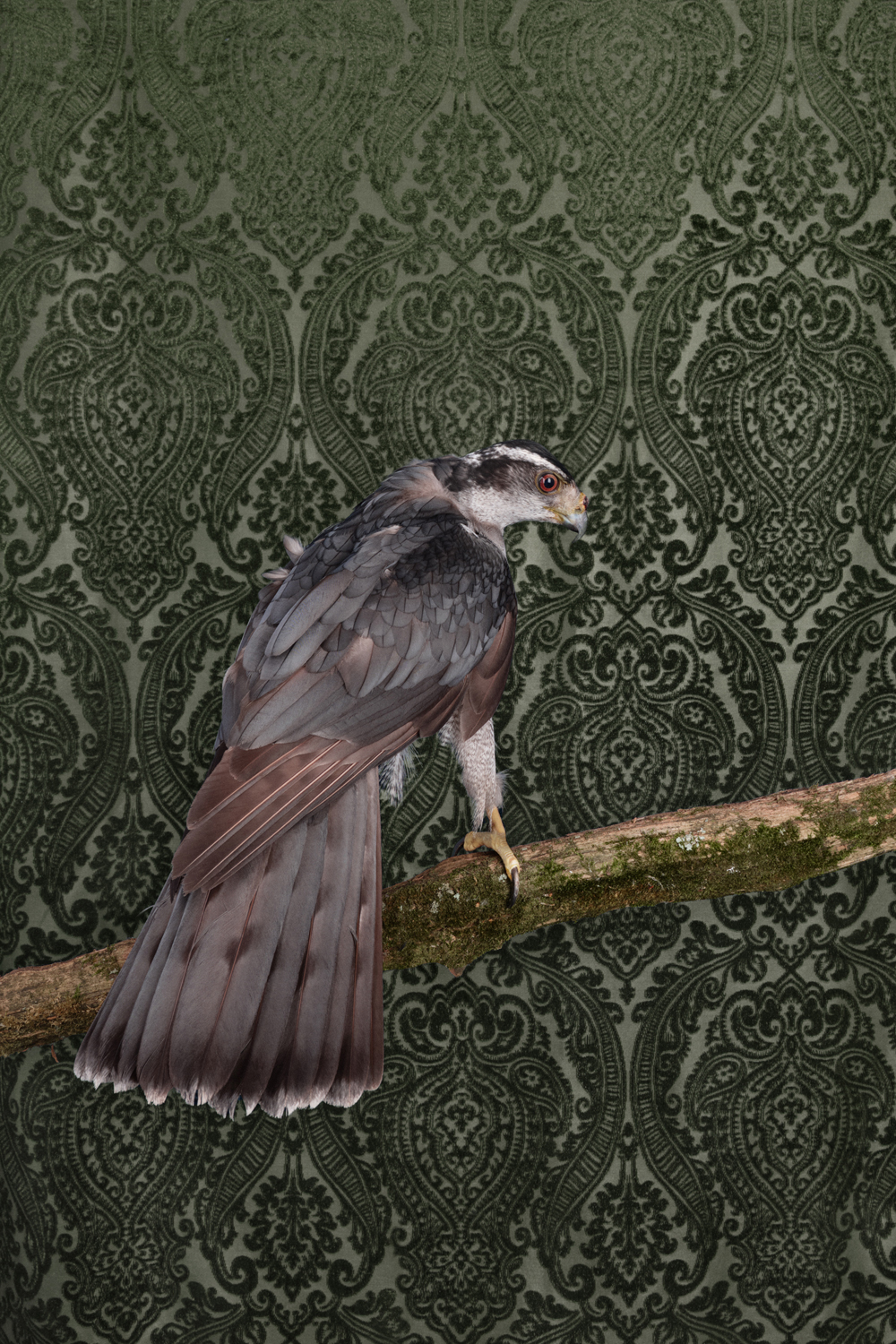
“American Goshawk, No. 7866, Cut Velvet Damask Motif Textile” (Photo: Courtesy of the photographer and Warwick Editions)
What was the process of creating the Birds of a Feather monograph?
The Birds of a Feather monograph was a collaborative endeavor that unfolded over more than two years and drew upon over a decade of photographic work. Together with editor Beth Taubner of Mercurylab, we revisited thousands of images, carefully narrowing the selection to 120 pictures. The thoughtful sequencing and pairing of birds generated unexpected interactions and interesting color conversations, establishing a dynamic rhythm as the narrative of the book unfolded.
Designer Caleb Cain Marcus of Luminosity Lab worked closely with us to balance historical references with a sense of contemporary relevance through typography and page layout. Great care was devoted to the physicality of the book object; choices such as the insets, edge painting, binding thread, paper selection and a velvet “flocked” damask limited-edition slipcase were intended to create a tactile object to be experienced in the hand rather than merely viewed on a screen.
Bec Manson of the Post Office revisited every digital file to ensure visual cohesion across images captured over many years and with different cameras, carefully harmonizing earlier works with those produced using my more recent large-format Fujifilm GFX.
I spent months crafting the accompanying essays and artist statements alongside my uncle and sister, refining the language to ensure it carried the voice and message I envisioned and researching quotes to weave throughout.
The project was enriched by contributions from Femke Speelman of the Metropolitan Museum of Art and Joel Sartore of the National Geographic Photo Ark, whose perspectives situate the work within a broader dialogue about art, ornamentation, and the power of imagery to shape awareness of the natural world.
Printed in Florence, Italy, by ABC Tipografia, the book’s production involved a meticulous color process overseen by Lorenzo Tugnoli.
After a long period of anticipation, with many stops and starts along the way, when the book finally “hatched,” it was a very rewarding and emotional moment.
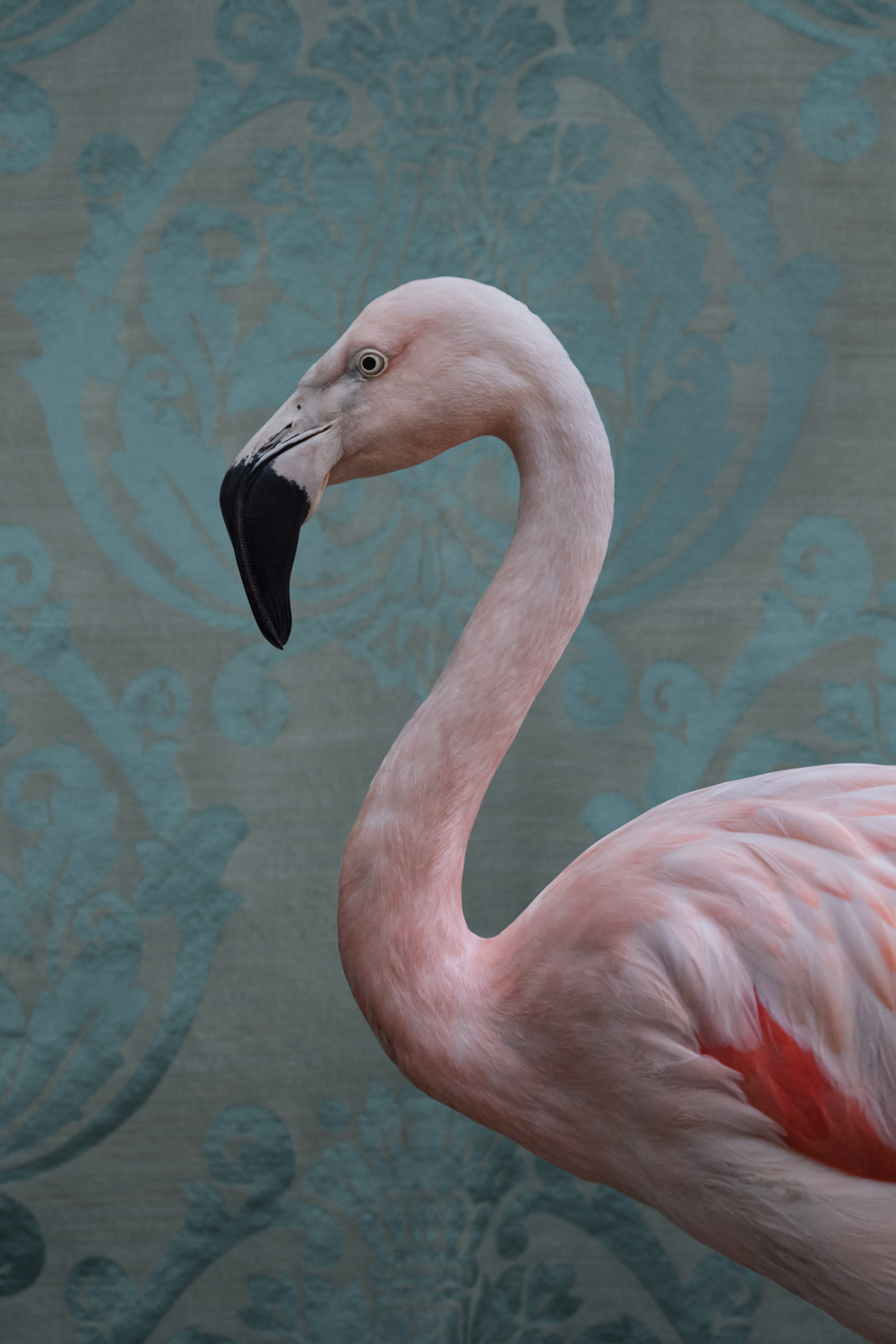
“Greater Flamingo, No. 0350, Damask Textile” (Photo: Courtesy of the photographer and Warwick Editions)
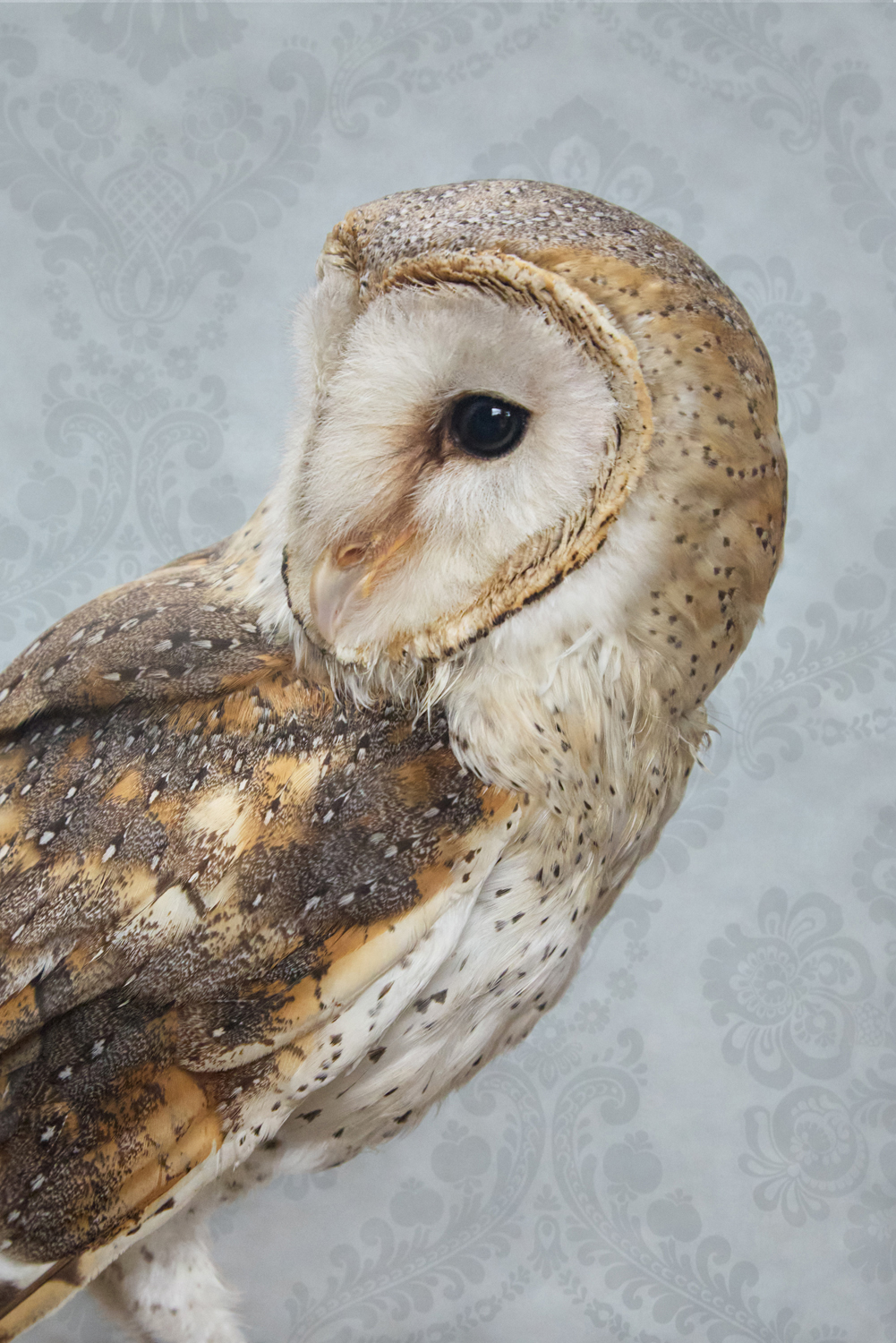
“Western Barn Owl, No. 7275, Damask Textile” (Photo: Courtesy of the photographer and Warwick Editions)
What do you hope people will take away from your work?
The 18th-century naturalist, George Edwards, wrote, “Art and nature, like two sisters, should always walk hand in hand, so they may reciprocally aid and assist each other.”
My greatest hope is that art inspires action in nature’s favor, that it sparks a thought or ignites a shift in perception. Nature has inspired so much art; if art can in turn advocate for nature, even in small ways, those individual moments of connection can accumulate into a broader cultural change in how we view animals and the environment.
Understanding the impact of our modern world on these creatures is the motivation that drives this work. All of these species are impacted by human society, whether inadequate care in captivity, habitat loss, light pollution, illegal trapping, chemical and plastic pollution, animal testing, or the brutality of factory farming.
I have seen the deep connection and care that we can have for non-human creatures and how our empathy can extend to the most unusual of animals. But modern society has made it incredibly difficult to avoid doing harm to creatures that we would never wish to hurt.
I hope my photographs can be part of the conversation about how we can preserve, protect, and restore our natural environment and its inhabitants. I believe that we can always do better, from our smallest daily decisions to our greatest aspirations of how to live mindfully in this entangled world.
If the work offers even a brief moment of connection—encouraging viewers to notice and care—then it has achieved what I had hoped. As we admire what nature has inspired in art, I hope we might also consider what art can do for nature in return.
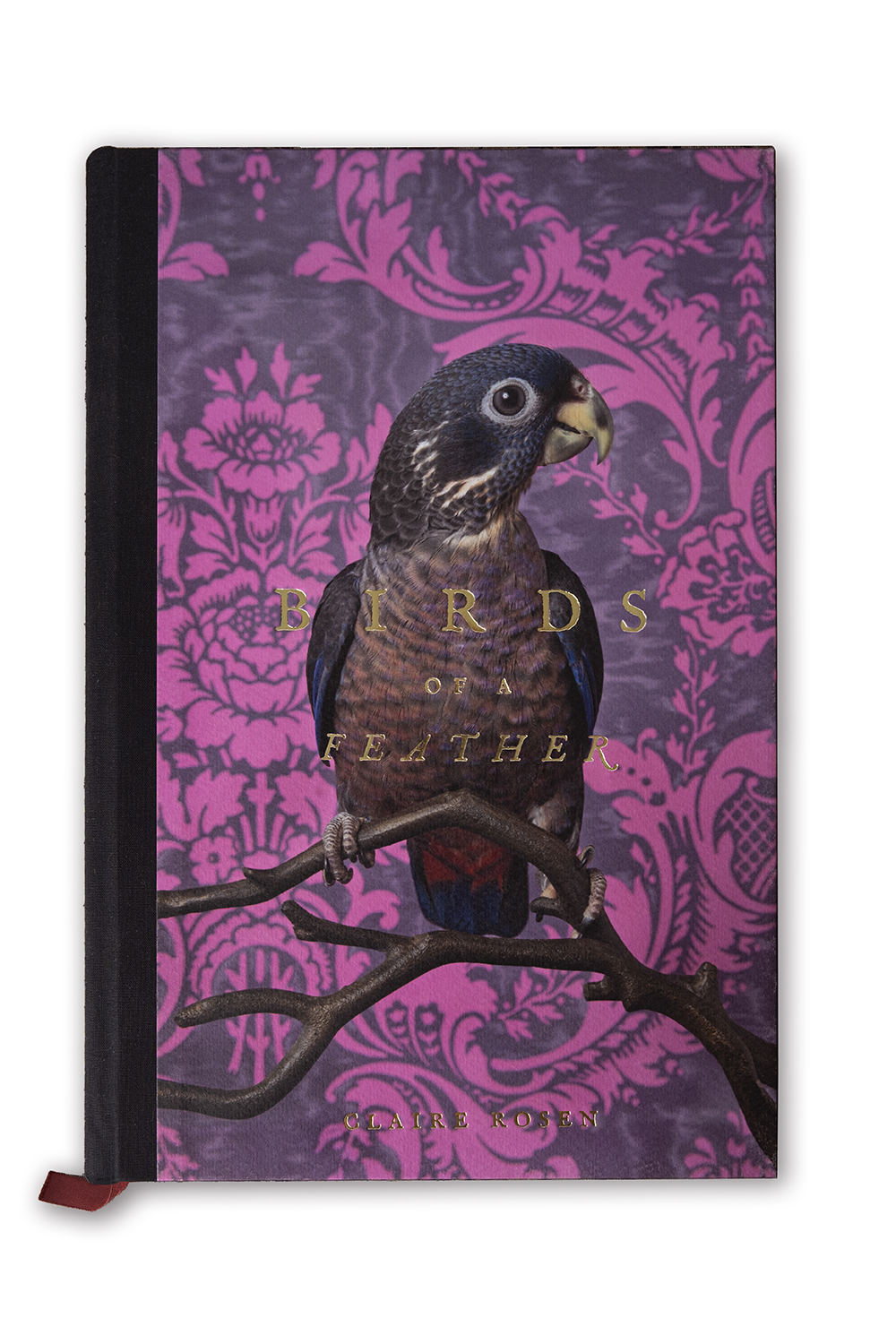
Book cover for “Claire Rosen: Birds of a Feather,” published by Warwick Editions
Claire Rosen: Website | Instagram
My Modern Met granted permission to feature photos by Claire Rosen and Warwick Editions.
Related Articles:
Striking Scene of a Toad Swimming Across a Pond Wins the 2026 British Wildlife Photography Awards
New Fundraising Initiative Raises Conservation Funds Through Wildlife Photography
WildLOVE: Beautiful Portraits of Animals Who Look Like Photogenic Fashion Models