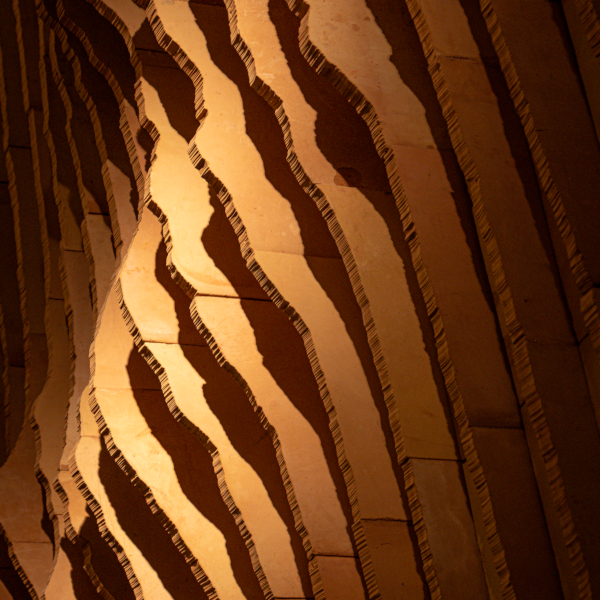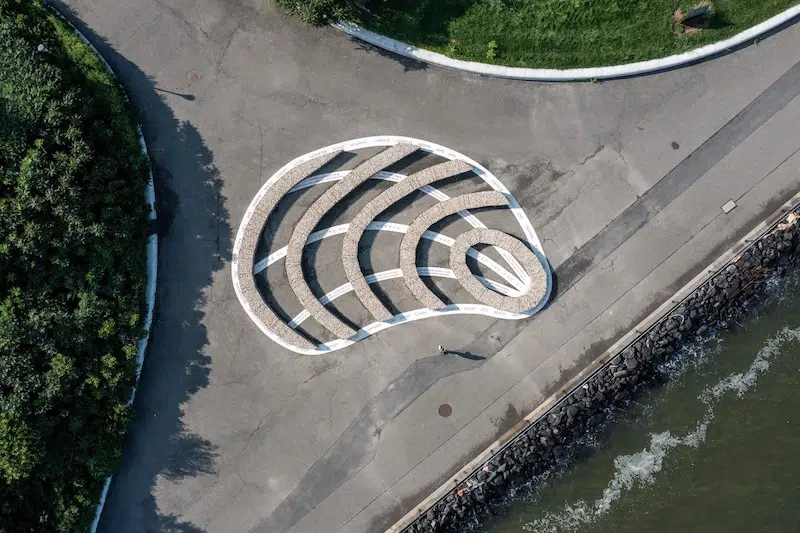
Alan Michelson, The Oyster, 2026. Commissioned by More Art. (Photo: Timothy Schenck for Governors Island Arts)
A monumental oyster now rises from the waterfront at Governors Island. Aptly titled The Oyster, the new public artwork by Mohawk artist Alan Michelson invites visitors to step inside an immersive sculpture. It reconnects New York Harbor’s Indigenous history with one of its largest environmental restoration efforts.
The location carries particular significance. Governors Island sits within an estuary that once supported vast oyster reefs and shell middens built by Lenape communities over generations. However, colonization, industrialization, and pollution reshaped both the island and its waters. As a result, Michelson’s sculpture serves as both an act of remembrance and a vision for ecological repair.
Constructed from recycled shells and shaped like a monumental oyster, The Oyster functions as both an earthwork and a gathering place. Visitors can walk through its curved interior, pause within the space, and read text wrapped around its surface. Together, these elements trace the oyster’s ecological, cultural, and historical significance to New York Harbor.
Michelson conceived the work as a contemporary Indigenous geoglyph inspired by the shell middens that once lined the harbor’s shores. These vast deposits preserved food remains and cultural artifacts while documenting the Lenape people’s deep relationship with the water. Over time, expanding colonial settlement erased many of these sites along with the communities that created them.
The installation also recalls the harbor’s dramatic environmental transformation. Before industrialization, New York Harbor supported what some historians estimate was nearly half of the world’s oyster population. Yet as shipping expanded and pollution intensified, water quality deteriorated. Reefs disappeared, and oysters vanished from the harbor by the early 20th century.
Today, organizations such as the Billion Oyster Project are working to reverse that decline. For more than a decade, the nonprofit has recycled discarded shells from restaurants to rebuild oyster reefs throughout the harbor. These living reefs filter water, stabilize shorelines, create habitat for marine life, and strengthen coastal resilience against rising seas.
Michelson built The Oyster using many of the same techniques employed by the Billion Oyster Project. Gabion structures filled with recycled shells mirror the reef-building process taking place beneath New York Harbor’s surface. Meanwhile, bands of purple and white text encircle the installation. They weave together literature, ecology, and history with contributions from students at the New York Harbor School and members of the Governors Island community. The colors reference wampum, the shell beads that Lenape and other Eastern Woodlands nations traditionally used in diplomacy, ceremony, and cultural exchange.
The sculpture’s environmental impact will continue after the exhibition closes. In November, portions of The Oyster will return to the harbor and become part of those growing reef systems. In doing so, the artwork will continue supporting marine life long after visitors have left.
More Art commissioned The Oyster in partnership with the Billion Oyster Project and Governors Island Arts as part of Reframing 1776: Land, Water, and the Work of Repair. Rather than marking the nation’s 250th anniversary with a conventional patriotic narrative, the initiative examines American history through Indigenous perspectives and environmental stewardship.
Like much of Michelson’s work, The Oyster reveals how landscapes preserve layered histories. Rather than separating ecological decline from colonial expansion, the installation presents them as intertwined narratives. It also encourages visitors to consider how restoration can address both cultural memory and environmental recovery.
Standing beside the harbor, The Oyster transforms a familiar shoreline into a place of reflection. Ultimately, Michelson’s installation connects Indigenous history, ecological restoration, and contemporary public art. In doing so, it reminds visitors that repairing an ecosystem also means recovering the stories embedded within it.
Alan Michelson: The Oyster is now on view through November 30 along the Western Promenade at Governors Island in New York City.
Alan Michelson’s The Oyster transforms Governors Island into an immersive monument to New York Harbor’s ecological and cultural history.
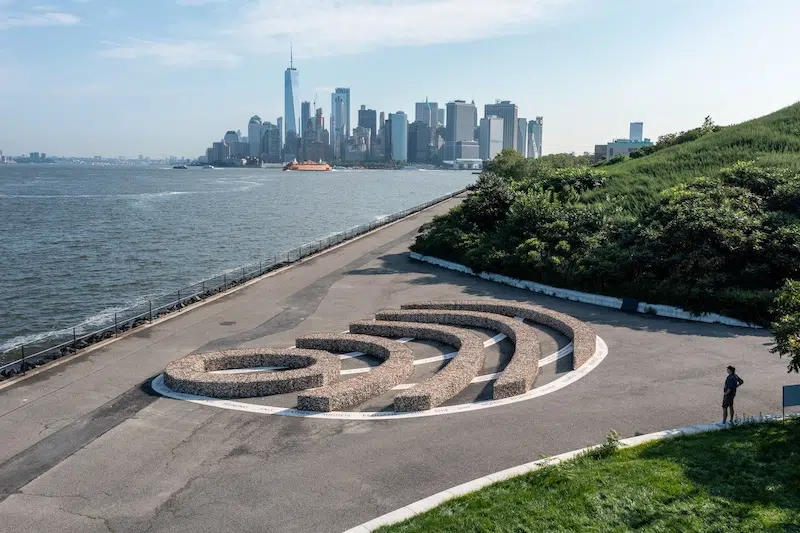
Alan Michelson, The Oyster, 2026. Commissioned by More Art. (Photo: Timothy Schenck for Governors Island Arts)
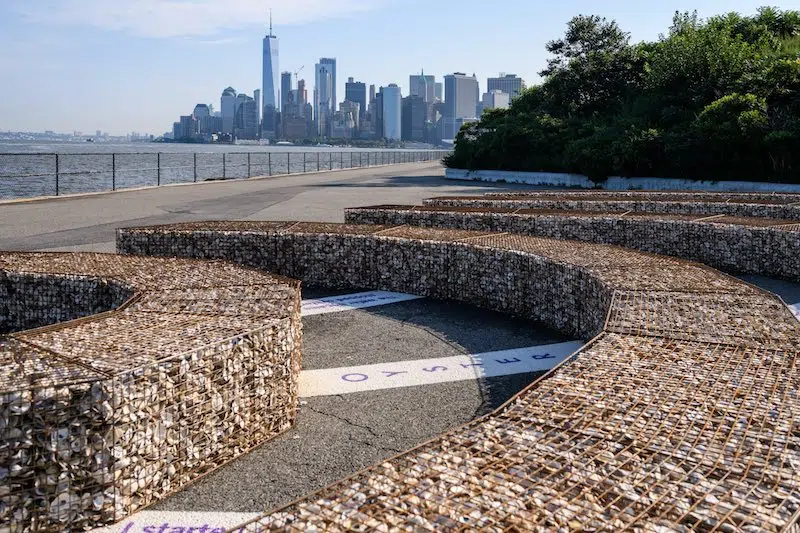
Alan Michelson, The Oyster, 2026. Commissioned by More Art. (Photo: Timothy Schenck for Governors Island Arts)
Built with recycled shells using techniques developed by the Billion Oyster Project, the sculpture highlights the harbor’s lost oyster reefs while supporting their ongoing restoration.
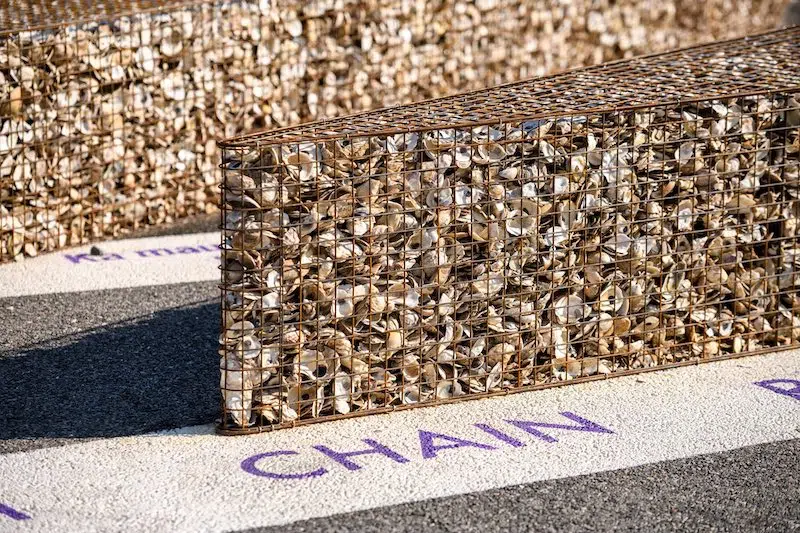
Alan Michelson, The Oyster, 2026. Commissioned by More Art. (Photo: Timothy Schenck for Governors Island Arts)
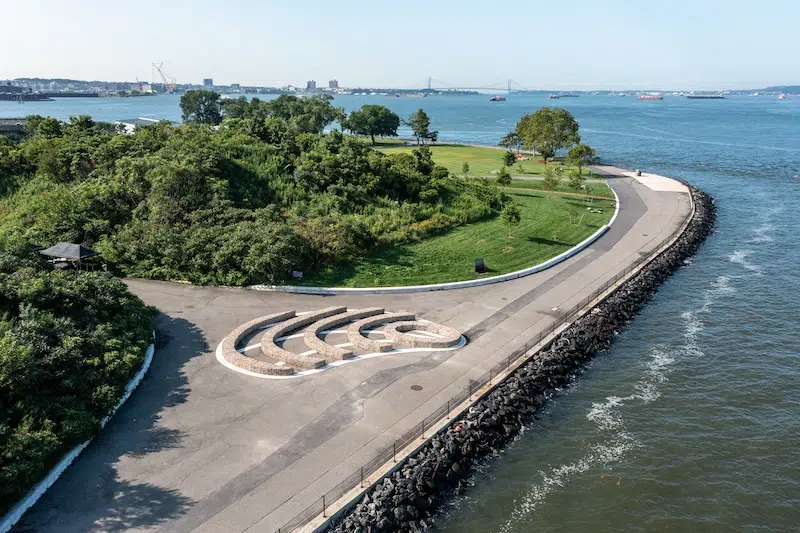
Alan Michelson, The Oyster, 2026. Commissioned by More Art. (Photo: Timothy Schenck for Governors Island Arts)
After the exhibition closes on November 30, portions of the installation will return to the water and become part of living reefs beneath the harbor’s surface.
View this post on Instagram
View this post on Instagram
Exhibition Information:
Alan Michelson
The Oyster
July 30–November 30, 2026
Western Promenade, Governors Island
New York, NY 10004
Alan Michelson: Website | Instagram
My Modern Met granted permission to feature photos by Alan Michelson.
Related Articles:
Artist Creates Mossy Arms Wrapping a Forest in Tree Hugs
Floating Installation Turns Climate Data Into Immersive Light Experience
Anish Kapoor and Greenpeace Partner on Powerful Environmental Installation in the North Sea
Finnish Artist Manipulates Trees To Create Incredible Land Art