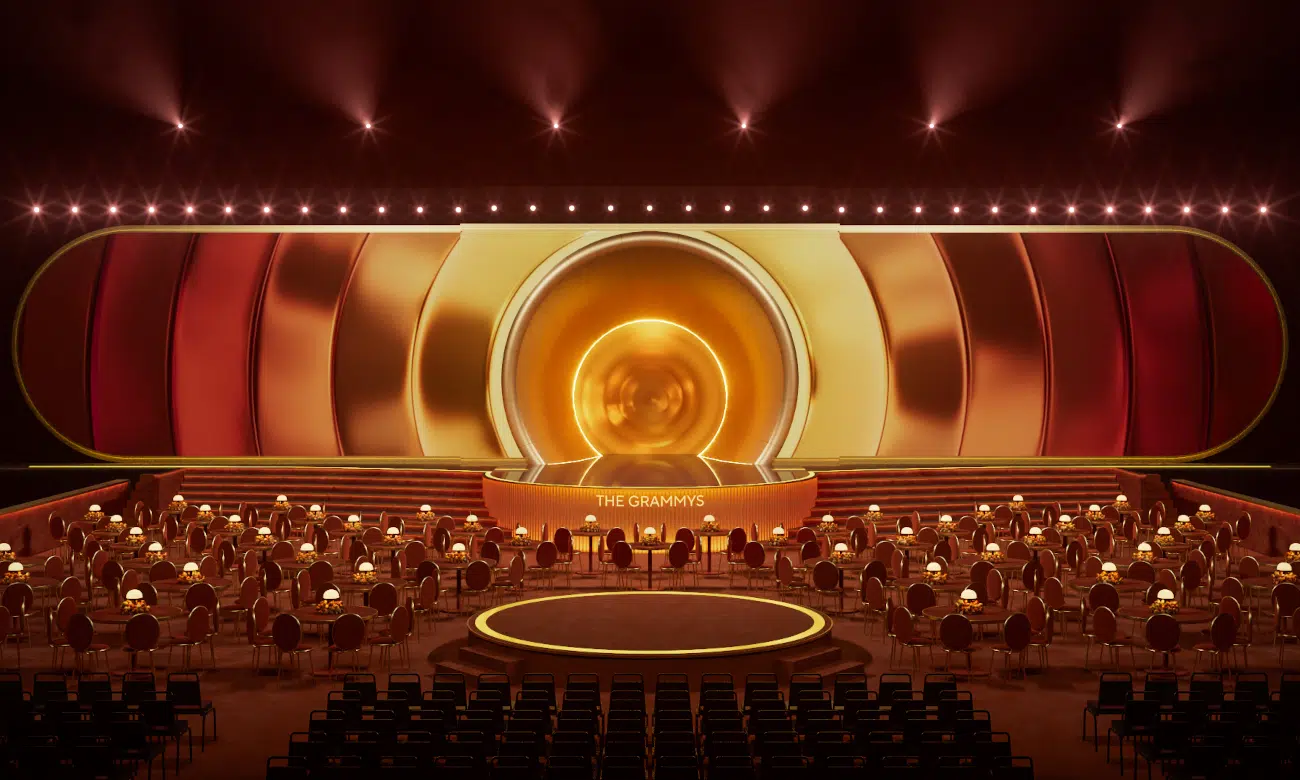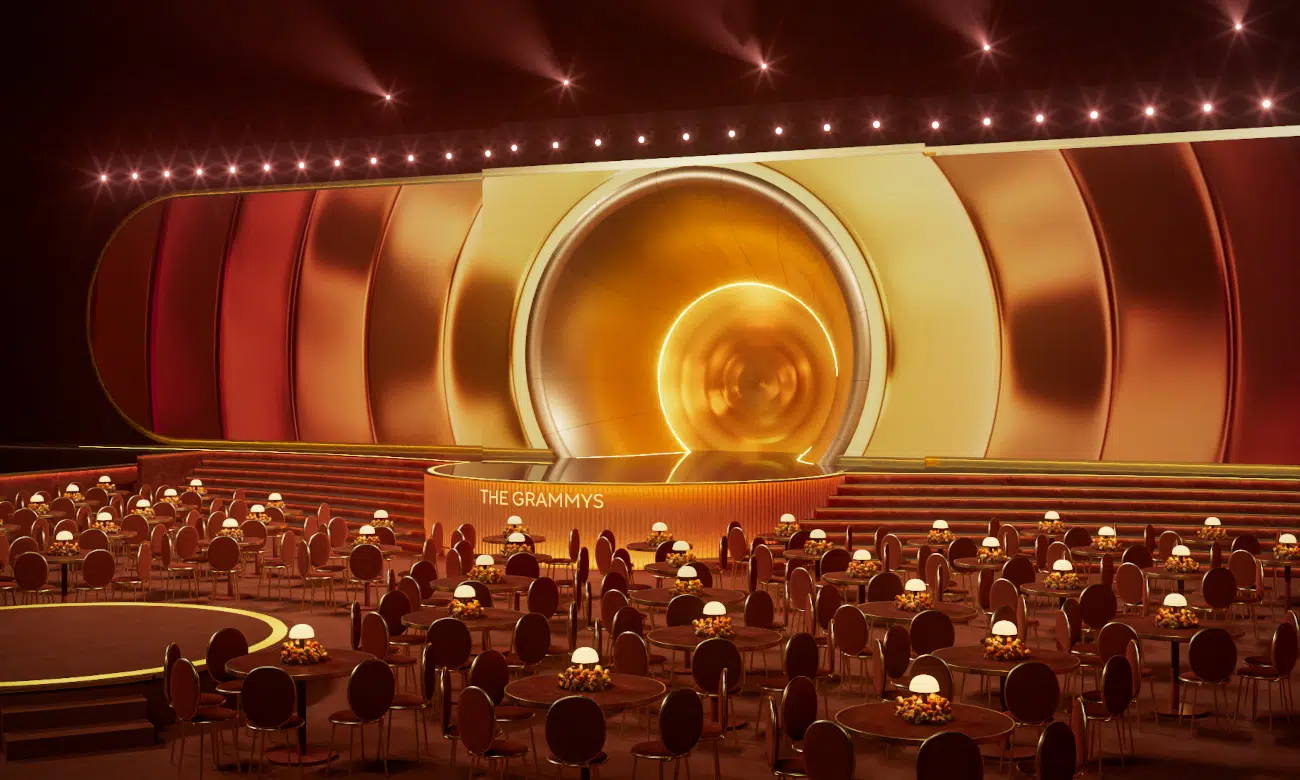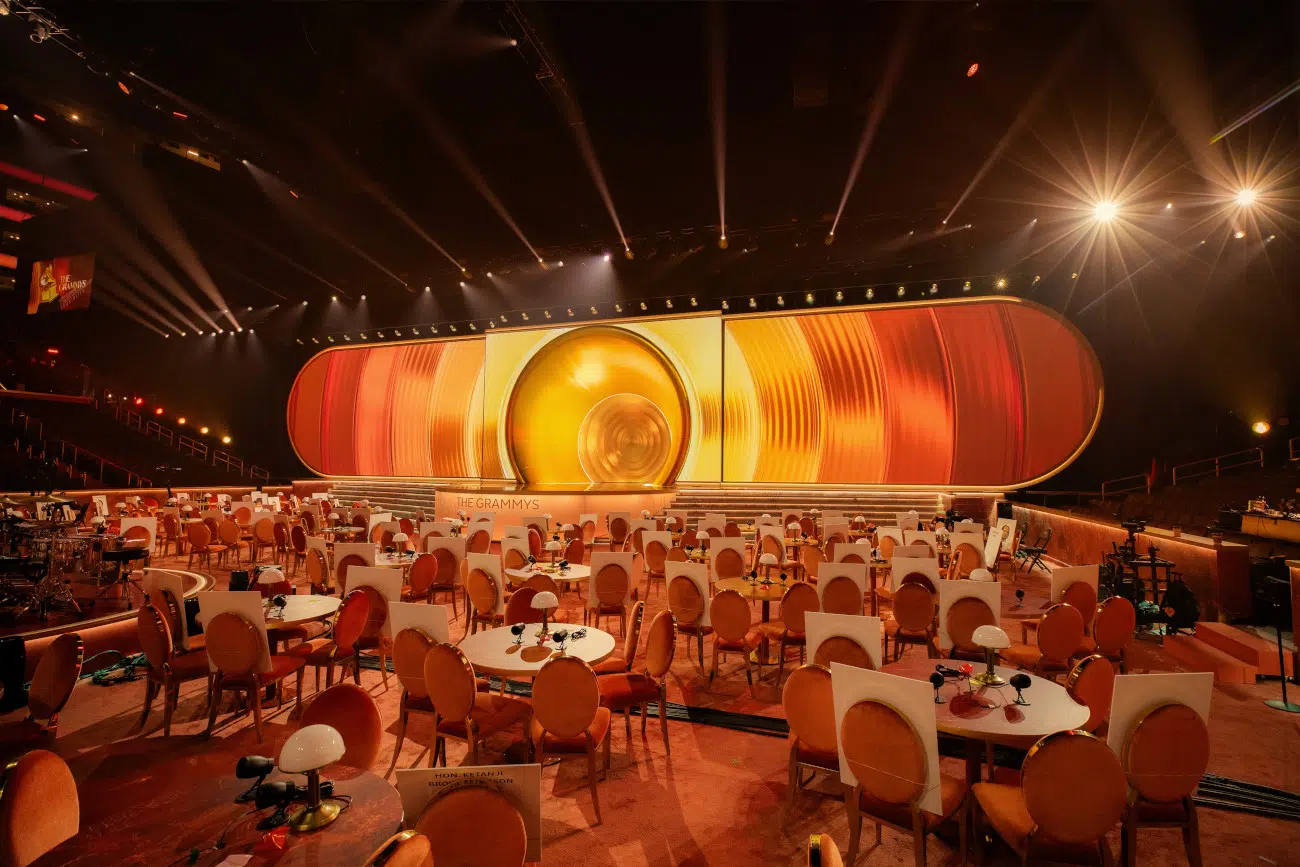
This year, the Grammy Awards ceremony gave audiences a lot to talk about, from Bad Bunny’s powerful winning speech to unconventional musical acts like Justin Bieber’s stripped-down performance. Regardless of the specific moment during the event, they all shared a common backdrop: a trophy-inspired set that mixed glam and warmth, embedding the graphic identity of the Grammys into each moment.
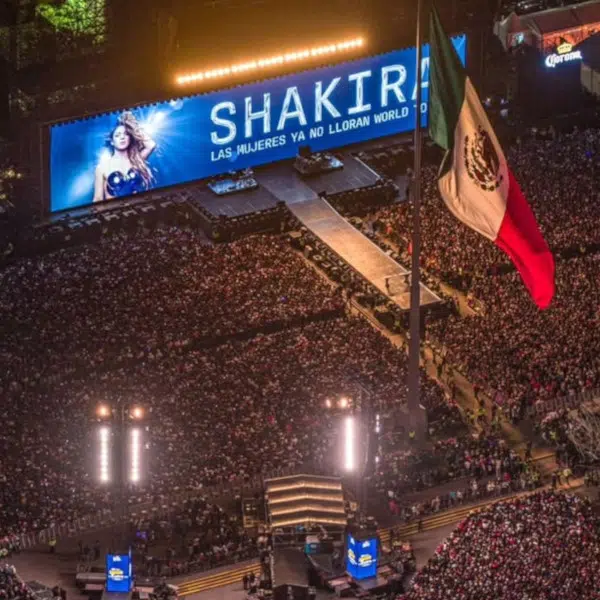
The stage design for the 2026 Grammy Awards, which took place February 1 at Crypto.com Arena in Los Angeles, was conceived by Yellow Studio, a New York-based creative hub. This marked the company’s fifth production design for the Grammys—a testament to their unique vision, which has led them to design set elements for some of the most successful live shows of our time, including Shakira’s Las Mujeres Ya No Lloran Tour and Bad Bunny’s Super Bowl halftime show.
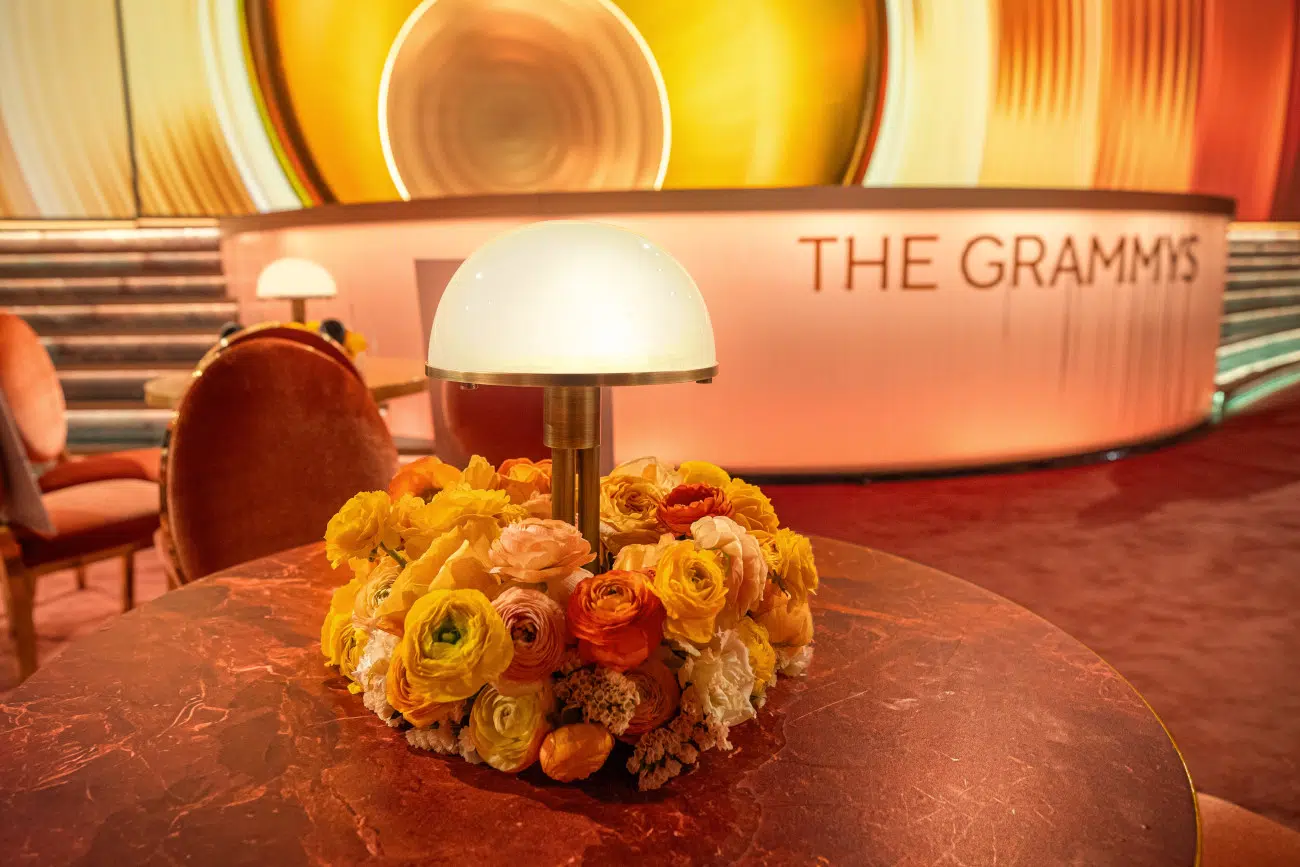
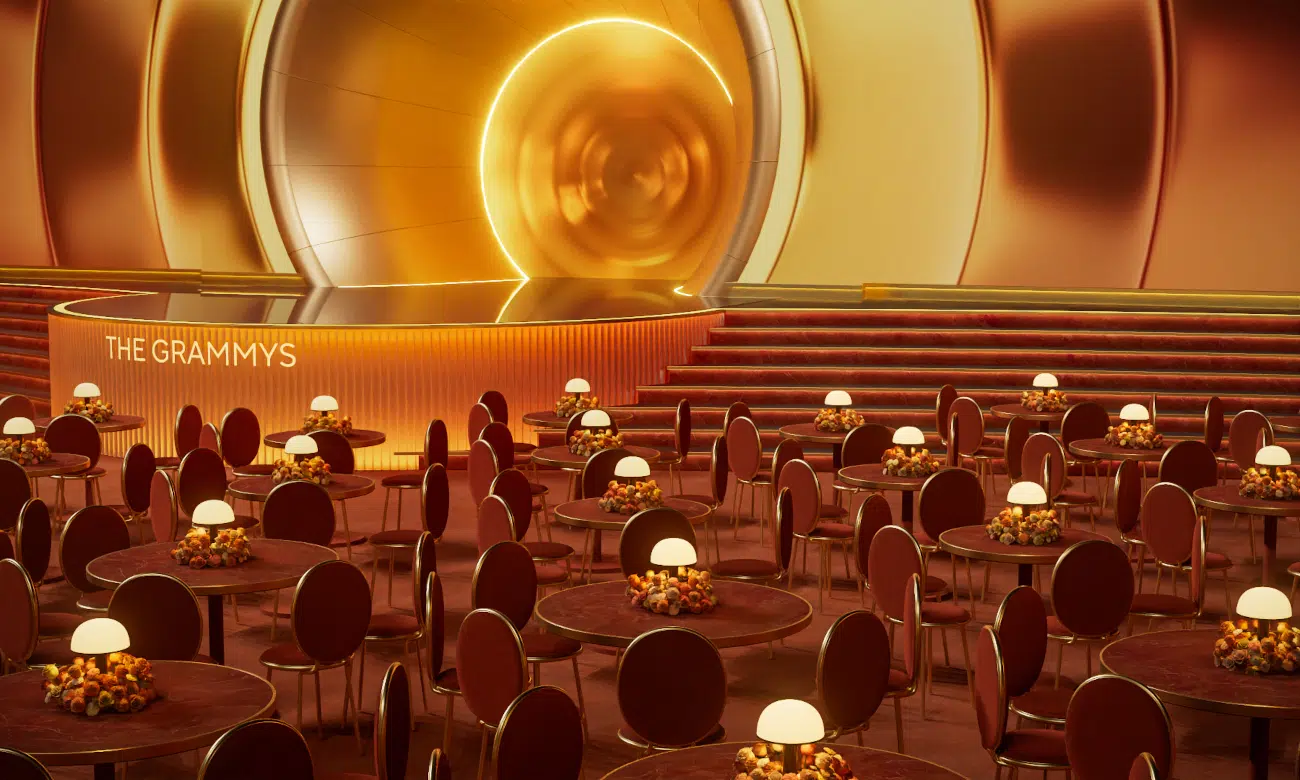
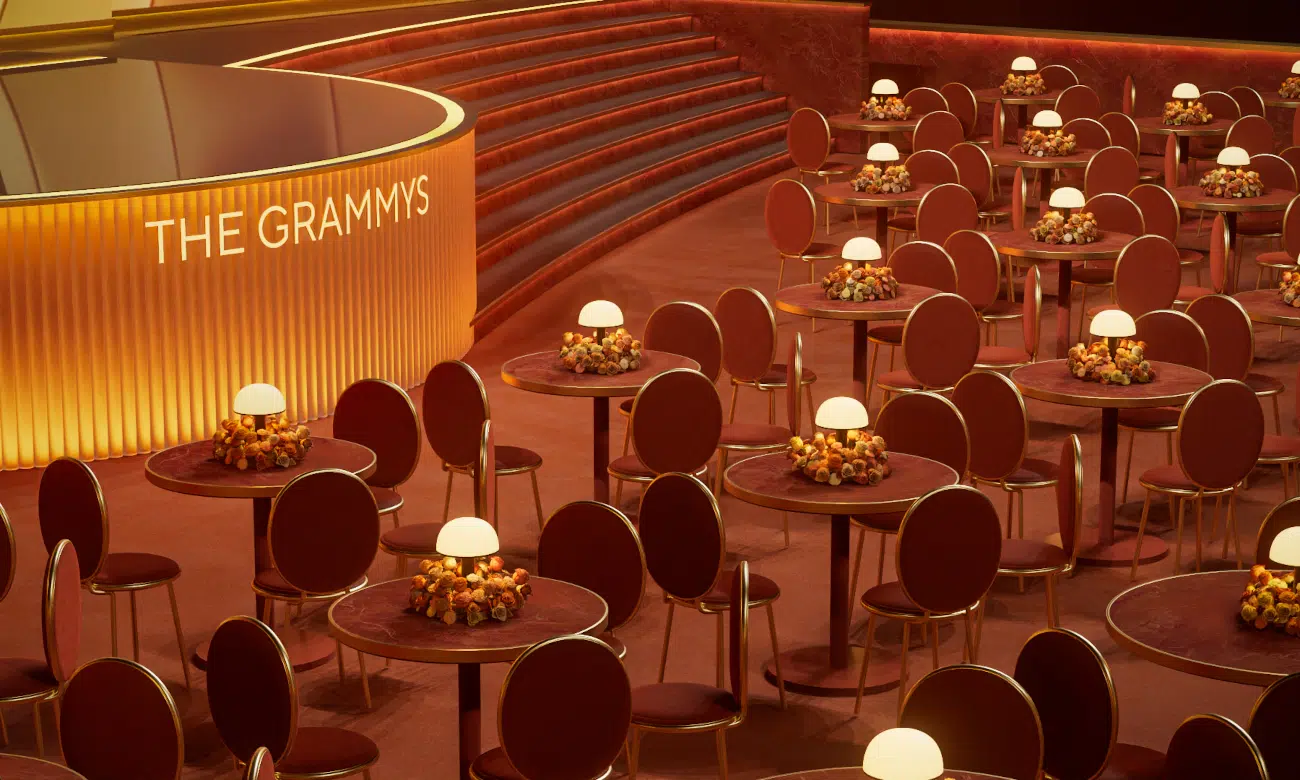
The stage and seating area for the nominated artists shared a glittery gramophone motif. This design choice extended to the stage where the center mimicked the sound horn of the iconic musical device, serving as a tunnel-like runway for presenters to walk out of. The gramophone theme was evident throughout the space in the tiniest details, down to the lamps and chairs, giving an all-encompassing Art Deco feel to the ceremony.
“The design was rooted in the gramophone as both an icon and a symbol—not just of the Grammys, but of sound itself,” Yellow Studio director Julio Himede tells My Modern Met. “We were interested in translating music into a physical, architectural presence, using form, scale, and light to echo rhythm and resonance. Rather than creating a literal backdrop, we wanted the stage to feel like an environment that reacts to performance, shifting with the energy of the artists and the music.”
Himede describes the creative process behind this design as collaborative and iterative, a product of their ever-evolving collaboration with the organizers. “We worked closely with the Academy, the show’s producers, and technical teams from the earliest conversations through rehearsals,” he shares. “Alongside that collaboration, we spent time researching broader cultural and design trends—looking at shifts in color, materiality, and spatial design across music, fashion, and architecture. That research helped inform the overall direction, while the ongoing dialogue with the production teams ensured the stage remained flexible and responsive to a wide range of performances. Balancing contemporary influences with the practical realities of live broadcast guided the process at every step.”
While it can always be challenging to appeal to both attendees and those viewing from home, Himeda hopes the design elevated the emotional experience of the performances. “[We hope] that it felt immersive, intentional, and connected to the music rather than simply framing it,” they say. “For the audience in the room and viewers at home, the goal was to create moments that felt iconic but also intimate, allowing the artists and their performances to remain at the center while the design quietly amplified their impact.”
To stay up to date with these designers and their next big collaboration, make sure to follow Yellow Studio on Instagram.
The alluring stage design for the 2026 Grammy Awards, which took place at Crypto.com Arena in Los Angeles, was conceived by Yellow Studio.