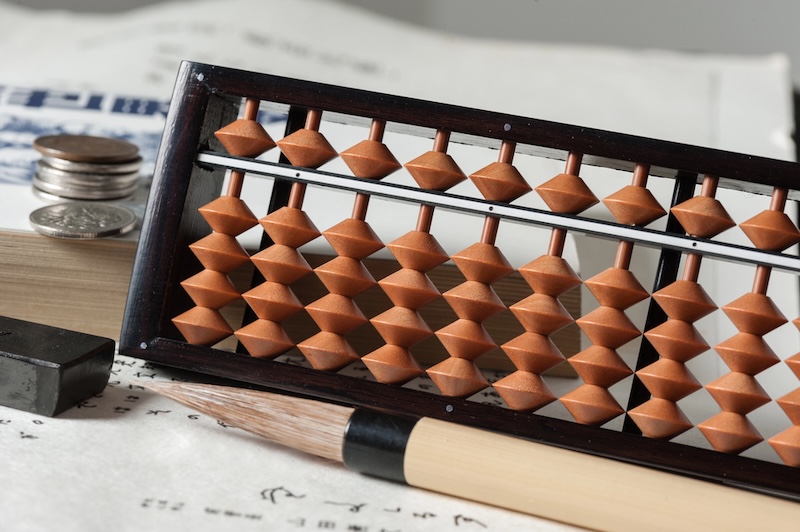
In an age dominated by screens, algorithms, and instant answers, it may seem counterintuitive that one of the most effective tools for strengthening memory and focus dates back thousands of years. But it does. The abacus, an ancient calculating device made of a wooden frame and sliding beads, still plays a meaningful role in education today.
In Japan, the abacus is not taught only as a math aid; educators view it as a form of mental training. Also known as the soroban, the Japanese abacus transforms numbers into physical movement, encouraging students to engage both mind and body while calculating.
Introduced to Japan centuries ago and refined over time, this tool became a staple of education in the early 20th century. It consists of vertical rods divided by a horizontal beam. Each rod represents a place value such as ones, tens, or hundreds. One bead sits above the beam and represents five. Four beads sit below and represent single units. Users move the beads toward the beam to register numbers. With this system, they can perform addition, subtraction, multiplication, and division.
This design favors clarity and speed, as well as the tactile experience. By physically manipulating numbers, learners develop a deeper relationship with math that goes beyond memorization. Researchers and teachers alike point to the abacus as a tool that strengthens concentration and mental discipline, as training requires constant attention. Each calculation demands visual tracking, hand coordination, and mental organization. Children who are trained in abacus methods often demonstrate improved concentration and faster information processing. Because mental abacus calculation relies on visualization, it activates both sides of the brain. This balanced engagement supports skills that extend beyond math, including problem-solving and creativity.
Today, the abacus is still taught in schools and private learning centers across Japan, where it is used primarily as a cognitive training method for focus rather than a practical calculator. But thousands of years after its invention, the simple tool continues to sharpen minds. It proves that progress does not always require new technology. Sometimes, it requires revisiting what already works.
The Japanese abacus is more than an ancient calculating device; it is a tool for strengthening memory, focus, and mental math through hands-on learning.
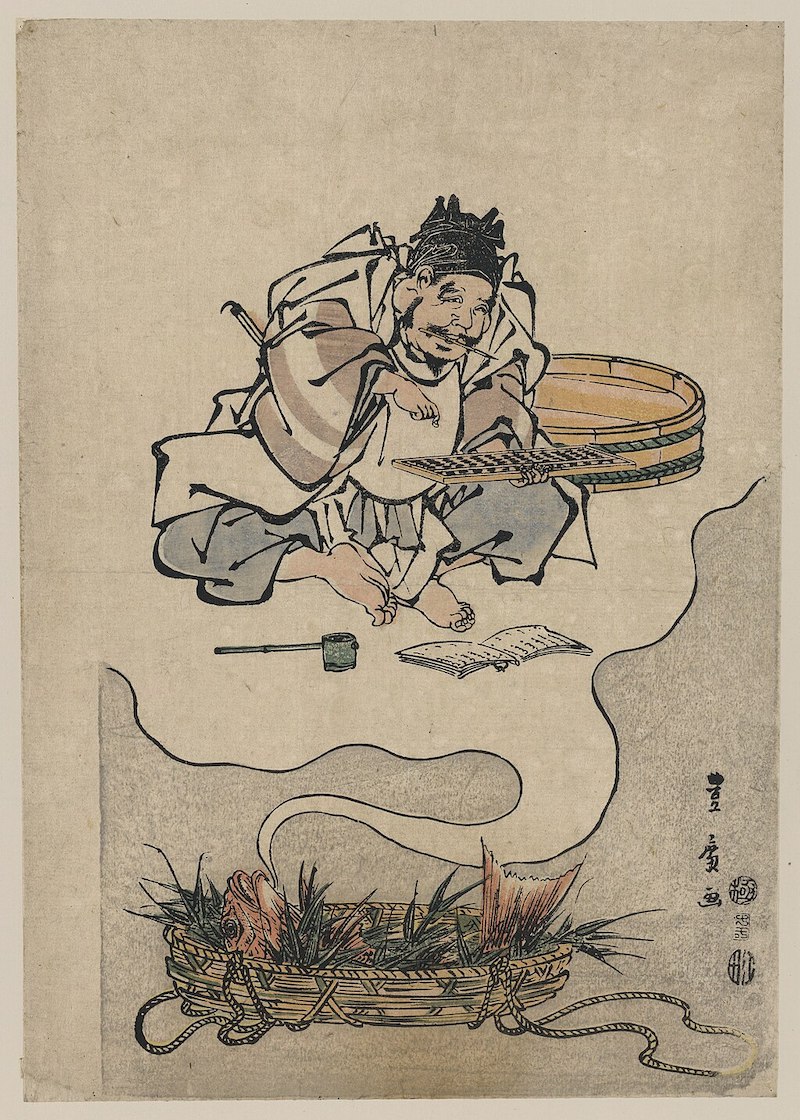
By sliding beads along rods, learners perform calculations while engaging visualization and concentration skills, activating both sides of the brain to support problem-solving and creativity.
Source: The Ancient Tool Used in Japan to Strengthen Memory & Focus: The Abacus
Related Articles:
Ancient Math Is Hidden in 8,000-Year-Old Floral Pottery Patterns
Who Was Pierre de Fermat? The Mathematician Who Left Behind a Mysterious “Last Theorem”
Discover the Popular Textbook That Helped Benjamin Franklin Pass Math
Man Wins the Lottery 14 Times Using a Simple System of Basic Math