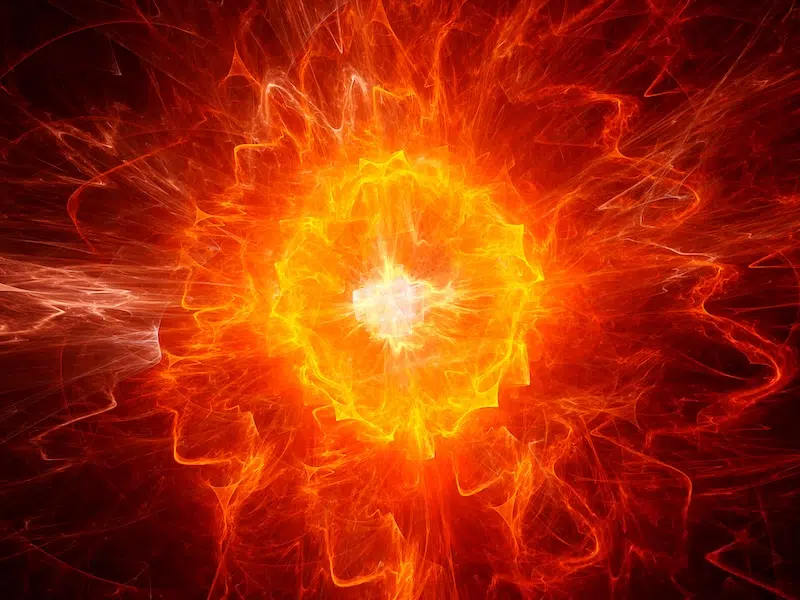
Scientists consider fusion energy the “holy grail” of clean power sources. It can provide limitless electricity without the carbon emissions or radioactive waste associated with traditional nuclear reactors. Now, scientists in South Korea have taken a step towards making commercial fusion power a reality following a breakthrough with their “artificial star.” The hope is that one day, something like this could power your home.
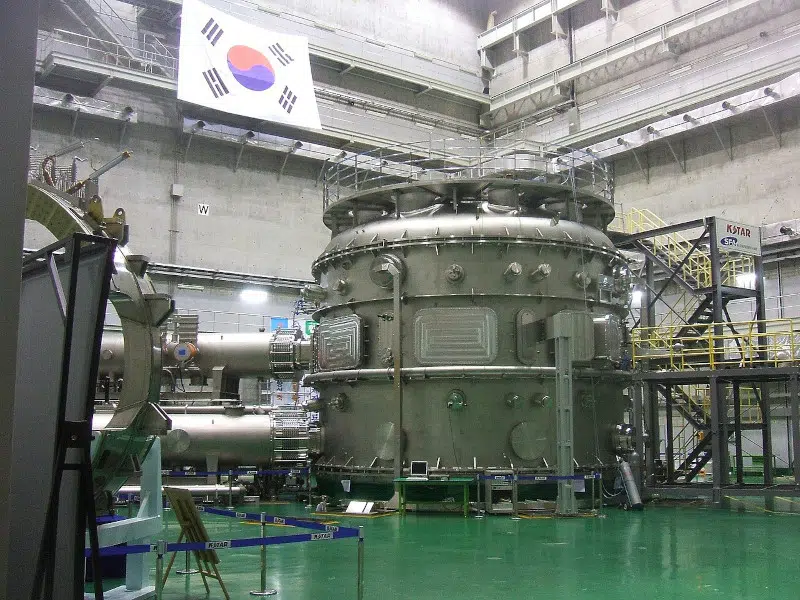
The Korea Institute of Fusion Energy (KFE) announced that its KSTAR device, which stands for Korea Superconducting Tokamak Advanced Research, sustained stable plasma at fusion temperatures for 102 seconds. This means the KSTAR reached and held 100 million degrees Celsius, which is about seven times the temperature of the sun’s core; a formidable feat that took decades of work.
KSTAR is the first tokamak, which is a doughnut-shaped machine used for harnessing energy, to sustain that temperature in a fully tungsten-walled configuration. The team behind KSTAR switched from the carbon plasma-facing tiles used in previous endeavors, which allowed them to remove a key tritium retention concern.
These materials provided additional stability to the reaction and helped KSTAR break its own 2024 record of sustaining plasma—a superheated gas—at fusion temperatures for 48 seconds inside the tokamak. This is key to creating a fusion reaction the way it happens in the sun, as a great amount of heat is needed to substitute the gravitational pressure found in our star.
While the dream of fusion powering cities around the world with clean energy is still decades away, every breakthrough provides scientists with insights that will be used in fusion reactors down the line. After all, the challenge is not just to generate heat, but to sustain it for prolonged periods. While the reactor does not generate electricity yet, the next goal for KFE is for the device to sustain fusion temperatures for 300 seconds.
The Korea Institute of Fusion Energy announced that its KSTAR device sustained stable plasma at fusion temperatures for 102 seconds.
Sources: KSTAR sustains 100-million-degree plasma for 102 seconds in tungsten divertor campaign; South Korea’s “Artificial Sun” Ran For 102 Seconds, Just Changed the Global Energy Game
Related Articles:
Swirling Light Cone Photography Visualizes Einstein’s Theory of Relativity in the Desert
What Is the Rarest Eye Color? Discover Why Only 2% of People Are Born With Them
Scientists Visualize the Complex, Dynamic World Inside a Human Cell
Scientists Find That Ordinary Wi-Fi Routers Can Identify People With Near-Perfect Accuracy