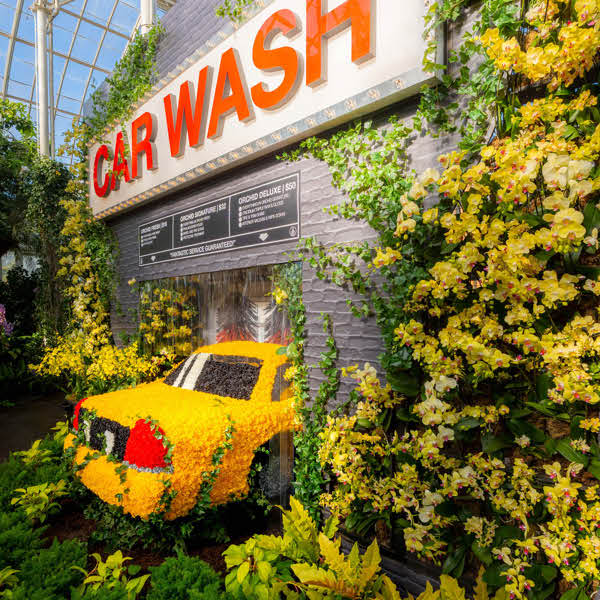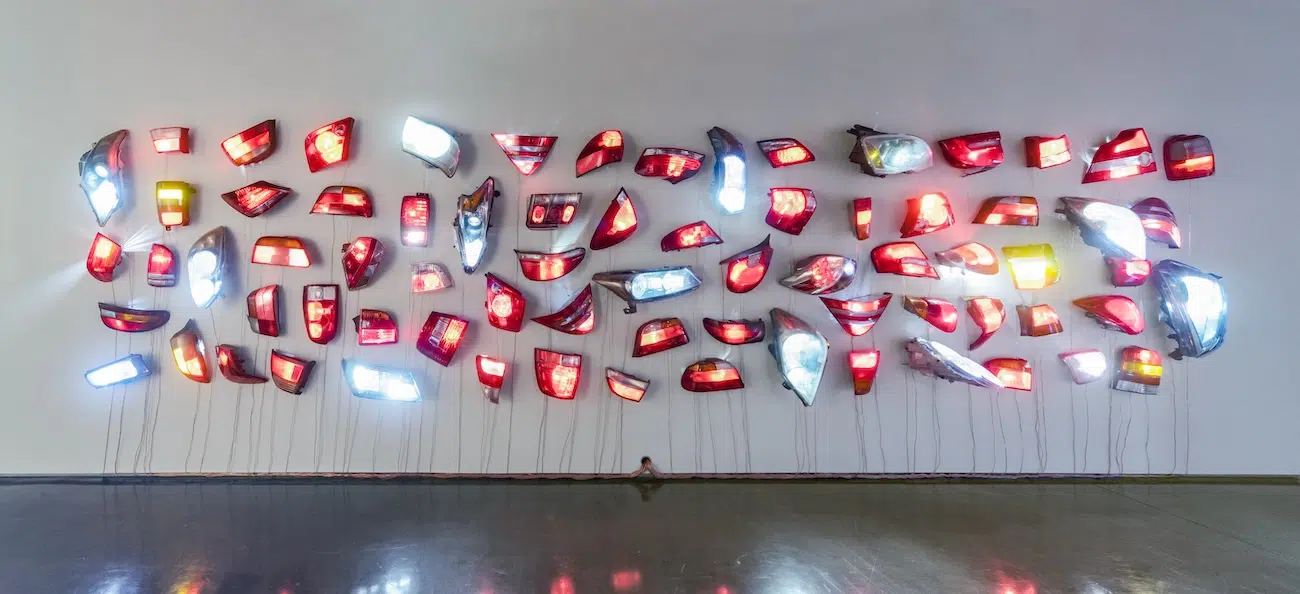
Madeline Hollander, “Heads/Tails: Walker & Broadway 4,” 2020, 73 Automobile headlights and taillights customized with LEDs and real-time software program, infinite, display: 120 x 240 in., Collection of the Carl & Marilynn Thoma Foundation
It’s become nearly impossible to live a life where we’re not inundated with technology. Maybe it’s by choice, or maybe it’s thrust upon us. Either way, just as we can’t evade the passage of time, we can’t escape a world where things are increasingly defined by how efficient and automated they can become. While some creatives are choosing to reject the use of things like generative AI in their work, others are running toward new technology. Like a painter, they see it as a tool to bring their visual language to life. A group exhibition at the Blanton Museum of Art in Austin, Texas, explores how artists use technology to create things that go beyond its “corporate use” to develop new ways of seeing.
The show is titled Run the Code: Data-Driven Art Decoded by Thoma Foundation X Blanton Museum of Art. Using immersive installation, real-time data visualization, and responsive environments, the artists included in the show seek to reflect the human experience in all its uncertainty and splendor. It was organized in collaboration with, and features work from, the Carl and Marilynn Thoma Foundation in Dallas, which has one of the most comprehensive private collections of digital and media art.
Refik Anadol, Daniel Canogar, Rafael Lozano-Hemmer, teamLab, Siebren Versteeg, Leo Villareal, and Marina Zurkow are the artists in the show. Although their visual languages vary, the collection of creatives has one thing in common. “Today’s artists are writing code the way others have handled paint or clay,” says Hannah Klemm, curator of modern and contemporary art at the Blanton. “Their works show that technology can be both analytical and poetic—making visible the patterns, biases, and chaos embedded in the data that shapes our world.”
Run the Code is organized into five thematic sections: technological archaeology, interactivity, data-driven systems, remixing art history, and landscape reimagined. The center of the exhibition is teamLab’s The World of Irreversible Change (2022). Unfolding across a freestanding wall in a dark gallery, animated figures move through a city that is constantly changing based on the time and weather of the real Austin. While this cycle seems largely predictable, a visitor’s arrival activates its surface and alters the work. A once-calm landscape becomes mired in conflict and ultimately gives way to destruction. The piece was developed over five years and is a poignant look at ecological and social precarity—even in the digital realm.
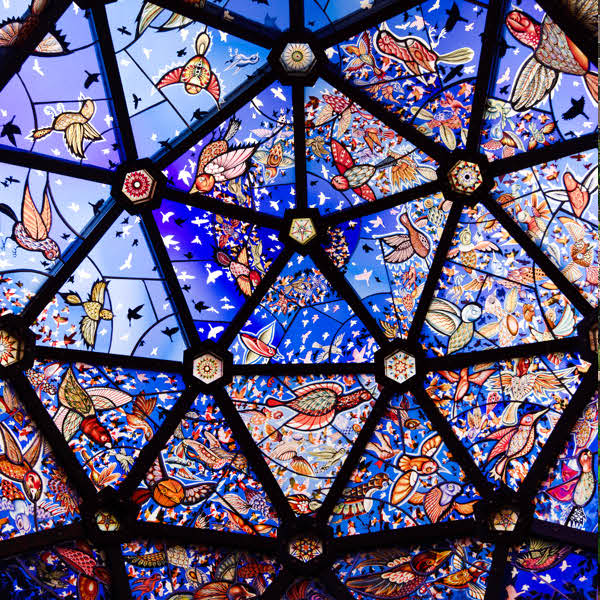
Other highlights include Refik Anadol’s Machine Hallucinations–Study 1 (2019), where an AI model was trained on thousands of Gothic cathedrals and endlessly generates transforming architecture of light and color. In Pulse Index (2010) by Rafael Lozano-Hemmer, visitors’ fingerprints and heartbeats are the raw materials in a communal portrait that’s a reminder of the data we leave behind.
Not all pieces are generative, however. Madeline Hollander’s Heads/Tails (2020) translates New York traffic patterns into flickering headlights and taillights and creates a performance from the everyday experience of driving in a city.
Run the Code: Data-Driven Art Decoded by Thoma Foundation X Blanton Museum of Art is currently on view until August 2, 2026.
The group show Run the Code: Data-Driven Art Decoded by Thoma Foundation X Blanton Museum of Art explores how artists use technology to create things that go beyond its “corporate use” to develop new ways of seeing.
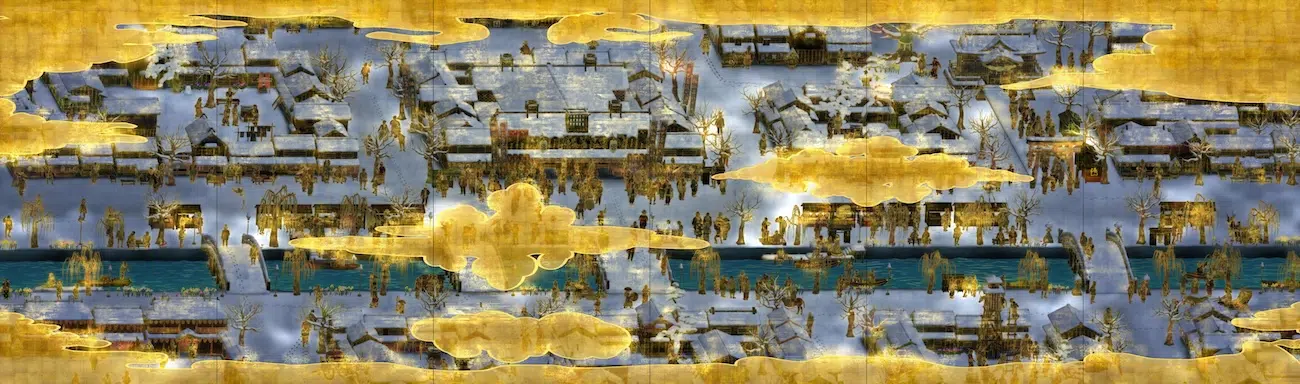
teamLab (formed 2001), “The World of Irreversible Change,” detail, 2022, six-channel interactive digital work, endless, Collection of the Carl & Marilynn Thoma Foundation © teamLab
Refik Anadol, Daniel Canogar, Rafael Lozano-Hemmer, teamLab, Siebren Versteeg, Leo Villareal, and Marina Zurkow are the artists in the show.
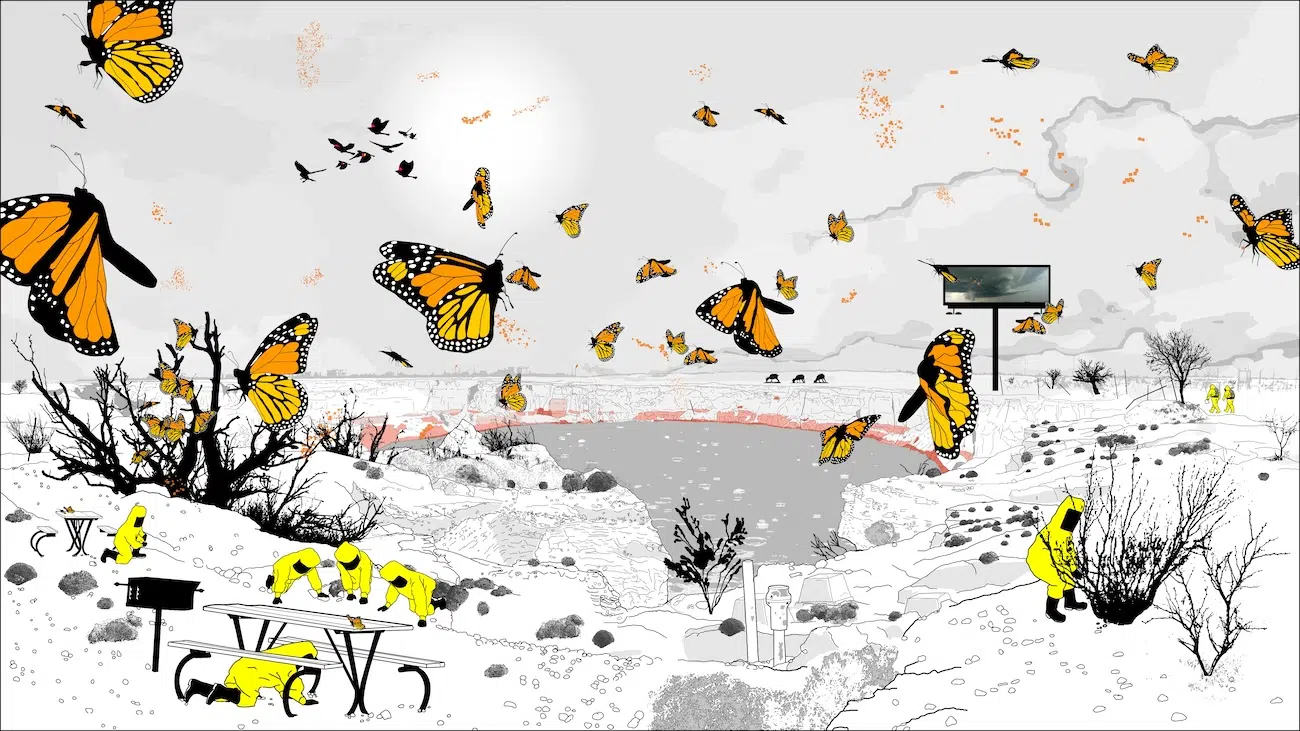
Marina Zurkow, “Mesocosm (Wink, TX),” 2012, real-time generative custom software animation, with sound, computer, monitor or projector, 146-hour cycle (24- minute day, 146-hour year), Collection of the Carl & Marilynn Thoma Foundation © Marina Zurkow
Although their visual languages vary, the collection of creatives has one thing in common…
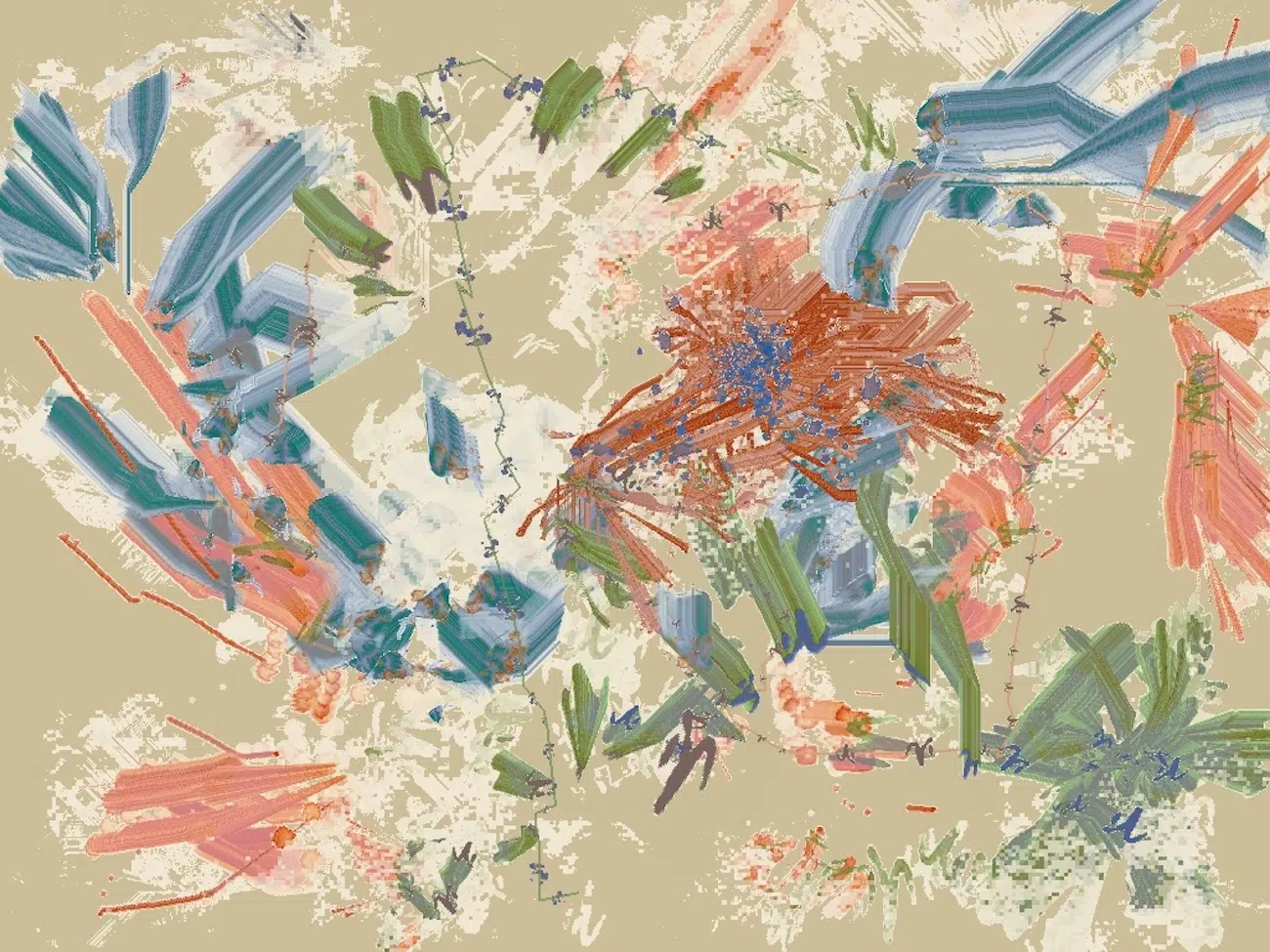
Camille Utterback, “Untitled 5,” 2004, interactive installation: custom software, silent, video camera, computer, projector, lighting, infinite (live generation), Collection of the Carl & Marilynn
“Today’s artists are writing code the way others have handled paint or clay,” says Hannah Klemm, curator of modern and contemporary art at the Blanton.
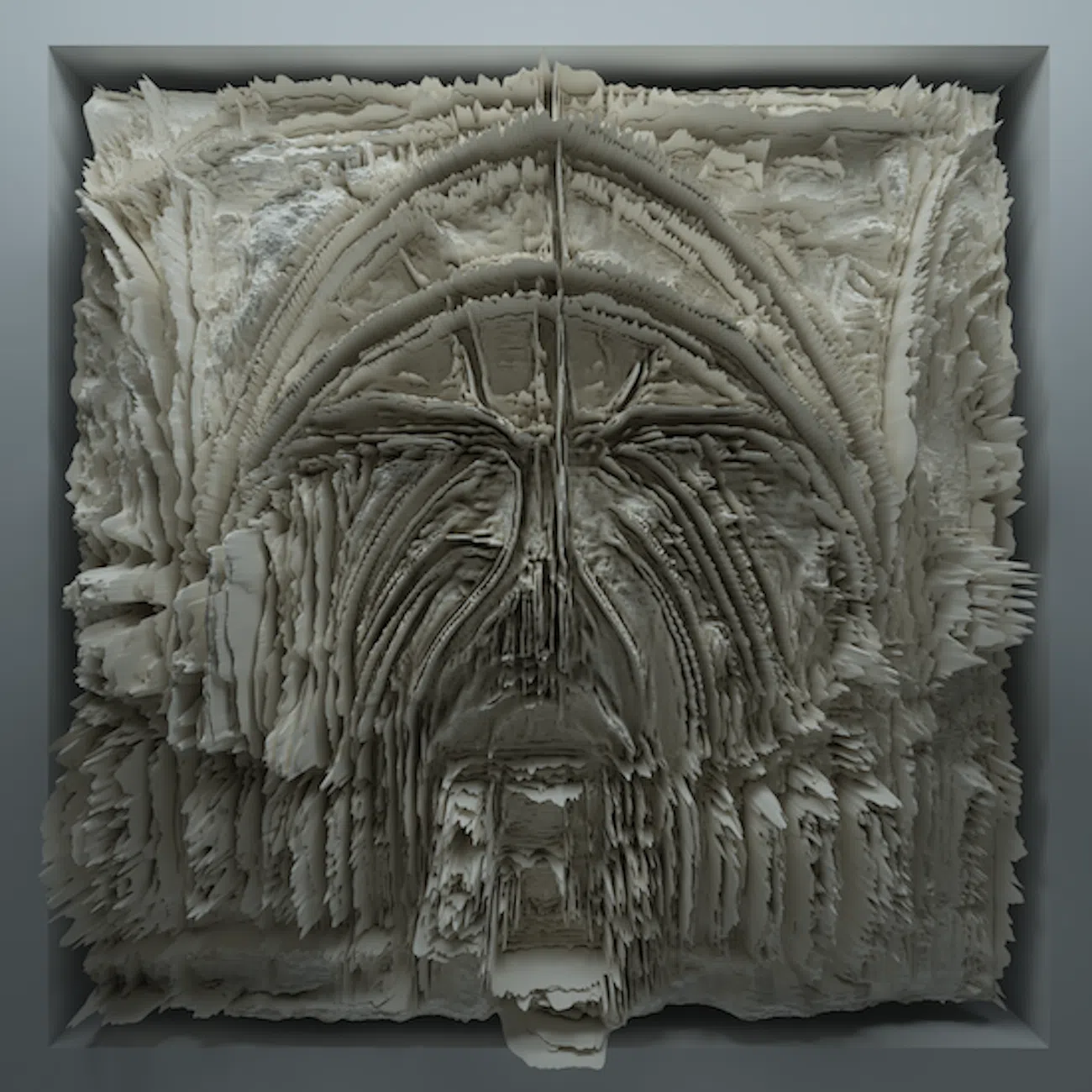
Refik Anadol, “Machine Hallucinations – Study I,” 2019, single-channel digital video, silent, computer, monitor, 30 min., Collection of the Carl & Marilynn Thoma Foundation © Refik Anadol
“Their works show that technology can be both analytical and poetic—making visible the patterns, biases, and chaos embedded in the data that shapes our world.”
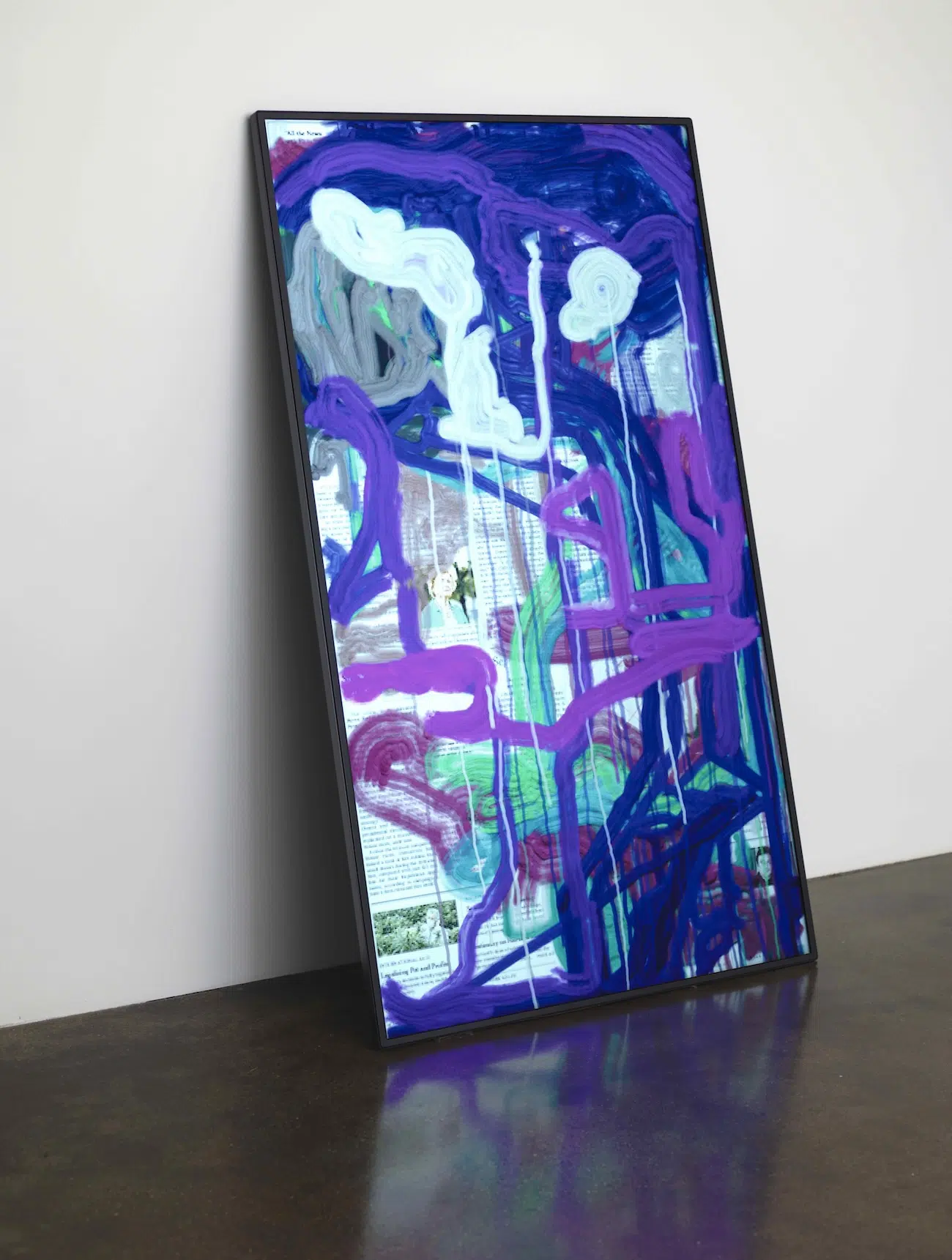
Siebren Versteeg, “Daily Times (Performer),” 2012, real-time generative custom software animation, silent, computer, internet connection, monitor, 24-hour cycle, Collection of the Carl & Marilynn Thoma Foundation © Siebren Versteeg
Run the Code: Data-Driven Art Decoded by Thoma Foundation X Blanton Museum of Art is on view until August 2, 2026.
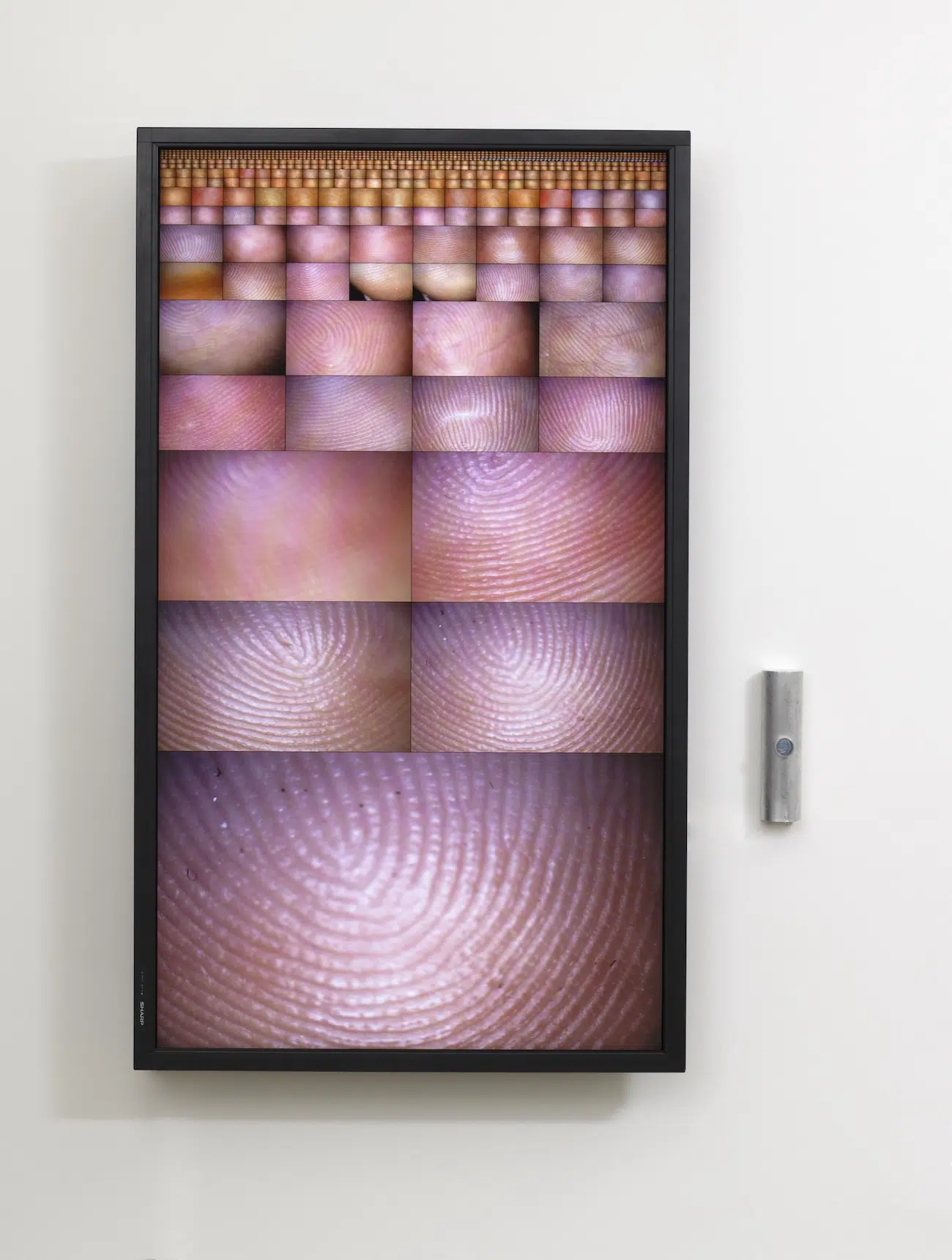
Rafael Lozano-Hemmer, “Pulse Index,” 2010, interactive generative custom software, silent, computer, digital microscope, industrial camera, plasma monitor, Collection of the Carl & Marilynn Thoma Foundation © Rafael Lozano-Hemmer
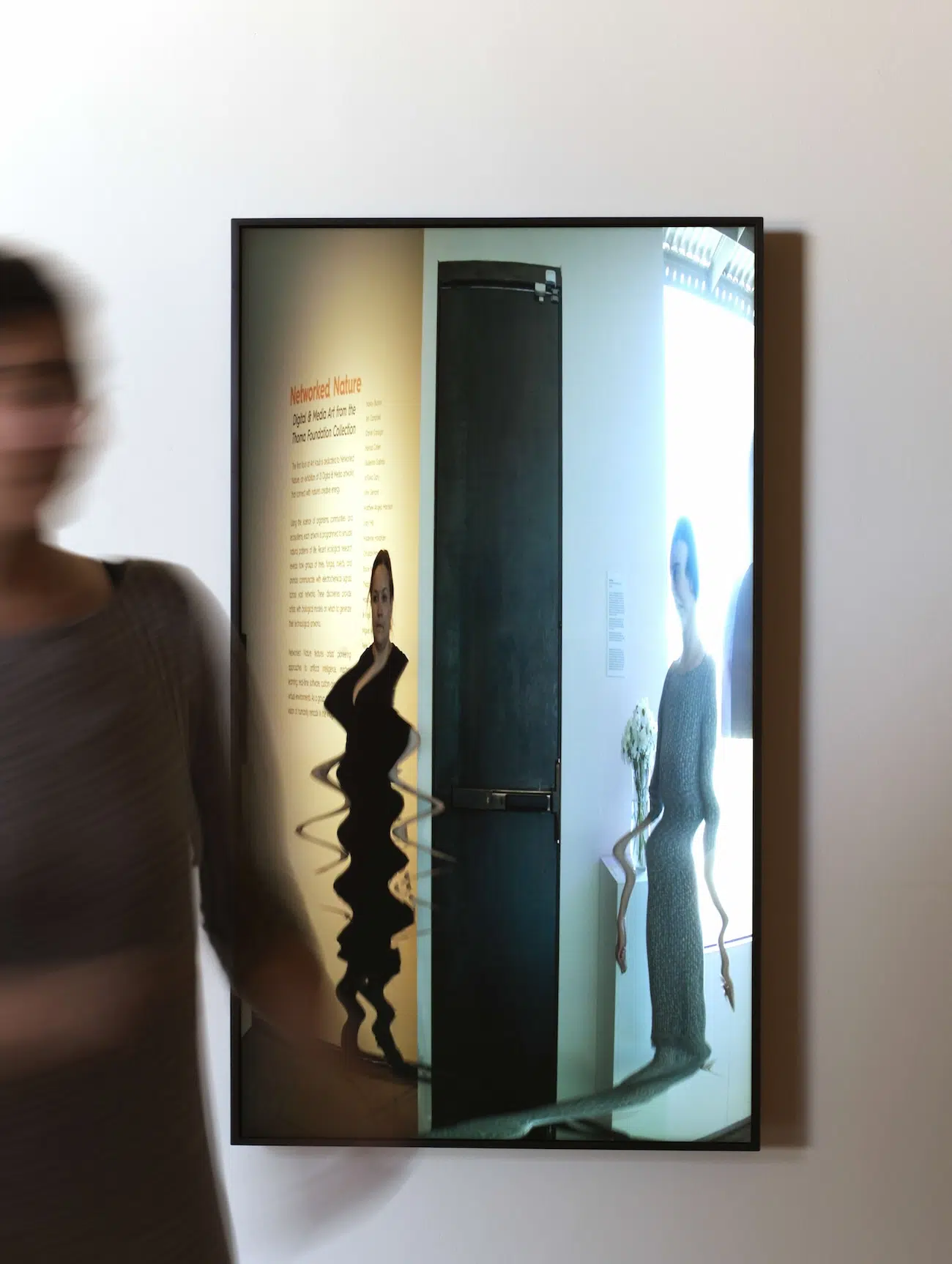
Martin Reinhart, “tx-mirror,” 2018, interactive, real-time generative software (silent) on TV monitor with camera, infinite (live generation), Collection of the Carl & Marilynn Thoma Foundation