Seattle’s oldest neighborhood is shifting into a global spotlight as a host city for the FIFA World Cup 2026 matches. In Pioneer Square, that attention arrives not as spectacle alone, but as a coordinated transformation of streets, facades, and alleyways into an open-air exhibition shaped by contemporary art.
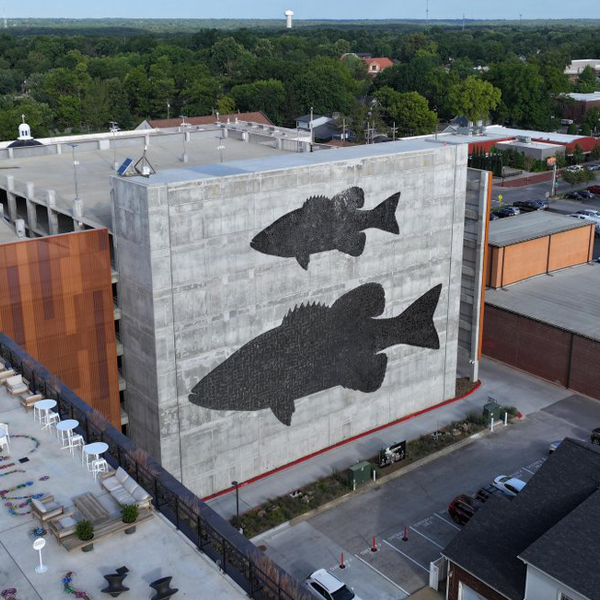
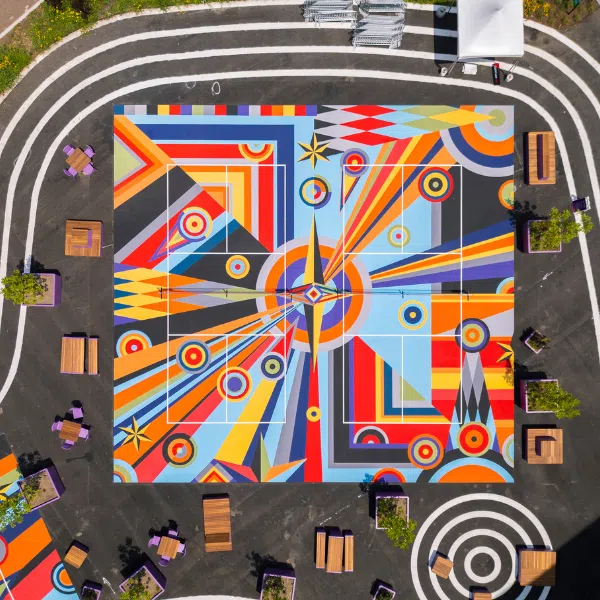
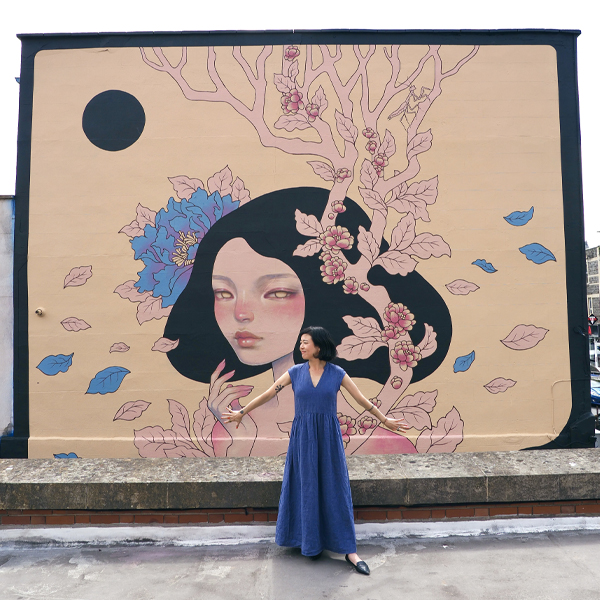
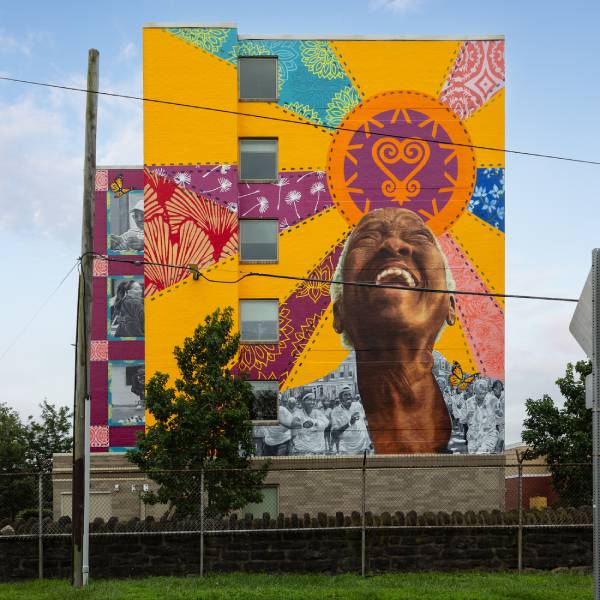
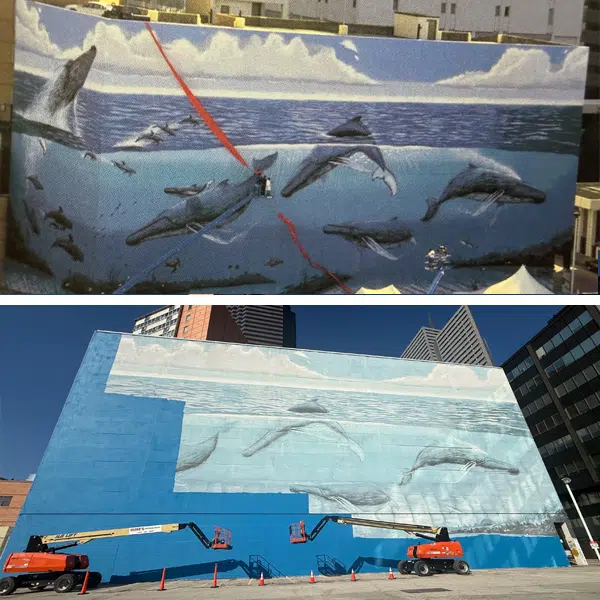
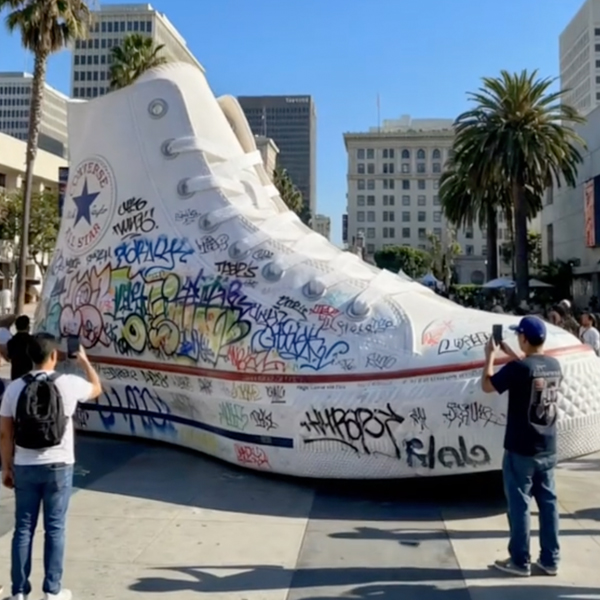
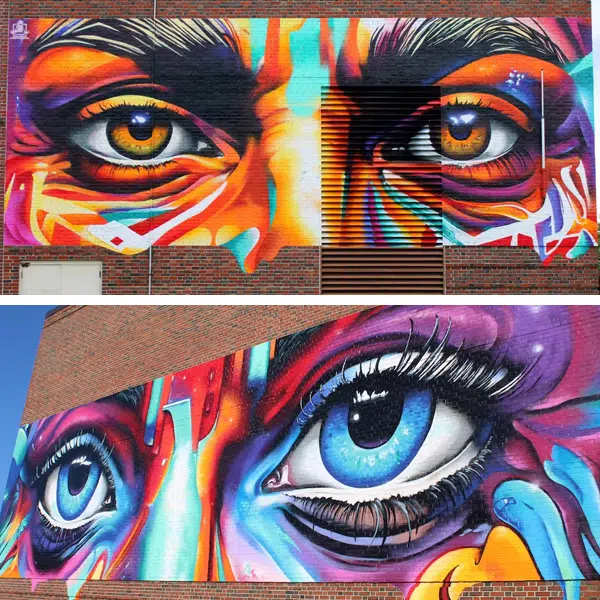
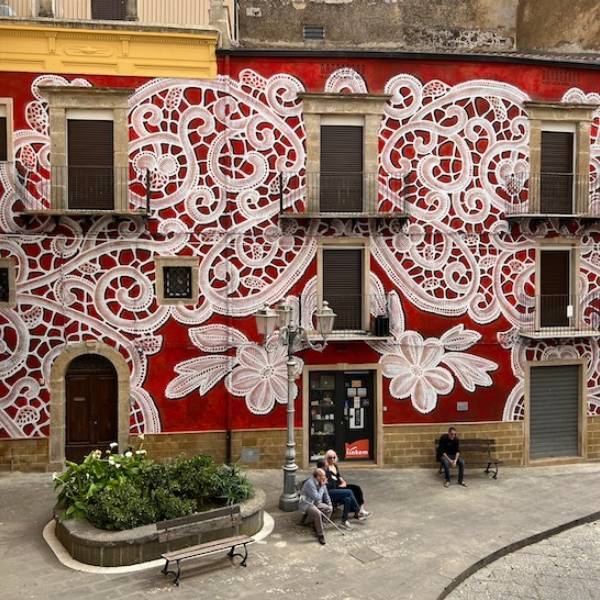
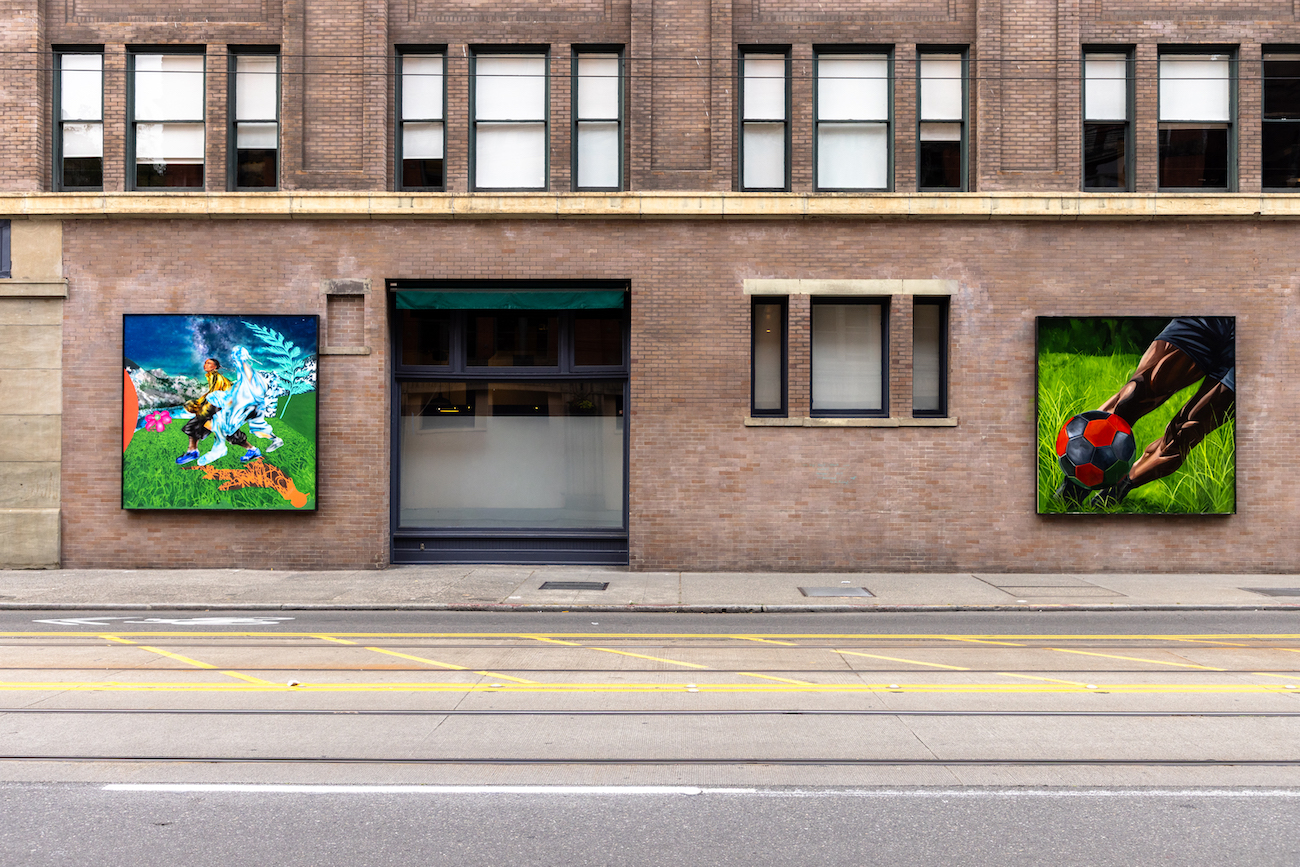
A neighborhood-wide initiative led by RailSpur in partnership with Forest For The Trees and SeattleFWC26 brings 15 newly commissioned large-scale artworks into the historic core from June 4 through July 2, 2026. The installations activate existing architectural frames embedded into Pioneer Square’s building facades, turning intersections, corridors, and alleyways into a continuous exhibition route.
Rather than placing art at a distance from daily movement, the project integrates it directly into how people move through the neighborhood. Works appear across key sites such as RailSpur Alley and surrounding streets, where historic brick buildings become surfaces for contemporary interventions that interrupt and reshape familiar pathways.
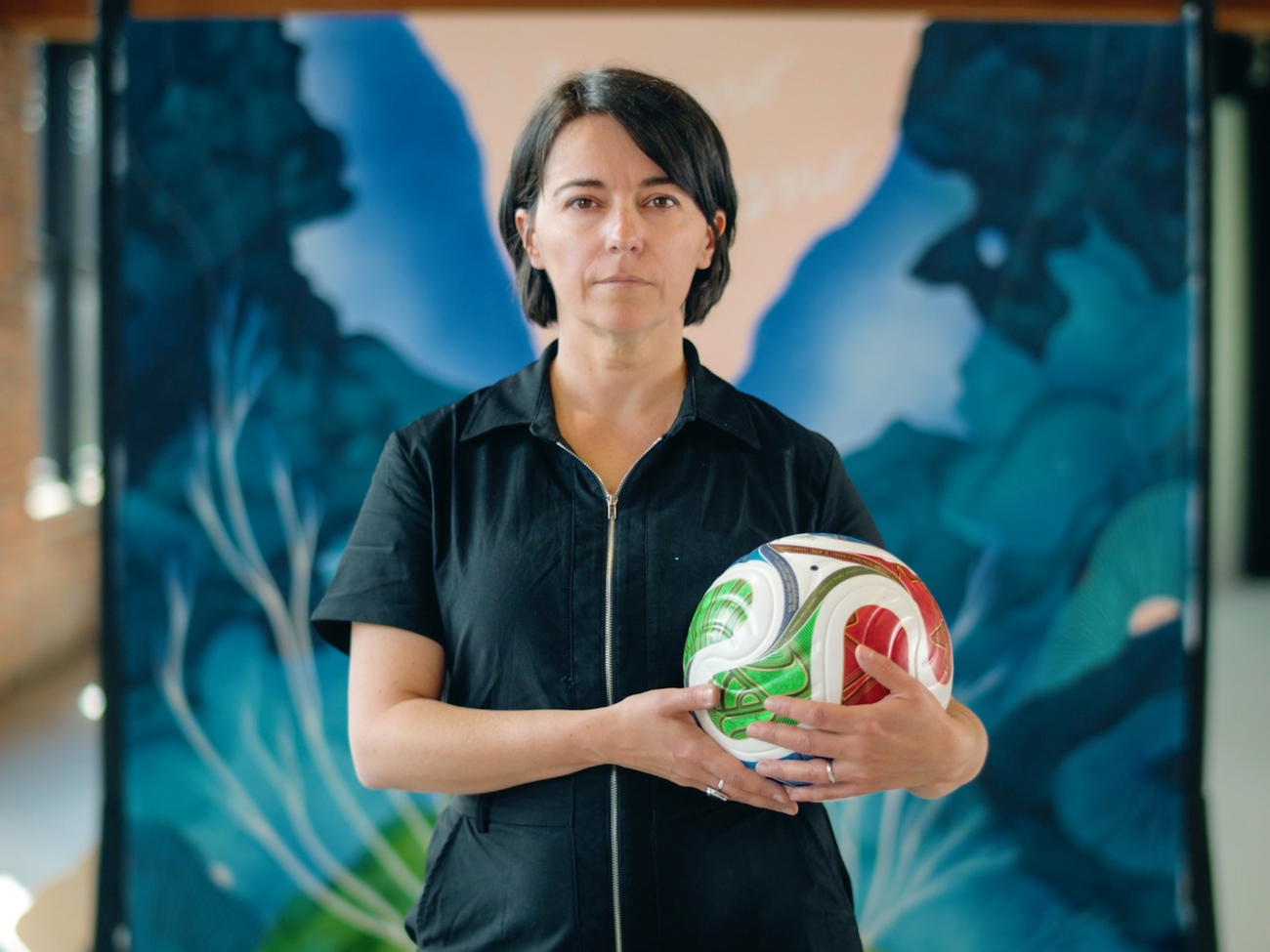
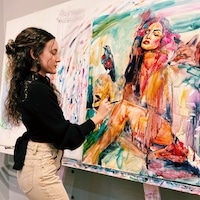
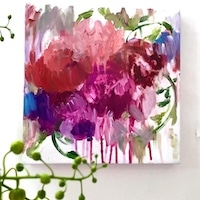
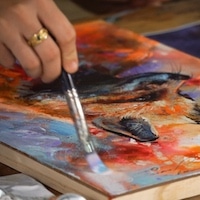
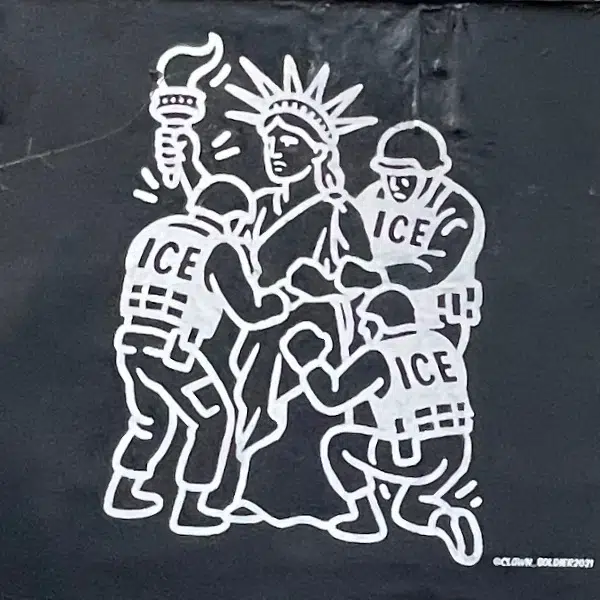
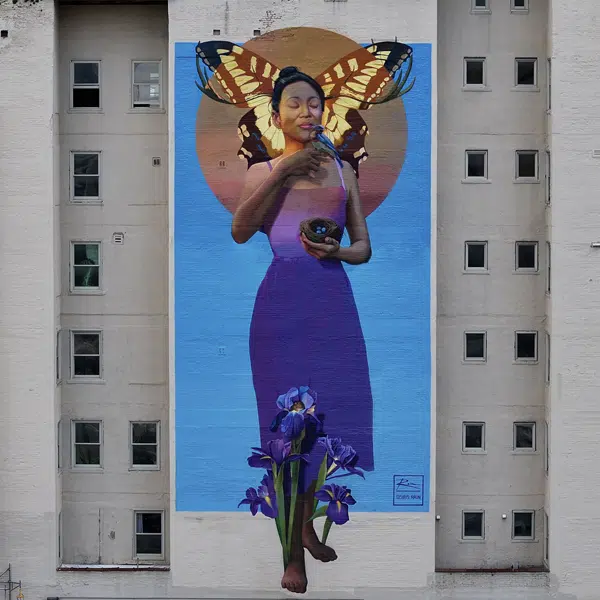
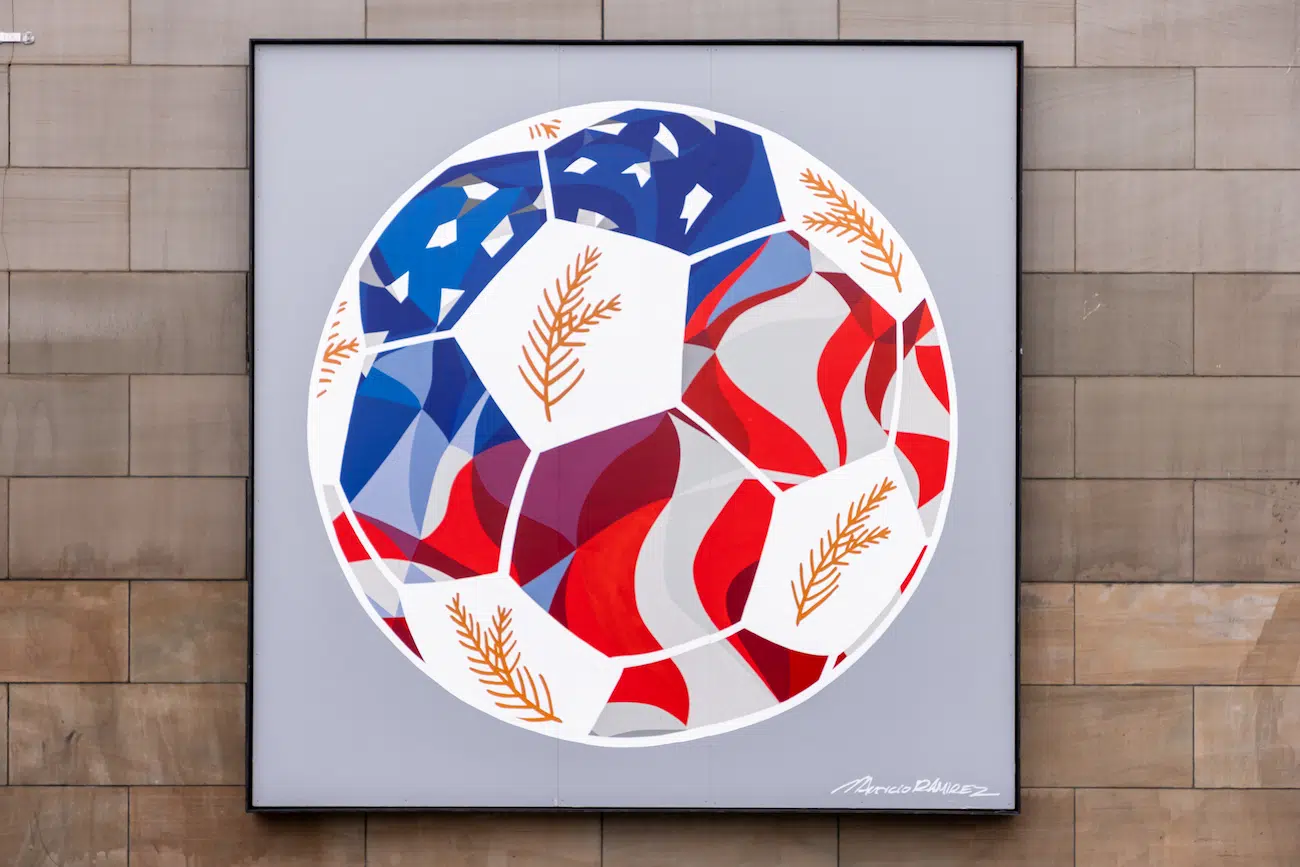
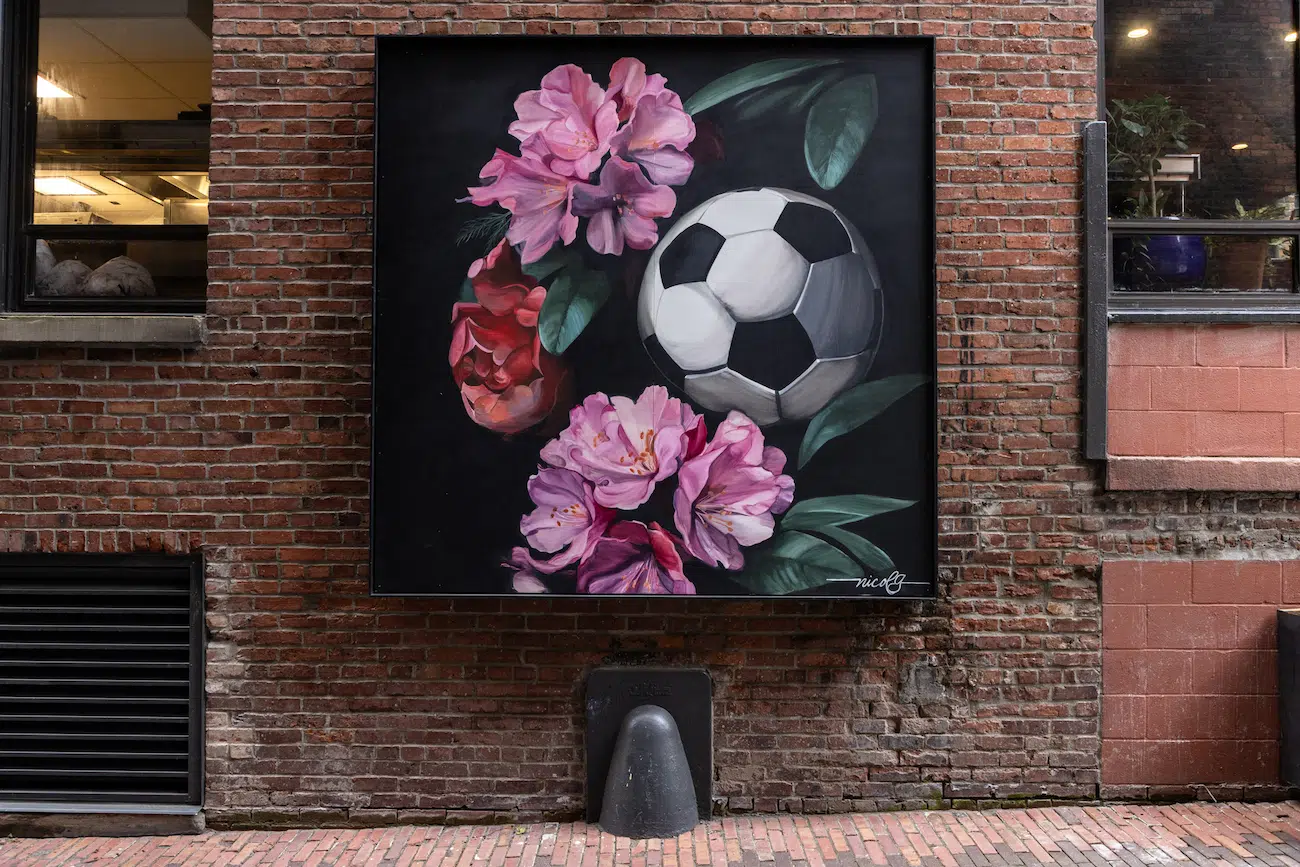
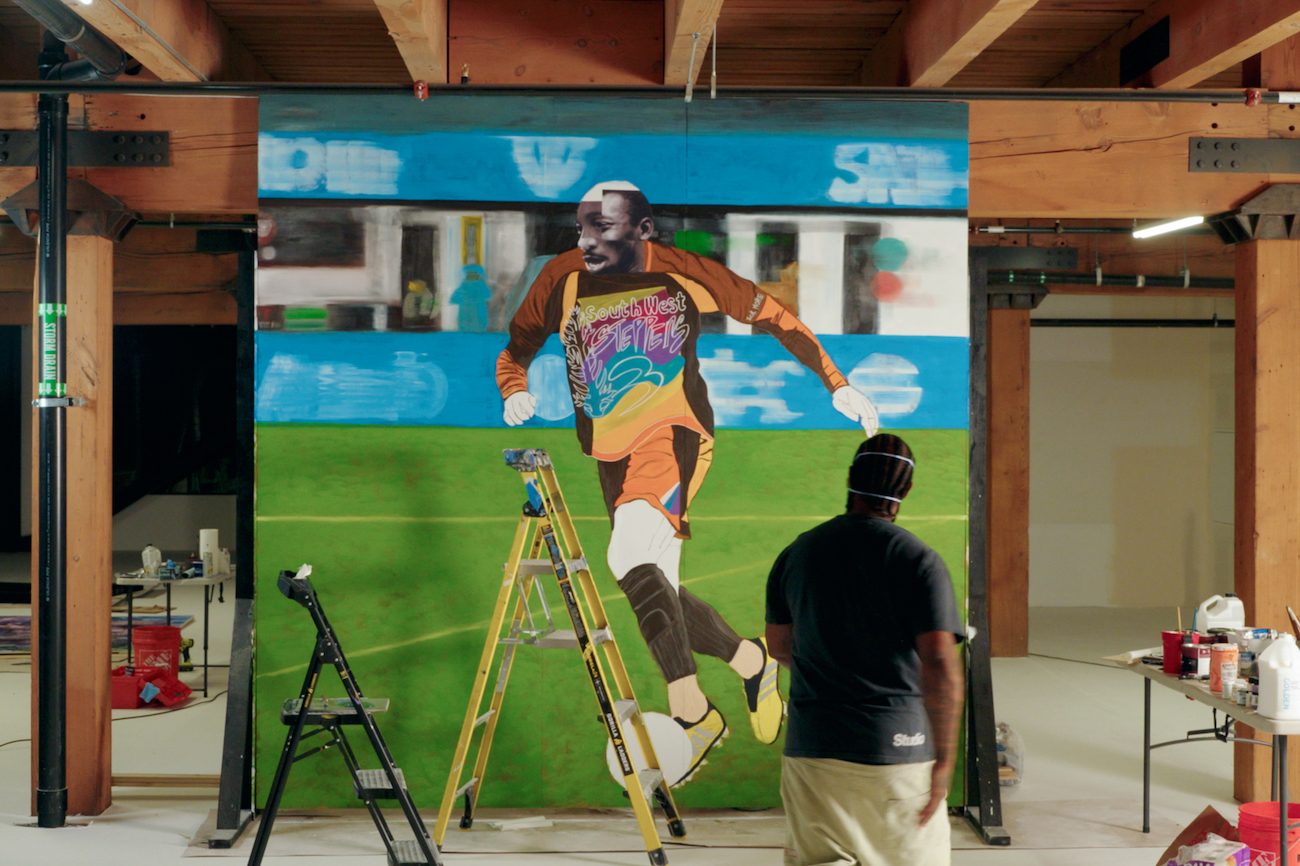
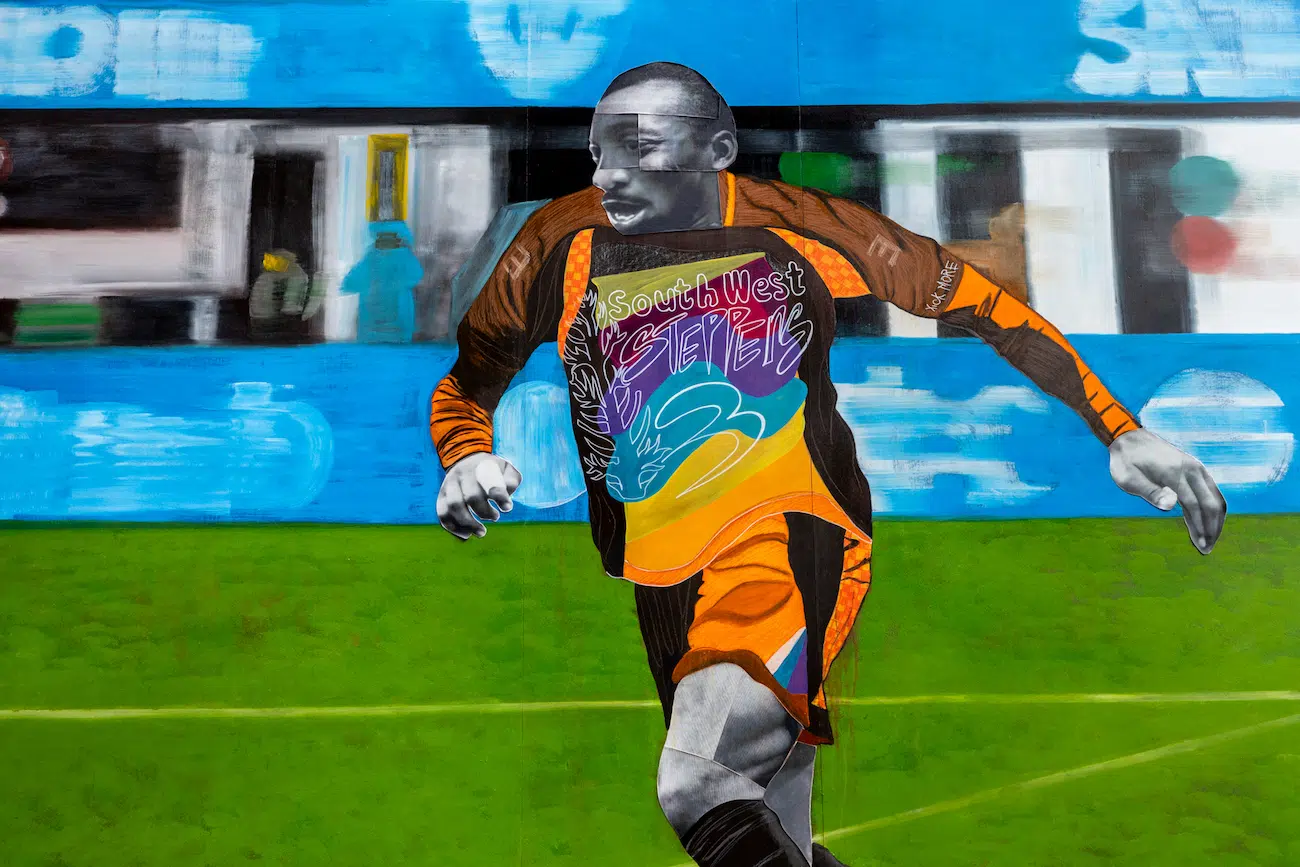
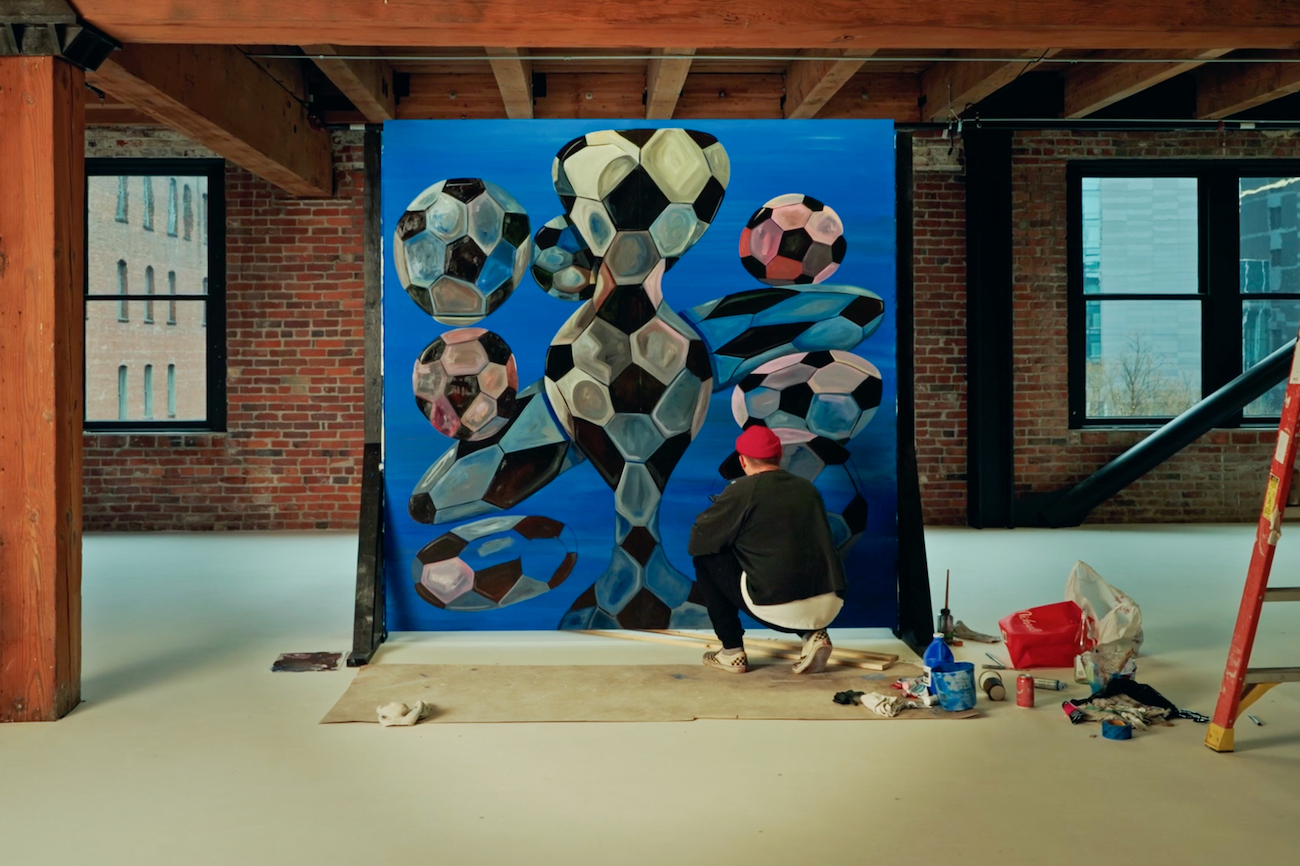
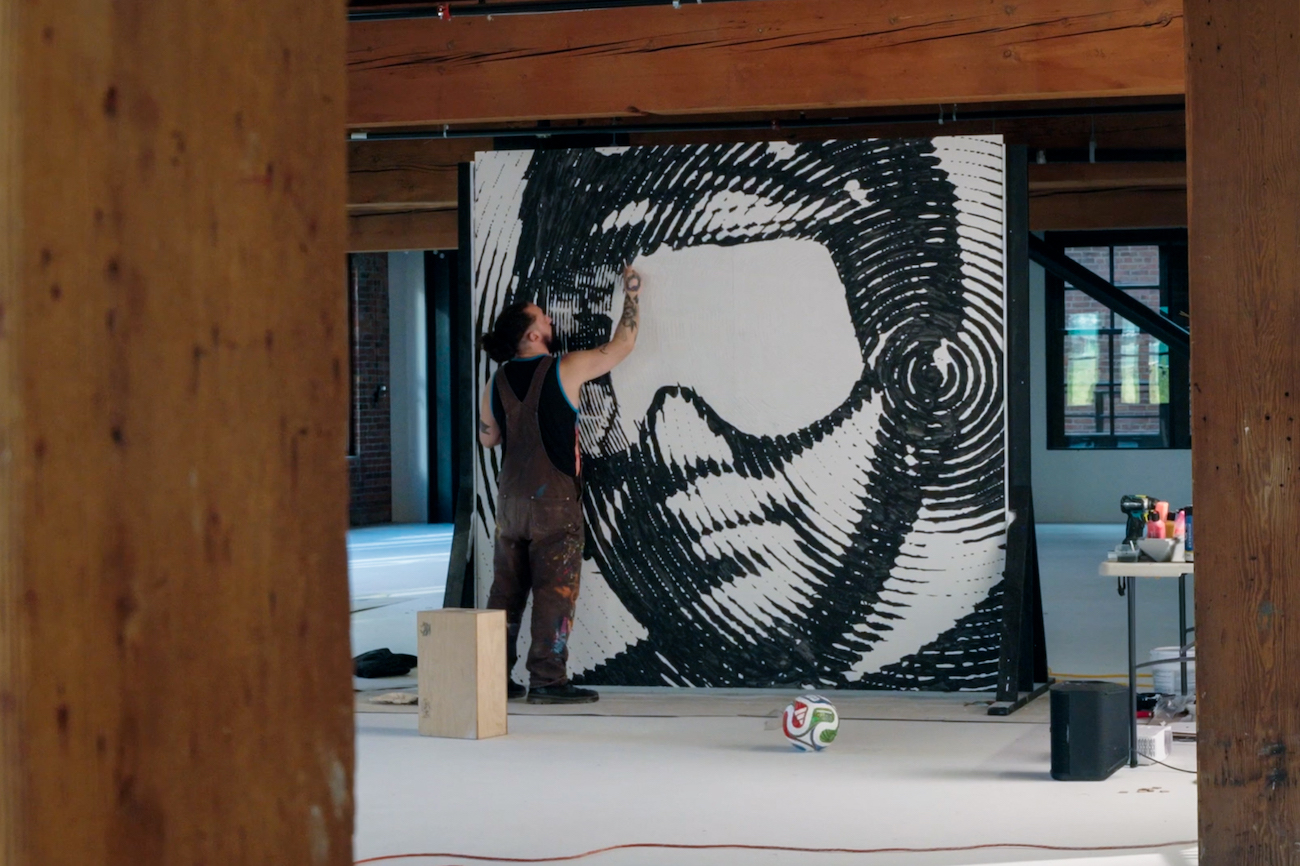
The commissioned artists bring distinct visual approaches shaped by place, identity, and lived experience. Mauricio Ramirez works at large scale with a visual language rooted in street art and cultural memory, using sport as a connective force between communities. Sa’rah Sabino centers visibility and self-definition, often drawing on references to movement and embodiment to explore how presence is claimed in public space. Nicol Grindulis and Paul Nunn each approach mural-scale work through contrasting visual systems, one leaning toward layered abstraction and the other toward figurative structure grounded in architectural rhythm.
Other contributions expand the project’s global perspective in different directions. Kwonny builds narrative environments shaped by migration, memory, and ecological reference points, creating imagery that moves between myth and lived geography. Caratoes works across symbolic and contemporary visual languages to reflect how identity forms through displacement, hybridity, and cultural exchange.
Across all 15 commissions, the emphasis stays consistent: art functions as something encountered in motion rather than viewed from a fixed point. The result is a district that shifts in perception depending on where a viewer stands, walks, or pauses.
The exhibition also extends the long-term work already unfolding in Pioneer Square. Over the past several years, RailSpur has developed its buildings and surrounding streets as an active site for artist residencies, public art installations, and community programming. The World Cup activation expands that ongoing framework into a concentrated, citywide moment.
At the center of RailSpur sits Populus Seattle, which anchors a series of match-period events under its “Beyond the Pitch” programming. The hotel connects hospitality, food, and live programming across the neighborhood, with events at Salt Harvest and Firn extending the experience into dining rooms, rooftops, and outdoor gathering spaces.
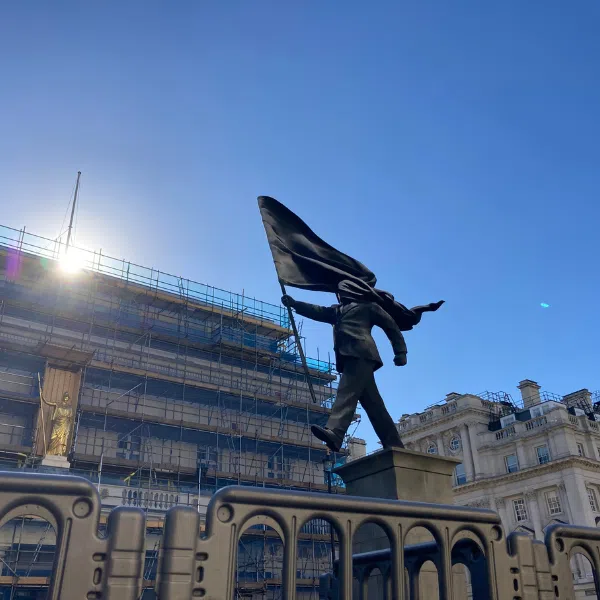
Across Pioneer Square, the installations reshape how visitors experience the district during one of the most heavily attended sporting events in the world. A mural might emerge unexpectedly above a service entrance. A painted figure might stretch across a building edge where a passerby would not normally stop. These encounters slow down movement and shift attention toward details embedded in the city’s historic surface.
The project reflects a broader shift in how cities approach large-scale global events. Rather than concentrating activity only around stadiums, Seattle expands the experience outward into its oldest neighborhood, using public art as a connective structure between visitors, local businesses, and cultural institutions.
When the installations come down in early July, Pioneer Square will return to its everyday rhythm. Still, the presence of these works will likely linger in how people remember the district, not as a backdrop to the World Cup, but as an active participant in it.
To coincide with Seattle’s FIFA World Cup 2026 matches, RailSpur, Forest For The Trees, and SeattleFWC26 commissioned 15 large-scale artworks that transform Pioneer Square into a neighborhood-wide public art exhibition.
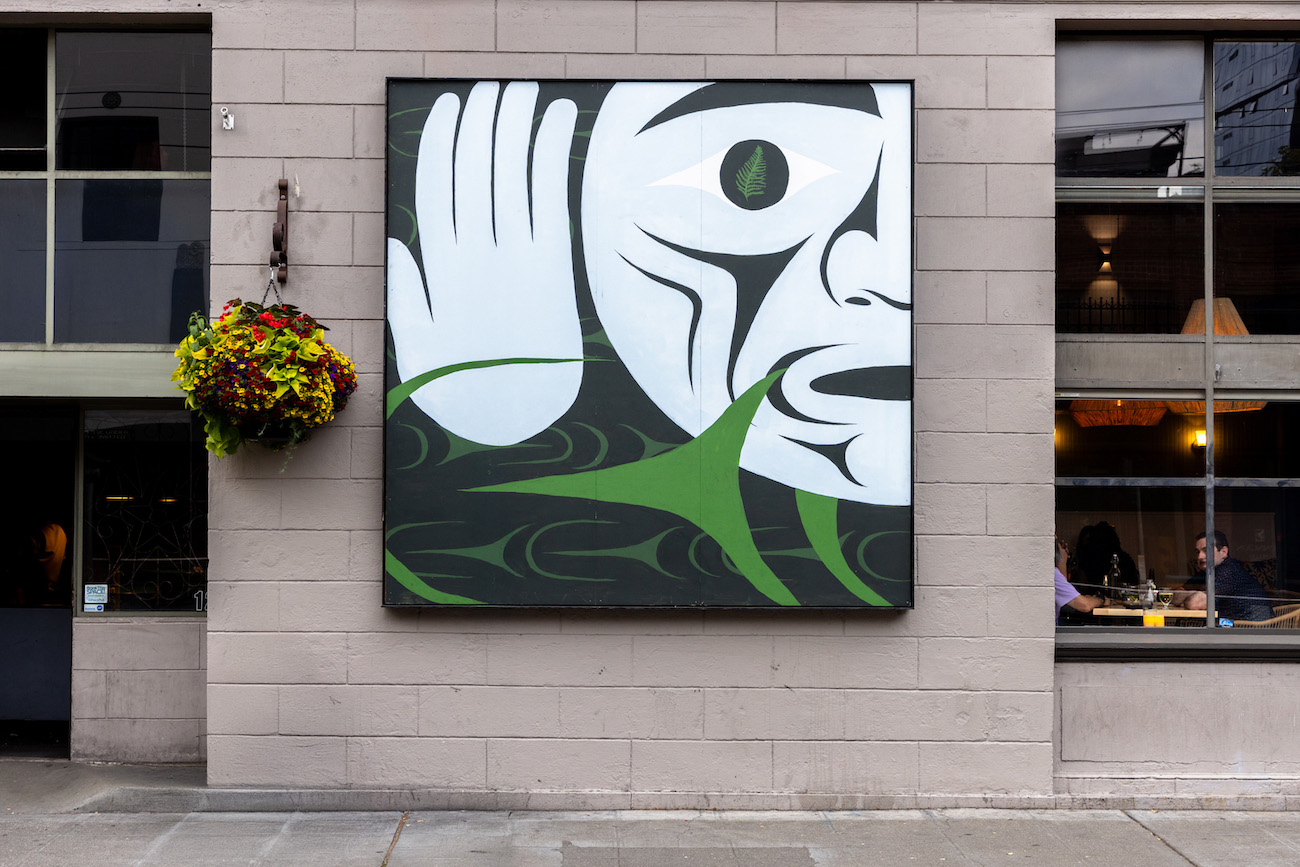
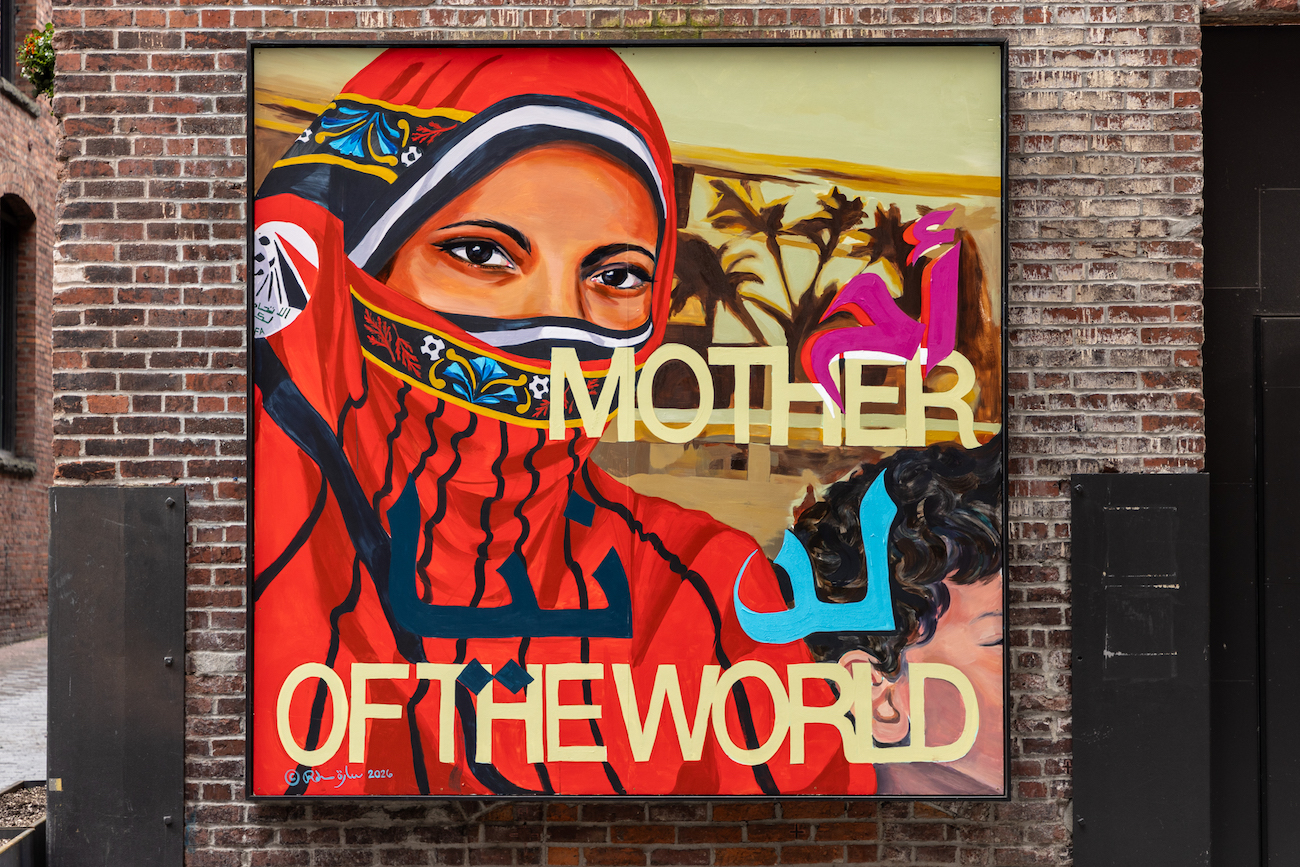
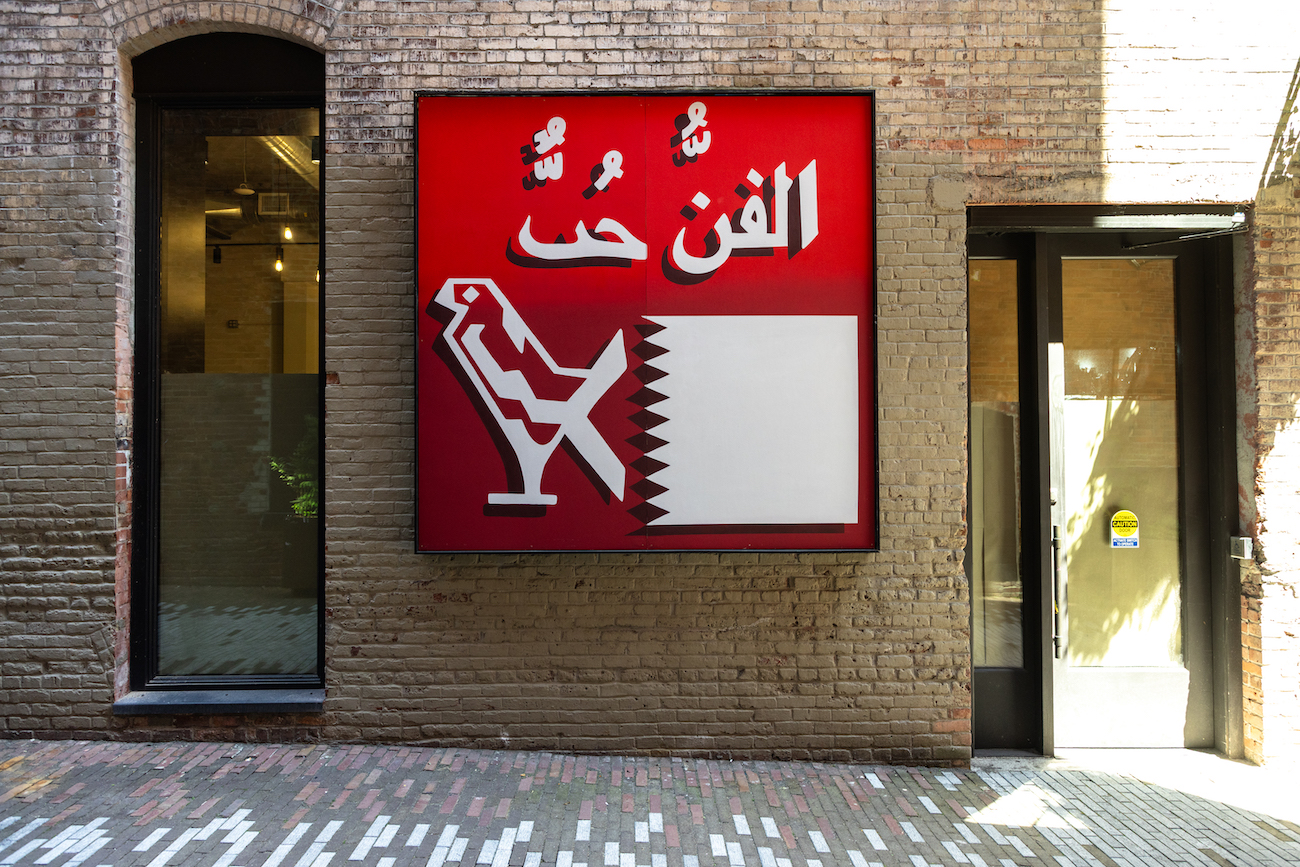
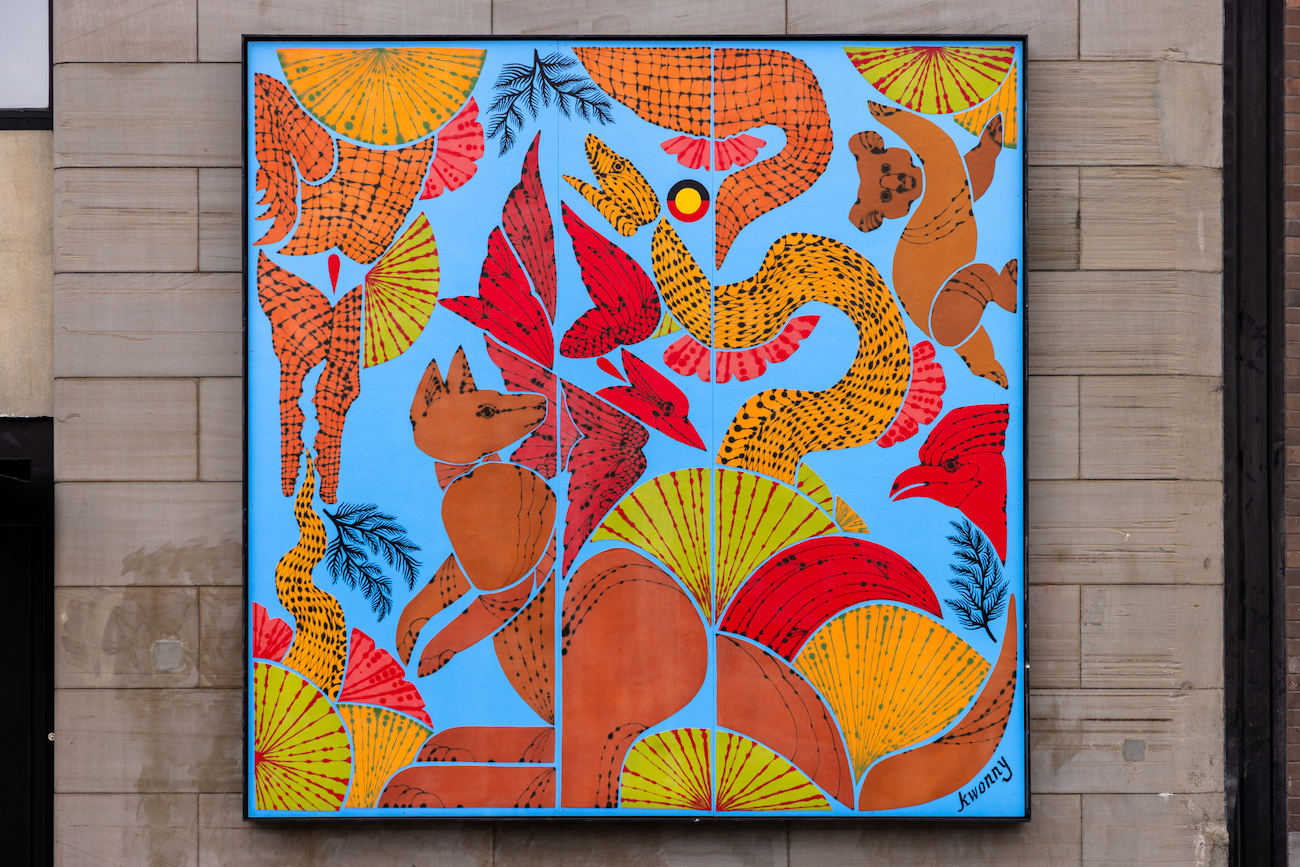
The new works appear on historic facades, in alleyways, and at intersections, encouraging visitors to explore Seattle’s oldest neighborhood through contemporary art.
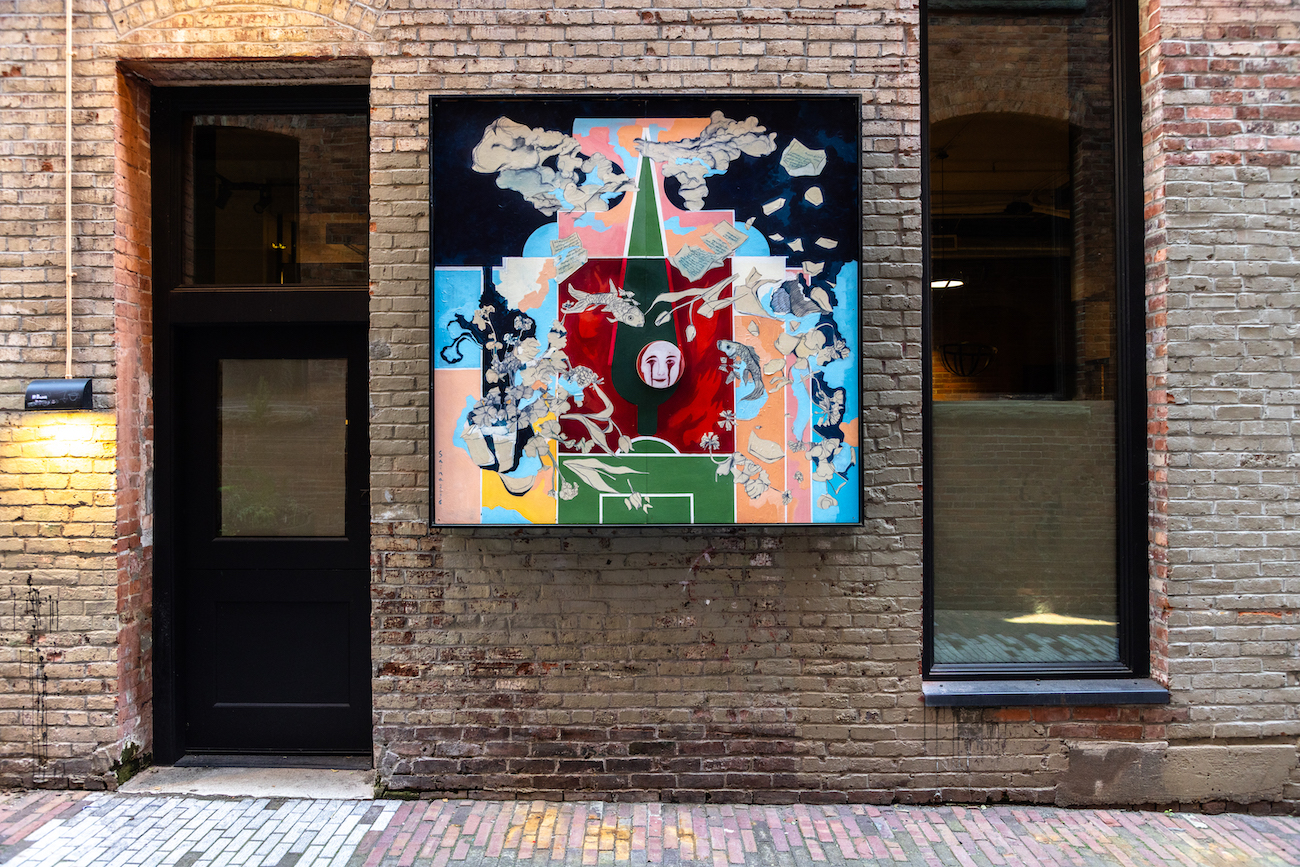
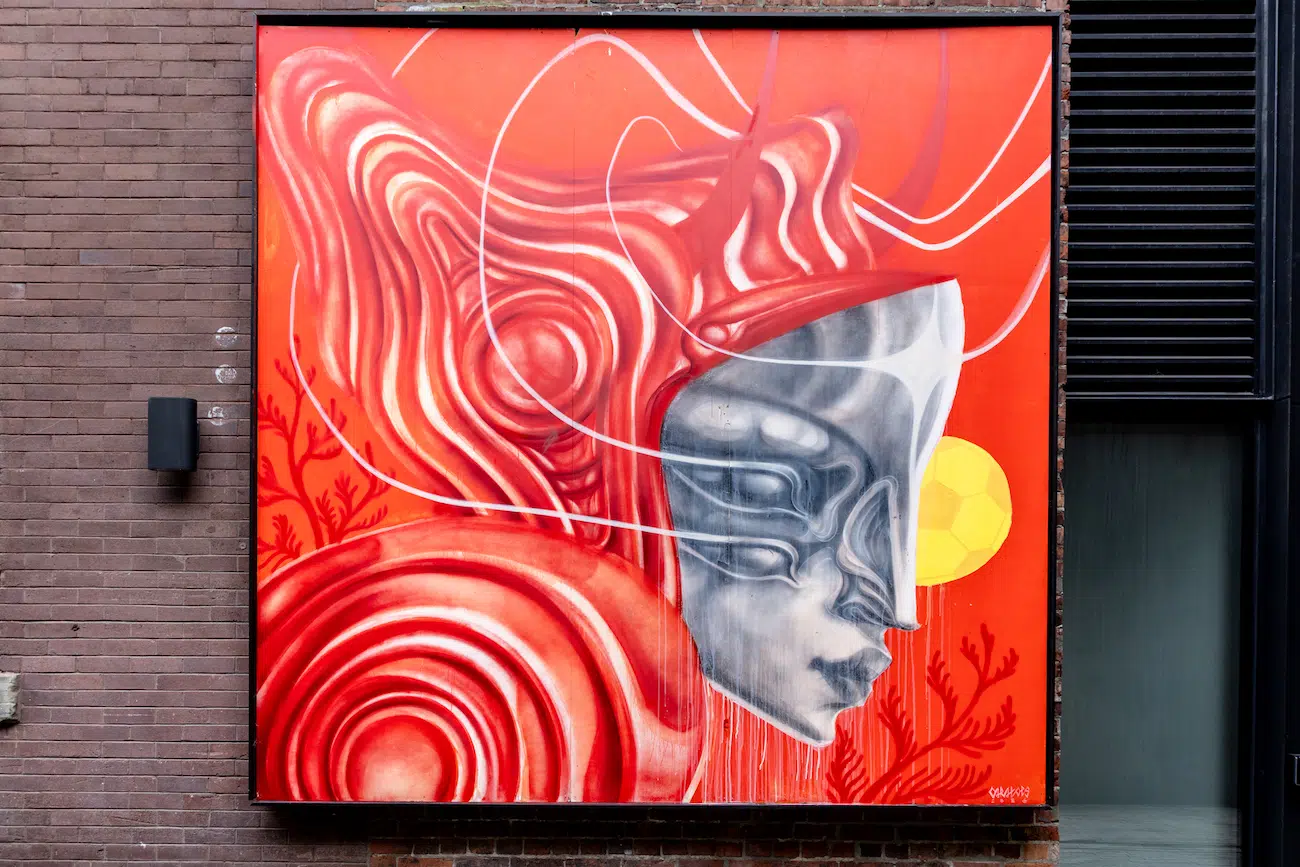
Artists from Seattle and around the world contribute perspectives shaped by personal histories and cultural exchange, using mural-scale works to reflect on identity, belonging, and the unifying spirit of sport.
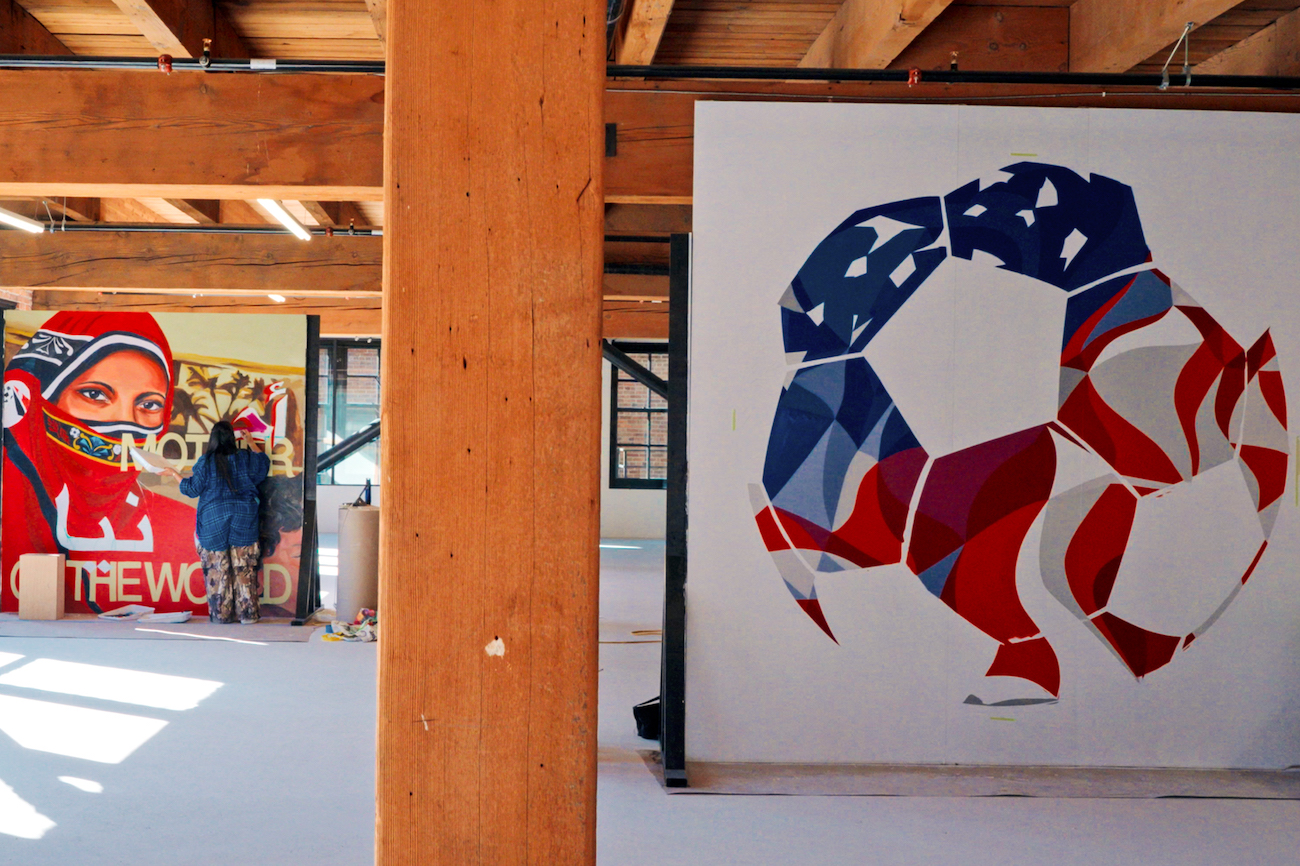
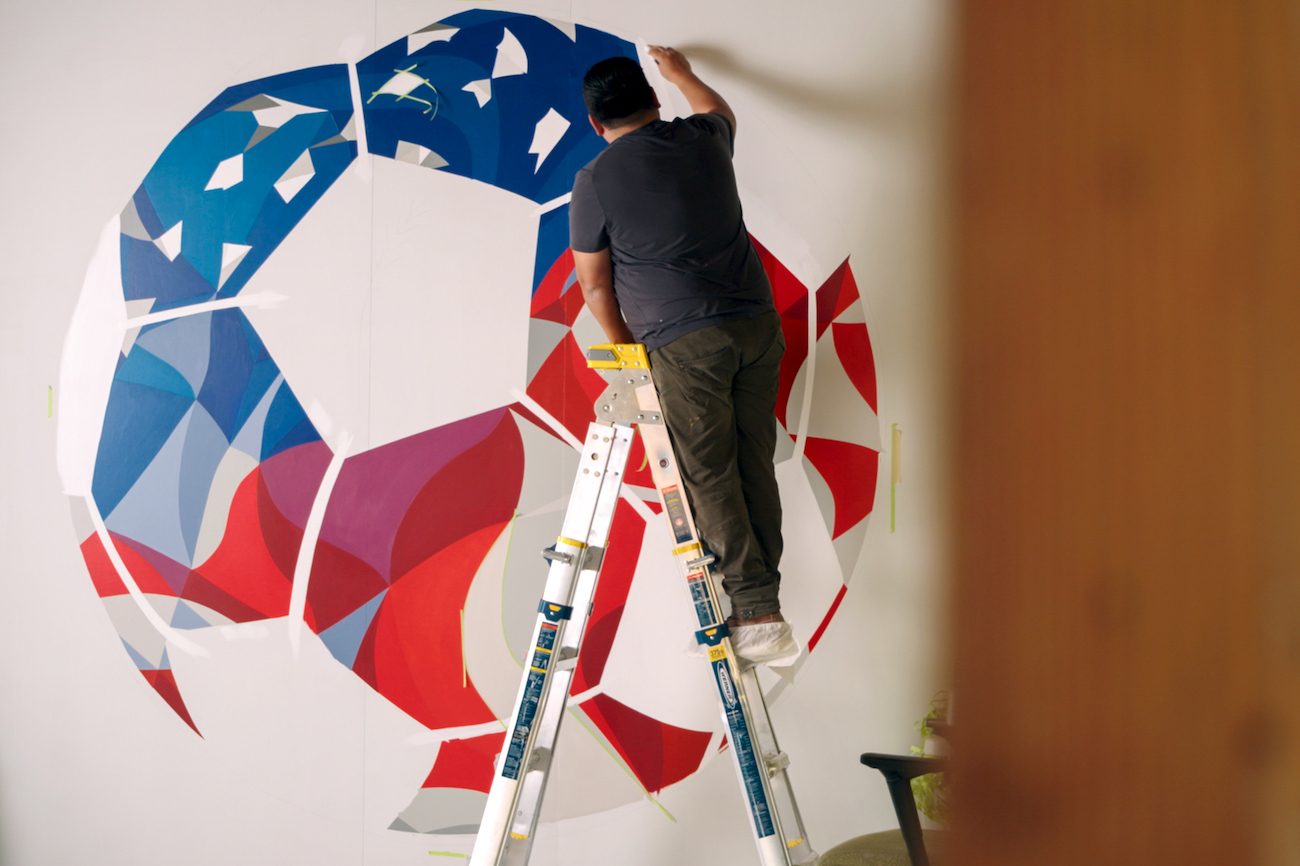
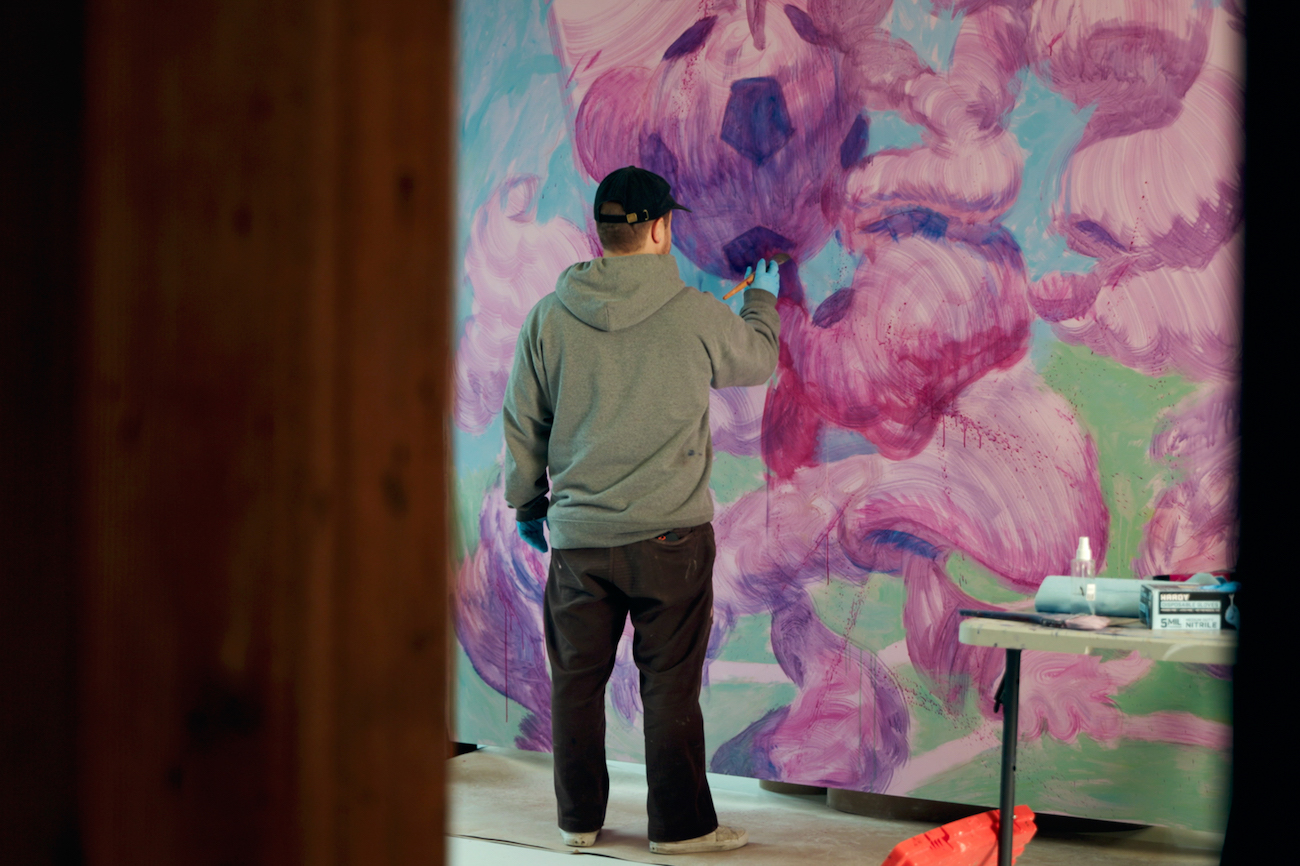
By extending World Cup celebrations beyond the stadium, the project positions Pioneer Square as a cultural destination where public art and community converge on a global stage.