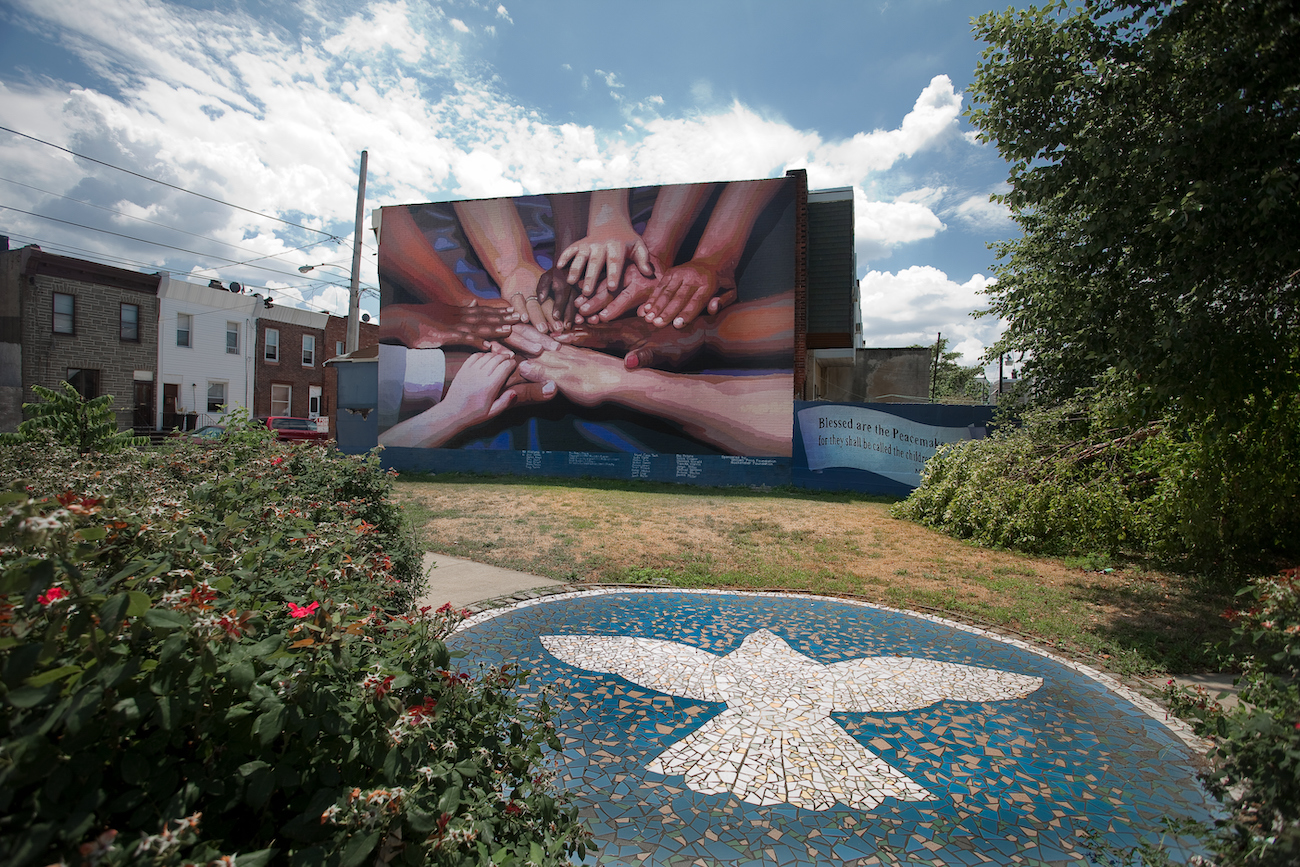
Peace Wall © 1997 City of Philadelphia Mural Arts Program / Jane Golden and Peter Pagast. 1308 S. 29th Street. (Photo: Jack Ramsdale)
Walk through almost any Philadelphia neighborhood, and you’ll notice something unusual: the walls are alive. Towering portraits, sweeping landscapes, and community stories stretch across building facades from Kensington to South Philly, transforming the city into one of the world’s largest outdoor art galleries. Behind this citywide canvas is Mural Arts Philadelphia, the nation’s largest public art program, which grew from an anti-graffiti initiative launched in 1984 into an internationally recognized model for community-based art.
The transformation began with Jane Golden. After studying at Stanford University and painting murals in Los Angeles, Golden moved to Philadelphia to work with the Philadelphia Anti-Graffiti Network, a city program established under Mayor Wilson Goode. While many people viewed graffiti as vandalism, Golden saw something else.
“I worked with graffiti writers for like 10 years,” Golden tells My Modern Met. “When the Anti-Graffiti Network closed down, I went to the mayor at the time, Ed Rendell, and asked whether he would create a community-based public art program. And he said yes.”
That conversation led to the creation of Mural Arts Philadelphia in 1997. What began as a small initiative grew into an organization with an annual budget of approximately $16 million, a full-time staff of 60, a part-time staff of 140, and roughly 140 new public artworks created throughout the city each year.
“The Mural Arts program believes deeply that everyone everywhere should have access to public art,” Golden says. “We also believe that young people should have access to art education. And we believe that the work we do is both about beauty and aesthetics, and it’s also very practical and pragmatic. So issues that are on the desk of the mayor and city council are issues that we think deeply about.”
Today, Mural Arts’s work spans nearly every corner of Philadelphia. Created through partnerships between artists and community members, the outdoor paintings have become so deeply woven into the city’s identity that Philadelphia is now known internationally as the “City of Murals.”
“I really think that we’ve turned Philadelphia into an outdoor museum,” Golden says, “but it’s one where the work is very resonant with the citizens who are here.”
The organization’s reach extends well beyond public art. Through programs focused on restorative justice, behavioral health, workforce development, environmental justice, and youth education, Mural Arts uses collaborative artmaking to bring people together around issues affecting their communities.
“Sometimes we take on difficult and complicated themes around restorative justice, or behavioral health, or education, or environmental justice,” Golden says. “In the process of creating the work, people come together, they have conversations, they learn from each other. There’s some mutuality. And the mural becomes a tool of education and advocacy.”
One project in particular remains especially memorable. Called Healing Walls, it brought together crime victims, victim advocates, and incarcerated men at a Pennsylvania state prison to explore how communities can move toward healing and safety.
“People signed up for the project, but then weren’t really sure they wanted to be part of it,” Golden recalls. “Everybody wanted to claim they had more pain than the other person.”
Workshops took place inside the prison and throughout Philadelphia neighborhoods, but the turning point came when participants began painting together.
“These groups that didn’t really see eye to eye cared for each other, a great deal,” Golden says, “and then went on to do different things in the city that had meaning.”
The project reflects a broader philosophy that runs through much of Mural Arts’s work. Beyond the finished artwork, the process itself can create opportunities for connection, understanding, and personal growth.
“So as they change, they’re changing the city,” Golden says. “And that’s something wonderful that stirs in their minds.”
Over the past three decades, that philosophy has helped transform Philadelphia into a global model for public art. Cities around the world now reach out to Mural Arts Philadelphia for advice on building their own community-centered programs.
“When we started doing this work, we had no idea that it would become like an international model,” Golden says. “People would be turning to us for advice—and that’s exciting.”
Visitors can experience that legacy through Mural Arts’s walking and trolley tours, which use murals as a lens through which to explore Philadelphia’s neighborhoods, history, and culture.
“You can really go through virtually every neighborhood and see works of art,” Golden says. “These murals aren’t just decorative—they have a certain heft to them, because they are reflective of people who live here.”
For Golden, that remains the organization’s greatest achievement. When so much of daily life feels increasingly divided, she believes public art still has the power to bring people together.
“At a time when the world seems frayed, and things seem so complex, we really need art now more than ever,” she says. “We’re very determined to make sure people have it, and that it is not just exclusively behind the walls of galleries and museums.”
Together, Philadelphia’s thousands of murals form a collective portrait of the city itself.
“In its collective diversity,” Golden reflects, “it speaks to the identity, the aspirations, the hopes, the struggles, and triumphs of our city.”
Next time you find yourself in Philadelphia, look up. The walls have something to say.
Mural Arts Philadelphia began in the 1980s as an anti-graffiti initiative led by Jane Golden, aimed at addressing vandalism while reimagining how public space could be used for creative expression.
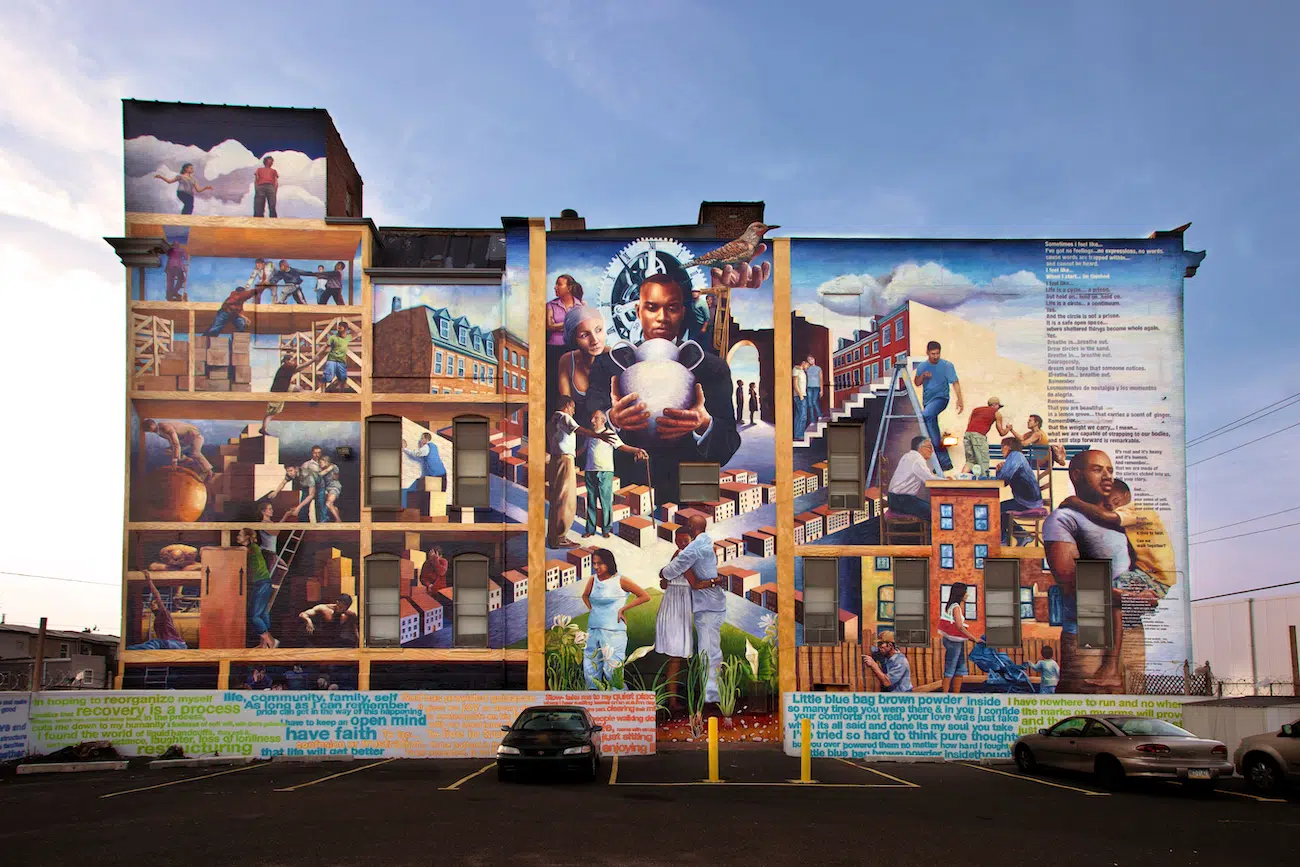
Personal Renaissance © 2010 City of Philadelphia Mural Arts Program / James Burns, 1745 North 4th Street. (Photo: Steve Weinik)
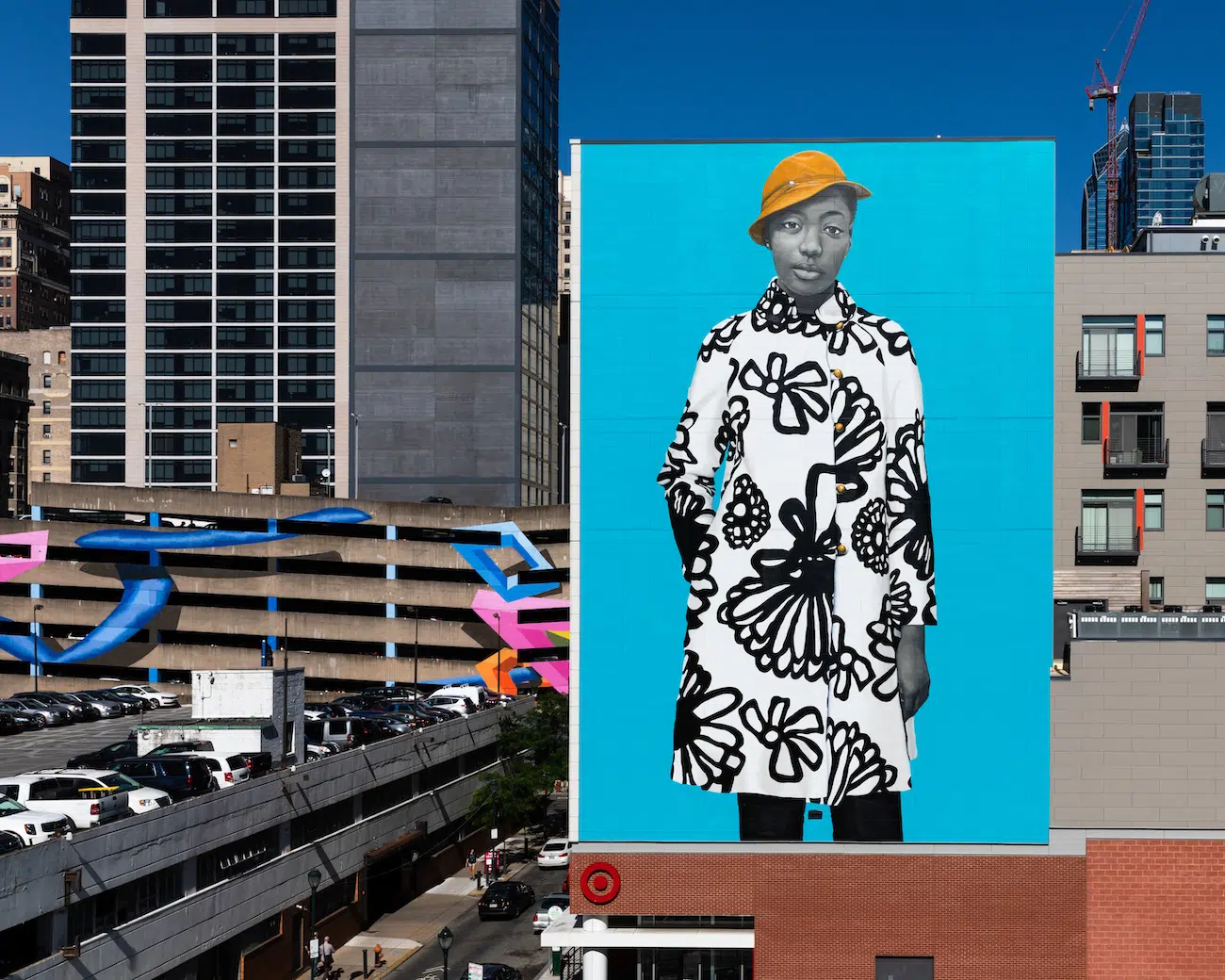
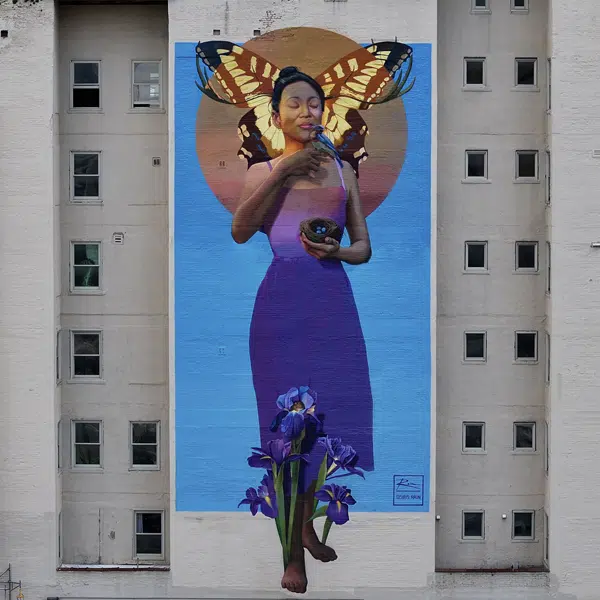
untitled © 2019 City of Philadelphia Mural Arts Program / Amy Sherald, 1108 Sansom Street. (Photo: Steve Weinik)
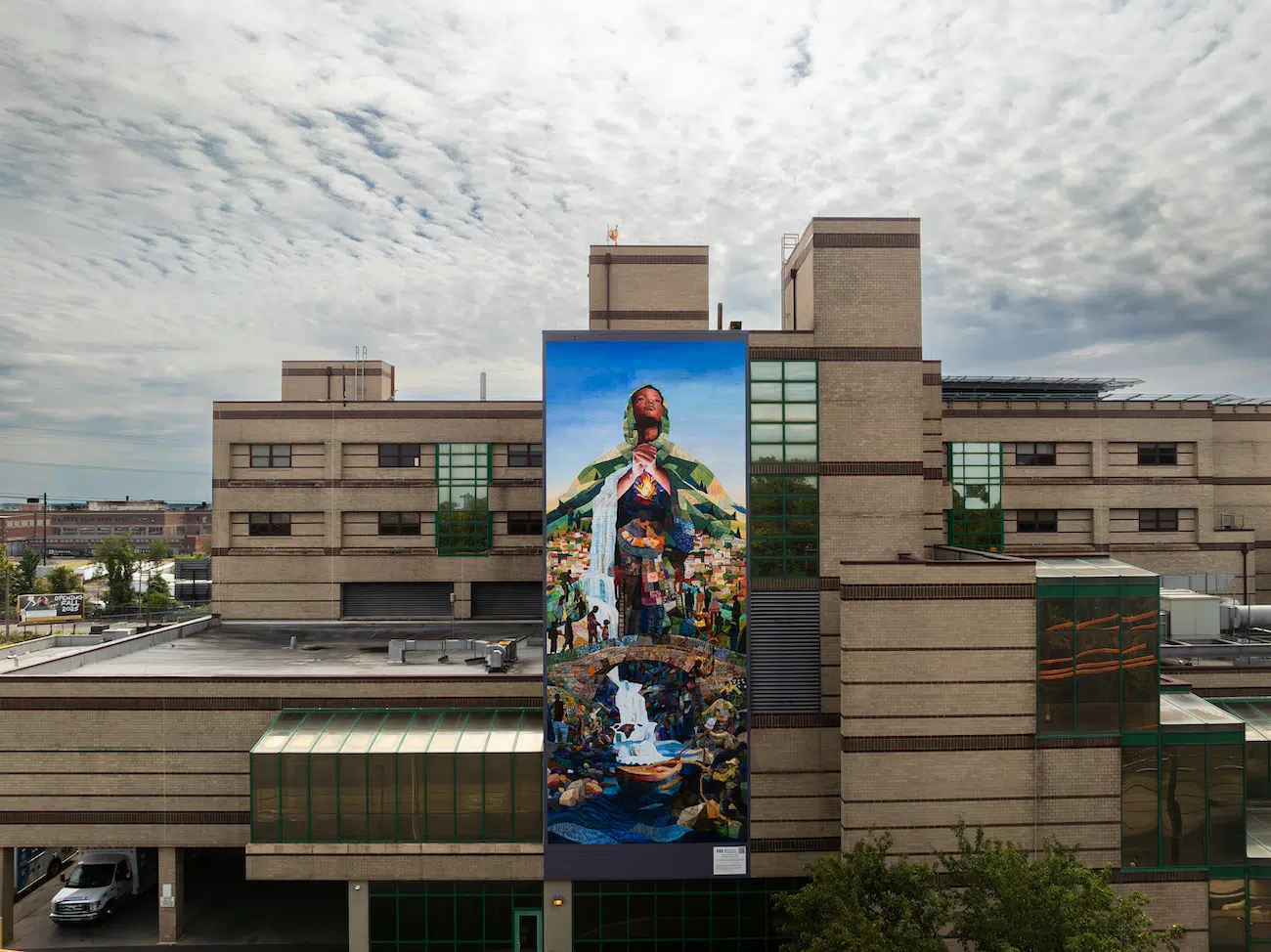
Embracing the Light © 2025 City of Philadelphia Mural Arts Program / James Burns, St. Christopher's Hospital, 160 E Erie Ave. (Photo: Steve Weinik)
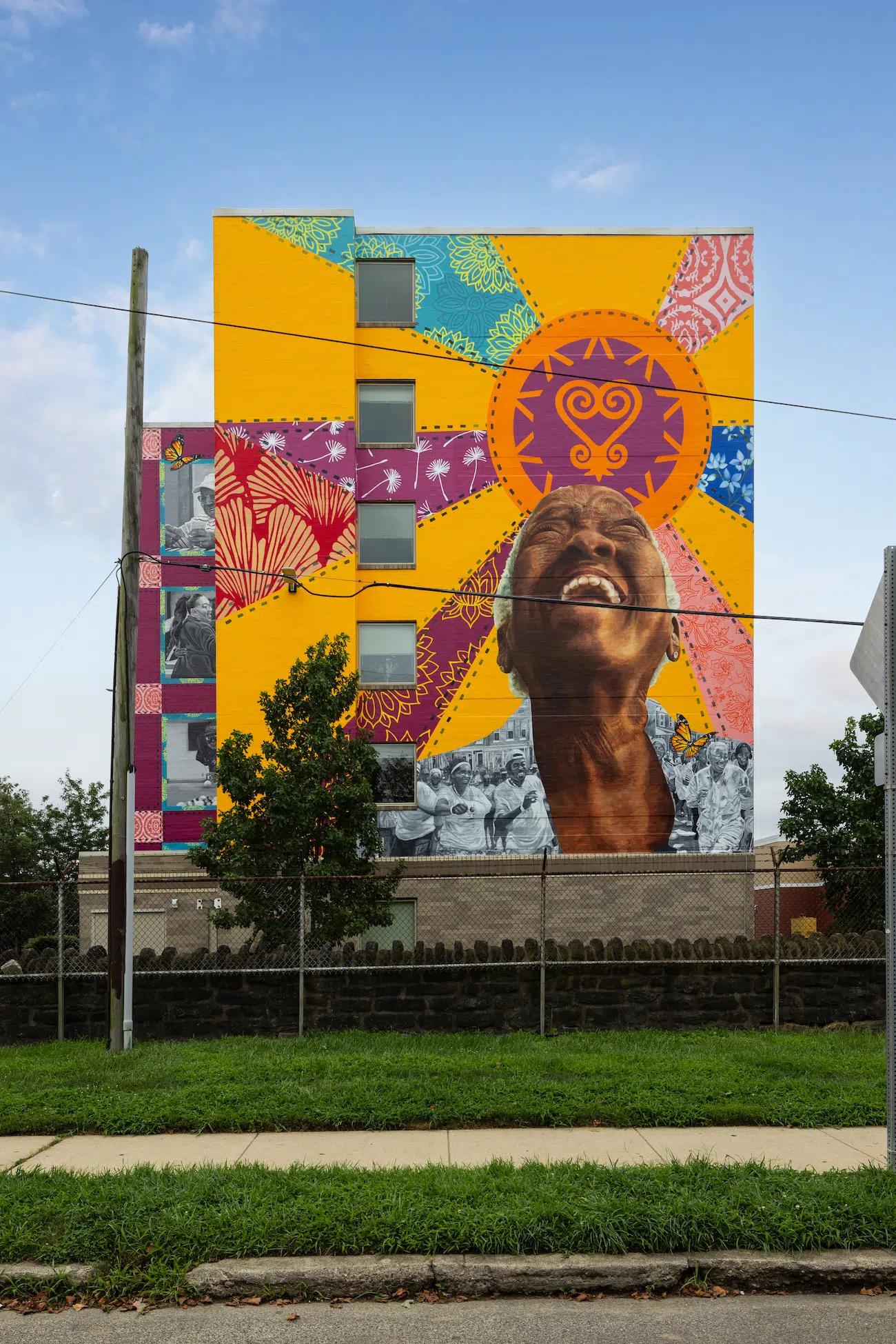
Threads of Joy: Celebrating the Golden Years © 2025 City of Philadelphia Mural Arts Program / Kelley Prevard, 5800 Kingsessing Avenue. (Photo: Steve Weinik)
It soon evolved into a community-based public art program built on collaboration, bringing artists, residents, and neighborhoods together to transform blank walls into shared cultural storytelling.
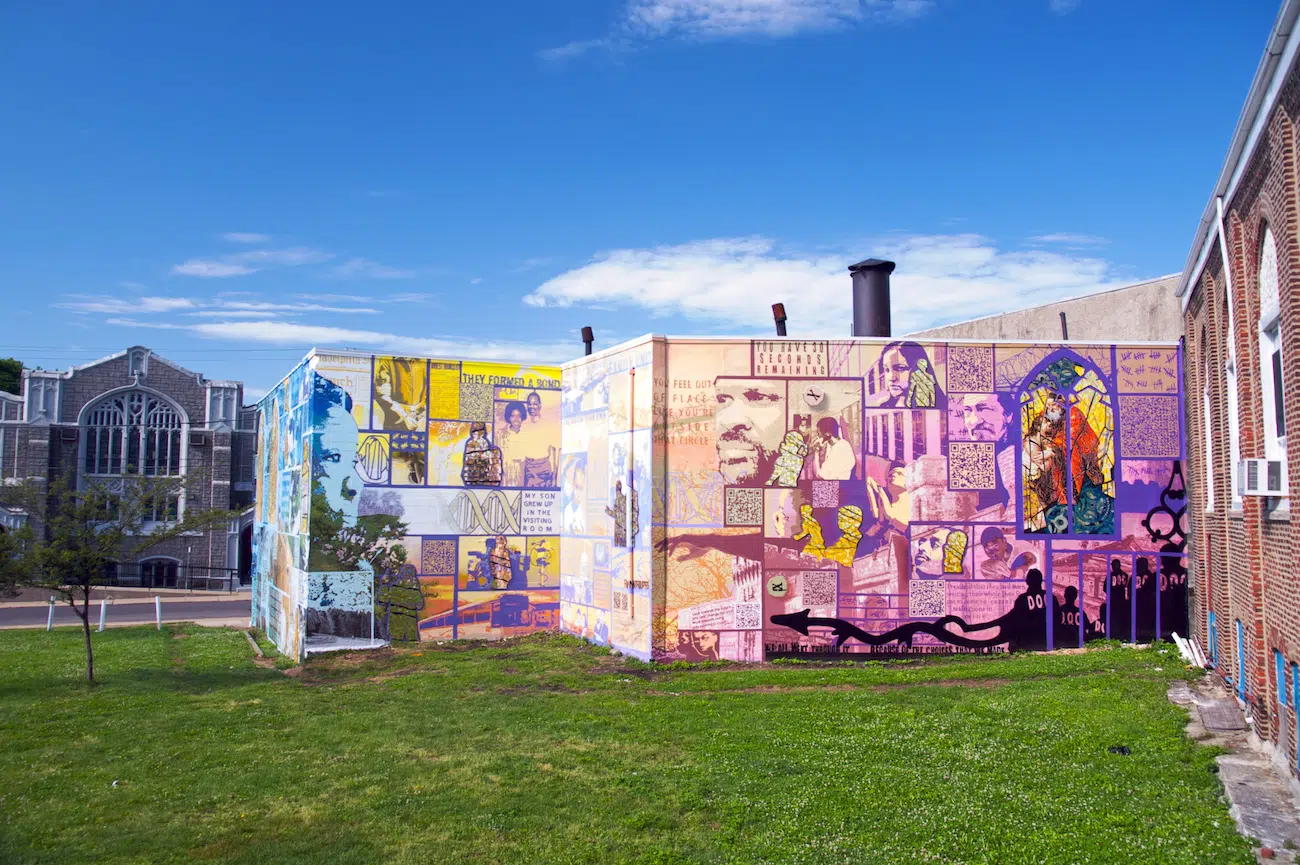
Family Interrupted © 2012 City of Philadelphia Mural Arts Program / Eric Okdeh, 709 West Dauphin Street. (Photo: Michael Reali)
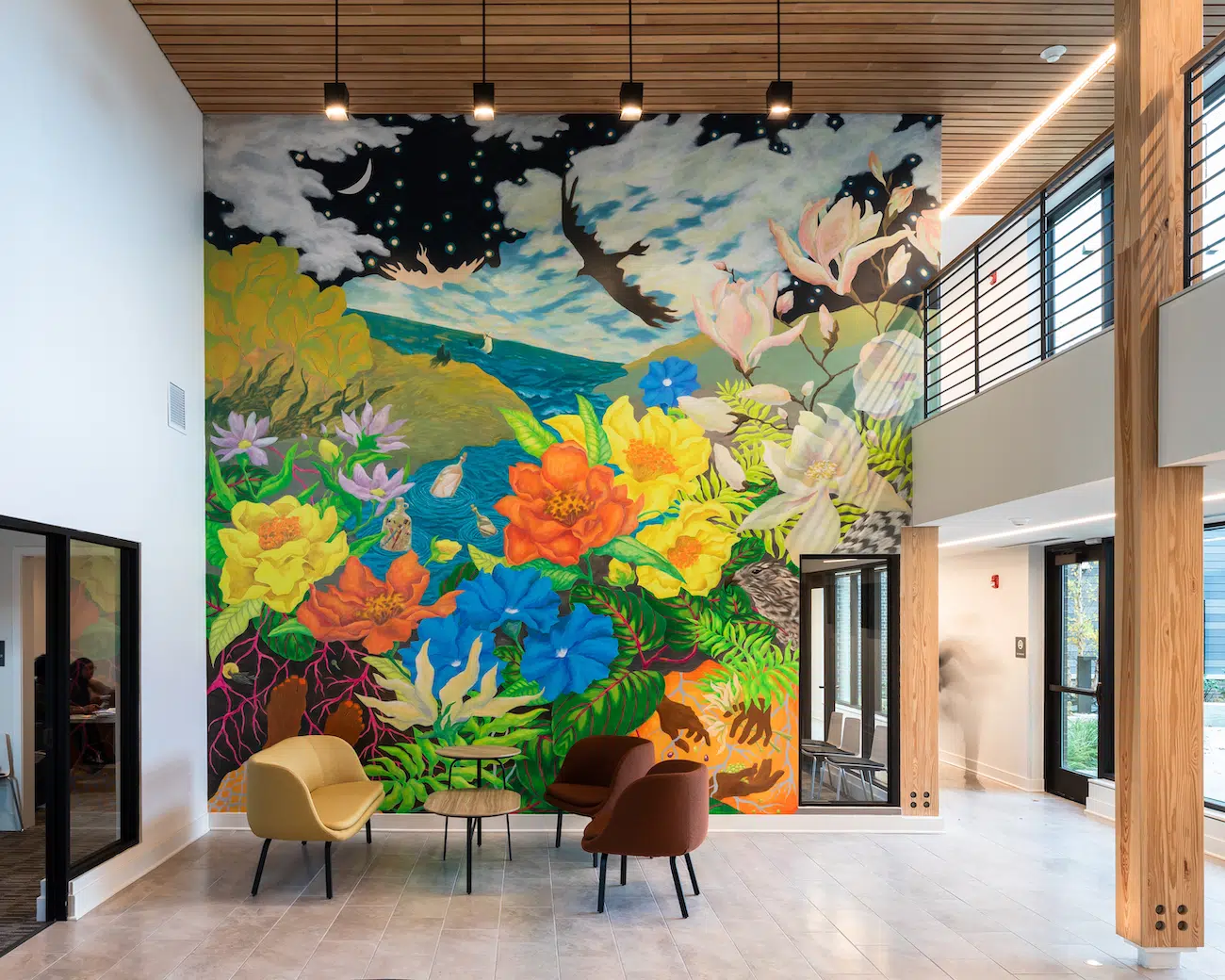
Dark is a Way and Light is a Place (Interior) © 2021 City of Philadelphia Mural Arts Program / Alison Dilworth, Norris Homes, 1900 North 10th Street. (Photo: Steve Weinik)
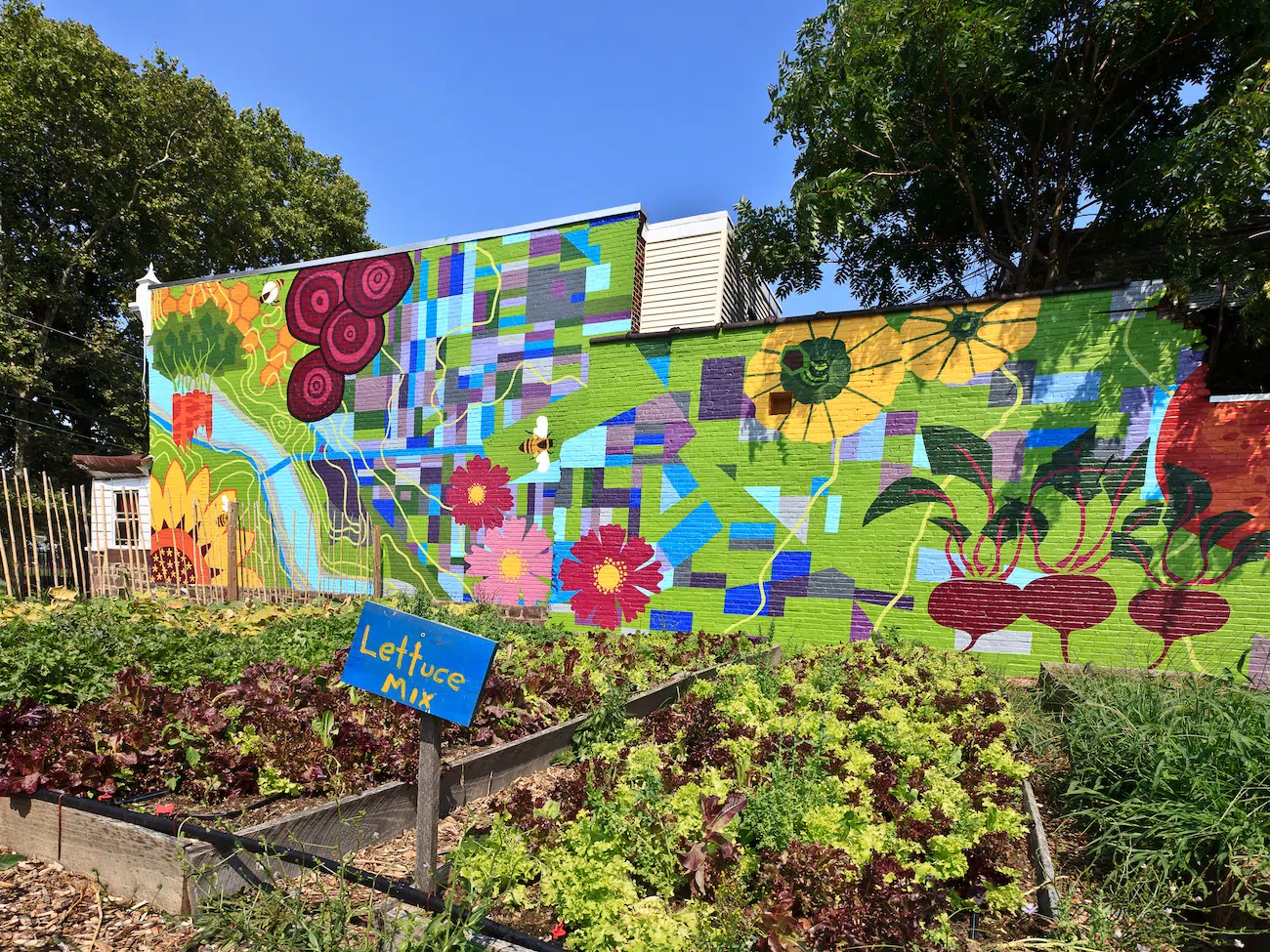
The Abundant City © 2012 City of Philadelphia Mural Arts Program / Eurhi Jones, 27th & Master Streets. (Photo: Steve Weinik)
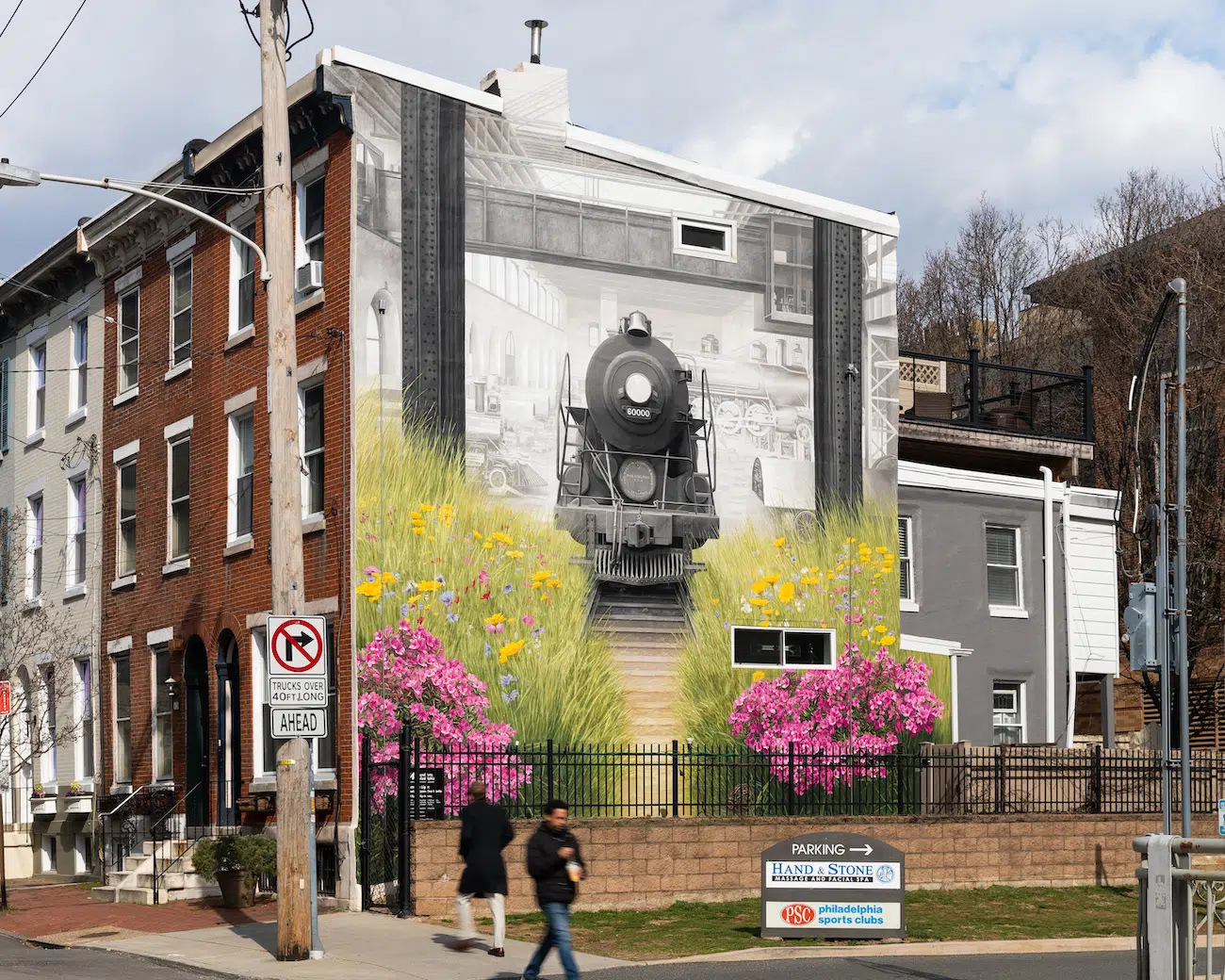
Industrious Light: Baldwin Locomotive Works © 2019 City of Philadelphia Mural Arts Program / Phillip Adams, 417 North 20th Street. (Photo: Steve Weinik)
Over time, it expanded into citywide projects where participants co-create murals that engage urgent social themes such as restorative justice, education, behavioral health, and healing, including initiatives like Healing Walls.
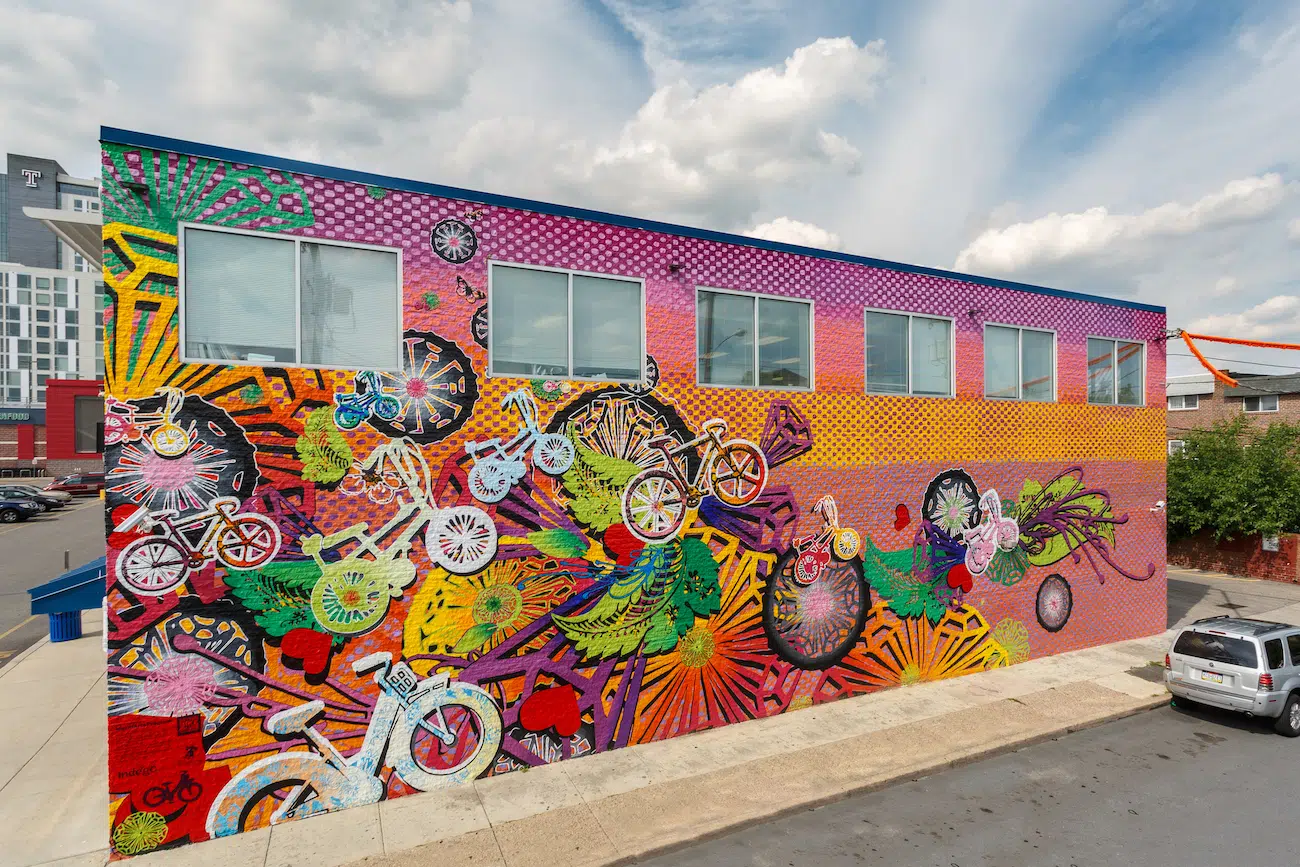
Pedal Powering © 2016 City of Philadelphia Mural Arts Program / Candy Coated, Broad & Jefferson Streets. (Photo: Steve Weinik)
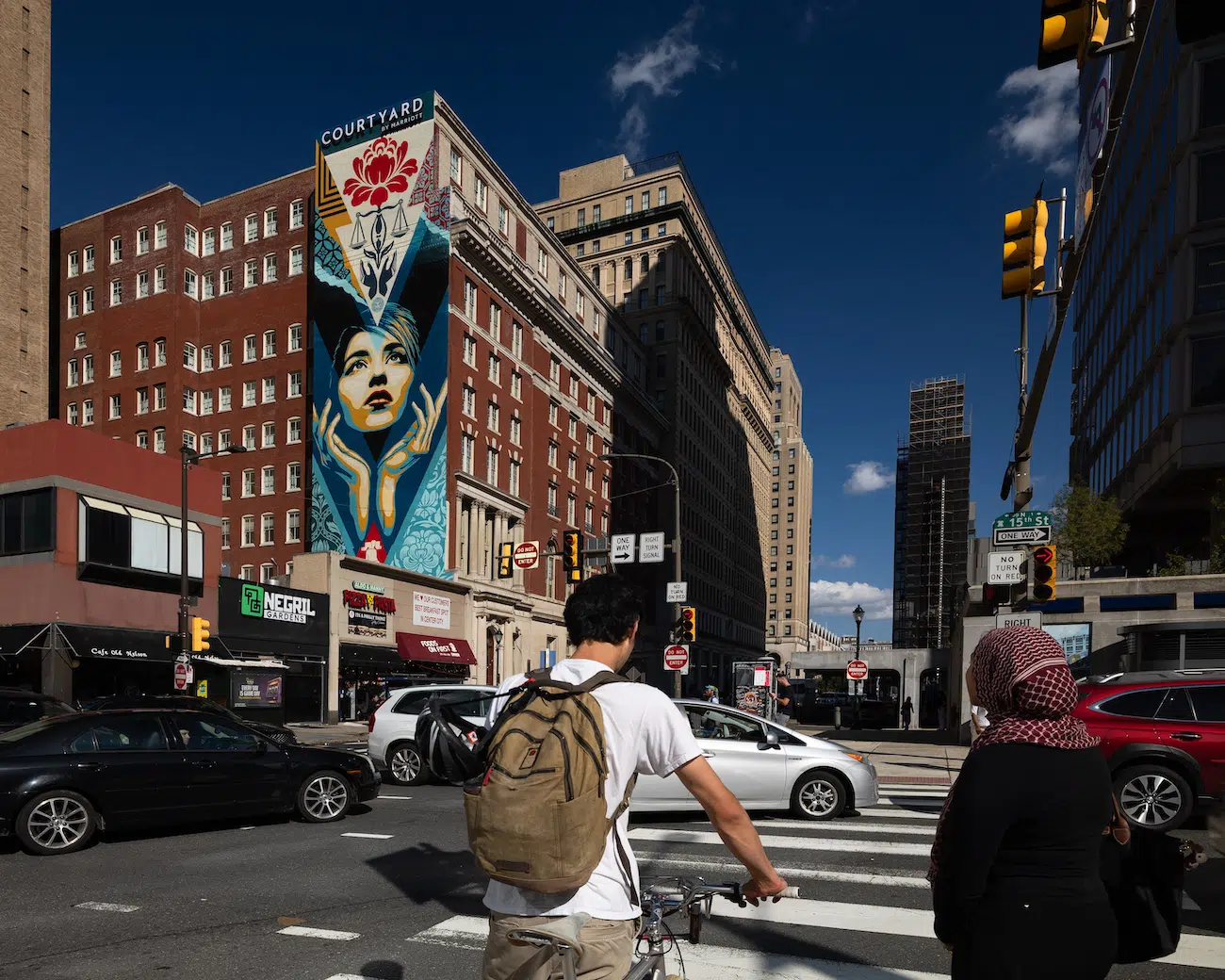
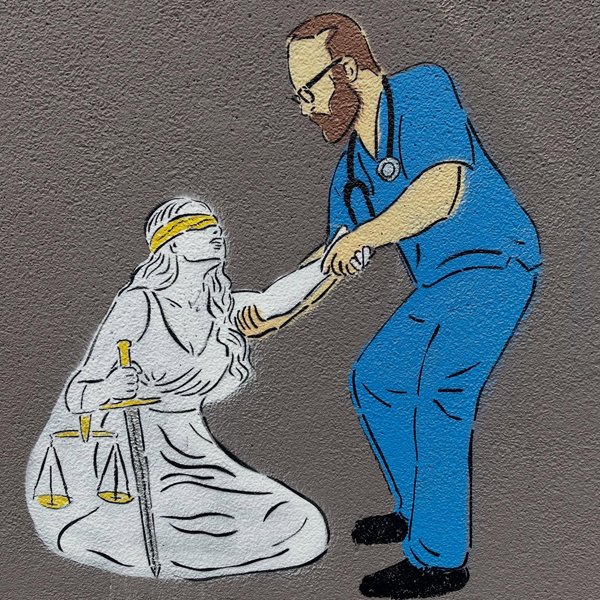
Uplift Justice © 2025 Shepard Fairey, 1425 Arch Street. (Photo: Steve Weinik)
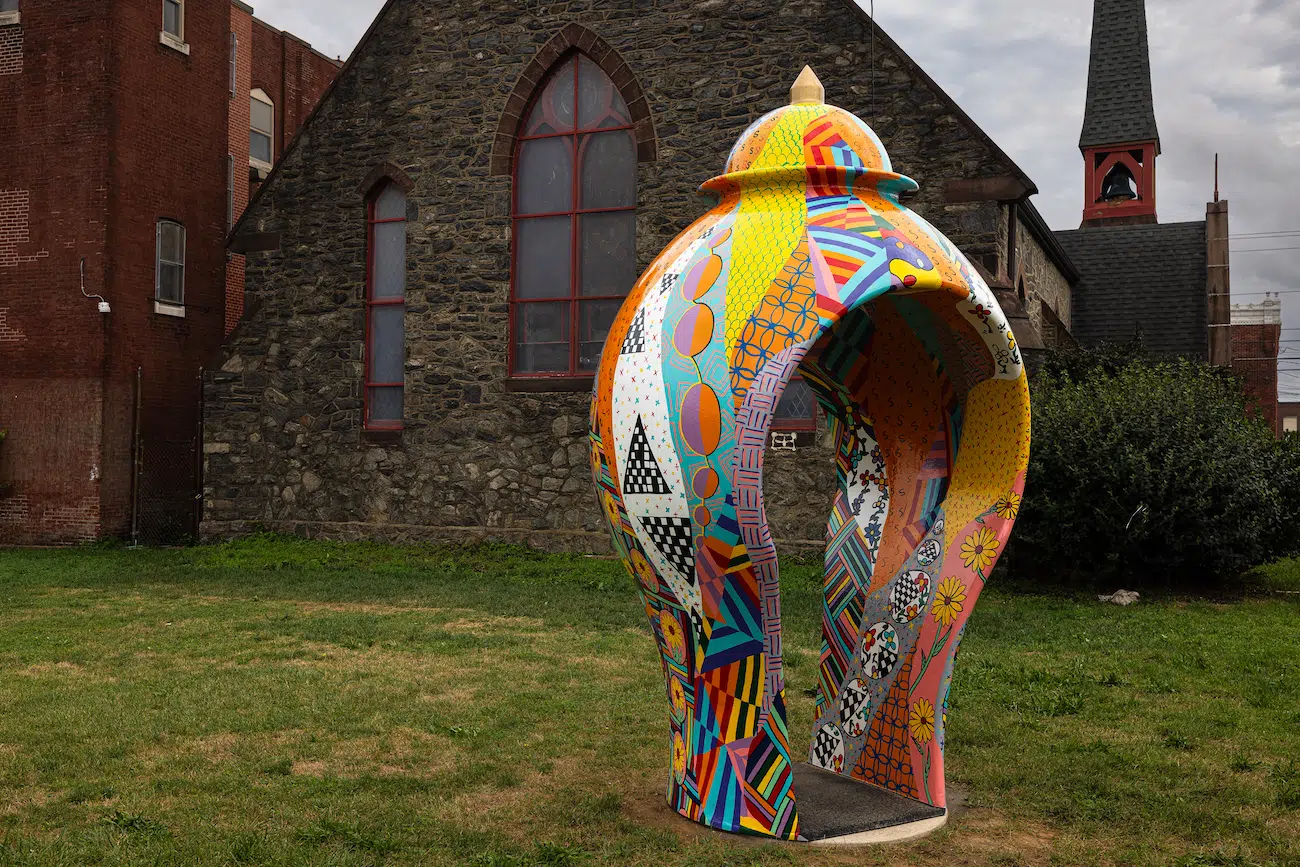
We Here © 2024 City of Philadelphia Mural Arts Program / Church of St. John, 3076 Emerald Street. (Photo: Steve Weinik)
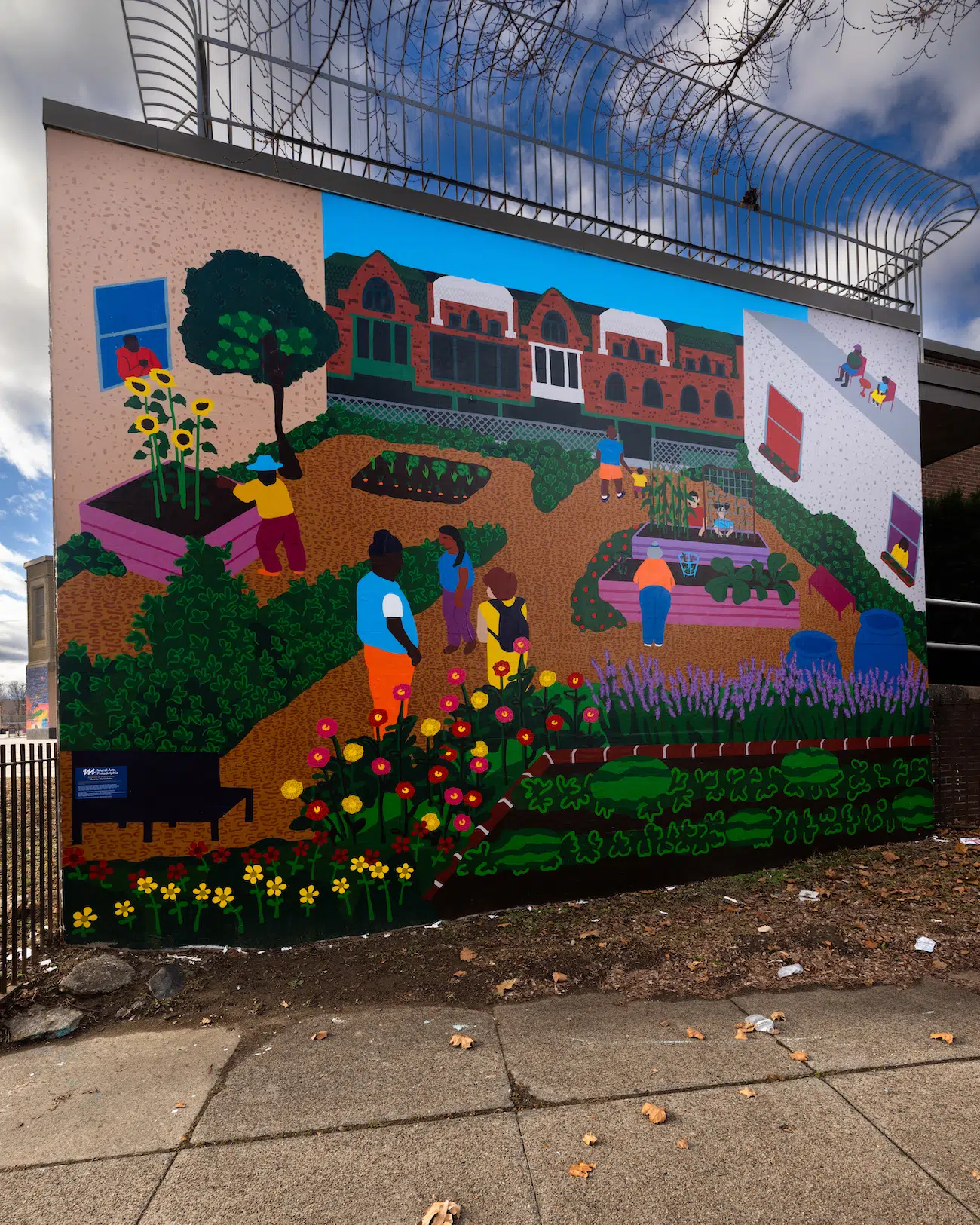
Seasons of Imagination © 2024 City of Philadelphia Mural Arts Program / Marian Bailey, Joseph Pennell School, 1800 West Nedro Avenue. (Photo: Steve Weinik)
Today, the organization has transformed Philadelphia into an open-air museum of thousands of works, with walking and trolley tours allowing visitors to experience how public art continues to shape the city’s identity, memory, and civic life.
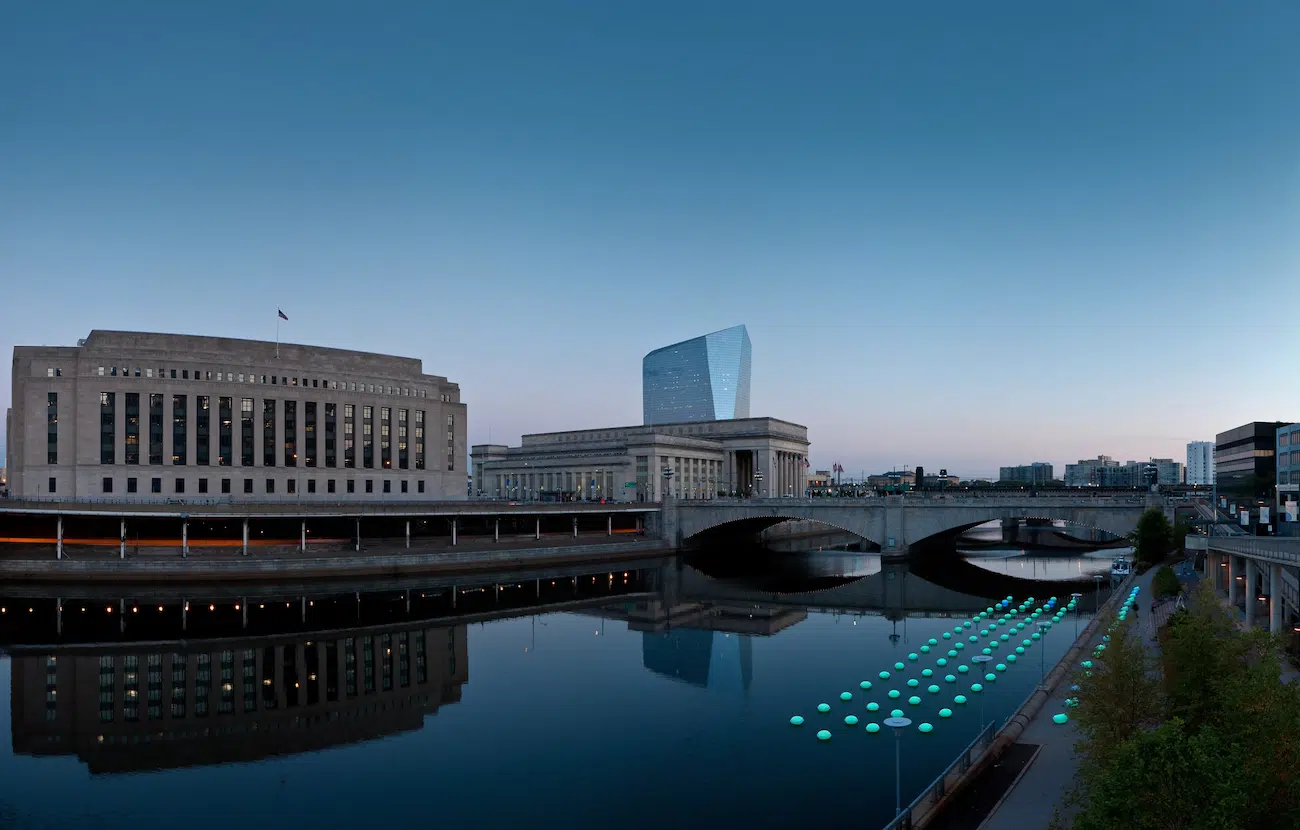
Light Drift © 2010 City of Philadelphia Mural Arts Program / J. Meejin Yoon, Schuylkill River Park. (Photo: Joel Avery, CREATiVNESS)
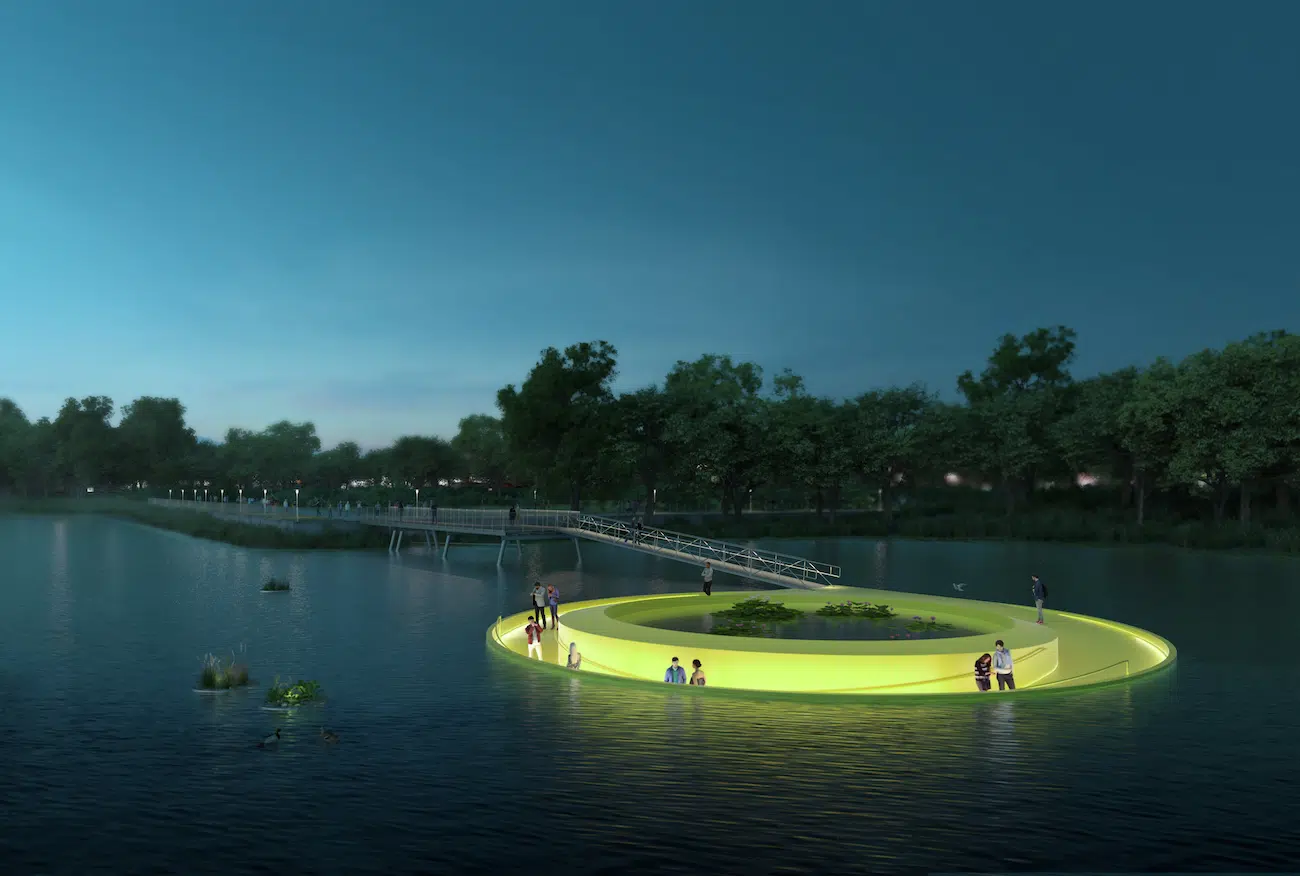
FloatLab © 2026 City of Philadelphia Mural Arts Program / J. Meejin Yoon, Bartram’s Garden. Concept image provided by Höweler & Yoon Architecture and Brick Visual.